Dan Hoffman On Why We Learn Better In Circles (Peernovation Season 1, Episode 3)
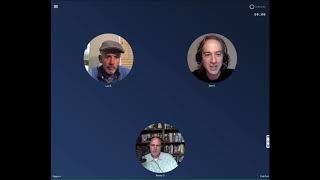
Dan Hoffman built Circles, a platform for peer learning in small groups, after realizing we learn better in circles than rows. Equal speaking time and built-in silence for reflection drive psychological safety, backed by research from MIT and Google's Aristotle project.
Chapters
Welcome to Peer Innovation, the podcast with Leo Bottari and me, Randy Cantrell. Building on our previous shows, The Year of the Peer and What Anyone Can Do, we turn our attention to helping business leaders build high-performing teams.
We'll talk with a diverse group of thought leaders who will share stories and insights that will help you and your teams achieve new heights.
If you believe there is strength in numbers and that meeting the challenges of the future can only be achieved if we do it together, then join us for the conversation.
Today's guest is Dan Hoffman, founder and CEO of Circles. After starting growing and selling a cloud-based tech company, Dan and his family spent a few years in Spain learning what he wanted to do next.
From that sabbatical came the idea focused on peer learning. Today, Dan is building Circles, a platform that fosters deeper conversations to create enduring connections and learning. We welcome Dan to the show.
Welcome back to another episode of Peer Novation, the podcast, and we are happy to have a returning guest. And, uh, in fact, did you a solid as far as the book goes too, Leo. He is Dan Hoffman. Circles is the platform. It's circl.es. Welcome back to the show, Dan.
Thanks, Randy. Great to be here. Hello, Leo.
Hello, Dan. Yes, Dan was, uh, kind enough to contribute a terrific forward to the book What Anyone Can Do. And, you know, and I think this was at a time when, you know, you were in the pretty early goings of Circles and putting together this platform. And so what I'd maybe love to just start out doing, because, you know, some may be familiar with Circles, some may not, but I think let's assume that, you know, given that we have the founder and CEO on the podcast here, that you can tell us a little bit about it. The basics of it first in terms of the platform, but then I think we also want to talk a bit, as we have looked at this podcast and rebranded it Peer Innovation, because we're really looking at these practices that drive high-performing teams, whether those are virtual teams or in-person teams. And I know that you've done a lot of work, not only build a platform, but also create a wonderful framework for how these meetings can be held in a way that really maximizes everybody's productivity. So Dan, I'll let you get rolling and tell us a little bit about Circles and go from there.
Thanks, Leo. Thanks for the opportunity. We've been obsessed with how humans connect and studied lots of places where small groups in facilitated inclusive dialogue, talking about themselves, application, maybe a little bit of content, and then meeting over time produce this magic where people are really open with each other and push each other to be their best. And we call that Circles when that happens. A lot of leaders have experienced that through peer groups like Vistage or YPO Forum. But it exists in many other practices and traditions goes all the way back to sitting around a fire telling stories. And so my work is building a company, a method, a technology platform, and a team of people that are really good at making it easy to scale this type of small group magic.
Yes, we learn better in circles than in rows. I know you are very famous for, you know, repeating that. And actually, just in terms of some of the features of this, which is great because, you know, again, I was taken with this because, as you know, one of the first things you explained to me in terms of putting this together was you really wanted a platform that was really great at facilitating conversation, not just presentation. So with that, you have some really cool features that I actually wouldn't mind going through the basics of it because why not give people a sense of what this is all about. We love using it for the podcast and people may certainly love using it for their meetings, especially if they are using one platform and want to change things up a little bit. But we can of course turn my video off and on here. We can mute right here. If I want to put myself in the center of the circle, There we go. And if I want to raise my hand if I have a question, and then of course if someone says something great, I don't want to interrupt the flow of what they're talking about, little plus one. You're next, sir. Thumbs up for, you know, so this is really great stuff. But then there's also some fun things too. I'll throw this up on the side, and then, you know, I know that you could throw yours up as well and just kind of walk us through this left menu, everything from some terrific opening music to some other such things that you've got here that, um, really I think are some great features that you've had, including chat, group survey, and all that, you know.
So, well, the platform is built on philosophy, um, and, you know, one of the philosophies is that structure driving conversation gets people to open up and feel safe Really simple example of that is the principle of equal talk time, equal airtime. It was a big finding of an MIT Carnegie Mellon study on teams. It was a big finding of Google's Aristotle Project that the magic bullet for producing psychological safety, a feeling of belonging and openness on a team, is just giving time for everyone to be heard. So we bake that into the platform. With the ability to ask a question of the group, set a random order. You can see everybody's got a little number, right? And the green number goes next. You can put, as you demonstrated a second ago, put yourself in the circle when you're number 1 in the center of the circle, and that timer on the top right automatically starts counting. So, you know, we'd say a minute each, then I bumper car you out, Randy's got the green 3. He's next, and so on. And so that little structure, ask a question, little time to think, another good practice, we play 30 seconds of music, random order, equal talk time. Do that at the head of a meeting, do that when you have a real important question. Leaders ask great questions of their teams. And you'll feel how connected and open people feel. So the features are really in the service of some philosophies around peer learning and teams beneath the surface.
So as you have— now, you've worked with teams that have actually been just, you know, company work teams as well as peer groups, as well as people all over the world and all of that, right, who've had to connect and bring folks together. How has this been when it comes to just keeping people connected in terms of how they've enjoyed circles?
Well, it's been an exciting time for us. It's fast-forwarded the adoption curve of video technology. Some of that is— well, most of it has been very, very helpful for us. It's not enough though just to accept the technology. People are starting to have to get good at how you connect. When you're remote. And I know you've done a lot of thinking about that and practices that we're all adopting to run teams when you're not physically together. So there's been a really increased appetite for taking time, deliberate, intentional time to foster that human connection. When you don't have the asset of a company kitchen with a water cooler in it, you've got to be intentional. And so it's forcing us as leaders to think about What are the things that we can deliberately do to foster human connection? And what are some of the breakdowns that can happen when you don't do that? You know, what's the absence of real connection do to a team? Why is it worth it to burn a few minutes at the head of a meeting to connect as people? What's the commercial value of that? What's the productivity gained by that? Well, you really notice it when you don't have it in other places and you can't go to the bar after work and you can't run into each other in the hall. So It's been a very interesting time and a lot of learning on fast forward.
You know, what I've heard is that teams not only become connected with one another, largely because when we go to a central workplace and we're all kind of dressed, we go to work and we're there at that spot and we have our little offices or cubicles or whatever we're working out of. But it's a very different dynamic when we literally invite people into our homes. They get to see a little of the background. They get to hear the crying kids or the dog jumping on your lap and all these other kinds of— and it it just humanizes us in a way that I think, to your point at the beginning, allows us to connect on a very different level that I think serves us pretty well in terms of us just being that much more forgiving of one another and recognizing that we share this common humanity and common circumstances in many respects that allow for a little more of us being patient with one another, I'd like to think, you know.
There's been a slogan, "Bring your whole self to work," out there for a long time, right? Why?
Why?
And maybe it's not always the right idea, but teams that try to build a high level of trust so you can move fast, teams that try to encourage wacky ideas so that you can be more innovative. Teams that try to have a diversity, a real diversity of viewpoints brought in so that you can see things maybe a little bit more from how a customer might see things or, you know, get, get some fresh perspectives, see the value of this idea of bringing, bringing your whole self. And yeah, going in someone's bedroom or, you know, home office or seeing their family walk by or seeing what, you know, their pajamas. I guess it's a way of encouraging that. But where the rubber really meets the road is when, when you include people's whole selves in the conversation, and then just see how trust levels are built faster, how idea flow speeds up.
Why?
Why bring your whole self to work, right? And I think ultimately, When you do that as a leader, people are engaged. You've engaged more of who they are. And that reduces churn, increases presence. You get more discretionary effort. And I think engagement is really the magic that we're after in building teams and companies.
I think you brought up a great point in terms of just how to start off a meeting. It isn't just, okay, the goal for today's meeting is blah, blah, blah, and you talking at them for a while, and then they get into this. But just to start off meeting with, how's everybody doing? Let's go around the horn here and just get a sense of how you're feeling, what's going on. Because, you know, obviously, especially in this situation with the pandemic, you've got a lot of people dealing with some real varying personal challenges as well, on top of having to change the way they work. And to, I mean, it's, it's pretty remarkable actually to me when the number of CEOs I've talked to who said productivity is up, you know, all my employees, I'm like amazed at how they've stepped up and how they've responded and how it has built trust all across the organization, you know. You know, I do think there can be, we have to be mindful that We're a few months into this, and there's a lot we've got to do to kind of keep that in place. But it's kind of interesting when, especially a CEO, when they say, you know, they do these sessions like once a week where it might be Friday afternoon and people can come on, not come on, whatever. And it's just using this not for a specific meeting with an agenda like we're talking about today, but just how's everyone doing, just complete open forum. And these CEOs are often kind of sheepish about the fact that, you know what, I never asked my employees how they were doing often enough, nearly often enough. So that's been a kind of an interesting new practice as well, as people are working together virtually.
Absolutely. Again, you know, you take for granted that people are having those conversations, especially if you're coming into an office and there's time in the hallway. Without that, you've got to be intentional about it. And I think we're all being more thoughtful about, about how that happens. I think it's an interesting time. I mean, we're about 3 months into lockdown or getting on day 100 here. You and I have talked about culture a lot. Well, there's culture shock. And what people don't realize about culture shock is it hits at the 2-3 month mark. It doesn't hit at first. At first you travel, you're excited, it's nice. But it— culture shock wears on you and it's very subtle. And things like missing how things were, just feeling a little low energy or feeling some frustration, the restlessness, those things start to creep in when you're living in a new place after about 2, 3 months. And I think now is a very critical time for people to start asking asking, "How are you doing?" And I'll see that question and raise you one, Leo. What we often don't do when asking that question is give some silence to think before answering. So my recommendation, again, is that we call it reflection time, that practice of just, "OK, we're going to go around the horn, ask how everyone's doing," or maybe another question that engages you emotionally a little bit, put a twist on it. And then 30, 60 seconds to give people a chance to come up with a great answer and then be present listening to each other instead of thinking of their own. So that little reflection interval is a very big difference. Takes conversation up a notch.
You know, I've heard about that in terms of let silence do the heavy lifting. And I think that's just what happens in that moment, you know, when people really have that time and they can really reflect and formulate things in a way that works really, really well. So Randy, you've been—
I've been sliding.
—on virtual meetings as well here. Yeah.
Yeah, my curiosity, Dan, is the things that you and your team have learned even since your launch or even things during this pandemic. One of the things that I learned just today in a client that I was coaching, and she's a leader and she has a number of direct reports, and she made an observation that I had not thought of that seemed one of those smack-your-forehead obvious things. And she said she had direct reports that were now being more mindful of the look on their face, because in a platform like this, you see yourself on your webcam and you're not used to looking at yourself in a conversation, which I thought was an interesting observation. That's one of the big things that I've learned during this as far as remote kind of work. I'm curious what big takeaways you and your team have learned from the beginning and even during this pandemic as far as just the way these things work.
Oh, what a great question. So much learning and on fast forward. I think we all have laid bare our calendars in a new way. And if you're like me, the first impulse without travel time or commute time or was to just fill up calendars wall-to-wall, you know, video meetings, particularly wall-to-wall. And That produced a real learning around my own energy level. You know, I started to really notice the stuff I was good at in the mornings and the stuff I was really couldn't just get done in the afternoons. And so I've had to start figuring out breaks and figuring out how to do writing, thinking time in the morning and meeting time, you know. I've also seen across the team places where we needed just synchronous time. You've got to be deliberate about new meetings, better meetings, short meetings, when you need a long meeting, and the value of synchronous time, what the limits are of Slack or chat or email in a new way. So I think it's taken a filter off. It's taken some excuses out. It's laid bare some things that were maybe going on the whole time that we just didn't get to observe as closely, like, like energy level and the rhythm of the day and the, you know, team meeting structures. And so in that way, we've all been learning a lot.
What sent you down this path? What made you even start something like Circles? I mean, a super ambitious endeavor for sure.
I built a unified communications company over 12 years, worked for the parent for 2 more. And then had some time to think about what I wanted to do if I grew up. I decided I wanted to build another company, and I decided I wanted to do it in learning and development generally, because that gave me a lot of energy, both my own journey as a CEO and leader, but also building a company culture where people would, would learn and grow. It was the most gratifying, energizing thing. So I thought, okay, where can I make a contribution in that world? And After some time reading books and thinking and having a lot of, you know, making investments and volunteering in different education, you know, I thought, where can I make a contribution here? And it hit me on the nose. Peer learning. My experiences in YPO EO Forum were, and Aspen Institute Fellowship were the most transformative. So why doesn't the whole world learn in circles instead of rows? And so that was the question that I decided to spend the next chapter of my life on, and it's led to some pretty interesting places.
Well, yeah, it sure has. And, you know, it's kind of interesting now As you say, so where do you see Circles 5 years from now?
It's become a lot clearer. You know, it's my job at the head of the train to figure out what's coming up around the bend. And it's gotten a lot clearer for me. I see a platform that we're— Sorry. Kid bursting in. We're building a platform both in terms of technology and community, but also practices. And there are many different communities that believe in small group learning and the power of small group learning. There are many companies that believe in the power of teams and team learning. And there are many schools that believe in cohorts and action learning. And so, All of these companies, communities, and schools share this common practice: small groups, facilitated conversation, little content that sparks thinking, meeting over time. They all, they all look the same. I see Circles sitting in the middle of that, and through our concept of libraries of agendas, libraries of learning journeys, libraries of sparks for thinking, helping those communities enable their members to get in small group, have super powerful dialogues, learn together, whether it's teams learning or students learning or members of, you know, diverse community helping you to unlock the wisdom for each other. So, so we see this platform as just a way to snap— get agendas that structure dialogue out really fast and enable that really fast. Example is some of the work we're doing with YPO recently around around COVID or Aspen, around race. You know, these are questions that have really hit hard. Teams need to be talking about these things. In learning and development terms, the world has given us the greatest stretch assignment in the 70-20-10 that a leader could ask for. But we don't learn from our experiences, as John Dewey said. We learn from reflecting on our experiences. And without that last part, we're going to lose the gold here. So it's incumbent on our communities and our schools and our companies to be super agile, pump out relevant stuff, but give people the space to make meaning and process it and be in small group dialogue. And that's what I think Circles can do for the world is just make an easy way to do that at scale.
You know, since you invoked John Dewey, one of my favorite concepts of his also is collateral learning. And the idea that when you participate in Circles, you might be doing so for a very specific reason, but you're getting so many other benefits from it at the same time. At the same time in terms of how you engage others and what that looks and feels like, and really great practices around those kinds of things. So, you know, I think that's just super powerful. And now, so one of the things that we're going to be doing, and we hadn't talked about this in advance, but hope you think this would be okay. Of course, this is the second time now that we've actually done a podcast using the Circles platform. And, you know, so what we plan to do actually is we look to this show for the remainder of the year is we want to do a panel discussion. Basically, it's kind of a podcast panel, if you will, at the end of every month. And we thought what better way to really have a conversation to get everyone around the table, if you will, or everyone around the circle, would be to use Circles as, you know, an ongoing platform that we use for our monthly panels and little circle chats that we're going to have. And so we're really excited about that. I hope that it will also not only expose more and more people in a different way, you know, to what you're doing, but I do think it'll be a great way for us to, I think, be that much more effective with those kinds of conversations.
So we're excited about that. That's fantastic. I'm really happy to hear. I'm proud to support that.
There we go. Dan, do you see this remote learning, remote stuff, the stuff that COVID-19 has forced us to do, what lasting impacts do you see that having in the workplace or in education or just life in general?
Innovation under fire, you know. It's really It's exciting in a lot of ways. Starting at the top, you know, COVID is a global enemy, and it's made us collaborate globally at a much faster rate. I mean, I'm hearing story after story in the healthcare world, where we do a lot of work, of doctors across companies, you know, researchers across companies innovating at new speed. Coming together to collaborate in new ways. All of a sudden, our educators are forced to ask questions about what does need to be synchronous and what doesn't, and to be really deliberate and intentional and structured in the synchronous time and not take it for granted, and be really deliberate and structured and intentional in the asynchronous time. And so it's just forced an incredible— we do a lot of work with Harvard Business school, and they are not one place. It's become overnight a laboratory of innovation where they are running experiments. They're speaking in terms of— this is a place that has been very, you know, traditional, um, but now all bets are off. And, and maybe we don't need 3 weeks on campus, and maybe we need this in a big cohort and this in a small— I don't know, should they meet for 60 minutes? Should they meet for 90? Do we need a facilitator? They are running experiments at a whole new speed and learning at a whole new speed. And it's just really thrilling to be a part of it. And when we go back to a world with a vaccine, I don't think we're going back to the same world.
No, I wouldn't imagine we are. You know, you brought up something that I think is really important just to highlight as well, and this whole idea of synchronous versus asynchronous learning and time. So I've been teaching online for basically Seton Hall and Rutgers University for, you know, over 12 years. And there's a combination of certainly, actually some little in-person in there too, but a lot of it is, you know, synchronous learning. But the asynchronous learning piece is amazing to me because you lose spontaneity that you get in that energy that you get out of the classroom experience or even an experience like this where people are, you know, responding in real time. However, think about the number of times where someone will make a point and you're sitting there and you're— there's either some story or some reference or some article or whatever that you have on the tip of your tongue, but you don't know it well enough in the moment really to be able to bring it into the conversation, right? But what you can do is I'm thinking, you know, I'm going to make a note on that. And then later on in an asynchronous environment, now I can say, hey, during our conversation today, I really— I wanted to bring this forward because this I think is really a helpful addition to things. And now all of a sudden you get this very more thoughtful, reflective piece that gets brought into this extended dialogue now that lives past the moment, which I think is really powerful. And, uh, you know, I'm excited that as we start bringing more and more of those tools and we start getting better and better at that, I think there's the potential is just enormous.
Yeah. It's forcing us to rethink. These learning processes and, you know, at a time when there's so many tools at hand ready to try in different mixes. So, you know, in this global diversity we can bring to bear of students from all over the world and all different backgrounds and motivations and walks of life, it's very, very exciting.
Dan, go ahead. Go ahead. I was just gonna— I know we're up against it for his for Dan's schedule. So I was just going to ask you, Dan, to give our audience some idea— if people would like to check out Circles and if they want to see about how it can apply to their situation, how might they best go about that? Thanks, Randy.
We've primarily been delivering Circles using the technology platform ourselves as a managed service. We work with with leadership development, manager training groups inside of large companies primarily, also exec ed programs like HBS, and some communities, trade associations, a venture capital portfolio, YPO, Aspen Institute, TED.com. We are getting to the point where we're going to be offering Circles as a software as a service platform, including libraries and some training on how to do a great inclusive dialogue in many different traditions. And so at the moment, we are offering some limited beta, free betas of the software component of what we do. You can come to www.circl.es for España and check that out. And, you know, we're really in learning mode. Our price is feedback for the software component. But if you do run a learning and development program, or you are interested in breakout circles as a component of a large event and having— allowing your people to continue to meet and learn together after maybe an event that you've had to move online, that's quite a mature offering, and we're offering that as a service where we're the easy button for peer learning. So happy to hear from you.
The easy button for peer learning. I love it. Plus, is the.es a bit of a nod to the time that you and your family got to spend in Barcelona? After you sold your company as well, I would imagine. Yeah, exactly.
It was a wonderful sabbatical, and Barcelona is a place that really encourages you to think differently. You know, I was so inspired by walking in Gaudí's Sagrada Familia. Every other church in the world is a box, and here he's created something out of swirls and colors and lights. It's a completely different experience, and it really made me think Why, why is everything in boxes and rows? What couldn't we— couldn't we find a new shape to the world? So I'm always grateful to, to the city of Barcelona and the time I spent there. Nice.
Randy, well, we appreciate— we appreciate—
yeah, we appreciate you being here. We appreciate you, our audience, and we hope you got some value out of this. And we realize that the world is a changing place, and Circles is— we've enjoyed a nice relationship with Dan and with the technology and watching your story unfolds. So all the best to you, and thanks to our audience. You can find out how to subscribe to the show and all kinds of other information by going to peerinnovation.co. Until next time, we'll see you later.
Give you a hug, Randy. Thanks.
Our audio listeners will have to watch the video to see the virtual hug that Dan Hoffman gave me and Leo.
Thank you for joining us. To subscribe to the podcast and learn more about how you can engage peer innovation for your organization, contact us on the website at peerinnovation.co. Till next week, remember, the power of we begins with you.










