Dr Maja Zelihic On The Power Of Perception
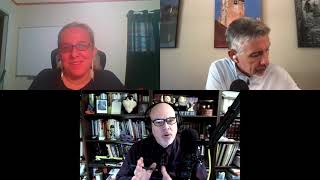
In this Peer Innovation podcast episode, hosts Randy Cantrell and Leo Bottari interview Dr. Maja Zelić, Fulbright specialist, professor, and co‑author of The Power of Perception: Eliminating Boundaries to Create Successful Global Leaders. Dr. Zelić explains how divergent perceptions arise—illustrated by her own and co‑author Diane Hamilton’s opposite readings of the same workplace message—and why aligning, rather than homogenising, perception is crucial for high‑performing teams. The conversation explores the role of delusion and mis‑interpreted change communications, the impact of upbringing, culture, gender and personal history on perception, and how leaders can use the EPIC (Perception Power) Index to assess and polish perception within organisations. Dr. Zelić shares cross‑cultural communication practices, the importance of psychological safety, empathy, and suspending judgment, and offers concrete advice for CEOs on delivering clear, universally understood messages. She also recounts her personal journey as a refugee from former Yugoslavia, describing how that experience shaped her worldview and her focus on empathy. The hosts discuss the book’s structure (three parts, 20 chapters), its blend of philosophy, spirituality, and practical tools, and how it can help leaders, managers, and individuals manage up and improve personal relationships. The episode ends with information on where to find the book and the accompanying training program.
Chapters
Welcome to Peer Innovation, the podcast with Leo Bottari and me, Randy Cantrell. Building on our previous shows, The Year of the Peer and What Anyone Can Do, we turn our attention to helping business leaders build high-performing teams. We'll talk with a diverse group of thought leaders who will share stories and insights that will help you and your teams achieve new heights. If you believe there is strength in numbers and that meeting the challenges of the future can only be achieved if we do it together, then join us for the conversation. Our guest today is Dr. Maja Zeličić. Dr. Maja is a Fulbright specialist, full professor, and a department chair of the Advanced Management Studies at the Forbes School of Business and Technology. Dr. Maja co-authored The Power of Perception: Eliminating Boundaries to Create Successful Global Leaders with Dr. Diane Hamilton. We welcome Dr. Maja to the show.
Dr. Maya Zelihic, uh, welcome to the show. We're so happy to have you here, co-author along with Dr. Diane Hamilton of The Power of Perception: Eliminating Boundaries to Create Successful Global Leaders. I know both of you are PhDs. You work together on this book. Um, you know, as we talked about, uh, at the start of the show, I've always been fascinated by this topic, this idea of perception, and one of the models that was, you know, that I learned about obviously in graduate school was Chris Ardris's ladder of inference and how it talks at least a bit about how we can as people see the same event or the same person, same circumstances, and come to completely different conclusions about what they mean and what that looks like and how we perceive them. And, you know, that was in the case of writing about it in Pernurbation, just a quick example so that people could— we could kind of level set on that idea. But what I love is that your book, um, both you and Diane have really taken both a dive that is deep and broad with regard to perception, and would love to talk about what that can mean for us as individuals and what it means in terms of engaging with others both personally and professionally. So thank you.
Thank you so much, Leo and Randy. Thank you so much for having me. Uh, it's always a pleasure to talk to both of you, and I'm glad to touch upon our book and the research that we've conducted over a span of a few years. Dr. Diane and I, we met as colleagues, as coworkers. And at first, we were just very friendly, and then we developed a friendship as well. And the way this book came about was kind of interesting. We were on the receiving end of many different messages. We were part of the different meetings. And a lot of times, as we started getting very close, we realized we have a vastly different perception of the same set of events. And we started digging through the whole, why is that the case? And at first, it came as a general interest. What's impacting our perception? And then we started looking through different variables and different set of circumstances that are impacting our perception. And the way we perceive impacts our effectiveness within a workplace and life in general.
You know, and what's interesting about that is, so if we relate this to peers and with a recognition that we can all have very different perceptions on things, just like you and Diane happen to in the workplace, is that basically when any kind of let's say it could be a strategic change, it could be a new policy, it could be anything that comes up, that it's not as if people hear this information and they just go back to their desks and they just process it themselves and that's it, right? And they have their own perceptions about it, yes, but they also tend to engage one another in sense-making exercises, right? To think, all right, what does this mean? Is it good for us? It is not? Where do you think is going on? What's the motive behind this? And all these kinds of things that can tend to come up So how can recognizing that everyone does see things differently, I think the real question is how do we go about accessing that from one another, being open to that, and then how do we work with that?
Well, we're trying to, and one of the core purposes of our book is not to get to the point where we all think the same. That is absolutely, that would be not, that's not realistic and also not a desirable outcome. But it is to bring us as peers, as groups, as close as possible aligned to that ever-fluid concept of business reality. And it is fluid because there's a lot of philosophical thinking as to is there such a thing as reality and business reality in general. So we're trying to figure out how to have different effective teams. And in order for teams to be effective, their perceptions Their views can be vastly different. Their opinions can be vastly different. But perception about, you know, what are some of our common goals, what's that general direction we're all trying to get into, that should be aligned in order for us to be productive, in order for us to be— to have meaningful ventures and work well together. So the goal is to understand what impacts our perception Uh, try to polish it to the extent possible. Uh, try to get to the point of understanding ourselves, where our perceptions are coming from, having an appreciation of the perception of others, uh, interpret what all that means, and, and to a certain degree predict our behavioral patterns in a corporate setting. But all of this, as you can tell through our book, is well translated in a personal life as well.
I know Randy's got a question, but I also want to see this conversation with the same level of clarity that you all are. So at least we all have our glasses on now, right? Oh, these are my— yeah, these are my regular glasses. There we go. So, um, all right, so Randy, take it from here.
I'm curious, Maya, about the role of delusion. You know, our self— I mean, we can see things and we can perceive things that clearly are inaccurate. but not so clearly to us. I'm curious what your research or what your, what your perspective is on that role, whether it's our own self-delusion or, or our ability to kind of be deluded about someone else. Well, I'll tell you what's on my mind. There are a number of companies that I have worked with in the last year or so that have gone through transition, and the number one, the CEO, maybe taking the company in a different direction, maybe changing the culture. And then those below the CEO, they've got this perception of what they think is going to happen. There's no evidence at all, right? But they perceive certain things to be threatening, certain things to be uncomfortable. So that's the reason for the question. I'm just curious your insights about it.
Absolutely. Well, there are so many things impacting our perception— upbringing, our culture, our life experiences. Uh, one of the reasons that Diane and I were not only, uh, working terrifically well together, uh, we genuinely like each other. We're so vastly different, and the reason why we started this book was our perception was hardly ever aligned. And I always say, and sometimes she disagrees with me, I always say I feel she is a complete optimist, and I'm the one that is always more on the pessimistic side. We grew up in different cultures. We have vastly different life journeys. Not to say one journey was easier than the other. It was just vastly different. And one of the jokes that we have, we were on the receiving end of a message. And back to your point pertaining to CEOs, it was coming from higher-ups, coming from our immediate managers at the time. She walked away hearing that message with, "We're getting promoted." I walked away from the same message, "I'm getting fired." So we're not even talking about alignment. We're not even talking about it. We're talking about a Grand Canyon of difference in messaging. Then you go back to the standpoint of, How was it communicated? Is it truly that our perception was making me— by the way, I was wrong. Was I delusional one? Or what was the message? Was the communication crafted in a manner where it could have been done better? Because the theme of the messaging was big change is coming. We have to make some difficult decisions. And all I heard was, OK, I need to work on my resume. And all Diane heard was, oh, this Getting pretty good. I mean, we have some opportunities. So we have, you know, Plato's allegory of the cave with the prisoners being chained, and we have puppeteers behind them, you know, projecting, you know, playing with the puppets, and, and the prisoners are seeing the reflection on, on the walls of the cave. That is their reality. Our goal is for all of us to get out of that cave understand the perception of others, and understand what the others are trying to give us or to tell us. With the understanding at the very core— we're not delusional. At the very core of our beings, we are who we are. And Maya Zelihic is always going to perceive things a bit more emotional, a bit more with a little touch of paranoia. And Diane Hamilton will perceive the same message always a little bit more optimistic. But what can we do as two vastly different individuals? We can work on the research, have the mechanisms. This is where the— our index comes in place, polishing our perception, understanding the perception of our own selves and those of others, bringing it closer to the business reality. So the next time that CEO that you're mentioning, Randy, is communicating, we're not walking away with 'What a terrific news,' or 'Oh my God, I have to work on finding another job.' What is COA trying to convey? Probably he's somewhere in the middle with that message.
In your situation with Diane, was there— what could have been done differently that would have made you— your perceptions more, more aligned? Anything?
The usage of keywords, drastic change. When I Leo and Randy, you're also— I mean, the assumption always going to be vastly different people. When you hear the terminology as the change is coming, we're having to make some difficult decisions, to me that didn't sound like my getting promoted.
Yeah, I'm with you.
Yeah, but they were different, they were different verbal clues that helped Diane, some of you will take upon more responsibilities. I shut down after the first few. I couldn't hear the rest. I was just hearing noise. It is our life experiences. It is our culture to a certain degree. It is also gender differences. We have a story in our book that's kind of funny. A man and a woman, they're looking at the same painting. And a lady's saying, oh, look at the rays. Look at the sun hitting the old man's face and how serene he is and how peaceful. And the gentleman— and this is oversimplifying, of course, it's a funny story— and the gentleman saying, boy, oh boy, that bar needs some paint job. So you have, you know, so we have some differences when it comes to gender. Also, when it comes to leadership, they always say the best leaders are the ones that are able to observe and listen more so than speak and give out orders. And how do we observe others? Speaking of personal situations, partnership, marriages, whatever, you know, we were on the receiving end of, at the end of the argument, someone telling you, well, that's not what you said, that's not what I heard, because we injected so much of our own perception into that argument. We, we just started hearing that background noise and we were not staying on message. I had a, I had a situation, I always share that story. A couple had a very awkward, uncomfortable argument in the middle of a public restaurant, and several of us were observing that. I was so embarrassed for them, and I don't know them. I was petrified. I just wanted to like— I wanted to hide underneath my table. I don't know these two people. I had a friend who enjoyed the whole situation. She felt it was funny, as you know. And then you have all these different ways of interpreting the same set of events. Because we're injecting what happened to us in life, our emotional intelligence, our intelligence, the two of which are critical thinking, level of curiosity. I had no curiosity towards that situation. I just wanted to hide. My friend was very curious to figure out what the argument was all about. And I said, can we, can we change tables? Oh no. Oh, we're staying here. I want to hear the whole thing. So, you know, we, we're different people and our goal is not for You know, yet again, we want to make sure that everyone's perceiving things in their own unique way. But number one, being aware, evaluate your own self. What are some opportunities? My opportunity, I always say, can I tone it down a notch when it comes to emotional interpretation of other people's messaging?
So when you talk about this whole topic area with the idea of creating successful global leaders, right? So I want to think about it from the perspective of, A, it's a recognition that everyone may perceive the same event or the same person or the same message very differently, number one. Second, that as a leader, my responsibility as a communicator is to deliver that message with clarity as intended to whomever is receiving that message, regardless of what lens they may take, they may look at it, right? So what's the advice for leaders who, once they at least recognize and embrace the idea that there's a lot of different perceptions and a lot of different attitudes out there, what guide do you have for any CEO or any business leader when it comes to communicating with clarity so that it is— the message is universally understood as intended?
Well, the, the cross-cultural communication is, is really a passion project of mine. I As a Fulbright specialist, I've done research in many different countries across the world and also worked on many e-learning implementation initiatives. The thing that served me best was to, to be okay with being silent. It is not awkward being observant and spend a lot of time observing others. And we use the concept in our book, suspend your judgment. However, That does not equate into abandon your beliefs, because a lot of times people are saying, well, I have my— my— we talked about spirituality. One whole chapter is dealing with the concept of spirituality. We focus on spirituality more so than necessarily, uh, one being religious, even though sometimes people combine the two. So I am not abandoning my faith system. I am not abandoning my beliefs. I'm suspending my judgment through observation, listening to others, and perceiving others from a standpoint of they have the best intentions. And for any leader, a global leader in particular, in order to learn about others and other cultures, you have to put yourself in their shoes with the understanding that you're lacking a lot of background information. And that's where that whole observation part comes in place. And we were talking about, you know, first step is evaluate your own self, evaluate your, you know, try to figure out who you are as a perceptive human being. What are some opportunities for you? Each one of us, we know our opportunities. I mean, we may not share them with others, but when we are alone, I know exactly the things I need to work on. I can write them down, I can read them out loud. Can I, can I change completely? That's not realistic either. I will still stay within the core parameters of my being, but understand others, try to anticipate and predict what their perception is going to be. I did recently a blog article. It's actually a true story. When I was in the financial industry, we had a manager who was— I'm never going to use the word leadership pertaining to him because he was not a leader. And he actually, at one point of time, every single member of his team went to complain about him to the upper managers, every single member of his team. He went out of that meeting saying, I'm an excellent leader. And he said it so loud that I heard him. And of course, never thought about it at that point of time, but later on reflected. And I said to myself, he truly at his very core thought he was a good leader. He was misprojecting. He completely failed from what he tried to project what others saw. So how can that be aligned? That is through predicting, anticipating perception of others. And we, we do that through experience, suspending our judgment, observing more. In a global setting, I've learned so much more, as much as I'm talking today, um, when I when I was quiet and just observing the way other people interact, other cultures, and coming from a standpoint of wanting to learn with an open mind.
Well, your boss, using him as an example, how can we give ourselves permission— that may not be the right way to word it, but for lack of a better way, how can we give ourselves permission to be wrong?
That is very hard because you're, you know, we all, you know, we— I think emotional intelligence is crucial when it comes to that. And, and I know that I, I've met many, and I'm sure both of you have, I've met very many exceptional intelligent people that were lacking basic parameters of emotional intelligence. And they were exceptional when it comes to their, their content knowledge. The manager from a financial industry that I was referencing He was a terrific worker. He knew his stuff. But the way he was communicating, he was not aware of his own downfall. He was not aware of what he was doing. I mean, he was actually bullying many of his team players. I don't know how— I think you reach that from a standpoint of self-reflection. A lot of us are afraid of self-reflection because we worked so hard since we were kids to project something, um, based on whatever our parents were teaching us, school, educate, you know, educational system in general, maybe, maybe our church, maybe our, you know, communities. And we worked so hard on, on a certain projection of, of, of oneself, and here we are in a situation where No one's seeing what I'm trying to project. Because I generally go from a standpoint that no one's trying to go out there being mean to others, to simplify it. But it is sometimes a misunderstanding oneself and projecting the wrong image from others wanting to see.
Leo writes, you know, he's written quite a lot and talks quite a bit about psychological safety. And I'm curious, that role of other people and the power of perception. You and Diane, me and Leo. Leo's from Boston, back east. I'm an Oklahoma, Texas guy. Um, just come from completely different, you know, different viewpoints, much like you, you and Diane. But the value of those differences and, and the value of I don't know, talk a bit about the value of that safety in that relationship of maybe my ability to serve Leo, Leo's ability to serve me, you and Diane the same way.
Well, the thing is, I think it comes from the place of empathy, putting oneself in other people's shoes. Uh, I have not mastered many things in life. I am still learning. I do believe that I'm doing really well in always in any sort of a— I'm not going to say conflict, but I'm going to say disagreements or misalignment in our perception. I think I'm doing very well in putting myself in the shoes of others and trying to think from a standpoint of where they were coming from, to the point that I'm sometimes annoying when it comes to my friendship base because they say to myself, stop making excuses for XYZ. And I said, I'm not necessarily making excuses because I want to genuinely believe that people are coming from a good place. And this is a misunderstanding. I'm not naive. I've went through a lot in life, going through a war situation and a refugee camp situation. I do acknowledge the fact that there are some people out there that are not decent human beings, to say it mildly. So I'm not being naive, but I will still continue living my life thinking that deep at their core, the vast majority of people are they're having goodness in their hearts and they have good intentions, and a lot of disagreements, conflicts is coming from a place of misunderstanding. So I think I go overboard with putting myself in the shoes of others, sometimes in my own, you know, to the point of time of not, not giving myself enough credit. But then there are other things that I can personally work on, and I think you and Leo can define what those things are for you as well. I do feel that sometimes I I have an emotional reaction in situations where emotions have— not as— they're misplaced. And I did notice that we all have triggers. And those triggers are impacting our perception. A lot of times, it is the lack of curiosity, the lack of proper application of critical thinking. We all have capabilities of being critical thinkers. In my particular case is I say I go from 0 to 300 in a split second. And I don't like phrases such as business as usual. I say, you know what, at least the way my perception goes, it's always a little bit personal.
And, you know— By the way, I just want to mention that I think Diane would be proud of your optimistic view of human nature, which I tend to agree with, by the way. I think, yes, there is evil in the world. There are bad people in the world. But I think by and large, what we don't see covered enough is the amazing generosity that takes place with people all across the world every single day. And I think it's really rather remarkable. And in some respects, the lack of attention to that informs our perspective about human nature in many respects. And I think we need to be reminded that just what you said, that I think all in all, most people, I think, are, you know, want to do good in the world and want to do good for others. And, but I would like to ask one question too, because And it's maybe a bit of a large question, but I think important for people to understand the book and all of that. So it's in 3 parts, uh, 20 chapters. You're taking people through this journey, and I'd like to know from you how you went about figuring out how to organize that, how to take people on that journey, and what are those 1 or 2 big takeaways that you want people to get from the book, in addition to the countless you know, bits of knowledge that you pick up, which is really extraordinary. I mean, I've really enjoyed going through it. Um, but, uh, tell us a little bit about that. And then, of course, um, a little later, of course, we want to tell people where to get the book and how to go about it and why, um, they need to read it.
Well, the— we, we approached the book at first. We, of course, you know, each book you have, you have a generic outline, and then we kept calling each other, and, and, and there were, there were certain chapters Every single one was written by both of us. But then there were certain chapters that each one of us was a bit more passionate about. Diane was bringing this incredible experience that she had with interviewing business leaders, the top-notch individuals in their respective fields. And they had very, very specific advice to share. And they were giving us very significant insights into their perception and their perception mechanisms. I was bringing to the table my vast international experience. So I was actually contributing quite a bit pertaining to the concept of culture and the concepts of how the culture and life experience are shaping one's journey. We created not just the book, but we created the training program, a comprehensive training program that companies may take advantage of, and also the index that is literally— we call it an EPIC index, Perception Power Index— that is really geared towards helping companies evaluate where their employees are and their leadership teams are in reference to the perception mechanisms, in reference to company's goals. And then the ultimate goal is how to be more successful in a business environment, in a global business environment, because I think no one's naive enough to say that they're going to operate in any sort of domestic business environment nowadays. So our goal is to create more effective leaders. By understanding our perception, polishing our perception, getting it aligned to the business effectiveness and sustainability, and also in the process, tap into the curiosity of your employees, motivation factors of your employees, and something along those lines. Each one of us has had a few passion, passion projects. I was the one in my, in my other life, I think I'd be a historian and a philosopher. So I was the one coming up with all these philosophical references, with Diane being more practical, more geared towards business professionals, what they have to bring to the table. So this is a very valuable read for those individuals that are already in leadership positions, and they want to get to that next level, or the ones that have not been leaders as of yet. And the spirituality chapter in particular, we were very mindful that we don't want to create a book that is, you know, like when we talk about the suspension of judgment, we said to ourselves, we cannot be naive enough not to say that our value system, our belief system, that is impacting our perception so significantly. So I started tackling that chapter first And, and then we of course brainstorm on it. But our ultimate goal is to say it's another tool in a toolkit that leaders can use to become more effective, motivate their employees, get their employees to, to do better. And also, as you grow as a leader, you have to be aware, going back to that whole EPIC process, evaluate your own self. Understand who you are as a perceptive person, predict the— anticipate the perception of others to the best of your knowledge, interpret what that all means, and then correlate as you move forward. I think that lack of awareness at any layer of life is to our detriment. And I always say that this is a book, business, you know, business book, but it can help anyone in a personal life. Because how many times are we in a situation where we're, we're completely disconnected with our friends, with our loved ones because of the perception disconnect?
Absolutely. You know, the other thing that really dawned on me as you were talking was when we're talking about who this book is for, and it isn't just about global leaders and communicating to employees and all that. I can't, imagine anything more valuable than this book as a tool for helping people manage up in their organization, right? How critical is that to understand your leaders, right? How you perceive them, how they perceive you, and how to, how to, um, you know, I think effectively communicate, uh, and, and manage up in our companies, which is a real challenge, you know, for a lot of people. And I think this book can really provide them some amazing tools to help them do that far more effectively.
Yeah, and also, a lot of times there are so many different things that we investigate within any sort of organization, and we talk about work ethic, we talk about motivation, we're talking about conflict and all that stuff, but a lot of these things are stemming from the perception. And, you know, we're talking about emails nowadays. We're constantly— how many arguments we have within any company pertaining to, well, I took your email this way versus that way? Well, we perceive things differently. So having that, that mindset and having that understanding, stepping away. And, uh, and I think that the, the thing is, we're— like I said, we approach this from a standpoint of not being naive. Uh, we can tweak. I'm a firm believer when someone says, oh, I completely reinvented myself as a person, I say congratulations, but I'm having a little bit of a hard time believing that because I can tweak So many things that are in need of tweaking pertaining to my personality type. I do realize that there are some opportunities that will always be an ongoing struggle for me. And, and when I hear people say I'm a completely changed individual, I congratulate them, but I'm a bit skeptical because we, we, we're work in progress, all of us combined.
Absolutely. Maya, tell us where they can find— where listeners can, can find your book and learn more about, um, your work and Dr. Diane Hamilton's work as well?
Sure. It's, uh, the, the book is on Amazon, so it is The Power of Perception. It is on Amazon. And also theperceptionpowerindex.com, they can actually go and they can look at our training program, they can take the index, uh, and if they're, they're interested, they can actually communicate with one of us and we are happy to talk to either them or their companies Definitely those are the venues where they can actually go into looking some further information pertaining to the book.
Well, thank you so much. Just one thing, Dr. Maja Zelić, everyone's going to be able to pronounce your first and last name after the show is over. I know we're just really excited to have you on and it's just great. Randy, if anything else or take us home, you got it.
I've just got one question and then I'm going to wrap up. Okay. I've got to hear about the war refugee part, just whatever you're willing to share.
Sure.
We talked last week, Leo and I talked about being human. So this is our, this is our contribution to, to show some humanity here.
Great question.
Sure. I was born and raised in a country that no longer exists. Uh, so I lost my country for the lack of better words. I was born and raised in former Yugoslavia. Southeast of Europe, and the country split in several different parts during the wars of the '90s, known as the Balkan Wars of the '90s. We had, in my country of Bosnia, we had the, the worst conflict after World War II, and I actually left Bosnia on my own, leaving my parents and grandparents behind And I spent approximately 3 years in a refugee camp in Austria. I was, I was 17 when I left the country, and I landed after a pretty turbulent journey with a, with a Red Cross. I landed in one of the refugee camps, and there were many in Europe. I was in Austria for 3 and a half years, and then I immigrated to the United States, also in a refugee status. So I have quite a lengthy tenure as a refugee. I think I was a refugee for approximately 5 and a half years. I came to the United States as a refugee and then started my U.S. journey. So it definitely shaped my experience as an individual. I always say that I was luckier in comparison to many of my countrymen and countrywomen who actually stayed throughout the war in Bosnia. But I always split my life in two different parts. One is prior to the war and one is after the war. I think those are two completely different individuals. I grew up as a very spoiled child, loving grandparents, loving parents, and I had no siblings. I'm not 100% certain if my childhood was the best childhood ever, or if I remember it as such because of everything that came afterwards. But if I reflect on my childhood, I think it's like the cheesiest story in the universe of childhood stories. And that's kind of my journey. And another thing about me that defined me as an individual, The most important person in my life was my late grandfather. We started every single morning having breakfast, then we would play a party of chess. He was a very passionate chess player. And then we would have discussion about history, geography, philosophy, literature, and politics. I was 4 years old, 5 years old, and my grandfather was asking me to solve world conflicts. He said, how would you solve issue between these two countries if you were president of this country? I thought that was super normal. When I started going to school, I realized that is not how every single girl grew— was interacting with their grandfathers. And he would always end every single one of our quote-unquote sessions by saying, you can do whatever you want to do. And it was still a patriarchal society. I was not understanding the value he was giving me at the time. He was the reason I overcame all the, all the bad things in my life, and he's the reason that I'm talking to both of you fine gentlemen today.
And that's good because Leo and I both are grandfathers, so it's good, it's good advice.
I got some work to do.
Yeah, yeah, well, I do too. Thanks for sharing. Thanks for sharing that, Dr. Maya. We've enjoyed having you. We appreciate you, the audience. We hope we've brought you value. We encourage you to go buy the book, The Power of Perception. We'll put links in the show notes at our website, peerinnovation.co. Till next time, we'll see you. Thank you for joining us. To subscribe to the podcast and learn more about how you can engage peer innovation for your organization, contact us on the website at peerinnovation.co. Until next week, remember, the power of we begins with you.










