Gini Dietrich On Virtual Teams
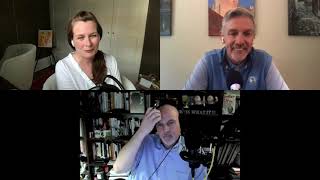
Gini Dietrich, CEO of Spin Sucks, ran a fully remote agency for a decade before COVID hit, giving her team an edge when offices closed. She discusses measuring productivity without seeing employees, the fairness gap between remote and in-office staff, and how the crisis pushed her toward values-first marketing and better information hygiene.
Chapters
Welcome to Peer Innovation, the podcast with Leo Bottari and me, Randy Cantrell. Building on our previous shows, The Year of the Peer and What Anyone Can Do, we turn our attention to helping business leaders build high-performing teams. We'll talk with a diverse group of thought leaders who will share stories and insights that will help you and your teams achieve new heights. If you believe there is strength in numbers and that meeting the challenges of the future can only be achieved if we do it together, then join us for the conversation. Our guest today is Jenny Dietrich. She is the founder, CEO, and author of Spin Sucks, host of the Spin Sucks podcast, author of Spin Sucks. She has run and grown an agency for the past 14 years, is the co-author of Marketing in the Round, co-host of Insight PR, and co-host of the Agency Leadership Podcast. And she confesses she doesn't really enjoy doing podcasts, but she's so good at it. Welcome Jenny Dietrich to the show.
Jenny Dietrich, welcome to the show. We are so excited to have you back.
You know, it's actually so good to see you guys, as you know, hear you guys, I guess.
That's right. Well, we are seeing each other too, right? Right. And this will be available on YouTube, just as a reminder. Um, but the, um, yeah, so when this posts, it'll actually be 4 years to the day that you were with us and with, and basically talking about virtual teams, which And that's what to me just blew me away, that here we are 4 years later, now still maybe on the tail end, but still in the midst of a pandemic. And with a lot of companies right now trying to figure it out in terms of, okay, what's next? You know, those who may be staying virtual for a while, I hear some companies not going back maybe at all, or maybe waiting till January.
Yep.
Others trying to figure out hybrid and because everybody's got varying circumstances. Not everybody's work situation at home is ideal, right?
Right. But thankfully, most of us have kids going back to school now.
So there we go. I would love to start first, though, given this, because you did such a wonderful job over the past year-plus now chronicling your isolation days. And it was so much fun not only to see, you know, kind of the real challenges and all, but a lot of the fun things too. I mean, your daughter is a force of nature, you know, and she's got all of these amazing creative kind of fun things going on. So tell us about what that year was like for you, both personally and professionally. This could be—
it's only a 40, 30 or 40 minutes, right?
We're just gonna let you riff on this now for a while.
You know what's funny is I distinctly remember the Sunday before everything shut down, I went to SoulCycle down the street and I was walking back to the house and I remember thinking, what's the big deal? Like, you already work from home. It's only going to be for a few weeks. Your husband will be home. He can't travel. It'll be kind of fun for a few weeks. Well, it was fun for about 2 days. And then, you know, like, and I remember, I also remember probably like right about this time last year, mid-May, calling the first grade teacher on her cell phone, the real first grade teacher, and crying. I locked myself in the bedroom closet and I was bawling, and she had to talk me off the ledge. So this poor first grade teacher is not only having to deal with, you know, trying to figure out how to teach first graders on Zoom, but also dealing with crazy parents like me, poor thing. So, you know, the idea that You like, it just, I mean, you know, you all, you both went through it. It's, it was crazy. The fact that you couldn't buy toilet paper and I would be on the computer ordering my groceries and then there would not be a delivery time. So you had to keep hitting refresh, like just, just that kind of stress on top of running a business and making sure that your employees were okay and then losing business and applying for a PPP loan. And, you know, like all of the stuff, there was just so much stuff. Stuff. And then we had, you know, we didn't just have a pandemic, we had an economic crisis, we had a social justice crisis, we had a White House crisis. Like, there was, there was so much stuff in, in the last, well, in the 12 months, I would say that it's just, that was a lot. It was a lot, a lot.
Speaking of the timing thing, um, when all of a sudden it was announced that everyone was pretty much going to lockdown. So here we live in Southern California and our adult children are like, huh, I know where we're gonna go. Right, back to San Diego. Everyone just send it on the place, right? So we've got—
Smart.
And I'm thinking, all right, a few weeks, I was right there with you, right? Okay, it'll be a few weeks, it'll be fine, it'll be fine. And actually, in fairness, there was no drama. Everyone just worked out of every room in the house. He just bumped up the internet, did what he needed to do there. There was dinners every night, every night, no phones and no TV, with people taking turns and just having real dinner conversation stuff. However, it was 10 weeks, 10 straight weeks that this house was just full of adults doing their thing and all that. And it was, it was something else.
And we did, and we did have a shirtless son-in-law appearance.
No way!
Oh yeah, oh sure, but we had that going for us.
That's awesome.
There's always You know, stuff in the background happening, which, you know, part of what I always— and did feel, and the more that I would continue— so I continued to do a lot of stuff with groups, and of course we did it remotely, and CEOs are talking about what some of the struggles they're having, this, that, and the other. But many of them, I think, were super surprised that productivity was up for a lot of them. They found that their employees were more understanding, more cooperative, more collaborative with one another. And largely, in the irony, right, of pulling people out of the office to actually bring them closer together. Because instead of having their employee hats on and all this other stuff, now all of a sudden you've got people. And because, right, there's kids in the background, there's people walking around, there's, you know, dogs and cats running across people's keyboards and all crazy stuff like that, artifacts in the background that give you a sense of like, we're just all, you know, doing the personal and professional thing and we're all kind of in this together. And we're just— it kind of tapped into our shared humanity a little bit instead of having to look at people like they're just fellow employees filling a role and doing some kind of a job somewhere. And I think people were just a little extra forgiving and a little more understanding sometimes with one another. Not every team, of course, but it may not have been everybody. Maybe not everybody's productivity would up and all that. But, but then again, you know, it's the length of time that this has gone on, which has really been something to get used to. Um, you know, although you get a whole lot of people now that have gotten really used to like not having that hour-plus commute each way every day to the office, and like, all right, yeah, I mean, I like it.
Time to exercise or, you know, hang out with your family, like have, have breakfast with the kids, or, you know, for women, you don't have to get up and get dressed and do your makeup and everything every day. Like, that's— there's something to be said for that, for sure.
So when you were on 4 years ago and you talked about the fact that you felt, you know, really good and really comfortable leading virtual teams, um, how did that serve you in this past year? And, and what was it that you felt, um, if you feel that you were as effective as you hoped, um, that how did that work and what were some of the things you did that you felt were really helpful in leading your teams for yourself and for your people?
Well, we had, you know, to that point, we had 9 years of working virtually. So that piece of it didn't change. But I think what changed is, to your point, Leo, is that, you know, everybody had kids at home, newborn babies at home. Like there was all, you know, all of that stuff. And I think you're right. Everybody became a little, even though we were accustomed to seeing one another in our homes or in coworking spaces, there still wasn't the added benefit of having the spouse or the children there, you know, because normally that wouldn't happen. Um, so everybody did become very patient with one another and really understanding. And, you know, we have somebody who— on our team who had a baby in the middle of this, and the newborn comes to Zoom. It's not a big deal, right? I mean, it's just what it is, and we love it. Um, but I found that people, at least from, from our perspective, clients were really, really, really patient and understanding until about November. And then they were like, you got to figure something out. You can't have your kids show up to Zoom every, every time. And I was like, kind of can't help it. Can't send her back to school because we're not doing that. Like, you know, um, so I did, I did see that there was a shift. And I think people have lost a little bit of the patience. And I think people have I had a really interesting conversation with my best friend from high school the other day, and he works for a huge company. And they have just been told that they have to come back to work 1 to 2 days a week, which goes to the hybrid conversation we were having before we hit record, which we can talk about. But he doesn't think that's fair. And he has 2 colleagues on his team who moved to Florida during all this because they could, and they could work from anywhere. And the company's not requiring that they come back and go to the office. So he's like, why is that fair? I want to continue working from home. Have this big— I think you're right. And I think it'd be interesting for you to talk about the Boston Globe article that you, you read, because I haven't seen it. But I think you're right in that the hybrid piece of it is it may not work. It may not work. Because I mean, from, from my experience, early, early, early on, before we decided to go fully, fully virtual, we did have some team members who were virtual and we were in the office. And the team members who were in the office did not like that. They didn't like that they had to come to work and that they, they didn't like it. They didn't think it was fair. And they started ostracizing those that were virtual. So I think we'll start to see some of that happen too, which—
Yeah, this idea of being, of feeling penalized because you're local, right?
Right.
You know, really, really becomes an issue for sure. You know, one of the things we had mentioned, we were talking about this hybrid thing as well, is I had read an article recently that someone said if you have people in the office and remote, and they're all part of the same team, don't have a bunch of people in the office and then have a screen. Just put everybody on Zoom. So it levels the playing field for everybody. I think it's a really interesting idea. It'll feel weird for people who are in the office wondering, why am I here when I'm going to be in Zoom anyway? However, that's just for those situations where you've got people there. But I think what was a struggle too for a lot of companies, unlike yourself, right, where there were companies where they were completely in-person experience and all of a sudden, boom, they had to pivot immediately to— and I think they found that difficult. It reminded me really of when they used to take in-class experiences and they'd try to make it in-class experience and replicate it online. Well, it doesn't work that way. You have to build it from the ground up online. So where you were already prepared, if you will, what were some of the things you felt were of an advantage for you all, other than just being kind of used to it, that you felt set you up a little better to be able to work remotely because that's kind of how you're built, right? You didn't have to do that transition thing and try to figure out how to take an in-person experience and turn it into something remote. So what was, what were some of the advantages you felt for you?
I mean, there wasn't the transition, so that was good. And we already had the technology set up and everybody was accustomed to using it, so we didn't have to try to create new habits or, you know, figure out new technology or do onboarding or, you know, training or demos or anything like that. We already knew what worked, so I would say that works. We were all really already really good at collaborating online, so that, that was an advantage. And this, I think, This is one of, one of the things that didn't happen immediately, but happened eventually. And I think organizations are just now coming up on this is my younger team members need to have the collaboration sort of quote unquote in person. And so they'll keep Zoom open all day with one another as if they're in the same room. Now, for me, that would drive me insane, but they love it. And they've sort of figured that out on their own and they figured that out on their own a couple of years ago. So I think just having those kinds of experiences where you're in it every day. And so because of that, we were already leaps and bounds ahead.
How did it alter your client work, that client interaction?
I mean, it didn't because we were already, you know, for the most part, clients, because we do work internationally, they're just like, yeah, do the work and we'll see you on Zoom. So that didn't really alter anything. I mean, what it altered for me is speaking, 'cause I was doing a ton of speaking.
But, and you had younger people appearing in the meeting every once in a while?
Yes, I did. And I had a hamster on my head a lot and a dog sitting in my lap a lot.
Yeah, well, the pandemic empowered the little people in the world, that's for sure.
Yes, it did. Yeah, I mean, remember, I— it has to have been 2 or 3 years ago now, but the guy that was doing the BBC interview And his kid walked in behind and the nanny was grabbing the kid. Like today we'd just be like, oh yeah, there's my kid. Like nobody has to grab the kid out secretly, like crawl on the floor to get them out of there.
You know, as I'm thinking about this though, I think that for the employees it was less of an— I think the real advantage was for you as the leader. And the reason I say this, remember, Randy, we had David Burkus on the show and we were talking about this idea of when we're all, you know, when the CEO was in the office and you could stand around, see everybody working and all that kind of stuff, there was that issue of being present, right, and being there. And what replaced that in the virtual form was being responsive. I kind of feel like, at least for you as a leader, you may not have been feeling that same transitional tug of having to pivot like that as other leaders had to when— and part of the, you know, in some of the various software to make sure people are there, I often refer to this as like, I don't trust you dot com software, you know, kind of stuff where they load it into people's and just, and, you know, so sending on one hand, yeah, you work remotely and yes, you're more productive, but I still really don't trust you. And we're going to work in whatever new levels and layers of accountability, if you will, that didn't exist before, but I kind of feel like for you as a leader of a team that worked remotely, that, that had to be, you know, you didn't really have much of a transition really, other than of course the big transition for you was everything going on around you and being home. And that perspective obviously is still a big challenge, but yeah.
Yeah, I would agree with that. And You know, I certainly early on I went and we've been doing this for a decade now, which kind of blows my mind. But certainly early on, you, you try as a leader, you do try to figure out how do you measure productivity and effectiveness and all that. But pretty fast, I figured out it was less about them being in there, having their butts in the seats, you know, from 8 to 5 or whatever happens to be, and more about are they getting the work done? If they're getting the work done, great. I don't care if they can do it in 2 hours or 8, and if they're not getting the work done, then that's the problem, right? So that you don't have to, you don't have to go to idontrustyou.com and set in eyeballs to make sure they're doing their work. If they're getting the work done and they're getting results, that's really what we're trying to get to. And that, that, that one I had already learned. So that's a hard one though. It's a hard one. And when I speak, when I work with prospects and, and CEOs and peer groups, the same thing, they're like, but How do I, and even I just did a small group of about 15 CEOs 2 weeks ago on Zoom. And that was the question. But how do I know they're being productive if I can't see them? And I'm like, is the business moving forward? Are you making money? That's how you know.
Exactly.
Yeah. Jeannie, did the pandemic alter alter any of your, any of your content, any of your expertise? Did it provide you any opportunities that you didn't see coming?
Yes, it did. Massive crisis communications work last year, a ton, which I didn't expect. There also was a lot of how do we handle the social injustice movement and how do we keep employees engaged. And now it's moved from that to How do we market with our values first? And I think one of the biggest things we're seeing right now is we've been taught as professionals not to talk about certain things in our messaging and at work because, you know, there's certain things you're just not going to change people's minds about. That has shifted from it's really important to the people who buy from you that you stand for something. It's really important. And so Watching executives try to make that mindset shift has been fascinating. And that's where we're doing a ton of work right now is helping them go from, but I thought I wasn't supposed to talk about this to, okay, now I'm supposed to talk about it, but I also have to get okay, be okay with the fact that I might make half of our customers mad and we might lose them. And so we work through a process of, you know, that's okay, right? But it's hard and it's really hard to put your values first when you're marketing. And that's one of the things that we've been working on, I would say, since last summer. And that, that has been huge. And the other thing is we did some communications around the vaccine, which that would have never happened otherwise.
So I need to— you know what, we're about to have like a COVID meeting moment. I literally hear my dog, who's a German Shepherd, crying somewhere, and I've got to go. I gotta go check him out. Please talk for a second.
Yeah, no, go ahead.
For baby.
Yeah, Argus. Argus is in there.
Argus.
He made a number of appearances through the pandemic, as he should. Of course, the corporate communication game, the storytelling, the actual storytelling. I mean, I get the subject matter, but did the pandemic— how did it alter, maybe even improve the storytelling strategies?
Yeah, I think it depends. Depended for sure. It depended on how the the executive team wanted to do that. And I think we went from everybody and their brothers in March saying, out of an abundance of caution, like everyone said that, right? To how do we actually handle this in a different way that's true to our values? And then you saw companies misstep over things like, should we really be talking about the Capitol insurgents? Should we really be talking about the murder of George Floyd? Should we really be talking about these things? Or should we just stay the course? And so you saw, you know, from a storytelling perspective, is this something that we should be doing or is it not? And if it is, is it only internal or should we be doing it externally as well? So just figuring out those pieces, like it's just this, there was a lot that happened last year from that perspective.
Oh, you know, sure was.
Is Argus okay?
Yes. Now he's barking at something. I think there's ducks in the pool or some crazy stuff like that. He's just, you know, he's losing his mind.
He's getting sick of COVID Things that don't happen in the middle of the city.
That's right.
Ducks in the pool.
Yeah, that's right. But, um, you know, one of the things around that I thought was pretty interesting is in Edelman's recent, um, Trust Barometer, they introduced this concept of information hygiene, which I thought was really fascinating, right? Um, because when we can't trust where the information comes from, there's— you've got that, but then even more so, ironically, we're hearing things. And because we're not vetting that information, we're just spreading it anyway, not in a way to be mean or be deceptive or anything, but we're just like, we hear something and next thing you know, and it becomes— and with this lack of trust in media and government in particular, now people are looking to their CEOs to take positions and to be signing letters regarding social justice and climate change and all of these other issues you're talking about, which has really been fascinating with regard to looking to their business leaders for clarity around a lot of this stuff, which I find just kind of an amazing kind of turn. You know, now, in recent years, businesses' reputation and from a perspective of trust has been kind of climbing upwards. It's actually higher than NGOs right now by a little bit, at least if you believe the Edelman survey. But yeah, it's kind of fascinating to see, and people are definitely still finding their way around, you know, yeah, the government thing. And yeah, who really won the election, as if we're having this, that conversation still.
Yeah, it's been really interesting. And like I said, it's a massive mindset shift because, you know, for many business leaders they've been doing this their entire career where it's, hey, we're, you know, we message about our products and services and that's it. Like, we don't talk about— there's no personal anything. And that has shifted. And I think it'll be easier as the younger generations begin to lead, right? We're not there yet. So now you have this weird dichotomy of this is what's expected, but we've been taught not to do it. So how do we, how do we mold the two together?
So as companies and leaders are trying to make decisions for themselves about whether they stay remote, whether they go hybrid, whether they get everyone back to the office, what are you hearing as far as what some of the criteria are for people making those decisions, both from the perspective of timing and for everything?
You know, it runs the gamut. I mean, some are saying everybody has to be vaccinated. Some are saying that hinges on privacy. Some are saying we're going to stay fully remote because we're saving a ton of money. Some are saying hybrid. Some are saying now. Some are saying January. Like, it's, it's, it is completely running the gamut.
Well, you know, it's funny. Um, so I'm an adjunct for Rutgers, and Rutgers was the first university in the country to basically say, yeah, you can come back to school, but you've got to be vaccinated.
You have to. Yeah.
And, and they basically said to the president of the university, well, what does that mean if someone doesn't want to get vaccinated? Well, they can go somewhere else. They can go to another school. I mean, that, you know, they're just flat out, like, boom, this is the way. Yeah, we're going to do that. Really, uh, really interesting stand, you know. I think, um, that—
I think I just saw that 15 schools have not required that, but pretty much everybody else has.
Yeah.
So your own communication, Jenny, with your, with your brand, is it— has it, has it changed? And I'm gonna hijack the conversation and kind of segue because we're all podcasters here. So I got some questions about your podcast, but not just the podcast, but just, just your messaging out.
Like, spin sucks more than ever, you know, or something like that.
I mean, did it alter it?
The last 4 years was helpful from that perspective. Fake news. And yeah, um, I would say that they— yes and no. We probably put more of a focus on sort of the personal side of things right now. Like our podcast that's airing next week talks about the importance of self-prioritization, which really doesn't have anything to do with communications, but it has to do with how you work and what's important to you. So from that perspective, I would say we're adding sort of the softer piece into it a little bit, the more emotional IQ kinds of things. But from a business perspective, we're still, you know, staying the course on spin does suck and you have to vet your information and fake news exists. So make sure you're checking sources and don't spread information. Like this morning, my 8-year-old says to me, did you know that a kid died while he was riding the Peloton bike? And I was like, I didn't know that. Wasn't it the bike? But how do you know that? And she said, well, we were talking about it at school and So-and-so's dad said he can't get on the Peloton bike because he might die. And I was like, OK, well, that's something. So then I had to explain what really happened and that it was the treadmill and it was running. So to my 8-year-old, which is not a conversation I want to have, but I did. But the idea that even just— she's 8 and she's in second grade. And at school, one of the little boys said, my dad says you can't get on the Peloton bike because you're going to die. And it's like, what? That's not true. So they're exposed to it at that, like, just at that level. And imagine. And so now you have to extrapolate that to what we're exposed to. And so from, to answer your question, we really talk about those kinds of things now a lot more, which is, you know, make sure you're vetting and you're, and make sure that the information is correct. And when you're participating in a media interview, don't give information you don't know is true. And we've always said that from a media training perspective, like, if you don't know, and it's not a fact, don't say it. Just say, let me check or get back to you. And that's even more important today.
But you're right, you're all— that does bring up— because I've got a number of clients who had small children, and there was at some point, there was an epidemic, especially among preteens, a real fear of mental health issues.
Yeah, yeah.
And there were a number of my clients, private and public sector, that brought in people qualified to kind of help these parents. As a mom yourself, and I know it's outside the purview of your professional kind of domain, but I mean, what are your insights as a mom of an 8-year-old and all that we've come through and all the fake news? I mean, what can parents do to, to better arm these kids to understand that not everything you hear is absolute gospel.
Well, I think it's like anything else, right? I mean, we were, we were raised with drugs are bad for you, and now marijuana is legal, which I can't— in my mind, can't— like, you know. And so there, there were campaigns that taught us how to handle things, like you don't get— go, go near a white van without windows, you don't talk to strangers, you don't accept candy from— or puppies from strangers. Like, you know, we were taught all those kinds of things. And I think it's, it's the same kind of thing. You just have to be really smart about, about it yourself so that you can educate your children and talk about it consistently. The mental health thing really scares me because it is— mine is young enough that it hasn't affected her in that way, which is good from our perspective. But I have nieces and nephews that, you know, there's some real depression because they didn't get to see their friends and they didn't get to be around them and they were told no all the time. And that's— it's, it's a real problem. So I mean, just from my perspective, we continue to talk about it and we continue to set the record straight and we're very open, try to be very open. You know, I certainly don't want to have a conversation with my kid about little kids dying, but we try to be really open about what's really happening and what's age appropriate, right? You know, I'm not going to give her all the details, but I think that's how we are handling things. But I don't have a preteen yet, so I think it's a little bit easier for me because I'm not having to deal with that challenge yet.
You know what I do think also is that obviously to your point, Jenny, look at all the things that have happened in the world over the past few years. And on one hand, we can really focus on all of this stuff. And at the same time, we don't spend enough time really thinking about the unbelievable acts of generosity and kindness that people showed one another throughout this this past year plus. I mean, extraordinary and wonderful. And that's what gives me some hope that we can kind of turn the corner, because I think the more that we can celebrate all of the amazing things that people have done for one another, and even the fact that, you know, sheepishly so many CEOs were telling me, you know, I can't believe now, you know, how I will begin more meetings just by asking everyone how are they doing. And they never did that before. Wow. You know, uh, you know, what are you doing? Did you get that done yet? You know, right, where now it's at least really getting a sense of and caring more, uh, about one another as people. But I think a lot of people really took care of one another in some rather extraordinary ways, um, you know, over the past year. And I'm hoping we can kind of build on that, um, and, you know, yeah, I'm hoping you're right.
I really hope that as a society we've learned a very valuable lesson, and it's that it's, it's kindness, it's understanding, it's empathy. Um, it's not getting back on the hamster wheel that we were all on where we're, you know, rushing from activity to activity to activity, and you don't have any time to be together, to have dinner together without phones. Like, I think those are really important values that we need to continue to impress upon ourselves and our teams that that's important. And that comes first.
I got one podcasting question, Leo, and I'm going to let you, I'm going to let you end the show. You wrote an article, which was a great article, and anybody that's thinking about podcasting. So I'm going to, I'm going to cycle back around here. You wrote an article, the 3 Steps of Creating Your Own Successful Podcast, which I thought was a terrific article, by the way. I've got a buddy in Ohio who does podcasting consulting and stuff named Dave Jackson, schoolofpodcasting.com. I'll give him a shout out, but he has a question that he sometimes does as a segment in some of his shows is, because of my podcast blank. And I'm wondering how you would answer that.
Because of my podcast, we have generated more qualified leads than I would expect. It's the bane of my existence. I do not like doing it, but it generates so many freaking leads.
Why? What don't you like about it?
I don't know. I'm a writer. Oh, thank you, thank you. I'm a writer. I prefer to write. And so it, for some reason, it just takes me longer to do it than it does to write an article. It takes significantly longer. So I'm always like, what am I going to talk about? What's the topic? Like, it just And it's constantly in that because it doesn't come easy like writing does.
Well, you do a good job of it.
Thank you. Thank you.
We won't cut that out, but people can now know it's hard for her.
It's hard.
Sometimes you need to just do hard, right?
Yeah.
Yeah. I mean, if it didn't work, I wouldn't keep doing it, but it works.
So yeah. No, I'm glad you do it.
Thank you.
Well, I just want to say thank you so much for being on the show. We have to make sure that we do this maybe more than every 4 years in the future. But, uh, no, I think it was great. And I think there was a lot, um, shared that I think can be helpful to a lot of people in terms of just how to think about what's next and what's best for themselves, what's best for their family and for their organization. And, you know, I, I think finally, to your point, just taking time for ourselves and just taking time to pause and take a breath and not be moving like crazy from one thing to another, only to really have nothing to show for it at the end of the day. So, right. Um, but Anyway, one thing though, before we go, please let our listeners know where they can learn more about you and your work and whatever, wherever you'd like to send them. You tell us, we'll have it in the show notes as well, but we'd love to hear it from you.
Spinsucks.com, it's the easiest place. Literally everything's there.
There you go. All right. Well, hey, thanks again.
Thank you both. It's so good to see you.
Thank you for joining us. To subscribe to the podcast and learn more about how you can engage peer innovation for your organization, contact us on the website at peerinnovation.co. Till next week, remember the power of We begins with you.
Mm-hmm.










