Holly Woods, PhD On Purpose (Peernovation Podcast)
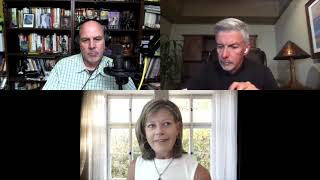
Dr. Holly Woods discusses how to find purpose across life stages in her book The Golden Thread. She explains that recurring challenges signal internal themes worth investigating, and that leaders who clarify their own purpose first can build high-performing teams where everyone aligns with theirs.
Chapters
Welcome to Peer Innovation, the podcast with Leo Bottari and me, Randy Cantrell. Building on our previous shows, The Year of the Peer and What Anyone Can Do, we turn our attention to helping business leaders build high-performing teams. We'll talk with a diverse group of thought leaders who will share stories and insights that will help you and your teams achieve new heights. If you believe there is strength in numbers and that meeting the challenges of the future can only be achieved if we do it together, then join us for the conversation. Today's guest is Holly Woods. Holly earned her PhD in Human and Organizational Development and has recently published a new book, The Golden Thread: Where to Find Purpose in the Stages of Your Life. Holly enjoys working with visionary entrepreneurs, founders, and innovators who use their business as a vehicle to change the world. We welcome Holly to the show. We appreciate the audience. We appreciate you clicking play, watching, listening, however you're choosing to consume it. We have a special guest today. And as you just heard the introduction, she is Dr. Holly Woods. And, uh, the discussion is purpose. He's Leo Battaglia. My name is Randy Cantrell. She is our special honored guest, and we welcome you to the show.
Great. I'm so delighted to be here and have this conversation with you all.
Oh, thank you so much. Well, first of all, loved the book. Really enjoyed it a lot. The book, of course, for our viewers is The Golden Thread: Where to Find Purpose in the Stages of Your Life. And it's really interesting because, as you know, you know, what we really deal with in terms of peer innovation in this podcast and a lot of our work is with this idea of the power of we begins with you. And it begins with me. It begins with all of us. And I can't think of a a better opportunity to kind of dive into how we can bring our best selves to this world, to this life, to our job, our family, whatever that may happen to be. You know, a few weeks ago we had a woman, her name is Angela Meyers, and she does a lot of work on mattering and how the importance of kind of owning our genius and how and why we matter. But I think in many respects, people may believe they matter or they want to believe they matter, but they don't know how or why. And I kind of feel like this is where your book really does such a wonderful job of having people discover what that might look like for them. So if you could kind of tell us a little bit about, about that for you, that would be terrific.
So how I found out what matters to me, or how I— Sure. So as you read the book, mine was a long and circuitous journey. It was not a straightforward thing. And mostly because I didn't— I mean, I came in to do this work. So because I am here in order to help other people liberate their own soul purpose, I had to actually figure out the methods and begin to see this progression of how it occurs in our lives. So I actually believe that it was necessary for me to have the experiences I did in order to liberate my own soul purpose. So mine was a challenging and fraught with trauma journey. Um, but I ultimately ended up finding this thread after many experiences that led to the liberation in myself. Um, so what matters to me literally is to help others liberate their soul purpose.
What I found interesting, uh, and I bet I'm wondering kind of the choice behind this because I thought it was a really great choice, and that was your own story, of course, informs this work, you know, in a very large way. And yet, so there's a bit of a reveal of that at the beginning, but in terms of your purpose statement and your story a little more thoroughly told is in the appendix. So it was this idea of not making you kind of central to the book but yet showing the vulnerability that I think you, you know, talk about here. And at the same time, I just thought it was a wonderful blend of how you did that. And I'm wondering in terms of writing it, what your thought process around that was in terms of how you integrate your own story.
And so that's a great question, and it took me a while to come to that awareness. My publisher and the editor is like, oh Holly, you must include your story. And it's like, no, this isn't actually about me. This is about the journey I took. And the message I wanted to give in the book is that if I can do it, anybody can do it. Literally. Um, I mean, I, I've had a fairly challenging life and yet I used every ounce of it in order to find out who I was and what I was here to do. In this lifetime on the planet. So it was important to me to share enough of the sort of the culminating moments or the gems of discovery for me throughout the book, and those of, you know, the gems of my clients and colleagues as well, but not share the whole story so much that it would turn somebody off in that this was a memoir, because it's not. And I had no interest in writing a memoir. Like, who would want to read that? So I wove in enough story in order to show literally the reader that this thing that happened that looked painful and looked traumatic and, you know, you might have some empathy for me— no, wait, let's turn it around. And I want to demonstrate how I used that to uncover some facet of my own self. So I became more self-aware and in fact evolved and developed because of each of those experiences. Experiences in life. So if I had chosen— and I did— the first few decades of my life, I didn't know what to do with all of that. And I did suffer, and I lived in the, you know, the trough of experience because it wasn't fun or easy. Not that all of life was that way, but there was enough of it. So it took me a while to figure out, oh no, this stuff's happening on purpose. Like, I'm supposed to grab these experiences and use them in order to become more aware of who I was and why I'm here and how this is intending to fit itself, insert itself in my life in order to turn it into a tool or an opportunity. So once I figured that out, like, oh, I'm having all these experiences on purpose, they are a part of my purpose, I began to really get clear about each and every moment of my life is a gift. And if I take it and use it and transform it into something that helps me know myself better, then I can be more productive. And aligned with my truth.
I think it was a great choice though to make. I mean, clearly the advice of having your own story in there was powerful, but yet at the same time, you didn't want that to hijack the entire narrative. And I think it was a beautiful blend of the way that was executed. And it also— and I think this speaks to your wanting people to feel like, if I can do it, anyone can do it. And I think it's in the title. I think You're not talking about how to find purpose in your life where it becomes, oh, but this idea of using GPS, it's where to look for it. And it's like, well, I can do that. You know, I, if you point me in the direction of where to look, I can at least feel that that journey is more approachable for me. Is that kind of, um, a bit of where you were coming from with that as well?
Well, it is exactly. You've hit the ball on the nail on the head. Um, I really intended to help everyone realize, you know, everybody on the planet has this unique one-of-a-kind purpose. That's my belief anyway, and, and I see it in all my clients and, and all my friends. Like, I can't actually look at somebody and start pulling out their thread. It's kind of impossible for me. It's because that's what I do. And so I wanted people to know that, no, it's right in front of you. Literally, if you can shine the light on your life, your full life experiences, everything's included, nothing is left out. Out. So all that stuff that you want to forget about or repress or, you know, is no longer a part of the story you tell about yourself, then there is— there's fodder to discover the truth of who we are in every bit of it. And I wanted to distinguish that it looks different over time. So what it looks like as a child may be very different than what it looks like as an adolescent and as an adult. And here are the ways that you can go about finding it, uncovering the stories of each of those phases of life.
Holly, how did you get to the point, and how can people in our audience that might be stuck, how can we get to the point where we do see the circumstances of our lives, even those things that are beyond our control, as you've termed them, gifts, that you'd made up your mind to leverage, but so many people, they— that's not the decision they make. They make the decision to be a victim. What got you to that place to make that call?
Well, if you've— I mean, as you read the book, it took me a while. And I was— I mean, I did therapy for years, but I was mostly doing this on my own. And, you know, there are many resources now that I would have called on had they been available. I think after hitting my head on the wall— my father always says, "You're one of the most stubborn people I've ever known," and I can see that. I just kept hitting my head on the wall, you know, like, "Why can't I get this? Why is this so hard?" And then finally, after, you know, many bruises on my forehead, I realized, "Wait a minute, there's a reason these things keep happening over and over and over." And I started to see— because, you know, I'm a scientist, so I see patterns. Very easily. And I started looking at the patterns of even trauma in my life. Why do I keep having these same patterns in relationship? Why do I keep having these same patterns at work? Like, that just doesn't make any sense that the same thing would happen over and over again. So I realized, ah, when something happens more than once, I need to pay attention to it. So if you are in relationship and the same, you know, you find the same person over and over and you always have the same challenges, hold on a minute, there's something there that we need to look inside because life— what I uncovered is that life really is a hall of mirrors and that everything we experience in life is also something that we're experiencing internally. So when I hit upon these patterns, you know, if it happened more than once, I took note like, oh goodness, okay, here's another one of these patterns. What is there for me? So over time, I actually began to see things coming at me, like, oh, here's a challenge. And what is that? Have I experienced this before? Does that look familiar to me? What about it is familiar? And is that— where is it inside? It's not, is it inside, but where is it inside? What might that be inside of me that's creating resonance with that life event? That I might actually be inviting in. It's not like I caused it or I deserved, you know, a perpetration. I don't deserve to be a victim of something, but there's something inside of me that is actually resonating with that thing out here in my life. So I very quickly now say, "Oh, there's that thing." And it still happens. It's not like I've cleared all my stuff and don't have, you know, trouble or challenges. It's just that I so much more clearly now see when they occur, that there's something for me to actually hold on to and say, ah, here's something that now I need to work on and uncover.
You mentioned—
go ahead.
You mentioned being of service to others and that being kind of the driver behind all of this. I'm curious, the role of outside looking in versus inside looking out. As, as you try to help people discover it for themselves?
Well, it's a both/and, Randy. It— I mean, you have to do both. So our experience internally is a mirror of the external and vice versa. So I teach my clients, you know, and friends and children, etc., both to look deep inside and examine the experience you're having here and how is that manifesting what's on the outside, and use the outside experience as a means of looking in. So you'll— you remember in the book that I talk about over, over time, over the stages of our life, or the stages of consciousness more, more accurately, we begin to gain a perspectival awareness capacity. And so those are big words, but what I mean is that we begin to be able to see things outside of ourselves more easily. And so as we gain the consciousness, we can stand further and further back from ourselves as a witness to our experience. So over time, I began to stand out further and further and see the bigger picture of what my life experience was. And then I could more easily look in and say, oh, that's what I'm experiencing, because I saw the context I had the awareness to see the expansion of my life so I could see the systems and the networks and how it all fit together. It's the— it's both. I mean, we call it evolution and involution. It's a technical term for it. So the evolution is my shifting over time relative to the world, and my involution is the constant internal evolution, I guess. So it's a constant changing and exploration, a deep inquiry of what's going on inside as a means of exploring who I am in the external world. I'm not sure if that answers the question well.
Yeah, it does. Yeah. And so, and I think for our audience too, when we think about purpose, right? Uh, there was a line in your book actually that I'm going to pull here that I really kind of enjoyed. It said, my marching orders were cut out for me and the life I chose would produce a great end result. So, so, and there were aspects of kind of my soul pulling me toward my GPS and these other kinds of things that are, so I would love it if in terms of, you know, fate, in terms of purpose, in terms of goals, let's, let's kind of flush that out a little bit. So we've got clarity on what finding purpose in our life looks like, and then how we can take that and I think operationalize it, right? I mean, that's kind of because discovering our purpose is one thing, actually living it to your point becomes a whole other challenge. So there's a big question.
I'm not sure I can do justice to that in a few moments. So everything from faith to operationalizing purpose, which is, which has actually, you know, been my life's work, is how to figure that out. So again, this is my awareness. This is how I came into the world to experience purpose. And you'll also recall in the book that I outlined some other more distinct or nuanced beliefs about purpose. But given I've seen it so practically and so logistically in not my own life, but also, you know, many hundreds of other clients, it feels right to me. And that's why I wrote the book, to attempt to validate this belief. You know, at least it's an early phase study of purpose. Um, so I believe that our soul brings us onto the planet to have experiences in order for us to evolve into a grander version of ourselves. And then wherever we go next, you know, whatever your belief system is about that. So we're given these marching orders, you can call it, and that doesn't mean that our life is projected for us and we know exactly every twist and turn that's going to happen. But like, these are the kinds of things I am intending to express in the world. And then we come in, you know, into the womb, we're born, and we have this amniotic amnesia, as I described it, that Oh, I forget everything. You know, I was given these marching orders, but I wasn't given the paper, so I can't recall what I was here to do. And I have to navigate my way through this crazy complex world, and, and my soul is always saying, yep, you're on track, or no, you're not. So in the context of our lives, usually in childhood, we grow up in these families that have very definitive beliefs about right and wrong, good and bad. These are the way we do things. And then our soul is like, well, yeah, but that doesn't exactly fit the, you know, the mission or the purpose that you were set out to accomplish in this life. So we're going to have to push kind of hard here to accomplish what we intended to do. So some of us come into families where, you know, they don't really necessarily allow us to become our best selves. And in fact, I would suggest that most of us choose those families in order to have that tension, which leads to the ambiguity of, well, who am I? This isn't what I'm supposed to be doing. Why am I here? And early on, we begin to hear the longing of our soul, but we often repress it because the context of our families prevents us from hearing it really, or the, you know, peer groups and in social settings. So as we go through life, you know, we're marching forward now from childhood and adolescence into adulthood, we're always in this tension of, well, how do I express more of me and not the thing that I was told I should be? And so this route of trying to find purpose or, you know, intention or passion or interest or curiosity or longing there are many words to describe this thing, calling, we are constantly at odds with what families, peers, society wants us to be. And so there is, in order to live purposefully, we have to be at odds with that, which means we have to do some deep digging into who we are internally. What is, what is it I want? What is it I need? What fulfills me and has meaning? So I can find my way down this path. Now once we begin to experience what those things really are, if we were paying attention all along and, and, you know, not ignore but certainly didn't get caught in the expectations of others, then we can begin to better express ourselves more fully early on and find meaningful careers or jobs or roles. I would say that the The, the just the beauty, I'm just loving watching our younger generations growing up, the Gen Zers and the Millennials and the Gen Xers especially. Because of the challenges we've had in society in the last several decades, our younger generations have, have basically, you know, they basically said, you're not going to hand us a silver spoon. We know our lives aren't going to be what you had, there isn't as much opportunity, I have to find my own way. And in some ways, that actually was a gift to these younger generations to say, I don't have to listen to what your expectations of me are. I'm just gonna do what I'm gonna do, but what feels good to me, because you didn't actually create an opportunity for me to have what you have. So I'm gonna do it a different way. And these Gen Xers and actually primarily the millennials and the Gen Zers are finding their way, finding purpose and meaning so much faster than us, you know, those of us who've been in the system for a long time and tried to live according to the rules. Yeah, answer.
No, it's good. And, um, you know, it reminds me of the conversation Randy and I had actually just before, uh, you came on was we were talking about Brandon's story, one of those stories that you told. And for us, it was really interesting because we thought, well, in some respects, you have to get to a certain place and, you know, have certain lessons that become part of who you are before you're even ready to find out what your purpose is all about, it seems. You know, in his case, I kind of felt like Brandon didn't understand what being a man meant. And I think, and as Randy and I were talking about just ourselves and our own lives, and I think every little boy is trying to figure out what does that look like? What does that mean? When you think about the influences you may have around you, what you see in movies, what you— sport, all of it. And you're like some scrawny little kid with no money and you're just like, what the hell? You know, it becomes very difficult to think like, what are the things? And you talk about vulnerability and dignity in terms of at least two of those attributes that I think Brandon became acquainted with that kind of helped define what being a man was all about. Yet think about those two words. Those words aren't necessarily rolling around in the consciousness of a little kid trying to figure it all out, but it seems like once he did figure that out a bit, then it allowed him— that provided a bit of a gateway for him to discover what he was to mean to the world. Is that a fair way to think about it?
And it's, you know, it's not just men, certainly. It's the same for sure. The stories that we're fed about who to be and how we, you know, overwhelm our own sense of contribution and importance, value. You know, they would— there are slightly different words for men than there were for men and women, and I don't think that actually holds true anymore. I think that's some of those distinctions are now blurred or vanished. But yeah, Brandon was a— and he's a really good friend of mine. I just adore him. And I'm so grateful to him to let me use his story. And he did have to struggle because, again, as I spoke about, you know, the tension of having a parent who demanded that he be a certain way in life prevented him from becoming himself. But the beauty of that, again, the opportunity, is that he had to really push very hard to overcome that constraint of his father in order to live into, you know, a better, more grand version of himself. And he is now a phenomenal human being and man. I have great respect for him. And, you know, the same happens for women, and it's happening differently now for our younger generations because the rules have changed so significantly in their lives. I have two young adult daughters, both in their 20s, as you read about, who, you know, somehow, bless their hearts, have grown up not only with my understanding of the world, you know, that was challenging for them, but they've learned in a way that the world is giving them a different opportunity to be themselves than what I had.
We've all got, we've all got baggage, clearly. And there are, you know, there are these negative influences. And I freely admit, most notably as a father, now grandfather, I raised my kids and told them, I realize I'm packing bags for you. Not trying to, but I just, it happens, right? I mean, it's what we do. But you've got a, you've got a great PDF that I want to, that I want to tout and make sure that our audience— and we'll have links in the show notes so that our audience can have access to this because it's a, it's a pretty terrific little PDF entitled Purpose to Impact Roadmap. And you've got 3 phases and the 3rd one is Amplified. And you mentioned the word partners in that. So talk to us for a little bit about the impact on the other side, the positive impact that somebody can have to help us find our way, figure this out. So let's put a positive spin to counterbalance those negative impacts that other people can have on us.
You know, and I want to just clarify too, Randy, that I no longer see that the tension that our parents and others create for us in childhood as negative. When I began to realize the gift that my mother had given me, the challenge, the tension for me, that's where my major tension existed. I— and unfortunately was after she passed, so I didn't get to resolve this while she was still alive. But I came to see the gift of her forcing me to live fully was, you know, a contribution from her. And so she had she had given me this gift. So partners, I think throughout life— I studied social networks at one time in my— as a researcher, and I understood that we also choose the kinds of people that we need in life in order to accomplish these tasks, right? Both our developmental tasks and our purpose tasks. There's kind of two different things. And we don't necessarily keep the same social networks or friends or groups or colleagues throughout life, but the kinds of people that we choose generally look the same from phase to phase. And I don't talk about this in the book, just kind of didn't fit. But once you recognize the kinds of people that are useful to you, and in some part of your life you can expect to find similar kinds of people at other points in life. And what I mean there is that we want to find people who can both accept us as we are right now, like you can love me and have compassion for me and empathy and support of my contributions and intellect, et cetera. And I also want to have people in my life who stretch me. In several ways. And one of those ways is that you'll continue to point out the things that I can't see, the shadow. And those might be gifts, and they might be challenges, things that, that limit me. So having people in your life who truly speak to you as a caring, compassionate warrior, almost. So they're going to say the things that you may not think about saying and don't necessarily want to hear, but they're going to say it anyway because they love you so much. And you're also going to want people in your life who stretch you into new possibilities, who can, who can help you see, oh yeah, that opportunity sounds great for your set of talents and skills. So it's having a wide variety of people who don't just say, oh yeah, you're great, let's go have a beer and hang out. Because those people will not actually help you evolve and grow. Those are great friends to have. Everybody should have those kinds of friends. And we also need people in our lives who can support us to become our next version of ourselves.
You know, when you talk about the shadows, it makes me think, as I was, you know, kind of reading through the book, that those shadows don't have to become as dark. They're still there. They almost become more translucent, right? So it isn't that they go away, but once we recognize them, embrace them, understand them, see them as gifts, even like you talked about, in many respects it seems to be really powerful. But, um, one of the things I want to actually ask you about is, um, I think when it comes to teams, right, I think about people as, you know, as you describe in the book and you kind of put it together, a lot of things that if someone's really purposeful and, um, they are often confident, they're not arrogant, they are even actually have a humility about them that allows people in. And when I think about whether it's learning teams or teams inside organizations or peer groups, whatever they may happen to be, you know, it just seems that the very best I've seen in those groups are the people that aren't just really great. It's not that student who can get an A on every single thing they do. It's that student who makes everyone around them a little bit better. So I think when we think about teams and purpose, and this is where I was, you know, really wanting to connect these things, is the more purposeful we are and can be, I'd like to think the better teammate we can become. Is that— or I'd love for you to maybe share some experiences you may have with that or talk about that a little bit too, because I think that hits to the core of the power of we begins with me, right?
I, you know, I just had big chills going through me, Leo, as you spoke that question. I absolutely agree with you, and I think the fundamental reason I believe that's true is that when we are truly living on purpose, so we're aligned, we know ourselves deeply enough that I know what— I know how I contribute most significantly in this life. I know where I do that. I know how I do it. I know that— I know the ways that I still need to learn how to do that better. I'm fully cognizant that I'm good at these things and not quite so good at these things. And so I become very certain about how I can be in the world and want to grow into a bigger version of that, a better version of that. So when I'm that, I am very humble and I'm confident. And I'm able to also see that, oh, everybody else in this room or on this team has that same capacity. And I know that I'm going to be able to do my work better, make a better contribution, if I also let that person contribute and that person be their best self and that person identify the things that they don't quite do well enough yet and support each of those people to become their best selves. So my primary mode then, my, my way of operating in the world, is to be a friend and a colleague and a peer and a supporter and a confidant and be an inspirer— that's not really a word— inspire others to be more of themselves, as opposed to, you know, I need to prove myself and I need to look better than and put other people down. Or so, so we are in this reciprocal dance where I get to see how others are contributing to my work and my life and what we're creating together. So it's a process of co-creation, this reciprocal process. And then they get to see me as someone who cares about them and can contribute to them, and they're more likely to actually then hear what I have to say because it may actually give them some insight about themselves that makes them more effective. So I, I mean, purposeful teams to me is the ultimate efficiency in a company or an organization. Because when you are purposeful together, it's like, it's like clockwork. Everything fits, you know, like gears in a machine. All of a sudden, all the gears work together. And if every person on the team is feeling valued and honored and respected and cared for about being there, then everybody will be contributing well beyond their stated role. You know, there's a— there actually is a lot of research about this, that when you're on purpose, employees tend to have more commitment and motivation and role expansion. So there's data about that stuff, but I also have witnessed it in quite a few teams.
Holly, our audience are largely leaders and emerging leaders. So as we kind of wind this thing down, we want to be respectful of your time, and thanks again for being here. Our audience, give our audience takeaways from your work, the things that you would really have them know. And I really want to encourage people to read the book, at the very least get your free PDF. At the very least, it's thought-provoking. But what are some things that leaders and emerging leaders, people who are who have direct reports, who are in charge of facilitating and leading teams, some things that your work, some actionable things that maybe they can do starting today to really make a difference in their life and in the lives of the people they're trying to serve?
That's a great question, Mandy. And obviously, the only reason I do this work is because I want to affect how we are here on the planet. I believe that living purposeful lives will actually not only save humanity but actually create a different environment here on, on the planet. So initially, I would suggest that digging deep into your own purpose is essential. It's foundational to being a leader. One of the things that I most observe in leaders is that they tend to, especially new ones, new leaders, is that, and new innovators and new founders of companies, is they tend to think they have to do it all by themselves because they've been put in a role that says, oh, I have to look good and I have to prove myself and I can't let anybody know how scared I really am about being successful. And when you can uncover you know, a little bit about your purpose and figure out what you're good at and what you're here to do, then you actually begin to invite in people to fill in roles to support you. And you see that not everything is yours to do, that there are many other people on the planet. That's why there's so many of us, right? We're supposed to work together. And so you begin to imagine that, oh, I need one of these and one of these. And it's not about a role, you know, a physical role in a company. It's about, I need people who have these capacities, whose orientation is different than mine. And, and as your living purpose— I talked about teams— we— that becomes easier to do is because you see it isn't all mine to do. I can't possibly do all this. And the second piece is that once you begin to form these teams, help everybody on the team, you know, even smaller or large companies, it doesn't matter. Everyone existing in the company should also find their purpose. There's also a lot of data about the utility of having shared purpose in a company. And I know this is true, and I do this— the kind of consulting I do in companies is that when not only the leaders of a team, you know, the founder, CEO, and the management team having a shared vision or purpose, but everybody in the company needs to know their purpose and, and distill them enough to have those purposes infused in the spirit of the company. And why that's important is that every single person in that company is a fractal, right? Every— we're all part of this whole. And so no matter where you are in the company, that person is contributing or not, if they're not aligned with themselves and their purpose aligned with the company. That it's either a deterrent or a, or a, um, you know, an advantage to the company. So we build systems and products either from ego or from purpose. So I guess the question is, which do you choose? Would you rather build products and systems from something that actually is inspired from source, or build them from an egoic decision-making process that leads to goals and objectives and strategic plans. While those are good, when they're not based in purpose, they actually miss the mark. And that's basically why 50% of startups fail, is they're not inspired by something that's actually really sourced from the origin of who we are.
Holly Woods, PhD, author of The Golden Thread: Where to Find Purpose in Stages of Your Life. Thank you so much for being on Peer Innovation. The show notes and all will have, you know, links to a lot of your work that everyone can— and obviously Randy and I both encourage you all to learn as much about Holly and her work as you can. And great advice for our leaders out there. And we just loved having you on the show today, and thank you so, so much.
Thank you so much. It was great to be here with you.
Thank you for joining us. To subscribe to the podcast and learn more about how you can engage peer innovation for your organization, contact us on the website at peerinnovation.co. Till next week, remember, the power of we begins with you.










