Jake Jacobs On Leveraging Change
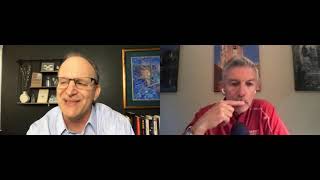
Jake Jacobs presents eight levers for organizational change, starting with an overlooked one: pay attention to what stays the same, which builds confidence to pursue change. He shares how reframing a troublemaker as an MVP transformed a team, and notes that 70% of change initiatives fail, often because leaders skip continuity and peer engagement.
Chapters
Welcome to Peer Innovation, the podcast with Leo Bottari and me, Randy Cantrell. Building on our previous shows, The Year of the Peer and What Anyone Can Do, we turn our attention to helping business leaders build high-performing teams. We'll talk with a diverse group of thought leaders who will share stories and insights that will help you and your teams achieve new heights. If you believe there is strength in numbers and that meeting the challenges of the future can only be achieved if we do it together, then join us for the conversation. Our guest today is Robert Jake Jacobs. Jake is the founder of realtimestrategicchange.com, a consultancy to help organizations work better. He's also an author whose new book due in May of 2021 is entitled Leverage Change: 8 Ways to Achieve Faster, Easier, Better Results. We welcome Jake to the podcast.
Jake Jacobs, welcome to the show. So excited to have you here.
Thanks so much, Leo. I'm pleased to be here as well.
So Jake, you are the author of Leverage Change: 8 Ways to Faster, Easier, Better Results. I know it's available for pre-order right now. It's coming up May 4th, 2021, and it deals with one of my all-time favorite subjects when we talk about change. In organizations and what that looks like. So one of the obvious questions, I guess, that first came to my mind when I saw it was we've got these 8 ways, these 8 levers, as you like to talk about, which I want to get into that whole concept at first. But also there's John Kotter's work, who's been around for a long time, of course, in organizational change, and he's got 8 steps also. So it's kind of interesting. So I'd love to first get a sense of— talk about LEBERS and your Archimedes and all of what you like to talk about there. And then, of course, tell us a little bit about how your work fits in with what kind of what we know from that platform that I think many in the organizational change space recognize with John Kotter.
Sure. So this goes back to— I actually have on my wall a chalk drawing that I commissioned 25 years ago. Which is a picture of Archimedes moving the world. So, for those who don't know, Archimedes was a 3rd century BC Greek mathematician. And he was one who first described the concept of leverage by saying, "Give me a lever long enough and a fulcrum on which to place it, and single-handed I shall move the world." And so, I hold a belief that people can move their worlds in the arena of change and to do so faster, easier, and better than they imagined possible. So the kind of folks that I work with, and these levers can be applied at the individual, team, or organizational level, they're folks who are frustrated that the results they're achieving are too slow, too hard, or too often disappointing in some way. And if we ask listeners, you know, raise your right hand if you've ever had that experience, I think we'd probably find people raising their right and their left hand because it's so common. So I knew that this concept of leverage 25 years ago was important, and it's been part of my work. But the way that we think about these levers is there are 8 strategies, and each of them used individually or together addresses a common problem. In organizations and in change. So what's nice, I think, about the levers is that you can go through and do some quick diagnosis. And let's say your organization, the change is going too slowly for you. A lot of people would say, that's me. And I've worked with clients about think and act as if the future were now, which is one of the levers. And what that says, just to give an example, is most people think about the future as something that's out there. It's going to occur later. And we're disconnected from it. And I think that's a flawed paradigm that in fact, if we think and act as if that future were now, we have some image of what the future looks like, then we grab hold of that image and we start behaving as if that were our current reality. What we find is we start to behave differently. We make different decisions. We involve people in different ways. We take different risks. We make different conversations with people, and it blurs the line between the present and future. So this notion that it's something that we have to wait for, I challenge. And so that's one of the common problems that each of the levers addresses, a common problem. And to speak to John Kotter and other approaches, I smile. So your audience can't see this, but I am smiling, which you can vouch for. I have a lot of respect for John Kotter, and I actually have a lot of respect for many people in the world of change. And at the same time, one of the levers is called design it yourself. And so what I say in that chapter is that you should use what's been working for you. I mean, absolutely.
And if you're a John Kotter fan and his 8 steps have served you well, I would say go for it. And I would add that these levers can act as turbochargers for existing methodologies that you're using. So this is only about making a good thing better. It also talks about in the chapter not to get trapped in somebody else's model. So if you find that John Kotter in developing a dominant coalition on the front end is difficult. I have a lever that's called start with impact, follow the energy. So you don't— I would argue you don't have to always start at the top. It doesn't always have to be a waterfall approach. It doesn't have to always cascade. You go where there are possibilities for change and you work from there. And I'll just— just a very quick story and we'll move to another question, but I worked in a telecom company and I got a call. There was 10,000 people who worked there. They just laid off 1,500. So this was not a good story. And I got a call, can you help with a problem-solving workshop? We have 80 people coming. And I'm not an expert in problem-solving and 80 people is not gonna solve a 10,000-person problem. I said, would it be better for my having been there? So I signed up, I came out, I met with the leaders. Next time I came out, there were 300 people in the workshop. We did good work. We came up with some solutions and the CEO happened to come to the event. And at the end of it, there's a video and he's standing in front of the crowd and mouthing the word, wow. And what we did was create the possibility that CEO saw that you could have a large group working together interactively. And we had one event of 500 people, another of 800 roll-up-the-sleeves working sessions. And that company was written up in Fortune and Businessweek for reclaiming market share, uh, from some of the major telecom companies in the country. So that notion of start at the top, sometimes that could serve you well, but it doesn't have to always be the answer.
Well, it's interesting too, because the first lever that you talked about in some respects seems to, on one hand, align with creating a sense of urgency, right? One of Kotter's big ones. And at the same time, I think you express it a bit differently in a way and get people to think about it a little differently. I think there's just really incredible value in that. And I'd love the idea, first of all, that you're tackling this subject because— and I'd love for you to give us maybe some of the latest on this, but Last I checked, when it comes to the success rate, failure rate, however you want to measure it, of organizational change initiatives, it's been pretty abysmal. So I would imagine that, you know, there's a real need for another way to think about this, another way to look at it. So first of all, tell us what the research is saying. Maybe explain a little bit about why the failure rate is what it is. And then maybe talk a little bit about how you feel your book and your work and your approach can really help a lot of organizations.
Sure. I mean, my experience, Leo, is about 70% is the typical number that gets identified where change efforts fall short of the results they set out to achieve. So that doesn't mean that they're all-out failures. It just means what we wanted to accomplish, we didn't. And I think that there are lots of reasons for that. Let me point to one that I think is very unique in terms of the argument that I make. So most people, when they talk about change, and John Kotter talks about urgency, focuses on a case for change. And they wanna build the reasons for why this is important. And that seems logical at face value. And I think that that's part of the story that needs to occur. But the other part of it, And this is where I would diverge from practically everybody, I think, who writes about change or consults in change, is one of the levers. And it's the first one in the book, 'cause I think it sets the tone for the rest of the book. It's called pay attention to continuity. And so while everybody else is talking about change, I believe it's equally important to focus on continuity. Now, why is that? Well, first of all, no one else is talking about it. So I like to be in a position where I'm the one who's talking about something and other people aren't. But when you find people in an organization resisting change, which is the greatest curse that a change leader can face, that this pay attention to continuity says, if you have a firm foot on which to place your grounding, then you're much more willing to take a leap into the unknown. That in fact, the number of things that stay the same in an organization during times of change radically outnumber those that are actually changing. So I tell clients, I say, you know, make a list of all those changes that are occurring. Now make another list of all those things that are continuing, but make this list twice as long as the list of changes. And so when you come back to people in the organization, the believability index, I call it, increases substantially because you're dealing with all of reality. When we're focused on change, I think we can overfocus on it. And so I call it a paradoxical approach to change, but you take what is the less preferred path the, uh, unspoken truths that are part of organizations. And so this pay attention to continuity is something that's sort of a radical departure. If you ask, what do I do for a living, and I told you I was a continuity and change consultant, you would do a double take and say, how many floors on the elevator do we have for you to explain that to me? And so in terms of change and why does it fail, I think one of the key reasons is that we're paying attention not the whole story.
You know, I love the idea of continuity and change. I really picture it as a real yin and yang, right? I mean, they really need to coexist in a way that, you know, is really powerful, and each gives real strength to the other. They're not opposite forces. They're very much necessary. So when we think about Employees in particular. I mentioned to you before that this idea, one of my favorite quotes that always stuck with me was that people don't, it isn't that people don't like change, they don't like being changed, right? So when you're not in control of the change, that becomes an issue. Now, so there's two ways or two reasons you might not like the change or want to be changed. One is you don't actually like the change and Second, you may not have been part of the change. You didn't have a hand in that, a voice in it, maybe earlier on. And we also chatted a little bit about a subject near and dear to my heart, which is the power of peers, right? And how the horizontal, right, about peers influence one another. And it isn't what the leaders are going to tell these folks what to think and what things mean. They are going to engage in those sense-making exercises on their own. So, you know, how do we kind of as leaders try to approach that and think about those dynamics?
Yeah, so, um, I am a big fan of yours and a big fan of this whole, uh, peer approach because I think that, you know, organizations operate up, down, and sideways, and the peer aspect of it I think gets too little attention. I think we talk about the hierarchy, but when people talk about the hierarchy, they're talking about the top of the house and frontline workers. And so one of the levers that I believe in is develop a future people want to call their own. And in order to do that, you need to be part of the conversation in developing that future. And you need to be, in a conversation about it. So it's not all one or another. It's not people coming down from on high with the commandments, right? And blessing the people and having everybody fall into line. But it's about having a stand that people can take from a leadership standpoint and from other places in the organization and being as strong about your position as you are inquiring about others' positions. So what is it that other people care about? What matters to them? We had somebody in our group consultation program that went out and got people in their organization flipboards, and they went out and had conversations with colleagues, and they said, what do you care about? What do you think are the issues in the company? What do you think needs to be different? And what this person reported back to the rest of the group was that the conversation itself was as valuable as the answers they had. That becoming an organization, you know, you could talk about learning organizations, Peter Senge talked about it, but you know, it's a verb, it's learning organizations, it's an ongoing process. And so As you engage people in these conversations, you start to have a more strategic organization. You start to have people thinking beyond their job to what impact and implications are there for the rest of the organizations. One of the things in this program that we have has you list all the other changes that are occurring in the organization right now, and which of those are you helping with the work you're doing, and which of those are getting in the way of their success. And vice versa, what are they doing that's helping you and getting in the way? And then let's have a conversation. How can we better help each other be successful rather than fighting about either/or debates and, and who's right and who's wrong? It's about how do we get the best out of what everybody's trying to accomplish. And I think that, you know, in the peer notion that you bring up, it's about listening and asking and getting smarter together about what that future needs to look like.
I love what you said about the conversations. The point is also that people just, they really appreciate just being asked and to feel like they've been heard. And that happens. Now, conversely, when we get to a point where a decision is announced, Oftentimes, I don't always feel, and this you can correct me if I'm wrong here, that leadership does a good enough job at digging into what the response, where the response comes from. So the idea, for example, that even if you had some survey and people have neutral responses or something like that, you don't know the difference between whether they're just indifferent to it or whether they were ambivalent, right? Where they have like really, actually really strong responses positively and negatively. I think about, hey, we're going to move our offices 10 miles away. People love the idea of a new office, hate the idea they have a commute right now that's maybe more than what they have before. So unless, I guess, in my mind, you can get to the heart of really understanding what may be any obstacles out there to people getting behind change, you're never going to really get past that. So what are some of the ways that can be effective for leaders to, you know, a change is announced and maybe the reaction is unexpected, or maybe there's something different about it. How can they get to the heart of it, hear everyone at least at that stage of the game, if they even have done it before, so that we can start kind of moving things in the right direction?
Sure.
So, Leo, I think most people talk about planning of change and implementation of change. And they talk about them as they're separate events. So what I do in this real-time strategic change, which is one of the approaches that I developed, is to shrink the timeframe between planning and implementation, to blur the line so that the planning becomes part of the implementation. You do rapid cycle. We call it rapid prototypes when I worked with Ford years ago. But this question of rapid prototypes is about how can we make changes, small ones immediately, learn from that, make course corrections, make more course corrections, continue to move that ball down the field in a way that's positive and productive rather than making one large bet, hoping for the best, putting all your chips on red 21 and thinking that you're going to win big. It's more about people every day making changes that make sense to them and make sense to the organization, and being able to continuously learn and improve on the changes that they're making.
So your book, um, is for whom? Let's just really think about it in terms of size, organization, leader, all that kind of stuff. If you were to think about the real primary audience that you are writing this for and what you hope ultimately comes from this when people are able to absorb this content and really do something with it. What would you like to say? Great.
I love that question, Leo. And what I have is an unusual answer to a common question, right? So who's the book for? The book is for anyone leading change in organizations that are frustrated the results they achieve are too slow, too hard, or too often disappointing. So these levers can be applied at the individual level. If I've got a problem with my peer and I need to work through that conflict, then create a common database is one of the levers. And so that means that I need to get smart about what that person knows, and they need to get smart about what I know. And together with more facts on the table, table, we can make a more strategic organization for, uh, decision for the organization, right? So that whole concept that you're talking about in terms of, uh, the work that needs to be done around change, I think is absolutely critical. But this approach can be used for any change in any organization made by anyone that's interested in faster, easier, better results. I'll tell you, one of the podcasts I was on, somebody asked me, have you applied this to relationships? And I said, well, indirectly to my own. And as I was writing the book, and what they said is, I think you might have the next Chicken Soup for the Soul here. And I smiled and I said, you gotta tell me more, right? And they said, well, anything that somebody wants faster, easier, better results on, this should work, right? And I said, absolutely. I wrote it for organizations and teams and leaders. But if those are the kind of results you want, then this is the kind of book you should be reading. And so it plays well with others, Like we talked about John Kotter, if you want to turbocharge a methodology that you're already using— and I'm not here to argue to say stop doing something that's working. What I'm saying is, could it work even better? And could it go further, faster, toward the preferred future you desire? And my experience has been— because I've used other approaches as well, and I've worked in organizations that have adopted other methodologies. Put these levers into place where you've got problems and you'll be better off for having done it.
Well, I think the thing about relationships is spot on. I mean, it's the first thing that I thought of, to be honest with you, because this whole approach is all about the recognition and consideration of other people that will be necessary for you to have any kind of a change initiative be successful. And when you can do that and recognize that, as opposed to Like we talked about, you know, the companies where the senior leadership team goes off to the Greenbrier for 3 to 5 days to come back. And then like you said, you bring the tablets, you impart your wisdom on the rest of the organization in some way that, you know, this is, you know, where that wisdom lies and where it rests. And we're now going to, you know, share it with everyone in that way. It's not exactly been too successful, at least maybe a great plan and maybe look pretty and all of that, but it's really never going to get done in any way that's successful.
Well, and if you're on that executive team, it's probably a few good meals that you will enjoy at the Green Bar. Great kitchen. But what I found, one of the stories that we tell in the book is about this think and act as if the future were now. And there's a guy who has a direct report and happens to be a she, and they're having caused some trouble. New person on the team, team's having trouble, she's having trouble, and consequently the manager's having trouble because she just has a different perspective on most of the things they're trying to decide. And so she seemed to be a troublemaker. And in another book that I co-authored called You Don't Have to Do It Alone: How to Involve Others to Get Things Done, we had a special section on troublemakers. And we said troublemaking is in the eye of the beholder. I have you be a troublemaker, you tend to cause mischief. If I see you as a valuable contributor to the team, all of a sudden you've got insights that I don't. So I talked with this leader and I said, well, if we thought and act as if the future were now, what if we treated this person as an MVP on the team? What if they had insights that nobody else did? And we talked about that and then brought this person in who was very nervous to sit down with their boss and the consultant type. And, you know, what am I in here for? And am I being dismissed? Which is one of the concerns she later said she had. Well, we talked, the two of them, about what behaviors would look like that afternoon if she were an MVP on the team. And then they started practicing those behaviors. And then we met the next morning And we said, let's take it a week at a time. Look at your calendar and let's come up with plans so that you're the most valuable team member. Well, what they found is she became a valuable team member and it happened within a week of the intervention. And by the end of a month, the team had accepted her, her boss had accepted her. She decided to stay all from a shift in paradigm. That said rather than seeing this person as an outcast and somebody who's creating mischief, how do we treat her as if she were adding value? And then find ways when she says something, you say, could you say more?
Rather than saying, there she goes again, working her own agenda, you go, she's working everybody's agenda. She's just coming from a different place. She's in fact watching our backside and she's noticing things that we're not noticing. So we're not going to vote her down. Anymore, we're going to listen to her and we're going to integrate her thinking into the decisions that we make.
So one of the things I want to mention, of course, is you have— this book is more than just a framework. It includes 44 stories which illustrate all of these ideas and concepts and how this all works, which I think is really exciting. So of the 8 levers, Is there one that's either your favorite or one that you think to yourself, if you're not doing this one, it makes the others really almost impossible? Or is that not necessarily the construct you might ascribe to this?
Boy, it's like asking who's your favorite kid, right? Kind of like, as I look at these, what I would say, Leo, is the, the best one is the one that's going to solve the common problem that you're experiencing. So you really got to step back and say, what are the issues that I'm having with change? And then you can use one or more of the levers that are going to help you address that. So one of the problems that we have is talking about what's in it for me. Now a lot of organizations struggle with this. They sort of, you know, it's like a transactional analysis. It's like, well, what am I going to get if I make this change? What do I get in return? And so that is enlightened self-interest, but it's still self-interest. And so what I say is, when you have that problem, then you need to focus on developing a future people want to call their own. I need to see myself in the future, and that's the organization's future or the team's future. So once I see myself in that future, I'm I'm a lot less concerned about what's in it for me because there's a motivator pulling me into that future rather than the resistance of you having to convince me that this is the right way to go. Which, by the way, that I do videos on LinkedIn. So you could look for Jake Jacobs on LinkedIn and I do these 1-minute videos. And one of the things that I talk about is that you have this future that people have to get convinced is the right one for them. And while leaders are trying to convince people about their case for change, what they're really saying is, your story isn't right. I've got the right answer. Here's what it is. What you're concerned about isn't correct. And so you're alienating people who, in fact, could care a long time for the organization and have tenure there and care deeply about the future, and they're paying attention to other things than a leader might be, and they end up getting called troublemakers, resistors. They have to be found a way to get around, over, through, under. I mean, I don't care how you avoid these people. You don't see them in the hallway. I had a client once, Leo, that said, you know, we're not having a problem with Joe anymore. And I'd been there interviewing, and Joe was the problem. I mean, you know, when Joe's the problem, you're like, Yeah, Joe's not the problem, right? Everybody's got Joe as the problem, so therefore he must not be. Well, when I said— I came back 2 weeks later and I said, okay, we're getting ready for this leadership retreat. What is going on here with Joe? And everybody said, no problem at all. I said, that's remarkable. 2 weeks, you solved this whole problem that's been causing you grief for months. And they said, oh yeah, yeah, we don't invite Joe to the meetings anymore.
There you go. Problem solved.
Yeah, exactly.
So, so we'll just, you know, remove him from the situation. Now, Joe had a shared calendar with the rest of the leadership team, so it's not like they were surprising him by not having him at the meetings. But that notion of finding ways that resistance is a problem— I say there's wisdom in resistance. And move into it to learn more rather than moving away from it to try and get some better way forward.
You know, for the first book that I co-authored with Leon Shapiro, The Power of Peers, I interviewed Robert Pittman from iHeartMedia. And one of the major parts of the interview was he really got into talking about embrace the dissenters and how important that is, exactly what you're talking about. So, You know, it's not always easy to do for people to do because their reaction is, or their inclination is, let's just not invite them to the meeting. But it's really important and really valuable to embrace that and to listen to it and to lean into it as you suggested, no question. So Jake, in addition to, you know, where they can find you and your videos on LinkedIn, tell our audience where they can learn more about your work and then how they can preorder your new book.
Sure.
So, uh, jakejacobsconsulting.com is the place to go, and, um, there are, uh, programs that we have that help people learn and apply these levers. So it's one thing to understand the levers from the book, and then the question is, well, how do I go about applying them? And that's what we have support for from the organization, uh, whether it's programs, coaching, consulting All of that is aimed at helping people create faster, easier, better results. You can also follow me on Twitter @JakeJacobs. And I think that the key here is when you look at Amazon, if you look for Leverage Change, you'll find Jake Jacobs. And there are pre-orders available before its publication on May 4th. And my request would be, to get the book, to read it, and then give an honest review on Amazon. If it doesn't make sense to you, if you think that this isn't going to help you, then tell other people. But by God, if you read it and you find that there's an immediate application, even on my website, I have a document, an ebook you can download called 27 Ways to Achieve Faster, Easier, Better Results. Immediately. So, these are things that you can do by the time you finish reading that ebook. And if you're not finding improvements, write that up on Amazon too.
Well, Jake, in a world where change is happening faster than ever all around us, I can't think of a more fascinating and timely topic. Definitely, I'd really urge our listeners to get a copy of Leverage Change. And Jake, thank you so much for being with us and having, being on the show today.
Thanks so much, Leo. And thanks for having the show because I believe that these kind of conversations are the kind that matter. And when people can learn about peers, about the organizations, about change, they're better equipped to be able to lead organizations. And I think there's a great responsibility that leaders have to do their best work. So I'm delighted to be able to join you and talk about the book talk about change and affirm all the work that you're doing in the world.
Hey, thank you.
Thank you for joining us. To subscribe to the podcast and learn more about how you can engage peer innovation for your organization, contact us on the website at peerinnovation.co. Till next week, remember, the power of we begins with you.










