Jennifer Thornton on People (Peernovation Podcast Season 2021, Episode 01)
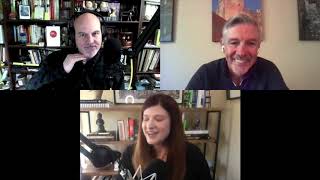
In this inaugural 2021 episode of the Peer Innovation podcast, hosts Randy Cantrell and Leo Bottari interview Jennifer (Jen) Thornton, founder of 304 Coaching. Jen recounts her 20‑plus‑year career that began in retail operations, moved into HR, and later international HR before launching her own talent‑strategy consultancy. She explains how a last‑minute pitch to a CEO birthed the name 304 Coaching, and she shares the core philosophy of her firm: aligning hiring and development plans with business strategy. The conversation delves into common hiring mistakes—such as hiring to fill payroll without clarifying work, overlooking “vanity work,” and ignoring natural traits and decision‑making styles. Jen introduces the OAD (Organization Analysis and Design) assessment, emphasizing its focus on traits like assertion level, communication style, and especially decision style (pragmatic vs. innovative, emotional vs. factual). She discusses how to define “fit” through curiosity, learning orientation, and risk tolerance, and how leaders must manage their own style to create psychological safety. The dialogue moves to innovation, linking it to pre‑frontal‑cortex activation, the need to suppress fear‑driven primitive brain responses, and the importance of rewarding risky ideas. Both hosts and Jen argue that cultivating a learning‑culture—through a robust learning‑achieving cycle, peer advisory groups, and celebrating “learning is cool”—is a practical pathway to greater innovation. Jen shares a flagship coaching story where her work with a multicultural organization’s executive team led to a cultural shift, leadership academies, and a tripling of company size. The episode closes with practical take‑aways for leaders seeking high‑performing, innovative teams and information on how to connect with 304 Coaching.
Chapters
Welcome to Peer Innovation, the podcast with Leo Bottari and me, Randy Cantrell. Building on our previous shows, The Year of the Peer and What Anyone Can Do, we turn our attention to helping business leaders build high-performing teams.
We'll talk with a diverse group of thought leaders who will share stories and insights that will help you and your teams achieve new heights.
If you believe there is strength in numbers and that meeting the challenges of the future can only be achieved if we do it together, then join us for the conversation.
Today's guest is Jennifer Thornton, founder of 304 Coaching. Jen has developed her expertise in talent strategy and leadership development over her exciting 20-plus-year career as an HR professional. She joins us today to talk about people. We welcome Jen Thornton to the Peer Innovation Podcast. Happy New Year. And we welcome everybody back to, well, it's, it's season 2021 of Peer Innovation, the podcast. The website is peerinnovation.co. He is Leo Buttari. She is the special guest birthday girl as well, Jenn Thornton. Welcome to the show, Jenn. I'm going to turn it over to Leo.
Thanks for having me. And on my birthday, how, how better can my birthday be?
Well, we'd love it. And actually, Randy and I agreed that as your birthday present, we're going to have this produced and up and posted before the end of the day. So it will be available to everyone and they can celebrate your birthday as well. So, you know, Randy, when you talked about 2021, that's music to a lot of people's ears, I think, even though we are still obviously in the throes of, you know, what we've experienced through all of 2020, I think we're obviously hopeful, you know, for a much better year overall. And, you know, looking forward to that. You know, Jen, well, first of all, what I'd love for you to do, because, you know, we had fun learning about your story, but since we have you here, we'd rather have you tell your story than us. But we'd love to know, Here's your company, it's 304 Coaching. And, you know, just love to know and have our listeners know how you were inspired to get into this work and what that's like for you. And then we want to get into some specifics about, you know, having the right people on the team, which we know is such a critical part of your work. And then also talk about the innovation aspect as well. But hey, if you could just tell us a little about yourself to get started, that would be great.
So my journey was actually in the retail industry, and I won't date myself, especially since it's my birthday, but it was definitely before the internet and when hanging out at the mall was very cool. So of course I wanted to work at the mall, and dreams do come true. I worked at the mall. And, you know, it's interesting, at a young age I was leading people and making hiring decisions and scheduling decisions and looking at numbers and KPIs. And I think that, you you know, at that age, I was just hanging out at the mall and working. I thought it was really fun. I didn't really, I didn't understand what I was learning and what I was doing. And what I found is that I got my results in a way that was very different than my peers. And I always felt a little off, like I'm not like my peers. I'm still a top performer. I'm still, you know, knocking the numbers out of the park. I'm making, you know, my year after year after year, comping my own numbers. But I wasn't competitive. I didn't do it because I wanted to be No. 1. I did it because I wanted to have the best team. And I loved, you know, hiring someone and talking to them about what they wanted to do and help them get there and help develop them and teach them. And so that was really the first half of my career is I worked on the operations side in all different leadership roles with a large retailer. And then halfway through my career, I went into the HR side because talent is what I had a passion for. And, you know, did all kinds of different roles with within the HR functions and tested out a lot of different departments. It's a nice thing about HR. It's really 10, you know, 20 different jobs inside of one group. And the last part of my career, I took an opportunity to move to Hong Kong for a few months and start opening stores internationally. And that led to the last chapter being international HR, which was fantastic. I had teams all over the world. We had a ton of fun. A lot of laughs. When you have a team that speaks 6 different languages and you're trying to explain something at once to all of them, it's hysterical. So we had so much fun. It was a great team. But I just was missing something. I wanted to, I wanted to start building something for myself. I'd built for someone else, a company, for years and years. And, you know, we all have those moments in time, right, where you like remember the sounds and the smells and exactly where you were sitting. And I remember I was actually in Hong Kong and I was in a boardroom and something was said. And I just thought, it's done. I'm done. Like everything in my body was like, you're done. And you have to go out and explore and do your own thing. And so that's when I started 304 Coaching, about 6 months after that, you know, kind of moment. And I wanted to focus on helping people have strategic hiring plans and strategic development plans and really think about their talent in a different way. And so it matched their business plans. And so that was kind of the inspiration for 304 and what we do today.
So two things. One of the things that kind of made me laugh when you were talking about people speaking six different languages, I think people can be speaking six different languages even when they speak the same language when it comes to communication. But the other thing too, maybe you can talk to our listeners about my failed attempt to figure out what 304 Coaching was and where it came from. And tell us the story around that.
So it's not the most glamorous story, 304 Coaching, but I had decided to go off on my own and someone I had worked with previously knew. And she gave me a call and she was like, I need you to pitch to our CEO tomorrow. And I'm like, I still have a job. I don't even have a name for my company. She's like, I don't care. Figure it out tonight because I need you to pitch to him tomorrow. He needs to hire someone. You're the right fit. And he needs to know that tomorrow. I was like, OK. And so I just was like sitting on a blank piece of paper of like, what do I call myself? And I didn't want anything cheesy, like, you know, results coming your way, you know, or whatever, something cheesy. You know, 304 is kind of my lucky number. It's a combination of important dates. And so I just thought, you know what, I'll go with my lucky number. And it was 304 Coaching. And hey, it's been pretty lucky still.
You know, what's interesting is here's this person who was so sure that you were the right fit for the CEO and kind of challenged you to come up with a name, get it together, be ready for the meeting the following day. But I think it kind of speaks to what I felt in terms of researching what you do is the heart of what you talk about in terms of the right teams is really getting the right people on the team is obviously very congruous with what we talk about with peer innovation all the time is you have to start with the right people. And how do you figure out who those right people are, especially if you to your specific organization. You know, I talk oftentimes with CEOs and I'll say, hey, can you relate to this scenario? And I'll say, you know, because I've had my own company, I've run different divisions and things, I've had to hire people. And it's like, okay, I see this great resume, I have the person come in, awesome interview, everyone else interviews them fantastic, 3 months later, this isn't working. And we're wondering what happened. And everybody in the room can relate to having had that. So maybe you can talk to us a little bit about how we can avoid either having that happen altogether, or at least a lot less often?
Yeah, I would love to say I have a magic potion and it would never happen again. But I don't think I do. And if so, I'm going to, you know, buy my own island somewhere. But, you know, I think one of the biggest mistakes that we make as hiring managers or companies make is when they go to hire someone, they don't stop and really think about the work. And oftentimes we throw payroll at the problem. So a team is overwhelmed. So we're just going to hire someone to help them where we don't stop and say, is the team overwhelmed because the work is incorrect or do we have process problems or do we need development and training? Like, why is this team overwhelmed? Does it truly work? We also spend a lot of time doing what I love to call vanity work. And that's work that really does not impact the bottom line at all, but there is someone up the food chain that thinks it's really great and wants it done. And it can be as simple as this executive doesn't want to learn how to read the new reports that you can push a button and the system spits it out. And so someone has to refigure these reports for hours for no reason. And so I think it's really important to make sure that we have clarity on the work. And that's, that's the first piece and the piece that I think that people miss out on. And the second piece is that hiring process. And, is, you know, really understanding not only the job, but how is that job going to be done. So for example, if your organization is highly innovative, then you do not want to hire someone who's more comfortable in a traditional job, even if their resume is great. And if you have a traditional company, you don't want to bring someone in who loves to break what's working just for the fun of it, because they're not going to fit in. And that's That's why we start to say goodbye to people very early. It's not their skills, but it's how they are, what their natural traits are, and how they show up and make decisions.
So when you think about those natural traits, now we start thinking about, and you brought up some things that align with the culture. So beyond the role, beyond the work and all of that, there's this idea of whether someone's a good cultural fit with the organization. So when you are providing an assessment, and I'd love for you to tell us more about the— it's OAD, correct, the assessment that you have? Correct. What that looks like and how you kind of layer in the cultural aspect of this, because, you know, I've certainly worked at a lot of different places where same role, same job, but the culture really, really different, and the expectations of how you engage one another, what that looks like, and all this is And the difference being such that I would absolutely thrive in one culture, but not in the other at all. It would be really bad. So, so how does that factor into it? Because that would seem to me to be kind of, at least we start getting closer to that magic potion when we can start figuring that out.
Yeah.
So I think there's 3 things. One of them obviously is skills and knowledge. I mean, that's You know, that skill and knowledge bucket, we have to have that. We also have to have education experiences, and that's all the stuff we interview for all day, every day, and we can interview for. What we can't interview for is someone's natural traits, because most of us aren't even really aware of how we think because it's normal in our heads. So everyone thinks that way, right?
Right.
And so it's really hard to interview people. And also, you know, when you think of Adding that piece, you're bringing in an assessment. So OAD, Organization Analysis and Design, is the one that we use here at 304 and that we sell and, you know, consult with. And the reason why is we're science nerds at OAD. We protect the science of it versus the marketing piece of it. So most people have never heard of us. We're very small. We're very boutique, and that is on purpose. Because we really are passionate about validation and how a tool is used versus the shiny, pretty new object. So with OAD, what's fascinating about it is you can learn about someone's natural traits, and that is everything from their assertion level, their detail, their patience, their, um, how they communicate—
are they more technical or more social in their communication? And a lot of assessments give you that, and that's fantastic. I think where the gold is and where people start to get, you know, where those matches are off is decision style. And so this tool helps you understand, do they like pragmatic problem-solving or do they like innovative and creative problem-solving? And are they making decisions, you know, emotionally, or are they making it only on fact or somewhere in between there? And that is the biggest important piece, because if you bring someone in and you don't want them to rock the boat, but you hire someone who is off-the-charts innovation and creativity, they're not going to be successful. They're going to have bad relationships. They're going to be challenging people that do not want to be challenged. And, and so it's really about making sure that you look at all the pieces. I don't believe— and I'm sure assessment people are going to hate me right now— I don't believe it's a, it's a one and done. You can only look at assessment and know. It's a package and it's part of the story. And so that's the one that I've used for years. I was actually on the client side for 15 years, and for the last 4 years now, I've been a sales consultant for them. So it's a fantastic tool that really helps you finish off the story and who that person is and how they'll show up and work for you.
Nice.
We all talk about fit when we're talking about hiring people. And I do some work with HR folks, particularly in the city government sector. And they're always— and it's interesting to me when I ask them, well, define that. And it's hardly ever the same. So when we're thinking about what we need for fit, what can we do on the hiring side? What are your insights for us to even figure out what that is? I find in so many of my conversations, sometimes we've got teams and we've got some people that are performing at a higher level than others. But we don't necessarily fully understand why, which makes it difficult to ask, so how can we replicate that?
I know, and that's a really hard thing. And I think it starts with curiosity. And it's really setting down and even with a piece of paper and describing that ideal person and not necessarily their experience, because again, we can interview 4. But what does it show up? When they sit down in their desk, how do they make other people feel? How do they build relationships? How do they make decisions? How do they manage conflict? Then, you know, when I love to do this exercise, because, you know, some, an executive will tell you all these things, and then I'm like, OK, let's talk about what that looks like to manage that person. Because what you think you want isn't necessarily always what you're willing to manage. And so then that's the next curiosity is, what are you willing to manage? If someone says, I want someone that's going to come in here and take risk and make all kinds of changes, then I'm like, OK, fantastic. The opposite of that is failure. How comfortable are you with risk-takers failing. And so those are the kinds of conversations to really learn about the fit that we have to have, and the conversations that I don't think we always have. We always point to like a list of values and say they're supposed to do that.
Yeah, I think everything that you've been talking about, when you, when you start, when you're dealing with communication and all these things, aren't really just about how an individual can fill a role, but how an individual can be part of a team. And work with one another, which I would imagine is that next layer of what you're talking about, right? I also don't think too many people who even, you know, who no matter how into assessments they are, would ever suggest that any one assessment would define us, nor should, you know, it's just part of the data, it's part of the information, it's part of everything that comes to us. And, but they can be important and they can be really valuable, like you said, and they can provide us with information on things that aren't always easily you know, discerned from, you know, an interview or something like that, for sure. But is there any one particular thing you look at or look for with people regarding whether they would be a good teammate or not?
Oh, such a good question. I think that one of the things I love to ask people in an interview and love to just anyone I've talked to What did you— I love to think, find people who want to learn and are willing to learn daily. And so that's what I look for when I hire people for my team. I, I look for people who want to learn. And so I ask a lot of questions about, tell me what, you know, tell me a time it didn't go well. What did you learn from that? You know, what did you learn at that job that you still utilize today? Because when I think about building partnerships and about building bridges and relationships in the workplace. It's about willing to learn about that other person, learn what they do, learn what they take to the table or bring to the table and accept that. And that's really hard. And if you're not a natural person with curiosity, it's really hard, I think, to build strong relationships.
No, that's great. That's, that's really good. And I think that's, you know, spot on. You also mentioned something when it comes to risk-taking and creativity and other such things, and that's about innovation. So it would be great to see, to get a sense of what you have found among the teams that you've found to be most innovative, number one. And secondly, what is a company that maybe not particularly, is not particularly innovative right now, they'd like to be more of that. So how does, how do we take everyone out of their comfort zone, including the leaders, right? And everybody has to ride that boat, right? In terms of getting to get to a place where we recognize our very survival is going to have to depend on us not just doing things the way we do it right now. We've got to find a way to— and I think it's really about tapping into the talent of the people you have and willing to listen, you know, and willing for them to be able to speak up and speak out. But what have you seen among the most innovative teams that you admire? And then secondly, what advice would you have for companies who if they're honest with themselves, aren't particularly innovative at the moment, but would like to be more so?
So I think what's interesting about innovation is you have to start with understanding how the brain actually processes information. And what's fascinating, I think, too, is that what we know about the human brain, we've really only— most of it we've only discovered over the last 20 years. And so when you think about innovation, that means you have to ensure that someone's using their prefrontal cortex, right? So that's where our new ideas come from, collaboration, you know, decision style, like all of that stuff is coming from that. It means you also have to get people out of their primitive brain, which is where fear sets. And so I know psychological safety is incredibly important to you. And that's the big piece of it. People, people will always struggle no matter how naturally innovative they are in an environment where there is judgment, where there is fear of failure, where there is fear that if I believe something that my supervisor doesn't believe, that I will be punished. And so I think to create innovation, we have to create an environment in which people are chemically using the right piece of their brain. And, you know, you think about leadership, and a lot of this stuff we're taught was, you know, kind of born, you know, 50, 60 years ago when we didn't know about the brain and we didn't understand chemicals and how it worked. So I think that there's a lot of revolution to how happen around understanding the chemicals in the brain. And I think that's going to lead to innovation.
Jen, the— Go ahead.
Go ahead, please.
I was just going to ask you, when it comes to innovation, I mean, just my own personal experience, I have found that congruency is a big deal. When leaders say one thing, but staff, call them whatever you will, they see something different. And it's oftentimes— I've, I've observed people frozen in fear, that primitive part of the brain that you mentioned, because it's just easier to stand still. Because if I move to the left or move to the right, I'm gonna get it. And it's just easier to stay still and still get it, but then nothing nothing happens. I'm curious your perspective as it relates to innovation for a team, the congruency of leadership when it comes to communication and our actions kind of being aligned. My personal experience, I have found that people leave jobs when it no longer makes sense.
Yeah, that's such a good question. When I talk to someone and someone's called and they want to bring us in and help with their innovation and their leadership development, I always say, you know, why? Because no one ever calls us when we're, they're in a good mood and their team's fantastic, right? No, we never get those phone calls. And so I always ask, you know, what's going on? And so, you know, I always get a long list, and, you know, the exact list that you just kind of talked about: My team doesn't make decisions. They just stand in fear. They don't do this. They don't do that. And my first question is always, what about your style has created an environment where they're not comfortable to act? And that's always like, well, you know, you know, they backtrack. But, you know, we create that environment as leaders. And when you think of your actions, you're imprinting unconsciously on everyone on your team. So if, you know, over the last 6 months, you have been leading in a crisis mode, it was a tough year in 2020, you might be overly crisis managing at this point. And so you're heavily directive. You don't ask questions. Everything's black and white, wrong or right. Then you have created neuropathways for your team to believe that that is always true and will always be true. And so as leaders, we have to create neuropathways in our team that says we want innovation. And so you can do that by saying, I want you on Friday, you know, product ABC is down 10%. I want you to bring me the most ridiculous ideas you can think of to, you know, turn this around. Well, your team could be like, oh, I have the answer, but, you know, they don't really want to hear it, so I'm going to keep it to myself, which is never a good day, but it's what happens most of the time. Or you could— or they could be saying, hey, they really do want my ideas, and last time I gave them ridiculous ideas, we actually went with one and it helped. The other thing you can say, if you haven't been doing this and you're trying to change the environment, you're trying to create innovation, you can say, bring me your most ridiculous ideas, and in fact, In fact, I'm going to reward you. For the most ridiculous ideas that we hear, we're going to have an award. And it could be just bragging rights because you had the most, you know, insane idea. You wanted to take the product to Mars. But that tells people, I'm going to get rewarded for risk and innovation. I will not be punished for it. And those are the new neural pathways you have to start to create with your team if you want to create innovation.
You know, you mentioned something about learning that I think really fits well here. You could easily replace, we want to be innovative, with we want to learn more. We want to be a learning culture, right? One of the things I talk about in the, in the book Peer Innovation, and it's about what peer advisory groups can teach us about building high-performing teams, is that we found that high-performing groups and high-performing teams in general have what we refer to as a really robust learning-achieving cycle. Right, so that's the idea is they learn and the more they share their learning with one another, right, we know we learn better when we learn together. There's mountains of research around social learning, but we also, in addition to being more comfortable with what we've learned, we give each other both the encouragement and the courage to act on that learning. And when we do and we start achieving some good results, even if there's some little trial and error in there, it's a cycle that we want to repeat. And that great teams, if we were to think about it in sports terms, for example, when you look at teams that, you know, in the NBA, right? Someone wants to win the NBA championship. For the best teams, their goal isn't to win the NBA championship. Their goal is to get better every single day. And they know when they do that, they put themselves in a position, whether they win it or not, they're always there, right? They're always among those top teams playing all the time. And those are the kind of winning organizations. And I think about what you said with regard to learning and innovation and all that is, so I guess it would seem less daunting to me if I'm a company who may not be, or even see myself as particularly innovative, that seems like a big leap, but I think we can start learning more. I think we can start creating that. Do you think that would be an interim step on the pathway toward innovation if we could just get people to And to your point earlier also, be less judgmental. We're all just here to learn. We're all just trying to figure it out. We're going to make mistakes. That's okay. Right? So I'd love to get some of your thoughts on that too, because you've seen a lot of this out there. And I think that's what our listeners are looking for is, you know, looking at what you see happening out there around that and how, you know, we can just be more effective, you know? Yeah.
You know, every day is, you know, life is a practice. You don't ever master it. And, you know, you think of these great teams and they, It's a practice to them. They go to practice. They never master, you know, Tiger Woods never mastered his swing. You know, we never master it. And so innovation, leadership, working with people, it's a practice. And when we become an environment where every day we learn that learning is okay, we are providing evidence to our subconscious mind that learning is that's cool, and that we can do it and survive. You know, our brain has one job, and that's to make sure we don't die. And so it doesn't really understand the difference between a snake on your leg and my boss is going to fire me— same chemical reaction. And so I think that if every single day you are making steps to let people fail and be excited about the learning and, and share that, if you are constantly getting curious and asking questions as a leader, then guess what? Your team The team's going to start asking questions because those are the pathways you've created in their mind. We ask questions and we learn from each other. And every single day, if you are making a step in somewhere in that broad direction, you are increasing your chances of innovation, which definitely in today's world increases your, your opportunity for survival as an organization.
Well, I think you should take the quote you just said, learning is cool. And just put that for every company should think about learning being cool. And that would be a good step in the right direction, right?
Yeah. You know, when I work with organizations and they are like, I want you to come in and work with my managers and this, and I'm like, well, we got to work together. Like, no, no, I'm cool. Like, I'm good. I'm like, no, no. See, if you are learning and you talk about what you're learning and you and I are, they see us in the office having a conversation, you're setting the tone that all of us are here to learn. And then you'll make a difference. But don't waste your money just telling me to talk to someone at a lower level and hoping I'm going to change your company, because I won't. I can't. Only you can do that. And so I think that's important for executives to know is they have to participate, and they have to, you know, make learning and growing cool if they want their team to do it.
Right.
And how do you, how do you see the distinction between science and art when it comes to leadership?
What a question! Oh my gosh, I don't know. Let's see, distinguish between art and leadership. Is that what you said?
Art and science.
Art and science.
Look at me, I was trying to take it a different way. So I think that— I don't know what I think about that. That's such a good question. I think that as an artist, that you, whatever your art is, it could even be the art of leadership, the art of friendship, the art of love, the art of painting, drawing, you only get better when you're willing to take risk. And you're only willing to get better when you push yourself. So science applies. You have to be in a mindset in which you feel creative. And to do that, you know, as you guys know, because you talk about all the time, you have to have psychological safety. And you hear about people who have writer's block, you know, and then they work with someone, and then they have a breakthrough because something was going on. And all of a sudden, now they're back to normal. So I think that they kind of go hand in hand. Good question.
What's your most remarkable coaching story? Whether it was a turnaround or whether it was with a leader or a group, I'm curious what really stands out in your mind.
So there's an organization I worked with for years, and they're fantastic. And they, they're very multicultural. And so there's a lot of cultures working in one building and a lot of different languages being spoken in one building, even though they're here in the States. And so that causes some conflict, natural conflict, right, because everyone's culture is different. And so, you know, I was brought in to help, you know, bring everyone together. Now, I remind you, we're on year— I'm just about to sign my 4th contract with them. So it doesn't happen overnight. But what we did is we started with the executive team, and we really helped them. And the CEO, he's, he's tough. He's successful, he's self-made, and he is for a reason. And so we really worked with the executive team to learn how to manage collectively as a group and to not work in fear. Because if the executives are working in fear of the CEO, then they're protecting their department; they're not protecting your company. And we spent a year individually and group coaching as an executive team so that we learned it was OK to protect all of us versus fighting for our own wellbeing. And then after that, we actually started to move our way around, down to our directors. And now we have leadership academies for all of their managers, Their company has tripled in size since I started working with them. And so we continue to run programs and continue to teach people as they come in, this is how we work. And I don't think it's any surprise that their company has tripled. And it's because the CEO was willing to work on himself. I mean, I still coach him 3 and a half years later. If things get out of whack, I have permission to call him and say, "Hey, here's what's going on." And he actually has me do 360 interviews with all of his executives 3 times a year and bring that feedback back to him. And he's willing to hear some tough stuff. And sometimes we've made progress, and sometimes we've slipped back, you know, 2 steps forward, 1 step back. But we're making the progress. I think those are, I think I'm most proud of that organization.
Well, you should definitely be proud of a situation where if you've taken a cross-functional work team of senior leaders like that and got them to take off their, you know, king or queen of their department hat on and start wearing their enterprise hats and working together on behalf of the whole organization, that's no tasks. So congratulations for that. That is huge. So, Jenn, where can our listeners learn more about you and your work and all of that? Because we've so enjoyed, you know, talking with you today, and I'm sure people may want to learn more.
So you can find us at 304coaching.com. We have tons of resources, all kinds of fun stuff for you there. And you can also connect with me on LinkedIn, and you can find me on LinkedIn at Jenn Thornton, ACC.
It's been great having you. And, uh, fellow Texan, so she's here in the Dallas-Fort Worth area. So for once we've got California outnumbered here. So we're happy about that. And it's Monday, January 4th, in case you were wondering what day her birthday is. We're recording on January 4th, Monday, and hopefully the podcast will be live today as well. It's been great having you, Jen. Our listeners can reach out to her. We're going to put links in our show notes. So if you didn't catch that, you can, uh, catch it on our website at peerinnovation.co and happy new year. And we're glad that you're here and we look forward to an exciting year together and we feel really good about having kicked it off with Jen on her birthday. Thanks, Jen.
Well, thanks for having me.
Yeah. Happy birthday and happy new year to you and everyone. Everyone, thanks.
Thank you.
Thank you for joining us.
To subscribe to the podcast and learn more about how you can engage peer innovation for your organization, contact us on the website at peerinnovation.co. Until next week, remember, the power of We begins with you.










