Kimble Greene, PhD On The Power To Thrive
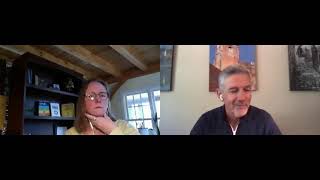
Dr. Kimble Greene discusses her Monarch Method for rewiring subconscious beliefs that limit us. About 90% of our thoughts and behaviors run on autopilot like old tapes. She moved from juvenile justice into transpersonal psychology, and now teaches leaders how compassion and curiosity reshape team dynamics.
Chapters
Welcome to Peer Innovation, the podcast with Leo Bottari and me, Randy Cantrell. Building on our previous shows, The Year of the Peer and What Anyone Can Do, we turn our attention to helping business leaders build high-performing teams. We'll talk with a diverse group of thought leaders who will share stories and insights that will help you and your teams achieve new heights. If you believe there is strength in numbers and that meeting the challenges of the future can only be achieved if we do it together, then join us for the conversation. Our guest today is Kimball Green. Kimball is a PhD and a bestselling author, master catalyst, and trailblazer. Her groundbreaking approach for personal development and leadership evolution is internationally acclaimed. She is the author of the book The Power to Thrive: When Surviving Is No Longer Enough. We welcome Kimball Green to the show.
Hi, Dr. Kimball Greene, welcome to the show.
Thanks, Leo. Thanks for having me. I'm looking forward to talking about leadership and thriving.
Well, it was so great, uh, you know, Mo Fathelbab, of course, um, made the introduction, and I know he wrote the foreword to your book, did a wonderful job with that. And, um, so how do you know Mo?
I met Mo through a mutual friend, someone that he— a woman he used to work with at YPO, I believe. And turns out she lives right here in Maine near me, and we met at a networking event, and she just thought the two of us, Mo and I, should meet. So, you know, it was one of those conversations, not unlike yours and mine, where there's a connection immediately.
Hmm, nice. Well, that's great to hear. And, you know, there was a friend of mine who I used to work with at Vistage who, over a year ago, basically said you and Mo should get to know one another. And Mo and I, you know, talk very frequently and are starting to do some things together here and there, which has been really fun. And, uh, you know, I've enjoyed that quite a bit. So, uh, it's nice when we kind of help each other make those connections. I think it's really helpful. So your book, Power to Thrive, I'm really excited to talk about that. And, um, I was also taken with the idea that your book comes with kind of a warning label. or as you call it, a caution. Basically, it's likely in reading this book you'll experience heightened clarity, creativity, passion, health, success, abundance, balance, harmony, joy, and love. Proceed with wild abandon, a free spirit, and an open heart, for chances are you'll discover the self you cannot live without. And I think that is just so powerful. You know, I teach a course at Rutgers And the fun part about that course, I think, for everyone in many respects is the time we spend in self-reflection and real self-discovery. And I know your book touches on a lot of that, and we'll get into the Monarch Method and other such aspects of the book later. But if you could kind of tell us a little bit about your personal journey, as much as you like. I mean, clearly you go into it, you know, quite a bit in the book, and I think it lends such credibility through your vulnerability, quite frankly. And, you know, it's just really, really well done.
Oh, thank you. Thank you. Yeah, I learned the hard way, I think, that being vulnerable is okay and essential when it comes to leadership and being influential and impactful, because really People want to be able to relate to the people they admire. And how can we relate to someone that we don't know or who shows up and seems like they have it all together when really, does anyone have it all together? I'm not sure they do. But my journey, like so many of us, pivotal moments, I go back to my teens for. And one thing I have learned is that I'm not my story. That said, my story certainly has informed who I am and how I got here. And it only influences my future as much as I choose to let it. So it's something I do talk about. It's certainly not something I dwell on or use as a foundation for who I am. Especially who wants to relive pain and agony, right?
Sure.
So as a teen, I recognized that I really struggled with self-value, self-worth, and probably that was a result of a lot of the emotional turmoil and struggles at home. And really didn't know how to find my way, was bullied in school. And at the time, I'm in my late 50s, so back then coaching, counseling, that was not something people spoke about and was not readily available. Um, and so I didn't really know what to do with the way I was feeling. And it ended up at the age of 18, my first year in college, that I made a suicide attempt. And in hindsight, I didn't want to die. I just wanted the heartache to go away. And I didn't know how to do that. So coming out of that, I didn't tell anybody at the time about the failed attempt at that. And I just sort of kept it to myself and decided if I didn't want to hurt anymore, I didn't want to die, what were my options? And the natural progression for me was to become hard and strong and tough. And I did that so successfully that my career in juvenile justice skyrocketed. I became the warden of a juvenile prison before the age of 30 and was really good at it because I was really hard and I was really tough and I was really strong. And while that served me professionally, around the age of 35, it dawned on me that personally I was still a mess. And had no more self-value than I did when I was in my teens. And, and I was probably worse off in some just because I had not dealt with so many deep emotional issues for so long. I happened upon a counselor. I got into counseling as a client and happened upon a counselor who was very alternative at the time. And taught me about concepts like personal power and intuition and inner knowing and energy and all of the things beyond our brains and bodies that really fuel, um, the trajectory of our lives. And once I started learning about those concepts, I couldn't get enough. So I ended up going back to school for my PhD in psychology, transpersonal psychology, and dove into the science and the research and the philosophies that define how we are human and how we grow and evolve. And that's sort of where I am today.
It's amazing, Indu, how— isn't it? How I think for most of us, we, we just really do live in our, in our heads and we are not receptive to all that we have access to in terms of our entire being. And what that's all about. And I think you do such a great job of talking about that in the book and the riches that can come from really accessing that and being receptive. Just knowing ourselves. You also, I think, make a great point in the book that you can look at someone else's life from the outside and all things can all line up beautifully and you think, but you have no idea. What a person may be struggling with. And I think this is what makes things often very difficult when I think about groups who work together, teams, that we're not always considerate enough of really trying to gain true understanding about why someone may be showing up a certain way at a certain time. And we can be pretty harsh and unforgiving in those things and not asking questions and not being curious about or even giving someone the benefit of the doubt in that regard. So I think your work really struck me in that we talk a lot about telling our story and being storytellers and all that, but then the real thing is the untold stories, right?
Right, right. And you mentioned the people that, you know, when, when we get frustrated with people that we feel like their actions or their thoughts or their interactions are not something that is in alignment with, let's say, our— the workplace. And very often they don't even know why those things aren't in alignment. And, and that is one of the facts that I discovered, um, when I was doing this research over the past decade or so, is that over 90% of who we are is subconscious. That leaves less than 10% of your thoughts, feelings, and behaviors that you're aware of that you have access to to manage your days. So thousands of thoughts, feelings, and behaviors are, are limited to within 10% or less of your consciousness. And all of those stories and the perceptions and the beliefs and the energy that they generate now and have since birth are in that 90% of material that you don't access on a daily basis.
So why don't you think we as humans reflect more when it comes to just something as simple as maybe we reacted in a certain way to something, maybe we get angry about something that when you, when you think about it just for a moment, you're like, that was no big deal at all. Why did I get so upset about that? What was that all about? Why, you know, did I behave that way in such And I'm not sure that we always ask ourselves those questions or that we're conscious of the fact that we just got all upset about something that in the scheme of things is completely meaningless. And we just created drama around basically something that was completely inconsequential. I mean, why don't we reflect more in that way? And if, and if And if we just naturally don't, are there things that we can do that can help us know ourselves better?
Yes, there are things we can do. And the reason we don't is because even if you did try and reflect on that, because the underlying intention that fueled that reaction is subconscious. So all of the reflection in the world isn't going to get you there. It's really hard to get you to your own subconscious material. Once you learn a strategy to do that, it makes it easier once you're familiar with the process. But for most people, they don't even realize that anything subconscious is going on, much less 90% of their functioning, right? So one of the reasons we as adults, especially in midlife, start to recognize that how we react to things no longer makes sense is because in the first, call it 10 years of life, when we are assessing the world, how does the world work? How do I work within the world? Not only my immediate world, but more globally. And that's based on what we have or haven't been exposed to. And the way we're designed as human beings brain and body to operate is to optimize our survival mentally, emotionally, and physically. So we're constantly assessing what's happening in our world and deciding, how do I optimize getting those needs met, those basic survival needs met? Now, as children, we're also very dependent on the adults in our lives. So in many ways, we are powerless to manage our world in an independent sort of physical way. So children often revert to control. How do I control what's happening in me and around me so that I am keeping myself out of risk or danger and putting myself into getting those needs met? So that— those become the strategies that turn into the subconscious beliefs. The tapes, I call them tapes. So those tapes are running in your head over and over and over, basically saying this is how you survive. In addition to that, every behavior, feeling, and thought is derived from one of those core beliefs. So we don't create our own thoughts, feelings, and behaviors independently. Our core beliefs are triggered by something in our world, and they generate every single one of the thousands of thoughts, feelings, and actions we have throughout a day. So when we go about trying to reflect, as you mentioned earlier, on why we thought something, felt something, or chose to act on something in ways that were not congruent with who we are as adults, it's because those old tapes are still running. And you're no longer 8 years old, and you're no longer living at home with adults taking care of you, hopefully. And you are an independent adult who has had a lot of success in your life. And so naturally we think, well, I can figure this out, right? I can think my way out of something that I felt my way into, which we cannot do. So we end up in this cycle of, you know, what is wrong with me? I know that doesn't make sense for me. I know that doesn't get me towards my goals. Either career goals or personal goals, yet I keep— I feel compelled and I keep returning to those same old cycles. And it's because that's how we're wired as human beings. We're wired to survive that way. The key is in recognizing that and then connecting to the resources in your life that can take you from surviving to thriving.
So talk about how we can tap into that deeper part of ourselves. What are the strategies for that?
For, for most of us, it requires, um, someone else to help guide us there. Not just through talk therapy, not through ruminating over the things that we've done that we don't like and trying to analyze those, but really A strategy for tapping into what are the aspects of a thought, a repetitive thought or behavior that doesn't work for me now that might have worked for me at some point. So really taking a look at, for instance, if you're someone that is overly aggressive, let's just say, either with words or actions, and you know that that's not working for you. You're getting reprimanded by bosses, whatever's happening. Sit down for a minute and think, at what point in the first 10 years of life did being aggressive serve me? And while you might not be able to get to the core subconscious belief, you certainly will be able to get to more clarity around your attachment to something now, and that's because it served you back then. So it's not wrong, it's not bad, it's simply outdated. It's a tape that needs to be erased and taped over with a new perspective that serves you moving forward. Now obviously there's more science to that, which is why I love doing what I do, helping people plug their unique circumstances into that formula. But once you understand that formula, you can reapply that to anything that comes up for the rest of your life because you've created an awareness of who you are beyond brain and body, but the power that you have with beliefs and energy to change the trajectory of your life.
Yeah, and it makes perfect sense too, because think about the fact that how often might we want to adopt a certain value or a certain belief system? And we might think in our heads that this is right, it sounds good, it seems to be who I want to be as a person. But at the moment there's any adversity or anything, I'm going to revert back to that. Yeah, right. I mean, how hard is it to— and you wonder what it takes to kind of push through and stick with a new set of values so that that can cement itself your core beliefs going forward, or as you kind of put it, how does that erase the tapes, if you will? I mean, I don't know if you have any comment on that in particular, but it strikes me as a bit parallel in that regard.
It's actually quite simple. Once you understand and are able to validate who you've been and and the choices you've made in, in the past, especially in very early years, and aren't trying to change those, but instead are looking forward and trying to employ something new, create a new strategy, it really just becomes about repetition and certain practices to keep your mind focused on that direction rather than focused on changing the previous direction. So if you're driving a car and you have a new destination, you aren't looking behind you to see where you've come or how you got there the last time. Hopefully, if you're in the car, you're looking forward in front of you and deciding, how do I want to navigate the pathway I'm on right now with all the people in my life? The cars in other lanes to get to the goal I'm getting to now. So it's really about focus. And again, we are immensely powerful as beings of energy and belief, more so than as beings of body and brain. And as a matter of fact, you asked earlier, you know, how, how is it that we don't see this potential? That we have outside of our brains and bodies. And it's because we've been raised, and for centuries the world has operated on what I call Newtonian science. Everything, our health systems, our corporate systems, we function based on the model that says you are primarily a being of matter and cognition, brain and body, and that Yes, there's immense opportunity within that very physical construct, and there's also a lot of limitation. So work with your limitations, right? You are— you're born with the DNA you have, the genes you have, and it's what you have to live with. Well, new science, what I call frontier science, is like epigenetics, neuropsychology, metaphysics. Have discovered that that is actually not true, that we are not primarily beings of cognition and matter. We are primarily beings of energy and belief, and that the potential that we have to create just about anything we want, including changing the, um, direction of our cellular development, is limitless. And so it's about focusing on that potential and using that energy to create the new pathway rather than trying to, um, change the old pathway.
I'm just gonna— I made a bit of a connection here to something that I studied a while back that you can tell me of how accurate this may be. But I remember in terms of a lot of the work in my doctoral studies, I studied the school system, secondary school system in Finland. Shorter school days, longer recess times, learning through play, bringing joy into learning, doing things that represent that more full-body, full-emotional experience. And I wonder, in addition to these students ultimately as 15-year-olds when they test their PISA scores, have better, better critical thinking skills and, and score by far better than U.S. students, for example, if they aren't also educating kind of healthier beings overall.
So if you think of human beings as actually, um, a component of two primary aspects— human and spirit, matter and energy— and from what you described about your experience in the Finnish school system is that, um, there are equal parts focus on the body and the mind, learning, sitting in the classroom, paying attention, managing your motor responses and paying attention, and then integrating imagination, play, creativity, relationships. That's all metaphysics. That is all the part of you that is energy and spirit, passion, creativity, limitlessness. So they're already taking kids— matching surviving and thriving for kids. This is how you survive in the world, and this is how you take it one step further and define your pathway through thriving. In the U.S. and throughout history in the U.S., we've been very focused on just that human aspect. Of get the brain going, get the, you know, get the functioning. We are not actually human beings here, we're human doings, and the focus, overfocus, is on doing. If we really could be human beings where there's a matched focus on doing and being, then we'd be more evolved much earlier and wouldn't be struggling in midlife, um, to find that balance again. I actually think that the majority of what we call the midlife crisis is not a biological phenomenon per se. It's in large part a spiritual phenomena where we have functioned for so long in survival mode that by midlife we're frustrated and we're unfulfilled because we're only filling half of our potential through those mechanisms mechanisms of survival that we've been taught and that we've taught ourselves to rely on.
I think we go through a really interesting arc as human beings, particularly when I think about how when you look at really young kids and they're like great-grandparents, right, today, and, and, you know, one is kind of born of innocence, the other informed by wisdom, and somehow they meet in exactly the same spot. And, and they enjoy this incredible relationship. Because I think the arc of things is that we start out in this really good place and we screw ourselves up for a fairly long time, only to find ourselves back in that same spot when we're 80 years old. And it's just, uh, always been amazing to me in that regard.
Yeah, that does definitely match what happens. And, and I'd like to insert that we don't necessarily screw ourselves up, although that's how we feel. We feel like I screwed up my life, I've screwed up myself. What, what's really happened is we've been taught to overfocus on our physical aspects. So even though we're born— and this was the focus of my PhD dissertation— was even though we're born with our spirits fully intact and that inherent balance of human and spirit, surviving and thriving, our culture, um, with the overfocus on human and surviving sort of relegates that spirit, that energy, that creativity aspect to the back seat or into the shadows. And so by the nature of how we're raised in the first 10, 15 years of our life through our school systems, We already are at a disadvantage because we are only— we're imbalanced, if you will, because we're focusing on only one very limited aspect of who we are and can become. And then that's just reinforced by our choices and our culture and the solutions that our cultures offer for solving problems and achieving goals. Again, they're very limited. Structured, even our mental and emotional health system is very structured around that Newtonian model that says you have to use your brain to think your way out of something you thought your way into, which, which isn't possible.
So in terms of your book, The Power to Thrive, talk to us about the 3-step process, the Monarch Method.
So the Monarch Method, the actual method is in a separate book. That I used to work with my clients. The Power to Thrive, the way that sort of came to be was that people kept saying, well, what can I buy that isn't a workbook, that isn't the method, that tells me about your philosophies and how you operate, that I can get from Amazon and it's an easy read? So I— that's how I put the Power to Thrive together. I took some of those philosophies and translated that ancient and the frontier sciences and philosophies into concepts that people could easily understand. And so that is really where that, where that came from. And it's an amazing book to get people started on that path. For me, further down that path, the philosophies that underlie that formula The formula is the Monarch Method. The philosophies are the Catalyst Factor. And I call it the Catalyst Factor because, as I've just described, our beliefs are the catalyst for everything that we experience— thoughts, feelings, and behaviors generated by those beliefs all day long. So it's the catalyst for our lives and who we become. So Those two approaches inform and include the science and the philosophies, you know, back across centuries, informing us how to apply those strategies moving forward. And the formula really just boils down to getting to the outdated beliefs. What are the actions and thoughts now that I feel like work against me, um, at what point did they work for me? And let's sort of pull the layers back a little bit on that and clarify how did this serve me at one point. All right, I got that, I don't need to focus on that anymore. Now let's define what's going to serve me moving forward and then applying practices to taping over those old tapes. And that's sort of the concept of the method. Obviously, I do a deep dive with people and I take it a little bit further. But, you know, it's not complicated. It's, it's really based on this new understanding of how powerful we are and how to empower ourselves to live through that and into that.
So obviously we've talked a lot about ourselves and our own lives and all that. What advice might you have for how we can more easily kind of coexist with others and not be so judgmental?
I call that grace. And for me, grace is graciousness, respect for self and others, authenticity, really tapping into what's important to me and how do I show up in a real way. Making my own rules, believing in who I am, and not feeling like I have to buy into the expectations and beliefs of others. Compassion. I guess just being gentle with yourself and being gentle with everyone around you. If you're doing something that you don't like the way you're thinking, or feeling or acting, rather than beating yourself up, try and understand and recognize it. At one point, it worked. Some version of that thought or feeling or action worked for you. And to recognize, all right, I'm not broken. I really just need to re-strategize and realign. And when you can do that for yourself, Only when you can do that for yourself, you'll be able to do that with the people around you. One of the things that I recommend as leaders in the workplace, that we start thinking in terms of when someone is, is behaving in a way that we don't like, or is not congruent with how— of the expectations of the workplace. Rather than thinking or saying, what is wrong with you? Perhaps think, what happened? What happened to you? You know, what happened in your life to generate these strategies and these patterns? And maybe if we can explore that and honor that that served at one point, then we can explore what to do that's different.
All right, nicely said. So tell our listeners where they can learn more, where they can find your book, where they can learn more about you and your work.
Um, well, they can find The Power to Thrive on Amazon, ebook or paperback. It's also available on my website with some other books. Um, my website is drkimberlgreen.com or themonarchmethod.com. And I go into a little bit of what we talked about today. I also have 2 quizzes on my site. If, if people are anything like me, I love to learn more about myself and clarify a bit about how I'm operating. So I created the Core Instincts Quiz, the personal version and the leadership version, which takes 5 categories: mind, body, emotions, spirit, and relationships. And ranks them so that it tells you which ones you rely on most and least. And so there is no standard that anyone's meeting. There is no right or wrong. We all use those 5 categories with different degrees, and it just gives a better understanding of who you are. It takes 10 minutes and it's free, so that's also available on my website. And I love talking to people, so I welcome emails and comments. I'm on LinkedIn, and as you can tell, I like to talk about these concepts. You know, people, we need to empower ourselves and each other, so that's the goal.
Wow. Dr. Kimble Green, thank you so much for joining us on the show. I hope for all of our listeners, you'll see this podcast as a catalyst for learning more about Dr. Green's work. So anyway, thank you all so much and have a great day. Thank you.
Thanks, Leo. I appreciate your time and everything that you do to forward the cause.
Thank you for joining us. To subscribe to the podcast and learn more about how you can engage peer innovation for your organization, contact us on the website at peerinnovation.co. Until next week, remember, the power of we begins with you.
Mm-hmm.










