Laura Goodrich On Remote Leadershift
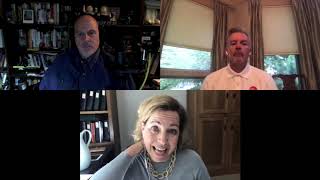
In this Peer Innovation podcast episode, hosts Randy Cantrell and Leo Bottary interview transformation and future‑of‑work expert Laura Goodrich. Laura shares her 25‑year journey from executive coaching to designing a suite of microlearning‑based development programs that blend short video stories, spaced reflection, and both group and one‑on‑one coaching. She explains the origins of her "cinematic microlearning" platform, how it was built to overcome the low retention of traditional training, and why lessons are kept to 3‑5 minutes with weekly spacing. The conversation pivots to the Remote Leadership program, which tackles the social‑emotional health of distributed teams, outlines the four phases of crisis (honeymoon, dissension, rebuilding, renaissance), and highlights the need for intentional dialogue and mental‑health support. Laura discusses the challenges of virtual fatigue, the importance of concise, spaced experiences, and the value of cross‑industry conversations to spark innovation. She revisits the "Seeing Red Cars" metaphor that illustrates how focus shapes perception, and reflects on how the pandemic has accelerated a broader business transformation akin to a new industrial revolution. The episode closes with practical advice for leaders: prioritize social‑emotional needs, create safe spaces for conversation, and empower teams to challenge assumptions one problem at a time.
Chapters
Welcome to Peer Innovation, the podcast with Leo Bottari and me, Randy Cantrell. Building on our previous shows, The Year of the Peer and What Anyone Can Do, we turn our attention to helping business leaders build high-performing teams. We'll talk with a diverse group of thought leaders who will share stories and insights that will help you and your teams achieve new heights. If you believe there is strength in numbers and that meeting the challenges of the future can only be achieved if we do it together, then join us for the conversation. Today's guest is Laura Goodrich. Laura is an expert on transformation and the future of work. She has over 20 years of experience as an executive coach and innovator. She's recognized by Thinkers360 as a top 20 thought leader in transformation, future work, change, culture, and technology. Laura is recognized as the 10 most inspiring businesswomen to watch in 2020. We welcome Laura to the show. And we welcome you back to another episode of Peer Innovation, the podcast. The website is peerinnovation.co. Special guest today, a returning guest, Laura Goodrich. Welcome, Laura.
Well, thank you for having me. I'm excited.
You know, of course, returning guests back in 2017. It's actually hard to imagine it's been that long when Laura was one of our 50 featured guests of the Year of the Peer. And of course, talking a lot about her work at the time with seeing red cars and this idea of, as individuals, really understanding, you know, what we want and what that looks like and how we can, you know, I think realize ourselves and, you know, contribute to teams. But as your work has evolved, Laura, you know, we thought what an amazing time actually to have you on the show to really be able to talk about you know, really what's happening today and what this means for leaders in particular. So let's just, let's get started with that.
Let's do. It's important.
Yeah. So let's start with, just so that people can catch up a little bit, let's talk, give folks a little background about yourself and your work and how things have evolved right up to now.
Well, I have focused on change and transformation and the future of work for 2.5 decades. So a big part of what I do is research and pay very close attention to emerging technologies and human behavior in a change dynamic environment, really being keen observers of human behavior in light of change. And in so doing, we pay close attention to the pinch the pain points that come into play in a change environment and really get quiet and think through solutions that we can help with those pain points that exist. And so we've had an evolution, no doubt about it, a transformation really. I mean, it's kind of interesting that that's the area of our work. And of course, there were times that we had to transform and you would say to yourself, well, I just thought I could teach this to people. I didn't think I'd have, you know, we would have to do it. But it's only fair that we would have to do what we teach, right? What we talk about. And we certainly have. So we started, I, you know, spent a lot of time early on in my career, you know, serving as a coach and advisor to leaders that were leading significant change. That was really where I was at. And then back in about 2008, 2009, I had an epiphany. I was flying over the mountains, beautiful mountains of Utah, and I thought to myself, there is $64 billion spent on training and we know that retention is extremely poor. We know that, you know, shortly after experiencing a lot of training, that it's largely all gone. When we ask people questions, and it made me think of this. I just had a conversation with someone that went through a training, and the next day they were like, I heard some good things, but now I'm kind of forgetting what they were. And a few days later, worse yet. And so it was at that moment I pulled out an 8.5 by 11 sheet of paper and I sketched out, what if we could really utilize the value and benefits of a coaching relationship, which is, you know, it's targeted conversation, it's spaced over time, and, you know, in that spaced over time, giving people the opportunity to reflect and to, you know, ultimately take action, that we can create sustained change, our outcomes can be much better. And so I sketched this out on an 8.5 sheet of paper it had the corner ripped off of it because I'd put a mint in it. And I'll never forget it because I met with a client the next day and I said, I've had this idea. And she said, can I see it? And I was like, oh my God. And I set it on the table and she's like, this is fantastic. And I'd like to take a look at this. I'll bring our executives in. And I mean, I walked out the door that day going, well, Oh my gosh, now what do I do? All I have is this sheet of paper. So, so fast forward, we really jumped in then with the belief that we could design experiences for leaders and employees alike that would include coaching, you know, coaching with one-on-one coaching with groups and what we call a microlearning process. So we leverage video stories and small bite-sized learning spaced over time. So we designed these video stories so that people can, you know, consume one, think about it a little bit, take action on it. So each microlearning is 3, 3.5 minutes max. The reflection time may be 5 minutes. And of course, you know, the action really varies depending on the action steps that we've asked them to take or that that they define themselves. But it's really, we don't give people the answers, we have them come up with their own. So that's evolution. We've got, gosh, 14 of these processes that we've now created. So it's kind of funny, 'cause if you think back to 2008, first of all, the economy just went in a terrible direction. That didn't help us. Technology platforms were not great. Videos were still buffering back then. Think about that. And, and the adoption, the adoption of, you know, human beings, the human side of what we always look at, it was not very good. So it was heavy lifting, let's say heavy lifting.
But just providing that mechanism is so important. You know, we know, especially today, where you've got people who Typically the staff is smaller. They have just as much, if not more work to do in a more compressed timeframe. They go off to some kind of training and then only to have to come back and catch up on everything they missed while they were gone. And it's like there's no mechanism for retaining, let alone implementing anything new when it comes to behavior. So this is, this is really powerful. You know, so 14 areas. So we think about these microlearnings, what does that look like? In other words, what are some of the subject areas covered, for example?
Well, since our research and work and really passion has been around, you know, transformation in the future of work, these programs do address the challenges and opportunities that are present in a change dynamic environment. So we have creating a mindset for change. Agility program. We have made versions of these processes for specific verticals. In particular, you know, we've made it and customized it for healthcare. Healthcare likes to see their environment in an experience. And so we're able to do that. That's really the beauty of being able to use video and stills in that video content that are germane to a particular audience. We are— we just completed, we've been working really, really hard on a program, as you mentioned earlier, called Remote Leadership. And that is a program that addresses, like I said, we're always looking at the challenges. What are the pinch points that are present? So that program really addresses challenge number 1. We're now working remotely. We've recognized that we can drive business outcomes, right? I mean, most organizations are quite surprised that they are able to drive business outcomes in ways they didn't imagine. What is largely being neglected is the social and emotional health of the team. So in fact, I just talked to the leader that said, well, I have a couple employees that have literally been in an apartment now for 4 months. They don't have anybody else in that apartment with them. Their social and emotional needs are not being met. And this leader said, well, I'm so grateful that the rest of ours are because we have family and friends that close. And I said, you know, one of the things we have to recognize is that our teams have social and emotional needs also. And so imagine for a moment that you would— to reverse that— imagine that you would say, well, my social and emotional needs are met on my team, I've got this great team dynamic, well then I will not attend to the social-emotional needs of my family. How long would it take for that to be problematic, right? It would be problematic quite quickly. And so, so this program addresses that, the social-emotional needs of the team. And then the next point is, here we are leading a remote team through crisis, and that's another element that we are largely not speaking to. But think about sustained stress that people have been experiencing over the course of time. It's now— now we're getting into months upon months, and we've got much uncertainty going forward. In the midst of all this work that I've been doing, I spent a couple of years working as a crisis counselor and as a volunteer crisis counselor, and in that space I had the experience of working with a lot of folks in crisis and came to recognize that the challenges with crisis are not often not in the middle of them, right? They are on the other side of those crises. And so that's a lot of what we're seeing right now. And I, and just to give an example, so think about we don't have to be frontline workers to recognize we were absolute heroes in a moment. Leaders around the world were heroes. They took their teams and they put them in a remote environment and they got them up to speed literally overnight. I mean, none of us had even a moment to collect ourselves to sort of get oriented around that. So very heroic, which is, you know, the first phase of a crisis environment. Then the next phase of crisis is the honeymoon phase. Okay, now we can do it. Look at us, we can do a great job. As one leader said to me, we're doing great. Our adult children are here, we like each other, this is great. And then 3 weeks later, I got a text message from that leader that said, Wi-Fi's been down twice, I am sitting on my rear end in Zoom meetings back to back for 8 hours a day, and my adult son just walked through a conference meeting with his pajamas on. Right? And so now we've moved into the dissension phase, and it's not— so now we're frustrated. Now we're frustrated because our social-emotional needs haven't been met. We haven't had a place to express the stress that we're experiencing. Now we're frustrated, and what we're seeing within organizations and what we're hearing about is, is behavior that is very unexpected and behavior that is that is problematic, and it's this bursting out of all of these things that is in place. Now, offer, you know, the next phase in the— in is the rebuilding phase, and hopefully we'll be moving into rebuilding. And I've added the Renaissance phase because I really believe coming along with this work and change in the future of work is that we are going to see a Renaissance of businesses that are going to come out of these ashes, opportunities that are really quite extraordinary, but in the midst of it also peril. So that's the other thing that we've got that's weighing.
What I love about what you're talking about though, you know, when we think about training oftentimes we think about people who are learning skills or learning different things that help them do their job. What you're talking about reminds me of a math teacher that I had in high school. And he was the only person who actually didn't teach memorize this formula so that you'll, when you see this problem, you will know how to plug and play and how to solve it, right? What he taught was how to teach mathematically, or how to think mathematically, I should say. And so now all of a sudden I know why the formula was created as it is. And now when I see a problem I've never seen before, I actually have a chance at being able to figure out how to go about solving it. When I think about a lot of the stuff you're talking about and teaching, this is the kind of stuff that builds just muscles and awareness and that is reusable and repeatable and you just get better at it and it makes you probably the most important thing you can be in today's world and that's being adaptable, being agile that you talked about, being able to— because we're confronting situations all the time that we've never seen before and we have to understand, we have to be able to draw from something in order to be able to successfully deal with that. And it seems that the genius of your training and what you do is you give people the ability to do those kinds of things. Would that be fair?
That is fair, and thank you for making that note because the next, um, critical part of this program, what we talk about is it's really about empowering leaders to transform the underlying assumptions of the work, the workplace, the workforce, all of that, transforming those underlying assumptions. So all of us have these assumptions that got us here, and here we are, and we, you know, the natural tendency is to be tethered to them and hold on to them. And so what we, what we created in this process is a way to think through challenges one challenge at a time. And we did that for a very specific reason, because it's— we need to sort of take it one step at a time. There's so much uncertainty that we have now that, you know, nobody's taking big leaps at this point. We need to take one step at a time, but we have to— we have to stop in the moment when we encounter challenges and consider different solutions, because those underlying assumptions are no longer serving us.
All right. You know, the thing you brought up also that I love is that we don't think about it often enough. Like, you work as a consultant, a coach, you know, to all these companies to kind of help them through whatever transition that we're kind of dealing with right now. And yet, what we don't think often enough is that you've had to go through that transition at exactly the same time with your own business. Exactly. So, what is— how has that been for you in terms of, A, trying to figure out how to serve others, to be in terms of just your own company and your own concern. Like, how do you parallel those things? What has that been like for you?
You know, it's every once in a while you— every once in a while you're in the right place at the right time, right? And it's not that often that it happens. And like I mentioned, we had some tremendously heavy lifting on the front end of our business. If I were to share with you the number of years that we worked to lift this model and to get traction with it, So it's not that we haven't experienced hardship because we have experienced hardship, but it is, you know, here we are 12 years in and have been designing virtual experiences for that time. So it has, you know, this has been a good time for us. It's hard to say that in light of many industries that have been hurt by it, and that's why I say, you know, let me tell you, we've had our pain and we've had our hurts as well. So don't think for a moment that we have been exempt from that. But we spent the last 12 years designing virtual processes. And there's a lot of lessons learned. And we certainly see, you know, as people en masse try to step into this space, a lot of mistakes being made and mistakes that we learned you know, early on, such as I just had someone that reached out to me and said that they had designed a virtual 6-hour program, 3-day, 6 hours a day. I mean, can you imagine the amount of fatigue, the sitting viewing fatigue that's going to come into play? I mean, that's really the antithesis of everything that we've created. We create experiences that are spaced over time. Remote Leadership is a 4-month process, but many of the elements in it, the touchpoints, the reminders, that, you know, they're extremely short. The microlearning is 3 minutes, the self-reflection is 5, the group coaching is 30. The longest time that we're working together is the one-on-one coaching with these leaders, which is just once a month. And, you know, those are, those come That comes from experience. That comes from, you know, having tried a lot of things and realizing what creates ongoing engagement, what keeps people, you know, really rolling their sleeves up and actively working toward something. That's, that's some of the lessons learned that we've gathered over time.
Or walk us through the user experience. And you alluded to it there, and I'm exhausted just by listening to a 6-hour.
I know, I know. Isn't that true?
You get experience in it just hearing about it.
Yeah, that's right.
Can drain me. Cinematic microlearning is what you call it. So walk us through that user experience and what changes you may make to that user experience because of this pandemic and some of the lessons you've learned in the last 5 months and we don't see the end in sight yet.
And before, right? And before that. That's a, it's a great question. So cinematic microlearning is a part of a larger process. What we have is an interactive technology platform where, you know, participants, we can schedule our virtual sessions. So we go in there and we'll work with that client. We'll schedule a kickoff. Session, bring everyone together. And the kickoff is simply the link to the session would bring us to Zoom where we would begin the process. And then we would invite them onto the platform. And on the platform, they would have all of their group coaching, which are weekly, scheduled. So that's all there for them. They schedule their one-on-one coaching, and then they receive a push notification for the first microlearning lesson. They would view that lesson, respond to self-reflection questions. How does this relate to my work, my project, or where we're going as a business? And we'll prompt them to take action. The next time they come in, the platform says, oh, did you take action? Right? So we are able to create that accountability where they check off, yes, I had a conversation with each of my employees or 2 employees or whatever that action might be, they check it off. So now we're able to look at a dashboard and see exactly where a given leader is at. And I can review a dashboard so when I gather with that group of leaders for that 30-minute coaching session that week, I can come in and I can speak to where they're at and the action steps that they've taken and really debrief what their experience has That time gap between sessions, between learnings, is typically what? Typically 1 week. There again has been another, you know, big lesson that we've learned. We've had organizations that say, let's do a couple a week. It doesn't take them about 2 minutes to realize that's just too much. So that again has been a learning process, but we've come to recognize that spacing Those experiences once a week gives ample amount of time for conversation, action, and those kinds of things. So we're really moving into that place where they're, you know, sinking in.
What does the group coaching look like during this pandemic versus pre-pandemic? I'm curious if it changed at all.
Well, you ask a really important question. I started with a group of leaders recently, and what I observed is something that I haven't seen. So when we're working on these projects, almost always this is an organization that is being charged with changing. There's— I mean, that's really almost always the prerequisite, and that might be the implementation of new technologies coming in, it could be the acquisition, it might be a lot of things. I'm talking historically. And so when you begin the process of coaching, I always identify what are the themes that are emerging. And 9 times out of 10, the themes that emerge are frustration and confusion. Frustration that they're trying to advance in, let's say, you know, the new technology that they're going to bring in. It's, you know, it's frustration because they're seeing the resistance the natural resistance to it, and then confusion by behavior, right? Confusion, like, wow, I didn't, that's odd, I didn't think this person would behave that way. I started off with this group of leaders, and I should note, this is an organization that has had a significant uptick, a positive, has been positively impacted. Not like Zoom, not like a crazy sort of growth, but a very significantly positive one. And every one of those leaders mentioned one of two things in terms of the theme: anxiety and depression. They were either speaking about it from their own perspective or people on the team. And sort of that comes back to, you know, why when we designed this program that we designed, you know, how do we make sure we give people the opportunity for expression because we're pushing through on business continuity now, and we're not addressing some of the certain realities and creating either resources to support people or simply the opportunity for them to express their experiences.
And, you know, the implications of these realities are really important. One of the things, you know, Randy, I know, and if you had seen it, but I wrote a piece for CEO World that talked about what that looks like. Not only burnout, which is an obvious one that CEOs recognized could be coming soon, if not happening already, but I think there's many others too. There's obscurity, right? If you think it was tough to get noticed at work when you all went into the office every day, and imagine what it feels like when you're sitting at home saying like, hey, I'm working hard and doing— or the feeling of social isolation you talked about, the feeling that you are kind of insulated also from the perspective of there's all of this stuff going on, but you're not feeling connected to the larger purpose of the organization.
Right.
You've just got your own job right in front of you. And then of course there's the inspiration part of it. How do you, how do I do things in a way that can actually keep me up and keep me fired up and inspired and feeling good about my work and what I'm doing? And, you know, so when we don't address these needs that you're talking about, any number of these things, either by themselves or in combination, you know, become inevitable. You know, quite frankly, when we're working from home like this. And so I think as long as we do pay attention to it, and as long as people like you are out there giving people, first of all, the awareness, and then obviously also the ability to kind of being able to lead through these times, you know, I think it's really, really powerful, really extraordinary.
Well, I mean, we're all learning along the way. We are all learning along the way. But if you think about it, and sort of coming back to the transforming the underlying assumptions, we're beginning to see some of these organizations that are, you know, they're going to take on entirely different businesses, right? One of the examples that I thought was really interesting was, you know, in the making of the masks related to the pandemic, how in collab— 3M in collaboration collaboration with Ford. I'm pretty sure Ford came in. Ford was going to contribute a piece of it, and I spoke with someone at 11 days from the first conversation to the point that they put a product on an assembly line. And to think about, that's literally moving a mountain. But it's also, you know, it's also a business. It's becoming a different business. All together. And so, you know, there's, there's, there's needs that are emerging, there's opportunities that are emerging, and there's countless businesses that were on life support before this, right? Countless industries that were really at a place of struggle, and they face no option but to come up with innovative solutions. And that's really what we built into this process is how do we address the challenges that we're facing and we come up with really innovative angles to them and potentially new directions that we can go in with our organizations, new revenue opportunities in the midst of this.
Yeah, and I think you bring up a great point. This whole idea of finding the opportunity in the adversity is really, you know, it's kind of the metaphor of a fighter. You know, when someone throws you a punch, by definition they're also leaving themselves open in some way. And understanding and seeing that opening and being able to take advantage of it becomes huge. We think about all these companies, for example, I was involved in something the other day where I was sharing, I think it was Disney, CNN, there's a whole host of companies out there from a long list that all started during a recession.
Yeah. Yes. I saw that. I love that.
Things like that. And so it's, it's, um, I think it challenges all of us. And I think part of what we can do when we get together and we— whether people listen to podcasts or they participate in peer group meetings or they work with their coach or their fellow employees, whatever— just to get together and have conversations about these things. Because the more perspectives we can get on it, the greater ability we're all going to have maybe to see that opening, to find that opportunity.
I love that you mentioned that because one of the accountabilities that we built into this program is conversations with people outside of our industry because we're having the conversations with those in our industry, and yet if we believe that if we have dialogue and conversations with people outside of our industry, that's where we're going to come up with the innovative breakthrough thinking. So when we begin that process, we ask those leaders to have 10 conversations in the next month with people outside of their industry. And that they reach out to their most innovative, forward-leaning people in their network, friends, family, you know, whoever it might be. And really, you know, have the conversation that people are not shouting off of the mountaintop about. There's a lot of conversations going on right now which are quite quiet. So how can we learn from one another and how can we leverage that, those conversations to build, build new and innovative solutions?
It's so interesting when you get the perspective sometimes of people who think to themselves or will say out loud, I don't know what I could possibly learn from someone who doesn't know anything about my business. And usually one of the greatest things that I see happen all the time is people who don't know about your business specifically will ask you the questions you've stopped asking yourself. Asked yourself a long time ago. And especially when times of change is born now, all of a sudden we start, you know, grappling with those questions that we've stopped asking ourselves because it's always the way we've done it or whatever happens to be. It helps us find that opportunity sometimes that we would have missed entirely had we been not asked by someone outside of our industry who wouldn't take that question for granted at all, but just will ask. And it's always amazing, the aha moment that occurs for so many.
For so many. And the moment that that happens— and we had that as a business where we had someone that said, okay, here's an activity that you have been involved in for, you know, X period of time. They put the numbers out there and then they say, well, that's a very logical— seems like a very logical activity. What actual revenue and outcomes have come from it? And it was just brutally painful to go, not much, right? Not much. And, you know, in that moment when you have that clarity, you just, it's, you don't know whether you want to, you know, grab a bag of burrito, you know, burritos and, you know, just cry and burritos and your beer or be so grateful that the question opened the door to realize that you were doing something that was just, it seemed really logical, but really wasn't. And these are the kind of things that are coming up in conversations now. That made sense. That action that we used to do actually used to help, but it isn't. If we really honestly look at the numbers, it's not helping us reskill our workforce. Again, one of the biggest challenges that that are being faced as you look at these transitions. Just last night I had a conversation with a leader that said, okay, so we're, you know, we're gonna change in this way. Well, this change, I don't have the skill set on my team. Zero. It's not there. I mean, they just gave a definition of the team and what they're going to do, and they don't have the skill set, and we have a hiring freeze. So now what am I supposed to do? So think about that, right, is that the things that got us here are not the things that are going to get us to where we're going in many cases. And these are the conversations that are happening quietly between leaders, quietly between professionals. And so that is a really critical piece. How do we make those connections? How do we ask those questions and get quiet enough to, to hear, hear what's being said and, and to have those moments where we go, well, we're gonna have to figure out another way. That road that got us here, not getting us where we're going.
Well, and that's the essence of leadership, which— and I love the word, but also just for our listeners too, because a lot of your terminology does have a, you know, car reference on it. So tell us about that a little That was the start.
I sort of missed that piece. That's an interesting piece. So I, I just starting— oh my gosh, now 17 years ago, I started to do television and was a host on a number of television shows and wrote a concept for a television show. And my business— my now business partner, an Emmy Award-winning producer was brought in to produce that pilot. And we didn't get that show off the ground. We made it, you know, multiple steps, but just didn't get it off the ground. And he came to me afterwards and said, you know, Laura, I know that you want to do television, but there's a lot of work to be done in business and industry storytelling. You know, storytelling was something I lived by. Always in my work. And storytelling is what he lived by behind the lens. And we then came together and we produced our first film DVD. And, you know, to give that historical perspective, and it was called Seeing Red Cars. And that's what brought you and I together. That's how we met originally, because I think you used the film in your teaching, right?
I did. It was, it was, I actually was a student when I first was used by another professor, and then, and then I kind of, you know, continued with it when I ended up teaching for Seton Hall University, and even later at Rutgers as well. And it's just, it's just such a wonderful piece because everybody can relate to it. Everybody can relate to it. We all— you just watch it and go, yeah, yeah.
Okay, so the premise is— and let me tell you where it was born from. So I had spent all these years working with leaders that are charged with leading change, and I would say to them, in light of this change and what you can control, what do you want? And without a moment's hesitation, they would tell me everything that they didn't want and all the things they wanted to avoid. And, you know, I always would say, you know, you get more of whatever it is you focus on. It's kind of like when you buy a red car, you buy a red car, and what do you notice? Red cars, because that's where your focus is at. So that's where that film came from, and it was very, very successful. It was very successful. We went on to create a number of other films. We came through the economic downturn. And I'll never forget it because I woke up in the middle of the night one night and I said, this, what we're experiencing right now is not the economic downturn. This is disruption. This is rock-solid disruption. I don't have a DVD drive in my computer. And now we've got people that are really gravitating to the story on YouTube. YouTube. But those DVDs that we sold, they were very expensive. And so it's just incredibly clear to me that we needed to do— we needed to transform everything that we did. And I went to our partners that we had at the time. They looked at me like I had 8 eyes and really, really, you know, dismissed what I was saying. And that wasn't easy either. But at that point, that's, and then shortly thereafter, I had that epiphany on that flight and said, listen, we can take these stories and we can break them in bite-sized pieces. And if we can space that over time, that's where that all, that was that evolution. So that is where that began. But that, that concept is coming alive again. I can't tell you how many people I'm getting messages internationally that are reading that, reading the book, seeing red cars now, which is just surprising because I don't, you know, I don't, I, we have a toolkit that goes with it and many of the international versions, that's not even live anymore. So I'm getting direct messages with people that are like, can I get the Portuguese version or the Spanish version or the Russian version or what have you. So that's interesting.
An opportunity.
I just sent a chat to the wrong person. How about that?
There's one of the challenges with the—
I love it.
We've got all kinds of It is very human. It is very human. We've got all kinds of things that could possibly happen, for sure.
Laura, what do you see? And it's a loaded question, but what do you, what do you see transforming in your business? Is there any one thing that you see, whether it's just, I mean, because this all really plays into your wheelhouse technologically?
Well, it's beyond technologically. It's really about, you know, one of the things really focusing on transformation and the future of work is, you know, this question is that what would usher us into, you know, whether we call it the Fourth Industrial Revolution or the Fifth Industrial Revolution or however we might term it, what would create that tipping point? It was always the question that I asked and have for years. And I didn't think pandemic. I thought possibly AI, maybe the combination of of, you know, IoT and 5G, or maybe it would be autonomous technology or virtual reality or any of these things. And lo and behold, here we are in the midst of a pandemic. And if you really think about the behavioral shifts that are going on, you know, I believe without a shadow of a doubt that we are in the midst of an explosively fast business transformation, and few industries will be exempt. And I feel pretty passionate about playing a role in serving as a guide, as a partner, as a mentor, as a whatever you want to call me, with leaders that will be charged with leading the way. And so, you know, I don't think this is going to be easy. I don't think, you know, if you think back to the early 1900s when, you know, all but 4% of the population made their— their business was on the farm. And then when they— there was a transition into the Industrial Revolution and people began to, you know, manufacture. If you think that, you know, the farmers and the blacksmiths were standing around going, well, this is terribly exciting, look at the opportunities that we have for us. I think we could, you know, safely say that they didn't. They probably thought we would— they would go back to business as usual. I'm guessing they would say, oh, they'll find life in the city to be unpleasant. We have to live in the plains. I'm guessing they were quite dismissive of it. And no doubt we have that around us right now. And that's, you know, that's the— that's the hard part. That's the hard part, is that we're going to and see some hard things happen.
The great thing about your work that, you know, that I know Leo and I both love is, you know, it is this evergreen nature, which I would suspect is why Red Cars is having a resurgence. Because at the end of the day, it still is about us as people, and it's about the way we think and the way we approach our problems or our challenges or opportunities. And the way that we interact with each other as well. I want to ask you one last question before we kind of hawk your website. We're going to send people to gwtnext.com, and we'll let you hawk anything before we close. But leaders that are listening to this podcast and are concerned about their teams, you have any parting word of advice for things that they should lean into?
Yes, I do. One, recognize that this— that your team has social and emotional needs, and it's important to, to content— to be very strategic and mindful and plan for that now, right? How do we address the social-emotional needs that we're not physically together. Two, your team has gone and is in the midst of crisis with uncertainty on the horizon. So consider how are we going to address the emotional needs of our teams, and as a leader, how am I going to create a place for dialogue and conversation that is much needed? And then ultimately, the foundation of that is How do we enable our teams, one person at a time, one challenge at a time, to, to challenge that status quo, that knee-jerk reaction to the challenges that we're facing, and kind of set the stage so that we can consider what's next? Those are the three things. And if you're not sure how to go about doing that, then reach out to us. Us because we've thought a lot about this. We've worked really hard at creating methods and tools to support leaders in this journey with all of those pieces that are at play. So, you know, we're, we're here. I'm here. I'm ready for that conversation, and we've got some tools that we can place into the hands. It doesn't have to be, you know, what we've created we can place into the hands of leaders to, you know, deploy within their organizations. And that's what we've been, you know, that's what we've been working on for the last 4 months, truthfully. So when you say, what is the, you know, last 4 months been like for us, I mean, just absolute nonstop work is what it's been. And I'm grateful for that.
Well, as it should be. Your work is, you know, excellent. It's more relevant than ever people are already making incredible investments and yet not realizing anywhere near the ROI they could be from it. And I think everything you bring to the table helps companies maximize that in such a huge way. So look, thank you so much for being on the show. We loved having you, and just thanks very much for everything.
Well, I've loved being here, and I'm a big fan of you know, what your work that you're doing. And I think there's just such lovely synergy, and that's always fun to be amongst, you know, amongst synergistic thought leadership. So appreciate being here.
Here we go. All right.
Thank you for joining us. To subscribe to the podcast and learn more about how you can engage peer innovation for your organization, contact us on the website at peerinnovation.co. Until next week, remember, the power of we begins with you.










