Leo Hits A Milestone: 200 Peernovation Workshops
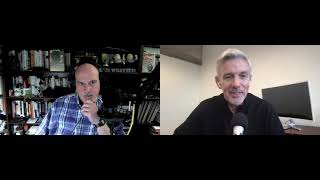
Leo Bottari hit 200 Vistage Group workshops, which started as a single pilot in San Diego and now run globally, often in one virtual day across time zones. The workshops apply peer-advisory dynamics to corporate teams, emphasizing psychological safety and accountability. Leo shares how intentional conversations unlock measurable improvements, though it's not a quick fix.
Chapters
Welcome to Peer Innovation, the podcast with Leo Bottari and me, Randy Cantrell. Building on our previous shows, The Year of the Peer and What Anyone Can Do, we turn our attention to helping business leaders build high-performing teams. We'll talk with a diverse group of thought leaders who will share stories and insights that will help you and your teams achieve new heights. If you believe there is strength in numbers and that meeting the challenges of the future can only be achieved if we do it together, then join us for the conversation. Welcome to another episode of PeerNovation, the podcast. The website is peerinnovation.co. He is Leo Battari. I'm Randy Cantrell. He's coming to us. He's from the road. He's in Birmingham, Alabama. He has delivered— I don't know, was it this week? Your 200th?
Yes, as of yesterday. Yesterday, 200th Vistage Group workshop. For high-performing groups, essentially, which has now, of course, become peer innovation. And depending on the group, I'll either work with the group on how they can be a better group, or in some occasions or some situations, like earlier, I went back to Ohio. And I delivered the original workshop about 3 years ago. And they wanted kind of a second installment. But of course, rather than repeat what we did 3 years ago with a lot of the same members, it was the idea of now how do we do a team exercise with the group so that they can engage one another in conversations about how they go about finding the right people and what does that look like in their companies? How do they achieve psychological safety? How do they drive and make sure that employees are productive and, you know, have a culture of accountability to one another? And then what as leaders can they do to actually you know, take their role to the next level in terms of supporting their team. So, um, yeah, it's been, uh, 200 as of yesterday. Last week I actually had an instance that I shared with you that I was in Ohio in the morning and then from the hotel delivered a second presentation Toronto in the afternoon, only to do a third, uh, to Australia that night, which would have been of course the following morning for them. So it's, uh, so it's been really busy. But it's been really awesome and really great, and the whole thing has been such an unbelievable learning experience. I can't begin to tell you. I mean, when I think about doing this for the very first time with a gentleman who's a Vistage chair in San Diego called Charles Fuhrman, and he was the very first one who said, okay, you can take it to my group and get you off to a start. And then from there, it's just the rest is history kind of thing, but very much in the middle of it too. You know, it's, it's a lot of fun. Just did a— just finished a group here, uh, in Birmingham this morning. I have one, um, you know, in Canada, um, on Thursday that'll be virtual. And then I've got several next week as well.
So yeah, and the great news is kind of— I know that we're not technically post-COVID, but it sure feels like we're getting awfully close. Here in Texas, we would tell you we are post-COVID because Well, it's kind of how we roll, but you know, your ability to get back on a plane and to travel and do some of this in person, as well as do an awful lot of it virtual, which I think, I hope the pandemic, I'm optimistic. Are you that the pandemic has taught us how capable we can be in doing a lot of this kind of stuff virtually? And so, man, I mean, you've got access Australia all over the globe. I know you got, you got big things happening in China. As well.
So coming, yeah, soon.
Pretty awesome.
And the China stuff is, you know, so the meetings now, um, are virtual, if you will. In fact, um, there's a, um, meeting that I'm going to be actually doing an introduction and, uh, taking some questions, um, that I'll be doing Thursday night Pacific time at about 10:30 PM. That'll be the following day about 1:30 PM in China. And so that'll be happening actually soon, you know. So, uh, and then I'll be going there, uh, in November. We're looking at doing some events and everything there. Of course, the book comes out there next month. Um, there's just a lot happening. And, uh, yeah, so I feel like I do need several of me, you know, as I'm trying to run around and be everywhere at the same time. But to your point, virtual helps a lot, you know, that the fact that I could do 3 meetings in one day, right, from one location, uh, is, is huge. Um, you know, to be here in Birmingham today, uh, was wonderful. Um, you know, it doesn't feel so much like we're post-COVID when we're in an airplane, let me just tell you that. When you're having to wear a mask from the West Coast and everything's far away and it just seems a bit— however, when you get to a lot of locations, there's no question that with a high percentage in many cases in the communities I've visited where people are fully vaccinated and people are really starting to feel a lot different. People are shaking hands again, people are doing things that we weren't sure for a while there were ever going to happen again. I think we're headed in a good direction. I think to your point too, with a few exceptions here and there, and we did manage to politicize the pandemic unfortunately, but even with that, I think we still managed to come together as a community, and I think what we're doing right now, when you consider where we are against a lot of the rest of the world who's still struggling with a lot of it, and given the severity of where this once stood in the U.S., I think, uh, you know, we should start feeling a lot better and feeling a bit of a sign of relief. But, you know, we got to be mindful too.
That's right. Well, when you posted about the 200th Vistage presentation over at LinkedIn. And by the way, our audience, go to the website, go to any of the show notes. You can go to any episode and you will see links where you can connect with Leo by way of LinkedIn. All of our social media profiles are pretty much in every episode. So let me encourage you to do that. You can, you can connect with him and kind of follow the stuff he posts really regularly and a lot of cool stuff over at LinkedIn. But the photograph, you know, the selfie that you took, you know, after you did the 200th, yeah, it got a lot of attention. I mean, it's a big milestone. And as I think of just the podcast journey, which is only part of the journey, it certainly isn't all of it, but, you know, from the genesis of the first book, The Power of Peers, up through this third book, Peer Innovation, and kind of the arc of this journey as a friend and a cohort, but looking a little bit outside in and seeing that journey. I don't know, before we hit record, I was thinking of the conversations that you and I have had about the power of peers for teams, the power of peers inside companies and organizations. And I know that you've gotten increasingly more interest in these CEO groups with CEOs, the aha moments of them connecting the dots and figuring out, you know what, why can't, why can't I bring this inside my company? Why can't I help leverage this? So I don't know if that's a kickoff point for us to kind of walk down the path of you rehearsing some of the things that you've learned over the course of these 200 workshops that you've done with Vistage and those That's just with Vistage, which is a huge milestone and a huge hats off to them for having the foresight to, to offer the Vistage chairs the opportunity to have these workshops with you. But I don't know, just, I'm curious how that journey has felt and the insights that you have learned along the way.
So a couple of things. First of all, before we get into that, I do want to— we should, if we don't know this already, between when we started with the Year of the Peer, which was kind of the idea of this venture into podcasting where we at least had an exit strategy in year one was kind of the idea, right? To morphing into what anyone can do around the second book to the brand change to Peer Innovation. We need to check out, you know, how many episodes between those three shows that we've done. We're probably, pretty close. You know, I'm not sure it's 200 or not, but it's, it's a lot. You know, it's, it's right there. You know, it's, it's, it's way over 100. We know that for sure.
Yeah.
Um, so, um, but anyway, um, you know, I think regard— with regard to the team situation, I think that the most obvious connection that CEOs make to what they do and what peer advisory groups do so brilliantly is applying it to their cross-functional work team, because what they see is a very similar situation where you're there for a specific reason, right? Which a cross-functional work team is there for the enterprise to work best for the company. But you do have all the different perspectives around the table, and it's finance, it's legal, it's HR, it's sales, it's, you know, all of that, and how important that is not only to think in terms of sharing with one another and looking at the company really holistically and removing silos. But again, all the necessary thinking that can really truly benefit the organization moving forward without regard for people believing that they're only there to protect their department and their people and their budget and their pet programs and all that kind of thing, that they're truly there for to advance the enterprise. And when that happens, and when you have trust in that way in a cross-functional work team in the same way you can have it in a CEO peer advisory group, That's really powerful. And I think it's that step that moves you from what Harvard Business Review calls the dysfunctional work team to being a truly functional cross-functional work team. So I think that's been a big aha over the time. There's no question that one of the big ones too is when we look at the 5 factors, the 5 factors in the original book were expressed a bit differently than they are today, but they were also not Illustrated, if you will, in the form of a reinforcing loop. They were just kind of these pillars. They were these 5, you know, they were kind of listed as these 5 factors. And the reality is that it has to start with the right people. And then once they, you know, can enjoy an environment of psychological safety and leverage that psychological safety, which was another huge learning about this, just because the environment is psychologically safe doesn't mean everyone is accessing it and leveraging it to the degree they need to. And with that, that opens the door for productivity. And when you've got a group that enjoys true psychological safety and really cares about their productivity, then accountability in the form of accepting personal responsibility for bringing your best to the situation starts to really come into play. And you see this incredible relationship between psychological safety and accountability. I was in a meeting actually just a week or so ago where someone was talking about the fact that, hey, if I have to hold this person accountable to do their job, I've got the wrong person. But then when you ask that same person, how do you think psychological safety is in your organization? He was like, well, pretty good. And I said, well, okay, well, that's great. But now you have to imagine, right, that if someone doesn't feel psychological safety, how in the world are they ever going to take ownership over the area as you want them to without fear that they're going to make a mistake or something's going wrong and there's, you know, dire consequences awaiting them, you know, if that happens. So you've got to have both of those things. And, you know, as Amy Edmondson and others point out all the time, psychological safety isn't about everyone being nice and all of that kind of stuff. It's very much about candor, the ability to be open, the ability to be selfless and recognize why you're there. And it's actually very much about challenging one another in the most positive of ways and coming from a place of intent that isn't personal in any way, shape, or form. And so, I mean, I could go on and on in terms of— and again, this isn't You know, all of this, when you really think about it, from the first book all the way through, this has come from group members, it's come from team members, it's come from experiences that people share with regard to their own situations and their own attitudes and mindset and what works and what doesn't. So I think for anyone who reads this work in any of the 3 books, and particularly peer innovation, because Pernovation is that culmination basically of, hey, here at the time was about 150 workshops that I had under my belt at the moment, and there were some things to learn from those workshops that not only advanced the, the ball down the field with regard to what's going on with groups, but also created a much clearer understanding of how these principles can be transferred and translated to high-performing teams and companies. And that's been just really exciting to to put together right now.
Not to ask you to show your underwear, but is there anything that from the beginning till now, 200 workshops with Vistage later, that you feel like didn't quite get that right and now I feel like I've got it more right?
Um, well, let's put it this way. I don't— I think there's no question that I have a much better understanding, and so I can communicate more clearly the relationship between psychological safety and accountability than I ever could before. And people start really seeing the value and benefit from it. I think there's no question about that. Um, I think too that— and again, this is a much more about emphasis than anything else— but I think it's easy when you're looking at peer advisory groups who bring people together from various industries and practices and all that, that diversity becomes a real driving force behind wanting all the voices around the table. And I still continue to believe that. However, what is equally, and not even equally, maybe largely more important, is having the shared values that are necessary to being a good contributing member. So I say that from the perspective of having one more bank anchor in the group, or one— or a woman in the group, or, you know, anybody in the group who can't chin the bar when it comes to really being a good contributing member is not going to help the group. Yet you can have someone who may not come from an industry that you would have identified at all as maybe being added to the group, but yet their voice, because of who they are, because they will share their experiences, they'll be open, they'll be vulnerable, they'll be just an incredible contributor, um, will always deliver value. So, you know, I think at a certain level, you know, we can aspire to have all those voices around the table, which I think is real important. But I think there's no question that it kind of leans in the direction of making sure first and foremost that they can be a good contributor. And wherever they come, if they are that good, curious person who's a learner, who's willing to grow and willing to give of themselves to others, You want those people on your group, or on your team for that matter.
Well, we know that all of us who are evangelizing anything, we have naysayers, right? We've got these people that are just non-converts. When you encounter a non-convert, what's the issue?
Well, first of all, these groups aren't for everybody. I'm going to tell you that right away. You know what I mean? And I knew you understand this really well. So I think if someone is absolutely not the person who, you know, again, when you think about those things that we said are important to being a contributing member to a peer advisory group, if that's not who they are, then there are other ways to learn and grow, and they should pursue those things, to be honest. And I think that's okay. You know, that's fair. There's nothing wrong with that. There's nothing anything around that. I think for people who are curious about it, believe they could be a contributing member, but question it, they do so usually for two reasons, especially in a group where people were, are from different industries from their own. One, they basically say, how is someone who knows nothing about my specific business possibly going to help me? And that is the question. What they realize very quickly is you can go to one meeting and realize how many shared challenges you have with everybody around the table. And by the way, because they come from different industries and they have different practices and different way of doing things, you become exposed to things that you would never if you just stayed heads down in your own company and even in your own industry sector. So that becomes huge. The second one they say is, well, I think about being helped by someone who might be my mentor or my coach, which means they're more experienced than I am, they're more advanced than I am. And how are a bunch of people who are in the same stage I am, how are we going to help one another? And I think again, very similarly, they become very surprised at all of the incredible value that everyone brings to one another around the table because their experiences are so different and they tend to fill in those blanks for one another. Not everyone there knows everything, but they know something that they contribute to the entire group. And when that starts happening at any scale, they start feeling like, wow, okay, now, now I get it. And because they're at that same stage oftentimes of learning and growing, they, they do it together and they, they celebrate in that and enjoy that. And that can be a lot of fun too.
You did a considerable number of these workshops. Pre-pandemic. You did a number of them during the pandemic, and now you're beginning to do some— well, we'll go ahead and call it post-pandemic. The cross-functional work team, the feedback that you've gotten, particularly from the Vistage members in general, have cross-functional work teams over the course of these 200 workshops are CEOs reporting that they feel like their leadership teams are becoming less siloed, less self-focused? I mean, is there— what shift, if any, has been made over the course of these 200 workshops that you've seen?
I think more siloed, if anything. It's hard enough when everyone's all together to have a view and to have a lens into what's going on in the rest of the company. I think for many people who were leading sales teams, marketing teams, and all that, they were so focused focused on keeping that team together and functioning and productive and all that, that they didn't often stick their head up enough to see what was happening in the rest of the organization. And, and, you know, short term you can kind of get away with that. Longer term, I would argue that we need to start looking up a little bit, and we need to start giving everyone a window into what's going on in the entire organization, not just with their particular job in their particular department. This was kind of this idea of insulation that we talked about with regard to some of the things that were happening out there with pandemic, in addition to people, you know, just being burned out or feeling isolated or feeling obscure and all that, this idea of, of that focus, um, you know, again, short-term, can you kind of get away with doing that and get your job and with productivity up? Yes. Um, do other things potentially suffer longer term if you don't kind of get your head back in the game, um, with regard to what's going on in the entire organization? Absolutely.
Are CEOs feeling— my guess would be they— how could they not— feeling empowered that the peer innovation framework, which is what we refer to it as, that it has such real-world practicality and application that it can— it's not some frou-frou pie-in-the-sky kind of kind of theory, it certainly has been practiced enough and, and put into practice enough. Are CEOs that may be hearing about it for the first time, especially those people that are kind of just beginning to get their feet wet in just the concept of it, I mean, are they feeling somewhat empowered that this can help? This may be able to solve some real issues that I've got in my company.
I think CEOs who are in groups definitely recognize how applicable what they do so well in groups can be brought to teams in their organization. There's no question about that. I think they recognize too, though, and I don't have any, you know, there's no illusions about this, that these things take time too. This is not something where you go in and just, you know, flip the light switch and everything changes at your organization, and all of a sudden now everyone is working together seamlessly and beautifully and all of that. But I think if you want it to happen someday, it has to begin at some point in time where you have intentional conversations about what you want for yourself. And this is what this is about too, as you all know. I'm really adamant about this whole approach not being a prescription, but being a framework for people to have intentional conversations about what they want for themselves and what's right for them, what's right for their team and their particular organization and what that looks like. Clarity becomes huge and we have too little of it in companies because we don't have these conversations. They don't happen organically. When we sit and have conversations around people and psychological safety, productivity, accountability, and leadership, how many times we sit around having lunch, having those conversations or anywhere in a Zoom call, doesn't matter. We're just not doing that and we're not talking about those things. We just expect we're going to work together as a team because that's— I'm on the marketing team or on this cross-functional team or on whatever team I'm supposed to be on, and they tell me I'm a team, and that's what we're going to do. And, uh, but there's very little attention really given to, God, how productive that team really could be if, you know, we actually, um, you know, put a little attention toward it.
I know we use the tagline, the power of, of we begins with me. And in that same vein, how are you finding CEOs embracing that kind of a thought when it comes to their own transformation as a leader, as kind of the tip of the spear in trying to lead an initiative like a peer innovation framework?
Well, one of the most powerful stories, and I say this, I call it one of the most powerful stories because It's one of the stories that CEOs react to when I tell it most strongly. And it's the story of Richard from the book. And Richard was the one who stood up and was kind of responding to this idea of attendance being important at the meeting and that, you know, he paid the dues and it was him who lost when he wasn't there and he went on and on. When he got done with his speech and I finally asked some of the people around the table to give me a 1-minute description of what's lost when Richard can't be at the meeting and see the effect that Richard— that that had on Richard, right? Richard knows he's the most important person in the whole world running his company. He had no clue how much his presence meant to everyone around that table. And he's a CEO. So think about it for, you know, most people in any organization who they come to work every day and they know Here's my job, here's my role. But I think once you get people, and this goes back to, and I continue to give Angela Myers props for this because this is about mattering. This is about if you can get, and she works with students and trying to get kids to feel that way, which I hope by the way, those next generation, she's going to have that influence where people understand when they go into workplace or any other team they're part of how much they matter, that they're there. you know, to make a difference. And so when you see CEOs questioning if they're even going to make a difference in their own CEO group, you can imagine how difficult it is when, you know, employees to own their gifts, to own very specifically what they're delivering to the team. So I think that alone becomes an aha moment when they realize, wow, if I could give that sense of mattering to the people on the, on our teams in our company, and they recognize the difference they make when they bring their best every day. That's, that's a real powerful idea. And so I, I think that's the big thing that resonates with them.
Did you have, or did you even think about it before you get to 200? I mean, at some point, at, at number 50, Are you thinking at all about, you know, what the future may hold and what am I going to discover? And what fears did you have along the way? Man, am I— of course, by that point, things had been so vetted, you had enough data and enough research from your years of working at Vistage. I'm supposing you probably didn't have a tremendous amount of doubts, but we've all got doubts and fears. I'm curious what yours were.
No question. Well, first of all, every group is very, very different. This is not— this particular workshop is on one hand very much the same in terms of how it's organized and essentially what I talk about, but the conversations you have with people in groups, because they're all so incredibly different, it changes everything. And you always learn something, or somebody always frames something in a different way, um, that you like, you're like, huh, you know, I really like that. It was, it was the guy, and this was recently, right, the, um, um, guy that I was talking about when we were getting into systems thinking with companies. And he said, yeah, it's like when I went to the doctor and, um, you know, I said my knee, my knee is hurting, you know, and he's pointing to different ligaments and this, that, and the other thing, and all he is focused on is knee. And the doctor reminds him, you know, in no uncertain terms that he's gained 30 pounds and maybe he's putting a little too much pressure on that knee now, and maybe if he lost the weight, um he might find things a little easier on the knee. And in our companies all the time, we have things that show up in one department, they show up in one area, but it's only because something else is putting stress on that area and we're just seeing it there. So, you know, I think in terms of when, when Vistage chairs, for example, talk about chairing for the first year, most of them jokingly refer to it as malpractice, right? Because it's just because you're learning so much, you know, there's so much to learn and so much to grow. And that's an exaggeration, of course, there's some incredible, you know, brand new chairs out there who were killing it, you know, but it's their own kind of, you know, humble way of just talking about the work and what it's all about. I think for Vistage speakers or for speakers who speak to groups like this and have to be on for 3 hours working with a brand new group all the time, um, it's very much, you could say the same thing. So those first 50 or so, um, workshops, that's a lot of fine-tuning and a lot of, you know, experiences that you're hoping to build on all the time. So, and I'm constantly getting something new thrown at me or getting something new, and it's awesome, you know. Um, so I'm not sure I have fears about it. I feel like I've gotten just about every question I could possibly imagine about all this, which makes me feel confident about the fact that this has been pressure tested, right? I mean, six ways to Sunday, you know, over the course of, you know, from late 2016 to now. Um, but yeah, it's just a—
what are the next big opportunities that you see as you look forward, you know, at the, at the next 200? I mean, we've certainly not even come close to plumbing the depths of the value that we know this framework can bring to help companies improve their environment. I think now's the time.
Now's the time for companies to really be thinking about it. I mean, if you talk about we're coming out of COVID right now and we're trying to return to some sense of what the new reality is going to look like as far as teams go, we're going to do so now, really at the advent of working side by side with AI in an increasing in a increasingly major way going forward. And I think this is a time for us to rely on not trying to compete, you know, with machines, but actually trying to lean into what makes us human. It's why I enjoy the work I'm doing with Squircle and with, with Frances Scholl. You know, I'm becoming certified actually in that, you know, assessment and in developing that workshop materials to be able to bring to high-performing teams because it helps us tap into what really makes us, um, you know, what makes us human and the real strength that we bring to the workplace in that regard. And I think when we're looking at how we take our, our people and get them to work together and cooperate and collaborate much more effectively, that there's no end to what you were able to accomplish, I think. And I think now is really kind of an opportune time as we're kind of maybe hitting reset a little bit, you know, to have those intentional conversations about what the future looks like and how we're going to, you know, attack that together and be in a place where we can continue to be, you know, comfortable with ambiguity and uncertainty and be able to pivot and at the same time have a real understanding of what working together looks like and what that's all about. So I think there's the timely opportunity right now for companies to look at a peer innovation framework and start thinking about how they can bring it to their own organizations.
Well, we know, I mean, we've got history on our side to prove that the very best organizations seize opportunities that the rest of the world may look at as a horrific challenge. I mean, coming out of the pandemic, there are companies that they are achieving unprecedented success So the whole making lemonade out of lemons kind of a notion, I think, is certainly applicable for companies to be open-minded now that we're somewhat emerging from this pandemic. Yeah, to your point, seize the day. The book is Peer Innovation. The website is peerinnovation.co. We appreciate you subscribing. We hope you'll subscribe and tell a friend. Again, great world-class show notes. As my friend Jim Collison over at Gallup says about his. He does his tongue-in-cheek because he doesn't do show notes. We do. And ours have hopefully some great useful resources and links there. So that's my pitch. And I'll give you the last word because I know you got another podcast to prepare for.
Yes, Jay Izzo, A New Direction. What a great host he is. And I'll tell you, the most prepared host you ever come across, trust me. I joked online that I'm gonna have to reread my own book just to be able to be prepared further for what he brings to the table. He reads it, rereads it, dog-ears the pages and highlights everything. And I mean, he's an amazing guy. So I'm looking forward to that. But I actually just seem to use my time to, you know, give a shout out to Vistage and to all the chairs and to all of the members and everyone who I've had the good fortune to take this learning journey with and how exciting that's been. I think this has unlocked a lot for companies, for any organization, by the way, as we start really preparing for this always uncertain future. But it's never been about— in fact, it wasn't until recently that I've even really become aware that we were I was getting close to 200 of these. And, and by the way, there are a lot of Vistage speakers out there that have done over 1,000, uh, you know, Vistage talks. Um, but, um, you know, in this case, I think because the work is unique to helping groups operate in a more healthy fashion and helps them take some of these concepts and bring them to their teams, you know, I like to think that there's been some lasting impact, uh, with this. And, you know, just grateful for the opportunity. It's been fun. And You know, um, we'll just kind of keep going and take it from there.
Yeah, well, congrats on the milestone. I'm happy for you and happy, happy for everybody that invited you and the benefit that I know they got and having you present the material.
All right, hey, we will see you next week.
Thank you for joining us. To subscribe to the podcast and learn more about how you can engage peer innovation for your organization, contact us on the website at peerinnovation.co. Until next week, remember, the power of we begins with you.










