Leo & Randy On Being Human
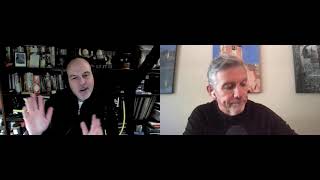
Randy Cantrell and Leo Bottary discuss why leaders need to see the whole person, not just work output. They describe a Vistage check-in where people share one word about how they're feeling, and explore how remote work and Zoom have changed what it means to genuinely connect with your team.
Chapters
Welcome to Peer Innovation, the podcast with Leo Bottari and me, Randy Cantrell. Building on our previous shows, The Year of the Peer and What Anyone Can Do, we turn our attention to helping business leaders build high-performing teams. We'll talk with a diverse group of thought leaders who will share stories and insights that will help you and your teams achieve new heights. If you believe there is strength in numbers and that meeting the challenges of the future can only be achieved if we do it together, then join us for the conversation. Welcome back to another episode of Peer Innovation, the podcast. He is Leo Bottari. My name is Randy Cantrell. It's not frigid here. It was, it was last week. I, I, I had, I didn't bail out. I didn't have internet. Thankfully I had power, but we had this, this winter, this freakish, I guess once in 30 years storm that blew through Dallas-Fort Worth and just paralyzed the whole city and misery loves company. So. Yeah, as you say, it was a shared experience for sure.
It was. I'm glad we didn't find you down in the basement somewhere freezing to death.
Yeah, exactly. You know, we didn't lose power, thankfully. We had a young family that had a 1-year-old, and we moved them in with us because they lost power. And, uh, you know, now the utility bills are hitting, so that's been a big thing. You may have read the story of the guy. He's like our age, but he took Social Security early, so he's a fixed income guy, a bachelor, and gets this $16,000 energy bill for the month. And this thing lasted about a week. And he was on some variable rate plan. It's like variable rate mortgages, right? Which I've never done in my life. But so he gets this variable rate thing, and of course the usage just was off the charts. I got an email yesterday that graphed my— our house's usage in that week period, 5 times the normal usage. But you know, the pool pump's running constantly, the heater's running constantly, and the thermostat wasn't set high. It was like 67. Or something, you know. And our, our, our bill is normally, I don't know, $150 or so. It's projected to be $550. $550. I'm like, I'll pay, I'll pay that versus repairing busted pipes and all the other stuff. So we were fortunate, we were fortunate. But at any rate, I didn't have internet, so I had to sit out the show with, with Laura. So I hate that I missed that, but Yeah, that was a fun show.
Uh, enjoyed her quite a bit. The variable rate, um, situation though with utility bills was interesting because when they were interviewing people that I saw, at least they were basically saying, yeah, I've had variable rate for a while because my bill might go up like $30 or something like that. So they're like, all right, I can live with that. And that by and large, I would work out for me. Um, But then not so much when you hit this and all of a sudden the market did what it did. And yeah, it's a— I can't imagine. I can't imagine what that would be like to get a $16,000— he wasn't the only one. Obviously, there were many in the thousands of dollars and in the 5 figures right there with him for like 4 days of electricity. It was horrifying. Yeah, no joke there. I mean, that is—
and this directly taken out of—
relief coming their way.
Yeah, and most everybody, you know, does this. It's like a direct deposit, you know, you just— your bill's tethered to your bank account. So they take the money. Poor— the poor guy, it's like everything that he had in his savings to cover this, this thing. Um, yeah, the legislature, they're meeting. In fact, they're meeting as we speak to try to figure out, okay, what are we going to do? What are we going to do? But then you've got Compounded on top of that, you've got all these, you know, all these idiots with a pickup truck that descend in areas where there's a disaster like this, you know, claiming that they can repair things and conning people out of, out of their money. Uh, so yeah, between plumbers and drywallers and all these other trades that are off the charts crazy.
So it's actually an interesting segue to our topic today of the importance and the value of being human.
Yes, exactly. Yeah, preferably being a good human.
There's that. So I wrote a piece for CEO World recently where I basically looked at a check-in process in an entirely different way than I probably have ever looked at it before. It's kind of interesting because I've sat through peer advisory groups check-ins over and over over again. It's practically a ritual. It's, you know, people come in, they check in, how's my day, how's this, that, and the other. Every once in a while, of course, you may recognize that by just by the tone of someone's voice or something they say that there may be something bothering them that may be worth exploring later in the meeting or something like that. But by and large, it's a fairly casual check-in. The interesting part about it though, for me, this one time was the Vistage chair who was running the meeting set up the check-in in a way where they just simply said, if you could go around the room and give us one word that describes how you're feeling right now, and then tell us why that is. So it's fairly quick. Some people were saying energized, some were optimistic, some were sad, some were frustrated. And they would explain what that's all about. And the little aha moment I had there was just recalling how many times that I'd been in a workplace, just as you have, and we show up to work and things happen. And we don't know anything about what's going on in people's lives that may trigger whatever mood they happen to be in in the moment. And we're not really up for asking. And clearly, as we've talked about many times, in the command and control just get it done no matter what the hell is going on in your life, no matter what type of situation. I felt that I really kind of explored my own leadership situations in my mind and the times that I never asked that question nearly often enough, never checked in with my team to just say, how are you doing? How is everyone doing? What's going on? So that we could get a sense of the pulse of that so we could better understand all the shared challenges that we maybe have, or all the great things going on, or all the things that may put people in either the greatest mood or the worst mood or whatever it happens to be. But to at least to understand, as opposed to making assumptions about people's behavior in the workplace that didn't really serve everyone well at all, right? So just love to get your, your thought about that because It just really struck me.
My challenge, even as a young person, but I'm wired differently, so I'll put that out there. And I'm not saying in a superior way, not at all.
Faulty wiring?
Yeah, maybe. I'm such a noticer, and I had Two problems. One that you could say, well, that's not a problem, you know, of really wanting to sensing that something was going on with somebody. But now, okay, where's the— I don't want to overstep a boundary, you know, so I don't want to pry. But I was notorious, notorious. I doubt there was a day went by. In fact, days don't go by that I don't ask somebody, 'How are you doing?' or 'What's going on with you?' You know, because I can just sense it. So that was it on the one hand. And then on the other hand, like every leader, I could be preoccupied. And you come in, you got something on your mind, you don't say anything to, you know, this person or that person, and you're completely oblivious that Now their whole day could be wrecked because they're, they're thinking the worst. But all of it still focal is to the focal point of your article, I think, of just we're just not different, you know, we're just not different. Everybody's got problems, everybody's got situations. And, and this whole— I get so tired of this ad, as you know, leave it You know, when you come in that door, you know, leave it at— no, nobody does that. You know, you can't just compartmentalize. I mean, I coach, I can coach a CEO who's going through a messy divorce. Give me a break. Whether it's a man or a woman, that's impacting their work. It just is. I'm sorry. These devastating things that happen in people's lives. It's interesting to me. I think the human side of it, it's— I don't know. I'd be curious what your perspective is. It's so often not professionally related. It's the other stuff.
True. And I will say, through shelter in place, people are doing a lot more of it. CEOs are asking the question and starting meetings off more with not what are you doing or did you get that report in, but how are you doing? And going around and just asking that question. You know, in some cases it may provide information that is worth exploring, you know, outside of the group just to make sure that the person is okay with whatever they're dealing with. But even when you talked about you asking the question, and I think the way you did, and there's a certain— there'll be sincerity about it in the way you frame the question that is more than just what people can do in a perfunctory way, like, oh, how you doing? And all they really want is an affirmative, great, and then move on. Um, I, I think you have a way of asking the question, you know, I believe that shows some sincerity to it and might actually make me pause and say, hey, there actually is something going on, or maybe I can't talk about it right now, but I'd like to share it with you later, or something of that nature. And even if they don't want to talk about about it. I think there's always an appreciation that someone cared enough to ask. And, you know, this whole idea— and actually, the title of the article was given to me really, you know, inadvertently by Jerry Schneider. It just happened in a conversation. Jerry Schneider used to be the CFO at Vistage, and he was a member. And we talked about the importance, like you suggested, about your professional self and your personal self and all that. You— there is none of that. It's your whole self. But he described it as not just about not showing up only as CEO and showing up as a human being, but he said it's really about showing up and being human during the meeting, which to me had an extra sense of richness about that, which is why I used that for the title of the article and why it's so important for us to ask those questions, to not make assumptions, to not do— we talked about this, I think we had a show that we had looked at this idea of told and untold stories, right? The idea that when we don't have information, we will fill in the gap with our own story. We just make it up and we just unabashedly do that. And it's unbelievable. We're wrong most of the time. We get ourselves worked up over things. The example I used in the article was, let's say someone's going to meet me and they don't show up. I don't get a text. So now it's running through my mind about where they are or why they didn't do it, or they, they're always late, or— and only to find out that the person had to, you know, drive their kid to the hospital, or whatever example I used at that moment, where maybe I wasn't the most important thing going on in their life at that moment. They had something immediately to take care of. It wasn't about me, it wasn't about us, wasn't about the meeting. And so if we can have patience every once in a while and for finding out the information. Obviously, that can be really helpful as well. It's also been interesting too, because on one hand, as we've talked about how people have been able to tap into our real lives and shared humanity by inviting people into our homes on Zoom, there's also a real human connection that people are talking more and more about that they're missing, particularly the around the water cooler, the break room, getting coffee, these other kinds of things. It's been real interesting to watch how, uh, in this case, uh, there were several Vistage groups that have kind of adopted this policy of they will do it either at the beginning where they just open up the Zoom room a half hour early, or they do it at the end, much similar to you might have a meeting, but there's a before the meeting and after the meeting. And during that time, there's actually little breakout rooms available where people can, in smaller groups, just talk about anything, whatever silly stuff is going on in their lives, what's going on. It's coffee, it's casual, it's in developing the kind of connections with one another that are very meaningful and very missed out there. And I think the more that we can kind of be imaginative— there's a lot of complaining about Zoom for sure. And when that happens, I do remind people that during the 2008 financial crisis, there was no Zoom, there was no Slack, there was no Microsoft Teams. We're lucky to have it. So now our challenge is us as leaders to figure out how do we take this platform and leverage it to our benefit as best we can. Is it human connection in the way that we might always like and are used to? No, of course not. But there are advantages to it, and there are ways at least we can mitigate some of the challenges as well.
Well, it certainly has— it certainly has forced us to flatten out the learning curve. I mean, you think about how proficient we are at this technology today versus just 12 months ago. I mean, as a, as an aggregate group, I mean, a lot more, a lot more people are way more proficient at this who, who were clueless about it 12 months ago. And I'm finding maybe a little bit on the opposite end of the spectrum, people that are now, especially business owners, that are now questioning all of this physical infrastructure, do I need it? I was talking to somebody today and said, man, how would you like to be in the commercial real estate business now? I have no clue about that business, by the way, so I'm not talking as an expert. But yeah, it gives you pause to wonder what work is going to look like moving forward, especially in a market like Dallas-Fort Worth, you know, you got 7.5 million people, you know, going to and fro, and an awful lot of wasted man hours in cars and other things. To what do you attribute it other than— I get the two elephants in the room, COVID, the pandemic, and this electronic technology, but is there Is there something deeper that comes into your mind as to why are we relating more to each other as, "Hey, he's Leo and look at this artwork behind him and he's not just Leo in the office." Yeah, it's a window into your life that you don't have when you come to a central workplace.
Central workplaces in many respects are almost designed to level the playing field. In that regard. And, and this is what you're there to do, and this is how you identify, you know, by whatever on the front of your business card in terms of your title or, or any of that stuff. And all of a sudden, when you're home, and again, people see all of the goings-on— fortunately, people have stopped apologizing for the fact that the kids are running around in the backyard and the dog is barking and all this other stuff. It's just life. In fact, it adds a sense of richness to, uh, the engagement most of the time. And we got talking about some of the fun tools for Zoom that you can use that are actually true enhancers for a meeting, one more serious and the other not. But the more serious one is, so sometimes how many meetings have you been in where somebody makes a point and then, and this is why meetings go on way longer than they're supposed to, someone makes a point, what happens? 3 or 4 other people have to parrot that person's so that they like, I agree too. Well, in Zoom, it's awesome. Someone makes a point like that, you pop a thumbs up on your little reaction emoticon, and boom, you're done. So you immediately tell whomever's receiving that message that there is a whole bunch of other people who agreed to it too, and you just spent 10 minutes less time making that point, which I love. The other one that leaders joke about loving is that there's a mute feature where the leader can mute. People. And, you know, if you're in the middle of a long answer or something like that, they can just go, but they just cut you right out and you're out.
Yeah, but, uh, no, you know, would that we had that ability in real life sometimes. Wouldn't that be great?
That'd be awesome.
Yeah, it would.
But it, in all seriousness, it is wearing on people. But I also think it challenges us as leaders. And if you're participating in a CEO peer group or in a key executive peer group, you should be using Zoom in many respects no matter what role you're playing in that meeting, is a practice field for how you can better use it in your organization. Because again, we can sit and complain about it all we want, but it's what we have. And so now it's a question of, all right, how do we pivot? How are we able to do things that make the experience better? Clearly breakout rooms and some of the things they're doing around that, even some of the changes there, have been good, but We are trying to be leaders in this regard and not be victims, not be complainers. We need to step up and do that and have the positive attitude about this platform that doesn't get everyone in a— The power of peers. You want to start spreading and get everyone all soured on, yeah, this platform sucks and this, this, that, and the other thing, and we can't do this anymore and we can't wait till we get together in person. You know what? You'll get together in person when you get together in person. In the meantime, you're not on a telephone or you're not on some other godforsaken device where you're trying to do things. At least you can actually see one another, have a window into reactions around the room, as imperfect as it may be. But it's rather remarkable. And we've talked about before, 2008 financial crisis, right? These tools don't exist. You don't have Slack. You don't have Microsoft Teams. Zoom, none of it. And where would we be if this crisis had happened back in 2008? Unbelievable to think about.
There's another potential reality, and that is there's an awful lot of us, my hands in the air, introverts who rather love this. I mean, absolutely love this. I mean, for me, It's great. It's great. You know, and as a guy that coaches leaders, it's great. It's great for my clients. The time save is ridiculous. So I get in the car and I drive half an hour to see a client and I drive half an hour away. There's a lost hour. I haven't lost that hour. I haven't. And I'm still doing some stuff in person. But, you know, there's an hour that I haven't lost. Uh, the clients, I mean, hard start, hard stop, done. It's, you know, no coming out to the lobby to get me. And it's just, yeah, it's super, it's super efficient. But again, an introvert. Yeah, I'm the wrong guy to talk to as far as missing, missing all of the in-person stuff. I've had more conversations with, with more people from other places to boot, including Europe, than probably than ever before. I don't know why. I mean, the opportunities are there, so, right? You and I both— I would say you and I both are real big— we're yes men in the sense that we say yes. We say yes to a lot of things. We, we say yes to as much as we can say yes to, uh, because we want to. And, and that's been positive. Now tell me the quote again that Jerry— what, so Jerry, that was his name?
Oh, Jerry Schneider just talked about the importance and the value of being human. The idea isn't just about being a human being, about, uh, showing up as a human being, but about being human. Yeah, come to the meeting human with one another. Yeah.
Okay, we'll dive up, dive a bit more, a bit more deeply into that because what, what I, what I believe is that, okay, just this is us and the context is a Vistage meeting, so we need to paint that, you know, this is a peer meeting, this is, this is Vegas rules apply, everything that said in the room stays in the room, so That's the context, but I think it transcends. It could potentially transcend a peer meeting for sure, but in that setting, it certainly is just drop the facade. I mean, just, this is us. This is us. We're here to help each other.
Or not. Part of it is drop the facade. Part of it, in what we're really talking about, what I was talking about in the context of this article, is actually to take interest in other people as human beings and not just care about the task at hand. The fact is, you know, I, um, there's a story that I tell, as you know, about my daughter Taylor, um, which I'm not going to repeat necessarily here at this point, but the point of the story is that, um, she was a natural leader. In many respects, no question about that. It, it's something that her instincts go in that direction. However, that doesn't mean— and she'd be the first to tell you— she didn't have a whole lot to learn about leadership and what that looks like. And it is one thing to be able to say, okay, there's the task, you want me to get these people to get it done and we'll do whatever, great, you know, I'm on it, you know. So there was an aspect of this where She and I, and I'm— the same thing happens with various students I work with or whatever who are all about like, just, just get it done. And I'll remind them, okay, you can't do this by yourself, right? Right. You need human beings to actually help you do this. And by the way, this isn't something that's going to take you 2 days. This could be something that might take you 2 years. Now, now you're going to have a perspective on how much it matters that you care as much or more about the people than you do as the result that you're going to achieve, and that you imagine looking looking at, you know, everybody in that— because it shouldn't be just about achieving the outcome. It also should be about helping, as a leader, everyone be better on that journey. So by the time they not only hit the result and take pride in what they've done, they are better professionals as a result of it. So how did you bring them through that journey with the constant idea of— this is where that learning-achieving cycle that we talk about in the book really comes about. It's how do I learn and grow and keep getting better and keep setting my own standard of excellence for myself so that I can model that for our teammates, and then all of us will work together to get the result that we want to, you know, achieve for one another. And but that starts by being a human being first, and it's something you can learn and practice in a Vistage group meeting. And it's something I think that's even more essential when we are leading teams or where we are on teams in our organization. When we've got a teammate with us who's going through something, we're going to help them through that. When— and I've talked about this many times with regard to graduate school and the difference between the mindset that used to be like, look to your left and look to your right, you know, this kind of thing, like only one of you, the three of you, is going to make it and two of you are going to fail, blah blah blah. The mindset today is look to your left, look to your right, um, every one of you is here for a reason and you're all going to succeed. And we're going to help each other make that happen because there are things that are going to happen over the course of this degree program that are going to be really difficult challenges. And you're always going to have someone by your side, whether it's a faculty member or fellow student or whatever, to lift you up during those periods so that you can be successful. And the expectation is that you will do the same for others. And that's a completely different mindset than anything we certainly ever grew up with, but incredibly powerful. And what's rooted in that is all about just being human.
What are you finding with this new digital— it's not a new digital world, but more, a more, a more digitally connected world. On the flip side, the problems, the, the hurdles, the roadblocks that get in the way of people's willingness to do that, other than the fact that some people are just miserable human beings. I mean, there is that.
Well, there's also— and David Burkus touched on this— when we think about the fact that when we're not in the office and we're not physically there where people were looking at, are we at our desk yet? Are we still there after 5:00 or 5:30 or whatever? I was notorious for being out the door at 5:00 or 5:30 all the time. What people never knew was that I was usually there by 6 in the morning. But when no one's there by then and it's not seen and known, and I was just like, that's when I'm most productive. I, I'll get more done by 9 o'clock than most people will get done for the rest of the day. And yet somehow, if I wasn't there at the end of the day, it'd be, be that little thing in the back of people's mind. They don't care what the results are or whatever, they just didn't love that you weren't there in the room. And I was like, screw it. I really didn't care. I, I went my career that way. And, you know, Sure, it wasn't always extremely helpful, but, um, you know, it was what it was. But now, instead of our presence, it's our responsiveness. So I, I agree, you know, with David Burkus and with others who talk about this idea that no matter what time of day or what weekend or whatever, someone sends you an email, someone sends you a text or something on Slack or WhatsApp or whatever, and, and they're— they've got a stopwatch on you like, where are you and why haven't you responded to me right this minute? I think we've got to chill on that a bit for sure, especially when David Burke is also talking about some of this new software where your digital camera is connected, where they not only know in terms of being able to measure your screen time, but whether you're physically in front of it and didn't just go for lunch for 4 hours or whatever to come back while you're, you're still on, on screen. And I think you just— we should just call it I don't trust you software. And just, that should be just the name of the company, you know, it's what it is. But to be more results-oriented in that regard, I mean, I think you've got to help people with processes and on the journey, give them the tools and the resources to get things done and look carefully about how you're working together as a team. But the bottom line is, I know I will say one thing about myself as a leader is I didn't care if something took you 5 minutes or 5 hours. If you got it done, that was good with me. I wasn't worried about like someone's out for a long lunch or someone's late some morning, someone has to deal with that. They had all the flexibility, and I've always had through my whole career, I've always given everybody that personal flexibility with the expectation and understanding this is a person who really is very responsible and they're not going to not do it. They are, they're going to be all over it. But we have different times that we're productive. There's all kinds of things that factor into this. I think the moment, and I hope COVID in this whole period has taught us a lot about what our workers are capable of and that we don't have to stand over them at every moment to make sure they're doing their work. But the fact is that they've not only continued to do work and in some cases even more productively than ever, but they've done it at the same time, uh, as they've managed just incredible personal challenges all along the way. So I think it's something to really be, um, grateful for and something that we should think about as we come out of this and we get to a, uh, a new reality moving forward, I suppose. But to recognize what were some of those traits and values and behaviors that truly shined during this period of time, and how do we keep those alive and celebrate those going forward?
And we didn't even talk about it, but it's worth a few seconds here as we kind of wrap up— the benefit of being human, not just in showing your interest in other people, but what that gives you in return. I mean, that's that's multiplied many times. I mean, if you took a Vistage group of a dozen or so leaders in, I mean, if you got that many people expressing an interest in you, then that's also pretty powerful. And even at an organizational level, I mean, the reciprocity that kicks in, I don't think can be underplayed at all.
Absolutely not. Leading with generosity. And just do living life with a generous spirit, I think always really comes back to us in really powerful ways. And I do think it's, it's part of what makes us human. And as much as we hear about so much, because that's what's in the news, of all the divisiveness and this violence across the world, and there's bad people, and there's all these other things going on, when you really think about most of the people who live on this planet and how incredibly generous of spirit they are and how kind and giving they are to one another and how they are there for one another. Especially you see it during times of crisis where we, we see it in those times because they're reporting on the crisis. But this is the kinds of things that really goes on every day among neighbors, among family members, and all of that. And I think the more that we can bring that into every aspect of our lives you know, the better off we're going to be.
Well, we certainly experienced it here in the DFW area. I mean, there were those of us that were blessed to have power, you know, we— hey, come on, you know, we're all fine. And everybody just kind of— I don't know, as much as you can have a party in a freezing winter storm like that. And I posted a video, you know, my son, he's got this Jeep project that he's got. I mean, he, he's got the grandkids. I mean, they're, they're snowboarding and he's pulling them through the streets, and he's got a house full over there. But it is, it is cool to see under those kinds of pressure-packed times that people— it is, it is rather remarkable in a really positive way how quickly people jump to help each other and to chip in and just, you just do what's got to be done, right?
So in the spirit of generosity, I just want to applaud the generosity of C-Suite Network. I was just on the latest episode of Bestseller TV, and the way we all work together to kind of pull that episode together in a COVID situation and to have them spend the time preparing and doing what they've done around not only that, but all of the support for the book and the content and Jeffrey Hayslett writing the foreword. I just really want give a shout out to, you know, C-Suite Network, C-Suite Radio, Bestseller TV, John Largent with Game Day Media, who through C-Suite, we did the audiobook. And it's just been really terrific, because that organization in so many respects has really been built on a spirit of generosity, the idea of community and about people really helping one another. And it's why it's grown so fast. It's why it's as popular as it is. Look at the number of shows alone that are on the podcast. But that is That's just the tip of the iceberg in terms of all the things that C-Suite Network has going on right now. And yeah, just want to, as we close out the show from my end at least, I just want to give them a big thank you and a big shout out because just an incredible partner.
Yeah, no, absolutely. C-Suite. And, you know, if Jeffrey would just get a little bit of ambition, you know, he, he could move the needle.
It's because he's shy, you know, that's the thing. Yeah, that's right.
Yeah, he's bashful. He's an introvert like me. Yeah, no, Jeffrey Hazlett and the whole team over there are, are really, are really spectacular. Yeah, yeah, kudos to them and to you and especially to our audience. We hope all is well with you and reach out to Leo. You can reach us through the website eliobottary.com. Happy to help in any way we can. Leo has a number of, of services and things, so We're about trying to help you, and part of it is this, this podcast, completely free. In fact, we don't say it often, and we don't really ever say it, but the real goal here is to give away as much as we possibly can, because it's just kind of how we roll. So thank you for being a subscriber. So until then, until next time, everybody stay warmer. Those of you in California, you can stay cool, I guess. Keep hitting the links.
See ya.
Thank you for joining us. To subscribe to the podcast and learn more about how you can engage peer innovation for your organization, contact us on the website at peerinnovation.co. Till next week. Remember, the power of we begins with you.










