Leo & Randy On Coming Together
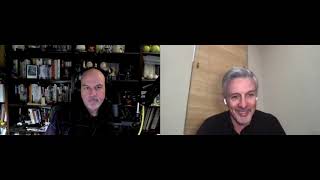
Randy Cantrell and Leo Bottari discuss their "Power of We" framework for building trust across divides, using the 2020 election as a starting point. They cover psychological safety, listening for understanding, and how individual behavior—not politics—rebuilds community. An audiobook of Leo's work is coming soon.
Chapters
Welcome to Peer Innovation, the podcast with Leo Bottari and me, Randy Cantrell. Building on our previous shows, The Year of the Peer and What Anyone Can Do, we turn our attention to helping business leaders build high-performing teams. We'll talk with a diverse group of thought leaders who will share stories and insights that will help you and your teams achieve new heights. If you believe there is strength in numbers and that meeting the challenges of the future can only be achieved if we do it together, then join us for the conversation. We welcome you back to another episode. If memory serves, it's episode 21 of this season, 2020.
We're legal now.
Yeah, we're legal. We are legal. He is Leo Battaglia. My name is Randy Cantrell coming to you from various parts of the country, Southern California, Texas, and, uh, parts of the country are mattering. We are recording on Friday, November the 6th, 2020. And with that, we know there's a big elephant in the room, so we're going to talk about it.
And we're going to talk about it because you can't not talk about it. And part of what I hope this show is all about is being able to talk about things and to be able to share kind of, you know, a bit of what's going on. And it's 6:05 AM on the West Coast, and basically the vote from Philadelphia— there's still more to come there— but has basically given Biden the lead in Pennsylvania, which is only going to to grow, which without even Georgia, North Carolina, confirmation of Arizona, Alaska, and Nevada, that would put Biden in a situation where he's got his 273 electoral votes. All you need is 270, and that's pretty much the ballgame. And we've kind of known this for a little while. The point isn't to talk about the election from the perspective of who won or lost more than— I think regardless of how this thing went, we, I think, as a country really have to take stock of who we are and what our role is. And I'm not sure in so many respects, and not to be, you know, stretching a point here, because I don't think it really does, but when you look at the 5 factors from peer innovation for high-performing groups and high-performing teams. They so apply to the challenge we have ahead of us, you know, in this country over the next, you know, 4 years. And we've always been a country that basically since Truman, right, because obviously you went through the Depression and the World War and all of that, you had, you know, a lengthy, you know, Democratic-controlled White House. But beyond that, We've been back and forth since the early '50s between Republicans and Democrats and, you know, I think, and have done well and have been productive with one another and largely are able to come together and get things done because even if people have honest differences about how to go about, you know, things, it was always and never assumed that someone wasn't that their intent wasn't to do something at least good for the country. And I think we've stopped trusting each other's intent. We've stopped listening to each other. It was really interesting, actually, a number of months ago, my sister-in-law was talking about, oh, politics, don't get into political conversations with my dad who's 90, because that could not go well. So of course, what I did was, got into a political conversation with him and it went beautifully. And largely because all we did was kind of hear each other out and figure out what are these points that we can agree upon. And one of the things that he actually talked really fondly about was his recollection of what he believed to be kind of Tip O'Neill and Ronald Reagan sharing an adult beverage at the end of the day, despite the fact that they disagreed vehemently publicly on a lot of things, and neither of them believed somebody was trying to do something that was trying to hurt this country by any stretch. They just had different ways of seeing things and going about things, but there was an ability to work together and to compromise. And when we talk about these 5 factors, it really made me think about the fact that when we look at a CEO peer group, this idea that they all share this common challenge of being the chief decision maker in their organization. And I think we need to start seeing our common denominator here, not as Republican or Democrat or liberal or conservative, but just as Americans. And kind of get back to that point. Where if we can do that and then actually care to listen to one another because we believe that our intent is generally good and listen for understanding and create such psychological safety that doesn't involve name-calling and other such things that, you know, have made people feel unsafe. If we do those two things, it's possible that we'll actually start being productive, right? That it won't— everything won't be a gridlock. Everything won't be, you know, votes that never make it to the floor of the Senate or whatever, or those that do, you know, don't get taken care of as they should and, you know, and all that. And again, I would say that this isn't about, you know, who's in power, although it's going to be really interesting as an aside because of what's happening in Georgia. You're likely to have two runoff Senate races there. And while it's unlikely that Democrats would win both. If they did, it would basically put it at 50-50 in the Senate with Kamala Harris being the deciding vote. So that does shift the balance of power there. But again, that's not necessarily what I would expect to happen. But the point is that just to be able to work together and be productive and get things done, and in doing so, hold oneself and hold and have the American people hold our elected officials accountable to actually making things happen, not just to giving great speeches and digging their heels in and never getting anything done. And as leaders, they have to be there not for themselves and their own self-aggrandizement, they have to be there for us. And I think that should be our expectation, but it's not gonna happen by us kind of always looking to, the top to do this. It has to happen like every great movement in this country has ever happened. I don't care if it's civil rights, women's right to vote, you name all of the things that were grassroots initiatives that became the law of the land as it should always be. And obviously we struggle still to get the kind of equity and equality that we need, but we make steps because it comes from the ground up. And I think in this case, when it comes to being able to have dialogue and actually get things done in this country, it's going to have to start when all of us start listening to one another and start turning the temperature down just a little bit.
Well, you're, you know, your big catchphrase, uh, for this book really comes into play, you know, in my mind. I mean, it absolutely does start right here, you know, with me.
Yep. The power of we begins with me. The power of we begins with you as listeners. And, um, and certainly I didn't write it with that intent, you know, I mean, this was strictly, you know, funny how something will, can go kind of macro on you, right? Where this at first was very specific to peer groups. And then it was the aha moment that, wow, this actually really does work when you pressure test this and talk about it from the perspective of high-performing teams, the same rules apply. Now, all of a sudden you look at what faces us as a country, and it's like, oh my God, you know, when you really get right down to it without really trying to stretch any point at all here, It's— this framework is very much something that I think we should really think about in terms of ourselves and how we show up and to any conversation and what we will and will not tolerate in terms of others and how we can model behaviors and how we can be helpful to people who are just up for a big fight that as we know, that it produces zero other than people just being pissed at each other, you know, over family gatherings or in the workplace or, you know, whatever it happens to be. And, you know, maybe it's not about— the idea isn't that we have to come together and agree on politics first. Maybe it's just on other things. You know, it's a bit of what we talked about with what's happened during the pandemic where instead of coming to a single place where we have our employee hats on, and we start seeing each other as human beings because we're inviting people into our households through Zoom calls. And all of a sudden, you've got this little shared humanity, this window into the fact that someone has a life, and a family, and aspirations that are pretty similar to your own. And just the difference that has made in terms of how people treat one another has been amazing. So now the question is, how do we keep that momentum, or how do we extend that into where we can actually have honest, good, productive conversations about things where we do listen for understanding? There was a pollster, and I was flipping around last night, and it was interesting. The guy who heads up polling I probably don't have his title exactly right, but he was the guy, for example, at Fox News who was in charge of making the call on Arizona on election night that they're getting really highly critiqued for, to say the least, that they called that too early and what that was all about. Now, it may turn out that the call was right, possibly. But it's going to be a razor-thin margin, in all likelihood, when you consider what votes are out there. But there was an interesting question when he said— because what happens is he was being asked about the fact that some votes would come in from this place and they'd be like 85% Biden, and then some other votes would come in and they'd be 80-95% Trump. And they're like, He said, you know, people are wondering like how that's possible. And he said, everyone thinks we're divided. He actually— we're actually quite united in our clusters, you know, in our neighborhoods, in the people we hang around with. You know, we don't hang around with people who typically disagree with us very often. We don't, you know, so these are the neighborhoods we live in. These are kind of where we choose to be. And we feel safe, obviously, in those environments, right? Because it doesn't push us out of our comfort zone in any way. And so I thought that was really quite a fascinating way to think about it. So I guess the first step is— you know, this reminds me of that— and remember that movie The Sure Thing? It was— John Cusack was in it, and the professor was, you know, talking about, you know, about how, you know, make, you know, have friends with people whose clothes are not color coordinated, you know. I mean, and she went on and on about this idea of living life and engaging with people that are different from ourselves and all of that. Maybe one of the first things we could do is say, hey, how many friends do I have who really represent any level of diversity in my life, you know? I mean, really, and how can I change that next year? How could I try to open that up for myself? How can I try to get a different perspective on things and on the world? And probably not a bad first step, but—
No, but you got to have the interest and the motivation to want to do that starting off, which is clearly problematic in today's society, you know, with all the polarization and all the people that are dug in. I mean, you just look at the map and you look at the color of the map, and I mean, it's, it, it, it's, it's fairly visible, you know, the divide. And it's so stinking close, uh, you know. And so you're gonna have, you're gonna have a massive amount of people that are gonna feel, to beg the mass media phrase, disenfranchised or not listened to. No matter what happens with this thing. And I've been— I don't know, all week I've just kind of been— I've been fixated at just kind of the behavior on both sides.
Sure.
Of, you know, how does your— what makes a mind go there first? What makes a mind go to throw a rock? What makes a mind— and forget the poverty issues, just You know, you've got this, you got this video of this woman in this police sergeant's face screaming and yelling, ends up spitting in his face. You know, you've got this 17-year-old Swedish girl who, you know, this is campaigning for climate control, and so she's, you know, she's gone to social media And I don't know, I just, I look at both sides and I think, and I go on record, I'm apolitical, don't care, don't— I don't— you're very much into politics and I'm just not. I'm a capitalist, so, you know, I just, I'm an American, I want what's good for the country, but whoever's going to be president, I'm going to respect the position, I'm going to respect The office, um, but where people's minds go to pick up a rock to throw it and how that permeates just in our everyday. I don't mean what we see on TV, that we're going to be that person, but we could be. And it trickles down to just our interactions with one another. And I'm wondering, you know, how can we, how can we get to a place where my first reaction isn't to bristle, whatever that looks like, you know, but my first reaction is to just even try to understand. You know, you've got people that hold this position and somebody that's 180 degrees opposite, and they're looking at the same thing, neither of them giving consideration that, you know what, we could both be wrong. One of us could be wrong. We could both be somewhat right. I liken it to this, you know, there are people— somebody today woke up and they need money, and their first thought is to go rob somebody. And others of us may have woken up and think, I need some money, and we're thinking about selling something, right? I mean, it's like, where do you get to psychologically where your first response is to bow up and to just shut down, or worse, to embrace violence or shouting and hollering and yelling. I think there's so many people— I can tell you as a person who's not political and not inclined, you know, the dialogue to issues, to even worldview kinds of things. I mean, I've got big questions. I put a tweet today, you know, I mean, it's Friday and I got, I got questions, you know. I don't have answers, but I got a lot of questions. And I don't know, I don't, I just, um, I'll get off my soapbox. That's, that's my spiel now.
And you know, to your point, um, and it's not just both sides, there's lots of sides to a lot of these issues, of course. It, you know, I have people who ask me sometimes, where do you go for news that is going to kind of be factual and just tell me what's going on versus like a very skewed version of the truth, which designed to take any situation and just make you afraid of it and tell you who to blame for it. And we find ourselves in those camps. And I think understandably in a very complex world where the issues that come before this country are so involved. And yet we're trying to just live our lives and raise our families and do everything we're trying to do. You know, so, and we don't live in a democracy, we live in a republic. We basically by our vote hire people to spend time on these things so they can vote in our best interest and actually make things happen on our behalf. And it's just not been working out very well. But I do think we are— we have these survival instincts, let's face it, you know, and we've got, you know, a lot happening with regarding that. And I'll give you a perfect example of pre-COVID, and you know this exercise, in the workshop that I would do with CEO groups, I'd actually have them thumb wrestle one another. And the funny part about that is that the way I set up the game is that I pair them off and I said, "Tell you what, we're going to, you know, do this thing." And I pair them off and I talk to them about the fact that one of the things I discovered writing The Power of Peers was that there's actually a world thumb wrestling championship that takes place in the UK. We kind of joke about the winners and the fact that for a while there was actually a couple where the man had won, you know, the world championship several times and one of the years his wife won it the same year he did and which always kind of begs the question about how they resolve conflict in their household. They just thumb wrestle for it, right? But the thumb wrestling idea is this. Basically say, tell you what, here's a fictional $100,000 that we're going to put up there. What I want you to do is pair off, and I'm going to give you 30 seconds, and whoever gets the most pins wins the $100K. Boom, we get off, right? So these people, by the way, these CEOs turn into 8-year-olds in about a second. And they're at it and they're competing and they're doing their thing. And all of a sudden the 30 seconds is up. And then I'll go around the room and say, how many pins did you get? Someone says 3. And someone says 4. Someone says, oh, I got 2. Someone says 5. And then someone says 30. And I said, well, let me get back to you. And then I go around. And finally I said, well, I want you to tell us how you got 30 pins. And the way they got 30 pens was that somebody looked across and says, tell you what, I'm going to let you beat me 30 times and we're going to split the $100K. So, right, when you think about the rules, we hear who gets the most pens like I've got to win and I've got to dominate and I'm going to engage in this fight. The reality is that when we work together, not only will we, you know, do well, but we'll do exponentially better, right? It's not that we get 3 pins or 4 pins, we get 30 or 40. We get 10 times the result when we actually collaborate and cooperate versus compete. And I think once we as a country kind of figure that out, that we can move a long way toward things that we really agree on. You know, at the end of the day, where you find your places of agreement and figure out how do we push those forward. Instead of fighting over other things to nobody's— I mean, it's just to nobody's advantage at all. So yeah, so I think we've got work to do. And we can say, well, what can I do? And what you can do is just be that person who listens for understanding, who is willing to reach out, really willing to get to know people who may be different from ourselves, willing to listen. And yeah, I mean, that's kind of what it's about. And I think it's going to be our challenge in a major way, not only over the next 4 years, because let's face it, the situation we're in today is not new.
No.
It's a decade-plus old. Not only did it start decades ago, but when you consider that frustration you're talking about and what people are feeling, I do think that we're still smarting from the hangover from the 2008 financial crisis when people lost their homes, they lost their jobs, they lost their pensions, they lost— and who was really held accountable for that? And I think people are finally like, all right, I'm paying higher taxes. There's nothing really happening. There's nothing getting done. And by the way, when things really go awry, it's clearly, you know, Like, that's something I pretty much assume I would have gone to jail for, but instead somebody's getting away with it. We just all kind of go on like, hey, you know, here's— this is just life, and we just move forward now and forget what's over here. And I think people get tired of it. I don't blame them, you know. Sure, sure. You know, and I think we're all among them. I don't think anyone feels good about that, but, you know, at this point it's a little like golf, you know. You can't do anything about the last shot. But you can do something about the next one. And, um, uh, you know, and by the way, um, good news, my daughter Taylor got her hole-in-one yesterday. First hole-in-one.
There you go.
Played a little par 3 course, put it right in the hole on the 17th hole yesterday.
That's awesome.
That's awesome. St. Mark's Golf Club.
Congrats and shout out to her.
It shows you anything's possible.
Yeah, exactly.
As unlikely that is for— not just for her, of course, but anybody, right? You know, um, to do that, I think it shows us that, yeah, if we—
You gotta keep taking shots.
You gotta keep taking shots and you gotta recognize that some of it's skill and part of it's a lot of luck. And I think if we, again, give each other the benefit of the doubt a little bit and take a breath before we get all hopped up on trying to turn something into an unnecessary fight, You know, um, was it a person? We can move things forward, you know.
Yeah, I mean, as somebody that, you know, that— and we both do this, I mean, we, we both spend our lives working with leaders largely, and my concern and most of my dialogue this week has been to, to get macro, to go from macro to micro. We, we've got, we've got to operate which is all about it begins with me. Micro, we, macro. Okay, well, we can't let that stuff that we're seeing on TV and all the vitriol and all the hollering and screaming— we're bringing that into our own lives, we're bringing that into our own teams, we're bringing that into our own organizations. I was sparked last week I read this when I was a young man, and the book was written in like '64, I think, 1964, maybe 1962. Douglas McGregor. It was one of the first books that I read, you know, the human side of enterprise. And I didn't know anything, you know, management theory, man, right over my head, you know. I mean, unlike you, I was not, you know, I was not an academic. I was, I was I was a voracious reader. I was young. I was curious. And, you know, so I start diving into this Theory X versus Theory Y. He was kind of the father of Theory Y. Theory Y being, we've all got motivations. We've all got stuff. We've all got worldviews. And as opposed to the old, the old way that people don't have it, you've got to kick them in the butt. If there's not some external external motivation, either a kick in the butt or a carrot dangling on a string, then they're not going to do anything. You know, and as a lifelong practitioner, I'd rather subscribe to what Mr. McGregor, I think, kind of concluded. You know, there's a bit of both. You know, we're— we are in America, and so We like capitalism, we like competition, we like free markets, we like all of that stuff. But to your point with the thumb exercise, you know, it doesn't mean that we've got to want to bury each other when we're all on the same team and we're all part of the same kind of the same group. So I mean, my encouragement, not that it counts, but for whatever it would be worth, is And this is the fear I've got. The fear I've got is that just all the collective noise seeps into and permeates us at a micro level, and now we're shooting ourselves in the foot or the head when we could be, okay, that's that. And politics is its own kind of a thing. I think even those of you that are really into it, I mean, it's kind of like the NFL. People like to make these sports analogies. Well, I'm not playing in the NFL. I'm not coaching in the NFL. I'm not GMing in the NFL. You know, it's kind of got its own little ecosystem, and politics kind of has its own little ecosystem. Well, we've all got ours, and we got much more control, it seems to me, over that and our ability to influence Well, I'm thinking of clients that I've gotten. They've got teams of 15 people, 24 people, 17 people. And it's like, okay, what can you do? Well, y'all can certainly know each other better. You know, I just talked to a client just yesterday and we were talking about peers. And I don't know, there's under 40. He's got under 40 peers. And I'm like, well, how well do you know them? I know, probably 6, maybe 8. I'm like, you know, I mean, I'm gonna have to tell you, I think you got a big opportunity here. I think you got a huge opportunity to get more connected to the others that you're not connected to, you know, and that's got nothing to do with who wins an election.
I think it's great that you framed it from this perspective of that you've got an opportunity here as opposed to chastising him for the fact that he doesn't know the other 30-some-odd people on the team, which is right. I mean, that's, that's exactly, I mean, you know, and that's natural. You know, when I'm asked, um, oftentimes, you know, I'll talk about this kind of stuff about, you know, us as a country and, and being more collaborative and cooperative and this and that. And people say, man, that's, they look at you like it's so Pollyanna-ish, you know, and that it's so like, what, what makes you think that that's possible? And I think what makes me think it's possible is that it's already happening. You know, on one hand, we can focus on all this negativity in the election and all this stuff that's front and center all the time. But yet at the same time, you know, when you look at the unbelievable generosity that's in this country of people, of neighbor to neighbor, or people just giving of themselves, whether it's their volunteer time or money or, the shirt off their back, honest to God, whatever, right? I mean, it's extraordinary. And I think that to the extent if we can tap into that, that is so inherently good, I think in so many of us and kind of extend the reach of that just a little bit into some other areas of our life, then I don't think it's much of a stretch. I don't. I think it's evident, it's within all of us and we see it all the time. And I think the moment that each of us can, again, if we can just turn the temperature down just a little bit and think before, you know, we speak and listen more than try to judge and debate, you know, I think we would be amazed at what could come of that.
But anyway, a number of GoFundMe campaigns, and I don't remember anybody asking, now, who are you going to vote for? Where do you stand on this? You know, yeah. I mean, man, communities, we realize that here's a family in need, here's a person in need, and people just, okay, we, we need to rally here. And boy, do we need to rally.
But, but do you think about what happens when, you know, you've got, um, people who go to this, you know, something will happen, you know, uh, think about, um, it could be a kid, it could be someone in a neighborhood who died or something like that, and people just coming out of their homes in the street and having these literally kind of spontaneous memorial ceremonies for these people and trying to remember the good that they brought to their community. And it's stuff like that that should give us all, I think, a lot of hope about, hey, we can do a lot of amazing things together. We do the extraordinary that too often goes as unheralded as it should. And we do focus on a lot of this stuff, but at the same time, the divisiveness that we've got going on is real, and we have to, you know, we have to recognize that, and we do have to, in our own way, each in our own way, recognize that if I do my little small part, and this is the power of peers, right, and everybody does their small part, you know, I remember years ago reading a quote that when John F. Kennedy was in the Senate, he kind of almost felt small in some respects versus looking at the presidency and all of that. When he became president and he looked at the Senate and saw what a formidable body that was of the 100 senators, he was like, whoa, like he got it a little bit. You know, he kind of recognized. So it is all a matter of perspective. In many respects. And we should, you know, as William Ury kind of says, understand that third side, right? It's for the good of the kids, for the good of the next generation, the good of, you know, the country, our families, our communities, that we take that pause and we recognize how powerful we really are to do really good things. And, um, so I'm just, uh, hoping that's, that's at some point in time, we're going to make that pivot. And it may be like turning a supertanker, but, um, it's just one day at a time. And I hope we make that happen.
You know, I know the answer to divisiveness isn't for me to be more divisive. I'm not real smart, but I'm smart enough to know that, you know, So, and I would hope that if we get up in the morning, and I think by and large I've got a positive view of humanity and America and American citizens and think by and large people want to get up every day and they want to live good lives. They want to, to your point earlier, they just want to provide for their family. They want to have as good a life as they can have. That's pretty much all of us. Yes, there are outliers. There are evil people. There are. There are wicked people that want to do you harm and envy whatever you've got just because they don't have anything. And sometimes that's through their own making. But I don't know, I still think, yeah, it's— I've thought all week of, you know, of your phrase It just— there's not a better one that fits, you know. The power of we begins with me.
You know, he's— yeah, I think that's kind of, you know, where we leave it. One of the things I wouldn't mind teeing up a little bit for next time is, you know, I'd mentioned to you just before we get on, I'm working with this guy, John Largent, who runs a company called Game Day Media. And he's out of San Antonio. And I'm actually going to go there and basically made this contact through Jeffrey Hayslett and C-Suite Network, C-Suite Radio. And he'll be doing the audiobook. And we're actually going to be able to record the audiobook in the end of November and have it ready by early to mid-December. So for those of you who, you know, take an interest in the topics that we discuss and don't love to read either softcover, hardcover, or on your Kindle, and people who love audiobooks, people who swear by audiobooks, the audiobook will be available, you know, probably in what, the next month, 5, 6 weeks at the most, I think.
So in time for the holidays. Yeah.
And you know, my 2 other audiobooks, I didn't read those. This one I'll be doing. And so that's going to be, yeah, that's going to be different. But it'll be fun, especially with those personal stories there. There's a lot of things that I would love to be able to share in my own voice, certainly. And that'll be a lot of fun.
But, and where will this audiobook be available?
All the, you know, Audible, Amazon, all that, Nook, all the typical, you know, places where you, you'd be able to get audiobook. But what I'd like to do, I think it would be great to get John Largent on the show, um, and talk not only, not necessarily just about you know, my audiobook, but just audiobooks in general, and some of how and why, you know, people listen to them and why— if maybe you don't listen to audiobooks yet, you know, and you're thinking you've kind of heard of people doing it, but where and how do they do it and why do they find it, you know, preferable in many respects in terms of how they learn and how they tend to consume information. And also, I think just— he's just got a great bit of knowledge about, you know, all these kinds of things. And I think he'd be a terrific guest on the show. So, um, I think we need to get John here next time and we'll have him join us and be a lot of fun.
Yeah, yeah, we should. And I'm glad you're doing it, not some— I'm all for voiceover guys. I've got a bunch of friends who are voiceover guys and I love them and I love their craft and it's a great fraternity or sorority, right? But for, but for non-fiction as an audiobook listener, somewhat, I want to hear the author. I want to hear the author read it. You know, now a novel, yeah, give me the voice, give me the voice actor all day long, right, in a story like a novel.
But that makes sense. I'll try, I'll try to bring some drama to it. We'll see what happens. Yeah. Anyway, hey, um, you know, um, appreciate the conversation this morning, at least, um, you know, to be able to just, I think, speak to something that is very not only current, but obviously very important. And I think does connect with everything we talk about all the time, not in a way that's a reach at all, but I think is central to, you know, how we can take these tools and whether we part of a peer group or part of a team or not, doesn't make any difference as individuals. I think, you know, they're irrelevant to everybody.
So, and we're coming from a red state and a blue state. He's in California and I'm in Texas, so it doesn't—
speaking of that, by the way, just one final note, because we talked about how these things are— tend to be, you know, you kind of look and you see, okay, yes, um, you know, Biden won Massachusetts almost 70-30, right? I get it. But at the same time, look at Texas, um, look at Arizona, look at Florida, look at, you know, I mean, there's a lot of shifts, uh, taking place, and they'll continue to to do that.
Um, but, um, well, I've got a neighbor to one side and it's all Biden-Harris stuff. And then directly across the street, it's all Trump stuff. And then on this side of me, the exact same thing, you know, there we go. Yeah. We're still neighbors.
Yes.
Thanks for listening, everybody. We appreciate you. Go to the website. Peerinnovation.co is the website. LeoBattari.com will take you there as well. All kinds of ways to subscribe to us and to contact us and to check out Leo's work. And we hope that you find some profit in the podcast. And if there's something more that we can do for you, hey, there's ways to contact us about that too. Thanks everybody. Have a good weekend. Thank you for joining us. To subscribe to the podcast and Learn more about how you can engage peer innovation for your organization, contact us on the website at peerinnovation.co. Till next week, remember, the power of we begins with you.










