Leo & Randy On Coronavirus (Season 2020 Episode 10)
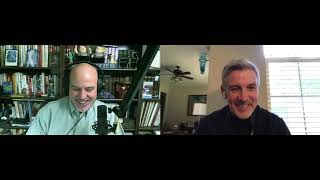
In this March 2020 episode of the What Anyone Can Do podcast, hosts Randy Cantrell and Leo Battari discuss the unfolding COVID‑19 crisis, focusing on its immediate impact on the Dallas‑Fort Worth community, the broader economic fallout, and the sudden loss of major sports events that normally serve as cultural touchstones. They emphasize the critical importance of surrounding oneself with supportive peers, especially during periods of uncertainty, and describe how digital tools enable virtual peer groups to continue sharing insights and emotional support. Randy announces the launch of a free, globally‑open Peer Advantage group for small‑ and medium‑sized business owners, designed to provide a judgment‑free space for sharing challenges, brainstorming solutions, and combating isolation. Leo reflects on how the pandemic has freed up time for him to advance his upcoming book, noting that the experience of uncertainty will shape its content. Throughout the conversation, both hosts share personal coping strategies—limiting panic, focusing on actionable steps, and maintaining mental health—while urging listeners to stay connected, be vulnerable, and use this forced pause as an opportunity for creativity and growth. The episode weaves together observations about the rapid policy changes in Texas, the economic shock to local businesses, the cancellation of major sporting events (NFL, NBA, NCAA, Masters, Kentucky Derby), and a call to action for listeners to engage in peer support rather than retreat into isolation.
Chapters
Welcome to the What Anyone Can Do podcast with Leo Battari and me, Randy Cantrell. This show picks up where our previous show, You're the Peer, left off, highlighting the simple truth that who you surround yourself with matters, and that if we enlist the support of others, give back to those who give to us, and pay it forward for the next generation, we can do anything. Author and keynote speaker Leo Battari and I talk with a diverse group of thought leaders who will share stories and insights that will help you succeed in business and in life.
How?
By doing the things anyone can do, but most of us never will. Welcome back to another episode of What Anyone Can Do, the podcast. Here is Bill Battari in Southern California, thankfully a little better off than Northern California. I'm here in the Dallas-Fort Worth, Texas area. And in Texas, I don't know, I don't know about you guys, man. We're in, we're pretty much full lockdown mode. It seems like just everything's changing by the hour, including Tom Brady leaving your beloved Patriots.
There is that. Yeah. That was— yeah. I'm sure there's a lot of crying in New England right now over that one. But at the same time, it's just interesting that it's not a surprise in terms of between Belichick and Brady how that was going to go. And Kraft has always been the guy who has let Belichick do his job. And they claim that when you really look at whether it's an NFL franchise or any sports franchise, you've got an owner, you've got a GM, you've got the coach. In the case of New England, the GM and the coach are one and the same. But when those owners and when GMs and when the people stay in their lane and they trust one another and they make decisions that are on behalf of the entire organization and the football team, That's what they're allowed to do. So Kraft, who very easily could have, you know, gotten in the way of this one because he's, you know, loves Tom Brady like a son. But at the end of the day, Belichick gets to make football decisions in that way. And, you know, I think it very much was that, not because Belichick didn't say he didn't want him, but it was pretty clear that Brady wanted a little more love coming in his direction about how much They wanted him and Brady over a number of years to, in fairness, not that he doesn't make a lot of money, but he doesn't make nearly as much as many other folks around the NFL. He took kind of his hit so that to stay under the salary cap and so that they could build a team that could actually win Super Bowls. And so that was the trade-off for that. And I think Brady just got to a point where that relationship ran its course. It was, you know, certainly successful. And now we'll kind of see what happens over the next couple years in terms of Brady's career and where that looks like he will go.
So yeah, but at his age, at his age, you can't much blame the team, although I have no idea what they've got behind him. I don't know of anybody that they've got behind him, you know. So it's right, they've got some star player player, you know, riding the bench who's anxious to get in there and start. They've talked here about how hard it is for Jerry Jones to say goodbye. He keeps wanting to recycle older players, and New England does not have that problem.
No, no, there's no, um, there's not that. But, um, but it is no question it's going to be really difficult, you know, for a lot of people to see him wearing another uniform, and especially if it turns out that he wears another uniform and they play at New England, you know, someday, and what that will be like to sit in the home stadium with Tom Brady playing quarterback for another team. So, and if they had—
but if he were to— if he were to somehow win the whole thing with another uniform, that would be— they were talking about Montana and even Emmitt Smith and these people that left their original team, but you don't remember that. You know, you don't remember Brett Favre. I mean, you think about him in Green Bay, but they said those people didn't win championships with that second uniform either. And if that happened, that might complicate the memory.
The closest thing I can come to it, at least from a Boston perspective, is seeing like Bobby Orr play for the Chicago Blackhawks at the end of his career. You know, it was just like, really? You know, it was just kind of, yeah, not what you want to see. But I think what we wanted to talk about today, of course, especially here we are, we talk all the time about who you surround yourself with matters. And I mean, in a very different context, we see how serious that is right now in terms of— we were kind of joking before the show that we typically do our social distancing, given that you're in Dallas-Fort Worth and I'm here. And we typically do this from home. Now it's more of a, we're home because we not just want to be home, which we always do, but we need to be here. Certainly from my perspective, as far as, so what, I travel and have to speak to in-person groups largely, right? So you can imagine that is on hold for a while, although, it is really interesting that, and how important people recognize that we do have technology and tools that allow for our being able to convene in other ways. So I'm actually doing a workshop tomorrow to be a tighter version of it, but I'll be doing it for a Vistage group in Colorado. I'll be doing it right here. And because in many respects for those groups who are meeting, those peer groups, it is never more important that they are together. And it doesn't have to be together in person, but even if it's together virtually, virtually, but it's during times of uncertainty where relying on one another is really, really important in getting perspectives on how each person from their respective business is dealing with the challenges that are before us in this regard. And it's going to be different for every kind of business. And what we can share with one another in that regard can inspire ideas for us that we may not be thinking about in terms of how we get through the next month, 2, 3 points. We have no idea what the timing of this is really going to be about going forward. And I do think, of course, it's going to change the way that people engage one another and how they think about all of this stuff going forward. I mean, it was just yesterday, of course, the Dow was nearly down 3,000 points. And that's just the economics of it. Obviously, there's the greater tragedy of human beings dying and human beings contracting an illness and people being infected who are at risk. And so this is a— obviously a difficult time, but also an important time for us to surround ourselves with the right people and just do so in a bit of a different way. Now, you know, we had talked a little bit before we could start. Tell me a little bit about what the situation looks like in Dallas-Fort Worth and I'll give you at least some sense of, I mean, obviously we're not here to dispense medical information or talk about things that are way outside of our lane. I mean, people can go, to the CDC and the WHO websites, and I think stay current on that. But I think as a practical matter, we are all sharing this common experience of what it's like, you know, in our lives right now. So yeah, I'd love for you to speak to a little bit about what that looks like for you there.
Yeah, I mean, and I think it's probably true, you know, maybe true universally for all I know, globally, the day-to-day the speed of the change is really difficult. And as you know, I do some work with even local city government. And of course these people are— it's the ever-consuming thing. I mean, there's nothing else on the agenda, you know, traffic and road, none of that matters anymore. It's all about COVID-19 and just trying to keep their communities safe and do what they need to. Within the last 24 hours here, it went from 500 people, no more than 500 people, and now we're down to 50, and there's talk about it going down to 10. Public places capacity issues are like half. So if you have a business and the You know, their certificates of occupancy will allow, say, 150. There can— the recommendation is to be no more than 75, you know. So the numbers just keep shrinking and shrinking. Starting midnight last night, Dallas County, which is huge obviously and involves all of main downtown Dallas as well as out a little ways, all of the restaurants curbside or delivery only. You can't even go in to dine. And of course, health clubs, they have pretty much shuttered for days now. So all the 24 Hour Fitnesses and the LA Fitnesses and those kind of places. So from a business perspective, I continue to think about these organizations that where it may not be mandated, but in this case it was. Dallas County, you know, what do you do? What are you doing? Where do you go? And all this uncharted water. I was reminiscing with somebody earlier today about, I kind of began my career in the '70s during the oil embargo. We didn't have any idea. If your license plate ended in an odd number, you could, you could get gas on odd number days based on the calendar. And if it ended, and that's how they did it. And that was the only time that's happened in my, in my lifetime. And I'm 62 now. So, and you and I are both long enough in the tooth. We've seen from an economic perspective, we've seen these ebbs and flows and these, I mean, from the S&L scandal and, and major shutdowns, uh, to the Enron thing, to 2008, 2010 and all that. It's just, I know people feel overwhelmed. We're just continuing to face this bombardment of these things that— and we know that the fear is largely just the unknown. We don't know how long this will be. What makes this one rather unique to me is the lack of distraction, especially in the sports world. When you've got sports worldwide that have been shut down, and for a city like Dallas, for a big major market, a big pro sports market where that's such a huge distraction for just normal everyday life, and now that's gone. It's, yeah, it's pretty amazing. It's pretty amazing.
Yeah, it's been kind of interesting to, uh, I'll have to flip on ESPN, um, where you've got countless episodes and 30 for 30 and 60 and, you know, all of the shows, or you're going to get reruns of every amazing sporting event ever in the history of sports, right? I was literally watching, you know, University of Houston play slam-a-jam and North Carolina State, right? Bill Donnell running around the court. I mean, so it was interesting. But when you think about, I think for many people in many respects, sports and largely, I think in many respects, beginning with the NBA, really took the lead in this. And once when you start seeing the NBA season suspended, and because one of the players, you know, was infected, which really obviously, I think, you know, accelerated that decision for them. But then when you start looking at, I mean, you know, the NCAA tournament and the delay of the Masters and the delay of the Kentucky Derby and all of these kinds of things, this is— that has got to capture your attention. Like, wow, this is something to pay attention to because If they're taking these things that, you know, especially people brought up the NCAA tournament. It's probably even more than the Super Bowl. Something that, I mean, how many people have filled out a bracket, right? I mean, and it's over 3 weeks and it involves multiple venues and all of these schools and all this. I mean, it's one of the most incredible, certainly US sporting events in terms of public involvement, forget about the financial impact of it, you know, everywhere and how that trickles down to, you know, vendors outside of stadium venues all the way to ad revenue to all of these things. And, you know, so it's things like that that really make you think, wow, you know, this is really something I need to take seriously. And, you know, we often talk about it's very difficult to combat something or, you know, as they would talk about in boxing every once in a while, you can't hit something you can't see. You know, when someone wants to claim how fast they are, but the reality is we don't know because of, quite frankly, how few people have been tested in the US and the availability of those tests. We don't know. You or I could be asymptomatic and have it. I was kind of joking about, so, My daughter Taylor, her travel has obviously been curtailed, and she travels and opens Sephora stores. So she's back. And basically, she was on the West Coast. So rather than fly all the way back to where she lives in DC, she came here. Diane's daughter, Noelle, she's down here. And so on one hand, we could just think of it as— because San Francisco was on lockdown, so she got out last night. Came down. And, you know, on one hand you consider it a biological, a diabolical plot to, you know, kill their parents basically because they don't know if they have it or not. We're clearly more at risk and we'll kind of just see what happens, I suppose. But, um, you know, but, but it is kind of interesting. Now we've got everyone here. We've got, you know, half a dozen people in this house where it's normally just, you know, been a few. And that's when we think about supplies, we think about being ready for just about anything. In terms of any, you know, things that may be down the road with this. It, you know, it's really significant, and but it also I think gives us an opportunity in many respects to reflect on what matters and on what's important, to reflect on how we use this time. Maybe I can't travel, maybe I can't speak to groups, But I can do other things, you know, to be kind of productive in some way. You know, I'm finishing my book, or we'll do this podcast, or I'll do some things remotely that I hope can be helpful to groups of people that are trying to find a way to work with one another around on this and through this uncertainty. So I just think we just kind of figure it out. And I think in many respects, not only just we as Americans, but we as humans can be at our best when our backs are against the wall a little bit, when we're dealing with a bit of scarcity versus abundance and we are forced, in effect, to be creative. And so we may have to practice social distancing, but in many respects, that doesn't mean that we have to come distant from others and the people who matter to us. Knowing that now it's just a matter of how do we prepare for what's next. Now, that what next could be 2 or 3 weeks from now, it could be 2 or 3 months from now in terms of how we get back into normal life and what that might look like. But I think it's time for us all to think about it and work together. And this is kind of where we started, where I'm not sure that this idea of who you surround yourself with matters. Doesn't just reflect in the situation of being infected, but who you surround yourself with matters in terms of how we look at this, how we think about it, how we use the time we have productively that may be against different activities than normal, and then how do we prepare for what we want to be a bright future.
We talk pretty frequently about judgment-free zones and sharing insights and the value that that provides in us not necessarily judging each other or even disseminating advice unless asked. I have just found some conversations in recent days because of my age in dealing with people particularly that are 40 or under and just by virtue of their inexperience in seeing as many of these huge waves and huge economic cycles strictly from a business perspective, just in talking to business people. And some comfort, you can tell, I, at least I hope, and, and some have said so, it just helps hearing a guy like me talk about something that I experienced for the first time ever, in many cases haven't experienced it since. And it wasn't like this. It was different. They're all kind of different, but just that fear of the unknown. And we got through it. My grandparents got through the Great Depression of the '30s. It completely changed their worldview, no doubt. And it had an impact in how they conducted their life after that. And this very well may do the same thing. But just our ability to kind of share these, share these experiences. And my, how blessed we are and how thankful I am that we live in a digital age where we have this kind of technology and we don't have to socially distance except in physical form. And we've got all of these great resources that are largely free or very low cost where we can stay connected and we can, we can share our concerns and our insights with others and collaborate. My fear is that the isolation that already exists in the, especially among entrepreneurs, especially among business owners who are in that hunkered down mode, my encouragement, if you're listening to this and you're, and you are isolated socially as well, you need to be for your own physical protection, but this is not the time to do that digitally. I mean, this is the time I would encourage anybody to really Open yourself up, be willing to be vulnerable enough to help other people and be helped yourself. If this isn't the time, then there is no time.
You know, it's so interesting. Um, I was thinking the other day about, um, the movie and of course the real life incident of Apollo 13. And so here you've got these astronauts trapped in space and they're on the return and there's, you know, press people and folks who were talking to Gene Kranz about this could be the worst disaster in NASA's history. And of course, you know, in the movie his response was he believes it's going to be our finest hour. And there was that sense of we will find a way and we will, you know, get through this. You know, as my daughter was reminding me, she'd heard something where Someone had suggested that, you know, our grandparents were called to war and we're just kind of called to sit home and hang out for a little while, then we can kind of get over it, you know. You know, so because we have, you know, our— yeah, we have— and all with all the toys and all the ability to connect without leaving our home and all of the things, the advantages, quite frankly, we have. I mean, obviously it's devastating for a lot of people. Both in terms of from a personal health perspective, but also it can be really difficult, obviously, economically for folks who don't have a lot of runway when it comes to being without work and not able to make an income. I definitely applaud those companies that even though they've had to shut their doors are continuing to pay their workers and at least, you know, in the near term that that's is certainly positive, and everyone is just hoping that this gets slowed down to the point where you've got a healthcare system that doesn't completely get overwhelmed. This is one of the things I will say that I've been fascinated and really impressed with the daily briefings that Andrew Cuomo has actually been delivering for New York and talking about how the governors in the tri-state area you know, have been really working together to try to not be Italy, not be China, not be, you know, these other countries where this is accelerated. But at the same time, they can do the math and they basically know how many people who actually get— who contract the virus are likely to end up in a hospital. And they're looking at that number. And the more that increases, if the percentage basically holds, the hospital bed, healthcare worker, ventilator situation, all of that starts to become inadequate in a real hurry, which really puts, you know, incredible— it's a rough situation. And yet it's also amazing the level of creativity that they are using to try to do every single thing to pull resources together from the most unlikely places in order to try to meet what could be a large demand while at the same time doing everything possible to try to slow it down. So obviously my hope is that, because I think we're going to be dealing with this for a while, also in the face of the fact that there is no vaccine that we're going to have anytime soon that'll treat it. But as human beings, as business people or whatever, figuring out what we can do in our own way to do our part so that we do slow it down, where we get to a place where we start moving back into life that starts to look a little more normal with maybe new practices about how we engage one another. And so it's an interesting time for sure. And I hope for those who are listening to this podcast, just kind of reflecting on their own situation and who they can talk to, who can get comfort from, who can they get ideas from in terms of how they can best manage their own situation and how they may be of help to others. Because it's true, who you surround yourself does matter. And I think we can help each other a lot right now. And I think we have to call upon each other to do that.
Well, and just within the last couple of hours, you know, I made a decision. And as you know, and we've mentioned it here from time to time, my, my trying to launch this charter group of the Peer Advantage. And I thought about it for about the last 12 hours or so. It probably came to my mind a few days ago. And I thought, I'm just going to do this. I'm just going to do this for free for the foreseeable future. So I'm going to launch the first group. And if I needed do a second one. So small to medium-sized business owners, and I'm even broadening to obviously English-speaking, but globally, you know, if you're a small to medium-sized business owner, and this is not, you know, it sounds like self-promotion and I certainly don't mean it that way, but I thought this is no time for business people to isolate. This is no time for business owners who may have been mandated to close their doors or to dramatically alter their business model. To just hunker down and bury their head in the sand and, and take a woe-is-me approach. So I've opened it up and it's, uh, I'm not charging, I'm not charging anything. All the details are at thepeeradvantage.com and I'm just going to do this. I'm still, it's still for small to medium-sized business owners and I'm still vetting people and having people apply, but I'm just, you know, for the foreseeable future, we're just going to start. And, uh, yeah, and that, so I don't regard it as self-promotion at all.
I think it's, it's, you know, in many respects very generous, obviously, and the right thing to do. And, and really an incredible opportunity. I mean, if you're listening to this podcast and you are wondering how you're going to get through this uncertainty, I think the opportunity to sit around with other business leaders who may be, um, or business owners from their various businesses where there are different challenges, different creative solutions people are coming up with, that the more that you can have those kinds of conversations and maybe inspire some thoughts that will be helpful to you, I think is an incredible gift. And again, you know, who you surround yourself with matters. And if you don't have a group that you have been part of and you'd like to use this, I think, time that we have right now to connect with a group that allow for you not only to just, you know, weather this challenge that you have right now, but maybe set a good launching pad for you and your business going forward. I think it's, you know, incredible. So I hope I hope people do really think about that. And let's be sure not only, I know it'll be in the show notes that we'll have a link for that, but also separately to be out really promoting that on social media as well as a real, I think, incredible opportunity for people. And so thanks for doing that, Randy.
That's awesome. Well, we sometimes play that hypothetical out, what would you do if money weren't involved? It's, it's time, you know, it's an investment in time. But I mean, if, if now isn't the right time there, then there, there isn't— there is no right time, you know, to, to try to help a few people. I've had so many conversations with people who in their business pipeline, and it— pick any, any, any area of business that you want, from manufacturing to anything with a supply chain to retail, you know, where things were on a roll and nobody, you know, people felt blindsided by this. And they've gone from tremendous optimism to just downright panic, just downright panic. And I've just, after, after having too many conversations with people, and you could just tell, you could just sense it in their voice. If I was talking on the phone or if I had them on Skype or if I happened to even meet them in person before everybody kind of shut that down, I don't know, just the panic and our ability or our inability to really get our head wrapped around something when we're in panic mode. And that's, for me, been the kind of the most disturbing thing about it all. Is we don't tend to make our very best decisions when we panic. We can, I guess, but especially for business people who are, who are kind of trying to plan and figure it out. And all these meetings and countless C-suites have been steeped in meeting after meeting after meeting. What are we going to do? What are we going to do? What are we going to do today? What are we going to do tomorrow? And it's all that what-ifing that we're doing. So I don't know, just my small part. I'm still going to keep the group small, and depending on the kind of response that I get, I'll just, you know, I put it in a podcast that I released just an hour ago. You know, we'll figure it out. It's just like we're doing with all of this in real time anyway. We're just trying to figure this out. It's uncharted water for everybody.
Totally. Um, no, I think, um, again, I think it's fantastic. And so, you know, with that, as we, you know, get near the end here, if you have a couple of words maybe to take us home, and we just obviously wish everybody well.
Yeah, well, and you mentioned it, but let me first toss it back to you. So you've now got an opportunity that you didn't see coming as far as the book is concerned. So Give us some positive, some positive news as far as your, your progress with the book and the opportunity that this can provide somebody like you who's trying to get a book knocked out.
Yeah. Well, um, you know, being home and sitting in front of my computer without having to travel and all that certainly frees up some time to give me the kind of dedicated head down space that isn't always as easy to do. When, um, you know, busier. So, uh, so yeah, it'll be done by the end of the month, basically. Something like this.
This is just an innocent question, but does something like this, does it impact the content in any way? And if so, how?
Yeah, I think it does. I think, um, we, when we start thinking about it, um, in the context of uncertainty, I think the idea of that concept being heightened a bit will certainly find its way in the pages of this. So yes, I would absolutely say that.
Yeah, I would think so. I threw out a quote. I think it was a Will Rogers quote. It was, "Never pass up a good opportunity to be silent." I kind of chose that for my own podcast. Um, so other than this podcast, I'm kind of going to go dark and just primarily listen. I don't want us to do that necessarily. I just felt like I'm going to put my emphasis in this Peer Advantage, uh, offer that I'm making and spend my time with that, at least, at least for a while and just kind of keep my ears open and talk less and probably stay off of social media a little bit more. I'm doing that for my own mental health and just for my own welfare. I think, I think everybody kind of has to figure their, figure their own head out and do, do whatever's best for them. I've just learned through these years of my existence, it just doesn't profit me to get wound up. It's more profitable for me to focus on Okay, what can I do about this? There's so many things I can't do. They're beyond my control. So what can I do? Which is largely why I made the decision that I did with PeerAdvantage. So I guess that's my parting shot.
All right. Well, you know, um, again, uh, thanks everyone. Um, the, the quote on silence that I remember that always connected with me, although I don't remember who said it, is that sometimes we should let silence do the heavy lifting. So on that note, it's a good time to reflect, good time to, like I said, surround yourself with the right people. We've never been in a situation where we have better tools to be able to do that, and we should take advantage of that. So with that, you know, keep at it, and we will see you next week.
To learn more about our show and what we do, to submit questions to us, and to subscribe to What Anyone Can Do Podcast, please visit our website, whatanyonecando.com. What Anyone Can Do Podcast is hosted by Leo Battari and me, Randy Cantrell. Music provided by Kevin MacLeod is Vibe Ace, licensed under Creative Commons by Attribution 3.0 license. Thanks for watching or listening. We hope you'll share the podcast.










