Leo & Randy On Fear
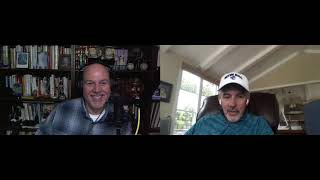
Randy Cantrell and Leo Bottari discuss how fear shaped decisions during COVID-19, and why asking "who" instead of "how" matters. They explore mastermind circles for support and accountability, and how Leo nearly finished his manuscript while discovering creative energy through adversity.
Chapters
Welcome to the What Anyone Can Do podcast with Leo Battari and me, Randy Cantrell. This show picks up where our previous show, You're the Peer, left off, highlighting the simple truth that who you surround yourself with matters, and that if we enlist the support of others, give back to those who give to us, and pay it forward for the next generation, we can do anything. Author and keynote speaker Leo Battari and I talk with a diverse group of thought leaders who will share stories and insights that will help you succeed in business and in life.
How?
By doing the things anyone can do, but most of us never will.
Welcome back. Another episode of What Anyone Can Do. This is, uh, we're still, it's May 1st as we hit the record button. It's Friday. So I don't know about you in California, here in Texas, Texas governor, uh, today businesses can open at 25% capacity, no health clubs, no bars, no hair salons. So you can show off the head of hair. Yeah, there you go. He is Leo Bottari. The website is his name, leobottari.com. My name is Randy Cantrell. I'm in Dallas. He is in Carlsbad, California. And yeah, that.
So what's May 1st here in California also. And also I wanted to mention that here the golf courses are opening up, which is like, that's, that's a really good thing. Now the timing is actually good because it looks like in terms of at least You know, there's some touch-ups and all that that I'll be doing, but basically the manuscript from A to Z will be done by end of day today. So as I mentioned to you, you and some other folks, I'm just gonna, after I kind of go through and fine-tune it another time, I'll be sending out chapters to folks and get their, you know, thoughts. And, you know, you gotta use the power of peers, man. You need to get everyone, you know, I always think about who I involve in this, right? I'll get people who've like written books before and you get them involved. I'll get people who really know the subject matter really well so they can kind of poke holes or do whatever in it. And then I get people who don't know anything about either, you know, and who just are totally like— they are smart people who are readers who aren't familiar with the topic, so that you really have to have done the job to make sure that— because we can easily get in our own heads about like, and it's so easy to skip from step B to step H, you know, without even realizing it because you just do. So I'm kind of looking forward to, you know, getting those chapters back from folks. Making the adjustments necessary there, and then it will go, of course, for additional editorial review with an editor with the publisher. So that'll go through another round of stuff where it'll come back and kind of do your thing, and it's, you know, a process for sure, but it's— but, you know, in the scheme of things, it's been, you know, a lot of fun. It's something that, you know, for me, the lockdown and no golf courses open and things like that keeps me home and keeps me writing, right? No real distractions. So I did promise myself, which has been an easy promise to keep because courses haven't been open anyway, to stay off the golf course until the book is done. So at least that should be, you know, I think your timing is perfect.
Yeah, you're shaming all the rest of us who have been sequestered and haven't gotten hardly anything done, which my hands in the air, you know, the focus has just been And I'm normally a pretty focused guy, but my focus has been shot for about 5 weeks. I haven't been able to stay on task. They did open the golf courses here and everybody's quite pleased about it. I think the governor's statement was if something can be played with 4 or fewer, which would include doubles tennis and golf courses. So I'm assuming that today, probably the tennis courts and golf courses are probably fairly crowded, but I I don't know, we'll find out later today.
I just think that the way most people play golf, I think the safest place on the planet's the middle of the fairway, right? Think about it. Exactly, right, right. Or stand by the hole, yeah. Where there is no fear of getting struck by a golf ball if you're standing there. But it actually does bring up, I think, the subject we wanted to touch on today. And that actually comes out of— so I did this program earlier in the week, it was on Tuesday, it was with KW Alpha in Portugal, and it was kind of part of kind of getting the band back together again in a weird way, because the group of us that spoke at the ANGE conference in Portugal— and this is a number of years ago now, right? So think about the fact that we all met for the very first time. And that was that whole story when we get there and, you know, Mike Diaz had invited us all to participate and we show up and before we arrived he said, hey, bring your running stuff with you because it'd be kind of fun, we'll do a little running tour around Porto. And we thought, oh, that would be cool. So of course we all show up there and it's been an overnight flight and everything, everyone's in their state of whatever jet lag that we're dealing with, but we all felt fine. So it was about 8 in the morning and all of a sudden we start going off a run and every one of us, I think at the same point realized, we're like, huh, you know, we never really asked Miguel, like, how far are we going? Right. Cause we're thinking, we just made the assumption. Well, 5K maybe. Well, sure enough, uh, 14K later as we had to, by the way, do the second half of it uphill. Um, You know, we get back and it was like, good God, you know, I mean, and we just talked about the fact that, hey, if we ever knew that that was in Miguel's head, we wouldn't, we wouldn't have gone. We would have said, you go, you go run yourself, man. You know, we're going to go to breakfast and hang out. Um, in large part it was most of us, you know, I mean, we hadn't been running that far, you know, in any recent time. And we would have said, I can't even go there. I mean, that's not going to happen. Yet we all do it together. We all encouraged each other. We all had fun. Um, the next thing you know, we did something together that we never could have done by ourselves. And ever since that time when we all went for that run and then we continued to spend the weekend together and we spoke and we listened and learned from each other in terms of the respective content that we were putting out there. And we've just stayed buddies ever since, you know, it's been, it's been really great. We connect. So every once in a while, and it doesn't happen often, but there's occasion where we'll get the 4 of us together and we're on this 90-minute kind of panel webinar, if you will. And the idea was really not focusing on the problem, but focusing on the plan. The idea of in the face of everything that we're dealing with right now in the world, How do you move forward? You know, what do you do? And one of the subjects, and I think without focusing on the entire show, but one of the subjects that came up was fear. And, you know, this idea that people are really afraid. I mean, they're, they're afraid for their health. They're afraid for their livelihood. They're afraid for their business that may not make it. There's, there's a lot of that out there. And, And we tried to, I think, talk about it from the perspective of fear being obviously a natural human emotion. Every one of us has been fearful or been afraid or all. There's no question about that. And so you kind of own that fear a little bit, but also kind of use it because I think most of the time we've talked about the fact that people are fearful of things that they don't understand. So the more that the fear can drive us to ask questions and we can learn more, and with that will involve bringing other people into the fold, right, who can give us perspectives on things so that now we can start maybe identifying the opportunities inside the adversity. And so this was a lot of the conversation we had about, you know, what people are doing today. Well, You know, so if you're fortunate enough to have a company where your people can work from home, then, hey, great. Now what are you learning, you know, as that process is going on? Or what are you discovering about things you can do that you never thought you could do before? And, you know, about how well you can serve your customers, serve your people. I hear so much about teams that are actually collaborating better working from home than they ever were when they have to go into the office. And I think a big part of it is like, just look where we are right now. Like, we've got this window into your world there with the books behind you and the professional mic and all that kind of stuff. Here I'm sitting, you kind of see a background here. But I think the more we invite people into our worlds in that way and have this kind of shared humanity, you know, as opposed to all showing up at the office and we're just kind of employees. Here I think we're people and we happen to be co-workers or, you know, whatever it happens to be. And all of a sudden now I think people are a little more forgiving of one another, just a little more, you know, helpful and cooperative and realizing, hey, we're all in this together and we're all just trying to help each other out and give each other the benefit of the doubt and do the best we can. And so I don't know, I mean, you know, I know you've been, you know, I know you had meetings yesterday and all. What are you sensing from people in terms of fear and kind of how they're dealing with it and how they're—
Yeah, the uncertainty is very real, you know. The only real vitriol and the kind of hate that has picked up— I've picked up on my radar, which I'll swing this back around to fear, is just all the second-guessing of the things that have been done. And here we are, we're what, 6 weeks into kind of the lockdown, at least for us in this part of the country, and I would assume same out there, you know. So we're a month and a half into this. Well, we know much more today than we did 6 weeks ago, but there's still a ton that we don't know. I've tried to focus conversations with people, because you and I both are evangelists for this whole notion of leaning on other people and bringing other people into the conversation and the dialogue, and to help us make some wiser choices and to figure things out. To me, it's the difference between asking the question "how" versus asking the question "who." And that's really tough. Admittedly, that's really tough because our minds seem to naturally gravitate when we're faced with a fear or a problem of, okay, how can I fix this? How can I do this? How can I do that? And I don't think most of us naturally gravitate to, I don't know what to do. Who can I lean on? Who can I bring into this that make it help me better see it. So I've tried to shift the focus in my conversations professionally with clients to, okay, can we tap the brakes on the how? Can we forget that for the moment? Now can you think about the people in your life that you could marshal to help you figure out the how? And that's just a whole different conversation.
Yeah. You know, the other response, I'm not sure what you're getting, um, locally there, but it certainly happened somewhat here. And I know you see it in other parts of the country. And there are certain— this uncertainty and this fear and impatience, and I get it entirely, is manifesting now in public demonstrations on the streets about reopening business at a time where the science is maybe instructing otherwise. And the last thing you want to do is for us to have gone through everything we have right now and all of a sudden now take a step back. You know, we're all sitting here, you know, whenever I think about like someone says, you know, well, you don't have coronavirus yet. You know, we don't know. This isn't gone away. You know, I mean, the number of cases is rising. The death toll is rising. You want to talk about flattening of the curve is fine, but that doesn't mean it's, you know, that there still aren't, you know, thousands of new cases every day. This is far from, you know, controlled, you know, or anything at this point. And, you know, between testing and the wait for a vaccine, I think there are some hopeful signs and I think that that's great, but It would also appear at least that the social distancing has helped stem the tide of this thing, and I'm hoping that our fears don't get us to do things that are— that we figure out how do we summon the ability, if at all possible, and like I said, I think the economics of this for a lot of people is devastating right now, and I get it. But to try to let the fear take us over—
yeah, the restlessness, the restlessness has really kicked in the last couple of weeks in this part of the country. I mean, you can see it, you know, the angst of just— and the economic impact. I think people, people that I've encountered, they got past kind of the shock and awe, probably took about 3 weeks, give or take. So, you know, we were about halfway in and And then things about 2 weeks ago, there was just, I don't know, a 10 or 12 day period that just seemed where people were really quiet and you could tell people were, they were trying to think, and I'm talking business. Let me paint the context, business people, business owners, you know, then they started thinking, okay, I, I got to figure out a new norm here. And that's where people got really wrapped up in how am I going to do this? And I think so many people, they sequestered themselves professionally. Because we're having to do it personally, even though we're reaching out digitally and stuff. And so many people have just tried to, to go too much of it alone, but in this part of the country, and we are so tethered to the oil industry and that's had a big impact. So those oil prices plummeting and that going away, and it's been particularly, I think, more harmful down south. You know, Houston, the Dallas economy is much— seems to me, I could be wrong, seems to be much more diverse. We're still heavy oil and gas in this part of the world, but we're also heavy airline. So you got Southwest Airlines and American who are headquartered here. Uh, you've got a GM plant here in Arlington. All of those, those businesses are decimated. So it's had a, it's had a big, big impact here in a bigger populated place. And I've been curious, I've reached out to a few people that are more rural too. I've just, there is a collective mindset, you know, you get 6 to 8 million people in a metro area like this. There is kind of this herd mindset, you know, that can kick in. And I know people have been fighting that, but The restlessness that you spoke of, I think, is really critical.
Yeah, it's real. I mean, well, part of it is restlessness and real worry, obviously, and real, I mean, really people are wondering how they're gonna eat, how they're gonna pay the rent, how do, I mean, so that is, that's not a state of mind. That's just, that is real stuff. Um, but, um, yeah, valid reason for it.
Valid reason for it all. The fear of the small business person, I think shifted from, and not to minimize their people because they all cared. All the ones that I work with deeply care about their employees, but it, you know, it was, how can I keep these employees afloat? And then it really morphed into a fear of I may not make it, right? I mean, for, for not forget the employees, but just the whole business may go away. And, and a lot of people in the smaller business sector really got irked at all this news that you've heard about the bigger companies that got some of this stuff. You know, so many of these companies, you know, they don't have a staff, they don't have a staff of accountants and lawyers who can go and dissect all that stuff and then go jump through whatever hoops are required to get that. You know, you've got a small business guy and he's, he's a $30 million player and he's, he's got a CFO, but you know, there's not a staff of, of accountants and attorneys that can pore over all that fine print and, and go and do whatever they've got to do. So a lot of those guys got left out in the cold.
That's where program You know, but that's where I've seen very specifically also a lot of where these peer groups, these mastermind groups, whether, you know, you pick them, you know, Vista, Geo, TAB, all of them out there who are YPO in their forums where folks are getting together and they're helping each other out with all this. And it's huge, you know, to feel like, hey, we can divide and conquer here in terms of figuring out, hey, you learn this, you learn that, we come together, we help each other get stuff done. It has been interesting, and we've talked about this before, obviously, that part of, you know, it— I mean, when you think about, I don't care what it is, I don't care if you're walking into a dark room or whatever it is that makes you— gives you trepidation or you have some fear about it, I'd rather have 10 other people with me than be by myself. I mean, most of us, I think, would feel that way. And I think this is where, you know, in the face of fear, having a group of people that you can rely on and depend on, and the value and importance of leaning into, if it's, whether it's a formal, if you're fortunate enough to be a part of a formal peer group, and by God, hold onto that group for dear life, and not only for yourself, but helping all of your fellow business leaders. I mean, this is no time to walk away from that. Just in terms of that alone can help you from a fear perspective, not just giving you tangible ability to kind of move and act, but also just the emotional support of it. And oftentimes these groups, as you know, may meet like a half day or a full day for a month. Some are still doing that. Many are shortening up those meetings, but then meeting during the week more frequently. I spoke to a group here in California, virtually of course, who on Mondays and Fridays, they do, you know, 2 hours. You jump on the call, don't jump on the call, whatever, but it's available for you. And people are participating and in many cases will stay on longer than the allotted time because of the richness and value of the conversation. So everyone's kind of pivoting and making things work in their own way. And I think in some respects, it could very well drive changes that are more permanent, you know, among peer groups over time. You know, how can we combine the benefits? There's no question there's tangible value and real benefit to immersing yourself for a full day in a month and getting the heck out of your business and really diving in and spending time. And yet at the same time, being able to meet virtually and and, you know, move and respond quickly to one another and help each other in real time versus month to month. Not that some members don't do that now, but it's not quite institutionalized, you know. It's because an individual or two or three are making the effort.
But I think that pace, you know, that new pace, I mean, here's some really positive things that I've observed that have come out of this. Number one is the humanity. Like you pointed out, people being able to see our backgrounds. And so now we've got a different context than maybe we had before. Now it's not the boss coming in in his Brooks Brothers suit or whatever. I mean, we just now got human context that we may not have had before. We just didn't think about it.
So that's more like the Marx Brothers now, I think, the way everyone's dressed and talk.
Exactly. So that's, I think that's been a positive. I think the pace, I think the pace of these meetings that you've described I think that's more congruent with the pace that we have, certainly in the business sector. And I would assume it's probably true in most any sector. And I serve a number of different sectors, including city government. And just yesterday, a comment was made, you know, when I bring people into this environment, meaning city government, they are completely ill-equipped for the pace. The pace of it, the pace of it is much faster than they really thought it was. Well, so now you've got professional peer groups that are meeting much more frequently. That's a very different pace than carving out a whole day. I think to many that feels like I'm stomping down, and this feels like, yeah, okay, I'm accelerating, I'm moving. And I've heard that feedback from a number of people who are able to jump on something. I can jump in a Zoom call. I can jump out of a call. I can, it can be quick. It can be as long as I want it to be. But I think the pace has been very favorable.
And I think it's actually helping their skills at a certain level because all of a sudden now you don't have time to do anything but tell me what's going on and be real about it. Be quick, be open. I mean, this is kind of, you know, what's happening here. When it comes to the conversation now, you got to be pretty efficient about asking those, you know, questions and, you know, getting to the heart of things. And then afterwards, you know, being able to check in with each other very frequently in terms of the accountability that now becomes part of built into the whole pace of it, as you mentioned. So, yeah, I mean, it's, It's a real interesting time, actually. Again, how do you look for the opportunity in the adversity, right? Well, now that we have to do this, it's actually forcing us to do things that are going to help make us better going forward. And certainly it's going to strengthen bonds. You know, when people are helping one another not only alleviate their fears, but also be able to act in ways that may be the difference between businesses surviving or not. You know, it's extraordinary. Speaking of that too, we should really shout out to think about, and we see it every night on the news, right? The number of small businesses out there. I don't care if it's a local pizza place or it's a business that's kind of retooled, you know, its operations and are making, you know, critical, whether it's masks or other PPE for frontline healthcare workers and all that. But, you know, small businesses who are just stepping up and just, you know, at the same time they're facing their own struggles for their own survival, they're finding it in their hearts and in their wallet and in their effort to be giving back to their communities at the same time. And I hope that for those who are listening out there, if you can, if you are able, that one night a week to, or two nights a week if you can, to support that local restaurant and get takeout or delivery or however they're doing in order to give them a little something their way. At the same time that, They're just doing so much. Just being open, number one, is a service to the community right there and kind of retooling things that way. Maybe a more limited menu, but being able to actually have access to that. But also what they're doing in so many other ways to support is just a— I mean, you got to really take your hat off to small business out there.
Well, and they're having to be creative, you know, so many of them are having to be really creative. Which I've heard from a number of business owners who admit that, you know, they've had to be much more creative in the last month than they've been in years and years and years. You know, many of these cases, they're having to completely rethink their systems, their processes, the way their people work. People, as you said earlier about remote work, people who were diehard against it, and there's no way, I need butts in seats here in the office, and now they're finding out You know, this is working, this is working, and not only is it working, but it's working really well. I'm not saying that's true for everybody, but there's, there's plenty of people that are experiencing that, where people are more productive at home. There is fewer distractions, there is a lot less, you know, wasted, wasted energy and time. So I'm hopeful that, I'm hopeful that a lot of these positive things can happen, and I think among the A-players My sense is they really began to know fairly early on that this could be an opportunity, and they really set about to try to figure out where, where's the opportunity. Because if you're already an A-player in your space, those B and C players, they're going away. I've used my son's business as an illustration, and my son owns a professional home inspection company here in Texas. That's a licensed thing. So if you're, if you're buying a new home, you obviously want that home inspected so that you know what you're buying. And then a lot of them bite the dust. He fortunately has stayed super busy, but I told him very early on, I said, you know, all the ne'er-do-well players are going to, you're going to see them the longer this goes, you're going to see them fade. You know, the problem is this could go so long that it impacts the A-players as well. But the creativity to planning as well. My sense is that small business owners especially are now intent to ready themselves, whatever that looks like. You know, many of them thought, man, I can't believe that if I don't have 90 days of runway cash flow-wise, then I'm at risk. That's idiotic. That's stupid. I mean, I— and so there was a whole lot of— initially I sensed a whole lot of self-berating, you know. It's like, man, how could I? And I'm like, it is what it is, you know. So now think ahead. But I do think that creativity is gonna— it's gonna be interesting. You and I've talked about this before. It's gonna be interesting, the kids that are coming of age who have endured this the business owners who have endured this and how that's going to impact our decision-making in the future. I began my career in the oil embargo in the '70s. I don't consciously sit around and think about it, but I think about all the economic cycles that my career has seen. There's little doubt that that has impacted how I've led and how I've managed, how I've worked as an operator.
Well, you think about the number of companies that started in the midst of recessions or even, you know, I don't care if it's HP or CNN or Disney, Airbnb, Uber. I mean, all of these companies, it's like incredible, you know, in terms of that. So there is that. I think, you know, you bring up probably as we get wind down here, but I love what you said too about creativity because I think creativity is a bit of that antidote to fear as well. You know, part of when it helps to get information and not just from one source, you know, it helps that, which is why getting and enlisting the help of a lot of people and getting a lot of perspectives is really helpful in getting us the complete picture. At the same time, people get exhausted by the constant barrage of all this stuff 24/7, and you do need an outlet for that. And oftentimes, you know, as we've seen, I mean, the level of creativity you go on, I mean, just pick a social media channel and watch some of the stuff that people are doing at home and everything from creating obstacle courses for their kids to just the funniest stuff. And it's just, you know, and, and for them, you know, it's an outlet that just gets their mind off of all this stuff and their gift to the rest of the world is sharing that so that we all can experience a little bit of the same thing and we can appreciate what they're doing and what that looks like out there. So I think there's a lot of things that we can and should be doing to kind of alleviate our fears. I just hope that as best we can, as hard as it is, we also don't act out of desperation. And, you know, so let's just, you know, as best we can, you know, this is kind of one of those things where the more that we can be disciplined about what we're doing, the faster this is going to go away. And so I just, I just hope that we continue. I think you really have to marvel at how this country is mobilized in many respects. And I'm not talking about public policy and government. I'm just talking about people and the idea that when you're walking down the street and someone crosses the other side, it's not out of fear. It's an act of caring in the same way as you would get a hug from a family member. I mean, it truly is. And I think as people recognize that, in one another and can look at each other and smile at doing something that would have been interpreted completely differently 3 months ago. That, you know, it's pretty remarkable, I think, what we're doing. I think my hope is that we can just keep it up.
Yeah. We appreciate you, the audience. We hope that you and your loved ones and your family, your friends, we hope you're all safe. You know, we're real mindful, as everybody is, that these numbers, particularly these, these mortality numbers, there are— these are real people. They have real names. They have real families and loved ones. And I've had a few clients who have been touched directly by this, who have lost loved ones, parents, children, adult children. But I've known— I know people in their 20s who have been quarantined. We, we all use that word like we're quarantined, but they've been quarantined because they tested positive for it. So it seems to like some others more than others perhaps, but you know, we're all in it together. And I think there's value in that. I think the global and the universal nature of this thing has, has hopefully given us some opportunities to bond together. The website is leobottari.com, L-E-O-B-O-T-T-A-R-Y dot com. PeerNovation is Leo's company, and peerinnovation.co, it'll take you to the same website. All kinds of content. I mean, Leo's got a ton of articles. All of the podcast episodes are found there, as well as your favorite podcast directory, whether that's Apple Podcasts, formerly iTunes, or Stitcher, or Spotify, or— I mean, we're wherever you need to be.
Or C-Suite Radio, of course.
Or C-Suite Radio. Big time shout out to C-Suite Radio on the megaphone.fm platform. So we appreciate all you who listen to us over there or catch us on the YouTube. They're all in video and they're all in audio. And Lord willing, here in a few months, Leo's new book will be out. And with that, I'll give you the last word, Leo.
Yeah, no, just want to thank everyone. And also just, you know, stay safe. And, uh, we will see you next week.
To learn more about our show and what we do, To submit questions to us and to subscribe to What Anyone Can Do Podcast, please visit our website, whatanyonecando.com. What Anyone Can Do Podcast is hosted by Leo Battari and me, Randy Cantrell. Music provided by Kevin MacLeod is Vibe Ace, licensed under Creative Commons by Attribution 3.0 license. Thanks for watching or listening. We hope you'll share the podcast.










