Leo & Randy On Gratitude: End Of 2020 Episode
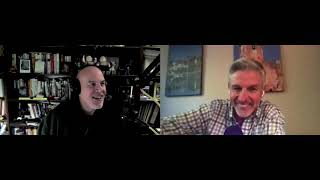
In this holiday edition of the Peer Innovation podcast, hosts Randy Cantrell and Leo Bottari reflect on the challenges and lessons of 2020 while emphasizing gratitude, remote‑work adaptations, and the power of peer‑driven high‑performing teams. They discuss a Vistage gratitude assignment that asks listeners to consider what they appreciate in family, business, and relationships, and they share personal stories about family life, marriage, loss, and the unexpected benefits of lockdown (e.g., nightly family dinners, deeper connection with spouses). The conversation highlights how technology—Zoom, Teams, Slack—enabled continuity of work and personal connection, and they credit these tools for keeping teams functional. Both hosts revisit classic management ideas from W. Edwards Deming and other frameworks (Six Sigma, Agile) to illustrate that timeless principles still apply to modern peer‑innovation approaches. They express a sense of urgency for 2021, noting the closing window of personal influence, the need to counteract societal division, and the desire to help more people through peer‑based collaboration. Leadership is framed as influence rather than formal authority, with an emphasis on facilitating conversations that surface team strengths. The episode also teases upcoming initiatives: the release of Leo’s book "Parentivation" (ebook and forthcoming audiobook), plans for future guests (including Dr. Henry Cloud), and a call to action for listeners to engage with the Peer Innovation community via the website. Finally, Leo shares a practical gratitude habit—a brief weekly reflection—suggested as a low‑time‑investment practice for personal growth.
Chapters
Welcome to Peer Innovation, the podcast with Leo Bottari and me, Randy Cantrell. Building on our previous shows, The Year of the Peer and What Anyone Can Do, we turn our attention to helping business leaders build high-performing teams. We'll talk with a diverse group of thought leaders who will share stories and insights that will help you and your teams achieve new heights. If you believe there is strength in numbers and that meeting the challenges of the future can only be achieved if we do it together, then join us for the conversation. Happy holidays. It's the holiday edition of Peer Innovation, the podcast. The website is peerinnovation.co. Leo Bottari, that's his name. In fact, that website will get you to the same place, leobottari.com. Author of the latest greatest book. Well, I, I'm biased. I think it's the best book so far, Peer Innovation. My name is Randy Cantrell. He's in San Diego. I'm in Dallas, Texas, and we welcome you. To this final edition of 2020. Boy, I didn't think we'd get to this point where we could even say that.
You know, on one hand, it feels like we just did this show, like, in the end of 2019. Like, the year went by so fast, and yet it was a year that, I mean, I don't think any of us anticipated that we'd be dealing with by any stretch of the imagination. And, and it'll be part of what we'll take into 2021, obviously, as well. And, uh, but yeah, but I think, you know, as tough a year as it's been, um, you know, for I think many people, whether it's business or in their, you know, personal lives and, you know, challenges they've had, and people have lost loved ones, and just been a, a very challenging year. I just, um, was involved with a, um Vistage meeting that I led a workshop for earlier, and they had an assignment that I thought was really pretty terrific. And it was really about— focused on gratitude, right? Gratitude for our family. What are we grateful for in our business or professional life? And then what are we grateful for with regard to relationships? And it's important to focus on those things even when You know, it could be because it's those things that kind of ground us and kind of get us through all of the other stuff that we're kind of dealing with. And so I don't think it's such a bad idea to talk a little bit about that now and kind of reflect on, you know, what we're grateful for in 2020, but also kind of looking ahead at 2021 and see how we, you know, pivot from, from this year and how we, you know, I think bottle up and channel that gratitude a little bit and put that energy towards something really positive for the months ahead.
Yeah, agreed. You know, I told you before we hit record, I mean, gratitude is a big deal, is a big deal for me, and selfishly, just for my mental health, you know. I just— it's just so easy to focus on all the negative And we can all do it. And I suppose we're all very prone to that. So every day I spend a conscious amount of time deliberately trying to negate all that and think, you know, things could be so much worse and there's a lot to be thankful for. The challenge for me is, and I was having this conversation with somebody just a few weeks ago, was to feel good or feel grateful for your situation without comparing it to somebody else who had something catastrophic happen to them and to be thankful that, well, I'm glad I'm not them. I'm glad I didn't experience that, which is kind of a horrible approach to the whole subject, I think. But just to, I don't know, just to try to reflect on your own life.
But there's a reality around that though. Vistage recently, it was, well, probably a few months ago now, but they had Amy Edmondson on one of their webinars from Harvard Business School. And obviously it was really interesting where she described it as, we're not all in the same boat, that old expression, right? She said, we're all in very different boats, but we are all going through the same storm. So, and I think that's where, I think more accurately, you know, and I think she described it well, is how we kind of find our way through our own situation, recognizing that other people are in different boats, but we do share this common, you know, storm that we're trying to navigate for sure. You know, when I think about, I guess, this assignment from the perspective of family business and relationships, you know, I think about when back in early March last year, when the shelter-in-place order was effectively kind of coming and it was coming fast, and our kids basically were like, huh, Southern California, that might be a fun place to hang out for a while. Now, we didn't know how long at the time, but it ended up being 10 weeks that they were here. People working from every room in the house, you know, bump up the Wi-Fi, do whatever, right, in order to accommodate, you know, the strains and the stresses of that just from a technology standpoint. And, but what was really remarkable about it was A, no drama, and B, also just being able to get together for dinner every night and where someone would take turns and they'd say, all right, well, we're in charge of dinner tonight. Someone else would take charge the next night or whatever. And we'd all sit around the dinner table, no TV, cell phones off and all of that. And just to get to have conversations and enjoy one another for weeks on end. And if you think about it, not for this kind of situation that drew everyone to our house, you would never get that. You would never get that at the time in the kids' lives. From a business standpoint, I mean, I went from traveling all the time to like, boom, nothing, you know. And so then it becomes, well, people pivoted as far as Zoom goes. Turns out teams were not only having challenges that they always had, but now they had really different set of challenges with this whole notion of remote work. And so as it turns out, things were as good or better, luckily, you know, after a bit of a dip, but then moved forward really well from a business perspective. So I was grateful for, by the way, technology that basically barely existed during the 2008 financial crisis, right? There was no Microsoft Teams, there was no Slack, there was no Zoom. I mean, none of it existed. So I was very kind of fortunate and grateful that those tools were available to do that. Obviously, finally, on the relationship front, you know, and I think about, you know, and I had mentioned this to the group, I said, you know, my wife and I love each other very much. It's nice to find out that we like each other a lot too, because we were fortunate. We were in this situation where it was before she'd be off to work every day and I'd be here or not or traveling, but, you know, both of us in the same house working there day in and day out, and yet It was just wonderful. You know, it worked out, you know, beautifully. And there are days where, because she works at one end of the house and I'm at the other, that we barely see each other in the course of the day. But by and large, you know, that time has been good, and I've been grateful for that, you know, during the day as well. But I would imagine that as our listeners sit and think about that for themselves, it's probably a good exercise to go through and imagine for them, just to take stock of that and reflect on that as we are here during this, what is typically a month of reflection anyway, I guess, in December. And just think about what that means. And as hard as the year may have been, and I know it was certainly much tougher for some than others, I'd like to think there's always something that we can hold onto that we can be grateful for and we can use as energy for um, for what's next.
Yeah, absolutely. Well, and Argus got to make a few appearances during the, uh, the pandemic, which we're still in. And I think there was a shirtless son-in-law at some point who wandered— who wandered into the camera during one of those shows.
Oh yeah, you know, it had its moments.
You can go back and, you know, what you and I've talked about before, you know, our ability to just come into each other's homes and And with a public podcast like this, for people to be able to see kind of where we're at, which we were doing before, but now people are able to do that with their coworkers and even their boss in these virtual meetings. And the benefit that that's provided to just kind of show us our shared humanity has been certainly a big, big thing. I always go to people. Um, first and foremost, which may seem strange because at heart I'm an introvert. I'm not socially awkward. I'm not, I'm not, uh, antisocial. I just, you know, my, my battery, my battery gets charged with deep conversations like the ones that you and I have. But, you know, put me in a room with 300 people and I'm, my, my battery's going to go dead really, really fast. So this hasn't been all that challenging. My wife and I were talking, she's wired pretty similarly to me in that regard. She can stay in her sewing, she loves to sew, she can stay in her sewing room. And I mean, we could go all day and not see each other and we're both okay with that. It's fine.
You look like you're in a COVID-free zone where you are. Yeah, I am.
I absolutely am. The books can't Can't hurt me, I don't think. So some of the ideas in the books might be able to, but that's a different subject. No, I'm thankful for— well, like you, you know, our wives are a huge part of our life. I'm fortunate in that, you know, she and I met and began to date when we were 18. We're both now 63, so we're coming up on 43 years of marriage. So a big deal. You just can't— yeah, my gratitude and my fear are kind of one and the same. The gratitude is that I have her. The fear is that God forbid something were to happen to her. And I told her, I said, I'm very selfish in that regard. I would rather something happen to me. She could handle that a lot better, but really thankful for for family and thankful that our family throughout this ordeal, like yours, has been safe. But I'm at the same time real mindful of people who've lost loved ones, some not to COVID, some to other circumstances. I was pretty wrecked a few months ago. There's a young lady up in Tennessee and her husband tragically was killed on his way to work on a highway. You know, an 18-wheeler had a blowout coming the opposite direction, you know, and leaves her and some small children behind. And, you know, you're just like, you know, it, it makes you not want to compare your life to someone else, but it makes you painfully aware that some seemingly small event could happen that has catastrophic impact, you know, on our lives and the fragility of our situations and our lives.
And so random, you know, that's the—
yeah, completely, you know, and nothing he could have done. Yeah, not one thing he could have done. It was, you know, it was just one of those, one of those events. I'm, uh, business-wise, and you and I've talked about this off camera, You know, my, my situation with the coaching thing has kind of changed. And my coaching was very much virtual even before the pandemic. Um, and the person-to-person stuff obviously limited here to Dallas-Fort Worth. Unlike you, I'm not going to travel. You know, I don't know that anybody, they might could write a check big enough to get me to, but I hate it. So, you know, and it takes someone like you that really embraces it. And rather enjoys that part of it. I don't. I don't at all. You know, it's— I'd rather be beaten than have to endure it, you know. But the city government folks that I've continued to serve is kind of continued to be a focus, you know, for me. So I'm grateful for clients, for sure. Grateful for the people that trust me enough, that believe that I've got something that I can offer to try to help them figure it out, whatever it is. That's for them to decide. So super, super grateful for that. And I think they're big opportunities. I'm a big believer in, if we can look past the challenge to, okay, where is the opportunity? Because if there are no challenges, there aren't any opportunities. We need them both. I've kind of gone back to my— regressed back to my early, early days of leading when I was in my 20s. I've been rereading— you'll get a kick out of this— I've been rereading W. Edwards Deming stuff from a guy that was— I don't know, what are we talking, 1950s? It was right after World War II. He's dispatched to Japan to try to help them rebuild and reconfigure. I got interested in him because I was in the consumer electronics business, which was dominated in my early career by Japan. No more. It's Korean and Taiwan and China. But just thankful for that. Thankful for the exposure to some of these old heads that have been long, long gone, who kind of paved the way for this whole high-performing notion, this whole high-performing teams thing. You know, I was even looking at— he, Deming, crafted 14 points for total quality management. And I started looking through these things, and when you realize that these things were crafted in the late '40s and 1950, and these are still really valid today, you know, I'm thankful to have the exposure to those kinds of ideas and the ideas that people like you, you know, are spending your time.
You know, it's funny though, you think about books like that, right? And I've had some times where it could be a student or it could be someone who I'll talk about a book like that and they go, "Yeah, wasn't that written like 50 years ago?" Or they'll make some comment and I'll be like, "People quote like Socrates, like let's get over yourself." I mean, this is like, if the thinking is good, it's good. And we should continue to draw from it. And I think one of the most frustrating things in so many respects, and I see it in, business with my, um, you know, students and daughters and all of that in terms of their organizations is how much we have to relearn the same thing over and over and over because it doesn't, you know, no, no. So, um, yeah, so there's that. The other thing you brought up, um, your wife and your anniversary cracked me up because Um, our anniversary, um, was, um, you know, basically, um, in October, and we could get out and, and have dinner. And we said it was our anniversary, you'd be there, you know, the waitresses, you know. And, um, we said, they're like, oh, how many years? Because we're both around the same age, we're in our early 60s. And, um, we said one. One. And, and in the look on her face, we didn't know whether she was disappointed, right? She was like, oh, or she thought it was really cute, you know. It was like one of those things. It was hilarious. But yeah, it definitely threw, uh, threw her for a loop.
Um, but yeah, no time limit on love, you know. I just, I'm, I'm thankful for my experience. I, I'm thankful for your experience. I know they're different, but You know, like, like you said, we're in different boats, but same storm. Not that our marriages are stormy, but no, no.
But so, you know, talk about that. What about next year? What are you thinking about for next year? What's your kind of, as you look ahead, I'm not talking about New Year's resolutions or anything like that. I'm just talking more about even directionally speaking, what do you thinking about, um, for yourself and your business and family and all that kind of going forward?
I'm painfully aware that the, the, you know, the window, no matter what your age, the window is closing, right? I mean, because none of us are getting younger. And as my father, you know, now pushes toward 98, and whether he'll make it or not, I don't know, you know, he's doing well But I think about him and I think about myself and I think about just the time limit for us to help one another. And I've gotten increasingly, and you've been largely responsible for this, and the first book that you wrote, The Power of Peers, was largely responsible for this whole peer advantage thing that I had no prior knowledge about at all. I was probably like many of our listeners, typical business guy, head down, doing the work. You know, I don't have time for this. And we get our heads so down that we can't see the opportunities that are standing right there in our way. And I have, I've been feeling that increasingly this year. And for me, it's okay, I need to really focus on where I can have the biggest impact, the people that I can serve, the people, the people, the clients that are saying yes to me, the clients that are finding ongoing value. And I'm leaning, I'm leaning really hard into that. Additionally, on a personal level, I'm leaning hard into the exact same thing, the people that you can make a positive difference for. You know, I use the illustration of pushing water up a hill. And I just, I don't tend to be a person who tries to do that, but at the same time I do, you know, there are many times that, you know, you, you're trying to help people that don't want your help, not interested in your help, whether that's business or in a personal relationship. And I just, I think 2021 for me is probably going to be a year where I'm going to lean hard into I'm going to say no to the things that I think probably are going to be wise to say no to so I can say yes to more things that probably have bigger impact. That's a hodgepodge and really generic way to say it, I guess, but that's where I'm— my head's at.
Yeah, I think, um, on the personal front, definitely, um, you know, would love more time with grandchildren next year, which will be kind of fun to be able to go to, um, Denver more often and, um, and do that will be, will be great fun. I mean, they're just, you know, there's, it's just such an age right now that, um, I know that's pretty fun. Uh, big, big Santa Day for them, so, uh, coming up. So that will be good. And I think business-wise, really, it's, it's really all about, um, making this full, you know, pivot, not completely getting away from the work I do with groups by any stretch, but obviously doing a lot more with teams because this framework is so unbelievably valuable and it works. And it's why even from the standpoint of the book, just making the soft cover available right away, making the ebook as inexpensive as possible, doing all the things that hopefully allow for a leader to make it a no-brainer that they would share the content with their team so everyone had access to it and they could all, you know, read through it and talk about it and benefit from it together and share their own aspirations for what they want for themselves and just usually simply use that as a guide for doing that. And I think the more people that we can really start getting to cooperate and collaborate and think and be purposeful about what they want to do in the coming year, I think we could really see some good things. And I'm very hopeful of that. And whatever's— as you said, the window may be closing, but whatever small part we can play during that time with however many, you know, lives can be impacted is, you know, worth it.
Are you feeling any sense of urgency as you get into 2021? Not just because of age, but just for any other reason?
I feel a sense of urgency in that I think there's a lot— you know, it's funny, right? It's two sides. On one hand, we have this incredible generosity and people caring for one another and doing all these amazing things in communities all across the country and around the world. And yet you also see an unbelievable divisiveness. That has cut through, you know, the U.S. certainly, if not other countries. And I think the more areas in our life, whether it's at home, at work, or whatever, that we can start conducting ourselves in a way— and again, cooperating and collaborating and realizing, you know, what abundance looks like and that life doesn't have to be a zero-sum game— the more I think that that can spread. You know, let that be the pandemic in a positive way, right, that spreads in 2021 and beyond, because that's, I think, essential. So I feel a sense of urgency about that, and I don't care about any ownership around it. As many people that want to stand up and talk about the fact that we need to work together and we need to respect one another and listen for understanding and not, you know, be judging other people all the time and to really see the best in each other. You know, it's so easy to find fault You know, it's so easy to look at anything and, um, you know, you can take the view from the cheap seats if you want, or you can decide to roll up your sleeves and get involved, see what the— again, see the best in others, figure out what it is you can agree upon and build from that. And I think that's what's, you know, going to make a difference. And so my sense of urgency, I guess, is around those things that I think we can do more easily in groups and teams in our company with the hope that we use that as practice for bringing that into every aspect of our life.
Yeah, I'm feeling the same sense of urgency with, again, like I said, with the window closing a little bit. But our ability to— there are people in our lives that can't be helped. And I've got a personal situation that you're painfully aware of that— and I'll just say this for our audience. If you've got a family member, a friend, a loved one that's going through something and you are desperate to try to help them and you're thinking to change them, my heart goes out to you because we all realize you just can't. You can't live someone's life for them. And so part of my sense of urgency, Leo, is probably born from, from those personal challenges. So if you're going through something, just know this: there are people that you, that you can help. There are people that want your help. And that's probably why I'm leaning really hard into the people that, that say yes, the people that find me a safe resource, just like people find you a safe resource, whether that's personally or professionally. And like you, I'm very, very focused on high-performing teams, high-performing groups, high-performing organizations, and what makes them them. Why are they so different? Which is why when I go back and I start reading something that a guy wrote in the '50s or some ideas that were conceived, and with all of the stuff that's going on with Six Sigma and Lean and Agile. And I mean, there are a ton of frameworks out there. And it's interesting to me that when you read Gallup and other organizations that look at that stuff, pick a horse, they work. They work. Now, some of them have insanely high price tags, but that's for me the exciting thing about your framework for a high-performing team or group. These are opportunities that aren't beyond the scope of the smallest of organizations or teams to the largest. I mean, the application is true. The application scales, I guess, is the best way to say it.
I think that's right. And exactly. And the point, as we've talked about many times, is I don't go in anywhere to any group or any team and tell them what's right, what's wrong, how they should be doing anything other than just to help them facilitate a conversation among themselves as far as what they want in recognizing their own strengths and how they can pull together and just create clarity around expectations of each other. I think that's often so important. We make assumptions all the time and, you know, You know, and it is what it is that way. And, and I think, you know, to your point earlier, and not speaking to your specific situation so much, but sometimes, and I think we all know it from ourselves, whether it's something small or something large, sometimes we're not ready for help yet. Sometimes we're not ready for help now. And But then eventually, and, and very much to your point, you, you can't— if someone doesn't want it for themselves, you can't want it for them in any real way. Um, but if they do get to a place where they eventually want it for themselves, um, then at least, you know, um, there's a, there's a shot, you know, at that point.
And so, well, we've all got the choice. I think we've all got the— I think for 2021 My focus is we've all got the opportunity to be that person who makes a difference. Somebody asked me just this week about high-performing teams and, but what if you're not? What if you don't have the authority? And we so often get locked into thinking that our making a difference is tethered to some authority that has been bestowed upon us. And I'm like, I mean, how much time have you got? To listen to all the evidence out there of things that began with some groundswell of, of, of a team, a two-man team in a multi-hundred person organization that starts performing at a much higher level. People are going to notice. You can't hide it. That's the great thing about improvement and growth. And so for me, 2021, I think, is a big opportunity. You and I have talked in the past in some episodes, I know, about these hypotheticals of CEOs, for instance, who never consider, okay, what if your right-hand person comes in today and resigns? What are you going to do? And if the pandemic has taught us anything, maybe we need to be playing out a few more of these hypotheticals and thinking about, well, what would we do? What can we do to prepare for those kinds of things?
Well, I mean, to your point too, to that person who thinks that leadership is about authority or it's about position, it's about influence. And Jim Kouzes and Barry Posner and others who know a lot more about the subject than I do will tell you that all day long. And what we do write about, or at least language I have in peer innovation, is that sometimes We might be the leader of the team, but I think we can always be a leader in the team. And I think that that shows where everyone is there, not just to fill a role, but they're there to make a difference. And they can do that. And the influence we have over one another and what that looks like with our peers is hugely powerful. So, yeah.
I'm hopeful that next year, you know, and even we as a country, I'm hopeful that we can get away from the blame game and the our situation would be better if only that person or this organization or this group of people would have done something different. I mean, I'm painfully aware that our lives are largely what we make of them. We've got influences in our lives, some that we can control, others that we can't. I'm a big fan of Dr. Henry Cloud, so I'm a big believer in the whole boundaries concept that he teaches, which we're all in control of, whether that's physical or our mind or our relationship or whatever. So I want for myself 2021 to be, you know, a big year of my own personal growth. And that doesn't depend on anybody except me.
Well, maybe we can get, um, Dr. Henry Cloud on the show next year. It'd be kind of great actually to have him sometime, uh, in the month of January as people are looking forward. To get some of his expertise and some of his thoughts. So let's figure that out.
And on that note, we've got a list of some pretty exciting guests lined up for next year, some that are a little more concrete than others, but I'm looking forward to the iteration of the Peer Innovation Podcast as well and what we can do to try to help So if you're, if you're a part of a group, part of a team, part of an organization, we hope that we're bringing content and we're planning to bring more content that's meaningful to you, actionable kinds of things, not just pie in the sky generic talk, but it really is about trying to make a positive difference for folks.
That's right. And hey, if you still, um, you know, need a gift for your team or your staff or your family for the holidays, you can always get them a copy of, you know, Parentivation. You can gift them the ebook, which is like the best stocking stuffer ever, I think, for the money. But also, as you know, we're days away from— everything's been all submitted right now. It's just a question of whether the audiobook will be live on Audible. Any day now, so that'll be fun too, to, you know, and I've asked, it'll be interesting to see if this comes forward, but John Largent and I, who of course heads up game day media, and we worked in conjunction with C-suite to talk about doing a little bit of a bloopers, you know, because when you, you hear the book on Audible, obviously it's, you know, it's read as it's supposed to be and all that, but it's not a lot it doesn't happen without some bumps along the way when you get caught up in the same sentence over and over and screw it up or something like that. So I said, I think a little blooper's real in addition to maybe a little excerpt just to, uh, give a flavor, uh, for the audiobook would be kind of fun as well. But yeah, we'll, we'll see if, um, we can—
yeah, that'd be great—
that put together.
That'd be great. And, and Leo reads the audiobook, by the way, for those of you that are that don't know that. So I was glad that you narrated.
You can regard that as good news or bad news, but no, it's, you know, you pointed this out before. I think for a novel, it's awesome to have professional voice talent do that, but I think when it comes to this kind of a book where I get to kind of tell my own stories and share my experiences and do that and have it first person, I just feel like, yeah, that, that felt the right way to do it. It was not the way um, the first two books were done, um, and, you know, and so I preferred this time around to be able to do it, even if it's clearly not professional voice talent. At least it's, you know, my getting to share, um, that story. So again, it was, it was a fun deal.
But hey, before we wrap up, or as we wrap up, goodbye and happy holidays to everybody. When it comes to this topic of gratitude, because that was really our focus today, Is there any specific practice that you have honed in your own life through the years that you try to intentionally— is there a place? Is there a setting? Are there any tactics or strategies that you've used?
When I went through the graduate program at Seton Hall, one of the things we did every Friday was kind of a weekly reflection. And it's that time you spend, maybe sometimes you write it down, maybe sometimes you just give yourself 5 minutes to just look at the past week and be thinking about things like, what was I grateful for? What could I have done better? Or what did I learn? Or all of these kinds of things. And I think that can be an important time that doesn't take a lot of time, but it can be really, really valuable, I think. And can kind of help us each week in terms of, I think we're all just a work in progress, we're all trying to get better. In whatever way, whatever that means for each of us. And so I think that practice for me is something that is important.
We're thankful for the technology that affords us the opportunity to do this. We're thankful for podcasts. We're thankful for our audience. And we hope that you'll visit the website. It is peerinnovation.co. He is Leo Bottari. My name's Randy Cantrell. I'm going to say happy holidays and let you sign us off.
And I will say happy holidays as well, and we will see you in January.
Thank you for joining us. To subscribe to the podcast and learn more about how you can engage peer innovation for your organization, contact us on the website at peerinnovation.com. Co. Until next week, remember, the power of we begins with you.










