Leo & Randy On Nothing
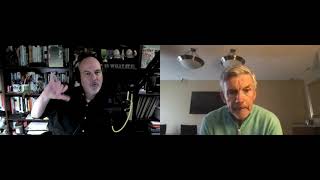
Randy Cantrell and Leo Bottari discuss how CEO peer groups helped leaders solve problems during COVID-19, and how the pandemic reshaped where talent comes from. They compare how these groups work differently in the U.S., Canada, and China, and why in-person connection still matters.
Chapters
Welcome to Peer Innovation, the podcast with Leo Bottari and me, Randy Cantrell. Building on our previous shows, The Year of the Peer and What Anyone Can Do, we turn our attention to helping business leaders build high-performing teams. We'll talk with a diverse group of thought leaders who will share stories and insights that will help you and your teams achieve new heights. If you believe there is strength in numbers and that meeting the challenges of the future can only be achieved if we do it together, then join us for the conversation.
All right, Randy Cantrell. Here I am in Cincinnati, Ohio. Just finished actually a Vistage Group meeting here. I actually have another one tomorrow before heading back to California. But it's kind of interesting traveling around the country, just seeing kind of what's going on and what's on people's minds and how different it is from one state to another and one municipality when you've seen how they're dealing with COVID Is it masks, no masks? You know, what that's looking like, but, uh, yeah, pretty, pretty amazing stuff. So, uh, how are things, um, you know, what's it look like in Texas right now as far as people masking up or not, or what's that?
Well, in the Republic of Texas, where we, where we kind of do our own thing. Yeah. The, you know, the mask at the height, at the height of it, I would say really well, uh, high compliance, I'll put it that way. But, you know, honestly, that did not last terribly long. I think we have had people— clearly we've had people that never, that never did, even out of courtesy, you know, didn't. But now, uh, probably more rare to see people wearing masks than not. I'm curious for you traveling, and now that you've been traveling, has travel changed from the time that it reopened? What are the changes in airline travel from the first time you got on a plane when this all ended to, say, your most recent trip? Has anything changed?
So two things. Um, one is when I went to the airport to fly out Tuesday morning after the Monday holiday, I've never seen so many people in an airport in a long time. So the traveler count was up for sure in a major way. And that was really kind of interesting to see, really kind of took me aback a little bit. As opposed to getting handed a plastic bag with a tiny, bottle of water and a bag of pretzels and a, and a wipe of some sort, um, to get you across the country was pretty much how that was supposed to last you. Um, they actually have reinstated, uh, non-alcoholic beverage service, you know, with the usual selection of, you know, limited snacks. But it's, it's getting there. It's, it's making progress.
Yeah, well, it's, that's an, that's an improvement. Well, we were talking before we hit recording, and now that you're out and about and you're certainly interacting with more people— for me, things have always been dominantly virtual. So my personal, my face-to-face interactions have increased, and that really is just because I choose it. You know, so if I choose to go and spend some, spend a morning at City Hall, you you know, with city leaders. Um, it's just kind of nice to do every now and again, but it really hasn't changed so much my interaction. So the scope and the scale of what you're hearing and the concerns, and I mean, what are the pressure points? What are people fretting over?
They're fretting over reentry, you know, some are at various stages of it. So a company I was at today, everyone's all back. They're all working in the office and all of that. Other companies, um, they're still remote, others have it more of a hybrid model because people have wanted to come back. They've really felt that isolation and really feel like they want to at least have a place to go at least a few days a week where they get out of the office. And, you know, if you're, you know, small apartment living by yourself somewhere with crappy internet, you know, you're pretty much, yeah, I'll take a little commute and at least feel like I can get out and about and have it be a little more normal. So, so it's not It's not the same for everyone by any stretch. I mean, that's the challenging piece of it. And I will say that this is where watching people work together in groups is really helpful because they really can bounce ideas off one another in real time. And this will be— there'll be hundreds of case studies written about this somewhere down the future, but we're living it now. And in order to get real-time, you know, I think input from people about what they're doing and how they're doing and for them to share their experiences, you know, this is where I'm definitely seeing the groups be most helpful. Let's face it, I think it's like anything, you know, but during times of difficulty or crisis or something, this is where we need one another more. And I do think people leaned into their groups, anyone who could, you know, unless your, your business was completely threatened to go out of business, or you end up not being able to survive this. I think most, you know, CEOs or, and/or key executives, you know, stayed with their group and really depended on and leaned into their group to help them get through what they were doing. And I think a lot of them are grateful for that. I go into meetings all the time where people are kind of reflecting on what that looks like, reflecting on what the group meant to them, reflecting on how their team responded, you know, at the same time they were facing enormous personal challenges, how they were able to, you know, keep things moving forward and, and going on there. So everyone's just in a, in a weirdly different spot. You know, one of the issues that comes up is vaccination, right? What's, what's our vaccination policy when it comes to people coming back to the office? Rutgers University, who, as you know, I adjunct for them, and I don't teach on campus primarily. I will probably go in the fall, and because I teach a residency a couple times a year there, but this will probably be the first time I'll be back there in a while and do the residency. But the only way I'm going to be allowed back is because I was vaccinated. Rutgers was the first university in the country to basically say, you want to come back to school in person come September, then you're going to be vaccinated. And people were like, well, what if, you know, I don't want to get vaccinated? And it's like, well, you can go to school somewhere else, is pretty much the, you know. But, you know, New Jersey got really impacted in a big way. And I think there's a lot of real caution around this about making sure they keep people safe and that they can get people back to school, you know, in an in-person environment. Who are choosing to do that. So there's just a lot of struggle there. So for companies, for example, it's like, OK, do we have a vaccination policy? Do we not? What does that look like? I think there's a lot of people that really fear is the job market is wide open right now. They feel like there's going to be a lot of movement. Nobody wants to lose their good people. You know, we've mentioned this before, you want to be the person at this end of it now who treated their people really well during COVID because if you didn't, um, you're going to find yourself on the wrong end of that, um, you know, yeah, scenario going forward.
The CEOs that in these groups, and, and of course, I don't know, is anything more galvanizing than being in a foxhole with other people. So these CEO peer groups that you so regularly address, I mean, I can certainly see that— I mean, coming out of it, I would surmise that they're going to have a bond. They're going to have a unique bond that the pandemic provided for all of them.
There were some groups, and plenty of them, that were actually formed during the COVID period. I think Vistage launched like 52 new groups last year during COVID I mean, think about that, right? So, it was the idea of people recognizing that they're better off as part of a group than being stuck out there alone. And I think when you looked at everything from various government programs to PPP loans to all kinds of things that were available, people needed a lot of guidance about how to get their way through the system and how to make sure that they were understanding whatever was being put out there to help them and to be able to maximize that. And to be able to do that together and have someone in the group who may be just better equipped to be on top of that and could share that, excuse me, with their fellow members. It was an enormous benefit. So yeah, and I think for those groups also, what tended to happen there was the groups didn't just meet like the typical once a month full day, you know, take that retreat. You know, the idea of the all-day meeting is that you try to clear the decks, you know, mentally, physically, and everything, so you can take a day where you can do a full immersion with a CEO group to really not just work in your business, right, but do this idea of working on your business and, and to do that with peers. And, you know, that was taken away a little bit for a while by the necessity of needing to meet more frequently for less time and help each other with the immediate fire, right? It's great to work on strategy, but if my kitchen is burning, I need to go to attend to that, you know. So I think this was what, you know, a lot of people did, and they did it for one another. And they got to know each other better, more quickly, and it brought the group together. You know, I've had certain people will say, well, you know, we're a little behind. We don't have kind of this process quite down or this way of, you know, working through issues quite perfect yet. And I'm like, yeah, but your group is so ahead of the game because of the bonds they formed so much more quickly and more deeply in this short period of time where everyone helped each other through the storm, if you will, right? So I think there's a certain advantage to especially new groups starting when they did, at least from the perspective of bonding with one another. I think that that has been absolutely evident. And I think for those groups that have been around a long time, for them, it's not even that far away when you think about the 2008 financial crisis. I mean, it probably seems like forever ago, But they recognized back then that that's when you need each other most is when times are toughest. And they not only helped each other prepare more effectively for that storm that hit, because there were certain obviously early indicators in the economy where people who, because they represent various industries in different parts of the economic web here, they just were able to keep one another apprised of what's going on, see the early warning signs, move forward with that. You know, as we've said many times, we can complain about Zoom and the various tools, but back in 2008, we're lucky that it wasn't a pandemic because we didn't have Zoom or Slack or Microsoft Teams. We had none of that. People would have been dialing in on conference calls until their ears bled. You know, I mean, it just would have been ridiculous. So I mean, I'd like to think that as we reflect on a lot of this stuff, and I think people are, first of all, they're reflecting and thinking about what went well. What do we be grateful for? What are some of the values? And what are some of the things that people exhibited that we want to make sure live on, you know, past COVID? But then it's how do we now organize/reorganize in a way that keeps us really productive, has our employees really happy? You know, Edelman just did a a mid-year trust barometer kind of update. And there was a lot there talking about just the value of the employees. Now, it may seem obvious, but when you start comparing it to customers and investors and other major stakeholders there, the employees weren't always first on everyone's list. And now they're so recognized as being essential to what makes a company a good investment, what makes it valuable to customers, and obviously what makes it important as far as people in a place to work. So I think there's a lot of, um, kind of regrouping going on right now, maybe taking some good of what happened during COVID when, you know, as we've talked about many times, so many more CEOs were asking, how are you doing, not just what are you doing. And, and how do we keep that going? How do we do a really good job and maybe a better job treating each other as fellow human beings as opposed to fellow— as just colleagues, you know.
Yeah. Well, and so— and the technology has just broken down. I mean, there's no geographical barrier anymore. So if you're looking for— I mean, here in Dallas-Fort Worth, so if you're looking for high talent in Dallas-Fort Worth, Texas, and the work If it can be done remotely, you're not limited to people who just live here in Dallas-Fort Worth, Texas. They could be anywhere. So the talent pool is greater, and I'm encountering a number of business people who are thankful that the talent pool can be broadened because, well, I mean, I'm 64, but I've heard all my life every year how there's a talent shortage. There's a talent shortage. I mean, there's always a talent shortage. There's always been a perceived talent shortage, real or imagined, you know. And so now I think whether it's a hybrid model or whether it's going all remote, and, and the number of— I don't know, just anecdotally, in, in the number of articles and things that I see online of CEOs and entrepreneurs who have figured out now, you know what, I'm spending $400,000 $100,000 a year in my lease. I'd rather give that to humans. I'd rather up the talent pool and pay that money to a person as opposed to a landlord. There's something to that for some people where that fits their business model.
I think that's totally right. It shines a light on people are not only going to be competing with AI, but they're competing with other people all over the world in a way that is going to be— that's going to be upped again and then some. And kind of shines a light on— for anybody who didn't really get too concerned over the fact that we're in the maybe high 20s, low 30s on PISA scores in terms of secondary education in this country and how We're just getting lit up by dozens of other countries around the world. We need to get on that in a hurry. We just flat out do. I mean, we can no longer— this is truly getting to become a world stage right now in ways that are going to be far more evident to us.
And yeah, it's just, um, it's, it's, well, I want to pivot back around to that because you've got this, you've got this enormous opportunity that's happening for you and for Pure Innovation in China. But before we get to that, I got to ask you before I forget, because you're the resident golfer here. So I'm watching the PGA Championship, right? Of course, I even non-golfers like me are watching because of Phil Mickelson. But the crowd, that, that crowd situation at, you know, that last hole, the, the pent-up emotions of that crowd, I don't— I can't imagine that we would have seen anything like that pre-pandemic. It just wasn't how it just wasn't how golf crowds behaved, you know, but it was, it was as a spectator, I'm like, man, this, they're, they're out of, they're out of control. Had to be scary for the golfers.
And there was a whole confluence of circumstances around that that truly created something that was just, um, frenzied. I mean, it really was. Yeah. Yeah. It was, um, yeah.
What were you thinking?
No, I, I think that, I think that very thing. I think there's a lot of pent up, you know, You know, I'll be in Boston in June and I'm finally going to get back to Fenway Park after not being there in a while. But, and the good news is, as of Memorial Day weekend, it's going to be full house there now. It's not going to be like whatever percent capacity or anything, because who wants to go do that, you know? But to be, but to be there and get the full experience of it, that's going to be really cool. And we're going to start getting a lot more of that, the most shared experiences. You're looking at movie theaters opening up around the country and, and people just excited to get out and yeah, and do that, you know, they've been like, uh, cabin fever is over. Yeah, stir crazy doesn't begin to, uh, to touch it, you know. Uh, when you mentioned though about, um, the, the China thing, and I know where you're going on that one, but you also said about how things have gotten smaller and so much it takes the geography out of it, you know. It's the, it's the meeting days where I had 3 workshops in a row, right? We did the Toledo, Ohio in the morning, did Canada in the afternoon, and Australia at night, right? You know, I mean, who, who does that in a normal— I mean, it was just an amazing— I referred to it as kind of a little time zone hopscotch, you know. It was already the following day in Australia when I was doing that evening program, and— or the day that I had that party, if you will. It was kind of a— it was basically an event in Guangzhou for young entrepreneurs that were looking at peer innovation and had some real curiosity, curiosity about that. It was kind of a little, you know, launch event. Uh, and but that— so I joined that event at 10:45 PM Pacific time, just made some opening welcome remarks, that kind of a thing, and said hi to everyone, and that was that. But at 5:30 in the morning earlier that same day, that's where I was on, um, the, um, Aji Keramidis's, um, podcast out of the UK. Um, who, who, as I mentioned, he was out of the UK. He speaks— he, he was— I think he was living— he's lived in Italy, um, but I don't think he's Italian. I— and, and I think it's, um, I, I don't want— I'm not going to guess his nationality, but, um, it was so funny because he, he would— when he pronounced my name, I told you it was Leo Bottari, and I'm like, you pronounce it better than I do. I said, I love it. Yeah.
I said, yeah, we're going to stick with that.
I'm going to stick with that. No, but I mean, and it is kind of exciting and really cool when, whether it's me or anyone, when your work can really get exposed to a much more global audience, that makes it, that makes it really kind of fun.
Oh yeah. No, it's awesome. It's often, it's awesome. Culturally, I'm, I'm surmising. So based on your experience, educate me. I mean, we're still people. The language is different, cultural customs, mores, all that stuff I get are different, but still it's about human connection and it still is about— I would think it still is about human collaboration and the shared experience and, and the insights and things that we can gain from one another. I don't care if you're in China, I don't care if you're in North America, I don't care where you are. I mean, am I wrong?
No. I mean, you have some cultures— I mean, clearly the US is much more of an individualist culture than China would be, much more collectivist. At the same time, to your point about us all being human, some of us are either going to be wired to be really open and vulnerable and share with people, and some of us aren't, period. You know, there's no getting around that. Um, I think you have to just be in a situation, in a group of people, in a, for lack of a better word, kind of a controlled environment where you're feeling like, okay, we're in this bubble, it's safe here, we can truly be open and recognize that we're not the only one in the room that has questions or issues or problems or challenges or opportunities in front of us. And, you know, what we can do for and with one another is, is really remarkable. And once people kind of get a window into that and discover it, You know, it's, it's, it's really special and really neat. The— it's been interesting to watch since The Power of Peers was written in 2016. And, um, you know, I think a lot has come, and I'm not attributing it to that book by any means at all. I think there's a lot of things going on in the world that have contributed to, uh, the fact that there are more people starting peer groups today. Some people are, you know, kind of almost in the following Bill George and True North groups, just starting their own groups. Or there's companies springing up all over the place, particularly when it comes to entrepreneurial companies, you know, startups, things like that, where people recognize there's a lot of decisions and a lot of things to be done here. And I'd really like to make as few mistakes possible and I at least want to be surrounded by some people who we can kind of guide each other and help each other as we're all going through what we're going through. And so I think slowly but surely we're getting better and better at that despite political divisiveness, despite a lot of other things.
With your work in, I mean, even if you just look at your work with Canada, and here in, in the States. I mean, just those two cultural differences. In any other commentary that you want to make, I'm curious about the whole— the quest for, the quest for safety, the quest for psychological safety. I would surmise that one of the big differences because of the cultural differences might be that, might be in how we, how we go about trying to establish that. And I could see that that might be Well, it would seem to me that that might be more difficult in a place like China than it would in a society as open as ours.
So the big thing that I've seen between groups in Canada, CEO groups in Canada, for example, and CEO groups in the US, and it's subtle, I don't want to overstate this too much, but when you look at There are basically 3 things that make a group really work and have the right people, right? One is you have to have a shared common purpose for why you're there. Both are important to both. The second is you have to have shared values and behaviors and traits that will make you a good contributing member to the group. And the third is really you want the diversity in the group of whatever diversity you can create so you have all the voices around the table. That will help, um, you know, you drive a valuable experience. U.S. groups, I would say, on average and slightly lean toward the diversity part as being really important, where a lot of the groups in Canada lean more toward, um, the shared values piece. Um, their feeling on that is that you have to have the shared values part because you can bring someone from another industry sector, another practice area, another, you know, whatever way that diversity cuts, right? But if they don't have the shared values piece, if they can't be a good contributing member, then it's just never going to work out. And I think they're right. I think that that is truly fair. And like I said, I think that there's a bent slightly on one side to the other for US versus Canada groups, but they both recognize that both are important. I think with regard to psychological safety, I think both groups, everybody's trying, everyone's trying their best. Everyone knows that, like I said, when I've used the metaphor about the pool of water at the spa, everyone knows that if they were full into it, it would be the most incredible experience in the whole world. They just aren't always willing. They just will sit next to it and read a magazine or dangle their feet in the water. But to get people to truly to let go and to truly allow them to receive what's available to them so that they can be open to listening and they can be more curious and ask better questions and learn more about themselves and others. You know, that's what— it just takes time.
It just takes time. Have you sensed any shift because of the pandemic and because of the kind of the pent-up siloing that might have been necessary during a pandemic, that now that we're emerging from it, are you sensing that CEOs in particular might be even more open to diversity or might be more open to, for lack of a better word, might be more open to the input and the experiences of somebody completely outside their realm?
Oh, I think they are. First of all, this is really funny. The call that was coming in from Italy, I have no clue who that would be, but well, but here we are.
We should have heard— we should have had him pronounce your name though.
This is this world, um, that we're living. Yeah. Um, so I'm sorry, ask the question.
Well, of the siloing that happened during the pandemic—
oh, the diversity piece.
Yeah, the emerging from that. Is there a pent-up demand for people to not be quite as siloed? Because, well, we know what that felt like, and that didn't feel too good.
Yeah, there's a diversity piece and the siloed piece. The diversity piece is, yes, we need a lot more voices at the table, but the inclusion piece, and actually even taking it a step further and creating a sense of belonging, I think is very top of mind with people, and the necessity of leveraging that really becomes important. When it comes to silos, I think there could not be a better time to work on your cross-functional work team. I realize that's out of self-interest, maybe from my standpoint, But, you know, the bottom line is that, you know, if you could take what peer advisory groups do so well and apply it to your cross-functional work team and actually get them functioning at least as well as your average CEO peer advisory group does, it would be leaps and bounds over anything that that cross-functional work team is doing together right now. It would help break down those silos, would build, you know, a spirit of cooperation and collaboration that would transcend these territorial battles that people have over people budgets and pet projects within their particular departments. And, and people would have a lens into what's going on in the organization so that when it came to making certain decisions, you'd have the right people involved from the beginning so that you wouldn't have something that happened in one department, you know, find out it adversely affected, um, you know, some somewhere else. And by the way, those things aren't always in real time. That could be something I do today that we don't see for 6 months, you know, and then now no one even knows where to retribute it. They don't— they're not even following it. So, you know, I think both of those things are hugely important. And it is amazing to me the number of companies that absolutely admit about how siloed they are and talk about, talk about being able to make a difference. And if you could remove that, what a difference, right? I'm just thinking about standing in really tall grass and not being able to see over the top, how that would feel. That's how people are operating in their jobs, you know.
Well, in the market, the market and the economy are going to kind of force our hand. Those of us that, you know, may be tempted to remain siloed or survive in organizations where That's, that's their department. I mean, that, that seems to me to be quickly, it's by necessity having to go away for the simple reason that we talked about earlier, talent. I mean, the talent pool. I don't know the high achievers that I know. They, they really don't want to operate that way. They really don't enjoy operating that way. They want their voice heard, and they've— especially some of the up-and-comers, the younger folks who want to have a voice at the table also have a degree of, I don't know, a sense about them that, well, if I want that, then I need to give way because I know my counterparts, they also want the same thing. So we kind of have to have a tolerance for one another.
You know, I think that this tight labor market thing Um, so for the lack of— I think, I think it's overplayed, and I really do. And I know a lot of people get upset to hear that, but I think the reality is that there are some professions, there are some trades, there are some skills that are, um, that we don't have enough people for, and I get that. But short of that, take 90-some-odd percent of all the other jobs out there. And we lack the imagination and a decent system to match people with open positions. We just do. I mean, we have this ridiculous system that is designed largely to weed people out. And that's what we do. And we cast really great people aside for jobs. And then we complain that we can't find the right person for the position because what they're looking for and how they're looking for it is completely ridiculous in so many respects in terms of finding people that would have the skills and the will and the passion and everything else to be really successful at your organization. I mean, think about the people that just aren't even considered. We've talked about this, whether it's, you know, women have left the workforce that are trying to get back to work, whether it's older people, whether it's, I mean, you name it. I mean, there's so many, Military personnel. I mean, people that find it difficult to get jobs because they're not even part of that pool. And I think if people get a lot better about considering that there's some amazing people out there who are willing and wanting to work, who absolutely have the skills. And by the way, and there's a lot of jobs out there that What's really important is these people have the things you can't teach people. You know, other stuff you can learn, but the things that, um, you know, some other folks have, you can't teach that. And there's no, there are no degrees on, you know, there's no integrity degree.
There's no, you know, I mean, it's just, yeah, but people, but people, a lot of people are, are largely hiring. They're hiring for that. They're hiring for that knowledge. They're hiring for some technical prowess. They're hiring for the thing that can be taught as opposed to the things that are learned because people have had some experiences.
Right. No, no, no. I submit to that. I mean, I get that there are certain fields in engineering and technology and all where we literally lack the number of people to fill open positions. I don't think that's most No, I don't either.
I agree with you. You know, so, but anyway, well, it's a new— it's a new day.
So it's a new day. And by the way, um, so that they don't have to, you know, listen to us do the show about nothing, which we decided we would do— it's like a Seinfeld episode for us. Uh, but think about Tina Martini, uh, think about Eddie Turner, uh, think about the fact that we got, uh, Chris and Peter, uh, guys that I'm working with in China who are, you know, amazing. And they're both going to be on on the show. And we've just got some really good shows coming up, talking about some really great topics.
And you'll find out their real first names, which is not Chris and Peter, probably.
Well, maybe that. But, you know, or yeah. But think about, you know, we've got just some good topics when you think about what, you know, Tina, Eddie, and Peter can talk about.
Well, and you talk about a diversity of people.
There you go.
We're, we are intentionally to our audience, we are intentionally trying to bring voices from, from a lot of, a lot of different areas of the world, geographically and otherwise, which, which is really enlightening for me, for a guy stuck, stuck largely doing Zoom meetings in Dallas, Texas.
So Texas-California thing, we need to branch out.
Yeah, exactly. Exactly. Well, we appreciate the audience for hanging with us. Um, the website is peerinnovation.co. You can also go to Leo Bottari. That's L-E-O-B-O-T-T-A-R-Y.com. I can't say it with an Italian accent. I could, but it would sound, it would sound Italian with a Texas drawl. So that won't work. I won't even try.
That'd be Southern Italy.
Yeah.
Yeah.
It'd be Southern Italy. That's exactly, that's exactly right. We appreciate you listening. We hope you're a subscriber. If you're not, well, what's your problem? Get with the program. And we really hope that you'll tell a friend. So I'll give you the last word, Leo.
Hey, just everybody continue to stay safe. We are kind of riding out the rest of this. It'll be wonderful just to see more of you soon in person. And just be well, and we'll see you next week.
Thank you for joining us. To subscribe to the podcast and learn more about how you can engage peer innovation for your organization, contact us on the website at peerinnovation.co. Until next week, remember, the power of we begins with you.










