Leo & Randy On Our Groups
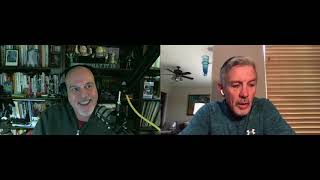
Leo Bottari and Randy Cantrell discuss how peer-mastermind groups like EO, YPO, and Vistage help CEOs survive crises. They outline five factors for strong groups: psychological safety, transparency, accountability, committed members, and effective facilitation. Microsoft, Uber, and Airbnb all innovated during downturns.
Chapters
Welcome to the What Anyone Can Do podcast with Leo Bottari and me, Randy Cantrell. This show picks up where our previous show, You're the Peer, left off, highlighting the simple truth that who you surround yourself with matters, and that if we enlist the support of others, give back to those who give to us, and pay it forward for the next generation, we can do anything. Author and keynote speaker Leo Bottari and I talk with a diverse group of thought leaders who will share stories and insights that will help you succeed in business and in life. How? By doing the things anyone can do, but most of us never will.
Welcome back to another episode of What Anyone Can Do, the podcast, uh, right in the midst of the coronavirus crisis that's global. He is Leo Bottari, star of the show. The website is his name, leobottari.com. My name is Randy Cantrell. He's in California, I'm in Texas, so we're in two of the biggest populated states that I don't know. I mean, nobody's, nobody's escaping here in Texas. The governor has taken great heat for, in this current condition of not doing this statewide stay at home kind of a thing, leaving it to the counties, because not every county when he did this last week had been involved. So he's taken probably appropriate heat for that, for that measure, leaving it to the, you know, kind of the county folks. To decide that. And of course now we, I think at last count there were 50 counties in the state that hadn't been touched by it. So just continues to escalate.
Well, it's just so funny how everyone just wants to push these decisions down, you know, to the local level in a way that isn't exactly what a lot of these folks have signed up for, nor do they have the resources or experience to deal with a lot of that. Um, I'm actually pulling up, which is why while you were talking, I will say that the Johns Hopkins Coronavirus Resource Center is an amazing source of data for like what's going on in the world, what's going on in the US. And it's really something else. In fact, this is populating now, although, you know, internet connection is slow. I trust, of course, that a lot of our listeners are just like we are. We're just sitting at home and we're just— and I know not sitting at home. I think many of us are obviously very, very active. We talked about the fact that, you know, imagine if this had happened even many decades ago, let alone, you know, centuries ago, right? Where— how does anyone do this? How does anyone connect in ways that— but I'm just looking at the latest numbers from Johns Hopkins where the total number of cases is 885,687 worldwide, 44,216 deaths over 180 countries and regions around the world. You know, it also speaks to, you know, we look at data like this and I don't care if we're looking at this kind of data or customers or employees or anything and We too often forget that these data points, if you will, represent human beings and who are not just affected because they got it or because they died from it or because you've got family members and friends who are, you know, affected by it as well. You're looking at what's happening obviously in the economy and everything else, but every bit of it involves real people. In real lives. And I think data sometimes can get us a bit hardened to thinking about it in real human terms. So this is something that I will say, at least where I am here, when we will take a walk or do something, it's fascinating where people are really taking social distancing seriously. I will say that. Or like, we like to talk about it more as physical distancing than that. But it's funny how, because everyone understands what's going on, you'll walk down the sidewalk and someone will like cross the street or we'll cross the street and nobody's offended by that. It just is what it is. Because typically it might be like, oh, great. But it's very much—
Just wave and go on.
Yeah, this is just what you get to— and actually people are quite friendly and smile and they, you know, they understand that we're all just, you know, none of us know whether we have it, we don't have it, whether, you know, nothing. So we just, you know, operate under the assumption that we're just going to do our part, that small part we can each as individuals. But yet, like anything else, and this applies to so many things in life, If each one of us does our part, we can do big things together. And in this case, the big thing will be stemming the tide here and making sure that it doesn't completely overwhelm our healthcare system. It doesn't completely put even more people at risk of a truly dangerous situation than need be. So, you know, it's It's difficult times for everyone, for sure.
I think a lot of us, I can only speak for myself, but probably I'm having quantity-wise more conversations. Admittedly, they're virtual, but I, it feels to me like I'm talking to a lot more people, you know, than I was before, which is kind of a fascinating thing. I know this has given you some opportunities to do some things virtually, uh, with, with some groups that otherwise you'd have been getting on a plane and going to see them. And now that this has kind of been the platform of choice, these kinds of video conferencing platforms, even the in-person groups are having to acclimate to this. And so bringing you in as a speaker or somebody that kind of does a presentation for these groups is giving you some kind of some new opportunities and them too.
Well, it's interesting, you're right. I'm doing a lot more in the way of, you know, webinars and virtual speaking now. I did a webinar for Tech Canada yesterday for the members there. I'll be conducting another one for chairs next week. And what's interesting about it though, in terms of doing these webinars is It's so important not to just take like what I've been doing with groups prior to COVID-19 and just say, oh yeah. I mean, on one hand, yes, it's relevant and all of that. But the reality is that in the first few minutes, if people don't believe that what I'm talking about can help them immediately with what they're dealing with in the moment, then they're done with that. They'll learn that stuff later. They're not interested in— so being relevant, especially at this time, and people, of course, are experiencing kind of a wide range of being in distress. I mean, there are literally people that are just severely inconvenienced by this, if you will, if I can use that term, where they just have to change the way they work. They can still serve their customers. They're working remotely. They're doing things. But they're able to shift. Others are not finding that easy at all. And others are in a situation where they're weeks away from running out of cash or having to shut down. I mean, so there's a lot there. So oftentimes, I will be speaking to an audience that, A, all have immediate issues, B, the range of severity, if you will, is, is huge as well. And trying to provide something there that can be helpful to them in terms of— because sometimes it's just one or two little things that you might get that can help you through a situation, which is why, you know, and what we wanted to spend time talking about today is that, you know, the importance of if you're part of a group, if you're part of a any group, whether it's, you know, EO, YPO, Vistage, or Tech Canada, or wherever you may be in the US or around the world. If you're part of a peer group for business leaders, mastermind group, whatever it happens to be called, it's so important because I think sometimes the tendency can be for people to go, okay, I can't spend time doing that. I got to focus on what is right in front of me with my company and with my people and everything. And when you start considering your group extracurricular almost versus central to being a resource that can help you do precisely what you need to be doing right now for your company, I think that's the difference. You know, we saw in the 2008 financial crisis over and over and over again the number of CEOs that I've spoken to who either survived or were able to thrive and also were set up to actually launch once we returned to kind of more normal circumstances was so greatly helped by the group, by being among other people who were sharing the same challenge, who looked one another in the eye and said, we are all going to help each other get through this. End of story. I mean, this is what we're going to do. And they did that. Now, of course, the difference between the 2008 financial crisis and what we're dealing with today is there is not the same ability to convene, certainly in person, as back then. So now we not only have to figure out other ways of coming together, but we have to figure out ways of how to use that time and not simply believe that we can take the human the in-person, if you will, experience and replicate it online. So the people are sitting in front of their computer for 6 to 8 hours, which can be insanity, especially when there really are things that people have to deal with. So it's been really great to see how groups are managing to— it's kind of like what I mentioned to you before we started the show. Years ago when online education became a thing, the tendency at the time was, all right, we have this really cool class and here's how it operates when everyone shows up in a classroom. So we're going to take that, boom, we're going to make it happen online. Well, when that didn't work, they said, well, that isn't as good. Well, of course it isn't as good. What you've got to do is build the course from the ground up using the resources you have that have nothing to do with the classroom experience but have everything to do with some of what's available to you online that you can't actually get in a classroom. So once you think about it that way, and I think that's what a lot of groups are doing right now, we're looking about how do we get together, how do we engage one another shorter periods of time, you know, or how do we, if we need, if there's an expert resource speaker that we need, we may not need a 3-hour workshop, but we need 45 minutes of like stuff that's really relevant to us right at this moment, or We think about, hey, maybe as a group, instead of once a month, we'll get together every week or every couple of weeks for a shorter period of time. But in the meantime, we as a group— let's say you've got a group of 12, 15 people— divide into triads and have daily huddles with these people that you all can help one another through whatever challenge it is you have, whether it's the beginning of the day, end of the day. I don't care how long it lasts, whatever kind of works for you. But to not only have the, I think, really substantive and tangible support that is offered there, but I think some psychological comfort that you're not in this completely by yourself is huge. So I can't emphasize enough that for people who— and by the way, if you're not part of a group and you think that somehow it's some silly notion that you should join one, at this time when all of a sudden you think, you know, money and time and everything are, you know, so scarce. Actually, it's the time maybe to do it. It's the time to think about, you know, how do I find a group of people that can help me through this? And conversely, you will help them as well. That everyone's going to deliver value to one another. But this is an important time to make sure that you're not doing this by yourself. And however you need to figure that out. One of the things I will say that I found out yesterday is Tech Canada has waived its enrollment fees for people just to try to remove another barrier for people who may be thinking, you know, I'm not sure that I can really kind of afford either the money or the time to join a group at this moment when I'm so all-consumed with what I'm dealing with. And I think once people— so I certainly applaud that effort and the efforts of other groups who are doing similar kinds of things to make sure that that barrier is lower and that they can access people who can be helpful to them. But yeah, I think it's really, really important right now. That to recognize we're all in this together. And, you know, how do we make sure that we are tapping into every resource humanly possible for us to be successful? Because we had a lot of people counting on us. If you're a CEO of a company, you had a lot of employees, a lot of customers, and a lot of stakeholders of all kinds that are depending on you. And why you would ever choose to, to go it alone in that regard would be beyond me.
I'm finding, and I may be an outlier, but I'm finding my conversations are filled with considerably more vulnerability than ever before, which is completely understandable, but is kind of a good thing. I'm hoping that when the crisis is over, that some of— well, I would hope that everybody can leverage their own vulnerability you know, with a group for their benefit. You know, some of the masking that you and I have talked about in a lot of episodes in the past, the fronting, uh, that's gone. That dissipated pretty quickly. And as bad as it is for it to be global, I think their misery loves company and all that. I mean, there's no reason to hide now. Because everybody's suffering it. Everybody's feeling the pain of it all.
What do you, what do you find?
Go ahead.
No, I'm just going to say you raise a great point here because this isn't just an opportunity to get help dealing with what's immediately in front of you. But if you are part of a group, I would suggest that as you go through this, and if you think about this, even in the terms of the 5 factors, which I'll go over in a second real fast, The, uh, the opportunity to make your group stronger than ever on the other side of this is enormous. Uh, and I think it comes down to having the right people in the room who are committed to one another and exhibiting the right behaviors. Like we talked about the psychological safety piece, which you mentioned, I think people are willing to be vulnerable because they realize I got to lay it all out there because it's so important that people have a full understanding about what I'm dealing with and not some half-baked notion where I'm getting advice on things when they really don't get the whole picture, that being completely open and transparent is essential. And because your likelihood, your engagement with one another is going to take place in periods of time that are shorter than an all-day meeting, you've got to be that much more effective and efficient, you know, with that time. And here you've got so much that's open and so much at stake. You know, Charlene Lee did a podcast yesterday talking about leadership during these uncertain times. And one of the things that she had mentioned specifically was that transparency breeds accountability in many respects, right? Because the more open everyone is about what's going on, the more accountable they immediately become, if you think about that. And then, of course, for anyone leading this group, they're being challenged to make sure they can be the kind of resource for the group members. And all of this, by the way, teaches everyone involved about what leadership should be looking like back at their companies, right? Because they go, it's all the same steps. It's all the same kinds of things. And we think about how leaders should be communicating with their employees, or particularly, or with customers, or whatever. What does that look like? How frequent is it? What are the messages that we need to be talking about? When you're part of a group of other CEOs or other business leaders and you can share that narrative with one another to make sure that that message is precisely what it needs to be as often as it needs to be to give people a sense of comfort. But even if you don't have anything, any big news to tell me, you know, at this moment, I know you're thinking about us. I know you care about us. I know that you care about us as people first, employees second, and then, you know, and that it appears that everyone's got their priorities, you know, going the right way. And I think this will help, you know, at the end of the day, and especially, you know, let's face it, as leaders, they're also not just challenged to deal with what's in front of them in the immediate. They're challenged to be thinking about what's next. And this is where the group can be crucial in that this COVID-19 thing isn't going to go on forever. So at some point in time, people are going to pivot and launch into what's likely to be a new normal. And they've got to figure out what that looks like and how to do that. And again, this is where these groups are extremely powerful. And But there's a lot that can be done that I think has real long-term impact in addition to just the immediate need.
What are you able to share? I realize that you did this for, you know, uh, for tech and for the audience that may not know, give them a little backstory so that they understand what you're talking about. When you, when you mentioned tech, I would assume that a large portion of our audience does understand it, but there are people that probably don't, but And what can you share, you know, some highlights of that webinar that you did for them that the audience might benefit from?
Yeah, Tech Canada assembles and facilitates peer groups for CEOs and business leaders throughout Canada. They have about 1,800 members and they, you know, they engage in monthly meetings and They have chairs who lead those groups. So the two webinars that I did, one was for members and even member candidates, by the way, so that they could get a sense of really locking into the fact that, again, this is a time to lean into your group, not lean away from it. I think first and foremost is important. And then the real takeaways were How it provides immediate value, how it will help you strengthen your group. You know, let's face it, anytime a group of people goes through adversity and comes out the other side, particularly if it goes particularly well, that's a forever bonding experience, right? How it will help them with their companies and their teams. There are a lot of practices right now that are being put into place to deal with what is now, but I think in many respects people are going to define, they're going to identify some of these practices things that they may continue at some level in some way going forward and actually may change the way how many people are doing business. And then finally, for them to be thinking about when it's all said and done, will they be regarded by those who follow them as better leaders than before this crisis started, or the same, or worse, or whatever. And I think, again, these— it's like that quote that adversity kind of reveals character more than it does anything else. And so this is a really great time and a real opportunity for CEOs of organizations to step up and, and do what their employees, customers, and everything expect that real leaders do during times like this. And so we went— I spent a lot of time yesterday. It was about an hour webinar, took some questions at the end, but we went over the specifics of what drives those four outcomes. And, you know, I was really pleased with it. Tech Canada folks were happy with it. Of course, now we want to do one specifically for chairs where the messaging is slightly different in terms of them leading the groups. But, you know, by and large, I think there's some similar aspects of this so that, you know, every time we have situations like this, there are opportunities within that. And I think as leaders, we have to identify what those opportunities are and how we can go about, you know, doing our best there. So that was really in large part what yesterday is about. It'll be pretty much what I'll do next Tuesday as well. I may in fact be able to share the webinar, and if that's the case, it'll be in the— there'll be a link available, you know, on our website right under this podcast. But, you know, it's challenging times for a lot of people right now.
Yeah, the uncertainty. I was having a conversation— my father's 96. You know, when a 96-year-old is going through something that is unprecedented, then those of us that are younger certainly are. But I was kind of reminiscing with him about And it was probably more his, his parents that were really in the throes of the Depression and the changes that that made in just their worldview and in their practices with their personal finances and, and their life. And it's interesting to me, the CEOs and the business owners that I've been interacting with over the last couple of weeks I mean, you can, you can sense some really positive changes in behavior as far as future-proofing, a term that we've kind of bantered about. And one of the things that you've alluded to for us coming out of this and people that are members of these groups and working together to leverage their collective experience and knowledge to try to not only get through this, but now how How can we try to be as strong as we can coming out the other end? Cash flow reserves and everything else that are in play now. It's interesting.
And it's important because the opportunity piece of this, yesterday, as I mentioned, so Shirley Lee obviously is a principal at Prophet and she led a webinar yesterday. And one of the slides, it was a really fascinating slide, she was looking at you know, over a long period of time and looking at the various recessions that took place. But she was looking at basically at the bottom of where those recessions were, some of the companies that were formed exactly during those times. Microsoft was one of them, Uber, Airbnb. You know, there was a number of companies across the way that every time there was a recession, someone saw the opportunity to create something that You know, wildly successful in many respects, right? So, you know, big ideas. So, you know, as we are looking at our existing organizations and looking at the fact that there will be the disruptors out there who are going to look at these times and see opportunities, that we also have to see them, you know, as well in our own right and see how do we serve our people and our customers in a way that, um, you know, is, is going to meet their needs going forward. Because if we don't, somebody else is going to. That's just the bottom line.
Yeah, exactly right. Exactly right. The website is leobottary.com. Um, and I went brain dead. Pairnovation. This is— I'm sleep deprived. Careinnovation.co will get you there. How can I forget? How can I forget this? I apologize. I told Leo before we hit record, I'm a hopeless insomniac. I have been all of my life and I'm operating on about 90 minutes of sleep every night for about the last 10 days or so, which sounds horrible for most people, but it's not that, it's not that bad. So, but it does kind of make the, sometimes the connections don't quite make. So at least I'll blame it on that. My wife just says it's because I'm old, but perinnovation.co. Leo is reaching out and doing a lot of stuff. If you have the need, please, please, please reach out to somebody. Leo and I both have our hands in the air. There's people that you can reach out to at this time. We clearly do sort of kind of lean our work into helping business leaders, but Uh, I was telling somebody the other day, and of course you and I know this phrase because we've heard it for a long, long time. A lot of this, of what group and what some of these interactions are, they are not therapy, are therapeutic. And as human beings, we, we need that in the best of times. We really, to your point of just mental health, we need it, especially in the worst of times and the speed with which all of this news is happening. and this slope is going skyward and the uncertainty that's happening every day. So I think we're both encouraging people to stay just as connected as you can stay so that you can get through this. And I'll give you the last word.
I don't know if I can do any better than that. I think that's a great way to sum up what we've talked about today. And again, Um, have a listen to the podcast, share it with friends and colleagues and family, and we will see you next week.
To learn more about our show and what we do, to submit questions to us, and to subscribe to What Anyone Can Do Podcast, please visit our website, whatanyonecandodo.com. What Anyone Can Do Podcast is hosted by Leo Battari and me, Randy Cantrell. Music provided by Kevin MacLeod is Vibe Ace, licensed under Creative Commons by attribution Distribution 3.0 license. Thanks for watching or listening. We hope you'll share the podcast.










