Leo & Randy On Quotes
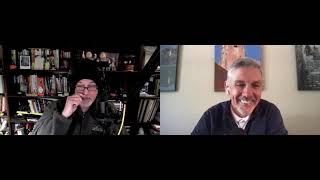
Randy Cantrell and Leo Bottari discuss why certain quotes stick with us and how they shape leadership and team culture. They explore how quoting respected figures creates a buffer for tough feedback, and share favorites from Einstein, Churchill, and John Wooden that reinforce values like humility and curiosity.
Chapters
Welcome to Peer Innovation, the podcast with Leo Bottari and me, Randy Cantrell. Building on our previous shows, The Year of the Peer and What Anyone Can Do, we turn our attention to helping business leaders build high-performing teams. We'll talk with a diverse group of thought leaders who will share stories and insights that will help you and your teams achieve new heights. If you believe there is strength in numbers and that meeting the challenges of the future can only be achieved if we do it together, then join us for the conversation. And we welcome you back to another episode of Peer Innovation, the podcast. The website is peerinnovation.co. Uh, he is Leo Battaglia. I'm Randy Cantrell coming to you from— it's, it's chilly here, Leo. It, we, it, the, the winter blast has hit. I think we got down to 20 degrees last night. It's going to get down to 6 at some point. And this is Dallas, Texas. It doesn't do that here.
So, well, we, we, it may go down to 60 here today. So just to let you know, we're, we're, we're a rough life here in Southern California. So I'm telling you what, you know, we'll get the scarves on, we'll get it all going.
Yeah. People, people get pick at me. You know, it looks like I'm podcasting from a refrigerator and I'm like, you know, the room is warm. It's actually, it's 73 degrees in here. Cause I've got a wall clock that's got a, but you know, those of us who shave our heads, we can, we can all relate to one another. I know you wanted to, and I'll kick it off this way. The power of we begins with me is a tagline that we use on the podcast. It's one that, you know, you deeply believe in. I deeply believe in it, and it kind of sets the tone for what I know you want to talk about today, and that's quotes. So I'll leave it at that.
Well, you know, think about all the quotes we see on LinkedIn all the time. Think about, you know, each chapter of the new book begins with quotes. And when we think about them all the time, you know, you're looking at what's going on in Capitol Hill right now. And, you know, if I hear Lincoln quoted one more time, you know, I don't know what, you know, what's going to happen there, right? But I think quotes can be inspiring, they can be comforting, they can be empowering. Of course, they can be funny, but really uplifting. And I think mostly really memorable. and, you know, I think really powerful devices and powerful tools. And so, yes, it would be fun to share some of our favorite quotes. We'll share some from the book, we'll share others from, you know, different movies or other such things that, you know, bring us back into those moments. But I think most of all, it would be great when we start sharing these posts, sharing this podcast on social media and, you know, providing people with a way to share some of their favorite quotes. And what are some of the things that they find to be interesting. You know, one of the ones when you're suggesting that I was going to have all of these like quotes from business people, whatever, and I thought, well, actually a quote that came to mind for me was out of the movie The Sure Thing. It was a film that, God, was probably shot probably from the '80s basically, and It was the line that spontaneity has its time and its place, which, you know, you're gonna love that, right? Great turn of phrase. And you just, once you hear that, you can never forget it, right? But yeah, and I'm, and, you know, part of what made me think about this too is I know how much you share, you know, online as far as, you know, certain quotes and certain things like that. So I think you should, you know, get us rolling. In earnest here with some of your famous Randy-isms that you like to share.
I'm a fan of snarkiness, for one thing, which I realize not everybody appreciates that, but I don't know, it's how I roll. I was thinking, you know, when you threw out this idea, I used to keep a notebook and I would write down things if I read something, and an awful lot of them came from books. You know, I would read a line and I would think, That's a good line. Or they would be a lyric from a song, or like you just used, from a movie or something. The great thing about the internet age— and we both predate the internet, to be really clear, especially to our audio-only audience— you know, we both remember the time of pagers and when the world didn't have fax machines. And one of the great things about the internet is there's you know, this repository of quotes. It's— I no longer have to write any of these down, you know, except I still do just because I don't want to forget them, but I don't, I don't catalog them nearly like I once did. My favorite quote of all time is, is ridiculously simple and straightforward. And I have looked and I can't find out who said it or who wrote it, or I would happily give them attribution, but it's, everything is hard. Until it's easy. It's just, it's just so true. And I think that's one of the things with quotes is they just, you know, they have such a ring of truth to them that, yeah, I don't know, we can find them really, really profound. But that's my all-time favorite. I used for a long time one that's long been attributed to John Wayne, although he didn't say it, it really came from a novel that was written in 1971. Life is hard. It's harder when you're stupid. And I'm rather fond, I'm rather fond of that one too. And then I'll, uh, I'll, I'll turn it back over to you. It leads into one that was done by Albert Einstein. So I'll end on a, at least this part of it on a little higher brow. The difference between stupidity and genius is that genius has its limits. Said Mr. Einstein.
So you gotta love that, right? You do. Um, yeah. Um, you know, one of the, um, ones I wanted to point to actually is at the, um, um, at the very end, um, of the book. Um, basically, of course I've got to look for it because this is one believe it or not, that—
while you're doing that, also the audience, and this is said book, "Peer Innovation: What Peer Advisory Groups Can Teach Us About Building High-Performing Teams" by Mr. Buttari, which we encourage you to go get, $3.99 on Kindle as we hit the record button today.
So, and what I like about a lot of quotes, sometimes they're clever turns of phrase, sometimes they state the obvious, sometimes they, you know, so you know, this H.E. Lukach, you know, quote of "No one can whistle a symphony, takes a whole orchestra to play it," you know, or, you know, like, there was another quote that from Margaret Carty, who I didn't even know who that was, which is another thing great quotes do, because great quotes oftentimes aren't from people that we always recognize. So now we like, well, who was that person and what did they do? And so Margaret Carty was an author, and she wrote that the nice thing about teamwork is that you 'Always have others on your side.' And, you know, again, pretty, pretty obvious, but just so succinctly and, you know, kind of beautifully stated that makes you want to learn, you know, a little more about her and, and what was going on with, um, you know, her and her life and all that. And so, yeah, I think, um, you know, it's always— or how many times have, have, um, you've been in conversations with people and they'll, you know, hit you with a quote like in the middle of your conversation as a way to, you know, um, so you, you get to, you know, when you think about favorites and oldest quotes, right? This quote that I'm thinking of right now comes from a Ziggy cartoon. Like, I was a little kid and I read this, and it was the caption, and for whatever reason it just made so much sense to me I never forgot it. And in the Ziggy cartoon it said, worrying is like rocking in a rocking chair. It gives you something to do, but it doesn't get you anywhere. And talk about some serious wisdom, right, in that little crazy little funky cartoon, because it's just, you know, we all get caught up in worrying about things, and it's energy misplaced in a huge way. We're not doing anything to help anything by worrying. And, uh, yeah, I just always found that to be, uh, a good one right up there with 'you can't handle the truth,' you know.
Yeah, well, and one of the most famous, probably attributed to a cartoon, is 'we have met the enemy and he's us,' right? I mean, what was that, Pogo? I mean, that was, that was a cartoon, you know. And of course I'm a big fan of cartoonists, so I, I will post a lot, you know, their, their quips. You know, I was thinking When you suggested this, it immediately made me think of— it's kind of a tinderbox kind of a moment. I mean, quotes for me, and I think for an awful lot of us, maybe universally for all of us, it's just a spark, you know. It's just that spark to— I don't know, it just kind of ignites your brain to go wherever you choose to take it, but it sparks thought. And to your point, with a conversation or even a presentation, yeah, it's kind of a positive interrupter. It's an attention-getter, I guess.
And they're all over on LinkedIn right now. So I've got a bunch of the peer innovation posters that I've got up there that are just little peer innovation-related quotes. And I don't have to repeat a lot of those right now, but those, again, they become memorable, they become things that that people look at and they go, "Huh, yeah, that kind of feels right." And I think that's an important distinction, right? It isn't just that people connect with it intellectually. Usually your connection with quotes is much more, or can be, I think, much more emotional. There's that feel that you get from a quote in terms of, you know, just what it brings and what that does. I remember what recently on LinkedIn, it was a definition of humility, the idea that I don't think less of myself, I just think of myself less, which I'm like, okay, you know, I'm digging that, you know, I like that, you know, that framing of that, that gives people that sense that, you know, you can be confident and have humility. You know, at the same time, right?
Here, I'll show you a few more. Eleanor Roosevelt: To handle yourself, use your head. To handle others, use your heart. Martin Van Buren: It is easier to do a job right than to explain why you didn't. A German philosopher, Goethe: Things which matter most must never be at the mercy of things which matter least. And then Winston Churchill: "To improve is to change. To be perfect is to change often." I'm a fan of Churchill anyway, but I'm also a fan of kind of that British dry wit. So he was very quotable.
Churchill's just a quote monster. Yeah. You know, it's funny, of all the quotes, um, that I get, I think, the most response from people in peer innovation, because each chapter begins with one, was Phil Jackson, actually. And this idea of the strength of the team is each individual member, the strength of each member is the team. And that seems to be resonating with people as much as, you know, I mean, this stuff from Steve Jobs and Isaac Newton and, you know, Andrew Carnegie and all of that. But that one in particular is something that people again recognize and resonate with it, you know.
Well, coaches, sports coaches can be hard to beat. I mean, they're the good ones. They're quote machines too. I mean, I've got, uh, here, I'll find one. John Wooden, you know, famous UCLA Basketball phenom coach. Do not let what you cannot do interfere with what you can do. See if I've got some other sportsmen. You will never outperform your inner circle. There's one that's congruent with our theme. That was Mr. Wooden, Coach Wooden. You will never outperform your inner circle.
That's right. It's— there's a— it's a treasure trove out there.
It is, it is. I was looking for one, uh, one from a, from a movie. I— there was one that— of course, there's so many. Mad Max Beyond Thunderdome. He can beat most men with his breath. So there's some, there's some, there's some levity to it. Oh, there's a bunch of great— there's a bunch of great movie lines. You know, I'm just— I'm really, I'm really taken with somebody's ability to just to so succinctly put something, you know, either really funny like that or something so profound as the quote that you, that you mentioned in the book. Um, you know, that these coaches, you know, who can turn a phrase in a word. I mean, for me, as just kind of a lover of wordsmithing. I mean, that was largely it, which I think is a tremendous talent that I wish I had. I don't. But to put something just so powerfully succinct is a great, great skill.
I've always found the— and this is not, you know, I don't come at this from a religious standpoint at all, but only one of real practicality when it comes to the surrender the Serenity Prayer. You know, this idea that, you know, grant me the serenity to accept the things I cannot change, courage to change the things I can, and wisdom to know the difference. And how, you know, amazingly wise that is when we start thinking about the things that we're confronted with in our own lives, and recognizing that distinction is huge. And I think we've all confronted things where we saw things that we should have known that we don't have the power to change them, and we try anyway. And, you know, this notion of having, you know, this notion of God giving us the wisdom to know the difference is, you know, really something to reflect on, I think, in many respects. And that's what I love about You know, a lot of these quotes, whether they, you know, tickle our funny bone or they, you know, inspire reflection, um, you know, or they just make us feel like, you know what, yeah, I can do this, you know.
Um, yeah, the encouragement, the encouragement part is, is you can't, you can't underestimate it. Albert Einstein said, any fool can know, the point is to understand. And you and I both are attracted to those kinds of— I would hope that everybody is, but I know one of the big themes that has come across in our time together is that whole pursuit of understanding, that whole curiosity notion, that whole— can we have enough humility to not believe that we're the smartest guy in the room and that the room has got quite a lot to teach us? A room occupied with other people, it's not a matter of who's got the highest IQ or the most vast experience, but just the insights from other people. And there's an awful lot of those kinds of quotes that I find myself attracted to. Go ahead.
The one, the one that you just said reminded me of a quote, and I've got it pretty close, I think, but it was a former NASA administrator who was a bit annoyed with a reporter asking a rather detailed question about something you know, with regard to, I think, one of the rockets. And he says, I could explain it to you, but I can't understand it for you. Right.
Yeah, yeah, that's a, that's a class.
Pretty rough, you know.
But yeah, yeah, but pretty, pretty true. I mean, he could have been talking to me with that one. Mark Twain said, it ain't what you don't know that gets you in trouble, it's what you know for sure that just ain't so. And boy, is that true.
So that's where you get to, you know, let's think about, you know, the Peter Druckers of the world, you know, the whole culture eats strategy for breakfast, or, you know, these. So you've got like Drucker and Twain and Churchill and Lincoln and, you know, all of these people that you just kind of, they are go-tos for quotes. Like if you were just, looking for a great quote that wasn't necessarily about anything in particular. Of course, nowadays you can, like, if I want to Google, like, quotes on empathy, quotes on leadership, quotes on— I mean, and you'll get like thousands of them, right? But then other times there's certain people you just— all right, I want a quote from, like, this person, and you just know that you're in for real riches, you know, for some people over others. And But I think they can be, um, they can be really fun. And it's a, and it's a perspective, especially when it comes from someone who is respected, thought of as being wise, thought of as being, um, you know, someone that you to take advice from other than just us, you know. Right. It's always nice to invoke that third party.
Yeah. Oh, definitely. And during the Super Bowl, Tampa Bay won the Super Bowl and I was, I don't, I went down the bunny trail of, um, I'm going to Disney World. Well, no, I just went brain dead. The initial, the initial coach of that franchise when they had those horrible tangerine orange uniforms and whatnot, uh, is it, was it John Robinson? Uh, it was, he was He was big time at USC back in the day.
I've got it. I think he might've been at Tampa Bay for a while.
Well, he was a quote machine in the early days of Tampa Bay. You know, at a press conference, somebody asked him about, you know, his team's execution of the game. He said, well, I'm all for it. You know what I mean? I'm all for executing my team. You know, they were, cause they were just dreadful. Uh, there was another one where he said something to the effect, you know, aside from not being able to pass or catch or tackle, You know, we played a pretty, pretty good game kind of a thing, you know. And then of course, well, there's the ever-famous, you know, Yogi Berra. I mean, yeah, I don't— you're gonna— it's gonna take a lot to trump some of his witticisms. Uh, yeah, I read one, and who knows who said, I see people around my age mountain climbing. I feel good getting my leg through my underwear without losing my balance. So, you know, some are just, uh, I don't know, they're, they're just, they're priceless. Just priceless after a while. But yeah, you got any, you got any others that come to mind?
You know, and part of the theme of this in some respects, right, when we talk about invoking third party, and, um, it was Isaac Newton, and it's chapter 6, if I, if I have seen further. It is by standing on the shoulders of giants. Yeah, although I think he meant if I've seen farther, but right, he's gonna—
yeah, who's gonna come up with the details?
We're not gonna— we're not gonna correct Isaac. Yeah, um, but, uh, but no, I, I think a lot of these things, again, they're worthwhile to talk about because, um, not only are they you know, I think powerful shares on social media that reinforce some, I think, important values in many respects that, you know, need reinforcing nowadays. But they can be, you know, powerful to use with our teams, powerful to reflect on, you know, for ourselves and, and to share with others. And that's at least one of the, you know, forces for good that social media provides for when it comes to sharing these kinds of quotes and oftentimes doing it in a graphically interesting way, in many cases with the various fonts or other such graphic representations of them that we can save them as posters and not just see them as words and use them as well.
Yeah, and I often hop down a bunny trail because I'm curious what sparked that quote. And of course, very frequently I'm sparked by, did they really say that? You know, or who said that? Einstein, I've just, I gotta insert this one. It's not that I'm so smart, but I stay with the questions much longer. And that's another one of my favorites, you know. And again, I mean, the theme of— it's pretty easy to see, you know, as I peruse through these, albeit the funny ones, but the theme of this whole podcast, it seems to me, is still about, you know, our ability to have a positive impact on one another, our ability to bring out the best in each other, you know, our ability to It's trite but true, you know, to try our very best to check our hubris and not let that interfere with our own ability for our own lives and our ability to help other people in their lives. And there's quote after quote after quote after quote that really kind of speaks to that theme, whether it's understanding, whether it's sticking with questions. You know, we think of an Einstein and I mean, he is the symbol of intellect and mental prowess, you know, and yet an admission that I just stick with the questions longer kind of proves the point. It was enough humility to drive to try to understand things that he did not understand that might have been his biggest brilliance.
Yeah, well, and he has a similar quote that if he had an hour to solve a complex problem, you know, he's going to spend like the first 50 minutes of it just focusing on the problem itself before trying to come up with an answer. And very consistent with the quote that you brought up. And, you know, I think it's so important, you know, we talked to the, you know, in the work that I do. In fact, I literally just got off a Zoom call where I did a 3-hour workshop for, you know, a Vistage group today. And we talked about, you know, if you— getting the right question is huge, you know, framing the question with the level of precision that if you don't do that, if you give someone or take them down the road where you're all you're going to do is get the right answer to the wrong question, you know, you can screw them up in a rather monumental way. And so, and it's having patience around that, you know, we're all problem solvers, and particularly other people's problems. We're awesome at that, right? We're not great at our own, but we think we're really good at solving other people's problems and jumping to conclusions about, oh yeah, I've had that before. We don't ask questions, we don't, or nearly enough. Um, and you know, and, and because of that, we're not always asking, so what's the real question here? Is this really at the heart of what we're talking about, or is this a symptom, or is this a, a side issue? If this isn't about, you know, what to do. This is how you're feeling about knowing exactly what you're supposed to do, but you can't pull the trigger because you've got some emotional, you know, attachment to this decision that is keeping you from moving forward. I mean, there's just so many things around that. And if we do take time to really dig deep and be inquisitive, and I think that's oftentimes, you know, when you ask about these quotes and where they come from, I think they do come from some real reflection. You know, even if they were, you know, a quip in what seemingly is off the top of someone's head, the reality is that they came from probably years or decades worth of thought and reflection and understanding that allowed for them to communicate something with such power and simplicity. And, you know, that's a real gift. And the more that we share those gifts with one another, um, you know, the better. And I'll tell you what, I would love it, you know, as we mentioned, you know, the real gift that I'm kind of looking for too is I'm hoping that, you know, our listeners, when we share this post on social media, will be in the comments like, okay, what's, what's some of your favorite quotes? What inspires you? What do you think is funny? What do you think has made you feel empowered? What is you know, comforted you maybe in times of real grief or real stress. Um, you know, so yeah, my hope is that, um, you know, we can kind of get some of those contributions and we'll kick them back out and share them and do whatever. You bet.
And they don't have to be from famous, famous people. One that Dr. Henry Cloud said was, don't desire to be right, desire the right answer. Even if it doesn't come from you. And when I first read that, it sparked— I'm 16 years old, I'm working in a hi-fi store. We have a grand opening of a brand new store in a brand new mall. Now malls were brand new and big deals, you know, when I was 16. And the store that I worked for had a photography department on one side and stereo equipment on the other side. I only worked in the stereo. Side. But it was all hands on deck, and it was a throng of people. And an older fella comes in— well, I'm 16, everybody was older— and he inquired about some piece of photography gear. And I said, I don't know. And I found my boss who was out on the floor, and we walk up. And the boss's name was Don. And I said, Don, this guy's looking for whatever it was. And Don said, I'll be happy to help you. And he whisked the guy off. Sometime later, I'm free, Don's free, and I see him across the retail floor, and he's motioning me, and he's standing by the stockroom door. And he takes me into the back door, and he said, the man that you brought up to me, do you remember what you said? And I'm— man, I'm racing through my brain because I clearly know I'm in trouble, but I don't have a clue what I've done. And he said, Randy, our customers are gentlemen. They're not guys. The audience has no clue who Don Stoffel was, but I just gave you a quote that— I'm 63— has been with me my entire career, and I've used that story over and over and over to illustrate, you know, our customers aren't guys, they're gentlemen. And Do you think I ever referred to a customer again as a guy or a gal? Never. You know, it was sir, ma'am, please, thank you. You know, it's just, it's those kinds of things that, you know, I would be curious in our audience's lives, you know, these people that maybe I've never heard of, but man, they had a profound impact on you or your career because they just, they just said the right thing at the right time in a way that you'll never forget it.
You know, that goes to, um, I love Chip and Dan Heath's book Made to Stick, right? And it talks about the difference between things like that, like the Ziggy cartoon I read, or that quote that you got, um, and, and things you'll never forget. So what's the difference between that and, and sitting through these elaborate presentations oftentimes, or all these things that 2 days later, you know, gone, right? Other things stick with you forever. What's the difference? What does that look like? And he has a little success model around that about things being simple and unexpected and concrete, and it goes through, um, and, you know, sharing stories and other such things that, again, it's really about, you know, if you think about it that quote was remembered by you not because of the words so much as how it made you feel in that moment. And you'll never forget that feeling of what it was like to be corrected in quite that way. And you're thinking, got it.
You know, it speaks to how much emphasis you put, appropriately so, on that psychological safety and the fact that I knew in that moment I knew it beforehand. I knew that he wanted my best, pure and simple. He, he— it was not a reprimand, it was not a rip and snort affair.
It was—
he, he knew that I was capable of better, and he had an opportunity to teach me a lesson that my sense of it— I haven't asked him, I never did ask him— but my sense of it was he You know, he felt like I needed that instruction and he cared enough to give it to me. And he cared enough about the business. But, oh, it is— if I had to encapsulate a quote by someone that nobody knows of what has driven my career and why I'm so fanatical about customer experience and client experience, it's that moment in that stockroom hearing him say, Just that very simple statement, you know, and I'm sure the audience has got— I would hope that you've had somebody in your, in your life and in your career that at some real pivotal moment took the time, took the effort, you know, to say to you what needed to be said, and it's, it's stuck with you. So we've got some great ones by, by some really great minds, and I don't suppose Don would have ever felt like He was a person of a great mind, but that's a gift that keeps on giving for me, I can tell you.
You know, I'll communicate a last one because Tony Lowe reached out to me recently, and we've been kind of going back and forth for a while because I would love to have him on the show. Tony's just such a world-class presentation trainer and trainer of public speakers, and He tells a story, and if you've ever seen Tony work and you see him present, you don't imagine a time ever in his life where he was ever nervous in front of an audience. It's just, you can't even fathom it. And yet, I remember he shared with me a story. He had to give a speech in South Africa, but he was really young. He was probably like very early 20s from what I recall. And he said he's up there and he's sweating bullets and he's all nervous about giving the speech. He gives a speech, and as soon as he came down off the podium, someone had said to him, hey, it was kind of like, hey kid, you know, nice speech, just don't be so selfish next time. And Tony knew immediately what he meant, you know, that you're up there and the reason you're so nervous, the reason you're so worked up is you are so concerned about your own performance and about you that you forgot to actually care about why you're there and to care about the audience. And when you do that, it can relieve a tremendous amount of pressure. Because you just really need to care about them. And I thought, well, there's a, you know, a game changer in terms of, uh, I mean, you know, I think it's certainly something that, you know, helped me over the years. And I know as he's shared that story with countless others, I think has done the same. But, um, and again, that guy wasn't— he said it to him in a quiet private moment coming off the thing. He didn't gather 20 people and say it and try to show them up or anything like that. He was just offering, you know, probably felt a little like, whoo, you know, but you walk away from that and recognize that, wow, that was a moment. And by the way, that person could have said, forget it, I don't— who cares? Like, why would I even bother to make that comment? But actually cared enough to want to be helpful. And, you know, we get into this too. Again, it's that whole psychological safety thing and entrusting the intent of the people around us that are just trying to help us do, in many cases, what we've already expressed we want for ourselves. And that's a pretty big gift to give to people.
It is. It's a little bit of an aside, but it sparked a curious question that I want to ask you. So intent. So as we think about these quotes and we think about the intended meaning behind those quotes and what we take, what are your thoughts about the power of our intention when we're communicating with other people, whether it's trying to correct or trying to help or— forget whatever the communication is. Just what are your thoughts about our intentions, the things that fuel our words, the things that fuel our behaviors? In our actions? How much grace or latitude do you think we likely give one another when we know the intention behind it? Because I think about Don pulling me in that stockroom, or I think about this story, and whether the person got the words just right or not. In my case, I feel like Don got the words right, but I knew his intention. You know what I'm saying? What are your thoughts? What are your thoughts about the intention as opposed to just, I want to make sure that I say this exactly right?
Oh, well, there's no question. You know, when you think about like peer group meetings, for example, where now granted you've got a different scenario there, right? You have what you have already by this time, of course, agreed with one another that this is what we're about and this is what we do. And you recognize that I may say something to you that might come across as harsh because 'cause I didn't have time to craft these words as precisely as I might like, and maybe it'll come across in a way that, but you do have to trust the intent on that. I think in the real world, it can be a little more difficult because people can be rather self-indulgent about their criticism, right? They get really pissed at people or they get upset, not because they're gonna actually positively affect anything, just because they're mad at the moment and they wanna take it out on someone and you happen to be there, and there you go. So I think sometimes it can be tough for people to trust that intent. I think in most cases though, I think it should be your default position. I don't think it hurts, you know, because it's really not about that other person. It's about taking those words in whatever context they were shared and whatever intent may have been behind them, and the more you try to assume good intent around those, the more you can evaluate whether that's in fact something that you should really pay attention to and be— and, you know, becomes important to you, and be less concerned about how it came out and what the intent may or may not have been, you know, around it. Obviously, the hope is that, you know, I certainly over the years— I mean, you know, when I was leading in certain organizations when I was younger, I wasn't always the best about, you know, if I was upset about something, you know, I didn't give thought in the way I should have to what do I want the desired outcome of this to be, other than I get to vent in the moment and that makes me feel good, right? Probably not the way, you know, so hopefully I'd like to think in my case as I've grown up and grown older, I, you know, that those things are dealt with in a, in a, with consideration to, all right, how do I want this to go? What do I want the outcome like? Not what's going to feel like the drug of the, of the moment, right? Yeah. And so I think sometimes when we do just give that, take a breath and give a little bit of thought to someone made a mistake, someone did this, someone did that, someone messed something up, something did whatever. Now I'm not suggesting you can't get angry, you know, I think we do. It's a human emotion. But at the same time, I think there's ways to handle a situation where we want to be mindful of what we're really trying to achieve.
Yeah, you know, you got any that you want to end with? I got, I got two here, but if you've got one—
no, no, I think, you know, you should— it should be like the, you know, like when you go to the driving range and you've got one ball left and you want to make sure that you hit the last ball and make it. You don't want to leave with like hit getting one that's really bad. So sometimes you keep another one. So I think if one of these two quotes hits it out of the park, I think we should end it.
Well, I don't know. I don't know that— I don't know, you know, now you're putting— now, yeah, there's so much pressure on you. Well, just in— the podcast is also largely about transformation. It's also largely about our ability, our willingness, our devotion to improve. And to not sit back and to think, well, you know, I'm going to wait on them, or I'm going to wait on situations or circumstances. Um, this one comes from George C. Lichtenberg. I would love to tell you I know who that is, but I have no idea.
Now we can look them up.
Yep. I cannot say whether things will get better if we change. What I can say is that they must change if they are to get better. And Peter Drucker: The greatest danger in times of turbulence— and Lord knows we're in those times— the greatest danger in times of turbulence is not the turbulence. It is to act with yesterday's logic. The great thing about some of these is you can kind of ascribe the meaning, you know. And I'll, I'll end my part on, on Peter Drucker's. I don't know exactly the context of that, but I can imagine it in the years that Mr. Drucker was you know, the phenom that he was while he was still alive. Um, you know, for us to continue to behave the way we've always behaved and expect those different results— Einstein or somebody, you know, that famous quote about insanity comes to play. I just want to challenge us as two older guys doing a podcast and our audience You know, we don't have to accept what once was in our own lives or in the lives of the people that we're trying to influence. If I had to sum up what I feel the podcast, the Peer Innovation Podcast, is all about, is about us just helping one another, helping each other build better lives, build better careers, build better groups, teams, organizations, and the power of our ability to step outside of ourselves and whatever the past was. And to believe that there can be improvement. I was watching a documentary on Netflix that Ron Howard did about rebuilding Paradise, rebuilding Paradise, California, which some horrific fires just took the town away. And over and over you hear that kind of thought. You know, there were many people who, there's no way to rebuild it. It's gone. It's over, you know, and a rather hopeless feeling. And I know that in today's climate, I'm certain that we've got podcast listeners who are feeling some despair for whatever reasons that we'll never know. But the other power of the quotes for me is just our joint humanity. You know, it's the fact that you can read a quote by some brainiac and it can be a really funny sarcastic quote, or it can be incredibly deep, incredibly intellectual, and incredibly succinct. And the fact of the matter is, we're still all people. We're still all fighting a battle. We're fighting our own battles. There was one— I should have written it down, but it may have been written by the Game of Thrones author, but I'm not positive— but, you know, never make fun of a live dragon. Kind of a thing, you know. And just, we've all got our dragons, you know. We're all trying to fight a fight, and we're all trying to weather the storm and get through to the other side. I know this: unless we lean on each other, we can't do it successfully. So I'll step, I'll step down from the pulpit now.
And, you know, um, it's so interesting when you bring up things like Paradise, you bring up You see destruction from hurricanes or other natural disasters and the resolve of people to take back their community and recognize that if we start building today, here's where we're going to be. And if we don't do anything, then here's where we're still going to be. It reminded me, it was so funny. There was a story about Pierre Salinger and John F. Kennedy. While he was president, and he tells Salinger, he says, "Hey, tomorrow I need you to do XYZ, and I need it to be completed like in 3 days or whatever." And Salinger looks at this project and he says, "Is it 3 days? That'll take me like 3 weeks." And Kennedy looked at him and he says, "We'll begin this afternoon then." Right, right, right. So, but no, the point, I mean, the larger point obviously is And, you know, it is amazing how when we don't do things and we look back and think, man, if the day that I thought about doing this, now we're 3 years down the road. And now here we are. I didn't do that. And now here I'm still in the same spot I was 3 years ago only because I didn't act. And it is about putting one foot in front of the other, right? And, you know, and we're all capable, you know, of doing that in a big way. And so, but, but yeah, so that being said, we don't want to run too long here, but a lot of good quotes and a lot of great lessons. And I'd like to think that, you know, have a listen and tell us some of your favorite quotes, some of your favorite lines, some of your, you know, favorite funnies, if you will, that you want to put out there that you can share, because they are likely to be real gifts of, um, of joy and of comfort and of, you know, inspiration to everyone who hears them. So that being said, thank the audience.
The website is leobottari.com. That's L-E-O-B-O-T-T-A-R-Y dot com. and we hope you're a subscriber to the podcast. Share it with your friends, and again, we'll look forward to seeing you in the comments and your quotes. Till next time, see ya. Thank you for joining us. To subscribe to the podcast and learn more about how you can engage peer innovation for your organization, Contact us on the website at peerinnovation.co. Till next week, remember the power of we begins with you.










