Leo & Randy On Roy And Joe
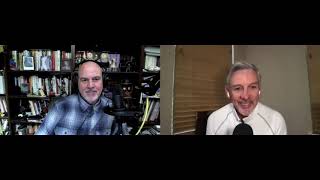
In this December 2021 episode of the Peer Innovation podcast, hosts Randy Cantrell and Leo Bottari (voiced by "virtuous-cynthia") discuss the recent release of their book Peer Innovation and its accompanying audiobook. They reflect on the process of recording the audiobook, the role of professional narration versus author‑read audio, and upcoming launch events. The core of the conversation centers on two contrasting leadership archetypes introduced in Chapter 6 of the book – “Roy,” a control‑oriented, motivational‑only leader, and “Joe,” an inspirational, collaborative leader exemplified by former MullenLowe CEO Joe Grimaldi. They examine how the COVID‑19 pandemic has forced CEOs to adapt, highlighting a split between leaders who now check in on employee wellbeing and those who double‑down on metrics and micromanagement. The hosts connect these observations to Dave Logan’s stage model (Stage 3‑5) and argue that many leaders are currently at Stage 3, but can evolve toward higher stages through psychological safety, peer‑group reflection, and cross‑functional collaboration. They stress the importance of C‑suite members acting as ambassadors for the entire enterprise, fostering inter‑departmental dialogue, and using structured peer‑group facilitation (often led by external facilitators like Leo) to surface hard conversations. The episode also promotes upcoming virtual launch events, interactive breakout sessions, and a downloadable PDF workbook that helps organizations apply the framework. Throughout, the tone is conversational yet purposeful, with an optimistic and encouraging sentiment toward leaders willing to reflect and adopt the Peer Innovation framework.
Chapters
Welcome to Peer Innovation, the podcast with Leo Bottari and me, Randy Cantrell. Building on our previous shows, The Year of the Peer and What Anyone Can Do, we turn our attention to helping business leaders build high-performing teams. We'll talk with a diverse group of thought leaders who will share stories and insights that will help you and your teams achieve new heights. If you believe there is strength in numbers and that meeting the challenges of the future can only be achieved if we do it together, then join us for the conversation. It's a December episode. What's the first December episode? We, we hope that we'll have more every week in December. We welcome you back to another episode of Peer Novation, the podcast. The website is peerinnovation.co. He is Leo Bottari. I'm Randy Cantrell coming to you from the West Coast and from Texas. And, uh, good Thanksgiving. We'll get that out of the way.
Yeah, great Thanksgiving. You know, small. Like a lot of people, I think we, we just kind of kept it tight, you know, here at home, but, but, you know, no pressure, fun, didn't have to worry about entertaining a dozen or so people or whatever. And, you know, while that's always fun, there's no question I do enjoy that. At the same time, there was something about having that little bit of time this, this time that worked out great. And, and actually, of course, shortly before the Thanks, Kevin. You remember, of course, we had John Largent on the show. Well, since then, of course, now I've gone to San Antonio and had to read my own book, which was— that was quite an experience, I will say. And I really thought about what you said regarding how when it's a novel, you can see how professional voice talent would really lend a lot to that whole experience for the reader. But I don't think there's any question that when it's a nonfiction book and you're trying to communicate your research and your ideas and your stories and and all that, that it's fun to really get to be able to read it yourself. And so I did enjoy, you know, as we've talked about, I didn't do it the first two times and really glad I did it this time. And I'll tell you what, the folks at Game Day Media were fantastic. It was such a super professional. It was, you know, you're immediately, you know, felt at ease, you know, through the whole process. Just really buttoned up, really cool. And we actually did it in about, ballpark it at 3 2-hour sessions, basically. Yeah, so I would imagine, I don't know this for sure, but given other ebooks, I would imagine that the book is going to be somewhere between 3.5 and 4 hours long, you know, which actually is on the shorter end. You know, I think we, you know, got through that okay. Um, there were certain things like I did read the preface and the introduction and then all the chapters, but you kind of leave out all the, you know, the about the author and the acknowledgements and, you know, any of the other, you know, kind of things that are in there and part of the book and I think helpful, but I think for the audiobook, you know, it was good. I found it interesting. I almost equated it to, you know, if you ever created a PowerPoint presentation and you look at it and it all seems really logical, but then you rehearse it and say it out loud, and all of a sudden you're like, nah, that doesn't work. I'm not going to say that. So two things. I think fortunately, because I never really thought about it, right? With all the things regarding like systems thinking and the figures and all that kind of stuff where there are visuals to assist you there. Now you do get a PDF with the audiobook where you could look at them, you know, but at the same time, I was grateful that it was described in a way that you didn't need that visual in front of you in order to understand what the heck I was talking about. But on the other hand, there were definitely some things that if I were writing it for the ear versus writing it for the eye, I might have changed, you know, some things up, you know.
Well, I was going to ask, when you wrote it, were you conscious of, of the illustrations as you wrote, as far as making the text, making the text make sense even without the illustration? Or it just happened, it was just serendipitous?
Well, no, I knew when I wrote it that it has to stand on its own, that the illustration has to be something that doesn't help you understand it. It's just a visual aid. You know what I mean? You can't lean on that visual to do the work for you. I think that you've got to be able to, you know, describe it in a way, but it is helpful to have the visual and say, yep, as I'm reading this now, this paints a picture for me about what it is. So, you know, that was good. And there's like 15 different figures in this book. So yeah, that was kind of interesting.
And John's got you using the good mic. I pinged him and I said, okay, give Leo a hard time, I want him to use this microphone that he's got that he's just— he's gotten out of the habit of using.
So it's true, and it's actually, um, really easy to use with the AirPods, you know, because I can, I can run these and I can run through the, through the good mic. And right, yeah, there's no question.
Yeah, so you folks that are listening to Leo, if you listen early, you'll, you'll, you'll hear him on this same mic. And it's, it's an inexpensive USB mic, but man, it sounds It does sound so much better. I had forgotten how much better it sounds.
I think we probably both did.
I'm glad doing the audiobook got us that far. Well, I know you wrote an article in CEO World that kind of reflects some of the— well, a story that you wrote in the book. So let's talk about it.
Yeah. So chapter 6 of Peer Innovation deals with leadership. And I actually tell a couple stories of two different leaders. One is Roy and the other is Joe. And it occurred to me as we're getting into the end of 2020, but yet not nearly out of the woods yet with regard to COVID still, I think it makes sense, as we tend to do in December, is to kind of reflect on the year and reflect on who we are. And what we do and where we can be better next year. And I think one of the things that I ask in this article is kind of a shortened version of the two stories of these guys that contrast a leader who I would regard like Roy, who is motivational only from the perspective of this being motivated means that you're motivated not to want to have a phone book thrown at you, you know, for whatever hint of inactivity that may exist at a given period of time, versus the more inspirational leader. You know, Jim Kouzes would describe it as the difference between lighting a fire under someone and lighting the fire within, right? And the whole idea of lighting the fire within being much more sustainable and obviously a much you know, I think higher standard when it comes to, to being a leader. But, you know, you just can imagine that as we're looking to lead next year, we're going to continue to have these remote distributed work teams. We're going to have challenges regarding culture and adding new people and retaining the really good people we have and fighting those things that we've talked about in past shows, like people being burned out or feeling isolated, insulated, uninspired, and feeling completely obscure because they're just home. But yet at the same time, there are so many things to leverage as well. We just have to inspire in a different way. We have to keep people connected in a different way. And we've seen at least the positive benefit of inviting our fellow our coworkers into our home versus meeting in a central workplace and how that has humanized the workplace for everybody. But I think over time, we're going to continue to have some challenges and we have to figure out how we're going to lead next year. And the point about contrasting Joe and Roy also has to do with the fact that if you— this idea of the, quote, "Stage 3 leader," which we've talked about before from Dave Logan's book, Tribal Leadership, is evident in nearly half of companies in the US. So, you might read about Roy and it sounds silly to you and it sounds like, oh yeah, well, of course I'm not Roy. Well, it's likely that one of two of you are. So, this is a time for honest reflection. And by the way, as I mentioned also, not every Stage 3 leader is quite I'd put in the Roy category necessarily, but it's close from the perspective of the attitude of I'm great and you're not. And, you know, he's just really all about trying to rule with an iron fist and be the dominant player, not necessarily inspiring a lot of teamwork either, by the way. It's a lot of these dyad relationships. All you have to do is keep Roy happy. That's all you're concerned about. You don't care about anyone or anything else, because that's how you survive in that environment. However, But when you look at Joe, and the Joe I'm speaking about is a former CEO of Mullen, it's now MullenLowe, Joe Grimaldi, what an extraordinary leader he was. He's retired now, but just amazing. And I tell a story in the article about, you know, what he did that I think was truly inspirational, not only to a prospective client. Which we would win the business, but for every person on the team, because he saw his role as CEO, at least in part on the day that we had that pitch, was being the chief encouragement officer. And when you've got somebody kind of in your corner like that, and, you know, again, it points to the difference between Roy never considered himself a part of the team. He considers himself apart from it. He's separate and distinct from all of these salespeople that he's thrown phone books at. Joe, on the other hand, was very much part of the team. And this wasn't a guy who just showed up on game day to deliver, you know, a little piece at the end so that you got the obligatory, you know, appearance by the CEO. He was involved in the pitch from day one, involved in the ideas, involved in the vetting, involved in, you know, in a way that— and that he can be involved because his involvement didn't stifle the process at all. It was a very psychologically safe environment in that regard. I mean, people were all about, you know, bringing your A-game, bringing your best. And, you know, he expected that of you and he had no problem being challenged and certainly he had no problem challenging other people. So everyone was good. And that whole culture was all about, hey, we're all really, really good at what we do. And if we challenge each other a lot and we keep doing it, the work just keeps getting better. And, you know, with that, we think we're capable of creating the best advertising in the world. And everyone also knew that they could only do it together. You had people who were really great at what they did, but none of us by ourselves could ever have created the campaigns and things that, you know, came out of that shop. So it is a really, you know, amazing, example of teamwork. You know, what I'd love to do, actually would be interesting, whether we got someone from All in Law, of course, our other friends that we really love, you know, at VaynerMedia, I think it would be really interesting when you consider the creative process, when you consider all of the things they have to do and how they work together, what that looks like for them in a virtual environment. How fun would it be, Whether we have Claude Silverback or James Orsini or somebody from the organization there, I think it'd be amazing.
Yeah, yeah, it would. I'm wondering what you've seen, what your observations are, especially with the COVID pandemic and the changes in leadership or a leader's— the urge that a leader might feel to need to make some adaptation but may be perplexed as to how to even start making that change? Because clearly, clearly changed in the styles that, that you may have had before. Okay, well, now they may not be working so well for you.
So I'm seeing two things. One is definitely a shift from a lot of CEOs who are asking their employees just how are they doing. Far more often, beginning meetings with that sentiment, right? Just wanting to know, how's everyone holding up? How are you hanging in there? Are you getting breaks? Are you, how's your family doing? How's, you know, just really and truly caring about them as people and not just whether, you know, they hit their number or they've got a certain report in on time or something like that. And I think that's been really positive and quite frankly has, you know, upped people's you know, sense of personal responsibility to make sure that they're hitting their numbers and they're getting the reports done and they're doing all those kinds of things. I think there is another group of CEOs though, who are getting a bit antsy about, you know, all right, everyone's been out of the office and I'm really used to seeing everyone show up every day and I want to see people here and I want to know when they come and when they leave and, you know, this kind of rather controlling behavior. For lack of being able to get back to the office, the tendency would be, well, we need more meetings, or we need more metrics, or we need more things to quote, hold people accountable. What we talked about with regard many times to really requiring your employees to play defense, and what that does not only for their own morale and their own psyche, but how it actually impacts their productivity as well. In a negative way. So I'm seeing those two things for sure. And I think that's a real challenge for CEOs in 2021 is to try to resist the attempt to over-control. In the past, I've used that metaphor of, if you have a ping pong ball in your fingers and you just gently hold it there, it's not going anywhere. It's great. It's comfortable. It's fine. You know, and yet when you decide, well, I want more control over that ping pong ball, so I'm going to squeeze harder, one of two things will happen. You will either crush it or it'll squirt out of your hand like that fast and it'll be gone. So I think if we can recognize that squeezing harder doesn't in fact give us more control, it gives us less control, then We need to trust, I think, that. And I think, also, if I can also, I think, encourage— this is a great time, not only just in the us as leaders and kind of this Roy-Joe comparison, but I also think it's a really good time to look at what are the attributes that really came forward? You know, when you look at your team and you look at how they responded and and how they got the company through all of this. You know, what were some of the things, some of the values and behaviors that they displayed that are really worth thinking about in terms of how do we not only continue to encourage that and reward that, but how do we, um, make that a continued expectation of one another, that that's who we are, um, not just what we do, but it's really who we are as people in this organization, and, you know, how to make sure that we can carry that into next year, whether we remain remote for however long we will or when we come back to the office.
Well, don't you think that a big part of this is for the leader to— I was talking with a leader just last week about the book and the framework of the book. And part of our conversation, a big part of our conversation was about just personality, the personality of leaders and our ability to kind of just be ourselves. Granted, we need to be the best version of ourselves, but I had pointed out that the book, Peer Innovation, the book, it seems to me, provides a framework not just for all the things that we've talked about, but for people. Okay, are you a Roy? Are you a Joe? And we understand the context of that, of their behaviors and their quest for control, or in Joe's quest for collaboration and connection, you know, and a big difference there. But the leader's ability to just to be himself, to be herself, and to use the book as just one resource to be a framework for trying to, to be the best version of you so that you can help everybody else do the same. I mean, I'm wondering what your thoughts are as far as— because you and I both know that there are people that are very animated kind of leaders and very verbal and very vocal and very candid, and there are the shy, introverted, far more quiet kind of personalities. And I think sometimes we get fixated on whoever the latest, greatest hero is in leadership and think, well, I need to mirror that. As opposed to, yeah, but what do I bring to the table that I can best leverage?
So it's really funny that you say this because as I think about this Roy Joe article and we come to terms with who we are and what we want for next year, aspirationally for ourselves as a leader or whatever, you know, it makes me think that you should get a copy of Peer Innovation, go directly to Chapter 8, just skip everything else, go directly to Chapter 8. And if you can chin the bar on Chapter 8, if you believe that you're the kind of person who wants to bring this into your organization, then this is for you. You may either be ready for it now, or at least you have a real aspiration toward making that possible. If not, if you're, if you're a Roy and you pretty much know that you can continue to be a Roy, And don't worry about it. Figure out something else that's going to work for your company and work for you because this ain't it. You're just never, you're just flat out never going to be able to create the kind of psychological safety and, you know, the host of other things as you go around the horn there on the 5 factors. You're just never going to put that together. It's not who you are. It's not how you're wired. But Again, I think there are a lot of folks, and you know, as when you look at Dave Logan's book, Dave, when you talk about being in stage 3, stage 3 isn't like a destination or a fixed state. It is a way you are being. It's a way you are behaving that can change and evolve over time. It's why you go from stage 2 to stage 3 and maybe to stage 4. Which is not, I'm great, you're not, but maybe we're great, right? That more collaborative piece. And then if you really want to hit the rarefied air and you want to, you know, at least take a few visits into stage 5 once in a while, which is life is great, where it's not about just you being better than your next competitor or something like that, but you and your team really setting your own standard of excellence and then inspiring everyone else to have that mindset. That's a whole other ballgame. You know, it's what we've talked about. I think it's where Joe Grimaldi visited many times. It's where I think the University of Connecticut women's basketball team lives. I think they live in stage 5, probably one of the rare organizations you could ever say that about. And, but yeah, yeah, I think you go, I think you go to the last chapter of the book and you just read through it and you're like, Yeah, all right, this is who I want to be, you know, and this is what I want my organization to look like. And again, because it's a framework and it's not a prescription, there's nothing saying that everything has to be just a certain way. It's using the framework to talk about how it will work for you with your company, with your people, with your— in your industry. And, but still at the same time, there has to be a basic mindset that is a willingness to really, I think, unlock the potential of your people and give them not only as individuals the ability to shine, but then the understanding of how and what they can accomplish if they cooperate and collaborate effectively.
Well, Chapter 6 and the article is really a challenge to just take a look in the mirror, it seems to me, in large part, take a look in the mirror at yourself. Are you finding in this pandemic year, are you finding that leaders may be more reflective in that regard than they've been in the past?
I do. I do. And certainly with those CEOs who are members of peer groups, I think they're challenging one another to be really reflective. They're not judging one another, but they are challenging each other to look at themselves and look inside their mind and their heart and look closely at their behavior and their perceptions out there. I think for, you know, I was talking to a CEO yesterday who just the idea of making sure that what they're asking their employees to do, that they are doing as well. And I mean this from the perspective, not as jumping in there and working on the weekends and that kind of stuff, actually just the opposite, to be very public about, hey, I'm going to take my dog for a walk now. I'm going to take a break. I'm going to run it out to the store because this is what I need to do, or I just need to clear my head or whatever it happens to be. And I think that, you know, gives people permission that, you know, you need to be doing the same thing. You need to be thinking about, that for yourself as well. And again, really modeling the way. And so, but yes, the answer is I think a lot of CEOs would be very, very much all about looking in the mirror and thinking about next year and what that's going to look like. And I think also there is a real understanding that, you know, we're dealing with the pandemic in 2020 and it will go well into 2021 as well. But it also, I think, gives people a bit of a, you know, a pause to say, well, what's next? What are we going to hit with next that I'm not going to— that isn't on my radar right now that I didn't expect? You know, we have all these plans for what we're going to do and how we're going to grow. And, you know, and all of a sudden, next thing you know, boom, someone throws a monkey wrench into it. And you're on a new plan in a hurry. So, you know, people are thinking about what's next. They're asking each— asking themselves and asking one another the what-if questions and really trying to think in terms of how do we plan better, how do we— and, you know, again, I think part of the reflection is what have we learned about ourselves as an organization, how we responded in this, and how do we keep that spirit alive.
What are you finding or have you found? Is it too early yet? I mean, we haven't got the pandemic behind us. And as we kind of ask this question, are you a Roy or a Joe? And as we're being introspective, whether it's about our own leadership or about our organization, I mean, has there been one overarching lesson learned so far in the pandemic that has emerged for you, or no?
Well, I can tell you this, um, most of the CEOs who are now managing remote distributed work teams absolutely would not have chosen to do that. You know, I mean, there have been people in companies all over the place for a lot of years that have been saying, hey, could I work from home a day a week or 2 days a week? Because boy, it would really, you know, help me out in a lot of ways and I could be more productive. And people weren't having it. They were like, no, no, you know, So now all of a sudden they're forced into it. They realize that, hey, you know, this actually can work. So I think that's been an overarching thing for a lot of leaders. It's been an aha that, yeah, that's been a big one.
Leadership teams. I'm curious, and I've been wanting to ask you this for a few weeks, but when it comes to not just the leader but the leadership team, if we look at, say, the C-suite as a group or as a team, and then, of course, the organization, I mean, what observations have you made as we talk about being introspective of even that group, say, the C-suite being, as a group, being introspective about their approach?
Yeah. So two things. One is the C-suite, I think. Has to challenge themselves not to be just the ambassador for their department, but to be an ambassador for the enterprise who happens to have a lens that comes from marketing or sales or finance or whatever. I think that's a big one. You know, that's super important. I also think that these cross-functional work teams, if they want to really get creative about how not to have their employees feel insulated, you know, in that way where they're so— they're at home, they're focused on their task and all, and they don't always, from home at least, can feel as connected to how what they're doing is impacting the entire organization or what's really going on in the other organization, in the rest of the organization, that gives them a good lens into things and really keeps them connected. And, you know, I think, hey, if someone's leading a meeting for their marketing team, you know, bring in the head of sales, bring in the head of finance, bring in the head of HR into it and say, hey, just want you to know that, hey, we're noticing everything, everybody on the team is noticing everything you're doing, number one. Secondly, would love to update you on kind of what's happening in our particular area. And then to take questions from folks that, again, keep them connected to a broader element of really keeping them connected to the entire organization as opposed to just having this linear reporting structure where they're reporting to their boss and their boss, and that's kind of the, the lens they have into it. So I think that is important, and I'd like to see more companies actively creating a rotation where they're doing that and people are feeling connected to the entire company and what's going on.
The leaders that I've been working with through this pandemic, that seems to have been a big temptation to just kind of go with the flow and let that isolation, not really being much aware of it, just being hunkered down to do your own thing, fulfill your own function. And I've encouraged every one of them to seize the opportunity because we've got the technology. So even if somebody's just popping in and out, it's very— it's not intrusive, you know, for them to be connected to other departments. And the funny thing is, in every case where they have intentionally done that and gone out of their way, they've discovered some things not only about some other group, some other team inside their organization, But they've, in many, many cases, they have unearthed things that have helped them become better, things that they had no idea that they were doing that might have indirectly, even very tertiary, affected somebody else in the organization. It's just funny, the kind of anecdotal evidence that you get that, you know, the more we're connected, we had no idea that what we were doing, you know, trickled down and impacted you guys in this way or that way, right? And vice versa. It's interesting, right?
Yeah, absolutely. So, um, so yeah, as you know, um, we're actually, um, of course, at recording this, will the— our kind of book launch party with Win Mastermind will have been completed by the time the show airs. But, um, you know, we've got people from 5 continents actually. They get like, um, Last I checked, and this was yesterday and people are still signing up, but there were over 80 people, you know, signed up for this. And there's a lot of these kinds of events. So I'm actually really, you know, pleased that a bunch of people from a lot of different, you know, countries around the world. And, you know, what we're going to do, or like I said, by this time we will have done it, is not only will it be Alexander and I talking a bit about some of the content and all that, but there'll be, you know, 2 breakout sessions. We're going to be using Mentimeter for, you know, a lot of live polling and creating word clouds in real time and doing a lot of things just to keep it interesting and energetic and where people feel that they're really participating. And we don't have to just, you know, no one wants to sit for an hour and have you explain to them what it's like to be connected with other people. Why don't we give them the opportunity to do that? So again, I think it's going to be exciting for people who are going to get to connect with people they otherwise never may have met and just, you know, chew on a couple of questions that we'll give them. We'll get some of their feedback on what that all looks like. And, and again, because this is going to run afterwards, anyone who actually stayed for the entire event and they're there at the end, we're going to have them just leave their email address in the chat and send them a free ebook. Version of peer innovation. So, you know, and, you know, the hope is they'll look at that and it'll be something they want to share with their teams as well. And that's kind of the whole, whole idea.
So we can look forward to the audiobook being out when?
I think in a few weeks. You know, it's been a— trying to think— it's been almost 2 weeks, has it been? Week and a half or so, let's say, since I recorded it. And Um, for the holidays. Yeah, it'll be— it'll, you know, I, I hate to put— yeah, yeah, Game Day Media is awesome. I don't want to put pressure on those guys, but I— they were talking about let's ballpark it around the 10th, give or take. Okay, so of December. Yeah. All right, so I think the 10th through the 15th, in that neighborhood. So yes, plenty of time for, uh, you know, late Christmas shopping or normal Christmas shopping for a lot of people.
Yeah, exactly. Well, I want to stress to the audience that the book is, um, and Leo said it, it's not a prescription, it's a framework. It, it's not, it's not written, and this is just my observation, it's not written like a workbook, but you should approach it. I would advise you to approach it as a workbook. It's not intended to just be, you know, some cute stories, and there are some great stories in the book, but it's, it's really actionable if, as Leo said, you know, if you, if you do it. If you don't want to do it, then this book or no book's going to help you. But, and that's, that's one of the things that, you know, I like about it, uh, as a guy that's run companies all my life. I mean, it's very, it's practical, it's thought-provoking. But it's a framework that you can employ as it suits you.
And yeah, and there is a PDF at the end. It's a 30-page PDF at the end where, um, you know, you can really— it's that extra step where you can take it into your organization. It's much more specific about how to go about doing that. And, um, you know, so there's a kind of a DIY version of it. And then obviously for Anyone who wants to get me involved in doing that, then I'm happy to work with them as well, because it's, it's always a lot of fun. Every organization is so different. It's, it's just terrific, you know, when you meet the people and, and you meet a lot of really just talented people who are really well-intentioned about wanting to do good work and do what's right by the company and right by their teammates. And sometimes it's just really about sitting down and getting the kind of very specific clarity about what that means for everyone. And when you can create that and you eliminate, or at least cut down pretty dramatically, the assumptions that people tend to bring into the workplace, it can help a lot.
The one big advantage, and I'll, I'll, I'll hawk this for you because it's just completely valid, Having somebody like Leo, having an outside facilitator facilitate the conversation, I can't overstate the value of that because there are conversations that every team and every group and every organization, they know they should be having, but nobody's stepping forward to make those conversations happen. When you've got somebody like Leo that can come in and help facilitate that, it really takes the pressure off the group or the team to initiate it. But they can become very quickly, as we both know, they can become very quickly engaged in having the conversation because it's pretty apparent that they've been chomping at the bit to have these conversations. I'll throw that in for my personal—
Well, and think about it this way. When someone wants to have a hard conversation with you, what happens is they think about it for a while. And when they're ready to do it, they spring that conversation on you. And you're not always feeling great about that in the moment, right? Wait a second now, that's not something that I was kind of prepared for or ready to deal with at this moment or want to talk about or pick anything. When someone from the outside raises it, it doesn't become any person inside inside the company's agenda that they're trying to push forward. It just becomes a question that I can ask of everyone and we can all attack it, you know, together. And it's a big difference. The dynamic is very different in that regard. And so that once everyone comes to some understanding about what we're talking about and what we want to go forward, it's not my idea, it's not any particular person's, it's everybody owns it. And that makes all the difference in the world.
The website is peerinnovation.co. LeoBotary.com takes you to the exact same place. That's L-E-O-B-O-T-T-A-R-Y dot com. Glad to end the year with, uh, with the book release and the book launch. And we've got some more things in store for you for the balance of the year. Any last words, Leo?
No, just that we'll see you for sure over the next several weeks, but I think between Christmas and New Year's we're out. Yeah, we will definitely kick it. We'll get back started after the first of the year. But hey, thanks for, you know, everything as always, Randy, in terms of, you know, what you do to make this whole show possible. And just really excited to finish out this year and get into next.
Yeah, me too. We appreciate you, the audience. Thanks for listening. We hope you subscribe. Tell a friend. Thank you for joining us. To subscribe to the podcast and learn more about how you can engage peer innovation for your organization, contact us on the website at peerinnovation.co. Until next week, remember, the power of we begins with you.










