Leo & Randy On Staying At Home (Season 2020 Episode 11)
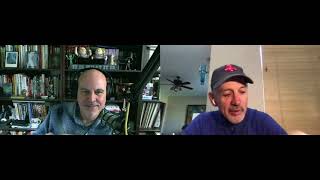
In this March 24 2020 episode of the What Anyone Can Do podcast, hosts Leo Bottari and Randy Cantrell discuss the early COVID‑19 lockdown from personal, economic, and societal perspectives. They begin by acknowledging the human tragedy of the virus, sharing a personal loss, and emphasizing the need for "physical distancing" while staying socially connected. The conversation moves to the rapid economic fallout—mass layoffs, paycheck‑to‑paycheck households, and the strain on single parents. They explore how remote work is reshaping leadership, office space, and talent sourcing, noting both skepticism and emerging trust‑based management practices. Creative responses to the crisis are highlighted, from musicians livestreaming performances to small‑business owners offering quirky take‑out incentives (e.g., free toilet‑paper rolls). They also discuss mental‑health pressures, the importance of peer‑support groups and mastermind circles, and the broader systemic ripple effects on air quality, fraud, and future societal norms. Leo mentions his upcoming book and a recent CEO World article urging entrepreneurs to lean on community. The episode ends with a call for listeners to support one another, stay safe, and stay connected.
Chapters
Welcome to the What Anyone Can Do podcast with Leo Bottari and me, Randy Cantrell. This show picks up where our previous show, You're the Peer, left off, highlighting the simple truth that who you surround yourself with matters, and that if we enlist the support of others, give back to those who give to us, and pay it forward for the next generation, we can do anything. Author and keynote speaker Leo Bottari and I talk with a diverse group of thought leaders who will share stories, and insights that will help you succeed in business and in life.
How?
By doing the things anyone can do, but most of us never will.
Well, it is Tuesday, March 24th, 2020. We are in the midst of the coronavirus lockdown or whatever we want to call it. Welcome to another episode of What Anyone Can Do Podcast. He is Leo Bottari. The website is his name, leobottari.com. My name is Randy Cantrell. I'm in Dallas-Fort Worth. He is in Southern California, but I think we're all in the same boat. No matter where—
Everybody's at home. Yeah, you know, now we typically do this from home anyway, so that's not much of a change. However, the circumstances around why we're at home and what's going on in the context of all of that is, you know, rather extraordinary. You know, one of the things before we get started, because we're gonna, I think, talk a lot about a lot of what's just going on, a lot of the social dynamics that are shifting and changing around our being at home. But I also think it's really important to recognize, you know, I had the friends of mine from Jacksonville, Florida. It was announced just a few days ago, both her parents came down with coronavirus, and it wasn't a day or two later that she announced that her father had died. And you know, you really start to think about the human tragedy around all of this, both with people dying and getting sick and people who are close to those who are directly affected. And it's, you know, it's really sobering, you know, and it really starts to get real and serious for people when they don't just see it as something that's going on somewhere else and they don't really kind of feel any direct connection with it and just think, well, I'm just kind of staying at home because I'm supposed to. But I think there's obviously real value in what we've talked about in terms of— and I think, you know, as we chatted about before we get on, that it's not so much social distancing as much as another friend of ours in the medical field here just says the more accurate way to probably talk about it is physical distancing. That we want to be socially connected and emotionally connected, but physically we've got to do what we can do to keep our distance in that regard, which is why these platforms, you'd mentioned that, you talk more about this a little bit, that the Zoom platform is like maxed out right now because people are trying to connect with one another and stay in touch and stay connected. It's how we're doing business. It's how things are going forward. And but yeah, so what's it been like as far as with you at home or everything so far?
You know, the people that I've interacted with, one of the biggest things is just the dynamics of, and just how quickly things escalated, how quickly things are changing. And here in the Dallas-Fort Worth area, you know, I mean, we're the fifth largest market in the country. So there's 7.5 million people here in North, North Central Texas. And so it has changed Daily, Dallas County is in basically shelter in place. Tarrant County, the Fort Worth side of things where I'm at, is not. It's anticipated that will happen today. This week has been probably here, especially painful because this has been the week of layoffs. This has been the week where sadly business owners and even medical practices have had to bring their staff in and say, here's what we have to do. Some are laying people off for 60 days and telling them your job probably won't be available at the end of that. Other people, their hours have been— I don't know hardly anybody whose hours haven't been cut. Now nurses and those kinds of people, no, but I do know some nurses whose hours have been cut as well. So that's, I think right now at this stage, you know, and again, this is Tuesday, March the 24th that we're recording this. Uh, that's, that's just added onto the stress. So if people aren't stressed out enough about the physical parts of it, now there's, there's the economics of it and how in the, how in the world are we going to, are we going to make it? I talked to a couple of people yesterday and I had read a number and I don't know if it's accurate or not, but the number was pretty staggering that 40%, and I hate to even throw that number out without knowing that it's accurate. So disclaimer, I'm not positive this is true, but it was a crazy number of people that are paycheck to paycheck.
And we know that that's actually, actually that number I've heard it as high as 80%. You know, it's lower, whatever it is, whatever the percentage is.
And so, and with schools being out, one of the first pressure points that, that came to the forefront were these parents, a lot of single parents who work. And when school was out, well, now they are, I mean, they are completely slobberknocked. Now we're trying to hold down a job and we've got a I mean, I know some single parents who don't have— they have no family here, so they don't have anybody to lean on, uh, with their kids. So now they have to make accommodations for that and try to hold down their job. So, well, there's pressure points everywhere with this.
For, for here, of course, we've got a house full of people. We have got, you know, kids who you know, on one hand escaping, if you will, kind of locked down in San Francisco to midnight to drive down here and be living here in Southern California. My daughter Taylor, who basically lives in DC and has been here now. And so, yeah, so we've got a different dynamic and everyone's parked in a different place or working from home. You can even see people walking by me, whatever, you know, but it's just, it's a crazy kind of, situation, but you mentioned about, you know, people say the stock market will come back, but there are a lot of jobs that won't and a lot of businesses that won't. And that's a frightening thought. And, you know, we've got to really look closely at— I thought it was interesting. I think it was the governor of Nevada who had given a press conference talking about this. Incredible thing that we've got in front of us between people's lives and then their livelihoods. And I kind of phrased it in that way and trying to figure out, you know, we certainly don't want to leap back into normal gatherings of people too early and basically disassemble everything that hopefully is being done to to at least slow things down at least enough for the healthcare system to be able to respond to. And of course, you've seen that has already been a huge challenge in New York and in other places already where there's not enough ventilators and beds and where they're looking to set up temporary hospitals in the Javits Center.
Yeah, you wonder what kind of habits are gonna stick after this. You know, I mean, people are going to go back to being so, so readily, you know, available to shake hands, for instance, as opposed to whatever.
So, so one thing, and I think we were getting into this a little bit, and, and one of the reasons for this show today, I mean, there's certainly a lot, um, a lot of, a lot of kind of sobering aspects of this, and yet I was hoping we could also, of course, spend our time on some of the pretty incredible things that people are doing, how creative they're being about, you know, everybody from recording artists who are live streaming, you know, entertainment out there, like out of their garage or out of their, you know, to—
and I'm loving that, I'm a music fan.
Yeah, and people who are using platforms like this to connect or finding ways, you know, one of the things is people are trying to figure out you know, how they go about working out when they can't go to the gym. And everything from people using paint cans at their house to, you know, whatever. If we actually do go out to stores that are open, you can't even find— like, you can't find weights, you can't find things like that because everyone bought them. And it's so funny because there's no question that this time when you're home like this, you're either going to use this time to get in better shape or worse, depending if you just want to sit home and eat and watch television. Or sit on the computer, or you decide, how can I go about being active when my ability to do so is limited, not just by equipment, but even by the amount of time that I'm supposed to be spending outdoors and all of that. So I think watching people use some of these online tools in particular, or just use whatever, the little games we have out in the front yard, hitting golf balls into a little net, or when you just take a little downtime for when you're not working too. And I mentioned, you know, every night, I mean, one of the things that Diane has been great about when we've had kids here, if you will, adults as they are, but it's like everything gets shut down and we sit around the dinner table and all 6 of us have sit around and just have an old-fashioned dinner at night where there's real conversation and a real healthy meal. And And that's something I think that, you know, again, when you just try to pull in some respect a little positives, you know, out of, you know, any negative situation, that will be one of them. You know, the idea that we were all here and we all kind of went through this together. And of course, in the hope that everyone stays safe and all that too, which, you know, one of the things about this, and I think the kind of insidious part of this and something I mentioned in the CEO World article that I wrote and had published, you know, in the last week, is that because we don't know who has it, because we don't know if we have it ourselves and are asymptomatic, we just— you just can't fight something you can't see. And, you know, I just always— I guess it amazes me, although I certainly understand the logistics and the scale of all this, but in a perfect world, if you could just test everybody, you could make a big difference in a hurry in terms of how you went about this and who needed a stay-at-home order and who didn't and what sectors of the economy could go back to work and those that couldn't. And I mean, there's so many aspects of this that if you could actually see what it is you're dealing with, it would be a heck of a lot more manageable. But it's not. And I'm not necessarily seeing much in the way of steps that are going to help us gain that kind of vision into it, which I think is what scares people about the perpetual nature of it. And I think is already, as we're reading about right now, spooking the White House with regard to, all right, once March 30th hits, What are we doing? You know, I think they're still, you know, watching as we get near the end of what the lockdown has yielded in Italy as far as trying to slow things down, to see how in fact effective that has been or not, which may provide guidance into, you know, how much longer we do things here, just as the continuing spike in you know, what's going on in New York and everything else becomes, you know, problematic as well. So it's going to be really interesting come March 30th, kind of where— what either gets— what either remains the same or what in fact changes.
Yeah, I mean, the uncertainty is, is getting to everybody, but you don't know what you don't know, and we obviously— there are many people on the planet that probably thought they knew everything, you know. Well, welcome, welcome to a new world where there's this unknown now, you know, that you're having to deal with. So how are you— one thing on my mind is how people, how people are coping, because somebody asked me the other day— excuse me— you know, what, what I was like, what I was like leaning on other than for me, faith. Uh, which we'll avoid, but, uh, music and humor, you know, I mean, I've, I've, I've, I've laughed nonstop at this fella, you know, over in England who, who announces European football and he's doing play-by-play. He's out with his phone. Have you seen this? I'll have to link this up. Oh, it's, it's, it's genius. It's absolute genius. He's walking in the grocery store and he's behind a guy that's got pajamas on, you know, and he's, he's, he's doing play-by-play. Of just whatever he sees on his phone. And he's doing this over at Twitter. And it's just, you know, it's 40 seconds of just absolute, you know, and it's, he's, he's commenting on people waiting at a bus stop for a bus, you know, and he's, he's calling it like it's just this do or die, you know, international sport. He does some commentary on a couple of dogs chasing each other in a park, you know, one's black, one's white. And so he calls them chocolate and vanilla, you know, it's vanilla out front, you know, and oh, look at the amazing footwork. And of course, He's got this killer, this killer British accent, which makes it even more hysterical. You know, Joe Buck has done some things from home. He's done play-by-play, you know, with his wife and little girl and stuff. And some of that stuff is just super funny. And the music, to your point, you know, a lot of live streaming, just a, you know, StreamYard and some of these and all these platforms that have live streaming like Twitter and Instagram. Facebook and stuff. I mean, these people are, you know, boy, they're leveraging the technology. So the technology is being tested, but I mean, you know, mostly, mostly it's, it's holding up. I was watching the other night, you know, the Opry. And I'm not this huge country music guy, but the Opry, which I guess for however many years has not missed a beat. And so Marty Stuart, Vince Gill, and Brad Paisley, 3 guys on stage. They're all, you know, 10 feet apart with a microphone, just an acoustic guitar and a mandolin or whatever, you know. And they did a, they did a show to keep the Opry performance streak alive. That, that stuff is, uh, that stuff's been, been awfully cool. Yeah. I'm with your physician or whoever it was that said about physical distancing. I'm finding, if anything, there are a lot of people that are socially even more connected.
Which is kind of sad. The bit of the guy who's running around narrating whatever he sees almost reminds me of a little thing that was done. This is forever ago, and I've just never forgotten it. It was— there's a show that was— could be still on for all I know, but the Lauren and Wally Show in Boston. And they did a segment one time called what they referred to as Mild Kingdom, where instead of Wild Kingdom, they would do these things. They would narrate like something like about a hamster. And made it like it was dangerous, like they were out in the jungle or something. It was hilarious, but just really brilliant stuff. But the other aspect of this is we see a lot of the creativity around this. I think we're also having to get some really real lessons, A, in working remotely, managing and leading remote teams. And what that looks like, and then how we can continue to be productive. And my hope is that there are a lot of leaders and a lot of managers who've been really skeptical and afraid because somehow they believe if someone's physically in the building and they're in control of seeing that they're there and they're not out doing stuff and everything, that somehow there's going to be a loss of productivity. And I think oftentimes in these times where, you know, again, people have specific goals, they want to hit their numbers, they have the support of the team, remotely as they need it. They may have a little more flexibility in terms of when they work. But you start taking away the time it takes for many people to commute to work, which— how many people do you know that their commute is practically an hour each way? Take the commute off the table. Take what they're spending on gas off the table. Start looking at companies now that think, huh, if I could have more people work remotely, maybe I wouldn't have to buy a gajillion square feet of downtown office space that costs me a fortune. And you talk about things that could have an incredible impact on the economy going forward. I mean, it's the realization that, you know, there's not everything by any stretch, but there's a lot of businesses that really can be run. You know, I was on my Wynn Mastermind call yesterday. And so it was a 2-hour session. And we were all just talking about various things with our business. And there were 2 people on the call, one from, Finland and one from the Netherlands who were actually looking for people to help them. You know, like one, they needed somebody, literally needed, was looking for a CEO for his company. Someone else was looking for like a digital marketing strategist or a marketing person. And the question came up, does it matter where this person lives? And both people responded no. That it just didn't matter if they were in the, you know, the country that they were in or not. And I think it's, first of all, it's incredible that we can have access to that kind of talent, you know, that doesn't necessarily— we're not limited by who happens to be living in our neighborhood or go through the expense of having to move someone or move their entire family in order to come, that we can work in a way that can be really productive, where we can access the best talent out there that's right for us to build our organization, do what we're doing. And, you know, I think it's going to be an aha moment for a lot of leaders who had real fear and concern about how they could kind of hold it together with regard to virtual teams and people working from home and finding that, you know, I forget, I think it was Truman or somebody was talking about this idea. It may have been Kennedy actually, JFK, who when it comes to leadership and the importance in leading in a way that trusts the character and integrity of those in your charge. I think is a really powerful lesson right now because people have to believe that they are, they're counted on, they're trusted, they are, we're going to celebrate their integrity. We're going to do the kinds of things that, you know, we're going to make people really feel great about what they're doing and hopefully even drive levels of productivity with people working from home and not have it be compromised. So, You know, this is a really interesting test, I think, for so many organizations where working from home, you know, and doing what we're doing right now is possible. And, you know, and just, and basically just having a situation where people would just meet like once a week, you know, maybe they convene, you know, or have whatever that tends to look like, but it could change a lot of what, you know, is done. And, uh, you know, and maybe for the better in many respects.
Jason Fried is a guy, and I think they're in Chicago. Basecamp is their, is their software, you know, and he has been active on Twitter calling out appropriately, in my opinion. Now everybody has, has the right to their own, you know, kind of calling out CEOs who absolutely staunchly, at least up until last week, were refusing to let their employees work from home. And, uh, he wrote a book called Remote, he and his co-founder, and they were giving free copies of that away. This was late, late last week, you know, to just try to push that initiative. Yes, they have a vested interest in it because they do have a SaaS product, But it's a bigger— if you follow him on social media and you read some of his writing, he does have a much bigger— he has a much bigger vision of it. And they are not— they don't come across at all to me like some mercenary company. But regarding great leadership under pressure, no matter how people feel about him, but Mark Cuban here in Dallas, very, very quickly came forward when the NBA shut down and addressed those hourly workers that work during games and the hourly workers that are associated with the Dallas Mavericks and said he, he was going to keep those people, he was going to make them whole. He was— now, yes, he can do that. Um, but you know, but still he was, he was kind of throwing the gauntlet down to people that have the wherewithal to make that kind of an arrangement happen to take care of these people who are among the vast number of people who are living paycheck to paycheck. So there's a ton of—
and I think we— yeah, I think we do have to think about that. You know, in a small way, you know, we've got a situation here where, you know, we have someone come not all the time, but basically once every 2 weeks who will come and just kind of give the house a good once-over, you know, in between kind of what, what we do with it. But I think it always really helps. But, you know, with 6 of us here and all that right now, it didn't seem to make sense to, you know, have her, you know, come this week and do that. But we basically just, you know, paid her anyway. We'll see how, you know, 2 weeks. And just so that she doesn't lose the income from it, we can just clean it as if, you know what I mean, it's just a little extra labor for us. I'm basically spending what I would have or what we would have normally. But just to, you know, in a small way kind of recognize that there are people out there that depend on, you know, obviously whatever it is they're earning, however they're earning it, and, you know, to the extent that we can support that. I think, you know, it's come up a lot too where all these restaurants that are offering takeout.
You've got a great story about one which Yeah, I don't know where that was. And of course my roots are small business.
Go ahead. But just the idea of, you know, of thinking in your mind, like, if you're able, you know, how can I get takeout from the local restaurant just to give them some business, just to make sure that they're, you know, are getting some support, you know, from the community in that regard. So yeah, we'll be You know, we won't be doing it tonight, but we'll be, I'm sure, picking a restaurant tomorrow night that we want to make sure that we do that. And you can either, in many cases, order by phone or by email or whatever, and, you know, they'll either drop it off at the curb, or you can go pick it up outside the restaurant, or however, you know, they're all working it. But, uh, you had a really interesting story about the restaurant and kind of the promotion for—
yeah, and I don't know— yeah, and I don't, I don't claim that this was in the Dallas-Fort Worth area. I don't much think that it, that it was, but I was talking with somebody the other day just about small business and the creativity, even under normal circumstances among small business. And we don't typically think of innovation coming from small business, but there are countless examples. You know, there's not anecdotal, there's empirical evidence. Small business can be very, very innovative. There was a restaurateur who was trying to elevate takeout orders in this crisis. So had a supply of toilet paper. I don't know how much he had, but decided he was going to give a free roll of toilet paper with every order. And sales just obviously went through the roof and he's trying to maintain that. I guess it'll last as long as he's got supply of toilet paper, but you know, those are the kinds of creative, creative ideas. We've heard lots of stories around here of people who have done takeout with a little neighborhood. And here there's a big focus on not just supporting the chains, but your, your local eatery. And there was a story that one of the talk show radio guys told the other day. There's a little neighborhood place, a little Italian place that he and his wife have gone to for years and years and years, knows the owner, went in, got his, got his food, paid. And left them, you know, left them a 3-figure tip to just help them out. And he said, you know, it just— everybody behind the counter, when they realized, you know, they just, you know, they broke down. He said, it's important to me that you guys stay open. It's important to me that you guys get through this, you know. So there's a lot of stories like that, of that kind of generosity Now, for every one of those, there's probably way too many of the opposite, you know, people that are absolute jerks and leveraging this in all the ways that are bad, which, you know, thankfully we heard last night from the White House, you know, the kind of the crackdown on just all the fraudulent stuff. I read this morning, you know, 3,900, I guess Amazon stores got shut down. You know, you got people that are just absolutely trying to capitalize on this disaster, which, you know, you hate to see that. But then I saw something about, you know, somebody is scamming using, you know, what looks like really official letterhead, uh, from the government, you know, and you worry about the older population. We're rapidly getting there, but we're not quite there. But, you know, these people that are in their in their 80s and, and being grossly taken advantage of.
So those should be a real special place in hell for those people. I really, you know, who— the scammers who are absolutely— yeah, yeah.
I mean, it's, it's awful. Then on the flip side, you know, I'm rather, I'm rather smitten by especially LA and New York air quality with a lack of traffic You know, I've read some stories of people who are like, you know, man, I can, I can see further than I've seen in a long, long time, you know, and it never crossed my mind about that.
It is interesting. I mean, how many times in the show we've talked about systems thinking, you know, and the fact that, you know, we, we look at things and how they have an immediate impact on kind of what we're looking at, but the ripple effect of these things is often so extraordinary and it impacts us in ways that, you know, you just never, never think about. And, you know, so obviously, you know, we will— it's going to be interesting this time next week when we're— when next time we have a show, we'll be on the other side of March 30th. We'll kind of get a sense of what decisions are being made with regard to how we, you know, move back toward— I think we're going to be forever changed. As a result of this. I think things don't go back to exactly the way they were. I think things are going to be different, obviously. And so we're going to really get a sense pretty quickly on what that's going to look like. And, you know, obviously feel again horrible for the people who have been directly affected, either physically or economically, you know, from this in a way that, you know, is going to be very difficult to recover from.
But you've been able to leverage this time for your writing? In a positive way, or has it been too much of a distraction?
Um, it's been some distraction, but yes, I have been— yeah, I have been able to, um, you know, focus more on, on getting the book done, um, which I think I'm about a week, a week plus away from having it finished. So, um, so that's good. And I'll probably take another week and really just go through and fine-tune and edit a lot of pieces of it. And interestingly enough, there's no question there will be some reference to what we're all experiencing right now. When we think about how this has involved all of us as a society having to work together and what that looks like, even if it isn't really the society coming together, but the irony being the society that needs to stay away from one another just for a little while. But yet figure out a way not to just be physically distant, but to actually remain connected. And I think that that's important, that we continue to communicate and see one another and talk and make this podcast, and for so many other people doing the same thing, that these kinds of things continue so that we remain connected in that way. But we will see next week for sure. And in the meantime, You know, I will say one thing. I do want to refer to the piece that I wrote for CEO World because I do think if you're a business owner out there and you are part of a mastermind group or part of a peer group and you're thinking, boy, this is really tough times in terms of being able to afford to be in this group or to afford the time to be in this group, that— excuse me— that just understand that this is when you need that group the most. And this is where you'll get the greatest benefit from leaning into your fellow members and you all helping one another and making sure that you get through this together. And that's an essential part, I think. And it was a central message, of course, in that. And if you're not part of a group, and you may decide, hey, maybe this is a good time to become part of one, look for one around. Or if nothing else, if you're not inclined to do that, at least find some people who you can connect with in a way that doesn't have you trying to have you figuring all of this out for yourself or your business all by yourself. And there's no reason to be going through it alone. And we are all in this together in that respect. So this is an important time to lean on one another.
Yeah, I've got concerns about, you know, my own and yours and everybody's mental health. During this crisis, as well as physical health, obviously. But the pressure and the stress of the entrepreneur and the small business owner, and even the high-end CEO, is unprecedented. So the website is Leo Bottari, L-E-O-B-O-T-T-A-R-Y.com. He's got a book, Lord willing, will come out in the summer, maybe even sooner. Given the sequestering that's gone on and his ability to crank this out. We appreciate you listening. In social media, and we've got links in the show notes to anything and everything that we talked about today, including Leo and my social media. I'd be interested to hear from anybody in our audience. If you want to shoot us a tweet or connect with us in any way that you choose to, and let us know kind of how you're holding up and what devices you're leveraging. You know, Leo's mentioned in this show, kind of going back to Leave It to Beaver days of sitting around the dinner table. So there's a ton of positives. And I think it's, it's probably smart of all of us to lean that way and be optimistic, leverage it for whatever we can. You know, it's the old make lemonade out of lemons if we can. I'll give you the last word, Leo. I'm out.
Well, you know, like I said, we kind of started the show just talking about the real human tragedy that's at work here, both in terms of people's health and the economy of it all. So, you know, again, certainly our hearts go out to those people, and in whatever way, you know, we can support those people who are small businesses who are looking to connect with others, you know, to definitely reach out. There are certainly resources out there to connect with groups, whether it's Wind Mastermind Group or any one of other groups out there that people connect with virtually in order to feel that they're not by themselves. You know, but yeah, in the meantime, just hope everyone stays safe and we will see you next week.
To learn more about our show and what we do, to submit questions to us, And to subscribe to What Anyone Can Do Podcast, please visit our website, whatanyonecandodo.com. What Anyone Can Do Podcast is hosted by Leo Battaglia and me, Randy Cantrell. Music provided by Kevin MacLeod is Vibe Ace, licensed under Creative Commons by Attribution 3.0 license. Thanks for watching or listening.
We hope you'll share the podcast.










