Leo & Randy On Stories Told & Untold
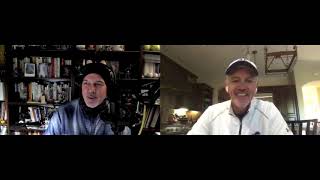
In this episode of the Peer Innovation podcast, hosts Randy Cantrell and Leo Bottari discuss Leo’s new book Peer Innovation: What Peer Advisory Groups Can Teach Us About Building High‑Performing Teams. The conversation opens with a vivid anecdote about a tyrannical sales manager named Roy, illustrating how bad leadership harms teams and how stories of such experiences can spark a desire for better leadership. The hosts argue that storytelling—both the stories we tell and the untold ones—creates emotional connection, builds shared humanity, and fuels high‑performing peer advisory groups. They outline the book’s practical framework (the five‑factor model) and a free 30‑page PDF workshop that leaders can use to facilitate team conversations without hiring a consultant. Throughout, they give concrete advice for leaders on how to become better storytellers, how to structure meetings to give space to all voices (especially “number two” leaders), and how to use specific prompts (e.g., “greatest team you’ve ever been on”). The episode also covers distribution details: affordable soft‑cover and ebook pricing, bulk‑order options, a partnership with C‑Suite Network for an upcoming audiobook, and endorsements from Jeffrey Hayslett (foreword) and Thomas Anglero (afterword). The hosts close by urging listeners to buy the book, download the PDF, and share the podcast.
Chapters
Welcome to Peer Innovation, the podcast with Leo Bottari and me, Randy Cantrell. Building on our previous shows, The Year of the Peer and What Anyone Can Do, we turn our attention to helping business leaders build high-performing teams. We'll talk with a diverse group of thought leaders who will share stories and insights that will help you and your teams achieve new heights. If you believe there is strength in numbers and that meeting the challenges of the future can only be achieved if we do it together, then join us for the conversation. I'm not in Antarctica, but I know I look like it. But this is, this is what winter does to you in Texas, man. Welcome to another episode of Peer Innovation, the podcast. Peerinnovation.co is the website. Now we can show up and we can hawk. It's also this.
Oh, there you go.
It's also this brand new book available in softcover, $12.99. Ebook, Kindle version, $3.99, priced affordably so that you can share it with your, your whole team. Peer Innovation, subtitled What Peer Advisory Groups Can Teach Us About Building High-Performing Teams. He is the author of said book, Leo Bottari, coming to you from a warmer Southern California. And I'm in Dallas-Fort Worth, Texas, Randy Cantrell. Welcome to the show, everybody. And I know that you've Yeah, there are all kinds of songs that leap to mind, Leo. I'm a music guy, not a player, just a listener. But the stories that we can tell, you know, all the stories that we could tell, and you've got some great ones in the book. And so I don't know, I'll just turn it over to you and let's dive off into this pool.
You know, yeah, and I wanted to share one of them from the book, and I'm actually going to read it from the book. It's kind of a bit of two stories in one. And it leads off Chapter 6, where I basically talk about something that I think is really common to all of us. And that is sharing the story of bad leadership that we've experienced at some point in our life, that we worked for that person and we're like, man, that is just the quintessential example of how not to lead people. And we probably have more of them and we'd like to share. But I shared one that I think not only offers a bit of comic relief for the book, but I think gets us really thinking about what real leadership looks like. And I'll pivot a bit to, after that story, to my experience at Seton Hall, which is why I've got the little Seton Hall garb today. As you know, I taught there for 7 years. Today, of course, I've been at Rutgers for 5 years, so I will do a Rutgers garb show next time. So I don't want people feeling— but I am a Seton Hall alum. Given, like I said, I think what comes from the story, I wanted to do that. But I am going to read right from the book because it's just kind of, I think, a fun story. And rather than have me paraphrase it, I think this will give folks a good sense of things. So anyway, Chapter 6 is literally titled Leadership. Begins with a little quote from Isaac Newton, which basically says, if I have seen further It is by standing on the shoulders of giants. So everybody I've ever met has had a boss who served as their personal example of how not to lead people. Here's one of mine. After my graduation from Jacksonville University in April 1983, there was roughly a 6-month gap between then and when I was supposed to start a position with US Senator Paul Tsongas' reelection campaign. With no money and no car, I accepted a job that would provide me both. It was a sales position at a local Ford dealership where I could earn a decent living and after a 30-day probationary period drive a brand new car. So to set the leadership stage, there was the owner, the general manager, and the sales manager. The owner was pretty much irrelevant, at least in terms of any direct contact with the sales team. The general manager's name was John, a well-dressed Bob Newhart figure, both in terms of his, um, understated demeanor, and a sense of humor. Now, Roy, the sales manager, was a chain-smoking tyrant. The duo was textbook good cop, bad cop. The dynamic was similar to what I remembered from junior high school with the ambassador-like principal who everyone loved and the badass assistant principal who everyone feared. Now, at the dealership, Roy was our assistant principal, so to speak. So to paint a picture, he rode everyone hard all the time. If he sensed a hint of activity in your eyes, he would literally throw a phone book at you and tell you to call 20 landscapers and sell them a truck. Now keep in mind, Roy was also the person who had to get involved before any customer left the building. So one of the many stories of Roy not only killing a deal, but mentally scarring the participating parties for life, involved a woman who came in to buy her first car. She spent months visiting dealerships and doing her best to get a great deal on her new Ford Escort. When she balked at the price I offered her, I had no choice but to get Roy involved in an effort to give it at least one last try. Roy sat at the desk next to me and politely asked the woman how he could help her. She asked him to give her a bottom-line price for the car she wanted. When he would not, she proceeded to tell us that the other dealerships had no problem doing so at all. It was at this point that she pulled a dozen business cards out of her purse and then threw flipped them over to show the price each dealer had offered. They were laid out all across the desk. He looked at her, he looked at me, he looked at her again, and I knew it was coming, but his vehemence surprised me. Roy screamed, "Are you trying to buy a car or wallpaper your blanking bathroom? Get the blank out of here." He got up and left. The two of us sat there for a moment. I just said, "Okay, thanks for coming." And she left forever, as you might imagine. Now, was this woman ever going to buy a car from us? Probably not. It does, however, give you a window into Roy's rather unique approach to leadership and the transactional nature of how he viewed the world. Subhead: A thank you note, crayon, and Hot Wheels. Roy had a bit of a reputation for getting into accidents with the company cars he drove. One morning, his Crown Victoria arrived at the dealership via tow truck. Now, Roy's story was that a 2.5-year-old kid had crawled out in the middle of the street, and to avoid hitting the child, he swerved and crashed into a tree. Now, of course, from everybody's perspective, the story was suspect, not the least of which was the specificity of the child's age. Not 2 years old, not 3, but 2 and a half. Now, after already— after having already heard this tale about an hour earlier, I was standing next to a colleague watching the car get hauled in, and for whatever reason, I said, "Hey, I'm going to give Roy a hard time about this accident and this whole crazy story." My colleague skeptically replied, "Really?" I look forward to seeing that. So he, of course, he had a point. Uh, any direct mention of this would have been professional death for me. There had to be another way. John, the general manager, led a meeting every Monday morning where he updated us on new inventory, talked about incentive programs, and frequently shared letters from satisfied customers. Everyone in sales, including Roy, attended. Before the next Monday morning meeting, I handed John a letter in a sealed envelope. I had written the letter using a crayon with my non-dominant hand and explained to John that it was from the 2.5-year-old kid thanking Roy for not hitting him with his car. Also enclosed in the envelope was a blue Crown Victoria Hot Wheels car so that Roy would have something to use while his vehicle was being fixed. Given John's dry sense of humor, it's hard to imagine a better person to have read this letter to the team, and he was a more than willing accomplice to the prank. Before closing the meeting, he announced receipt of the letter, read it aloud, and passed it around to everyone at the table. John was impressed at the kid's letter-writing skills and also applauded his forgiving disposition and generosity. To this day, I've never seen a group of grown men so overcome with tears of laughter, nor did I ever witness Roy's face glean such a color red. Roy spent the rest of the day trying to find out who did it. After lunch, he walked up to me and said, "I know you did it, you blank." Amused, but feeling he still had to punish me for what I did in some way, he made me move about a dozen cars to different locations in the parking lot in the blazing heat. For me, it was well worth it. So I haven't thought about Roy in years. But when it came to kind of— and he's not the only bad leadership example I have, but certainly one of the more colorful ones. And I think— and we've chatted about this before— that we intuitively, I think, even back then believed there's got to be a better way to lead people than this. Like, this can't be the way this goes down. And, um, you know, it was actually not really until I went to graduate school at Seton Hall and was introduced to the work of Jim Kouzes and Barry Posner and the Leadership Challenge that you read this and you go, aha, okay, now all of a sudden, all of a sudden now there was, there was, you know, real research and, and, you know, uh, these, these amazing scholars who basically are putting together things that hopefully, you know, proved everything that we intuitively believed and understood but really had no foundation for it at all. And they provided that for me, and I think they've provided it for a lot of people. And I know that it's, you know, as you know, this book has been, you know, it's in 22 languages, it's, you know, read globally, it's in its 6th edition. So I think for many people who the only example they may have ever had about leaders in their life that somehow this book gave them hope, at least until they discovered that there was something better out there. And of course, I do describe that good example of leadership, and that was Joe Grimaldi at Mullen. And another really great story there about what he did. But this whole idea of story, and which is really more the theme than the leadership piece and all that, is really something that connects with us emotionally. These aren't things we just remember because they tapped into our brain. They are things that we feel. I will never forget what that whole experience with Roy made me, how that made me feel every day, you know, going into work and maybe how much fun I had in my small way, kind of getting back at him a little bit. But I think about stories like that, both the ones that are told and then the ones that are untold as well. So, yeah, I wanted to chat a little bit about that. And I know that you and I chatted about that particular story before the book even came out. And I don't know, how does that resonate with some of the leaders that you've had?
Oh, it's in lockstep, as you well know. And now the audience does too. Yeah, we need to track Roy down and we need to send him a copy of the book. So we need to be something. Yeah, it would be something.
Now I did cut Roy a break as a, you know, Roy, by the way, and I described him at the end of the chapter as basically he's a turtle. He's hard on the outside. He's soft on the inside. He actually had a really big heart. Roy didn't lead that way because he was trying to be cruel. Or that he's a bad guy or a mean guy. Roy led that way because it's all he knew. And I guess my point for those who would read a book like this is we don't have the luxury of that excuse. We all know better, and we should understand and think about how we can lead our teams, how we can be a leader in our teams, and what that looks like in a way that respects people, respects the relationship, and is designed to inspire, or as Kusis Posner would say, to light the fire within as opposed to lighting the fire under someone, right? It's the difference between inspiration and simply motivation. Roy would motivate you because you didn't want to get hit with a phone book, but that's hardly inspiring, right? So it's—
And it makes you wonder what stories Roy has to tell, right? I mean, you know that at that time he had stories in his head that were very different which probably helped provoke him. Oh, I'm, you know, completely pop psychology here, you know, that, that prompted him to think this is, this is the way, this is, this is, this is what guys in my position do.
Yeah. It could be everything from your starting with your parents to places you worked to— I know he was, my recollection is that he was in the Coast Guard for quite some time. You know, you just, just in terms of all the experiences he had that informed the way he would approach that job. And by the way, that's the way that business was at the time. That business was highly transactional. You'd go into any dealership and they could care less. So if they weren't, if you weren't going to buy a car from them right that minute, they weren't really very interested in building a relationship with you and saying, oh, come back next week. They figured you're gone, you know. So that business has changed a lot as well. I think when you go into a lot of dealerships today, they're much more about You know, not the least of which, I mean, cars are pretty expensive. It's like selling someone a house, you know, back in the '60s or something like that.
Well, and the internet changed everything, community. And speaking of stories, it transitioned into the stories that people will tell about you and about their own buying experience. I mean, here we are, here you are with a new book and You and I both, we care, we care about these reviews. I would care about this word of mouth. We want, we want this work to spread and this idea, you know, to kind of take a bit of a viral power appears matters. Yeah.
The power appears matters. We, we know it matters. We know that it isn't about what people tell you. About it. It's what you experience for yourself and how you can share it with others who may have similar sensibilities and interest in this kind of content. And it's incredibly powerful. And I think it'll, um, I think with that it will get people to think about, you know, and, and part of this too, um, I'm obviously, you know, happy to work with people and, and do a lot of that work, of course, working with groups and working with companies. But what I really wanted to do with this also is give people a way forward that doesn't necessarily involve hiring me or doing anything like that. At the end of the book, people can go to peerinnovation.co/teams and they get a 30-page PDF which shows them how to conduct basically a half-day workshop that, you know, I think reading the book gives you that basis for it, and then all of a sudden you get very specific way to go about, you know, facilitating the kinds of conversations using the framework of the 5 factors, you know, in order to help you all get to the— any team get to what's right for them. So it's a very kind of heuristic exercise, right? This is people coming to their own conclusions about what's best for them and then figuring out what are the action items going forward. We— these are conversations we don't have often enough. And to just be able to stop down for a moment, the investment of this time and what it will do in terms of unifying a team as well as setting it, you know, on the right course, whether that team is virtual or in person, you know, I think is really, really powerful. And, you know, when we think about, and as we've talked about virtual teams and productivity and people tapping into one another's shared humanity a little bit more. And that's largely because of stories. It's largely because we're starting to learn stories about our fellow, about our coworkers that help us see them as human beings, not just fellow employees. You know, it was a number of years ago, I remember writing a piece called The Untold Story. And it's every time we meet someone And who knows, maybe they're either super friendly or they're really rude or they're upset or whatever it happens to be. And we'll make judgments about that behavior. And because again, we don't know where it comes from, but we're happy to fill it in and create our own story around it. But yet too often we don't know what just happened in that person's life during that month, that morning, whatever it happens to be. And I think once we start imagining that because we're not living that person's life, it's not like we're giving them an excuse for being rude in a given moment if that's what they're being. But at least we might recognize that that may be what they did, but it's not likely who they are. You know, I just think that that comes up, you know, so often. And it's these kinds of things, again, that I think speak to kind of the relationship aspect of peer innovation. You know, on one hand, it's about a framework for conversation. And on the other, so much of this kind of the collateral aspect of it is that people get to know one another better. They start learning and seeing one another just a little bit differently. So they can see each other's gifts and not just see each other's differences as being problematic for like, well, I don't like working with that person because they do things this way or that way or whatever. That we start seeing their gifts. We help each other understand why I approach something a certain way or not. And you know, at least recognize that we're all here for the same reason, and that's to do excellent things together, you know. And so, yeah, so I think the story part, you know, and the power of peers. Heather Pemberton Levy was, you know, really the editor from beginning to end that we worked with at a time with Leon and I had— we'd never written a book before. We were just kind of— we had a sense of what we hoped to do, but she really just so skillfully guided us and wrote a book shortly after she worked with us, not as a result of working with us by any stretch, but, and it's called Story First. And she really advocates this idea of leading every chapter with a story and because of the connection it makes with people. Now, I'm not going to say in my case that I followed her advice exactly. I mean, there is a lot of stories that lead each chapter, but not in every single case necessarily. But there's certainly a lot of stories in there. And she, among others, I think teaches us the power of story, both those that are told and those not.
Well, for leaders that want to incorporate it, of course, my first advice is going to be buy and read the book and then download the free 30-page PDF, which which, by the way, kudos, really, really well done. And it's not your prototypical, well, here's a free download by the time you get to the end of the book. I mean, it's pretty powerful just as a standalone document, if you ask me, to help a leader incorporate story. But what other thoughts do you have? What other advice could you give to a leader that it might not be— they might— some people are natural storytellers and some aren't, and some are way better at it than others. But what would be your advice? Because I think you and I both are strong, strong believers. It's just, you mentioned it before, and I think you mentioned it on, on my podcast, that part of your hope was the just the resonance. It's not that Okay, Leo Buttari has written something that is completely foreign to all prior human thinking, but to do it in a way that you know is going to resonate with some, where the other stuff that's out there doesn't. Along those same lines is we're trying to have a positive influence on other people, particularly in the workplace, particularly in an organization, a team, or a group. What counsel do you have?
So, you know, we think about employees getting to know one another better. You know, we could just go around the room and say, hey, tell us about yourself or whatever, right? And that's, you know, but I think what can be more powerful is asking specific questions like the one that I ask folks all the time that's, it's really fun is I'll ask them to talk about what's the greatest team you've ever been part of and why. Could have been any time in your life. What did that look like for you? What did that feel like for you? And as people share those stories, and as you as the leader share your own story, and everyone shares stories— and it's just brief. You just go around. You can make it happen pretty quickly. You actually learn so much about that person and what they care about and what they value and what their experiences are and all that. And they get to speak in front of others and have a comfort level doing that. And that when you come together and you can ask specific questions like that, that you know everyone will have an experience around that to share. That just can be really a great way for people just to get to know each other really well. The team question is really funny to me because when I ask this among CEOs, right, like people in the room can be anywhere from 35 to 60. And I've had like the first 3 people share their story and they're from like Little League baseball or Pop Warner football, high school basketball, something like that. I'm like, it's— so the remarkable thing to me about that is that on one hand, I think, wow, here's this story that they're sharing that happened decades ago that they can talk about like it was yesterday. And you could feel the emotion of what it felt like to be on that team and why they believed they were so great. On the other hand, how unbelievably sad it is that they have to look back 30 years in order to point to a team that they feel that way about. So I'd like to think that Part of peer innovation can give us hope again that we can build and create the kind of teams that are so connected with us during different times of our life, and that our best team experiences should be ahead of us. They shouldn't be things that we always have to look back on and sometimes look way back on. Yeah.
Let me shift your imagination and your memory and your brain power. And throw you a bit of a curveball. So what about the stories that people tell about us and the impact that we can have on the group that we are in or the team that we are on? Because I'm not sure that we give that too much focus. We get focused on the stories that we can tell. But what about all those stories that we don't know about, but people are telling about us? And the fact that we have the power to really impact what that story might be.
So people likely are telling all kinds of stories about us, some good, some—
Yeah, also bad for me, it feels like sometimes.
No, but I will say that what I find interesting, and I'll use my daughters as a great example of this, there'll be stories or there'll be experiences they've had that I barely remember, and yet they were like incredibly meaningful for them, you know, in some way. And it just, it's always, always kind of amazes me. And, and this is where I think we have to always be mindful that, you know, we, we have these intentional things we try to do, these lessons and these stories and stuff as parents or whatever, but the reality is that it'll be the most offhanded comment or some moment or something that happens someplace somewhere, and you're like, that's what you remember? Like, of all the stuff, like, that's the thing that hits you? It always amazes me that, you know, yeah, that it's— so I think about it like that sometimes. I think that we don't always recognize that when we tell a story, no matter what it's about, has an impact. I have people who will say, hey, I heard your podcast and I heard you and Rain talking about this or that. And they say, well, that connected with me because there was something in their life that it hit or whatever. And so, yeah, I think this is why groups and teams who really share, you know, I've always talked about that in terms of something that's a real act of courage. By putting yourself out there, being vulnerable, sharing a story about yourself, maybe, you know, something that didn't go well and experience that. But it's also of incredible generosity because in most cases, somebody in that room is benefiting from the fact that you shared that story. They're connecting with something in their life that can help them even in some small way. And, you know, and so the more we do it, You know, it kind of makes sense that the more likely those little events can take place for, for people in the room.
Yeah.
Or on the Zoom, wherever it happens.
Yeah, exactly. Quantity might matter. Yeah. And as you were talking about your, your daughters, you know, I was reminded— I can't remember who it was, my memory's not that good— but, you know, there's this historical story of— I'm thinking it was, you know, it's some American statesman, his memory recalls, you know, and he writes in his diary a really busy man with a super busy schedule and took a morning off to take his son fishing. And he writes in his diary, you know, a day wasted. And the son writes in his diary, best day of my life. Yeah. And it's an incredibly sad story to me, um, you know, but, but yeah, there, there is that. I've had countless conversations with number twos Meaning they answer to the number one leader. And when it comes to story, one of the seemingly universal complaints, at least among my client base, is particularly when the number one is so self-absorbed and dominates the conversation. And so the number two gets frustrated because they aren't even able to to share a story. There's no platform. There's just the number one holding forth. What are your thoughts to try to help a number one gain some self-awareness to realize that you need to let the room breathe, let other people kind of— and I don't have a great answer for that. You know, I've just told clients, we've kind of coached some things that they can do to just try to gain a little bit of space in the room. But what are you thinking?
Yeah, I always liked what Peter Senge used to say about this and that he basically says that slower is faster. Too oftentimes, those leaders, they get very preoccupied with, okay, here's my thing, here's what I've got to say. We've got to move on and we have to go on to other things and we have to end our meeting and we have to do whatever when. Oftentimes just a little extra time there and stopping down a little bit and allowing people to share their own experiences, their own stories, and have their own voice be heard becomes really, really, really important. And they don't realize that for whatever extra few minutes it took to do that, you've just now gained so much in terms of people's investment, in terms of their willingness to be productive and to be inspired by the work that they do. So I think when we can remind ourselves that, you know what, we're going to spend the kind of time together because this time is really precious and it's important. And if it runs over whatever scheduled thing, then, you know, so be it. Now, obviously, you know, we all want to respect each other's time and all that, but I think, you know, my point is that, you know, as a leader, don't be rushing your time with folks. And in fact, if you've only scheduled it for 30 minutes and because you know that the 25 minutes of stuff that you have to talk about will fill the room and then you say, any questions? And everyone sits there going, blah, blah, blah, blah, blah, and then all of a sudden the meeting's over, give it the hour. Schedule that time and make sure that people have time. In the book I talk about Don't begin meetings with, you know, the agenda and all that. Begin meetings by asking everyone how they're doing. You know, get a sense from them about, you know, what it's like there, how people are feeling, not just what they're thinking. And really tap into, again, it becomes that shared humanity, right? It's that feeling that, okay, we're all around this table and we're all here together to do something special. That's why we're here. We're not here to do something average. And, you know, yeah, that's a rally cry.
Let's go out there and be mediocre. You know, there's no one. The book is Peer Innovation. His name is Leo Bottari. It is subtitled What Peer Advisory Groups Can Teach Us About Building High-Performing Teams. Foreword by Jeffrey Hayslett. Jeffrey's You know, he's just a monster in so many ways. Uh, C-Suite Radio fame. He wrote the, he wrote the foreword for the book. And I know that you're, you're working on getting the audio book and that's got some ties to C-Suite Radio. So very, very much about the book. And if people want to buy bulk copies of the book, tell us more about that.
So working with C-Suite, um, networks, C-Suite Radio and all, not only with, uh, bestseller TV video segment that'll be an interview that talks about the book that will be, you know, get quite a bit of reach. And, you know, is appreciative of Jeffrey's, you know, help with that. But also in a lot of the things that being part of C-suite network really gives you access to some pretty incredible, you know, professionals and podcasters. And in this case, someone who can do an audiobook for me that I know, you can be really powerful and extend the reach of this. Obviously audiobooks are so incredibly, you know, popular right now. And, uh, and Jeffrey's about as generous a guy as there is. I mean, he is really all about, um, building community and, um, just, just getting it done, you know, um, and, and being there to, um, you know, help everyone else out. And you really see what a giver he is in many respects. And it's why the network has grown and to be so successful. In fact, I think I read something just recently that the downloads for the programs, the podcasts on C-Suite Radio are up 450% over last year. So he continues to extend the reach, had quality programs, quality stuff going on there. So that's huge. And as far as the bulk on the book, first of all, I want people to read it and feel like that content resonates with them and it's something they will use. I'm not looking to sell lots of books so much as I want to— I do want to extend the reach of the content for people who believe it connects with them and can make a difference in their organizations, whether it's a peer advisory group that they're looking to kind of, you know, kickstart because there's a lot in it for them, you know, as well. But it's also about what peer advisory groups obviously as you suggested the subtitle, you know, can teach us about building high-performing teams. And I think if, um, it connects with you, I wanted to make it easy for leaders, uh, to be able to, you know, get the book and to give it to everybody in their team, um, both from a shipping perspective, right, where you make the ebook, um, you know, available right away, make a soft cover available right away. So that in whatever format they choose, instead of a $30.95 hardcover price, which is what we do have for the hardcover, at least it's available in formats that are easy to share, affordably priced, and you can really get the whole team to benefit from it. And of course, the PDF I think is helpful for anyone because this could be for larger organizations and you may have you know, hundreds or dozens of teams at least in your company, and it allows for you to be able to scale P/Innovation in your organization really easily. So that, you know, for me was the, was the real motivator for making sure that, um, A, it's priced to share, and B, that the PDF that we provide at the end of the book that is just literally your name and email address, and I'm not going to send you all kinds of stuff and everything, when it's over, oh, we just want to make sure that you're kind of real. And you just go ahead at the end, and there's a link there for you. And I think once you've read the book and then you see the PDF, then you'll have— I think you'll kind of have what you need in terms of your level of comfort with the material to be able to facilitate a session with your team.
So it's a really— it's a really inexpensive training course. And I will say to the people that aren't readers, and I know a number of you aren't, and that's fine, but this is not— this is not a large tome. And you're—
you—
one thing that is powerful to me is the succinctness of, you know, of the framework and the book. So this is— you're not paying for this book by the pound. You're paying because the ideas, you know, Leo has taken the time to distill this and get this in a really workable, real-world, practical kind of a framework, which is one thing that I'm super excited about, especially coupled with the 30-page PDF that really is kind of a facilitation guide, for lack of a better word, for you to bring this to your own team, your own group. So this is a— it's a reasonably quick read. I think we've kidded before about the Mark Twain quote, "I would have written a shorter letter, but I didn't have the time." And, you know, Leo has absolutely taken the time to distill this. So Don't think that you're, you're in for a war and peace readathon when you get the book, but yeah, I'm excited. I'm excited for it.
I've had friends of mine who are not bashful about telling me that if it sucked or if it was not clear or something like that, they would be all over letting me know very directly about that. And it's actually been gratifying to have a lot of friends, you know, and like yourself and others who, who've read through it and who just find it really clear and really just, you know, easy to kind of work with. You know, about the length of it too, and it's— so one of my favorite books that I think is more packed with information, you know, is a book called Experience and Education by John Dewey. I think the book is 68 pages long, right? So my book's longer than that, but make no mistake, it's this tiny little book that has big ideas in it. And it's really dense in terms of what it's got in it. And I certainly, other than that one, have read a lot of books from a lot of authors who are really just trying to make a very clear, concise point that is actionable for people. And I think when you do that, I mean, I suppose, again, if I wanted to take the time, because I certainly have enough stories, enough data, enough stuff, you wanted to put together a 300 or 400-page book, that's actually more doable than it sounds. It actually is a little bit tougher to figure out how do we put this together in a way that's really manageable and really cuts to the chase and makes people feel like this is not some kind of academic exercise, but it's something, wow, I can use this. This can matter for me and my organization. And by the way, Um, I don't have to invest, you know, 2 weeks, you know, to read it. I can probably sit down and probably 90 minutes to 2 hours be done with it. Um, so yeah.
What did Michelangelo say about the, the, the sculpture David? You know, he just had to chisel away— David's in there. He just had to chisel away the part that wasn't necessary. A lot of hard work, a lot of hard work to do that chiseling. So as a rewrite, I appreciate the chiseling that you did.
Yeah, yeah.
So we appreciate you listening to the podcast. For all our listeners, um, encourage you to buy the book. And, uh, and at the end of the book you'll find the link. You referred to it, so I'm not going to repeat it because I want you to buy the book and read the book. But you can go and get the free download after you read the book. It's a 30-page— it's a dynamite resource, and, and you'll love it. Better yet, I'm going to go ahead and encourage you, if you read the book and you download the PDF and you implement it, shoot us an email. We'd love to hear how that went for you, and we hope more of you will, will do that. Again, the website is peerinnovation.co, and you've got all of Leo's contact information there. So there's all kinds of ways that you can reach him. We appreciate you listening. We hope you'll tell a friend about the podcast. Go over to the website and find any kind of way to subscribe, all of your favorite platforms. And I'll give you the last word, Leo.
Hey, just a shout out to our folks at C-Suite Network and also a little shout out all to the— we talked about Jeffrey Hazlitt writing the foreword and Thomas Anglero wrote the afterword. And Thomas is the director of innovation for IBM Norway. We talk a lot about, obviously, people and humanity. And what you'll find out from Thomas is he may be a tech guy in many respects, but there's no one who understands the value of human beings in the workplace and how that needs to blend with a lot of what's coming from a technological perspective coming forward with AI and everything else. So big thanks to Thomas for doing that. Again, as Randy said, thanks for listening and we'll see you next week.
Thank you for joining us. To subscribe to the podcast and learn more about how you can engage peer innovation for your organization, contact us on the website at peerinnovation.co. Until next week, remember, The power of we begins with you.










