Leo & Randy with Phil Holberton On Opportunities (Season 2020 Episode 15)
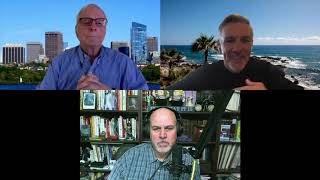
Phil Holberton, a Vistage chair in Boston, explains how peer groups became essential for CEOs during COVID. The pandemic forced meetings online, creating shorter sessions and "war rooms" where leaders like a restaurateur laying off staff or a manufacturing CEO navigating OSHA could get real feedback on tough decisions.
Chapters
Welcome to the What Anyone Can Do podcast with Leo Bottari and me, Randy Cantrell. This show picks up where our previous show, You're the Peer, left off, highlighting the simple truth that who you surround yourself with matters, and that if we enlist the support of others, give back to those who give to us, and pay it forward for the next generation, we can do anything. Author and keynote speaker Leo Bottari and I talk with a diverse group of thought leaders who will share stories, and insights that will help you succeed in business and in life.
How?
By doing the things anyone can do, but most of us never will.
Welcome back to another episode of What Anyone Can Do, the podcast.
My name is Randy Cantrell.
I'm coming to you from Dallas-Fort Worth, Texas. Leo Bottari, with the ocean back behind him, he is in Southern Southern California. leobottari.com is the website, L-E-O-B-O-T-T-A-R-I. We're really excited to have a guest on today. We've been kind of chatting in the back channels with this gentleman who is a Vistage chair in Boston, and I'll turn it over to Leo and let him make the introduction.
Yeah, I just want to let you know that I am in Southern California. However, the background is in Cabo Esperanza. It's where I would be if I could travel, I think. But anyway, just wanted to, you know, we're really lucky to have Phil on the show today. And, you know, as you know, in recent weeks we've been talking a lot about how how important it is for business leaders, especially during these critical times, to really lean into their groups because of how important it is for them that it's not some kind of extracurricular activity. In fact, it is central to what they need to be doing, right? And instead of having to go it alone, I can have 10, 12, 14 other people helping me. And I think that's really the key in how we can help one another. And I think also How Adversity Can Strengthen Relationships. So Phil, I'd love to maybe get started by having you tell us a little bit about yourself and how long you've been sharing and kind of just paint a picture for us on some of the groups. And then of course, let's get into some of what you think are some of the unique challenges that we're having here with COVID-19, especially when you compare it to the 2008 financial crisis and all of what we went through there, yes, we were dealing with some dire situations, but at least people could convene and get together. Here, we're challenged on a different level. So I'd love for you to just share some of your background and some of your thoughts and get us started.
Well, thank you, Leo and Randy. I'm absolutely— thrilled to be chair in 2013, and I've been growing as a chair ever since. And this COVID-19 virus or epidemic, pandemic, has influenced my chair practice beyond my imagination. And it's just unbelievable what it's done for our groups in terms of them getting closer together. And I look forward to talking about it. I'll share with you what I can.
Well, let me just say this. I presented to a group in Denver recently, and it really occurred to me as I'm, you know, kind of engaging with the audience that there were varying levels levels of pain, if you will, in that room. You know, some, you know, were really feeling the weight of just keeping the doors open, you know, metaphorically speaking, if you will, and others were at least getting by and getting through and all of that. So kind of tell us what you're seeing in terms of what, you know, these CEOs and business owners are going through right now in terms of maybe, you know, Obviously, from a confidentiality standpoint, you're not going to name names and talk about things, but I think, generally speaking, you can give us and paint a picture of some of the circumstances that people are facing and how people are helping one another through that.
Well, I had one CEO who was a restaurateur, and he immediately learned that he wasn't going to be able to build a takeout food business. He just doesn't have the kitchen for it, and it wasn't very— so he made a decision that we're going to lay everybody off off. He had 4 restaurants and we'll hopefully renegotiate our lease and defer any debt payments that we have and everybody's going to go on unemployment. So that's the worst-case basis where somebody just had to go out of business. I've got other CEOs that are really looking at the business that, well, first I'd say Every person to a T is like shock and awe, you know what I mean? Holy mackerel, what do I got now on my hands? And, you know, they were like a deer in the headlights initially. And of course we had to go to a virtual meeting, so everything was being done via Zoom, just like we are today. I would say that some members are dealing with it better than others. And what I mean by that is some are still working on the mechanics of trying to figure out what is going to happen to their business. And hope springs eternal. So some CEOs will say, well, I don't think our demand is going to melt away. We have good back— now, and I'm not worried. And an attitude like that, and then as time has moved on, they realized that, holy mackerel, this is the right mindset. The mindset that you've got to really look at your business, you've got to have a plan A, B, C, D, E, and F, and you sort of plan for F, and you hope for the best, and hopefully you come out the other end. The last couple weeks, I'd say most of the members who were qualified, trying to take advantage of the financial, you know, PPP and the various financial packets that the government was offering, so they were scrambling to file loans and SBA documents and so forth and so on. They didn't have a lot of time to sort of think about the future. Now I see, now that those loans have either been funded or not funded, they're starting to take a look at what's life gonna be like after this occurrence. And they're spending a lot of time, some of them have developed sort of what I call war rooms. So, in the first part, they developed a war room that's gonna, how the hell do we get through COVID-19? And then that deals with the tactical and everyday issues. Do I have to furlough people? If so, am I gonna fire people? I mean, it gives them a chance to look at their labor force. There's a lot of tactical stuff that can go on. And now they're sort of saying, we have a war room that's gonna look at the future. I see some of my CEOs were talking as late as yesterday that maybe this gives us a chance to attract new talent to our team because there's gonna be plenty of people around looking for jobs. So maybe this is a chance for us to strengthen our, our leadership team. I've had other CEOs, well, maybe here's an opportunity to some of the firms that we might have an interest that might be able to have some tuck-in mergers. So thinking about how would you go about explore that and that type of thing.
That's, that's really interesting. So a couple things come out of that for me too. One of them is It's always been my experience with groups, you talked about options A, B, C, D, E, and F. And oftentimes when we are left to our own devices, we might come up with option A, B, maybe C, but it's usually others can help us find those additional options that start moving down the alphabet a little more. How have you seen that in terms of members just helping one another at least identify a broader range of options versus what they may have thought about on their own?
Well, I think the members, when they, when they hear somebody saying, well, I think our, you know, our business is going to turn around and come right back, I think through their questioning and challenging, they're, they're saying, are you sure? Don't you think you ought to have a couple more options? And then they describe their own experience, and I have like 4 options. And it's not so much, I mean, everybody goes in this with a set of emotions, you know what I mean? And they want the outcome to be not very traumatic. But as they go down the path, they realize that maybe it is more traumatic than they really thought it was going to be. And through this conversation, I think everybody's gotten to a pretty good spot in terms of where they should get to. I'll give you an example of how difficult it is and where the peer group actually helped. The CEO that is a new member in my group discussed that he has a manufacturing— he's in an essential business, and He has a manufacturing plant and he— the manufacturing— somebody in the manufacturing plant tested for COVID-19 and then a couple other people tested for COVID-19. And, you know, he talked with his lawyer and what do I do and this, and he says, well, my— I gotta file an OSHA report. 'cause I have a disease that was caught on company time, basically. And through this peer group, we all challenged them and say, well, I don't think that's what OSHA is really intended to do. And why do you wanna take that route when maybe you just, you know, treat, have the people go home, shelter in place, and close down your manufacturing for a week or so, sanitize it, you know, and get it all spruced up and, and, and get it ready to go forward. But he had this nagging, you know, because he had a safety officer in his company saying, well, that's the law. We have to file an OSHA report. Somehow, somebody, you know, through him talking to lawyers and our network and talking to some risk people, he got the courage to call OSHA and he said, I've got this situation with respect to people that think they might have caught this disease in our manufacturing, but we don't know. They could have been out in the supermarket or so, they could have been at home and got it from somebody else. So it's not, it's not ironclad sure that They got it at our manufacturing facility. So one thing led to another. He called OSHA and explained the situation to them. And OSHA said, we only want people to file OSHA claims for COVID-19 as if you're working in a medical facility. We don't want any businesses to do it. So he solved this problem, but he wouldn't have solved it on his own. I can tell you that. The peer group really helped them think it through and what the intent of OSHA was and the whole nine yards and so forth.
Yeah, that's really interesting. But, you know, it was also, I think it appeared obviously top of mind with him and with members to do what had to be done, which was close the plant, get it sanitized, act on the interests of the health of the employees and people there, obviously, which was, You know, huge. Um, Randy, and any specific questions for Phil as he's kind of going through, you know, this time with his members?
For our audience's sake, and, and many of our audience is familiar with Vistage and the way it works, but for those that may not be, your own, your own business as a Vistage chair, I mean, this has clearly had an impact on that and the way that you're even having to do business So for our audience, just kind of give them the context of what Vistage membership in your group looked like before and now what it looks like.
And what it might look like too. Exactly. Yeah. So typically the Vistage model is, uh, particularly a CEO group, we meet once a month in person and 8 months out of the year, we'll probably bring in an expert speaker, something that they may be struggling with in terms of their own professional development or a business issue. One of the big topics now is cybersecurity, for example. You know, how do we deal with cybersecurity? I, as a chair, would meet with them one-to-one each month. We would talk about their own development plan, what they're working on, and I would help them sort of set their own internal goals for themselves as human beings. And if they had an issue that I felt the group could really help them, I would invite them to come to the group and share the details of that issue, and the group could opine in and give them their suggestions. What typically happens is the question they ask themselves is not the real question. There's something— there's another question. So our model goes through a technique or a way to get to the real question that this particular CEO is struggling with. Now, what's happening now is we saw the, we had to go virtual, so their ability and attention span was not 8 hours on a Zoom call for sure, you know what I mean. So, we've cut back the number of hours, and then I asked them, I said, would there be any value if we met, you know, every week or every other week just to sort of you know, help you through this process. And my CEO group said, let's meet twice a week. And we started at 8 o'clock in the morning or 9 o'clock, I forget. And, and then some of the members couldn't show up at that hour because they were already into their day. I said, why don't we change it to 4:15 and we'll have a water cooler or we'll have a cocktail party break. And so for the last 3 or 4 weeks I've been running these twice-a-week meetings in the afternoon. And they come on, they talk. I might have an idea for them to talk about, but they talk about what they want to talk. I've had members say to me, I didn't know Justin was that smart, and I didn't know he was that accomplished. And they are learning more about each other, and they're becoming more emotionally connected that it defies my belief. We as Vistage chairs like to think we have noble work.
You know what I mean?
We're helping men and women grow as human beings and be better business leaders and people and contributors to their community. But this is double dose of noble work because we're really helping them get through a crisis. And it's really quite empowering when they come back and say, "Boy, oh boy, I just like to come on and be with these guys and just talk." And so I run an hour meeting and they'll sometimes go an hour and a half and they just can't, you know, they can't decide to get off the meeting. So now looking forward, the days we go back to in-person meetings, which I'm sure will happen because members will want that, I can see a role where in the middle of the month I have a virtual meeting where they come in and they sort of talk, a mid-month meeting, because I don't want to lose that closeness. And then as I bring in new members, the way to get close is when you're working together. And my challenge as a Vistage chair is how do I keep this group so close and they don't go back to the old normal, they go to a new normal. And really, uh, and really work doubly hard for each other. So that's my challenge.
You know, it's, it's really interesting because on one hand I totally see, and what has been the Vistage value proposition for a long time, is taking that day and just removing yourself from that office and, and being able to reflect and really think about and kind of work on your business for the day as being really valuable. And yet I, I think there's also an aspect of this, as you're finding out, where that frequent contact and that ability to help one another with situations that are happening within that month, and doing so in a bit of a more structured way, and obviously developing the closeness. We talked a bit about how, you know, adversity definitely can strengthen relationships. But one of the things that I addressed in the CEO World article that I'd love for you to address now, because before we started the show, you said that you just actually signed a brand new member. And I think what's really important about that is here's someone that wasn't part of a group that realized that they could benefit from it. Conversely, we have people who are, whether it's Vistage groups or groups all over the world, who may feel, oh no, I can neither spend the time nor make the financial investment in my group right now because I got to attend to all these things. They're thinking about their group like it's some extracurricular activity as opposed to central to the challenge they have. So I think for whether it's for current members or for people out there who are feeling very alone going through this crisis, I would love for you to kind of address directly how important it is for members to lean into their group, especially during times like this.
Doubly so. And I think my comment to a new member would be, you can't afford not to do this. Because if you go alone, it may cost you your whole company, or you may not be able to take advantage if something comes your way. And in particular, this particular CEO that came in, I could see his company sort of unraveling, just, you know, the way I was watching him sort of grapple with the issues. So that was an easy example where this is really gonna be helpful. To me, I expect in the next couple of weeks, I'm gonna have a conversation with my members about what's the return on investment of being in a Vistage group for the last 6 weeks. And I'm gonna guess that it's gonna be quite favorable because these guys or women have probably saved some money or they made a right decision that's gonna help them save the company just anything. And look, we're all human beings and we all have emotions tied up in this event. And our job to be, be there for each other is to help them through emotions. So if they come up and they have a bad day, we want to be there to sort of cheer them on and help them set the mindset. Newer, younger CEOs sort of Oh my God, I've never been through anything like this. Some of us older people have been through crisis like this in the financial 2008 and '09. And now we have— this is much worse than that ever was, probably more like 9/11, you know, sort of the whole world coming to an end, except the unemployment. Well, there's plenty of unemployment because businesses stopped you know, sort of doing some business. One of the surprises to me has been several CEOs that I didn't really fully appreciate them, they were more tactical, have really risen to the occasion. I mean, this is, this is not a practice laboratory. This is the real game. This is like being thrown into the game and you're taking your first pass without a practice. And this This is where talent shines. And I had a fellow in my key group who, or a fellow in my CEO group, wanted to put one of his assistant general managers in my key group. And after this happened, he learned that that guy, he didn't have the motivation to, you know, and instead of him being tagged as a general, potential replacement for him is going to end up being terminated just because, you know, he couldn't exhibit his leadership at that point in time. So everybody reacts differently, so it's really kind of interesting to see who steps up to the plate and who really sort of pushes it aside and then who sort of can't, you know, can't handle it.
You know, you mentioned this notion of practice because I think about groups as practice for real-world stuff, right? I mean, we see sports teams all the time. We wouldn't imagine, you know, in your case the Bruins or the Red Sox or something just showing up on the field and never had to practice, right? They just show up and play a game. Yet in business, we kind of expect that, you know, all the time. And the idea of a group where you can actually really come together with other people who share common challenges and actually have a practice field, you know, to work on a little bit, to hone your skills and to get better and to help each other get better seems to be the kind of thing that, you know, again, is so helpful in dealing with what happens when, you know, you've got real-world stuff happening.
I see a lot of our CEOs here, you know, they'll prepare a host presentation and they'll get up and wing it. And I've started, I've started giving them feedback forms so we can give them some feedback. And what I'm seeing as best practices around this is the ability to communicate with transparency, being able to communicate often with your constituents, whether it's your employees, your customers, your vendors, advisory board, shareholders, everybody. And it takes a message that is not written clinically or cognitively, but it has some inspiration to it. It says we're going to face this together, but be transparent. I mean, never, never say everything's going to be good and then next week lay people off. I mean, because that, that wouldn't go very well. So you need to, you need to be out ahead of the game, and, and many of our CEOs don't have a lot of experience that sort of these communications, they say, well, I communicated that 2 months ago, and as far as they're concerned, the job's done. Well, you know, it's not quite that easy. And so we, we talk about that. And, you know, I, in fact, at one point in time, I, I helped edit a CEO's communications to his stakeholders. And he said he used part of it. So, that was, that was kind of cool to help him, you know, be more inspiring about it.
Yeah, I think they can help each other a lot in that regard. You know, one of the things I talked about specifically in the, in the article, as you know, near the end, was the importance of not only being transparent, but also there's, there's a frequency about it. There is a making sure also that employees feel that you care about them as human beings first and foremost. Recognizing and empathizing with the sacrifices everyone's making, the creativity, quite frankly, that people are exhibiting about how they can deliver value from home and how they can work together really effectively. You know, what do you think too, in terms of some of the people that are working with you in groups, what are they seeing in terms of practices that are that have been forced upon them effectively right now, but then they might be thinking, huh, this may be something that we can explore in terms of the way we work, or at least in part in the future.
I had that, we had that discussion yesterday and one of my CEOs says, well, that solves my office space problem. There's gonna be more distributive working now and it might be actually in, I mean, if you get the technology right and you get, look how much it might save on tires and commutes and all that kind of stuff. And I wanna go back, if I may, go back to your conversation about communications. So early on in the game, we talked about what kind of communications do you wanna have with your customers or your employees? And they said, well, I don't know, tell them that we're, you know, this is what we're doing with COVID and when's our next order coming in and, you know, all that. I said, why don't you just call your customer and say, how you doing? I'm thinking about you. Be there for them emotionally. Don't talk business, just be there for them. And it's amazing how this inspired some of these CEOs to say, wow, I got a lot of value out of that, and I hope my customers got a lot of value out of that. I have one CEO who spends— I don't know if he's spending every day now, but he's opening up the Zoom call to most of his employees and just being there. How you doing? What's going on? Has nothing to do with business, just shows that he's concerned for them as a human being. I think if we as leaders share our propensity to care for others as a human being, we're going to move to a much better model of servant leadership rather than autocratic leadership. What are you going to do for me next and now? So, well, this is good practice.
That's right. And you know what's been so nice and what Randy and I were kind of hoping for here in many respects, and you know, you've certainly delivered on it and And that is that not everyone is going to join a group. We know that. But if this podcast in some respects can provide— and there have already been just a few nuggets of gold there, I think, for CEOs or business owners out there who are struggling, who can capture some content here that I hope can be helpful to them. It's like part of being part of a group for 30 or 40 minutes here just to get a little outside perspective on what's going on out there, the fact that people are not alone. You're not alone as a listener out there going through this. You and I talked offline too, and I think it's worth addressing that we, and I've certainly done it, I catch myself saying, "Oh, I wish I didn't have to cancel that vacation," or, "I wish this didn't happen or that or whatever," and yet You know, we talked about the fact that we now, in my case, have adult children at the house. We're having dinner every night together over the course of over a month now, situation that never would have happened had this, you know, occurred. We're also fortunate that no one in our household has directly contracted COVID-19 or, you know, these kinds of things that I'd like to think it's helped shift some priorities. Randy, you've talked about this too in terms of how it just gets us to think and appreciate. And I don't know how long it'll last, but I hope that as we come out the other side of this, we have some memory around the things that we really should be caring about and thinking about most.
Well, the fact that this is so universal and it's disrupted everybody and we're all in the same boat, I think there's some— I've noticed, and I'm sure you have, Phil, with your groups, I mean, this is not This is the elephant in the room for everybody in the room. So I think that, I don't know, that, that kind of being in the, being in the trenches together. I'm sure you're seeing that, Phil. I mean, and 6 weeks ago, I would be curious if you were to describe in just, just a brief description the relationships inside the group. Not to mention the relationship that people had with the group, but their, their individual relationships amongst themselves 6 weeks ago versus it today, I would suspect it's very different in a, in a positive way.
You probably, uh, I would say, um, 6 weeks ago the individual relationships among the members was non-existent. In the sense that they come together every month, but they're sort of reticent to sort of reach out. And, but this brought them all a lot closer. So I think this is a catalyst that's going to change the— and this is chair's every struggle is getting people to talk to each other offline in between meetings. You know what I mean? Because I'm so busy, I got to get the work done. This is gonna let everybody know that it's really to their best interest to do this. And so we have some email threads going to the whole group, and I just say, pass this along to the other— now that they know each other, let's just answer each other's emails. So don't wait till the next meeting to sort of come aboard. It's kind of fun to watch, you know, and it's very fun to be part of. It's very fun to be part of.
Phil, if there are business people, CEOs in the Boston area, you know, we, we want to hawk the value that you provide to our audience. So if you were anywhere in the Boston area and what we've talked about today resonates with you, tell folks how they can contact you, Phil, if they want to know more about your groups.
Well, you can call me at 781-608-1966, and you can also email me at p.holberton, H-O-L-B-E-R-T-O-N, at holberton.com, and I'll be happy to I'll be happy just to have a conversation and just see how you're doing and help you through this.
And, um, and we'll put all that information in our show notes. So you folks that are listening, if you're listening in your car, people usually listen in the car, in the gym, but that's not happening right now too much.
That's right.
We'll make sure that all that, all that's listed, listed in the show.
I miss my personal trainer very much.
Yeah, there's another, there's another group that's been horribly impacted by that.
Yeah, right.
Leo?
Yeah, you know, it's changed our lives. You know, everyone of course jokes about the fact that they'll be ready to join another group after this is over. It's either going to be AA or Weight Watchers or somebody sitting at home. But no, I can't tell you, Phil, how much it's meant to us and how much I think it means to listeners out there to get a sense of not only what a lot of your members are going through and how they're helping one another, but how we should be, as best we can, thinking about the people in our lives that we can support and they can support us, first on that emotional level, like you talked about, but then also if you own a business out there and you're feeling really alone right now. Don't feel like, you know, this is not, you know, a bad time to join a group, but maybe the best time to become part of a group. As you know, obviously your new member kind of came to his own conclusion around that recently. And, you know, I just wish you and all your members, you know, the best going forward and look forward at some point you know, when we're more completely on the other side of this to see how everything has transpired for your, your group as a group and also your members' businesses. So thanks so much for that.
And, and, and perhaps how they have stronger marriages with their family now because they're eating dinner every night and they can't go anywhere.
So there you go.
I think that's going to be a real nice byproduct of this whole thing. Thank you very much for letting me come on your show. I really enjoyed it.
Well, thank you. And Randy, you want to close this up?
Yeah, we appreciate the audience. We hope that you're staying safe. For the show notes to today's episode and for all the other episodes, just go to the website leobattari.com. That's L-E-O-B-O-T-T-A-R-Y dot com. Peerinnovation.co. Will get you to the same place. Uh, Leo has got some history with Vistage and is, um, in my biased opinion, still one of the world's experts in peer advantage. And so we would encourage you to go check out Leo's work at the website. He's working on a new book, hopefully will be out in a matter of mere months. He has, uh, he's leveraged this sequestering to be able to get some writing done, even though he's had a crowded house. So we appreciate the audience. We hope that you'll share the podcast with others. We hope that you'll subscribe. LeoBattari.com. Thanks everybody for listening.
To learn more about our show and what we do, to submit questions to us, and to subscribe to What Anyone Can Do Podcast, please visit our website, whatanyonecandodo.com. What Anyone Can Do Podcast is hosted by Leo Battari and me, Randy Cantrell. Music provided by Kevin MacLeod, is Vibe Ace, licensed under Creative Commons by Attribution 3.0 license. Thanks for watching or listening. We hope you'll share the podcast.










