May Busch On Career Mastery
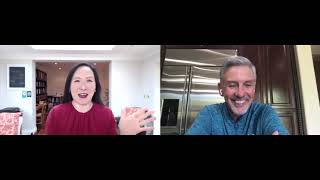
Executive coach May Busch, former Morgan Stanley COO, left a 24-year banking career to teach leadership. She uses a three-part framework—Can-Do, Will-Do, Fit—to help candidates find roles where their strengths, passions, and what the organization values overlap.
Chapters
Welcome to Peer Innovation, the podcast with Leo Battari and me, Randy Cantrell. Building on our previous shows, The Year of the Peer and What Anyone Can Do, we turn our attention to helping business leaders build high-performing teams. We'll talk with a diverse group of thought leaders who will share stories and insights that will help you and your teams achieve new heights. If you believe there is strength in numbers and that meeting the challenges of the future can only be achieved if we do it together, then join us for the conversation. Today's guest is May is an executive coach, speaker, advisor, and author of Accelerate: 9 Capabilities to Achieve Success at Any Career Stage. May spent her career in corporate environments and was the COO of Morgan Stanley Europe before pursuing leadership coaching and development. May's mission is helping people succeed in their career and life to be better, do more, and make the difference they are meant to make in the world. We welcome May Bush to the PeerNovation Podcast.
May Bush, welcome to the show. So very happy to have you here and, uh, real excited because I can't think of, um, you know, a more timely topic, quite frankly, than be talking about, you know, what's happening, uh, in the employment market right now and, and what it means for people's careers and, and all of that. But, um, you know, beyond the formal introduction that, uh, Randy just read, um, tell us a little bit about really how you get into this work with, uh, and, um, what drives your passion for it. And tell us a little bit about that.
Yeah, thanks for asking, Leon. It's so exciting to be talking with you. Uh, you know, we always had the best conversations, so I expect more of the same, right?
Right.
This is such an interesting question because, you know, I— you know that I spent 24 years in a completely different career than I'm in now. And often people—
Me too, actually.
Yeah. Okay. Well, high five on that. We have more in common than I thought. So I, I am motivated by pure challenge, or at least I used to be way back in the day. So I got into that investment banking career really because it was the most challenging, difficult thing. My whole family's full of doctors and academics and public servants. So I was determined to do something all on my own, which is gonna be a theme we'll come back to later because it is a bad idea. Nobody does anything all on their own. We all need people around us, and that's why peer innovation is so cool. Anyway, the thing is though, during that career, I, there were parts of it that I really thrived on and enjoyed. But after 24 years, what I found was that I kept thinking for the last 6 years of my 24-year career, Every couple of years I think, gee, you know, this isn't really what I was meant to do. And I'm really meant to do other things. I don't really get that jazzed about finance or capital markets. It's just what I do for a living. And finally, I realized in 2008, right before things got really, really bad, I said, you know what? I don't need to go through another downturn. And that's when I decided to I was going to take the leap and do something on my own. And since that time, I've come to realize that I am now doing exactly what I've always meant to do. And that all that 24 years was completely necessary for me to be able to do what I do now, which is to help people be better, do more, and make the difference they're meant to make in the world. And I happen to focus on helping people succeed in their careers and become better leaders. And I take that 24 years. It's a lifetime's worth of experience learned mostly the hard way that I've been able to pull together in a way that can help others who are going through their careers, primarily in large organizations, large and medium-sized organizations.
It's funny, isn't it, when you look back and you kind of realize that you were setting the table for what you're doing right now without ever realizing it.
Yes. And some of us take longer to set the table than others.
Yeah. Yeah. No, I hear that. But, you know, I obviously want to get into a lot of, you know, the challenges people are dealing with, with the current situation and what we're dealing with, with the pandemic, obviously. But there are some other things that I wanted to get to because right now I'm doing so much work with CEO peer groups and cross- functional work teams. And at the heart of the 5 factors that drive peer innovation is having the right people. So there's all this conversation on one hand that I'm having with CEOs about how do you find those right people? How do you know who's a good fit for your organization? But conversely, we've got people participating in job interviews who also have to make the decision about how do I know that's the right company for me? How do I know that's the right organization and the right team? And I think when oftentimes when we're on that side of the table and we're so happy that we got an interview and that we, you know, and then we get a job and we're trying to set, we almost think of it like we're trying to win, you know, versus kind of really kind of find out whether this is a good fit. So I would love to get some thoughts from you on that side of it that, you know, we're applying for jobs. What, what should be the things we're looking for? What questions should we ask? What are the kinds of things that can give us a good indication about whether this organization is really the right fit for us?
Yeah, well, as you're talking about finding the right people, whether you're on the— being the one looking for the right people or being the person that's looking for the right role, it just made me think back to way back, the most fundamental foundational approach that we used to take back when I was working at Morgan Stanley. This is in the early days. We had this form that we had to fill out when we were interviewing people, and it only had 3 sections. And these days it's much more complex than that, but there's something really nice about the simplicity of 3 sections. Each had a few questions, but it was can do, will do, and fit. And I still think it all comes down to that. Can the person do the job, or can I do the job that I'm being interviewed for. Will I do that? Does this really light me up? Am I motivated to do this? Do I have any interest in this? Or we need to really go beyond interest, right? And then fit, which is most important in my view. And fit is really about the alignment or lack of alignment between me as the candidate and the company or organization as a potential employer. And if, if you get the fit wrong, then the other two, your life is miserable and you're going to have to work really, really hard just to stay at some moderately adequate level. So I think that's really what you're getting at as well on both sides. It's that that fit piece that's so important.
And I'd love to drill into that fit part in terms of, of how we kind of— how do we determine that? I mean, you know, when you think about, um, you know, I certainly have had— and I bet this is an experience that many of us shared— we've ever been in a position of hiring people, right? Where I had a great resume, the interview went beautifully, the interview with the team, everything was great, hire this person, 3 months into it is flat out not working. And it was always fascinating to me that, and it wasn't that the person was bad, you know, that person eventually they would leave and they'd go somewhere else and they'd do great, you know, and, and, you know, so it really became about fit. It was, they were, they were really good. They just didn't quite fit here. And, you know, I've often thought about even the value and we talk about this a little bit in terms of just imagine what it'd be like to just sit down with your team and ask them, What do you think is the difference between the person who survives and thrives in this organization and one who just doesn't quite have the fit? What does that look like? And, um, you know, but again, I think about it from the employee perspective. What are the kind of things that can help me determine whether the organization is a good fit for me?
So the question you just posed is a question that we should all be asking the people that we meet when we're interviewing, right? What kind of person does really well here? What is the— yeah, what is it? You just describe the people who are doing really well here, not just in terms of the success, but also the fulfillment. The people that are at the intersection. Okay, so here's something that I think about, which is the intersection of 3 circles in a Venn diagram. So one circle is the things that I'm great at doing. Another circle is the things that I love to do, right? And so you look for the intersection of those two because you might be great at— I don't know, I'm actually great at organizing things, but that brings me very little joy. I'm also great at singing in the shower, but that doesn't bring anybody else any joy. So that's something. That I love to do, but I'm not great at. And so you want to be operating in that intersection. And then importantly, when you're interviewing for a role or job, then you have to add the third bit, which is what's valued by the organization. So the intersection of those three is your sweet spot. So you're always trying to figure out what's in that sweet spot. And among the things that are valued and that— and think about what you value as well. Okay, so you can do this intersection for yourself and do the same thing for you as yourself as a candidate, and then do it for yourself with the organization as your candidate for getting you as a contributor, right? Because, and then so you want to start asking questions about what is valued here? What is the culture like here? What happens if people disagree? Are they— can they say that in a meeting? How is creativity valued? And then also, so that's just a set of questions you can ask. But then you want to do also is get a feeling for the vibe when you are— well, if you are able to go physically visit. That's really helpful because you can kind of see if people kind of hunched down at their desk looking gray and miserable, or are they looking like they're enjoying what they do? Is there— or maybe people are flying paper airplanes all over the place, but you like order. That would be a little chaotic for you. So you just start to get a feel for it. I remember back when I was getting my first job out of business school, I interviewed with two different investment banks. And it became pretty clear to me that everybody I met at the bank that I didn't end up saying yes to, they were very similar to each other. And it was very clear how you progress. So I did ask questions like, well, what— how do people succeed here? And what— and it became clear that you just stayed in your silo and just went straight up. And I like variety, so I ended up going where I did because people talked about how they rotated across different groups. Everybody I met was a little bit different. It was a little eclectic, and that's how I am. I like to have a lot of difference and diversity. So you just start to formulate. You want to be very observant, and that means letting go of the phenomenon you're talking about, Leo, that Oh, I just want a job, any job. I hope somebody will hire me. You know, that kind of mindset just doesn't lend itself to your even being able to notice and use your own critical thinking and observational powers to assess this organization.
And possibly— Oh, yeah. And just in saying possibly contributes to making you a less attractive candidate on the at the same time, right?
Absolutely. Yes. And, you know, we all think that humans are very much like— they say horses can sense things, and humans are a lot like that. We can sense when somebody's trying too hard or not really being themselves. And that's what happens when that situation you described, the person does really well in the interviews, nails the interviews well, and then comes in and it doesn't work out. That's because there's some people who are really good at interviewing and other people who are really a good fit for your organization or where the organization is a good fit for you. So how do you know if it's the right organization? I think I would focus on whether or not your values align with the values of the organization. That is at the foundation the most important thing because if, that's not a match, then you're, you're not going to be happy being there and they're not going to be happy for you to be there either. And so a lot of it, I think, starts with doing some pre-reflection, getting really in touch with who are, who am I really, what truly motivates me, and what kind of environment Will I flourish in the best? And there's another— you talked about what's happening today. And the term that I think of that's often sought but often lacking is psychological safety. Because if we're really going to find a place where we can plant ourselves in that soil and flourish, then we have to feel psychologically safe to be our whole selves. In the office or in the context of that work. And so you kind of have to go hunting for the right kind of people and the right kind of organization that share your values or whose values you share and has a culture where you can thrive. And not just the stated culture, you know, how a company can write their mission statement and their value statement. Well, it's more what is the lived experience and how can you ask questions of the people who are living the experience to determine whether that's—
So, there's a few things that I'd love to unpack that's really kind of fun. First of all, I think all the questions that you've just come up with are— I hope everyone is writing them down because they're amazing questions to ask, you know, in an interview. There's no question knowing yourself, you know, becomes really crucial. But, you know, It, um, it kind of amazes me on the, um, on the question front because I always think— so I'm involved with a course at Rutgers that I teach. It's a, it's a course there, um, and it's really designed for, in many respects, kind of a personal branding course. And I talked a little bit about the fact that I said, if you leave the interview, I said, do you want to be known as the person who gave the best answers or asked the best questions? And so for me, it's the latter. And I think for— and I think for a lot of folks, they feel that as well because there's nothing worse in my mind. You've got someone that gives great answers and they say— and then the interviewer says, do you have any questions for us? And it's like, no, no, I'm good. You know, you covered it and all that. I mean, you think about, could there any be any worse way to end a conversation than that? And I think you offered some really great questions that can be asked, and quite frankly, not one of those questions required you to know anything about the organization at all. No big research, nothing. Just asking questions that tap into your own understanding of yourself and reflection and what's important to you. What's interesting too, I think, is when you ask someone, "What does it take to be successful at this organization?" What you're really asking the interviewer to do is talk about themselves, which is kind of cool. Because that's a nice place for that interviewer to say, well, here's what it takes to be successful here, you know, and they get to wax poetic about all of the attributes it takes to, uh, be able to thrive in that organization. But, um, yeah, I just think, um, yeah, so you would tend to agree also that that questions piece is really crucial?
Oh, absolutely. And, uh, and the reason is I think a lot of interviewers are on to the fact now, enough has been written about the fact that some people just practice their interviewing, being interviewed rather, and they can just come up with these answers. And so as an interviewer, I was always trying to find the question that would cut through the preparation and let me have a glimpse of the real person. And When somebody did not ask me any questions, that said to me that this person either doesn't have the confidence that they are going to find a great place to work, even if it's not in the place where I'm hiring for, or they lack curiosity, which is just a real killer in terms of being a strong candidate in my book, because lacking curiosity means that person is— that I'm probably going to have to tell them what to do very specifically, and they're not going to necessarily be a self-starter. Maybe they don't have a lot of creativity. They'll be afraid to innovate. You know, those are just— I don't want to have to sit in and manage them. We just got a little puppy and we got to watch that puppy all the time. Train her, right? But I don't want to have to do that with somebody who I'm hoping to be able to make great contributions to our organization.
So, you know, another topic I'd really love to get to that I think is obviously related when we talk about fit is You know, when we hire someone, we don't just look for the individual contributions they can make. We, and we talk about fit with the organization, but we're also talking about fit in terms of day-to-day. How is this person as a team player, you know, and how are they wired that way? And so I'd love to get a sense, how as a candidate, um, can we demonstrate our orientation or our ability to be a contributing member of a team as someone who not only is going to offer value, you know, in terms of my individual contribution, but by the way I model, the way I cooperate with others, the way I collaborate, do all these things that I can, you know, make others around me better as well.
Yeah, well, first of all, in the In the good old days or bad old days, it was actually possible to sit in a little cubicle and crunch out some stuff and have it and make your career as an expert. I remember having these product specialists who I would never ever want to put them in front of a client, but boy, were they smart. And I would, you know, get the answer and patch it up and tell the client myself. So those days are pretty much over. The world is so connected now. It's not so much the exact thing, you know, it's, it's the whole community who you're connected with and who you can bring in. So it's really the era of being able to connect and bring the entire organization or all the resources to bear for whoever you're serving, whether it's an internal client, external one. So yes, I think that showing that you're able to be that connected person, the person who can motivate others, the kind of person who— you talked about team player. I even think about it as something team player plus this ability to really bring out the best in all the other parts of the organization as well. And it's about being able to lead without authority. Because organizations are getting flatter and flatter, it's taking more and more cooperation and collaboration across different units, different silos. Hopefully we don't have too many silos, but of course we do because we're human. We tend to like our little thing. but it's really about being able to cut across. So how do you demonstrate that in an interview? I think it's one of those things that comes across in the way that you speak about what you've done, what you've learned from the things that you've done, and also the way you describe the experiences you've had. And it becomes pretty clear. So again, it's, so much of it resides within you as a person and what you're really like. And so if you're really not a team player, you're not going to sound like a team player. And if you are, it's going to be hard to hide that. So I don't know that there are specific words to use, but I almost don't want to share specific words and terms because then it's just going into that, oh, he or she really is just saying the right words but may end up not being the right person. So yeah.
But you, you triggered for me actually at least some words that I'll throw back at you and see what you think. So when, when I think about that, like someone might ask you to describe, tell me about a project that you worked on that was really successful, or tell me about this thing you did or that you did. And I think you can always frame it at the beginning in terms of, well, you know, I was part of a team that did such and such. And then from then on say, and we did all of this. So this idea of us doing it together and not taking singular credit for the fact that I changed the entire organization all by myself, you know, that, that, that there was, um, there's just that orientation of being able to talk about it in that way. Is that—
Yes, that's really what I'm getting at. That's what I'm getting at. And the person who thinks in terms of I will speak that way, and the person who thinks in terms of we will think that way, will speak that way as well. So yes, you are absolutely right. You can phrase it that way. And one of the things that is a bit of a caveat on the we is that there are times when an interviewer needs to know what your particular contribution is. So the art of it, yes, is being able to reflect that team orientation, the we orientation, but also be able to articulate the piece that is your unique ability. And I actually wonder if it's not talking about it in those terms, you know, and what I bring to the team is this particular super strength or unique ability, which is Dan Sullivan's term. He's the head of Strategic Coach. So you can talk about the I within the we, I think, by highlighting your, your, your super strengths, let's say, or the special sauce that you bring to the table, which then allows the team to do X, Y, Z.
Right. I also think I love, you know, Obviously, Leading Without Authority, that's Keith Perazzi's book now, I believe, correct? But it comes down to also, I think, showing that even if I'm not the leader of the team, I can be a leader in the team.
Yes.
You know, and to at least be able to exhibit that when it's time for me to step up for whatever reason, because of my specialty, my role, my, you know, thing, that you can be a leader in the team even if you are not, quote, the leader of it.
Yes, absolutely. And, you know, Keith's book is really amazing, and I would highly recommend it. And one of the other concepts that he has been talking about for some time now is this idea of co-elevation, which is, you know, we get stronger together, we get better together, we raise each other up, and not to see it as a zero-sum kind of me versus them, as in my colleagues or another team. So I think that's—
Yeah, everybody— everyone talks the abundance game really well, but they tend to operate out of this attitude of scarcity, which— or mindset of scarcity, which is— can be tough. And it can be tough especially during difficult times, which is kind of an interesting transition now to the fact that here we are in the most, I mean, incredible of times for people who— where there are fewer jobs available. Competition is incredibly tough. It's very difficult to obviously physically and in person get in front of anybody at this point in time. You've got everyone from people, recent graduates of college, to people who have lost their jobs as a result of, you know, this time we're going through right now. So I guess for folks who were thinking about where they go next for their career and how do they move forward sooner rather than later, What thoughts might we have for them?
Yeah, well, there are a couple of different ways I can answer that, and I'd like to start with the most— maybe the underpinning foundational concept, which is something that I've been working on for a training that I'm recording on thriving in the new normal. Which is how do we thrive in this environment that is hugely uncertain, where there's a lot of fear involved. If we still have a job, will we still have a job? Maybe we've lost a job. And it's just everything is a bit chaotic and there's a lot of complexity. So I like to think of it in terms of setting yourself up for success by regularly working on 3 different aspects. How you work with people, how you work on the business, where the business is really the, the work that you are either doing or want to be doing, and how you work on yourself. And I think it really, that's just something really foundational to, to set yourself up with. And then we can talk about some more tactical things that you can be doing now to to find a job. So in terms of how you work on yourself, that one I think is the most foundational. And it's about being self-aware and being able to self-manage in the moment. And this is really important because in this environment, it's easy to just do things that aren't helpful to our well-being. And that's why I think that especially if you're not not in work right now and wanting to get into work, you really have to be focusing on your self-care and making sure that you're, you're taking that time to take care of yourself, whatever it is that you need, that minimum daily requirement. When we talk about working with other people and how you do that, I think this is where you really want to be thinking about what kind of impact you're making on others relative to your intention. And that again can be very important, especially when you're feeling a little bit under the gun for, uh, because you're looking for work in such a difficult environment. So you want to make sure that your, what you want to convey and how, how you really, uh, your intentions are met are landing in the right way with people. And you can do that by asking, frankly. And then the third piece on how you work on the business is that I think it's not about trying to hone all your technical skills right now. It's really about making sure that you're aware of who the key stakeholders are. And even if you're not working in a role, you still have stakeholders and a network where you're trying— that you can leverage to help help you find something. And so it's really keeping in touch with those folks. So, um, which then comes to what the tactical answer would be, which is if you look at the statistics, it depends on what kind of role you're looking for. So if you're looking for a role where it is exactly in line with all the other things that you've been doing historically in your career, so like if I wanted to go into investment banking or into private equity or some other finance-related role, then headhunters or recruiters, they might be very helpful. But if you're trying to make a shift into something different than what you were doing before, they're really not going to be a great port of call. And instead, you want to really be relying on your network and leveraging that network and doing lots of conversations. And using those connections you have to get new opportunities to talk to people. And at the end of every conversation, these informational interviews, so to speak, a question that I recommend that you ask is you thank the person and say, and who else do you think I should be talking to? Because that's how you get to that next person. And, um, Leo, I don't know if you do talk about this in Pure Innovation, but there's a lot of research that shows that if when you want to find some, a role in a different sphere, then you really need to get to the edge of your network that connects to the edge of somebody else's network that connects to the edge of somebody else's network. And that's how you're going to find that new thing because if that new thing was already known to your close-knit circle of friends and connections, you would have found it already.
Exactly. Yeah, it's a great way to talk about extending our reach and how we go about doing that. And, um, that's, um, that's good stuff. I have to tell you, um, as, as I figured, um, great conversation. And, um, but before we go, of course, one of the things I want to know is I really love you to, um, talk to our listeners about how they can learn more about you, your work, anything that you have coming up that you want to make sure people are aware of. And that would just be great.
Sure, and thank you for that, Leo. So I do a weekly blog and that is at my website, MayBosch.com. And if you go to MayBosch.com/blog, you'll be able to sign up for that. And I also have a membership group called Career Mastery, and that is where I have resources not just from my own expertise, but also from other experts. And the idea is to really help you get your career humming and advancing without having to spend a lot of time. We have resources that in as little as 5 minutes a day can really help you make step changes in your career. And there are topics like, well, for example, the Thriving in the New Normal training is going to be in there shortly. And there's some other, other aspects like the 7 kinds of conversations you need to have with your stakeholders and how to, how to have a, make a bigger exit, how to have executive presence and poise and lots of other, other resources to help you advance in your career. So that is at CareerMastery.com. And both of those would be—
Oh, that's fantastic. I mean, thank you so much. So, um, yes, definitely, um, check out Mae Bush's work. Uh, it's incredible. I'm so lucky to have met you a few years ago. And, um, and it's funny how we've helped introduce each other to other people, and we help each other extend our own networks, which has been really lovely. So I appreciate that.
Absolutely. And me too. So nice to be able to chat with you, Leo.
Well, you too. You have a wonderful day, and, um, we'll see you soon. Thanks.
Thank you for joining us. To subscribe to the podcast and learn more about how you can engage peer innovation for your organization, contact us on the website at peerinnovation.co. Till next week, remember, the power of we begins with you.










