Michael Landers On Being Present
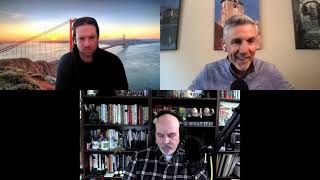
Michael Landers, who grew up across Colombia, Brazil, the Dominican Republic, and Japan, explains his four-power model of presence: Induction, Awareness, Authenticity, and Connection. He argues that brief rituals like breathing exercises and hand-raise ceremonies restore mental space lost in back-to-back virtual meetings.
Chapters
Welcome to Peer Innovation, the podcast with Leo Bottari and me, Randy Cantrell. Building on our previous shows, The Year of the Peer and What Anyone Can Do, we turn our attention to helping business leaders build high-performing teams. We'll talk with a diverse group of thought leaders who will share stories and insights that will help you and your teams achieve new heights. If you believe there is strength in numbers and that meeting the challenges of the future can only be achieved if we do it together, then join us for the conversation. Our guest today is Michael Landers. Michael is the principal of Culture Crossing, a global consulting firm dedicated to finding innovative solutions for groups and individuals working in challenging global contexts. He's most recently co-authored a book, Present Company: Cultivating Cultures of High Performance in Teams and Organizations, with Dr. Timothy Dukes. We welcome Michael to the Peer Innovation Podcast.
Michael Landers, welcome to Peer Innovation. So happy to have you on the show today.
I appreciate being here. Good to see you both.
You know, Michael, it's been fascinating. I would love, first of all, for people to get a sense of you and your background. I mean, I was just blown away looking at your bio and all the countries that you've worked in, in the world, and, and all that you've learned that I think has really contributed to the latest work that we want to talk about today. So, um, So if you could get started and just familiarize our audience with you, that'd be wonderful.
Yeah, definitely. I'm happy to share a little bit about my background and my journey. And speaking of journeys, before we get there, I just wanted to kind of just clue in and say, where are you coming from? Each of you, Randy, Leo, where are you coming from this moment? The moments before us starting this interview, which literally started about 2 minutes ago from when we got on, what's happened? Where are you both coming from?
Well, I'll start. We had a, uh, we had an interview scheduled before you, but we had a no-show. It doesn't happen often and it was probably a completely honest mistake. So I'm not going to throw anybody under the bus. So that, that, uh, I'm geographically, I'm coming from Dallas-Fort Worth, Texas, but that's what happened right about 30 minutes before you or 45 minutes before you.
All right, cool. So from that, like, you know, maybe a little frustration, like certain feelings, just like, oh, we had— we're supposed to do that, didn't happen. That's kind of—
all right, fortunate that it hadn't happened in a very, very long time. So we're like, okay, good, we got that one out of the way. So it's probably going to be a long time before it happens again.
Nice, nice. Okay, yeah, by yourself, Randy?
Yeah, so we shared that experience, of course, but I came out of it exactly the same way. I mean, we'll figure it out. And by the way, what we don't like to do is make assumptions about why that person may or may not have been able to make it, right? It could be something that I just want to make sure everything's okay with him and all that, and we'll just figure it out from there. So I think that's number one. Um, but then as it turned out, um, at a moment in time where I would not have been otherwise free, someone who I've needed to talk to actually called me, um, at the half-hour mark basically, and I had about 20 minutes to be able to catch up and get some things done that I never would have expected. So I'm actually feeling quite good about it.
Nice. That's the one door open or one door closed, one door open kind of philosophy, which I'm with you. Yeah, good. And for myself, you know, going through the whole pandemic thing, I actually— my wife spent the weekend on a film shoot for the first time. And so it was good for her, but also kind of thinking about, okay, having to kind of risk a little bit to do that, but exciting. And then that left me home with my daughter, which was good. But just managing all that stuff was a change in the past that was not a big deal. But now things are starting to open up a little bit where we are and trying to make those decisions and balance that stuff. So that's a little bit from where I'm coming from. And, and what I find and what we find in the work, that too often we don't do that. We just go from meeting to meeting, right? Especially now in pandemic life, no transitions. And we're not checking in really with where people are coming from. And it's not like, hey, how are you doing? Yeah, we get that a lot. That was really important in the first few months. And then it was just like, oh, I don't— someone asked me how I'm doing again. I don't want to answer that. Can we just get to business? Right? Can we just get to it? I don't want to, I don't want to look into that. Nobody mentioned the F word, right? Feelings. I don't want to talk about those. But what I found is that if I learn a little bit and we learn a little bit about where people are coming from, literally in the moments before, it allows us to unload a little bit, transition and listen, and we don't displace all that into our meetings. Into our interactions, right? And so, what you asked me was, where am I coming from, from a personal standpoint, right? And again, really interesting. Happy to share that interesting background that we all have those stories. And if we get curious about them, I find that there's better connections. But to answer your question quite— I'll try to do it as succinctly as possible and then feel free to ask anything else.
Sure.
Which is, I'm originally from Boston, Massachusetts. Okay? So, all you Patriots haters and Celtics haters or lovers, it's all good.
Don't worry about it.
All right, nice. You know it. So when I was— my parents are from Brooklyn. When I was 3 years old, my father got a job in South America, and I grew up in Bogotá, Colombia. We moved to Bogotá, Colombia from the time I was 3 years old to the time I was 15, coming back to Boston every summer. Then we moved again to Rio de Janeiro, Brazil, and then we moved again to Santo Domingo in the Dominican Republic in the Caribbean. So I went to 3 high schools, 4 years, 3 different countries. So interesting. And people would always ask me, Michael, What did your father do? And first I'll say, well, how do you know it wasn't my mother? Right? Kind of catch them in their gender bias, but it was my dad. My mom worked as well, but I tell them my father ran international schools or he worked for the CIA. Don't really know, but I'm going to go with the international school. But that's my background, right? And then after undergrad in the United States, I moved to Japan. I lived in Japan for a couple of years working for a traditional Japanese company and then opened my own consultancy. Helping Japanese doctors who were going to take sabbaticals. Came back to the United States, got a master's in cross-cultural relations, worked in that field for many years, and opened my own business in the early 2000s. And we do a lot of consulting around culture. And initially it was cross cultures, how to work with people from different national cultures. And that evolved into more of kind of the work that you, that you do, Leo and Randy, which is cultivation of cultures. Right? So my expertise and my experience has been always having to adapt and adjust into a new culture and then help other people do that. And that morphed into, okay, well, within those skills, how do we cultivate? How can we be more mindful of cultivating the cultures that work for us, that work for others? And we see that in anything from a team, organization. We also do a lot of work in the culture, the cultivation of cultures of services. What's the culture of customer service in an organization? Culture of sales in addition to the national culture work.
Nice. What I think is interesting is, you know, in reading your last book from 2017 where you talked about the fact that, you know, we think of cultures in different countries and all of that, but when you start looking at what immigration in the United States is going to be, where population growth is going to come from, what that starts to look like, it isn't just about, well, I may never work in another country or do that, but you're going to be working in your own country. You're going to be working with— and I think in some respects, yes, it's— you're going to certainly be working with a greater variety of people from different cultures. And at the same time, you know, you grew up in the Boston area. If you went and put 3 groups of kids together and, you know, one was from Dorchester and the other kids were from Concord and the other kids were from down the Cape, you get 3 different cultures that work there. And you've just got to figure that all out much the same way you would, you know, if they were from different countries in many respects. So as you see this in the workplace and you see people coming at their work from a lot of different perspectives and a lot of different experiences, both that are those recent experiences you talk about and those who hold real under-the-surface basic underlying assumptions that, you know, really drive how they think and how they feel, So tell us about how that has kind of found its way into your team's work.
Yeah, definitely. And I agree with you. I think that the method that we talk about in my book Culture Crossing from 2017, it was really formed from my experiences of helping people and then myself experiencing those, being the different person in these groups and what skills I could use to help adapt better. But to your point, culture is not national, you know, at all in some senses. You know, think about all the different personalities you have. You know, Randy, you mentioned you were in— was it— are you in Texas? Is that right?
Dallas-Fort Worth.
Yeah. So, I mean, the growth of that city, in my experience, I've been there a lot in the last 5, 10 years, but the diversity there just from a homebuilding perspective and people moving, I mean, you must see so many different backgrounds that I'd say 30, 40 years ago, you'd be like, no, we don't see any of that. Everyone's the same. But there's a lot of diversity, I'm guessing now.
Very much so.
Yeah. Yeah. And then what does that, you know, it kind of says like, how do we include everybody? Right? So, Leo, to your point, a lot of the work that we're looking at and doing is around the country right now is around inclusion, right? Diversity and inclusion and being inclusive of people who, a lot of times we say be inclusive of people who don't look like you, but it's so much far beyond that. Because everyone's going to have a little different take on things, right? And in the book, the initial book, what the method was, look at yourself, get some awareness about you, what it is that you believe in, what is it that you value, how do you demonstrate that, what your intentions are, what impact you'd like to have on people. So it starts with self-awareness. It really does. And I think that's, that's kind of the method that's worked. And If you can get people to take a look at themselves a little bit and then recognize, okay, how do I want to show up? How do I want other people to respond to me? You know, where's the flexibility in that? That's a great start. But when we don't do that and we just show up and expect people to be a certain way, that's a challenge because we're going to be disappointed, right? If you're consistently just— if your expectations are consistently not met by others, Right? And that's a frustrating existence. That's a tense existence. That's a stressful existence. And I always tell people, I'm like, don't assume they know your expectations. So share them. And then, then you can have a conversation. But in that, other than that, we get a lot of kind of frustrations. The biggest challenge I find people moving from one national culture to another, their expectations aren't met, especially around food. I work with a lot of Italian people who come to the States and they're like, no, this is not pasta carbonara. I don't care what you say. This is not pizza, right? And you have Americans who travel to places and go, this isn't pizza, right? That's not a hamburger. I'm like, of course it's not. What, what are you thinking that you expect the same hamburger, the same pizza to be the same in the other country that you go to, let alone another town or city? So I don't know. Randy, what are your thoughts?
Michael, as a, as a kid, as a kid growing up the way you did with, with, with all of those changes, especially during some critical years of being a high school kid, And to kind of bring this conversation a bit to the latest book, Present Company, and just that whole topic of presence or being present, one of the things that came into my thinking when I first came across your work and especially that work is our propensity, many of us, to live in the past. As opposed to living forward, living in the future. I'm curious as a young person, how you, what are some of the initial lessons that, that may have, it seems to me that, that those, those years clearly had an impact on you and kind of set this trajectory. I mean, it seems rather obvious. I'm curious as opposed to being a kid that could have felt I'm a victim of my dad's work circumstance and this sucks and I don't know. I'm curious about that experience for you.
Definitely. And I'll tell you that my work on culture and my business definitely came out of that world. But it, yeah, it was interesting. I would tell you that it wasn't like, "Yay, I love this, Dad. I can't wait to move," right? When we had moved back to the United States in second and third grade, and then my dad came and said, "We're moving back to Colombia." after being there 4 years, coming back to the US. And as a 3rd grader, I remember this really clearly, and I was in the kitchen and we had a split-level house, right? So downstairs, upstairs. And I was in the kitchen and there was a flight of stairs downstairs, and I grabbed a chair and I threw that chair down the flight of stairs. And my parents, my dad was so shocked that he was like, like that nervous laughter came up, right? Because I didn't want to leave, right? And I got teased and I got bullied when I went back. Your dad works at the school, you know, for— it was tough, but I adjusted. And then looking back, I wouldn't change most of the experiences, but in the moment it could, it might've been, you know, sometimes I'm like, oh, I don't want to leave. When I got older, I was open to it. I had more power. I'm like, yeah, let's go, let's do this. Let's explore this. But in terms of presence, it was an interesting experience because I could only be present. Right. I could, if I spent my time thinking about the past, you know, we kind of look at like depression comes from that. And if I was worried about the future, there's anxiety, but I was, everything was so new. And in order to adapt to it, I had to actually be in that moment to bring it all in and see how am I going to fit in? I got really good at adapting and making friends really quickly. And the only way you can do that is observe what's cool here. How do they dress here? What do they like? What do they not like? Right? And then that adaptation for me may kind of form some, some accommodation. But that presence bit is what was important, no doubt.
You know, the— it triggers something for me. I delivered a webinar about a week ago. And it was the first time on a webinar, for some reason, I knew there were going to be about 60 people on it. It was with this company, it was kind of a lunch and learn kind of deal. And I know that Everybody, you know, just, they were in a meeting or they were writing something in the middle of something. It's like noon, boom, they know they got to click onto this thing. Some are like, all right, reluctantly or whatever, or maybe some looking forward to it, some not. And to your point, I recognized that everyone was coming at this from a completely different place in a completely different state of mind. And so one of the things I tried, it was kind of a total experiment, like I said, was we, they did a brief introduction of me, said a quick hello. And the whole idea of it was that the power of we begins with me, right? It begins with each of us in terms of what we do. So I said, that starts with a little bit of self-care. And sometimes for all of us, it can mean just stopping for a moment and taking a breath. So I actually led them through about a 5-minute breathing exercise at that moment. And what was interesting was, and again, I know some of the people certainly embraced it right out of the gate. Others are like, this is stupid. I don't want to be doing this. I got to do. But by the end, and we had surveyed later, they really, really enjoyed that. They really recognized that if by just stopping and just kind of settling down a bit and kind of getting to a place where they could truly be present and truly be receptive to what was going on, as opposed to being, you know, mired in what they were doing, you know, that certainly seemed to help.
And yeah, it's— what it sounds like you gave them, Leo, is— and we talk about this in the new book, In Present Company, with my colleague Dr. Dukes, is permission to transition. We've lost that. And so when you give people it, you're going to have that resistance, like, oh, I have to do breathing. But then afterwards you're like, wait a minute, that was really great. And so think pre-pandemic, like, what were your transitions like going to work or going to, you know, deliver a talk? Or Andy, with the work you do, what were your transitions? Did you commute, either of you?
I haven't for a little while, but I would say all of my transitions, whether I have to travel or not, or certainly were abrupt. I mean, they just were, they were from one thing to the next, to the next, with usually very little transition time.
Right. But you might go to a speaking gig, right? And you'd have to drive and get on a plane and there would be times between that versus now online, you're just like, could be boom, boom, boom. Randy, what about yourself? What were your transitions pre-pandemic?
Similar, similar to Leo's, you know, except Leo did air travel. You know, some of my work is done in person, but an awful lot of my work, even pre-pandemic, was just like this.
Yeah. Okay, so you might not have lost it, but you might have already built that in for yourself.
Yeah, my work—
my world—
my world didn't change, didn't change a whole lot, to tell you the truth. And, and I'm a— and I'm a people I'm a connecting— I'm curious about people. The way that you began this, yeah, I don't know how it is for everybody. It may be uncomfortable for some people. Supernatural for me feels good to me. So I kind of lean into those things. But that'd be my take.
Yeah, I tell you, from the people that I've spoken with and that I work with around the world in the last year, like most of them have lost the transition. And it might have been a commute, right? There are a lot of global people that we work with that needed to go country to country to check in on people, or in the United States, just city to city, town to town, like their work was checking in on their people. And they've lost that. And then other people just lost their commute time, whether it was on public transit, you know, in the car. And so what we find with teams, senior teams, you know, managerial teams, even just, you know, regular teams is Everyone gets together and because of that lack of transitions, that displacement gets put onto everybody. If I'm having a bad day, if I just came from a crappy meeting, if I'm feeling uncomfortable, guess what's gonna happen in that meeting? Not a whole hell of a lot of good. Right? So giving them that time, whatever it's breathing, you know, whatever it is, checking in, saying, where are you coming from? Take a moment, center, get present for that moment. And then let's get into it. Even doing that, we see, you know, cultivation of better performance. One little tool I do with people, and feel free to steal this, anybody who's listening as well, is if you get together in a meeting and everyone's on Zoom or Teams or pick your virtual method of choices, I always go, okay, everybody, welcome to the meeting or welcome to the webinar. Let me see your hands. So literally, Leo, go ahead. Randy, go ahead. Show me your hands. Let's take a look. Okay. Boom, we do that. Then, okay, okay, put it, go ahead back down. And everyone goes back to typing or whatever, but it's a moment. It's just a moment of like, okay, can we connect here on Zoom and see each other where it's needed? And again, something small like that, as you guys just smiled, that's okay. That's something, right? It's just to break that kind of hamster wheel that people are feeling.
It is necessary. I'll tell you. Yeah. When people say that I can't focus on a Zoom call and I'm saying, because you have 2 or 3 monitors in front of you at the same time is one of the reasons. You know, if you had that at your desk, if we brought that to a conference room and we just set up the whole thing, you know, we'd be like, I mean, nothing, you know. Um, you know, so there's, there's kind of two different lines here I want to go. You can either pick one or address both. One of them I think about, I'm wondering if you're encouraged at all by changes in our language, moving from tolerance to inclusion to even belonging. Number one. And then secondly, what do you think is the biggest challenge? If you could come up with something broad here, or one or two challenges, what do you think are the biggest challenges that teams face today?
Yeah, I mean, so let's, let's, I'll start with the second one and then we can come go back into the first one. I think that the first one is pushing into the second one. And I'll say that there is a drive towards inclusion. I'm seeing that a lot, especially since what happened with the George Floyd murder. There's been a lot of push. The companies are checking themselves. They're like, how are we going to respond to this? What are we going to do? And for my work, a lot of it's happening at the senior level. People have never had that conversation around inclusion and diversity. And essentially, people put those two together, diversity and inclusion. To really get clarity around. They're two very different things.
Very much.
It's hard. You can be very diverse. You can win awards for diversity and not be inclusive. So I tell people, don't wait to be inclusive. If you have diversity initiatives going forward, great, but don't wait to be inclusive. You can be inclusive with the people that you have now. Everybody, all of us can be more inclusive. I don't really meet many people or many companies that are like, can you stop it already? We're so inclusive here, it's driving me crazy, right? We don't see that happen very often, and it's really getting clarity around inclusion. So the challenge that teams are facing is to have that, that kind of understanding of what that is. I'd also say there's limited tolerance for toxicity, and it's dwindling. And toxicity is— can be defined in many different ways, but for younger generations coming into the workforce, And people have already been there. We just have a very limited tolerance for treating people in a way that, that's not going to be kind of seen as, as human. Right. And then on the other side of that argument, I see, and you guys let me know here, is the cancel culture. Right. And there's some truth in that as well. And so I think the heart, the biggest challenge I see with teams, especially from a leadership perspective, is striking that balance. That's authentic and consistent and forwards the purpose of company's values and beliefs. And that's a heavy lift, right? And all it takes is every day to look in the news to see leaders who are failing at that and very few who might be having some success.
Michael, talk to us about this formula that that you and the doctor came up with on presence. It seemed an interesting— I don't know, to Leo's point about the language, and it's a different kind of language, but the language of that induction awareness plus authenticity plus connection equaling presence. And right off the bat, Yeah, I was a bit puzzled about the first one, so I'm curious, your, uh, the, the background of it and any explanations, you know, of, of, of how and why that, that particular kind of a formula.
For sure, for sure. And so Dr., Dr. Tim Dukes, he's a PhD in depth psychology, 40 years, uh, I think 40 years of practice, and then he started doing his work in leadership and presence, leadership presence as a coach. And we got together a couple of years ago because we had the same book publicist and we just started working and having conversations together. And we were like, well, your expertise, Tim's expertise is in presence, and mine's in cultures. Can we look at how do we cultivate cultures of presence? Right? And that's kind of how our conversation started. And the book came out of us recording our discussions. Imagine if you and Leo got together and just recorded your conversations. No one else saw them. That's how we did it. And we look at it and we transcribe them and kind of see and say, "Oh, that's good. And that's interesting. And hey, here we go." And so, one of the challenges is when you say presence, people have like, "What does that mean? Does that mean to be like, 'Oh, here I am in the moment. I'm present.'" There's a little of that. But if you Google presence, executive presence comes up and that's a whole different thing. Executive presence is more kind of, in my experience, linked to charisma and how you show up, how you carry yourself. Do you look at people in their eyes? What's your posture like? All really important skills. But when we talked about presence, it was, we weren't seeing people define it the way we did. So we were like, let's take a look at what is it? What is it really? And then how can we get people to build it like a skill rather than kind of just like a buzzword that's important? And so what we looked at was like these powers and your first one, and I'll go through them just quickly here, but the first one's induction. And when we look at induction, it's, you experience it in many different parts of your life. All right. I'm going to throw something to Leo and his Boston experience. Leo, did you ever go to Fenway Park where the Red Sox play?
I've been to Fenway Park hundreds of times.
Okay. So, I'm going to make you think back, and I'm sure the experience is similar, but think back to maybe if you can remember the first time or one of the first times when you go into the park. And by the way, everyone listening, think about any time you've been to a stadium.
It was August 1st, 1968.
Okay, great.
I'm kidding. I'm not kidding. Stan Bonds and Dave Morehead, 1-0 Yankees win. Both pitchers went the distance. Oh yeah, not the game you want to see when you're a little kid. Not many hits, nothing's going on, losing 1-0. But it was a night game and magical experience. And my uncle took me to the game and I took him to the game 40 years to the day later, and we went back to Fenway because that's what you do. That's the family kind of thing that Fenway Park is all about. So probably more than you wanted, but that was my experience.
No, that's what I want to know. That's amazing. And I want you to think back to that experience, and I want you to think about when you went into the stadium. You know, in Fenway Park, for those people who've never been there, when you enter it, you don't see the field at all. You can't even see— you can't see it anywhere because of the way it was built. And some of the new stadiums, Camden Yards, some of the football stadiums, You can see the stadium, but in Fenway you can't. And you go into the darkness, and you go into the bowels, and you go up these old stairs. And then you're going through, and you see where they sell hot dogs and a couple of the things, and it's old. And then you see a little light, and you walked through that light. And tell them, remember the feeling you felt when you walked up and what you saw. You came into the light, what did you see? And what did you feel? Right? You know, there's almost been a sound like, oh, and there's the grass, and it's green, and the lights showing, or the night lights are on. That's an induction. You're like, ah, right? That's an induction. It's preparing you for the moment. And I guarantee you, all of you who on the call who have felt that, you were present, so present when that— no one could distract you from that moment because it induced you into what was going to happen next. So Randy, that's an induction. If you go to a concert and the band comes on, you hear them kind of— it's dark and you hear the tune in a little bit, and then a drum slams, and then the lights come on. You're like, Boom, I'm ready for it. Let's go. That's an induction. And so we found is that's important to have to start this presence of process, this process of presence, right? Inductions, you know, it's the, you're on the plane and you're ready, you're number 2 for takeoff. And then all of a sudden, you know, you feel the jet, the thrusters kick in and you pin back. Most people who don't travel a lot, you know, are like, I'm ready, let's go. I always love that little feeling. People who travel all the time are like, yeah, whatever. But it's an induction, right? Here we go. And so how do you bring that to teams? That was the kind of idea, Randy. That's a long-winded answer there of what an induction is. But so you all do it. You create inductions on this show, I'm sure, when you start out, whatever it is. Right. And Leo, with the teams that you work with, I'm sure you have inductions built in to get people to connect early on. That, that breathing exercise you talked about, induction. Yep.
And then that leads to— keep on and walk us through these progressions.
Yes, will do. So I'm induced, and then— so Leo's back to the baseball game. I'm induced, I'm ready to go. And guess what's going to be heightened after that? My awareness. I'm going to be really open to seeing and hearing and looking at it, how I feel. And then also I might check in He might check in with his uncle, "How are you feeling? Oh, did you see that?" I'm going to listen, right? So, an induction allows us to kind of start to look at ourselves. And then when we look at the book and the power of awareness, that second power, it's not just how aware I am of me, but it's of me of you. And then also the third level, which is harder to kind of achieve, we don't spend a lot of time, is am I aware of you of me? How is Randy seeing me? How are my teammates seeing me? And so, for the induction bit, I'm aware, I'm primed for the moment, and then that's going to heighten my sense of awareness, those 3 levels. From there, if we can get to that level of awareness and share something, as Leo just did, guess what, guess what we heard in Leo's story? Authenticity. He told us how he was feeling. He told us how he repaid that, that experience. You know, I felt a little chill when he was sharing that because that was a connection, right? And so, authenticity comes out. I'm allowed to be a little bit vulnerable there. And then we know when that happens, when both sides are doing that, we connect and there's connection. And then from all that, there's that, that's that feeling of presence. Right. And so that's kind of how it works on each power in itself. You can work on, and it can be super helpful because some people might be like, oh, I have to do all 4, right? No, you could just, if you just built inductions in a little bit, you'll find yourself to be more connected. And I'll give you a simple example that a lot of us might be feeling is if you're away from the home when you work, and you come back home, significant other, children, whatever it is, we come in usually with all the stuff that we're coming from. We don't take a moment to say, hey, I wonder where all these other people are coming from. What's gone on here before I arrived, right? And those are kind of allowing you to kind of go through some of those powers as well to arrive more in a more present state to allow for better connection with people.
So it seems to me that selfishness is the enemy of all of this.
Am I wrong? Hey, I mean, I think selfishness in the sense of I'm not thinking about how other people are impacted by this situation. Yeah, that's what I mean. Right? Yeah, yeah, yeah. I think it's not helpful. Sometimes it's OK to think about yourself, right? But what we're looking at here is we want you to think about yourself as it relates to others so that you connect better with others, right? So we want you to be selfish and say, how am I feeling? What's going on? But we don't want you to take that and just go, well, tough, everyone else deal with it. There's an interesting thing that goes on with culture, which is some people are like, hey, you know what, I'm an interrupter. Just deal with it. Right. And I tell people, that's not, that's, they're like, but I'm being aware, Michael. I'm like, yes, you are. You're being very aware. But to say, hey, this is me. I run late. Deal with it. It's saying that that's not, that's not, that's not being authentic. Right. You're being aware, but people think that's being authentic. And I'll question, I'm like, that's not being authentic. It's being selfish. Like you could say, I've interrupted. I'm working on it. Catch me when I do it. Okay, I like that. But hey, I'm direct, deal with it, you know.
But being selfish is who they are.
Yeah, they're authentically selfish, you know.
Yeah, but there's a— that's a—
we don't like where it comes from. I get it.
Yeah, no, you're right. But you can be authentically— but they think they're authentic, but it's really a preference. And authenticity is more saying, hey, I interrupt This, and I don't— I think the reason I— the reason why I interrupt is, um, my dad— this isn't true— my father shut me down all the time. I never got a word in. That's authentic, right? That takes a different level of vulnerability. Or, I'm struggling with— I interrupt, I'm recognizing, I'm working on it. Authentic. Fine. Totally. But, this is me, deal with it. No. That one's not authentic. That's a preference and selfish. It's a selfish preference from my perspective.
And then he'll say, and I'm a liar and I'm working on that too.
As long as you're aware of it, you acknowledge it and you say you're working on it, I'm okay with that. I'll honor that. I really will. I would appreciate that so much more than, hey, sorry, I lie. That's what I do.
There we go.
That's funny.
Well, um, I guess if there were one big takeaway that you want people to leave with from your new book, what would that be? What do you want people— what do you want to— what do you want them to take away? And then what would you like them to do? This is after they buy your book, of course.
Yeah, yeah, they— or they read the sample, it's all good. Um, uh, you know, again, what we'd like them to do is There's an— there's at the end of each of the power chapters, there's kind of a self-assessment. How well do I do with induction? How well do I do with awareness, authenticity? And, you know, the goal of the book, in all honesty, was just to get people to recognize a little bit more about, you know, who they are, how they operate, and how they can create essentially more peace less stress by doing simple things. And presence is a conduit to high performance in our experience. Because you can— there are people who get together on teams are highly talented. I mean, it's astounding the people that we work with and their intelligences, especially within the disciplines that they're in. And so that's never the question. It's just how well they can connect with each other to get their jobs done. And that's where ego comes in. That's where power comes in. That's where, you know, certain challenges they have, previous experiences, all of that creates this kind of turbulence. And so in all honesty, again, what we want for people to take from the book is to read that and just to take a look at themselves. The book's a mirror of sorts. And so if we can have people look at themselves and see that and then take a couple of tips and strategies to lessen that turbulence. That's the goal there.
Nice.
The podcast is Peer Innovation. The website is peerinnovation.co. He is Michael Landers. The book is Present Company. We'll put links to all of this and ways that you can connect and reach out to Michael. It's so congruent with, with the work that Leo is doing and that Leo and I together as well as separately try to do. This whole focus on, you know, we're all in this together. I've just got one last question and then we'll wrap this up. As this pandemic has droned on and on and on, in spite of the fact that we may not transition as well, because we, we've talked with David Burkus and some other folks that are very into this whole remote thing and the fact that, and I'll just use my back— my background. This is not props. This is, this is where I— this is where I do stuff. And I was doing this long before the pandemic. Have you found connection? Have you found this whole virtual thing— is there an upshot to our ability to connect and be more human with one another in spite of our inability to be face to face?
Yeah, I'm glad you— I'm glad you brought that up. So We started writing the book before the pandemic, right? And then the pandemic came, like, and literally, Dr. Tim— Tim and I live about 15 minutes away from each other. I haven't seen him in over a year. We wrote a book. I haven't seen him. Like, it just— we just didn't get together, you know, because of just safety protocols and lockdowns. And so that's been an interesting experience, how the writing the book has shifted in the pandemic. But I'll tell you this, there's an interesting thing that we're seeing. We are seeing that people over Zoom, especially Teams, have the ability to be more vulnerable with each other and connect at a deeper level over virtual than in person. And, and why I say that is we worked with the people in person before, the same people, and then now we have to do it virtual. So there is this ability, and I'll say, I see it— I'm not saying it's always, but I see it more with men that they're able to connect at a deeper level. And maybe it's because there's this screen. So on one sense, you say it separates us, but we're seeing people be able to connect at a deeper level. So that's one upshot. The other upshot is it's leveled the playing field with global companies tremendously. Typically, they wouldn't have access to the people at headquarters, wherever headquarters was. As much as the people who lived at headquarters, right? Now, they've been meeting with each other more regularly, they're more involved, they can get on a call like this and see, and I think that's gonna stay. So to me, that's the upshot. Same thing with myself, I'm allowed to work in many different places, I don't have to get on an airplane. So I can help people, I can work with people. So to me, that's the upshot. And then the third one is just giving people some balance. To say you can work from home, you can be productive. So those are, those are 3 places, 3 things that I've seen as a potential. But getting back to in-person stuff is going to be needed as well. So I think that hybrid approach is our future.
Nice.
Thanks for being on the show.
Thank you.
Hey, my pleasure. Great, great to, great to speak with you both. Continued success.
Thank you for joining us. To subscribe to the podcast and learn more about how you can engage peer innovation for your organization, contact us on the website at peerinnovation.co. Until next week, remember, the power of we begins with you.










