Mike Richardson On Agility
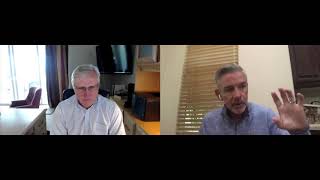
Mike Richardson, a former aerospace executive and author of Wheel Spin, argues that CEOs need five distinct roles to build agility: Chief Chaos Coach, Chief Triage Facilitator, Chief Insight Trainer, Chief Luck Consultant, and a Journey-Oriented leader. He draws on Navy SEALs and fighter pilots to show how organized chaos and situational awareness help teams survive crises.
Chapters
Welcome to Peer Innovation, the podcast with Leo Battari and me, Randy Cantrell. Building on our previous shows, The Year of the Peer and What Anyone Can Do, we turn our attention to helping business leaders build high-performing teams. We'll talk with a diverse group of thought leaders who will share stories and insights that will help you and your teams achieve new heights. If you believe there is strength in numbers and that meeting the challenges of the future can only be achieved if we do it together, then join us for the conversation. Our guest today is Mike Richardson. Mike specializes in the agility challenges of CEOs and executives running small to medium-sized enterprises. Mike is a keynote speaker, Vistage chair, and author of Wheel Spin: The Agile Executive's Manifesto. He's currently working on a second book, The Five Roles of Everyday Agile Leaders. We welcome Mike Richardson to the Peer Innovation Podcast.
Mike Richardson, welcome to the show today. Unfortunately, Randy was not able to join us, and I was really disappointed at not being able to participate in this conversation today. But of course, you and I have known each other for a long time. You were my Vistage chair. I was in your key group for a number of years, probably I think 4 to 5 years. And, you know, tremendous experience, obviously. And, and it's obviously where I became acquainted with your interest in your work on agility and of course how it relates to teams and leaders and organizations being adaptable in a world where God knows that's what we need right now. So I thought it would be a really great opportunity to have you on the show. But I do want to, you know, in addition to course to what Randy, you know, said about you at the, you know, in the formal introduction, I'd love people to get to know a little bit more about you and kind of where you're from and also how you came to this work.
Yeah, well, thanks for having me, Leo. And yeah, those were great days. We'd see each other every month, a couple of times a month in, in, in the peer group process. And boy, did I love to see you sort of jump into that and lead the charge and start writing, you know, books about that topic. And, and I'm sure as we go through the course of our conversation today, we're going to come back to the power of a peer process because In many ways, that kind of transparency, that kind of vulnerability, that kind of willingness to level set the playing field as a team is at the heart of everything Agile. Yeah, I'm English, obviously. You can tell that from my accent. American now, been here 21 years, and was originally a scientist, geophysics, which is geology, physics, and maths. That was natural training to get into the oil and gas business, which is what I wanted to do. So I joined Shell International and became a petroleum engineer, and I had a fantastic experience where they have a graduate program where they put you out on drilling rigs for 2 years, week on, week off. And I did about 18 months on onshore drilling rigs and then about 6 months on offshore, helicopter out, helicopter back. Week on, week off. When you're on, you're on 24/7. You sleep if and when you can. I mean, if it's got crazy and you haven't slept for 3 or 4 days, for sure they're going to send someone out to relieve you. But by and large, you're just in this flow all the time. And I realize now— I didn't realize then— I realize now that that connected me with the realities of Agile. I didn't use the language back then. I didn't have the vocabulary. I didn't have the mindset back then. But I realize now looking back, and there I stayed with Shell for about 5 years. I did the classic, you know, thing in the '80s and went and did a 2-year full-time MBA at London Business School. And then I was scouting around and looking at the industries I wanted to get into, and I lucked out getting into the aerospace industry initially as a program manager, then a product support manager, and then a commercial manager, and then a sales and marketing VP. Then a CEO and then the divisional CEO of the aerospace division of a British public company you've probably never heard of called Spirant. And that's what brought me to the States 20 years ago because the critical mass of my business was increasingly over here. And I was running small to medium-sized, fast-moving, high-tech businesses, $5 million, $50 million, $100 million kinds of revenue businesses. And I'm an avid reader. I always invest in training people, and not least of all myself. I harvest every ounce of insight that I can from thought leaders everywhere. The smaller companies, the training organizations, the big consultancies. And yet I had this increasing sense that nobody really understood what it was like to sit in my seat and to fill those shoes, fill the seat fully, being able to be strategic and operational, long-term and short-term, a leader and a manager all at the same time. And I just was having to figure it out. And one thing led to another, and in the early 2000s, I decided— I was based here on the West Coast in the USA. And I decided to take the leap from the corporate world to follow my passion of filling that void and bringing insight to it focused on the agility challenges of CEOs and executives and managers running small to medium-sized businesses. And I've got to tell you, I've had a blast, and I've been doing that now for, you know, nearly 20 years. Took me a while to write my first book, and now I'm working on my second book. And I'm delighted to be here with you today.
Yeah, you know, well, it's interesting. Well, you've had to go through your own bouts of agility, obviously, in terms of your own career. But it's also interesting that understanding this idea of filling the seat and people not really able to truly empathize with that and how that leads you to running CEO peer groups. Well, that's exactly why people are there. You know, they share that common challenge of being that person who's got to make those decisions for the entire organization. And at least they can talk about that from that very unique perspective and really help one another in that regard.
Yeah, exactly. That's why I love the work so much. You know, as you know, I was a peer group chair for 15 years. I was also a peer group speaker to groups all over the world. With the agility topic. I pretty much became acknowledged as the, you know, thought-leading agile expert for Vistage worldwide, which now has like, I think, approaching 25,000 members in 20 different countries. And then, yeah, it was a, it was a wonderful experience to help those CEOs and executives understand what does it take to fully fill the seat not just in business but also in life. Because those two things, as we're seeing right now with the COVID epidemic, those two things are interlinked inseparably. And agility in business is going to influence agility in life and vice versa. And then in the middle is the agility with a career. And how does all of that come together into the sort of trajectory of one's prosperity? And I like to define prosperity as some integration of success and happiness, financially and non-financially. It's not just a financial success thing, right? A sense of prosperity and being on a good trajectory and feeling like you're going somewhere. And all of us are experiencing to some degree right now the rug being pulled out from underneath that. So now is a time where we have to find new reserves of agility, not just in business, but also in life.
You know, and I don't think it's ever been more, you know, we, the whole term of a VUCA world and all that has been around a long time. People have been talking about agility, but I think you're going to see a real focus on agility as it relates to what we talked about before we got on today, this demand of adaptability. I actually think it's been pretty impressive, but not every organization, but certainly many organizations pivoted really quickly from being able to, you know, work in the way that that was their norm to, you know, distributed work teams and all of that. And it was really rather remarkable. And obviously some teams were more agile and more adaptable than others. I know you wrote a piece for CEO World that actually just posted this morning. We're going to make sure that the link to that is in the show notes, but in it you talk about basically the 5 things that leaders, if you're going to be in addition to the CEO, all right, or addition to the leader of your team, you, you also have to be kind of the chief agility officer also. But doing that isn't just saying the words and having that mindset. There were 5 specific attributes and roles that you described that I'd love for you to talk our audience through those, because I thought they were really compelling in the piece.
Yeah. So when I took the leap from the corporate world and I was, I was dedicated to filling this void of understanding focused on, on CEOs and executives and managers of small to medium-sized businesses, fully filling the seat. You know, because I'd sat in the seat, I could really empathize with that challenge. But I found myself looking back to those times on offshore drilling rigs in particular, and realizing that I had learned a lot about Agile in the real world where you have, you know, high stakes, potentially as we saw from the BP Gulf oil spill, potentially life and death consequences. And so my natural instinct turned in that direction, and I realized— and I, I, I call people in those kinds of roles, I call them everyday agile leaders. They're experiencing the agile challenge every single day. ER doctors, firefighters, Navy SEALs, lifeguards, fighter pilots, those kinds of people, petroleum engineers working on offshore drilling rigs. And I decided to devote myself to studying the secrets of their agility. And then interpreting those secrets from the real world, translating them into terms relevant to the business world, and then in the advisory world of consultants and coaches and trainers and facilitators, figuring out how to facilitate that learning journey for CEOs and executives to become everyday agile leaders fully filling the seat in the driving seat of their business. And over the years, working with a lot of fighter pilots and Navy SEALs and other, you know, everyday agile leaders, and looking back on my own experiences, I've distilled 5 attributes of agility to change your relationship with, each of which invites CEOs and executives to step up to a new role of everyday agile leadership. The first attribute to change your relationship with, I think, is the number one problem in business these days. It's one of my favorite topics to talk about— chaos. Um, you know, the speed of the business, the pace of change, the VUCA, the volatility, uncertainty, complexity, and ambiguity of things just drives chaos. And what I reveal to people is that, well, as we know, there are two kinds of chaos. There's disorganized chaos where unfortunately, present company excluded perhaps with your listeners, but in my experience, unfortunately, the majority of people live way too much in disorganized chaos compared to organized chaos. If I was living in disorganized chaos on a drilling rig, I wouldn't have been a petroleum engineer for very long at all. God forbid that something bad happened, but at the very least I'd have been fired. You just can't live there. Things are chaotic on a drilling rig. The weather can change like that. I can get notified that a supply boat is going to be late. We can have a snag downhole. Something can break. So I'm going to be in chaos, but if I can be in the flow of organized chaos, that is a completely different world. And so when I study fighter pilots and Navy SEALs and I get them to talk to me about when you set out on a mission, how do you make sure as best you can, how do you stack the odds in your favor that the mission will stay in organized chaos, not decay into disorganized chaos because bad stuff happens there. And so the first role that I invite CEOs and executives to step up to is be the chief chaos coach in your business, coaching your people from disorganized chaos to organized chaos. Because the risk is, if you don't step up to be the number one chaos coach in your business, you risk that nobody else will, and you're more than likely to stay over here with the majority in disorganized chaos. So that's the, that's the first one. Any, any big reactions to that before I, I continue?
No, it speaks to, as you know, because we were joking this morning that we both posted an article at the same day today for CEO World, and I was talking about, you know, people. And when you think about all the things you're about to talk about, including this one in particular, having the right people really matters and knowing how to select those right people. And I know both of us are fans of Stanley McChrystal's Team of Teams books, and one of the things they talk about because you did bring up Navy SEALs, was that Hell Week— everyone looks at Hell Week as the unbelievably demanding physical, even emotional test that these folks are put through. General McChrystal basically said that about 90% of the people can pass the physical test part of it. That's really not what they're trying to screen for at that point. It's really about your commitment. It's about your why. It's about who you are. Which really essentially makes you survive the psychological difficulties, to say the least, right, of what that is all about. Probably the world's toughest job interview, right? But it basically speaks to who you are. And we think about who are the people that, that can, um, you know, embrace and understand the difference between disorganized and organized chaos, I think becomes essential. You know, to this piece. So as we talk about these 5 roles, I, in my mind, I'm always thinking about who the right people are that we can— that have those tendencies that we can coach, to your point, and that we can all be successful together.
Yes. And so as we, as we sort of explore the concept of what is the difference between disorganized chaos and organized chaos, I talk about the design of a jet fighter plane. I talk about the training of a jet fighter pilot. I talk about how Navy SEALs plan missions. And one of the greatest sayings from the Navy SEALs goes something like this: when you're under pressure, you know, in the middle of a mission and things are not going as planned, which is always the case, right? When you're under pressure, you do not rise to the occasion. You sink. To the level of your training, your practice, and your preparation. And so that's the difference between organized chaos and disorganized chaos. If things are not going your way and all of a sudden you're under pressure, have you not done enough training, practice, and preparation, and you sink to disorganized chaos? And often that doesn't end very well. Or do you— because you don't rise to the occasion, you sink to the level of your training, practice, and preparation. And if the level of that is sufficient, then yes, you're under pressure, but you sort of bottom out at a place that is still sufficient to stay in organized chaos. You get busy, you figure it out. And then of course, General Stanley McChrystal, his book Team of Teams is one of the books I talk about frequently. I also talk about Alan Mulally. Both of these individuals are running huge organizations, one military and one commercial, and both of them, amongst other people— there's plenty of other people that do this too— held a daily meeting of their top team every single day without fail. In the business world of Agile, we would call that a daily Scrum meeting. They both held a daily Scrum meeting to help their team stay in the flow of organized chaos, not disorganized chaos. That's the kinds of things that we do, uh, when we're the chief chaos coach of a business and we're really stepping up.
Yeah, and you can see that's where the leader can play such an incredible role in helping that team work together more effectively. So tell us about the other four.
Yeah, so in the face of chaos, you have no choice to stay in organised chaos. You have no choice except to be triaging. So triage is a word that we're familiar with, but maybe we haven't spent a lot of time thinking about. And of course, triage is a word we've heard goodness knows how many times over the last few months. We don't have enough face masks to go around, PPE to go around, respirators to go around, etc., etc., etc. We have no choice except to triage our resources where demand for resources massively exceeds supply in a high-stakes, real-time unfolding journey of a situation with a boatload of VUCA— volatility, uncertainty, complexity, ambiguity. We have no choice except to triage. Triage is the most acute form of time management, priority management, focus management, attention management, Frankly, resource management, frankly everything management that you can get. But the problem is that most people in my experience, possibly present company excluded, default into partial triage. They're triaging but inside of partial situational awareness. They're focused on the clear and present dangers the clear and present opportunities, but they're not fully triaging and keeping their mind expanded to the unclear and the unpresent dangers and opportunities. There are a few hours or days or weeks away, but they'll be here real soon. And so if we want to stay in organized chaos, we have to be doing full triage. Otherwise, we're going to get a bunch of disorganized chaos showing up real soon with stuff that we didn't see coming. And, um, again, I learned this on a drilling rig and in talking to fighter pilots and Navy SEALs and firefighters. And what a Navy SEAL will say is, look, you're going to have front sight focus, right? You're going to be focused on what you're shooting at, but you have to keep your head on a swivel, okay? Retaining 360-degree full situational awareness, otherwise bad stuff happens. And so it's how do we facilitate that in business? Our teams are so prone to collapsing to the here and now that they're not on the operational stuff, the tactical stuff. They're not fully triaging the more strategic stuff, the less clear stuff, the ambiguous stuff. And so the second role that I urge I want you to step up to is to be the chief triage facilitator in your business. How are you going to facilitate your people from partial triage to full triage? Things like daily Scrum meetings can really help. It's not enough. There's more to do. And the key is, if you can get people from here to here, full triage, then that is going to help them stay in organized chaos. Not default to disorganized chaos. So that's the second role.
There's also a training in mindset there, and what I really love about what you're saying is it goes from, you know, when we think about like linear thinkers versus systems thinkers, we tend to think about systems thinking as bigger and longer term, when in fact systems thinking in the context you're talking about is in real time, and it is seeing the whole not just what you're looking at at a given moment in time and recognizing the ramifications of certain actions in real time. And I think training in terms of adopting that mindset becomes really powerful.
Yeah. So keyword, you know, that when we explore how fighter pilots are trained, how fighter planes are designed, how Navy SEALs plan a mission, we very quickly come across the word flow. Okay, now how can I be in the flow? And can I keep the flow fully triaging organized chaos, or is it breaking down and I'm partially triaging and ending up in disorganized chaos? Where's the flow right now? Now it will ebb and flow. An agile leader knows they can't be perfect all the time, but they recognize very quickly, alarm bells start ringing very quickly when they end up over here and they want to steer things back over here real fast. The third attribute of agility to change your relationship with is insight. And the reality in, in the majority of businesses, possibly present company excluded, is that we learn way too much insight in hindsight. 20/20 hindsight after the fact. Oops. Where we've got to try to stay is we're learning insights from Foresight. We're doing scenario thinking. We're doing what-if analysis. We're paying attention to the details that are gotchas waiting to get you. If I'm running heavy equipment in the hole, 1,000 meters, 2,000 meters, 3,000 meters down, I better not get to the bottom of the hole and realize, oops, we didn't attach this or we didn't adjust that. 'Uh, darn it, we need to pull back out,' and 8 hours later, you know, we've lost 8 hours of time. You just can't have that. So it is this, uh, this ability to learn from foresight, not just hindsight. Now I understand in business that you can't avoid learning from hindsight. Sure. Let's just realize that it's very expensive often and can often have consequences that are huge, if not in some cases life and death.
Well, there's value in it, to your point, right? Obviously, history teaches us things. At the same time, one of my favorite metaphors for this is like, it's not as if you would study traffic patterns over a period of time and then decide based on that information about what's happened in the past to walk across the street blindfolded, right? Probably not a really good idea. So I mean, in many respects it's similar in that this idea of foresight becomes obviously huge. Yeah.
And so the third role to step up to is how can you be the chief insight trainer in your business? Where I'm not saying that you're doing all the training, you're sort of the master trainer where you are moving mountains to make sure that your team is learning from forsight, not hindsight. The more you learn from hindsight, it's probably because you're doing partial triage, and it's going to keep you stuck in, in disorganized chaos. The more that you're learning from foresight, it's probably because you're doing full triage, and the more it helps you stay in organized chaos. So these things become self-fulfilling, and these things become self-defeating if you're not careful.
And having foresight Well, just one thing, because I think they work so well together, right? Because having foresight makes you that much more effective with triage, right? So there's a real yin and yang there, I think. Yeah.
Yes, actually. And all of that kind of arrives in the clarity we get from the fourth attribute of agility to change your relationship with one of my all-time favorites, luck. Luck is huge in agility. But it's a lot less random than we think. It's that idea of luck is where preparation meets opportunity. Uh-huh. And way too many people, present company excluded perhaps, way too many people are experiencing luck by accident, which is often bad right now. It can be good. Even a blind squirrel finds a nut every once in a while. But the risk we take if we've got too much luck going on by accident is that it's going to be bad, as compared to luck by design, which can also, you know, have some bad stuff in it, but by and large we're stacking the odds in our favor that we're going to experience more good luck by design reliably, repeatedly, in almost a way that we can trust. And you know, when Navy SEALs go on missions, they know that they might not come back. They know that, of course. Life's imperfect. They know that, uh, they can't guarantee anything, but what they can do is stack the odds in their favor over here and not allow them to end up over here. And one of the things they say, um, is make friends with Murphy. Murphy's Law. What can go wrong will go wrong. Now, I interviewed a Navy SEAL, Bob Schultz, and he put it like this. He said, you know, if we can, we'll leave a seat for Murphy on the chopper because we know Murphy's coming along for the ride. And the more that we've made friends with Murphy on the practice ground, the more good luck by design we will experience on the mission and avoid bad luck by accident on the mission. So make friends with Murphy. And, um, you know, what I invite CEOs and executives to do is step up to the fourth role of everyday agile leaders and become the chief luck consultant in your business. I want you to have all of the one-liners, all of the quotations, all of the phrases on the tip of your tongue so that when your people need that inspiration to play over here in good luck by design, not default over here to bad luck by accident, you can keep them sort of going over here. And then all of these things now, all of these things arrive at the last attribute of agility to change your relationship with, and I call it journey orientation. And it's getting oriented to a journey and a real-time unfolding high-stakes journey of a business, which in a VUCA world, that's what business is these days. The time horizons of business have collapsed, right? It's now happening with such a high pace, is to get oriented to that journey differently. And in particular, one of my favorite things to talk about that we were talking about earlier is change your relationship with a journey by changing your relationship with micromanagement. Now at this point, most people look at me quizzically and think, hang on a minute, hang on a minute, Mike, you just lost me here, because surely micromanagement has a bad reputation in business. And what I reveal to them is yes, but there are two kinds of micromanagement. There's bad micromanagement, breathing down someone's neck, is it done yet, is it done yet? But there's good micromanagement, which is called paying attention to the details to have luck on our side. We're fully triaged, we're learning from foresight, what details are we missing, what ifs have we not talked about, what scenarios are we not paying attention to, have we double-checked, triple-checked, that it fits, right, before I run it down the hole. I'm fully triaging all of those details to stay in organized chaos, not default over here into disorganized chaos. Good micromanagement is why Alan Mulally and General Stanley McChrystal had daily Scrum meetings. Most people's reaction to a daily Scrum meeting is, well, hang on, isn't that micromanagement? And what they don't understand is, yes, it is. It's you batching up a whole bunch of good micromanagement so that you don't have to do a whole bunch of bad micromanagement all day long. What's your thought on that?
Well, you know, so when I had read it, I thought to myself that because our immediate place we go in terms of micromanagement is we're at our desk and I've got the, the, you know, the, my CEO or leader of my team breathing down my neck looking at every little thing I do. That's obviously not what you're talking about. Instead of this, each on different sides of the table, you're the micromanager you're talking about is everybody's on the same side of the table making sure that they have a level of attention to detail that they get the type of collaborative process that brings all the perspectives together, that is able to capture all of those details that are so necessary to a team's success. And similar to when we talk about Navy SEALs, we talk about all that, one of the things they have is they trust one another. They are committed to the success of the mission, and they are committed to making sure that every single detail is, you know, attended to. And I love, and of course, one of the takeaways today has to be that while they do all that, they are also making friends with Murphy.
And by the way, as we've seen from the movies, they're fallible, they're not perfect, they're human. And so there are no guarantees here, but if we can stack the odds in our favor to be playing over here and not playing over here, then with a little bit of, you know, a little bit of fortune here and there, we'll be just fine. And you know, Again, I look back to my time on drilling rigs, and indeed, we would huddle multiple times a day, in particular, on a daily scrum cycle. And in particular, if we had a really big operation going down, we'd huddle every 2 or 3 hours. We would ask ourselves, what are we missing? What are we forgetting? What do we need to double-check, triple-check? Measure twice, cut once kind of thing. And we'd have a sort of final whites of the eyes kind of, you know, round robin. Is there anything else at all? Is there any glimmer, flutter, flicker of anything? You must speak up. The consequences of you not speaking up are too grave. And that takes me back to our experiences in peer groups, Leo, because We used to do that too, didn't we? We used to say when we're processing an issue for a member, perhaps you with your desire to write the book about peer groups, we're processing an issue with a member, and one of the core principles is that silence is agreement. If there's anything sort of disagreeable about this for me, how you've articulated the issue, the solution options you're coming up with, how you're weighing them up and the action steps you're thinking of taking, or just anything else I noticed. If there's anything here that's disagreeable for me, I must speak up because silence is agreement, and if I'm not in agreement, I can't stay silent. So that's the final kind of whites of the eyes peer group-like review that we do, and we have to trust that we have that level of vulnerability and transparency and accountability in the team, that is the pivot point of everything Agile.
Yeah, we all matter, and we're not just there to fill a role, we're there to make a difference, and we're not there to keep our mouth shut when we know better and we know otherwise. And, you know, I know we won't get into them right now, but there are countless stories about how people's silence caused people to lose their lives because the culture was such where the idea of saying something in a given moment was so kind of culturally verboten that— and then what happens, right? So these things. But what I'd love to do, just to wrap up, because I'd like to do two things. One, I want to give people a sense of here we are now. We're still in the midst, very much so, of this pandemic. There are all kinds of shifts and everything's still taking place with leaders in organizations and teams. Any thoughts you have for them as they start looking forward, number one? And then secondly, I'd love for you to make sure that our listeners know more about how they can find out about you and your work and what that can mean for their teams.
Yeah.
Yeah.
Obviously these are extraordinary times that we're in right now. We've We've talked about agile, we've talked about VUCA for decades, and yet we haven't experienced any VUCA like this before. This is, you know, what some of the gurus would call a black swan event. It's so unpredictable that you couldn't really have planned for it. So I would urge, you know, your listeners to step up into a next gear. I'm sure many of them are already doing very well with many of the things that we've been speaking about, and myself included can always find the next gear. And to not misinterpret the idea that we were just talking about, that this is simultaneously the sort of tangible stuff— oh, I need to run a new meeting, I need to train my people differently. I need to be doing a different kind of form of micromanagement. It's very tangible, but as we were just talking about, it's also very intangible. It's about family, it's about heart, and dare I say it, right now it's about love. And, you know, I work with some organizations that have love as an articulated core value. And I have had a realization more than ever before that if you want to be agile, love is a core value that you've got to have because love is an absence of fear, it's an absence of ego, it's an absence of limiting beliefs. And people need to feel love, heart, and family right now because this is an unprecedented time. We need to feel connected even though we're separated by the virtual technologies. We need to feel connected. People need to feel leadership. They need to feel inspiration. Not rah-rah, not false optimism, a balance point of reality and optimism. Yeah, I'd love to have people sort of come find out more if it's sort of tickled your fancy. Www.mikerichardson.live is where you can find me. www.mikerichardson.live. And actually, in about a month, on September 16th, we have a webinar coming up where we're going to be doing a deeper dive into all of these things before, during, and after COVID, the 5 roles of everyday agile leaders. And you'll see some other tips and tricks and tools at that website. And I'd love to have you come over there and check it out. And if you like what you see, then sign up for the newsletter and, uh, drop me a line. I'd love to hear from your listeners and do what I can to help.
Well, thank you so much for being on the show today. I can't tell you, you know, how much it meant, you know, for you to step up today. And I think the content that you offered is so, um, incredibly relevant. And of course, I think the ultimate thing too was the lesson you shared at the end, which I would love. It's one thing to talk with people who have had long careers who actually come to this place over time about that it's about love, it's about family, it's about people, it's about all of these things. And I think to the extent that if you listen to the show and if you're in your 20s or 30s or 40s and you can come to that realization sooner, um, that'd be a pretty great gift for yourself and for everyone around you.
So you, you just nailed it, Leo. I wish I had realized that in my 20s and my 30s.
Yeah, me too. Okay. Well anyway, hey Mike, uh, have a great one. We'll have all of the information available to everyone in the show notes. Um, you know, have a great day and we'll see you soon. Thanks.
Thank you for joining us. To subscribe to the podcast and learn more about how you can engage peer innovation for your organization, contact us on the website at peerinnovation.co. Until next week, remember, the power of we begins with you.










