Mitchell Levy On Credibility (Peernovation Podcast Season 2020, Episode 8)
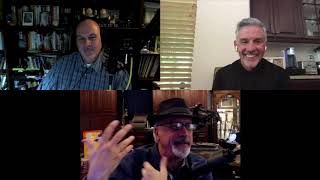
Mitchell Levy defines credibility as know, like, and trust combined, not just trust alone. He's interviewed 500 thought leaders for a credibility search engine and coined terms like "cred dust" (borrowing someone else's credibility) and "Customer Point of Pain" to help people introduce themselves. He stresses showing up early, prepared, and with heart.
Chapters
Welcome to Peer Innovation, the podcast with Leo Battari and me, Randy Cantrell. Building on our previous shows, The Year of the Peer and What Anyone Can Do, we turn our attention to helping business leaders build high-performing teams. We'll talk with a diverse group of thought leaders who will share stories and insights that will help you and your teams achieve new heights. If you believe there is strength in numbers and that meeting the challenges of the future can only be achieved if we do it together, then join us for the conversation. Today's guest is global credibility expert Mitchell Levy. He is a TEDx speaker and international bestselling author of over 60 books. Mitchell helps humans that want to be seen as credible. You can find out more by visiting MitchellLevy.com. 360.com. We welcome Mitchell to the show. Welcome back to another episode of Peer Novation. You can find us at peerinnovation.co. Special guest today, his name is Mitchell Levy. We're glad to have you, Mitchell, and I'm going to let Leo get us kicked off here.
Randy, I think you need to have Mitchell get you one of those hats. I think that would—
I need one.
Yeah, I need one.
It's too hot.
It's too hot right now, Dallas, Texas, but I do— I need one in the fall for sure.
Well, Mitchell, it's a pleasure having you. Um, you know, God, you have brought so much to the world, not only in terms of your own thought leadership, but what you do in terms of helping others and enabling them to be thought leaders and have their voices heard and being able to extend their reach, which I think is really powerful. And of course, you know, just before we got, um, on the air here, you talked to us about some, some recent work you're doing around interviewing thought leaders and what that's all about. And I think especially during this pandemic and what everyone's going through right now. I think it'd be a great way to start to have you tell us a little bit about that work right now and, you know, what your expectations are of that. Maybe some sneak peek on any early findings you may have would always be nice, but you just share what you are prepared to do right now. It'd be great.
Sure, guys, thanks for having me. Good to see you both, and there are hats. Actually, when I've traveled to Dallas, I still wear my hats. I just don't wear the ones that are so That is so heavy, so thick. The, the, I'm in the middle of, or actually I guess I could say now close to the end, of interviewing 500 thought leaders on credibility. And what happened is I woke up one day, my guess is I woke up about 18 months ago, and, and what happened is I, I was carrying the title Global Credibility Expert and I thought You know, I need somebody to actually crown me that. Let me just go and start interviewing people. Now, one of the things that happened out of this was, which was quite beautiful, is somewhere around interview 40, I entered flow, which basically meant I don't need anyone to tell me who I am and what I do. I know what I do, and it's, it's freaking incredibly cool. And what I wanted to be able to do with the interviews So what's fascinating for those people want to see, if you want a sneak peek, go to justthoughtlyourlife.com. It's a credibility search engine, and you can now see people who are in essence demonstrating their credibility in a 6 to 8 minute video. And so what does that mean? Well, first you have to define what the word credibility is. So I'll tell you what it is and what I found, and then I'll tell you what I've, what I'm finding to be the fundamental flaw that unfortunately many people do. And then what I'll do at the end, if you're okay, is I'll just say what's next. So what happens is I have 5 simple questions, and what those questions are is to help people or help us understand what is credibility. So first, let me tell you what the dictionary says. The dictionary says that credibility is the demonstration of trust. Now what I'm going to tell you is that is only one-third accurate. So that's important, but what's missing in today's world because we all have cameras, we all have microphones, we have global, uh, global both customers but we also have global competitors. So because of that there's something else that's necessary in terms of credibility. And that is, and by the way, I have not released this yet on a podcast. This is my first time doing it. It's going to be coming out in a book when we come out. And here are the other two-thirds. Credibility is the demonstration of know, like, and trust. So let me, let me clarify that a little bit more. When I say know, it's not about the fact that you're known. It's not about awareness. It's that next level. It's the fact that I understand your intent. I understand your commitment. I understand your integrity. Now, given that trust is about understanding your vulnerability, your integrity, your authenticity, what's really interesting is that word integrity. Credibility is the fact that if you and I are credible with each other, we could essentially look each other in the eyes, shake hands, post-corona or virtually, and agree on something happening. And guess what? It gets delivered on time, on budget, in the way we said. That is the world that I want to live in. That is the world of what credibility is. Now, what's fun when I think about credibility on the know, like, trust, it's the fact that I know somebody, I know their intent. That I trust them, that I've seen they've demonstrated that they're good at what they do. Now, the like part's really fascinating. In the industrial age, it didn't matter whether or not you like somebody or not. If they had the best product, you went with them. In the world we're moving towards, the ability to be likable, the ability to be someone who you, you not just like them, you just, you not just know that they're going to deliver. I'm sorry, it's, let's see, you're just not like them, you just, you You just don't, you know them, you know they're gonna deliver, you know, and you trust they're gonna do it. But if you don't like who they are, you don't like their, for instance, politics, or you don't like, in essence, how they view the world or approach the world, we've seen so many instances of companies not doing really well 'cause the CEOs are demonstrating something that are not liked by their user community. So like is now an important element.
So, you know, I want to just comment on that real quick because it's so consistent with— so I do a lot of work with students at Rutgers, and a lot of what we talk about when they're looking for jobs is that, let's face it, the— that whole process is the process of elimination, and then it's a process of selection. The process of elimination is pretty much what happens when you go and you can check the boxes off whether you have got the skills, experience, or whatever to meet whatever the job description says. The process of selection isn't about whether you can do the work. It's about, are you someone I want to work with? Which speaks very squarely to what you're talking about with like and the value and importance of it at every level. So that's really powerful. Thanks for sharing that. That's interesting.
Oh, you're absolutely welcome. And, and by the way, thanks for reinforcing. I love that. So one of the guys I, I interviewed was a guy by the name of David Meerman Scott. For those that don't know David, he's the guy who invented the word newsjacking. And so I'm talking to David and I go, David, how do I get known around the globe for the stuff that I'm doing? He goes, Mitch, invent a word. And I go, okay, cred dust. And he goes, no, no, Mitch, he goes, I know I just had one, it just popped in my head. He goes, no, no, Mitch, listen, it took him about 6 months to invent newsjacking. You could take a little bit more time. I said, no, David, I just don't know if it's 1D or 2. So for those that actually want to go, um, and just check out credust, c-r-e-d-u-s-t.com— so I decided it was 1D. If you want to create a— check out credust. I actually created a dictionary page there. Now here's what David said: don't put a copyright, don't put a trademark. Just put it out there and make sure that people recognize. I put more information that, that as it starts catching on, that it comes back to you. So let me tell you what cred dust is. It's very simple. We do it all the time. It's when we share somebody else's credibility. Not only do they sparkle, but we sparkle ourselves. By definition, you inviting me onto this show and the fact that we're sharing this with this audience, you're sharing cred dust. And we both sparkle as a result of that. It's a much more beautiful world to live in, and you see it all the time where speakers are on stage and they'll point to somebody in the audience and they'll say, hey, let me tell you about so-and-so who's in the audience with us. It's a win-win for both parties.
It is. The, the, the word sounds less beautiful than it is, um, in terms of the— right.
Oh no, I kind of like it. I kind of like it, but I think it's great.
I, I love it. And And I think, but I think the sentiment of it is really what it's all about, right? I mean, it just shares such a reality about this stuff and what happens. But in terms of embarking on this whole, I mean, it's ambitious, right, to go interview 500 people. Let's face it. We did the first year when we did the Year of the Prayer podcast, Randy, right? We had 50 thought leaders that we sat with every single week and preparing for those interviews and doing that. And that was It was awesome. But now think of in terms of 10 times that, you know, um, and so in the same time, so what inspires you? Right. So what, but what inspired that for you to want to take that on and have that sample size and do, um, you know, what you're doing right now with it?
Oh, well, not just that I wanted someone to call me. Global credibility expert. But simply, I woke up one morning and I thought Napoleon Hill, 500 Millionaires, Think and Grow Rich, Mitchell Levy, 500 Thought Leaders, and honestly at the time had no idea what the title of my book was. So that was really the inspiration. It turns out that for a long time, probably when I hit interview 250, That's when I titled my book. And it turns out, and I'll tell you what that title is, but it's gonna be my subtitle. So the title of the book at the time was For Humans That Want to Be Seen as Credible. But I realized just recently that that's the subtitle. And the title of the book is Credibility Nation. Because here's what needs to happen. Well, first, let me tell you what's come out of it. Redefinition of the word credibility, a number of words, not just cred dust, but cred crud, another fun word to talk about, a number of words I'll be adding to the dictionary. The, we, one of the things particularly for the students at Rutgers and for 99.5% of people who have profiles on LinkedIn, created a course. It's a 1-hour course on how to put credibility into your LinkedIn profile. I think for me personally as a growth factor, the recognition that I have a superpower, not just of building systems, that's how I was able to get 500 so quick. I'm really good at building systems. I'm really good, another superpower, of pulling the genius from somebody's head. What I didn't realize until I started getting the appropriate feedback from the interviewees is that I have a superpower of clarity. And the most important thing, and this is something for you guys to think about, certainly for the audience to think about, is how can you express who you are in a way that people not only care to listen, i.e., it's got to be less than 5 seconds, And not only do they hear it, but they hear it in such a way that they want to share it with somebody else. And so one of the terms I'm introducing is CPoP, Customer Point of Pain. And the first question in every interview that I have somebody is, what is your CPoP? 98% of the people who come on the show, even though they— part of what happens when people sign up, I send them a 13-minute video on how to prepare. They get to look at past episodes. 98% of people still need a little bit of support on their CPAP. The reason why is we have been taught incorrectly on how to network, how to communicate, how to actually, um, allow people to see us. Because what is the first thing that happens when somebody says, when somebody says, what do you do? Well, the classically trained will give their 30-second elevator pitch or their value proposition. What is the first word in the value proposition, I or we. Now, there's a percentage of the population when you say I or we, you sound like a salesperson, they're not gonna listen to everything else you say. So the value proposition is not bad, it's just not the first thing you wanna say. The first thing you wanna say is your customer point of pain. And what does that mean? It's simply, and once again, you could take a look at, if you go to Cred Dust, there's a little button you could go and see what CPOP means. Essentially, it is a way in which you could describe both your audience and the pain point. So for me, my, my CPOP is humans that want to be seen as credible. One of my favorites is global supply chain panic. I've had people have one-word CPOPs like miscommunications or profitability. What often happens, and some of the feedback I'm getting from, from those I'm interviewing, One of my favorite is a woman who said, "Mitchell, I've been looking to simplify my message for 12 years and you did it in 5 minutes. Where have you been?" And essentially what happens is you want to be able to say something that sticks. You want to be able to say something that when it comes at you, if you get to hear something in 5 seconds and let's say it's not you at the moment, But it's short enough for you to remember, and you go, God, there's somebody in my network. And guess what you do if you're a good networker? You're going to recommend the person who has given you their CPAP to the person who's in your network. I.e., you're going to spread some cred dust. And guess what? All parties excel. So first words out of your mouth should be your CPAP. Make sense?
Well, it makes perfect sense because it's about them, it's not about you. And, you know, as we know, you go into any conversation about anything, usually the person who talks the most feels the conversation went the best. And if they get to talk about themselves and they get to, you know, really, and really share their story and what they're doing and you're engaged and you're listening and really paying attention, and then anything I now say about what I do is going to speak to those pain points that you're talking about. And now you become relevant. You know, so obviously that is, you know, it's a powerful thing. And it's so funny, it's one of those things that is simple but not easy, you know. So it's why some people need help getting to that CPAP like you talked about and being able to articulate in a way that— and I think you brought up a great point too, that it has to connect with them in some way, and not just in how they think about it, but how it makes them feel in the moment, which is obviously how they're going to help, you know, remember it as well. You know, one of the things that, and Randy certainly attests to this, when we interviewed the 50 people that we had, one common thread among all of them was that none of them did it alone. No matter what level of success they achieved, whether it was in academics, media, and business, whatever it happened to be, the idea that they were self-made, if you will, and did it all by themselves was just a laughable concept to every single person there. Is Is there anything that you might be ready to share that you think is kind of a little common aha moment, if you will, from the interviews you've done so far, you know, of the leaders?
I'm going to say something that is not exactly along the lines of what you just mentioned. So let me say it and then pull me back in if I need to say something else.
I want to hear what you want to say.
Well, no, I want to make sure it's along the lines of— I want to make sure I answer your question. So one of the things I found in terms of demonstrating credibility, and it's a catchphrase I now use called, you need to show up when you show up. So that means it's 3 things: come early, be prepared, and come with your heart. And what happened, Leo, I didn't realize when I started the interviews that I needed to keep track of when people came, like what time they came. I didn't, I didn't know I needed to keep track of whether or not they watched the 13-minute video or they thought they could wing it. I didn't know I needed to keep track of whether or not they spoke like they really cared about what they did, they were passionate, or they were robotic. So I now, those are stats that I'm keeping track of, and I'll just give you a couple stats that just blew me away. So on the positive side, when I first started the interviews, 11% of the people came early, early as 10 minutes or before. So obviously you guys recognize I came 10 minutes early because I wanted to make sure that I was showing up on time. 50% of people come on time, and that's between 9 minutes and 4 minutes. 20% of people come late. So to me, when you're running a live show, coming between, uh, 3 minutes and 0 is late. Now this is shocking— out of 476 people, 4% of people who are being interviewed by the global credibility expert think it's credible to come after the half hour for a live show. And you just listen to that and you go, wait a second, that's not possible. Why would somebody be that stupid? And the answer is, for whatever reason, the way people feel, the self-importance of who they are, that they have calendar appointments, they're not smart enough when they're on the air to come 5 or 10 minutes early just in case they're actually going live and they're going to affect something else, or in this case, they may need a little bit of coaching on the answers to the questions. And so what did I learn specifically in terms of leaders? Show up when you show up, come early to every opportunity, be prepared. If you don't spend 5 minutes Googling the person you're interacting with or the company you're interacting with, before you walk in the door, you're stupid. Sorry for using a stupid word, it's just coming off the top of my head. And then the thing that's appropriate is come with your heart. Like, if people can't see you, they can't get to know you, they can't get to trust you. If they can't get to do either of these, you are not credible. If you are not credible, you are not getting the business, or you're not the person we want to interact with. We'll go to somebody else.
Nice.
So did you pull their thought leadership or their credibility card?
Um, you know, it's, uh, it's really fascinating.
That's exactly what I was thinking.
No, no, it's a, you know, it's a great question, right? And when I'm doing the research, so for the first 500 and I was doing the research, the question becomes not everyone can be really good at what they do. Right? So I, if somebody came late, I just kept track of it. Now, in my 13-minute video, I actually did suggest, so I did an update. My second version of the 13-minute video was, all right guys, listen, I really want you coming 10 minutes early. Guess what? You can catch the previous interview because I do, I might do 10 in a day, half, you know, half hour each. And so, you know, what's really cool part is seeing the coaching and the interacting the interaction that happens when I'm actually interacting with somebody. And those people who had, who came in early got to see the previous interviews. And, and so I, as a researcher, I skewed the numbers because at the beginning was 11% of people came early, and then now it's 21% because of that video. But to answer your question directly, Randy, I, if somebody came late or did a bad job, assuming they don't say, oh my God, Mitchell, this is horrible, pull it. It's part of the research, right? It's part of the learning. Now, what ended up happening, Leo, is I've now turned that into our product. And, uh, this was— it turned into a product because, uh, I interviewed somebody by the name of Whitney Johnson. Whitney has 1.8 million followers on LinkedIn. And, and something magical happened, by the way. When I hit interview 80, I kind of said to myself, oh, I have enough time, I could get a video testimonial. So I now have 400 video testimonials, right? And so when Whitney gave me her video testimonial, she did something that kind of shocked me, and then it took me a day to figure out the real benefit. So what Whitney said is, Mitchell, thank you so much for letting me shoot my credibility sizzle reel. And I kind of, I, you know, I said thank you because, you know, you got to say thank you, but I'm kind of thinking the only thing I thought of on a sizzle reel was a speaker sizzle reel. And you know how they go, it's a person speaking on this stage and that stage. A sizzle reel sizzles. It wasn't until the next morning when I woke up and I go, oh, I get it. A speaker sizzle reel needs to sizzle, needs to allow the speaker to sizzle so you want to hire them to be on your stage. A credibility sizzle reel needs to allow the person who's being interviewed to shine. And that's exactly what I was doing with everyone. So I've now turned it, instead of calling it a sizzle reel, I call it a cred reel, credibility sizzle reel, another one of my words. And we now, now that's the one that I actually went ahead and got a trademark for, or in process of getting a trademark for, because I now have this as a product for $1,000 for somebody who, and for companies that want to be able to present their people to the world well. The really cool part is if you watch one of these things, my, the shortest has been 4 minutes. I typically like 6 to 8 minutes, right? If you watch a cred reel, you get to know, like, and trust the person a little bit. You're not going to hire them based on that, but you're going to make the decision that you want to talk further with them. And so it was one of those interesting things for me that It was one of those presents. So maybe one of the things I'll say as a learning lesson, occasionally what happens, it actually, if you interact with a lot of people, it happens every day, is that people give you presents. You have a decision of whether or not you want to accept those presents. So the fact that it offended me that Whitney told me this, or that, you know, David Merriman Scott invent a word, I'm like, great, let me do a bunch, right? But with, with Nidhi, she offended me. I'm like, why is that bothering me? And I figured it out and ultimately said, oh, this is a product. And so what happens, people will give you presents all the time, and it's your job when you're interacting with people to, to be able to listen, to, to, to accept. If somebody says they don't like your product because, man, that's like the best. Like, they either like it and they buy, or they don't like us. Oh my God, tell me why.
Exactly. That's great. You know, before we got started, I had mentioned to you, because we were talking about past shows and guests and all that, and it was funny, I was listening to— it's so funny how this becomes relevant now to what we're talking about— I listened to a podcast we did with Linda Darling-Hammond, top education expert from Stanford. We talked a lot about when teachers collaborate, that once they do that and really get practiced at it, they're that much better at building collaborative environments among their students in the classroom. And there's a mountain of research around that. And I think there's certainly research that supports the same thing happens with CEOs. Now, when, you know, as you told me, you know, you ran some CEO groups for a while and you know what that process is like or whatever. How do you think participating in those environments helps CEOs build better teams.
You know, the, the benefit of— you're talking about groups like Vistage. We, uh, I created a company, it was a CEO networking. We had 4 different groups in Silicon Valley we were running. I've been exposed to probably 10 other peer-like groups.
Yeah.
And I also sat on the board of a public firm. I'm just giving you context.
Sure.
To answer your question is the— if you're at the top, by definition, if you're at the top, you're lonely. Maybe not lonely personally, maybe not whatever it is, but it is a lonely job because when shit hits the fan, there is one person that needs to make that decision. Now you can have counsel from those people who work with you So the people who work for you, the people who are your partners, if you decide now, in some cases, you're a public company, you can't actually talk to your partners. So what you're going to have to do is you need counsel from somewhere. And the coolest thing in the world is getting counsel from peers who are not— who don't have a personal interest in what you're doing. The problem if you go to somebody who works for you, the problem if you go to potentially a supplier, assuming you're allowed to do that, is there's a vested interest. So you can't, you can't determine whether or not the answer they're giving is the answer that's best for you or the answer that's best for them. And so if you're participating in a peer group, the coolest thing in the world, like one of my favorite examples I could ever give is there are peer groups where you have everyone who are all CEOs. There are also peer groups where you may have people who are different C-level execs. But from different companies. So I remember one time a CEO complaining about the CFO and the stuff going on and the things that's not working. And we just happen to have a CFO who was at the table. And that feedback, that peer group feedback was the coolest thing in the world because you could tell it was not in anyone's vested interest. It's just their perspective in life. And I think, Leo, probably the coolest thing that's worth mentioning is if you do it right, when you're running a peer group and it's done right, and somebody comes with a— typically what happens, you do something called a hot seat, and so you allow the person to present their ideas, get feedback from everyone else. The coolest thing in the world is when somebody was in a hot seat on a particular area that 2 and 3 weeks later 4 or 5 people in the room follow through with incremental ideas and incremental thoughts when you're not in the room together. If you've been able to do that both in running a peer group, but also if you're running a company and you're able to get people to just continue to think about how to solve other people's issues and, and be able to bring up a better, a better culture for everyone, that's the coolest thing in the world. And, and so peer groups essentially allow you to get information from smart people who are not, who do not have a vested interest in the outcome of what you're doing.
It's also interesting too, because in the, in the groups you're talking about, these people from all from different industries. And what's funny too is that sometimes you'll ask, you'll get asked a question by one of your peers in that group. That is a question you stopped asking yourself a long time ago. It's one of those obvious things. It's a given. It's how we do things, how we've been doing things forever. And all of a sudden, someone who, you know, really doesn't have any vertical understanding of your business at all will ask you a question and it gets you thinking, huh, you know, maybe, maybe, uh, we could kind of relook at that. Why is that, you know, um, you know, what it is? So that can be kind of a powerful thing as well. But there's no question too that In those groups, people learn how to ask better questions. They learn how to take, you know, that better, trust the intent of that person who, you know, maybe providing quote feedback that we don't always love, but you know it comes from a good place. In most cases, they're just trying to help me get where I've already expressed I want to go, right? So it's, it's, um, You know, fascinating stuff. And, um, oh, hey Leo, do you mind if I add one thing?
Cause you just triggered something.
Oh, please.
If you're running a group like that well, and let's talk about the same thing with your management team. What you've done is created an environment of trust, an environment of credibility, an environment where behind a closed door, feedback from somebody else is in your best interest, not in their best interest. And when something like that happens, and by the way, this is so anti, so opposite of what happens in most of the corporate space today when people are building fiefdoms and the silly silos that exist within companies. And what's happened is we, we all, the world has been forced to take a timeout. And for those people who are smart, they're kind of recognizing, you know, I don't think I like the world I live in today. Let me go in and fix it. And some of— some people will fix, and there'll be lots of better things that happen as we continue to move forward. And there'll be some people who want to go back to the way things were. Credibility is that thing that you could build that allows The opportunity for people to really, if you know, like, and trust somebody, or even if you know somebody and trust them, but may not like them, if you're getting their feedback, it still may be extremely valuable feedback for you. You don't necessarily need to like everyone on the management team that you're a part of, but you have to respect everyone on the management team you're a part of.
Well, and this is where there is opportunity in adversity when it comes to building our credibility during these times, right? I mean, everybody can be that affable, great, well-loved leader when everything's going great. But now all of a sudden when it hits the fan and the pressure's on and all that, how did that leader step up? And these are times where we can, as you've mentioned, really improve our credibility as opposed to have it being damaged anyway. And that's powerful stuff. Hey, in closing though, here we are. You know, we are obviously still, many of us, working from home. As evidenced by, you know, our backgrounds here. But I'd love to, given that you are the aha guy, we would be, you know, derelict in our responsibility here if we didn't try to get a few aha moments from you that come to mind over the last 3 months.
You mean a few incremental aha moments that I've not mentioned yet?
Yes, yes, of course. You've had many ahas so far. Let's press you for a couple more.
You know, I think probably the— let me give you a big picture just for people to think about. For those people who don't want to say this, and I get people to argue every now and then, but we still are in the industrial age. We happen to have technology that allows us to push information along a little bit better, but we're in the industrial age. The way our companies have been structured, the way our school systems teach, are all a direct outcome of producing people who live in a world of an industrial age society. Now, let me tell you about where we were. We used to live in a village economy. So here's the cool part about being in a village. Let's say a particular proprietor did something bad. Let's say the baker started making a couple of people sick. There isn't like a baker police that comes by and says, bad. What happens is the community itself will self-police, and if the baker doesn't get better, the community itself would ostracize. Now let's move to where we're going. We are moving from that local village. We went through this bad period of the industrial age, and we're moving towards a global village. There's a downside of the global village. We have completely lost privacy. There's an upside. If a vendor inside that community does wrong by somebody, they can't hide. Those people who are trying to hit you up for money to learn this course and you'll be 1,000 times better, or to do this funnel and money will come in the door, or all the charlatans that are out there today, they will not be able to escape their reputation. And so in the global village, what needs to happen is you need to be that best version of yourself. Because if you're credible and you're that best version of yourself, you, you don't have these, these skeletons in your closet which you can't hide. And there are ways to go about it. If you did one thing bad, that's, that doesn't mean we don't like you, right? And so what I'm going to say, so that's one thing. When we move to the point where there is no privacy, that everyone understands everything you did, Are there things you're doing that you don't, that you really shouldn't be doing today? Okay. The second is, who are you? And the biggest thing I see when I still see a lot of people is there's a face that is their family face and a different face that's their work face. I have to tell you, in the global village, there's no difference. And so the question becomes, how can you be that person that is the same father or mother or grandmother or child? How can you be that same person that you are to your family that you are to those people you work with? And if you could do that in such a way where you actually enjoy what you do, if you could wake up in the morning and it's not work per se, instead of a 4-letter word, it's a 3-letter word. If work equals fun, then you could have fun all the time, whether it's interacting with your family or interacting with your work cohorts, which are your family, right? And so we could move into a world in which we really enjoy what we do. If you don't love what you're doing today, you know, figure out what— this is a great time to figure out what it is that you love, and you can figure out how you get funded for it. And, and this is, this is the time. Hey, we, we're all on timeout, so figure that out.
Nice. Thank you, Mitchell.
It's been great having you. We could, uh, we could, could carry, we could carry this on for a long, long time, but we need to be respectful of your time and our audience. We're going to send folks to mitchellevy360.com where there is, you have got a ton of digital real estate, which I'm a big fan of a big digital footprint. Uh, but you've got one, you've got one. Any place else that you would like to send our audience?
No, no, actually, Randy, that's really perfect. So here's what I'm going to say. It's just my name, MitchellLevy360.com. If the first thing that pops up at the moment today is the LinkedIn course. So if you want to figure out how to increase your LinkedIn profile, you'll see that. If you want to see customer testimonials, the best way that people get to see you is through the eyes of others, their customer testimonials. You connect to me on social media, and if any of this thing resonated with you, whether or not you want us to write a book for you, whether or not you want to talk about credibility, you could book time directly on my calendar. And that's by going to MitchellLevy360.com. And thanks so much for that.
I love it. Thank you. You're welcome.
Thank you for joining us. To subscribe to the podcast and learn more about how you can engage peer innovation for your organization, Contact us on the website at peerinnovation.co. Till next week, remember, the power of we begins with you.










