Mo Fathelbab On Forums (Peernovation Season 2020, Episode 9)
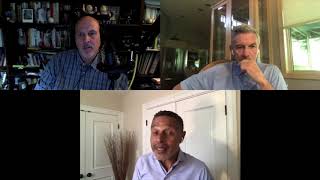
In this PeerNovation episode, hosts Randy Cantrell and Leo Bottary interview Mo Fathelbab, founder of Forum Resources Network and author of Forum: The Secret Advantage of Successful Leaders and The Friendship Advantage. Mo recounts how a mentorship with Vern Harnish led him from the Young Entrepreneurs Organization to creating peer‑group forums, describing the transformative power of sharing personal loss that re‑connected him with his own father. He explains the common resistance leaders feel toward peer groups, likening the challenge to selling a product people have never needed, and outlines how he educated CEOs about the value of confidential, small‑group meetings. The conversation shifts to the pandemic, where Mo describes moving forums online, noting that virtual settings accelerated bonding and added a humanizing “cave‑tour” element. He then introduces the seven DNA keys from his second book—alignment of purpose, mischievous fun, vulnerability, sharing & generosity, kind truth, and others—as practical levers for building deeper relationships at work and at home. Mo shares concrete facilitation techniques (e.g., asking team members to voice a current joy and pain) and stresses the importance of emotional check‑ins, especially during crises like COVID‑19 and social‑justice movements. The episode closes with resources for listeners and a reminder that high‑performing teams start with the power of “we.”
Chapters
Welcome to Peer Innovation, the podcast with Leo Battari and me, Randy Cantrell. Building on our previous shows, The Year of the Peer and What Anyone Can Do, we turn our attention to helping business leaders build high-performing teams. We'll talk with a diverse group of thought leaders who will share stories and insights that will help you and your teams achieve new heights. If you believe there is strength in numbers and that meeting the challenges of the future can only be achieved if we do it together, then join us for the conversation. Mo Fathelbab is our guest today. Mo is the founder and president of Forum Resources Network and former executive director of Young Entrepreneurs Organization. Mo has authored two bestselling books. In 2008, Forum: The Secret Advantage of Successful Leaders and in 2018, The Friendship Advantage: 7 Keys to Building Relationships That Transform Culture and Drive Productivity. We welcome Mo to the show. Welcome back to another episode of PeerNovation, the podcast. PeerNovation.co is our website. He's got to have the coolest name of anybody that we've had. First and last name, way cooler than my name, way cooler than Leo's name. Mo Fathelbob is our guest today. And, uh, welcome to the show, Mo.
Thank you. If you only knew what my last name meant, it means to open the door. So even cooler than you might've realized.
Yeah. Well, now you just had to really trump us all.
That's awesome.
That's awesome.
Well, that is great stuff. And I have to tell you what an honor it is to have you on the show. Um, you know, and obviously we want to really do what we can, especially for our audience to take advantage of all the amazing experience you have. When it comes to leading forums and leading peer groups, as you have not only in the US but across the world, and have trained so many people, you know, to facilitate these groups as well. But I'd love to, excuse me, get started a little bit by asking about how did you get into this, you know, in terms of what really attracted you to this idea of peer groups and working together, and why has it effectively become your life work?
Yeah, well, first of all, thank you for having me. I'm honored to be with you guys. I definitely found my passion, and I guess, you know, I have to go back to Vern Harnish. If, if you don't know him— I know that you do— but if you don't know him, he is just an amazing speaker, teacher, curator of the best of the best education for helping CEOs grow and scale their businesses. So he was my entrepreneurship professor in 1989, if you can believe that. And it was my last semester of college, and he offered me a job as associate director of EO, which back then was YEO. It was the Young Entrepreneurs Organization because we had a maximum age of 40, and now there is no maximum age, so it's just EO, the Entrepreneurs Organization. So he hired me as executive director. And within a year, we started to create an alliance with YPO, the Young Presidents Organization. And soon after that, we learned about these peer groups from them. They said this, this concept called Forum is our number one member benefit. And we all went to Toronto, a bunch of us from all around the country, to attend this training. And it just was mind-blowing for me. I found that, you know, I shared things I never thought I would share before. And I found it to be just moving, meaningful. And I decided to make it part of my job. I went around and started new groups for the organization for the next 6 years. I did it as part of my job. I didn't, I didn't get paid more for it, you know, save for an extra bonus here and there, but I just did it because I loved it. And in 1997, I decided it was my favorite part of my job and I'm going to make it my business. So that's, that's how I got into this.
Wow, that's fantastic. And, and so was there anything in particular, was there a moment in time where there was a particular story or particular meeting you went to or something that was kind of transformational for you in some way, or something that you think to yourself, well, here's a story of how a group impacted someone's life that I will never forget?
Yeah, many, many, many. But, you know, I think probably the biggest for me personally is I, in my own group, we probably had been about a year and a half into it. We've now been, you know, doing it since 1991. And so it's pretty remarkable. But about a year and a half into it, one of our members lost his father. And I had not spoken to my father in 10 years at that time. And honestly, I didn't think I needed my father in my life because I didn't grow up with him. I didn't have him as part of my upbringing and part of my childhood. And when I tried to get to know him, you know, in college, we started to clash a little bit. And so I didn't think I needed him in my life. And I got plenty of advice to call him from my mom's family that I just ignored. But lo and behold, this, this member of ours loses his father and we go to the funeral. And in the subsequent meeting, he says, I want to talk about this some more. He reads the eulogy and then starts sharing very vulnerable and painful things with us. And that, that, that moved me. And it's because of that single meeting that I have my father in my life today.
One of the things I know, just one quick thing that just struck me when you said that though, and I think one of the, you know, you'd gotten a lot of advice from, from other people, even your own family members, to talk about maybe what you should do or what they recommended for you. And yet You know, I think one of the powerful things about these groups is it puts you in a situation as you hear other people's experiences and as you have these kinds of conversations, it allows you to come to a place where you can reach your own conclusion about that and act on it as opposed to it coming from the outside. It really comes from the inside out in so many respects. And, um, that's a, that's a powerful story, certainly.
Thank you. And it's a powerful lesson because it's too easy to just tell somebody what to do. And, you know, it just often, at least as it was for me in this very case, in one ear out the other. But, you know, when I hear it through the heart, it resonates.
Mo, entrepreneurs and CEOs in particular, you know, the stereotypical Type A kind of a personality, and we clearly know the loneliness of leadership, the reluctance of people to take advantage of a group like that. I mean, I'm curious the resistance that you have encountered throughout the years and some of the ways that maybe you can help leaders overcome that reluctance to basically be that vulnerable.
You know, I think some people may not be ready to deal with their own vulnerability. Something I hear I hear sometimes in the groups that I work with is, I'm not ready to admit this to myself, let alone to you guys. And that's already from, you know, a group of people that are doing this, that are sold on it. But, you know, back to your question, when I started this business, I thought this is the best thing since sliced bread. And every association in Washington is going to be clamoring for it. I think the big challenge then is people just didn't understand it. You know, so if you're selling toilet paper or bread, people know they need toilet paper and they need bread, and it's just a question of what brand they like, how much they want to pay. But you don't have to convince them that it's something they need when it's something they've never used before. And so my, my challenge for, you know, as long as I've been doing this— it's becoming much more prolific now. I mean, we're doing forums inside of Google. We're doing forums with Harvard Business School alumni and the slew of organizations that are nonprofit organizations for CEOs or entrepreneurs. But back then, nobody had a clue what it was. And I think the biggest thing was, you know, first people had to understand it and then they had to realize that they want it. So it was a tougher, proposition when people don't even know what you're talking about? Because if you describe it to somebody and you just say, hey, it's a group of 8 to 10 people that meet every month in a confidential structured environment to help one another in every way possible, whether it's personal or professional. Okay, you know, academically, mentally, I get it. But do I really know what that means? Do I really know how special it's going to feel to be in this room with this group of people who know me, where it's okay to be myself, where it's okay to be flawed or to make mistakes so we can learn from each other and grow. That's, that's, that's, you know, that's, that's a hurdle for a lot of people. But thankfully, we found enough of them that, that don't see it as a hurdle, that see that, that it's really life-changing.
We're now more than a dozen or, well, yeah, we're about a dozen years, I guess, away from your first book, Forum: The Secret Advantages of Successful Leaders. In those years since you wrote that book, and especially in light of today's pandemic, what would you change about the message of that book, if anything?
Well, the big change is that book was created for groups that meet in person physically. And, you know, the thing that happened, you know, just starting February of this year, when I started this work with Google, they said, hey, we are going to do this virtually. We're going to use Google Hangouts. And that changes a lot of things, you know. So instead of driving for a half hour or an hour to meet with your group for 4 hours, you're now dialing into Zoom. But, you know, are you going to sit there for 4 hours in front of a screen? I don't think so. So a lot of the changes really have to do with The fact that when are we going to meet in person again? So, you know, you bring up COVID and what's interesting about COVID and with the Google cohorts is that I think COVID has actually been beneficial for the groups bonding more quickly. So imagine we started this first meeting in Mountain View, California on the 6th of February. And we were just starting to hear about COVID in the US. At that point, but we had no fears. It seemed like something on the other side of the world that wasn't really relevant to us. But I think the social distancing and isolation that people started to encounter in the months to follow made these groups even more special because everybody was just at home, stuck and not able to socialize. And so this really provided that opportunity, and it made it much more special and meaningful. And the groups, I would say, bonded faster than I thought they would in a virtual environment. I expect them to bond quickly when it's physical, but in this virtual environment, I was a little apprehensive, and yet they bonded faster still.
Yeah, I agree entirely. I've seen it with new groups right now where— and I think there's a couple of reasons for it. First of all, they're all kind of figuring it out right now, right? And they're all in this place where they're trying to figure it out. They tend to meet for less time, a little more frequently. They're diving into what they share in terms of the storm that everyone's going through together. And also, I think it's interesting where there's just a little something more intimate and more human about inviting people into our homes and having these conversations in this way as opposed to meeting in a central space, which I think has seemed, you know, from my perspective also to kind of cut through some barriers really quickly. And there are some of these leaders of the group saying, oh, but we're not getting this process and that process. But I'm like, you guys are way ahead of the game. You're connecting so much faster and building relationships so much more quickly. And that's the hard part. And that's the important part. And so I'm sure, you know, as you suggested, you're seeing a lot of that too.
Absolutely, absolutely. And, you know, the first month of COVID I mean, I don't know about you guys, but over here things just came to a halt. And, you know, my, my thinking at the time was, okay, you know, and this is, this is late February, early March maybe, and I'm thinking, we'll just, we'll just wait this out, you know, it's, we don't have to go crazy, right? But what became quickly apparent is, guess what, you got to reinvent. Yeah, I have to reinvent this business because if I just think we're going to wait for COVID to pass and we're going to go back to normal, you know, I thought that for a little while, but I don't think that now. I mean, maybe we'll go back to normal. I certainly hope so.
But what if we don't even know what normal is going to be now?
What is normal going to be?
Totally.
Yeah.
Yeah. And it's a longer wait than anyone probably thought right out of the gate too, when all of a sudden everything went into lockdown and next thing you know, they're doing virtual meetings and people now, they just don't know how long it's going to last. They really don't have any idea. So it was a question of, you know, how do we pivot? You know, how do we figure out, how do we find this opportunity inside the adversity here? And, you know, I mentioned too that, you know, so many of the tools we're using right now, whether it's Zoom or Microsoft Teams or Slack, any of it, you know, back during the 2008 financial crisis, none of those tools even existed. We're actually really fortunate at a certain level to be able to find ways to leverage these resources and be able to continue to connect with one another and how important that is.
Absolutely. And back to your point from earlier, we're seeing each other inside each other's homes. And I see Randy's cave. I see somebody walk by in your background. And you know what? That's human. It's real. And I think that's all right. But, you know, the other thing is when we connect in this way and we see how easy it is, I don't know about you, but the number of just basic phone calls that I would have had by phone, many of them have shifted to this platform. And so now what was a regular phone call where I'm just hearing someone has become elevated because now I'm seeing the person and we could share documents and slides and all that stuff. So I think we've had that benefit as well.
I had a client make an observation because of the Zoom stuff. You're also able to see your own facial expression, which I had never thought about. So the interaction for them, they felt was even deeper because now I can kind of see my own face and how I'm reacting to the team.
Yeah, absolutely. Absolutely.
You know, uh, well, one of the things this has also had an impact on is it's been a surprise, I think, for many CEOs who, at least in the early months of this, are finding their own teams not only continuing to be productive, but in some cases even more productive. Now, that may— this is going to have its challenges, I think, over time. Certainly, you know, we talked about everything from people being burned out to feeling isolated, insulated, feeling obscure, that they're not being noticed because there's no office to go into. Does anyone know how hard I'm working? Or being inspired and all of that. But, you know, based on kind of what you're seeing and hearing right now, what can leaders who are participating in groups, who I think themselves are kind of building muscles around collaboration, whether it's in, in-person or virtual world, what do you think about either some of the challenges or what you think some of the opportunities are to strengthen organizational teams at our companies, whether they're cross-functional work teams or departmental work teams going forward?
So we have a big opportunity, and I think an obligation, Everybody's suffering. You know, I don't know anybody whose life is not in some way upside down. You know, maybe you still have your job, but now you have to work from home. Maybe you still have your job, but now you got to juggle homeschooling the kids. Maybe you've lost your job and now you're thinking, oh my God, what am I going to do financially? And maybe you just have a huge amount of anxiety about Oh my God, my life's upside down. And, you know, you're worried and you're afraid for your basic health and safety. One of the things that I've done with a few executive teams that I think has been really magical and important is to create a space for them to talk about their emotions during this crazy time. And so, you know, a very simple question that I've asked many, many groups is something along the lines of, So here we are, you know, July or June, you know, let's stick with July to make sure that the example fits, you know, 2020. And we have this incredible fear around COVID. We have this huge movement about Black Lives Matter and racial equality. And it has to be affecting you somehow. So the question I ask people is, "Take a minute and tell us what are your primary emotions in this moment, and what are your words to describe those emotions to give us a sense of what's going on for you?" And, you know, I will— maybe more than 70% of the groups with whom I do that have a real meaningful emotional connection as a result of that conversation. But I think it's a powerful outlet, I think it's a powerful team-building opportunity because without having those conversations, we're just pretending, you know, life's okay and I'm strong and, you know, but what we have going on, which is unprecedented, is we have a global vulnerability. We have a global vulnerability. So prior to this, you know, I have my issues, you have yours, but We don't know each other's issues unless and until we spend time and energy to get to do that. In this COVID environment, you kind of know, you could just ask anybody, so how has this affected your life? And you very instantly, more safely than before COVID will get very close to somebody because everybody's been affected. And so to miss that opportunity as a leader And to not give your team the chance to connect through that, I think, is a big mistake.
Yeah, no question. I mean, that's very powerful. And we know too, so often, how many countless times in group settings, for example, where a CEO is struggling with how they may want to proceed in a certain way. And so much of it isn't really about what the objective facts are telling them. It's about what feelings that person has experienced that's either holding them back or from whatever, from making that decision. It really has very little to do with— someone lays the facts out there and you'll have the group looking around each other and say, well, but there's something going on. There's something emotional there that is really the dilemma. That's really much more about the core at what's going on. And so I think to your point, this is, again, this is kind of the opportunity opportunity in the adversity here. Since we're all going through this storm, now everyone's affected in different ways, certainly, but it's still something we hold in common. And to be able to have deeper conversations about that and really be able to talk about how we feel in that regard, I think is hugely valuable. And I'm sure you're hearing from CEOs, some of which, some of whom are, I wouldn't say embarrassed, but they they were kind of putting it out there that until the last, you know, from February on, let's say, they probably never asked their people more often, how are you doing? How are you feeling? Not, did you get me— can you get me that report on Friday? Or, you know, these kinds of things. But far more human connection. And I think it seems that that has really started to create some powerful bonds. Among people, but certainly being able to see their leaders act in the face of adversity in a way that makes you feel better about who they are, not just as CEOs, but as human beings.
Yeah, I can't imagine that you would get on a call with your team members and not ask, how are you doing? We're going through some stuff here. I just can't— how cold and callous can you be?
Exactly. No, it's so true. And it is fun. To your point, when you were pointing out whether Randy's cave or people in the background, but it's so true. You're on these Zoom calls and people have dogs jumping on their laps or there's kids crying in the background. And it just really kind of levels— it just taps into our common humanity, right? But we're all just really out there just trying to do the best we can. And do well by one another and for one another. And I think it just makes things just a little more forgiving if someone makes a mistake or something isn't quite as on time as we would have liked it, or we're helping each other through these things. And I think working together less as fellow employees and more as fellow human beings, which just kind of feels pretty good.
I love what you said, tapping into our common humanity. I think that is really at the core of a lot of this. If we tap into that common humanity that we share, what I have noticed for years doing this work is you start to see, you know, as human beings, we have a lot of the same, you know, feelings and emotions and challenges and worries. And, you know, to pretend we don't have those things separates us, but to own those things connects us.
So let me segue to your book because the whole human connection thing I think really is at the— seems to be at the heart of your most recent book, The Friendship Advantage. Tell our audience about this and what maybe what precipitated your your inspiration to write that book?
Yeah, so my first book was really about peer groups and really about how to get those peer groups started and how to make them work effectively. And what I started to realize over the, the years since I wrote that book 12 years ago is that a lot of the DNA of what makes these groups, these forums, these cohorts so powerful is really simple stuff that every person can do in life to have better relationships. And so, you know, in these forums, it was not uncommon, and it's still not uncommon, for somebody to show up to a meeting and say, you know, I've never shared what I'm about to share with you guys. Or to say, you guys are closer to me than my best friends. And so what I did for this second book is I broke down the DNA of the components that enabled people to have such powerful peer group experiences. And I really examined, do all of these things or which of these things are relevant for relationships at work or even at home? And those are the keys that are a part of this book. And so, you know, one of them is, do we have alignment of purpose? Are we going after the same thing? Alignment of purpose and values. Another one is mischievous fun. You know, who doesn't like to have fun? And when you have fun with somebody, real fun with somebody, you connect very quickly, much more quickly I think it's just one of those hacks. It's one of those shortcuts. Vulnerability, you know, it's another key that we've touched on already. But I want to quote David Bradford, who is a professor at the Stanford Graduate School of Business. He says vulnerability is the currency of relationships. And without vulnerability, relationships remain superficial. And so think of any relationship in your life, and if you are not as connected to that person as you would like, then one or both of you is simply not being vulnerable with the other. For me, you know, there's no chicken or egg. I think I always have to go first because I don't know what the other person will and won't do. Sometimes I'm surprised to find somebody else go first, but without that vulnerability, it's a superficial relationship. Sharing and generosity. I think sharing and generosity And it's not about money. You know, when we did the Petra Coach webinar, we had an interactive session where people talked about the value of sharing and generosity and in what ways they experience it. And I would say money was less than 20%. But are you giving your time? Are you helping somebody out who needs help? In what ways are you generous with your spirit as it relates to the people that you care about in this world? So those are a few of the keys, but really those keys are all about how to connect more deeply, how to have better relationships, more authentic relationships. One of the keys is kind truth. And kind truth is, do I have the facility to tell you what is not working for me in our relationship, but to do it kindly? Because some people just avoid that conversation altogether. That's my background. And some people, and some people don't care how that conversation sounds, and they're happy to slap you upside the head with it. And that doesn't work either. And so kind truth is the space in between where we can kindly speak our truth about things that can improve our relationship or things that are getting in the way of our relationship.
You know, and as the recipient of one of those kind truths, to see that for the gift that it is, because no one would want to express themselves to you in that way unless they truly cared. And in most cases, just truly cared about you as a person and care about the relationship. And, you know, the other things you talked about, I think, are so powerful because whether it's about fun or vulnerability or sharing, it is one thing, and I'm sure you've experienced this, to have what people might regard as a safe environment, and it's quite another to have them leverage that safe environment in a way that maximizes that rare place where they can go and truly be able to put their best face forward and not have to always put their best foot forward all the time, right? So I think so many of the things you talk about can be really helpful in breaking down those barriers so people can feel You know, you talked about the sharing. I've always felt it's an act of generosity and courage, really, to be able to share. It's hard to put yourself out there, yet it's so profoundly generous when you think about what it can mean for the other people in that room, in addition for yourself, when, you know, you can have that kind of exchange with other people. I think it's just remarkable. So yeah, thanks for sharing that stuff.
Thank you. And I want to highlight the word gift of receiving that kind truth. Because if I have a behavior or if I do something that gets on the wrong side of you, and you are my brother, you know, or you are my best friend and you truly care about me and you don't tell me, I'm going to perpetuate that behavior over and over and it's going to cost me. And so by telling me, you're giving me the opportunity to see something that I didn't see in myself. And by seeing that, I have an opportunity to decide how I want to do it different next time. And I think that's huge because none of us are fully aware of who we are. We have— it's a big generalization, but we generally have blind spots. And unless I'm aware of how I impact you, then how will I see that blind spot?
You know, it reminds me of a story, actually, of someone who, you know, someone kept exhibiting a certain behavior. And because they never told them, it never changed. And because— but the expectation of that person somehow was that they were going to behave differently. So after about the 10th time this happens, the person is now so exasperated about the fact the person keeps exhibiting this behavior, and then you start looking at them and saying like, all right, who's this problem really? Like, you know, like you have the same expectation even though you've never said a word about it. And yet all you got to do is kind of put it out there and I think everyone will be, you know, okay. But, you know, we can get into that loop. And, you know, we've often talked about in the show too that people are not typically good with vacuums in communication, right? So in other words, if someone's late to meet you somewhere and you're sitting there long enough, you'll start filling in some story about why they may be late or whatever that happens to be, right? Because we just can't help ourselves within those assumptions. And so when we can both express and receive those kind truths you're talking about, what a I mean, that is such a game changer and so powerful and so important.
Game changer. That's a good word for it. Absolutely.
Yeah.
Mo, give our, give us and our audience a few, a few key takeaways from your vast experience with forums and with groups, but make application to those people that have teams inside their companies. You know, someone that may have 5 direct reports or 15 direct reports, and they're really trying to They're really trying to make their team up their game big time.
Yeah. You know, so one of the things that I see with those teams all the time, and it takes a CEO who's courageous, and usually it is the CEO who brings me in. But one of the things I see commonly is the shared vulnerability and the impact on that team. And so I might ask a team of 10 people, you know, a very simple question. Tell us about a big, a big joy in your life, and tell us about a big pain in your life. And within 30 minutes, you know, 80% of the people in that room are in tears. And their tears, certainly they have pain behind them, but the connection and the humanity, the shared humanity that comes from it. You know, they start to see each other differently. And when you see somebody as a human being for who they are, it's much harder to judge them. It's much harder to say, you know, "What an asshole." Pardon my French. You know, it's more like, it's more like, "Okay, now I understand why they're doing that. Now I know where they're coming from." And then Add that to the kind truth, which is something that obviously comes from the peer group experience. And guess what? If you work with somebody day in, day out, from 9 to 5 or 9 to 9, chances are something has happened along the way that you've not handled well or not handled at all. And to be able to have that conversation gives those teams the facility to self-correct, to self-repair, so that their communication and their connection and their relationship can be more in line. So now imagine as an employee, if I'm not having to manage those relationships, how much more productive we can be if we're all aligned as people. And now we can really go after it and make things happen versus wasting time posturing. You know, one of the rules, for example, from the peer groups is if I have a problem with Leo, I'm not going to complain to Randy about it. Well, it turns out, you know, that kind of is a pretty good rule of the workplace as well, because back to our kind truth conversation, if I have a problem with Leo and I say nothing to him, I continue to build a case and create more stories about him that very well or just made up in my head, I start to believe them. And now by complaining to Randy, I'm starting to poison him unfairly, Leo never having had the chance to respond. So you could imagine what that triangulation does to a culture. But to disallow that, which is, you know, a two-way street— I can't complain to Randy, And if Randy hears me complaining to him, Randy would say, hey, Mo, did you talk to Leo? So we start to remind each other. And as a team, we become much more cohesive because we operate on this very important set of values that says, here's how we're going to treat one another and how we're not going to treat one another. So those are a couple of examples. But, you know, they're the first kind of readily available examples for me.
Very good stuff. So tell us, you know, where people can learn more about you. I mean, we could have this conversation for hours, I'm sure, but we want to respect your time. But at the same time, I know that for people who may not be acquainted with you, as well known as you are, I would love for them to be able to learn more about you and your work and whatever that looks like. So Randy and I certainly invite you to share that with us, and we'll also make this available in the show notes as well.
Yeah, thank you. Thank you. So first book is Forum: The Secret Advantage of Successful Leaders. Second book is The Friendship Advantage, and it's got a long subtitle about 7 keys to building relationships that will transform culture and drive productivity. And then a couple of websites, Forum Resources Network, as well as moefatalbab.com. The first one is more about the work of the peer groups that we've discussed. The second one is more about my keynote speaking work. And so they have different purposes in that regard. And then of course, some on social media and YouTube, and you could see some of the speeches or snippets of them and certainly many webinars and all that.
Well, it's been great having you, Mo. It's been terrific. I'm going to give you the last word, Leo, but I invite our audience to visit our website, peerinnovation.co. That's peerinnovation.co, and you can find out how to subscribe to the show. And we appreciate our audience and Mo. It's all yours, Leo.
Thank you, Randy. And thank you, Leo.
Yeah, you bet. Um, I really appreciate you and your work a lot. And one of these days when we start traveling a little more normally, um, look forward to figuring out how we can get together, because I know, uh, we'd enjoy that. So thanks again for everything today. And thanks for joining us on the show.
Thank you both very much. My pleasure.
Thank you for joining us. To subscribe to the podcast and learn more about how you can engage peer innovation for your organization, contact us on the website at peerinnovation.co. Till next week, remember, the power of we begins with you.










