On Our Shared Humanity with Anna Oakes
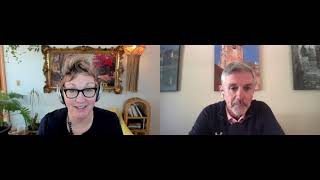
Anna Oakes, founder of Oakes Co., argues that remote work must shift from crisis mode to sustainable practices by measuring impact instead of hours logged and building psychological safety. She recommends culture audits, transparent communication, and rewarding coaches over individual players to operationalize culture as daily habits.
Chapters
Welcome to Peer Innovation, the podcast with Leo Bottari and me, Randy Cantrell. Building on our previous shows, The Year of the Peer and What Anyone Can Do, we turn our attention to helping business leaders build high-performing teams. We'll talk with a diverse group of thought leaders who will share stories and insights that will help you and your teams achieve new heights. If you believe there is strength in numbers and that meeting the challenges of the future can only be achieved if we do it together, then join us for the conversation. Today's guest is Anna Oakes. Anna is the founder and CEO of Oakes Company in Milwaukee, Wisconsin. Anna's main goal is to restore humanity back into our work and our workplaces, one human being at a time. We welcome Anna Oakes to the show.
Anna Oaks, welcome to the show. I have to tell you, I am so excited to have you here. I had listened to a number of your podcasts and obviously not only found the information great, whether it was, you know, you just kind of riffing on whatever team subject or, you know, times where you had guests. But the thing that really— it's kind of one of those things, you've had me at hello. You know, because in the intro of your program, you talk about not only you're passionate about high-performing teams, but restoring humanity back in the workplace. And I thought, there is the perfect guest for peer innovation. So thank you so much for being here.
Oh, it's an honor. It's an honor. And it took me a little bit to get to clarity of my mission, but now that I have it, I'm not gonna let it go.
Well, no, it's really powerful. And I actually want to start right there. I really want to start with this idea of restoring humanity into the workplace. And especially here we are, you know, as we're entering close to a full year of teams working remotely and what the adjustment that's been for so many people and some of the pros and cons and some of the things that now we have to think about as leaders in terms of keeping these teams together and inspired and productive and happy and, and and all of that, but I'd love to get a sense of what you've seen out there over the last year and some of the things to think about, both positive and negative regarding that.
Yeah, I think first off, right, when you said we're entering almost a year, I think we all need to just take a deep breath and like exhale that because that's like, like that's big. And it's also, you know, it can be and should be, I think, a moment of pride, you know, Whoever's listening, we're still here, maybe in a different capacity, maybe in a different makeup than you were a year ago. But we're still here, you know, and there are many that are not. So, you know, like that, that is a point of, of gratitude, I think, right? But in terms of what I've seen, you know, the last year, as somebody who focuses so much on humanity and does that through performance, right, of organizations, It was an interesting case study to watch go down, right? So these organizations who had really, you know, after 19 years inside organizations, too small, too mid, and too large, most organizations really are scared of remote or were scared of remote work, right? They just, "Oh, I really need people in the office." And it was really hard to push those agendas, no matter what size of company I was at, honestly.
Oh, they were forced into it, for sure. Yes.
So now 5 years out, I see the same thing. I mean, it doesn't matter matter what size organization. So you, they, they were thrown into something that they already had, like a fear-based mindset around, right? So we sort of had to acknowledge that. And maybe not just the leadership, but actual employees who enjoyed coming to work, who that was part of their joy, their identity, their daily fulfillment to go into the workplace. So, you know, when we did it, I look back and I'm so proud, right? Because everybody did it. In a scrappy way. And there's nothing wrong with scrappy, because when it is an immediate decision, an organization, a leader, a person has to be scrappy. You have no time to, well, let's sit down and deliberate and let's talk about the right strategy. No, it's no longer healthy for our— or safe for our people to be in person. And we have to start figuring out how to still get work done. And ideally, right, to treat our employees really, really well, take care of the— of our employees. So it was fascinating to watch these employees get really scrappy with it. And I also think that as I look back into 2020, that we also had a lot of increased humanity, right? Where they, you know, you and I talked about when you've seen in my home, right? And people are asking like, where did that come from? Like, oh, I used to own a vintage shop. Like, you know, you just learn about it. And this is so different, Leo, from when we remember that first clip. I don't even remember when this was, years ago, where the news man was talking in his office and his like 3-year-old son pushed the baby carriage in and he's like tries to keep talking and there's all this background and the woman comes in and she's like on the floor trying to get them out. That was so rare and now that is more frequent. So once you invite somebody into your home, I think you are increasing humanity already, right? I've heard from people saying like, I used to not really like that person or you know, I just, I avoided them at, you know, best maybe and then now we're on calls and I'm seeing in their home and, and their son comes in to kiss them goodbye when he's leaving for school or whatever it is, even for single people, right? Just that intimacy, that true, like, hostess intimacy that you have, like it or not, when you showing people into your home breaks down some of those barriers. So for that, I feel like we've made some progress in humanity. And we've also— I look at from organization's perspective, Many organizations, just like humans, you cannot push them too early into change. You know, there has to be enough discomfort and often pain before they're willing to change. So I can talk all day about how I want them to focus on performance and humanity. But typically, we always start here. Because this is like, oh, it seems a little woo-woo, it's a lot of effort, what am I really going to get on that? Now they've been pushed into the discomfort and potentially into some pain where their toes are now at the line or over the line, ready to change, ready to say, we actually have to do something different. We have to go about our work and go about the way we are communicating with each other better and differently than we ever have before. And for that, I'm happy.
I think part of that humanity too, that leaders, and many that I've spoken to almost kind of sheepishly admit, that they now begin meetings not with, "What are you doing?" but, "How are you doing?" And what a nice difference that is, right? I mean, what a— like, talk about taking a breath and really feeling like, wow, you know, isn't that nice? And then everyone talks about, you know, kind of things they're dealing with and how and what they're doing. So you've got everyone, and again, you're just tapping into this shared humanity, you know, and this idea that We all have lives and aspirations and all of these fun things going on. And it's also fun to, you know, we don't blink now when, you know, we're in the middle of a meeting and someone's dog goes off or a kid walks into a shot or anything. That's just life. And how great is that? And how wonderful it is. You know, I remember seeing research around the fact that companies who had dogs coming into the workplace tended to have cultures where people treated each other better because no one wants to scream at somebody in front of their dog. It was literally some of those just crazy things, right? But I think that's true now. I think when we are talking to people, you know, from our homes, and again, like you pointed out, they're looking at the various artifacts, so they see kind of you as a whole person, not just you as a fellow employee or for the function that you may be delivering. I think that is really, really great. But you know what, the other thing we talked about though also, and I'd love for you to address this, is Well, there's no question we were kind of dragged kicking and screaming into remote work. And yes, in many respects productivity is up. And yes, in also many respects we have tapped into that shared humanity we talk about. Sustaining that's going to be a whole other challenge. So I'd love for you to kind of address this idea of what do you see in terms of the things leaders have to pay attention to, watch out for, and how they may have to do things a bit differently. Since we're working remotely.
Yeah, that's a, that's a great, that's a great segue because there is the pride of being scrappy, the hope that we have increased humanity, but now there is a requirement that we move from scrappy to sustainable. Because unfortunately, the work that's happening right now isn't real remote work, right? It was urgent, crisis-related remote work. And so people, leaders and employees, I don't think have the real flavor about how beautiful you know, remote work can be, about how productive asynchronous communication and work could make your team. So that's part of, I think, the journey to moving to sustainable for me, Leo, is that I'm starting to hear leaders, and I'm pushing the leaders in the companies to start thinking about that, right? Because, you know, I talked to a client who's an executive at a Fortune 500 company, I think maybe 100, I have to look back. And You know, I, gosh, 4 months in, you know, we touched base and I said, oh, how's everybody doing? You know, and oh, so great, productivity is amazing, right? You were hearing the same thing, Leo. And I just, the caution there is that might be false productivity, right? Effort, busyness is not productivity, right? So I really want to encourage that we look at and transition from thinking about the number of hours to what I've always hoped for work and workplaces, which is to look more at impact and outcomes. Right? So if you have a talent that can get the same amount of work done that their peer can get done, but do it in 20% less time, that's amazing. Good for them. They can choose to use that 20% and start to explore new things internally. I would love that, right? I encourage people to be impactful intrapreneurs, be like a kid in a candy store, learn things things you don't know about, get ready for your best next, wherever that is, internally, externally, who knows. So they could do that, or they could create a side hustle, right? Which makes them even more joyful, maybe upskills them and makes them even more productive in their day job, right? So I think we just need to look at efficiency, effectiveness, and impact, right? Squeezing— maybe not squeezing is the right word, because I feel like that's got negative connotation. Understanding that it's less about the hours and more about the outcomes. I'd really like— we can fill— it's never-ending work, right?
We could—
I can work 40 hours a week, or I can work 80 hours a week, and I bet you I can come up with work to do in those 80 hours. But I'd rather work less than that and figure out what my biggest contribution and impact can be and spend my time there. But that's going to take, that's going to take some change management, Leo, you know, from a, from a structure from the processes, from the people and the technology, it's going to take a little time, but you've got to start having those conversations. If you haven't already, got to start having them now.
Yeah, I agree. And I'm watching though, I think some of the leaders who are really much more attuned to this, to be leading by example, to be very public and transparent about they're a leader and they're, it's 2 o'clock in the afternoon, I'm going to go take my dog for a walk, or I'm going to do this, or I'm going to do that and let people know that being hunched over your computer 12 to 14 hours a day is not what you need to be doing. And that's not sustainable. It's not good for your health. It's not good for you, not good for your family. And it's certainly not doing anybody, even the company, any kind of long-term good. And it's great when leaders are transparent about that and they are kind of tacitly giving permission that you can do that too. And it's OK.
You know, and could be something as simple as putting an out-of-office on that said, "I left early today to enjoy time with my family or to take a walk in nature. I hope you do the same." You know, just thinking about, you don't have to, you know, shout it from the mountaintops. Most of what we do is an observation. But think about those small things that's tactical that you can do to start. I agree with you, setting the example, because I think the leader personality, the leader habits, the CEO, the founder, the co-founders, they trickle down. Like it or not, right? Even, even if you've got layers between you and someone, they're still feeling and watching that, and it's affecting the culture. So, and the culture to me is the daily outcomes of our habits and behaviors. So if we want different results over here, we have to focus on those habits and behaviors.
How much do you worry about— so one of the things that obviously, you know, I would suggest for a lot of CEOs and people who are reluctant for remote work to begin with is somehow there was this false sense of control and stuff that if everyone's in the office and I see them at their desks and they're all working right there, boy, then everyone's being productive and doing what they're supposed to do, um, and all of that. I worry a little bit that the longer remote work goes, or people working remotely I should say, um, the more that this little control thing starts to to eat at them and they start thinking about, okay, we need more metrics, we need more accountability, we need more things that basically is going to say to these people whose productivity in many cases is already up, that we, we don't know that we trust you anymore, because now all of a sudden we're gonna— so, right, so we're gonna do— yeah, we're gonna become a self-fulfilling prophecy. How much of that do you worry about in terms of of that just antsy-ness, if you will, where it's like, OK, if we're not getting back in the office, then clearly we've got to impose this, this, this and the other.
Yeah, I worry a lot, right? And I think it stems back to my last comment, Leo, where I've coached enough executives, founders, I've worked with enough teams over the years that, and so have you, that we've seen those habits. So if you are a nervous leader, if you are an anxious leader, if that person once had a leader or even a parent who was very hovering and very controlling, you have those tendencies in you, and during times of stress, that comes out, right? So I do worry that even those who have been able to sort of push or limit that behavior on a day-to-day now are reigniting that. And like you said, over time, especially if their business isn't having the results that they want, right? There's a lot of businesses during great, but there are many who are still not back where they want to be. So I worry that they're going to look at that and think, oh, you know, monitoring tools or more metrics. I would say, you know what, look, I'm a— tools can enhance, but tools can only enhance if you have the right structure, the right processes, and the right people. So I say, if you want to focus anywhere, and this is my advice, is like, you've got to focus on people leadership. Right? There are a good amount of people leaders in organizations who are not capable or don't truly desire to be a people leader. They did it because it was the next best thing. They did it because that was the only place to go. They did it because it was more money. They did it without thinking because it was automatic, whatever it was. And then they sort of end up there. But now is the call for like true leadership. We have player-coach models in most of the organizations, and I've tried to talk organizations out of that model forever. I'm not I'm not going to talk you out of it and say only have coaches, although there's some companies that do, right? You guys are tactical and strategic. These are the people nurturers, performance nurturers. But either way, focus on the leaders, focus on the people managers who are monitoring them day to day and start rewarding and building a reward system that rewards more for the player— or sorry, more for the coach than it does for the player. It's okay for them to still have tactical things that they need to do, but they need to start being rewarded for that because then they're going to start putting these things into practice. If they're a good leader, they'll start putting those things into the practice, and they're going to create an environment where they actually do what people leaders should do, which is provide resources, support, and encouragement. They don't have to do their job for them. They don't have to be an expert at that. I remember the first time I was, I was asked to be a leader of a team where I'd never done the role. I was like, I don't, I don't know how to, I've never done that role. But luckily, the person who asked me to do it within that side of the organization said, no, but you're a great people leader, you can do it. Now, I had to earn credibility with those people. They were like, you've never done our role, what do you know? And I, and I led with, it's not my job to do what you do. It's my job to give you the resources, support, and encouragement that you need. So that's where we've got to move, in my opinion, Leo. So I worry a lot about it. And my hope with the increase of humanity is that we will refresh the role of true people leadership. And those that no longer want to do that will self— like, they will opt out and find something more impactful within that organization or elsewhere to do. And that we will get an increased nurturing, an increase of what I believe all the employees deserved all along.
You know what's interesting, and this is kind of a nice maybe segue into wanting to talk a little bit about culture, right? Because now we've got all new challenges around that. I'd like to think that for astute people leaders, they're really paying attention to how people stepped up during this crisis and what are some of the values and behaviors that really shined, that really came through, that you want to make sure are noticed and rewarded and, and, you know, lauded really within the organization, recognized in a way where you hope to perpetuate even more of that among everyone. And I think the opportunity to make really nice tweaks, if you will, you know, in your culture and what people are paying attention to is really possible. But I know you have a really good sense as well about how to really take stock of your culture. And what that's about. And I'd love for you to talk a little bit about that, 'cause I know people also are feeling challenged. Like you've got people, as you know, who have been hired, who've never stepped into an office yet, you know, and who, so how do I make these people part of us really in that way if they've never kind of connected with us directly?
Yeah, the good news is that for those companies, and I have, I know people personally who have started after that, right? Somebody had their first day the day that everybody went remote. So the good news is, is that culture is actually the outcome of our daily habits and behaviors, right? Less of how we dress and less of how we look at a meeting and if we're nodding or if we're, you know, doodling, whatever. And it's, and it's more about how work gets done at your company. And it's more about how people, the format people choose to talk to each other in, and then how they talk to each other in. In those formats, right? Asynchronous, shared documents. When do I email? When do I call? When do I have a meeting? All of that indicates your culture. Similarly, I could say, it's just like a personality, Leo, where I could say, I want to be a highly strategic person. And maybe it's not one of my strengths, but I could say that I want to do that. But if every day, I'm in the weeds and I'm tactical, if, if I do no visioning, if I'm not learning and growing, if I'm not talking to mentors, if I'm not testing things out, failing and trying again, then I'm actually not strategic. And I'm doing no behaviors that are actually going to get me to be strategic. Similarly, in a culture, you can say you want your culture to be innovative. Which a lot of companies would say right now, right? But if your day-to-day and your tactical requires lots of meetings and lots of conversation, and there's not a lot of psychological safety and failing isn't promoted and, or even accepted, you're not innovative. And in fact, you won't ever be, right? So maybe that's OK. That's OK. Then figure out where you really are, right? This is how you operationalize your culture, right? So one of the— I'm a co-founder in a new company called Own Your Culture, and we're going to help startups and small businesses operationalize their culture and own it. And we start with auditing, right? You have to audit and be really honest. Again, like, I may have always wanted to be, like, known as somebody who's strategic, but I should ask people, like, when you think about my top characteristics and strengths, what do you think that they are? And if they don't see strategic, I need to be very— they might say, people think I have really high Empathy, and I show that way, Leo, but you know, we talked about my strengths. Those are actually not— Empathy is not one of my top 10, or even I think in my top 15 in terms of CliftonStrengths, right? It's not my natural way, but because I was raised by hippies, it sort of oozes out. But I show Empathy by being strategic, by being high Relator, by living in my strengths. OK? So do the same thing for your, for your culture. Get really honest. Ask your people, how would you describe our culture? And by the way, it's not your mission, it's not your vision, and it's not even your values. It goes back to like, how do we get work done here? How do people treat each other? How do I get ahead? What happens when I spot that somebody is doing something wrong inside an organization? Is it OK to speak up or is it not? If I speak up, who do I go to? Right? So, you know, audit your culture. And if you don't like where you are, and maybe I hope that many people would go like, we're not so bad. Yeah, we're not so bad. Or people think we're doing pretty good. But you should also ask, which is one of my favorite questions, Leo, as individuals, I ask in every one-on-one with my people. I ask in every one-on-one with my clients. I've asked it for years. What could I do better or differently? So even with glowing remarks, you need to be asking and What could we be doing better or differently to make your life more happy here, to make your work more meaningful here? When you ask it like that, great, you're going to get some really interesting input. But the key will be that you have to act on some of it. If you're not going to ask on— if you're not going to act on any of it, don't ask, right? Then please don't ask. But there's got to be something in there that you can, that you can act on. And in fact, the sheer, the sheer ask, and then acting on some things and explaining why you can't act on the other things is building your culture. Culture of transparency, of continuous improvement, getting closer to innovation or whatever you want to get, right? So first audit, then ask, put that input to work, and then you have to decide directionally. This is where I want my business to go. This is where I personally, right, our leadership team, myself as a founder, co-founders, whoever wants us to act like, this is what I want our culture to be like. And therefore, then you back into the behaviors. So we need to start doing things like this, and this, and this, having less in-person meetings, moving towards more shared documents. Or, you know, we need to set thresholds for what types of decisions get escalated and what types of decisions you can do on your own. Right? Really think tactically, how can I put processes into place? And that's why I say operationalizing your culture is a real, real thing. Right? As somebody who comes from an organizational effectiveness background, as somebody who has helped organizations inside and out move through efficiency, effectiveness, and productivity while considering humanity. Because I tell you, once you start to get in there, and first people are nervous, oh, you want us to become more efficient and effective? But the reason we want you to do that is so you have more capacity to do better at what you are doing or to do more of what you want to be doing. Right? So when you, when you tell them the And of course, they understand we want to save money by reducing hours and costs and all that stuff. Be transparent. But there is something in it for the person. Right? So operationalizing and owning your culture is impactful for the organization as a whole. It's impactful for your bottom line. And it's impactful for everybody in between. And it can be done.
Yeah, it also speaks to the importance— we all know that as individuals how important self-reflection really is, and really knowing ourselves. And obviously for organizations, it's the same, right? An organization that doesn't know itself— can you imagine hiring people that you believe are going to be a good fit in your organization when you don't even know what that is? You don't even know what that looks like.
That happens every day at organizations, right? And they go, oh, they're not a good culture fit. I would argue you don't even know what your culture is, so maybe, maybe they are fitting with your culture and you don't like what you see, right?
Someone brought up a great line the other day there, because you bring up this idea, because you can talk to leaders and founders or whatever, and they can talk about what they want in terms of what sounds good or what they've read in a recent article they saw or whatever. But I think it was Jen Thornton who was on the show who talked about the fact that, okay, there's what you want, but then there's what are you ready to manage, like, right? Like, you know, so, and this, this is a great kind of segue in some respects because I do want to touch on this before before we're done today in this notion of entrepreneurs. Like you think, oh, I want people just like that in my company. Really? Okay, tell me more about that and what that's like to manage and how that will work. And you've just got to be ready for what I think can be amazing contributions from people who are entrepreneurs and take that level of ownership and all that. But it's also different from somebody who really wants someone who just, just do what you're— what I'm telling you to do and don't go any farther than that.
Yeah, and you know, people— look, I, and I spent enough time early on, first probably half of my career so far, banging my head against the wall and being very frustrated, Leo. Like, why can't— why won't they just do this? Like, I gather They know what's right for the people. And I think probably, you know, time, maturity, being at the table long enough, my MBA, who knows, I finally was like, oh, I get it. Like, you can't do it all. There is a cost-benefit. There is a risk-reward that these leaders are constantly assessing. So I have to respect that. It's not your time. You are not ready to put the work in that it's going to take to create a culture that is this. So then accept that your culture is this. There's nothing wrong with that. Just accept it and live in it. And the more you can accept it and be self-aware, number one predictor of success for executives proven by Cornell, the more you're self-aware, the more your culture is self-aware, the more people feel like they don't have to be scared in it. It's like being in a no a-hole, I don't know if you can curse on this, being in a no a-hole culture, which I've worked in too, by the way, who have that policy. And then people act like a-holes all day. Because it wasn't really properly defined what an a-hole really is. Yeah, so I have it, I have it in my head what an a-hole really is, and I'm like, well, that's that, is that— but maybe when they thought of it, it was a different, different definition. So you got to be really clear on that. So I think that self-awareness is key, Leo.
And then ask the right questions.
Yes.
Um, there was a really interesting example I think you'll find, um, and especially with your background So I remember there was an HR director that came to me at a company who was bragging about the fact that they did a survey of employees, and it's like, how much the employees trust the leadership team. Oh, it was really high, it was in the whatever high percentage that he was bragging about. And I said, did you ask the question in reverse? And he said, what are you talking about? I said, I'd like to know, wouldn't it be interesting to find out how much employees believe the leadership trusts them? Well, to his credit, he asked it the following year, and you can imagine that number was horrifying. And the reason it was horrifying was because, um, all of a sudden you've got these people who are running these teams or whatever, and they've got budgets, they've got plans, they get everything, but they need 19 signatures every time they want to spend $20 on something. I mean, it was like, whoa. So there were those kinds of things that were completely counter to They talk about empowerment and all that. There's no empowerment here. I can't even move, you know, without getting crazy signatures, right?
That's so fascinating, and you nailed it because it goes to the behavior. That goes to the behavior that it takes to actually move an idea forward. How many signatures do I have to get to get something done? And then you wonder why nobody speaks up about what you could be doing better or differently, because it's going to be too much work and they know you're not going to listen. So you've got to be ready. It goes back to that cost, you know, cost-reward, cost-benefit, to make those changes. And I feel like, you know, look, I said I'm patient with those organizations who are like, you know what, Anna, we get it, but we just can't put the effort, the time, the money, the whatever into it. I now accept that, right? And I'm waiting for your toes to be at the line. I'm waiting for you to have enough discomfort and enough pain, and then you call me, or then you call someone else, or then you do the work internally. I don't care, just do the work. But when you're Your time is there. You've got to do the work or your company will eventually fail. Your people will leave you. They will. So when you get to— you asked me about the intrapreneurial culture. People are like, oh, tell me more about that. I'm like, well, listen, an intrapreneur is somebody who says, I'm not going to wait for permission. I'm going to own my impact. I'm not— I'm going to dig in here and I'm going to maximize everything I do here. And they're like, oh, that sounds good. Well, then you better create an environment where that actually works, because then they're going to be constantly hitting those ceilings of those 19 signatures. Or, gosh, I, I shared 32 ideas and none of them went anywhere. None of them. You couldn't have like, hey, you, you wanted a Tesla, could we do the Pinto version of that idea? You couldn't meet them somewhere? That goes back to the good leadership, Leo. A good leader will go like, whoa, this is a great idea person. Like, we can't do all these ideas you have, but let's talk about what we could accomplish. Let me tell you some of the problems that our team, our department, our company is really having. Let's talk more in depth about what our CEO shared at the last fireside chat or company meeting. Let me get your thoughts on that. And man, there, I just got chills. Like, their work, their meaning goes up, their product goes up. Their output goes up. And so you want real productivity, you want real impact, you look at the environment, you make an investment. And not just by like hiring a head of people or chief human capital officer who's amazing and has this great experience and who's charismatic, might get people to follow them. Like, that, that's one person. Then you have the leadership team, and then you have all the behaviors that trickle down. So it is, it is a long game. There is not an immediate ROI, although there are things that I believe people could start doing tomorrow. And leaders could start challenging, challenging themselves. Maybe I've never been a people leader like that. And it makes me feel kind of weird going to my people saying, hey, I'd like to try something different in our partnership. Makes me feel like I've done something wrong. Well, just say that then. Say, this feels weird to say this, but like, I actually really want to be a better people leader for you, for our team. Here's what I was thinking of trying. What do you think about that? What else could I be doing better or differently? What could our team be doing better or differently? And you might not hear the answers the first time, but you will hear, you will hear the answers over time.
And you do have to keep asking. You know, you remind me, this whole conversation reminds me of one of my favorite books. It was written in 1992 called The Customer Comes Second, Al Rosenbluth and Diane McFerran Peters. Have you ever read that?
No, you will love this. I bet I will.
Here's what it is. So The Customer Comes Second, it's about basically Rosenbluth Travel at the time. And of course, they eventually were bought by American Express for like a gajillion dollars or whatever, and largely because the culture was really rather phenomenal. And of course, the customer comes second means, of course, the employees come first. And if you treat the employees well, a little bit like, you know, what they did at Southwest and some other companies have modeled it, but when— so, so I read the first page pretty much, and it's like the customer comes second. They say, so I'm wondering, okay, what's the rest of this book going to be about? I get it, you know, kind of thing. What you read in the whole rest of the book, the extent they go to deliver on the promise of the customer comes second will knock your socks off. You go and you just— it's just every aspect of every single thing they do and how it's done all reinforces this notion of it's our— we are an employees-first culture. And because of that, and because of the fact that everyone feels like a million bucks, of course, they're treating their clients and customers or whatever in ways that are just off the charts, right? But it was such a lesson in how you really, really, really have to look at everything in terms of the way you do, because it's so easy to feel like, I want to do this, and you think it's some narrow set of tasks. When in fact it has to be pervasive. It isn't what you do, it is truly who you are. And getting there is really difficult. But I think the book really shines a light on like, oh my God, to the extent that they did every single thing you can imagine to do just what you talked about. Because if you're not delivering on and firing on all cylinders with all that, you know, it's just never going to translate.
So I love— thank you for that recommendation. First of all, I love resources because especially those that have case studies like that and real tactics practical examples that I could go, "Hmm, how could I put that into practice today, next week, next month, whatever?" Right? Like, we need to share more best practices on this, right? Like, I've ferociously read Ben Horowitz's new book. Is it— I always mix it up— Be Who You Are. Anyway, it's about building your business culture. Honestly, one of my top 5 books ever. And now I'm reading Jim Collins' new book, BE 2.0. right, about entrepreneurship, being leaders. Don't have to be an entrepreneur to read it. It's a great read. I'm looking at those tons of case studies. I'm writing all of them down. Like, what do they do? Why do they do it? Who did it? Please look for those resources, right? And, and as you talk about CX, I want to come back to the resources in a second, but let me make this connection. There's so many companies, there's entire companies that, that focus on CX, the customer experience, right? But it has to be CX and EX. Right? I love the introduction of the EX, the employee experience. They go together. Right? I can't guarantee that if you provide a good employee experience that your business is going to, you know, go public and be sold for, you know, billions of dollars. I can't guarantee that. But I can guarantee you that you're going to be aligned with humanity, that you're going to be able to sleep at night, and that you're going to be able to say that you treated your employees the best and that they gave their best to help you accomplish your goal, right? So there is something in that. And in order to do that, you have to look for these resources. So we talked earlier, Leo, about scrappy to sustainable. What most organizations are doing is not sustainable. It's not true remote work. Let's look to the people that have been doing this for a long time, right? A lot of tech companies, a lot of startups. There's a company called GitLab, right? Their head of remote, Darren Murph, is a good friend. He's been on my cast. They are putting out so much free content, so many free guides to asynchronous work, to leading remotely, to how to make decisions on meetings. Like, guys, just Google, right? We say Google's our best resource, but like, we'll put some of it in the show notes if you can, Leo. But look to these companies, right? We're trying to retrofit this remote work into what our organization is going to do. So it's not all going to work for us, but there are tons of great ideas in there. We are not trying to reinvent invent the wheel. Let's beg, borrow, and steal for what has worked as a leader, as a tactical, all of it.
I think beg, borrow, and steal is a great, great way to, uh, bring this to a close. I will tell you, we could talk for hours on this stuff, and I really enjoyed having you on the show. But what I really want to do is make sure that our listeners know more about where they can learn more about you, your work, anything you've got coming up that, um, you want to let them know about, and I certainly would love to know as well. So awesome. Tell us where we can learn more about you.
And yeah, always our, always our website. So the Oaks Co. So Oaks is O-A-K-E-S. Um, uh, and if that is too hard for you to remember our website, you can go to me on LinkedIn, right? Anna Oaks, O-A-K-E-S. Um, I'm very generous on there of who I accept as partners. I put my email, my phone number right there. I love partnerships. I love getting to know people like you and And, and, and every day, every day, what are these people doing in the world of work, right? Me keeping my ear to the ground and also paying it forward to see if I can help them with a bit of advice on how they could make a bigger impact or find more meaning in their work. Happy to do that anytime. So I think LinkedIn is a great place to start with me. As far as what I have coming up, hopefully big things, right? My word for the year is build, right? I'm a first-time co-founder as of November, as I was sharing. I really hope to do some meaningful work with that. I continue to do virtual speaking. Speaking in workshops with my company Oaks Co. I have loved that more than I thought I would, Leo. I'm doing some really fun stuff about entrepreneurship culture. Also, humanity and performance is one of my new favorite talks. I designed it for a startup locally here in Milwaukee, and I love it so much, and I want to do it again. Like, I'm like, who else wants to talk, right? So those talks, the consulting, the coaching, all of that good stuff. Just love to meet leaders, meet companies, where they're at, help them figure out where they want to go, and then incrementally, right, get there. And there really is never an arrival, right? It's a practice, like yoga, like anything. It's a practice, not a perfection, but a progress. That's what I hope for.
Well, thank you so much for being on the show today. And for our listeners, yes, visit Anna Oakes on her LinkedIn page. Get started there, learn more about the incredible work she does And we will see you next week. Thanks so much.
Peace and progress, guys.
Thank you for joining us. To subscribe to the podcast and learn more about how you can engage peer innovation for your organization, contact us on the website at peerinnovation.co. Until next week, remember, the power of we begins with you.










