Simon Alexander Ong On Our Identity
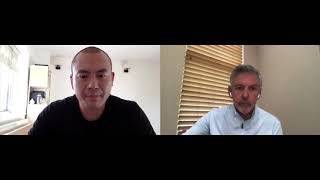
Business coach Simon Alexander Ong explains why mastermind groups work: they give you perspective from different people, external accountability that pushes you harder, and access to introductions and resources. He argues that real leadership is influence, not title, and that identity-driven change, where you shift how you see yourself, sticks better than vague goals.
Chapters
Welcome to Peer Innovation, the podcast with Leo Bottari and me, Randy Cantrell. Building on our previous shows, The Year of the Peer and What Anyone Can Do, we turn our attention to helping business leaders build high-performing teams. We'll talk with a diverse group of thought leaders who will share stories and insights that will help you and your teams achieve new heights. If you believe there is strength in numbers and that meeting the challenges of the future can only be achieved if we do it together, then join us for the conversation. Today's guest is Simon Alexander Ong. Simon works with leaders, entrepreneurs, and teams who are ready and committed to the next level of their success. As a coach and business strategist, Simon helps them transcend perceived limitations, dream bigger than they've ever dreamed before, and see how powerful and gifted they truly are. You can connect with him at SimonInspires.com. We welcome Simon to the show.
Simon Alexander Ong, welcome to the show. It's been a while since we've had a chance to really sit and chat. And by the way, I do want to say that for those of you who are watching on video versus audio, you know, Simon has his, you know, I think signature black on today. I was going to wear black and I said, you know, I can't do it. It's like wearing a red shirt, you know, on Sunday with Tiger Woods playing in the tournament. You just can't do it. It's just not done. So I just wanted to, hey, just welcome you to the show. To the show. And I know we're gonna have a really good conversation today because as you know, I think for, you know, for a long time, both of us have been really focused on the power of mastermind groups and what they can mean for us as individuals, as leaders, and as team members. And, you know, I'm excited to be able to, you know, talk with you about that and share some experiences and some ideas for our audience. So anyway, hey, welcome to the show. Thank you very much, Leo.
Looking forward to sharing this stage again. It's been a while, as you say, since we last caught up, and looking forward to sharing some fantastic insights and value to your audience.
Sounds great. Hey, to get started, I'd love to just— and I think people would love to really just catch up on what you've been doing right now, especially, you know, of course, during this whole pandemic, and maybe how that's changed your practice, or, you know, what have you been really kind of focused on over the last 6 months or so?
Sure, so as you said, Leo, we've all been facing this global pandemic, which means we've had to adapt, we've had to maneuver a little bit with the current circumstances. And situations like this always bring to mind that famous Darwin quote that it's not the strongest and most intelligent that survive, but it is the most adaptable. And so in line with that, I've also had to adapt A lot of what I do is speaking, speaking at conferences, speaking for company events. But unfortunately, as soon as COVID hit, I guess this applies to many cities around the world, all of that ceased to exist. All of those events were canceled or postponed. So I had to adapt a little. Fortunately, a lot of those events are still continuing with organizers adapting to hosting them virtually, which has been a great blessing. But also, I have had a lot of extra time because I haven't been traveling and also because I've become a new parent to focus on writing. And I'm sure we can explore this more in this session, Leo, but writing in the sense of writing my first book. Because during COVID I had a small win under my belt, which was signing a deal with a big publisher to, uh, to publish my first book.
Well, let's get to the important stuff first. Um, you have a new daughter and a new addition to your family, and it's been so exciting. I have to tell you, the pictures are fantastic. I think everyone has just really, um, loved, loved, loved, uh, seeing this amazing little girl. So tell us, um, you know, how that's changed, uh, things up for you a little bit.
It's massively changed things. If I've got to be honest, Leo, it's mostly for the better, actually. It's deepened my motivation. You know, it's given me more meaning in life. I think these things often do. If you are a parent, I'm sure you can relate. When you have your first child, it changes the way you see your world. You've now got extra meaning to what you do, extra motivation to want to do well in whatever projects or goals that you're working towards. But more important than that, it's actually made me more productive. You know, I look back now at the times before I had my daughter and thought to myself, wow, I was blessed to have so much time before. Now time just gets eaten up. But it challenges me to really think, what are my most important priorities? And what can I put off that isn't absolutely urgent to focus on? Because I have a lot more limited time than I used to. But other than that, I'm really, really enjoying the journey, Leo. Every step of the way has its own challenges, but we've been able to adapt. We had anticipated both our parents, my parents and my wife's parents, to come over to the UK to help us. But unfortunately, given they live abroad and with travel restrictions, we had to can that idea pretty, pretty soon. Because our daughter was born a couple of days after the UK went into lockdown. So that was a surreal experience in itself.
Yeah, well, I will tell you, as a dad of daughters, by the way, who are 31 and 30 years old, let me just tell you that time flies quickly. They go from being really little to grown-ups in a hurry. So enjoy every day of it. I'm sure you've got a lot of people telling you that. But it's exciting stuff. Congratulations to both of you. That's wonderful. Thank you very much. So on to the other stuff I'd love to get into today. As you know, so I've got a book coming out in about a month or month or so, or coming up in like mid-November. And it's basically called Peer Innovation: What Peer Advisory Groups or What Mastermind Groups Can Teach Us About Building High-Performing Teams. Obviously, you've got a lot of experience with this, and I'd love to get some of your perspective on what we can learn as leaders and as team members. That by participating in these groups, how can they make us better? What are some of the things that you've really seen out there?
Sure. For me and my experience with mastermind groups, uh, Leo, I think there's a couple of things that have been really powerful for me. Uh, the first is perspective. Uh, you know, we don't see the world as it is. We see the world as we are. Uh, and if we are only focusing on what is in our resources, what we can do, what we want to accomplish, it's actually difficult to open up and hear other people's perspectives. Accessing a mastermind group, accessing the minds of other people who are doing similar things in different industries, who have big goals in different fields, allows us to see the same event or experience through new eyes and lenses. And that for me is where innovation happens. You know, if you spend time hanging around with the same people again and again and again, well, of course you can't think innovatively. You've got to diversify. You've got to choose who is in that group carefully. Because for me, that is what feeds our imagination. It feeds our strategy to think different. So the first one is perspective. The second for me is challenge. And, you know, when you work for a company or when you are qualifying to get a degree at an institution, it is your professor or it is your manager that is holding you accountable. But when you are the top of the board at your company, when you are an entrepreneur, when you're a business owner, the only person really holding you accountable, if you don't have access to a mastermind group, is yourself. And often we can be our own worst enemy. And so when we are part of mastermind groups, when we are part of peer groups, we can be challenged to think different. We can be challenged to raise our standards, especially when we see other people doing that. You know, that's the power of environment. You know, I often say, Leo, that the quickest way to succeed in any area of your life, your business, and your career is to design an environment that makes it impossible not to succeed. And your peer group is a very big part of that because your peer group will either drain you or energize you, keep you where you are or hold you to a high standard and challenge you to be better than who you were yesterday. For me, the third one— so first is perspective, second is, uh, is, is that sort of challenge, if you will. Uh, third thing really is insight. You know, the insight of having these connections, the insight of having an introduction, uh, you know, of sharing your challenges, of putting your requests out there. You never know, uh, what someone in your group, someone in your mastermind can do to help you. And to help each other. You never get to the top alone. You know, I've been privileged to benefit from a number of mastermind groups in which I've shared my challenges, I've shared some of the big goals that I'm working towards, and people have either made introductions or they've connected me to friends or they sent me a book recommendation to help me make progress. And I think that has, that has been so important in my own journey, Leo.
Yeah, you know, you bring up a great point. I think in every one of these areas you're talking about, I think these groups can serve just as great practice fields for us, right? And in business, we don't practice, you know. I mentioned to someone that sometimes if you looked at business and then practice, what you get is best practices. You'll get all of these posts about best practices. If you look at golf and practice, What you'll find is all kinds of videos and everything to teach you how to practice golf and be better at it. So I love the idea that as you talk about this, they all give a different, you know, idea that this is where we kind of build muscles around these things about perspective and challenge and insights. I also think as we go into that group situation, we come into it with a mindset that I hope we can bring to our teams, and that is really looking at people and their perspective and themselves and the unique gifts that they bring as gifts, as things that are positive, as opposed to thinking, ah, this person works differently than I do and I don't like that. And, you know, and you start to be judgmental of that as opposed to trying to figure out and understand where that comes from and why that is the way it is. And so I'm hopeful too that, you know, this idea of being in a mastermind group gives you the ability to be a better team member as well as a team leader?
Definitely. I think especially for leadership, Leo, because I think often people can misunderstand what leadership is about. We tend to think that anyone who has a certain title is automatically a leader, but I think that isn't the case. You know, you can have someone who has the title of CEO, but because of the way they are, they are not seen as a leader. People would do what they're told because they're in that position, but they wouldn't be regarded as a leader. They wouldn't sacrifice things to help that individual further their cause. But you could have someone who's lower down in the organization, who has a lesser title, if you will, but that is seen as a leader, someone that people would follow, that they would sacrifice things for to further their cause. And it shows me that each and every one of us has the power to demonstrate leadership qualities in all that we do. And when you are part of a mastermind group, what that tells you, what that has taught me, Leo, over the years, is that you are successful in a company as a leader because of the people that you are responsible to lead. And it is how you manage those relationships with your team. Are you creating a space where they are appreciated, where they are supported, and where they are encouraged to be better, to grow. And for me, that really is the purpose of leadership, to create more leaders. And we can only do that by understanding the power of teams in furthering a cause. You know, there's that famous African proverb, you know, alone you can only go so far, but together you can go further. And that just shows the importance of who you have backing you, who do you have on your team.
Yeah, that is, you know, it's so true. I mean, if you just think about the— so a couple things there to unpack, I think. One is that even though you're not the leader of your team, you can certainly be a leader in your team. And I think to your point about peers, you know, I tell the story, speaking of daughters, and we were talking earlier, I often tell a story in a workshop that I have about— and I'll share this quickly— but my daughter Taylor was in preschool at the time, and they had this Halloween party, and there was a witch that came in to entertain the kids, and the kids were like, holy— they were scared to death. One kid cried, second, third. It spread like wildfire across the classroom. Taylor sees this going on, runs up to the front of the room, makes herself real big, and she says, it's OK. She's not real. There's no need to be afraid. And the kids are looking at Taylor. They're looking at one another. They eventually collect themselves. They go back to the party. The witch stays, and everything's cool. Now, clearly, the teachers would have restored order eventually, right? But I'd suggest, A, a lot of the disruption started because one kid got afraid. And they looked to one another. It's no different in a company when someone makes an announcement of some sort. We just don't go back to our desks and process that by ourselves, and that's it. We engage in sensemaking exercises with one another. And we do a lot of what those kids did in responding to the witch that day. And yet, what was fascinating was Again, teachers clearly would have gotten it under control eventually, but I'd suggest it happened a little bit faster when one of their own said, we're good here, there's no need to be afraid. And that was very comforting for them. And I think in the workplace, as leaders, when we understand that— and you made a great point about this— is that, you know, it isn't about people who have the fanciest titles and looking vertically down the chain. It's understanding where those leaders and key influencers, ambassadors that for what you want to do, uh, you know, are there. And, and that credibility can come from their tenure, come from their great personality. Maybe they have a technical expertise that people respect, whatever it may happen to be. But that peer-to-peer influence that exists in companies and on teams, super powerful.
Totally. So I mean, one of the things you see in masterminds, why masterminds are so great is you have a safe space. You have a safe space where people can share their challenges, where people can share their progress, where people can help one another. Now, if you were, if you were able to replicate that same feeling into the corporate environment, into the workspace, imagine how much more people would get done when they feel that there's that safe and trusted space to share their progress, no matter if it's a win or a fail. To share what they're learning, to share their challenges, to feel like they're heard, to feel like they're valued. I think there's a lot that we can apply from mastermind experiences into the corporate organization to not only benefit those at the top, but to also benefit the entire organization. Because when employees are happy, when employees feel like they are part of something bigger, then the whole organization benefits.
You know, you bring up a great point here too when it comes to psychological safety, because I think in many respects, and I'd love to I'd love to know some of your thoughts on this. It can be a bit easier to create that psychological safety in a mastermind group than it is in a team when you're in an organization where there are certain consequences that can come your way that are different from a mastermind group, right? So what would you say to leaders or team members when it comes to the difference and maybe the difficulty in some respects and the challenge between creating a psychologically safe environment in the workplace versus in a mastermind group. I think doing it in the mastermind group again gives us those muscles, you know, and we, we can exercise around that. But that, that step in our company, I think, is even a little more challenging.
I, I would agree, Leo. I think when, when you are in a mastermind group, it's easier because often when you are in a mastermind group, you are away from the company. So you might be with other leaders in this safe space, and you know, it's confidential. You kind of share within the group you have and it feels more comfortable because no one else in the company is in that group. But when you go away and you have to apply it to your company, I think one of the reasons why it can be more challenging is often internal politics. You know, if you really want to inspire change in your culture, in the team that you lead, it's not about telling people what to do because anyone can do that. You know, you don't have to be particularly talented to tell people what to do. The real measure is whether you are modeling the behavior yourself. Are you modeling the behavior that you would like your team to demonstrate? Because just like parenting, which again, I'm sure you can relate with, Leo, when we tell our children what to do, but we ourselves do the opposite, that doesn't really send a good signal to them. That doesn't really communicate efficiently what we want them to behave, what we want them to become, because they get confused. And children more often follow the adult's behavior than they do the words that come out of their mouth. And it's the same thing with a company. Now, you might tell your employees, we want you to share your failures, we want you to share your challenges so we can help you. But if you yourself aren't doing that, then it's not really leading by example. Why are the employees going to be the first to jump off that boat and share their failures when the leader it's saying that they don't have any failures or anything to share.
No question. You know, I know we both know Jim Kouzes and the great work that Kouzes and Posner does on the Leadership Challenge. And obviously the very first principle when it comes to the 5 exemplary practices of leadership is modeling the way. So unless you're leading by example, the rest of it becomes moot, you know, in so many respects. And, but I I think it's, it's challenging. So I think in many respects, it's kind of interesting. I'm sure when you're asked to work within companies, for example, and they may want a certain result, they may think to you, I want to improve the psychological safety in my company so that I can do X. Yet, how do you tell sometimes whether someone just wants something to happen versus whether they truly are committed to making that possible in that way that's necessary in order to be successful at it, right? Because it's one thing to your point, if they're not modeling it or they're not, they don't really believe it. They think it sounds good. They think all that kind of stuff. How do you get a sense of whether that commitment is really there, you know, from that leader to create that psychological safety?
Definitely. And I think it's hard and often, you know, I think it's a feeling, you know, when you're having a conversation with them. But if I had to pick out a few common features, I think one is the language they use. It's similar to individuals when we think about goal setting. You know, how do we improve the chances that we achieve our own goals? I think it's the same at the organizational level. If they say to you, you know, we need to improve here or we should do this in order to get this outcome, you can pretty much guarantee they're not really going to do much. But the language is we must make this a priority. This is something we want to make happen. The language is far more definitive. It's the same with when we set our own goals. If we say each year, I should go to the gym or I should change my career and it never happens, probably why it's coming down to your language. But when you say I must find a new job or I must start improving my lifestyle habits, suddenly the chances increase because it's a much more definitive use of language. So that's the first thing. And the second is whether they are willing to make changes to their identity. And for me, that's important because so often, whether it is our own goals or whether it's company goals, we always focus on the outcome. You know, I want my employees to be more X, or I want my employees to think like Y, or my leaders should be acting as A. It's the same with goals. I want to be fitter, healthier. I want to earn more money. The thing is, change does not happen at the outcome level. Change begins at the identity level. Only when you change your identity does it become a lot easier to change the behaviors and the habits and thereby the outcomes. Once you focus on identity, so if they are willing to shift their identity, how do they see themselves, who do they want to see themselves as, then the rest I think just becomes a byproduct of that.
Yeah, I think the identity is, is key, as you mentioned, because again, it's the outputs that produce the outcomes, right? So you, you've got to be able to really focus on those things. The other thing I really have found too is when I studied great teams. I often think that the teams that win championships all the time or put themselves in a position to win championships, that winning the championship for them is not the goal. For them, the goal is how do we get better every single day? How do we learn? How do we grow? How do we develop and just continue getting better? And if we're committed to doing that on a daily basis, we believe the reward for those behaviors, that reward for wanting to be better as individual contributors and as a team starts to be realized by championships. So I think sometimes if we could consider our goals more the reward and then that'll allow us to focus on those identity and those outputs and those behaviors and habits that are so important for us to form, you know, I would imagine that that can be really helpful for us as well.
Definitely. And I think, Leo, you raised such a good point there because in my own personal journey and what I see in companies and what I see of people wanting to become better leaders is you don't always get your goals, but you always get your habits. You always get your habits. It's what you put in day in and day out. You know, when I hear companies, when I have conversation with companies with regards to me coming in and facilitating a workshop or talking about leadership, And I say, how often do you commit to improving your leaders? And they say, well, we've got this event we do on a semi-annual basis, and it helps us tick the box to say we've done this stuff on leadership. And it always puzzles me because leadership isn't something you tick a box and say you've done the job twice a year. You don't become a leader by attending a workshop twice a year for, for a few hours. Leadership is a practice. Leadership is a way of living. It's a lifestyle. It's the way you are. And so it's something that, as you said, you improve day by day by day. You're constantly focused on how can you be a little bit better than who you were yesterday. And that's why habits are so important. And I think if we can move away from goals, yes, goals help to give us context to today's actions, but we shouldn't be so rigid on hinging onto that goal, but open enough to realize that actually it's the habits where the real difference is made. You may get the goal, but if you have the right habits in place, you are giving yourself the best foundation to win again and again and again and again. As you say, Leo, those championships, those trophies become the added bonus.
Yeah. And, you know, you bring up a great point too when it comes to focusing on those habits because that's what we should be celebrating all the time too, you know, is celebrating the hard work, celebrating, you know, oftentimes when you know, in my former life and, you know, being part of ad agencies and PR firms where we'd pitch business and we'd go through a tremendous amount of work in pitching this business. And in a lot of agencies, what'll happen is everyone sits around waiting to see if they won or not. And if they did win, fantastic. But if they didn't, then everyone's just depressed and all this other stuff. When the reality is that when you make the presentation, before you learn anything, that's when you should go out and celebrate. You celebrate the work, you celebrate the effort, you celebrate everything that everyone put in to creating something excellent. And, you know, and be able to do that and enjoy that. And I think, you know, because oftentimes when we— especially when we have these lofty goals, right, some of them are way out there in the future. I mean, to be able to sustain those daily habits that are going to be so important to making that goal possible a year from now or whatever it may happen to be That's a tough slog if you don't figure out a way to celebrate your actions all the time.
Definitely. I think this is why peer groups can be so important, Leo, because too often we focus on how far there is yet to go. As you said, sometimes it's a distant, distant future. But when we have the peer groups in front of us, what it does is it also helps us reflect on how far we have come. And often we don't give ourselves enough credit for that. We don't give ourselves enough credit for how far we've come, the challenges we have already, you know, overcome, we've worked ourselves through, how we've bounced back. We can often be harsh on ourselves and realize that we're still way behind where we want to be. But we've also got to remember we're all going at different paces. We all have different strengths, we have different weaknesses. And this is where peer groups can help us realize that we have to take more time to pause and reflect on the journey that we've been on and what we have already accomplished and the momentum that we have behind us.
You know, it's such an interesting point too. With, with the peer groups that I speak with, most of them recognize its importance, but still, even the peer groups don't celebrate enough. They don't take that time to celebrate one another's incremental progress and accomplishments and things that they have done. And, you know, and then you, you hope that again, kind of in this idea of this becomes our practice field, that the more they get used to celebrating with one another, the more they will bring that sentiment to their company so that they make sure that their people are celebrating all those small wins along the way, you know, and how valuable and important that really is. Because otherwise it's very difficult to sustain whatever effort you know, you're embarking upon. It just is, you know, and we need that boost. We need that feeling that we're making progress when we're moving things, you know, down the field a bit.
So, and that's actually what inspires us to take more action. You know, when we realize the small wins we've got under our belt, that gives us the confidence to do the next step, the next step, the next step. But if we only consider a win to be that big win at the end of the tunnel, then that can be very demotivating because you can't celebrate that until you've got there, wherever there is. But if you look at the small wins you've got under your belt, it gives you reason to celebrate. It gives you reason to continue. It gives you reason to keep moving forward.
So another daughter story. So because we'll keep the theme here going starting with your new little addition to your family. And but this was when my daughters, they were much younger. Obviously, they were probably in their very early teens. And they wanted to climb a mountain for the very first time. And and we were in Colorado and this was a 12,800-foot mountain. It was no joke. So we talked about what do you do to prepare, to get yourself kind of physically ready and all that. So anyway, make a long story short, we get up on the mountain that day. They're about halfway through and I start hearing things like, wow, the view looks pretty good from here. You know, because this is difficult. I mean, they're realizing that that peak is way up there and it's like, wow, I'm already feeling the emotional and physical challenge here, right? So anyway, we get up a little further and, you know, you could see that they were just really getting beaten down. And, um, I said, look, cause they were like, they were ready to go back. And I said, tell you what, I said, why don't we do this? Why don't we take stock of where we are? There was this massive bush or whatever, where we were. And I said, let's climb for another 10 minutes. And if you want to quit, then we'll, we'll get down. And, uh, you know, so sure enough, we climbed the 10 minutes. And they look up at that peak. They can't keep their eyes off it. And they go, look, we just climbed for 10 minutes. That thing is no closer than it was 10 minutes ago. I said, look behind you. And they look behind, and that bush was a dot on the landscape. They could not believe the progress they made. And they were like, wow, that is really cool. Next thing you know, all right, let's climb for another 10 minutes. Let's climb for whatever. And you start creating these small wins where they recognize we're making amazing progress that we can't see. When we are completely focused on the goal. But when we start looking at some other things and kind of what we're doing and just put one foot in front of the other, we're good now. And so it was a fascinating lesson for them because they actually did make it to the top that day. That's something that— it's something they think about even when they have different challenges in business today. And they think, if I can do that, I can get through this and I can change the perspective that I have on the way I think about it. And, and that kind of framing, I think, can be really so helpful for us.
Totally, Leo, totally. I mean, it reminds me of the saying that it's, it's not about the goal as such, but it is more about who you become in the process of reaching your goals. That's the biggest win. That is the biggest benefit, is the evolution that you go through, the person that you become on your way to achieving those goals.
And that, that speaks squarely to what you talked about with identity and why that's so important. Because once you have that, once your identity can evolve and you can do those kinds of things, then it isn't just a matter of I completed a specific or reached a specific goal in a particular time. It's now given me the ability to do it again and again. Yeah, right. Yeah, I mean, that, to your point, that's the win.
That, that is an incredible win. That just means, uh, Leo, that if things get taken away from you, you know, we've been talking about this crisis, we're in this global pandemic, uh, if you have been affected, what you have learned in that journey, in that process, arms you and equips you with the know-how to bounce back whatever happens, whatever challenges get thrown your way, because you have done it once and that gives you the resilience, that gives you the confidence to do it again.
So speaking of challenges, You are in the throes of writing your first book. So, so, you know, yeah, kind of been there. And, and it doesn't get easier necessarily, you get a little more familiar and all, like I said, I've got mine coming out in a month or so. But it's— tell us a little about what that experience is like. But also tell us what this book is about and why you chose to write it, to write it and what you hope your readers will gain from it.
Definitely, definitely. So it's, uh, it's a challenge for sure. Uh, the longest thing I've written before this, uh, Leo, is a newsletter or blog post. So going from that to, uh, 60-plus thousand words, it's certainly a challenge. It's no easy feat, uh, but it is an exciting one nonetheless. Uh, the book actually, uh, I guess the idea for the book originated from you know, when I'm doing talks, when I'm meeting friends, when I'm meeting people in the audience of events I'm attending, I often get people saying to me, Simon, I love your energy. I wish I could have some of your energy. It's very energizing, your talk. And it got me thinking about my own journey, you know, how did I get to where I was? How am I sort of waking up with lots of energy with everything I do, with the work that I do, with the events that I speak at? And so I really wanted to touch on that area, which was, I guess, half personal memoir about my journey, uh, and also about this concept of energy management in the sense that if you have time but no energy, you can't achieve anything. But if you have little time and lots of energy, well, you can accomplish a lot, uh, because when you feel energized, when you feel truly energized, that is a very powerful foundation, uh, to do many great things. But if you don't have any energy at all, well the best strategies, the best insights, they're not going to be put to good use. And so that's what I really wanted to touch on in this book. I'm working on sort of 3 parts, if you will. The first part is really talking about how do we ignite our energy? How do we put ourselves into a good place where we are feeling more energized? And then it's taking the reader to the second part to understand, well, with this energy, how do we focus on what is most important. Because when you have lots of energy, you've got to understand, well, how do you channel, how do you direct this energy into a productive way? And then the final part is to really understand that energy, just like time, is a scarce resource. And so you've got to take care of your energy and recharge yourselves and really understand the power of slowing down in order to speed up, in that you've got to take care of your energy your mental health, your well-being, if you want to thrive rather than just survive.
Well, that's great. And now I can't wait to read it now. But, uh, and you know, you certainly, of course, always bring, uh, a lot of energy to any reaction we've had, um, not only in the podcast, but of course, as you know, I was fortunate enough to get to— my wife and I met you in London, uh, and really enjoyed that. It was, um, you know, just really great to see that energy in person. And it's really who you are all the time. And I think that that, you know, is something that I think will obviously, I think, translate in your book and look forward to reading that. So you have a ballpark as to when that book will release? Will it be next spring?
What are we looking at for that? We are aiming for spring 2022. So a while to go yet. But we are hoping to start the marketing campaign for pre-orders next summer. So I'm gonna look forward to the marketing implementation next year. This is— development marketing is one of my favorite areas in business, and so looking forward to putting that all into action.
Nice. Well, you know, and I look forward to— as you know, I'd be helpful in any way I can. And, you know, again, I think your work is amazing. It's most certainly why I wanted to make sure that you were part of our show today. And where can people in the meantime, of course, you know, while we are patiently waiting for the spring of 2022, I want to know where and how people can learn more about what you do and, you know, how they can access more of your work right now.
For sure. The first place, the easiest place to find out more is my website, which is simonalexanderong.com. But I would actually suggest checking out my LinkedIn or Instagram because that's where I am the most active. And if you want to get a flavor for some of the topics I speak about, I often share videos and posts on those platforms. And if you do have any questions after you've digested and listened to this session with Leo, do feel free to reach out either by email or over social media. I do read all messages personally myself and make sure to respond in as timely a manner as I can.
Simon Alexander Ong, thank you so much. I can't tell you how much I enjoyed our conversation, and I know our listeners, you know, will enjoy it as well. Good luck with your book, good luck with your work, and we will see you again real soon.
Thank you very much, Leo, again for having me on.
Thank you for joining us. To subscribe to the podcast and learn more about how you can engage peer innovation for your organization, contact us on the website at peerinnovation.co. Till next week, remember, the power of we begins with you.










