What Anyone Can Do Ayelet Baron 1013
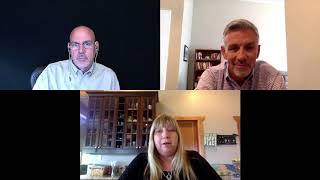
In this episode of the What Anyone Can Do Podcast, hosts Randy Cantrell and Leo Bottary interview Ayelet Baron, a former Cisco chief strategy officer turned author, speaker, and conscious‑leadership coach. The conversation opens with the show’s premise that who you surround yourself with matters and that simple, often‑overlooked actions can unlock success. Baron introduces her framework of seven “signposts” for thriving in the 21st century, emphasizing purpose, co‑creation, and “life‑working” as the last two. She critiques the broken corporate systems that prioritize traditional ROI, advocating a shift to a “return on impact” mindset where people, planet, and profit are integrated. Drawing on personal anecdotes—from leading a $2 billion Cisco business to a transformative trip to the Amazon rainforest—Baron describes her awakening to the limits of corporate structures and the need for conscious leadership. She argues that CSR should be embedded in core business, not a separate function, and cites purpose‑driven models like Warby Parker and TOMS as steps in the right direction. The discussion delves into the three 21st‑century currencies—trust, relationships, community—and how technology can enable co‑creation across borders. Baron also shares her personal shift to “life‑working,” moving to a small Canadian town, redefining “enough,” and aligning daily life with nature. The episode concludes with resources for listeners to learn more about Baron’s work.
Chapters
Welcome to our new show, The What Anyone Can Do Podcast with Leo Battaglia and me, Randy Cantrell. Our new show picks up where the last show, Year of the Peer, left off, highlighting the simple truth that who you surround yourself with matters, and that if we enlist the support of others, give back to those who give to us, and pay it forward for the next generation, we can do anything. Author and keynote speaker Leo Battaglia and I will interview a diverse group of thought leaders who will share stories and insights that will help you succeed in business, and in life. How? By doing the things anyone can do, but most of us never will. Today's guest is Ayelet Baron. Ayelet is a visionary author, speaker, coach, workshop facilitator, and former tech executive committed to making a transformational impact on business. She climbed the corporate ladder for more than a decade at Cisco Systems, where she was the chief strategy officer for Cisco Canada. Her leadership helped propel Canada from the 6th to the 2nd largest revenue-generating country for Cisco. At nearly $2 billion. She served on the emerging markets and IT executive leadership teams at Cisco, where she led pioneering programs for the company. You can find out more about Ialette and her work at ialettebaron.com. We welcome Ialette to the show. She is Ialette Baron, and she is our guest on What Anyone Can Do Podcast. Welcome.
Thank you for having me.
We're glad, we're glad you said yes. Uh, coming from Dallas, Texas in August, I would wish to be where you are, but I'm glad that you're here. She is the author of Our Journey to Corporate Sanity. It's got a lengthy subtitle, but I like it. Transformational stories from the frontiers of 21st century leadership. Our tagline, as you know, I Olette, is who you surround yourself with matters. The big focal point for Leo's work and mine as well is kind of evangelizing the power of the room and the collective, that, you know, it's infinitely more powerful than we are by ourselves. Talk to us a little bit and maybe just give us a brief rundown. I know that you talk about the 7 signposts to thriving in the 21st century, and there's at least 2 or 3 of those that are super congruent with what our work is involved. So why don't you start us off by letting our audience have some insight about those.
Sure, you know, it's everything in life is a journey, and to regain our sanity, it's part of it. And a lot of the mess we are in the world today is because we often lead with structure before we understand why we're here, what we're doing, and what we're here to do. And, you know, we keep moving the deck chairs on a sinking ship over and over and over expecting different results, and we're not going to get them because a lot of the systems that we have in place are broken and we need people to step out of the boxes, out of the system to say, okay, what can we build that is going to be in a way helping us to thrive instead of the current state of affairs? And so I took my own journey to the Amazon rainforest and while I was there, I met a lot of snakes. But some of the snakes I met in corporate America when I had a thriving career in corporate America were much nastier than the one I met in the rainforest. And I realized while I was there, 'cause I had time to pause and look and think, that there are signposts. And, you know, from my perspective, there are 7. For some people, there would be 5. It's whatever works for you because there is no universal manual that works for everybody. And so the purpose, and you know, we're in an era now where a lot of people are purpose washing, just like they were greenwashing, and it's become like very empty. But unless you have the shared purpose, which is at the heart of everything, you're not going to be able to move into the 21st century. You're going to be stuck in these old models. And what we need most for the 21st century are conscious 21st century leaders and who are aware of where we're at and where we need to go. And they know how to bring the right people at the right time with purpose to be able to get the results that we're looking for. And, you know, one of my dreams— I'm not going to go into the, into the 7 signposts in detail, but there's a book for that. But, and there's lots of images that people can just Google and find them. But, you know, I think at the heart of it is I would love to see more conscious leaders creating new types of companies in the world where they understand that return on investment and efficiency and productivity have gotten us into this mess that we are. And all the data around personal health and organizational health points to this. And the opportunity is to have conscious leaders who have the mindset to really go build these new systems, these new companies where people matter, where the planet where the business matters and we're not just measuring return on investment. We have a new ROI for the 21st century, which is return on impact. And it's very much speaking a different language than today, because today— I learned this in the rainforest as well— in the Western culture, we tend to be very separated and very divided. People go into groups, you know, marketing goes out and has their team building, And then sales goes and then everybody doesn't understand why they don't get along. We know how to work together around a shared purpose and a shared goal of what the company is trying to do. And you know, the bodies that are on the sides of the roads, um, should freak anybody out. And so it's up to us to come together and become whole, even in a podcast like this, to have the conversation and to say, how could we shift the game?
Ayla, who's doing it right now? I mean, who— what is the company or two that we can look at, at least as an example for us to be thinking about how we should be building and running our companies in the future?
So this is a question I get asked a lot, and I think that the time has come not to, not to look in that way. I think the time has come to shift because best practices And cookie cutters only work when you're baking. You know, when I quit my— when I fired myself from corporate America, people would call me and say, could you come in and talk to us about what Facebook and Google is doing and who's doing it right and who's doing it wrong? And I would say, I would listen to them and I would say, are you Facebook? Are you Google? Who do you want to be? How do you want to show up? And I think the people that are doing it right tend to be in smaller to mid-sized companies because it's much harder to turn the big ones around. And I think that a lot of, you know, a lot of the surveys, we just keep regurgitating the data. You know, employee engagement is broken, trust is the lowest ever, you know, and we keep hearing these slogans over and over and over. And we get together on conferences and events and we talk about the same thing. And the question is, who's doing it wrong and how do we fix it? And what does it mean to you? Because I think that Once we make it personal, we learn, you know, as individuals, we learn how to trust everyone else before we learn how to trust ourselves. And so we're always looking at the other. And right now we have an epidemic in the Western society that really points the finger and blaming it the other, you know, people are outraged, people are protesting, all those systems don't work anymore. We need to, we need unity, not conformity. And so, um, again, in my book and in my work, I tell stories of other people. So there are 33 stories. Stories in the book of people, not necessarily organizations, and their stories of what they're doing and what they're not doing and what their struggles and challenges are, because I think we need to change the stories that we're telling as well. So I failed at answering that question, Leo, because I just, I just, you know, I look at my own career, you know, I was a strategist for many years looking at the trends and even worked as a futurist for a while, looking at where we're going. And I think those divisions make a real big problem for us to sit back and close the door and say, what is it that we're trying to do? And, you know, I'm working right now in a role I never thought I would have. And everything that I write about is happening because we have purpose. We're looking at becoming whole. We're, you know, we're looking at— we don't have all the 7 signposts yet, but we're working at it. And it takes that practice and that willingness to not say, here are the competencies, here's the menu. Go out and create your own menu.
Yeah, I wasn't suggesting that it become cookie cutter or anything. What I was suggesting is that however you want to do this, just paint a picture of what doing it right looks like. Some thoughts on that so that we, I think, can give our audience a sense of that.
Sure. I think, I think again, it's that ability to have that shared purpose where you don't forget why you're in business and who you're in business for. That, you know, you know, you know what you want to do in the marketplace. You know how to create the focus on the key projects that the company and the organization has, that you don't just talk about the leadership, but you have leaders who walk the talk and they ask hard questions and they listen. It's not a program. It's not a survey. It's about really connecting heart to heart with your employees. I mean, just put yourself in the shoes of a consumer. Who do you like doing business with and why? And what messaging do they have out in the marketplace? And what does reality look like? And that alignment, that transparency becomes really important because we're getting more access, we have more voices, But, you know, we have also many people today who feel trapped. You know, they're going every day to a job that they hate. They get into a car and they complain about traffic, not realizing that once you get in a car and you are in traffic, you are traffic. Because if you weren't there, there would be no traffic. And so really looking at the world from a different lens and really caring about people. Whether it's your employees, whether it's your vendors. It's time to really shift the game in what we're doing. And, you know, this is coming from somebody who helped run a $2 billion business in the past, and I would do things a lot differently today. And I look at the success that we had, you know, we had massive success in tech at the time that tech just started, but we were also not Necessarily, like the programs got rated. We spoke at conferences. We did great. But when you close the doors and you talk to people, the burnout, the stress, the, you know, all this stuff, the health and wellness of people is going on everywhere. And I remember when I did my first talk and I said I fired myself from corporate America, I was about to, a group of 500 people and people came back to me afterwards and asked me, how do you do that? Or, you know, people applauded and it was so sad to see. And so what are the questions that we're asking becomes really, really important. And we're not asking the questions. We're going in, we're giving the fight plan, you know, to get more market share, to be number one. And at what cost? Like, you know, when you live in a small community and you understand that to be number one means you're going to take out the father and the mother of your kids, You know, your competition is right there. It's other human beings. And we live in one of the most amazing times in human history where there's enough. And so we need to build new systems. And most of the systems we have today are built on win-lose scenarios. And so the ones that are doing it right look at how do we lift each other up? How do we create healthy competition and not necessarily, you know, have to follow the whole materialist platform that has been designed for us up till now.
What did that, what did that journey, that, for lack of a better phrase, I'll call it, you know, your age of enlightenment to come to the realization. And it's not like you came from some real touchy-feely world, right? I mean, you came from a tech world, um, bleeding edge. Part of the tech world. And I don't know, describe that journey for us.
Um, you know, when I, when I joined the company, um, it was just when the bubble, um, hadn't burst yet. And I thought I died and went to heaven because I worked with some of the smartest people I've ever worked with. And I had the ability to create things that you wouldn't even dream of creating. Like we didn't even have the technology to do some of the things that we brought about. And it was just incredible. I mean, the internet was just starting out and everything was amazing, and people had a line of sight between their own success and the company's success, both financially and in other ways. And so all the questions that people were asking was, are we doing the right thing for the business? And it was just incredible to be in that timeframe, you know, and to have personally experienced that. You know, I remember being at one of our ops reviews, and at the time, the CIO who I worked for on the senior staff was questioning one of the projects that we were about to launch. And we had like the most amazing conversation about it. We did what was right for the company. And so I've worked on some amazing teams and, you know, I had an amazing career. I worked all over the world in over 140 countries, mostly outside the United States, and got to see the world in a different perspective. And as I was working, you know, I'll never forget, I was on the leadership team of emerging markets for this company. And one of the managers came up to me and she said to me, "How come in Africa we don't get eye care? Do you think like we eat a lot of carrots here?" And I went, "What are you talking about?" And I started to look at the policies and I started to talk to partners and customers in whatever country I was going to in all parts of the world. And I realized that a lot of the stories that we were told were not the reality of what was going on. And it depended on what country and region you were in, that most multinational companies went to the lowest common denominator in the country and they would compare on that level. And, you know, and people in other countries, they talk about how much rent they pay, they talk about how much their house costs, you know, they share a lot of information openly. And so I started to see things with new eyes that I hadn't seen before. And I also had like an amazing ability to work with some of the poorest people in the world and bring technology into their lives. And that was like really eye-opening. Like I would come into the office sometimes when I wasn't traveling on a Saturday morning and I would turn on our equipment and there'd be 20 to 30 young people from one of the largest slums in the world on the other side and we would talk about their lives and technology. So I saw a lot of really good things that we were doing and the impact that we were having, and that's why I was there. But as I got more promoted and more senior in the company, a lot of the noise started to really bother me about— and I was traveling like crazy. I found out that I was one of the top 100 flyers for United in San Francisco, and I was like, this is insane. I need a life. And so that journey of awakening took that, it took a plane that almost crashed while I was on my way to a very important meeting for me to realize that I had to stop and really look at reality and what was happening. And I think that for a lot of people, it takes some kind of crisis for us to wake up. And I don't know if the word is enlightened or whatever, but to see reality as it is. And, you know, it's very hard when you're working for a very, very successful company and you believe in what you're doing. But you're not seeing it implemented. You know, you have to give your employees a certain number of shares, and then you read the paper and you're like, wait a second, what's going on here? You know, they stayed all night doing this. This is a bit insane. And so, you know, I started to question and realize that life-work balance is one of the 7 signposts for the 21st century, is life-working. You know, what if life is one big adventure and work was just part of it? How would we see the world in that way? And so, you know, I realized that life working or work-life balance was just a myth and a trap to keep us thinking about these two things where we're two separate people. There's personal self and professional self, and we were divided again as two people. So I started to really rethink this. And then a friend of mine invited me to a trip I never thought I would take. I thought she wanted to go to the spa, but she actually took me to the rainforest. On a trip for maternal health, working with the Ashuar tribe. It was the first time in the history of this tribe that women were rising. And when I went, I was writing a total— I wanted to write a book, but I was writing a totally different book. And when I was there, I realized that much of what we have going on right now is insane because we forget about the people, we forget about the planet, you know. And I think technology has done an amazing job to show how connected we are, that if, if I run a company and I I pollute the body of water here, it actually impacts my kids in some way because it all comes back to each other. And I think that the more enlightened that we get about how connected we all are here and really start thinking about how we try to solve problems. If you go into a slum in one of— and I can't stand this term, but I'll use it— in one of the developing world and you would tell them that you're from a nonprofit, they'll tell you one of two things. They'll either run for their life and say, I don't want anything to do with you. Or the second thing they'll do is they'll say, oh, well, I wonder how I could get something out of it for me, because we've thrown billions and billions of dollars with not impact. And if you look at the number, like, I think when Haiti broke up, there were 10,000 registered charities, only 700 were doing something on the ground. And so we need people to start coming together, both inside and outside of organizations to say, what is the purpose? Why are we here? What are we doing? And come together instead of having, like, I mean, I think it's ridiculous that corporate social responsibility is a function. Every single person should have a responsibility. We shouldn't delegate our accountability and responsibility to a function. I think some of what CSR departments are doing great, but they're not integrated again with business development. They're not integrated with the core of the company. And so we have an opportunity here to say, like, how do we bring all these components together for the 21st century in a conscious way? In a way where, you know, what we're doing in the world right now is we're treating what's abundant with scarcity, and we're dealing with what's scarce, we're dealing with abundance. So natural resources are scarce. We only have so many oceans. If we fill them all with plastic, We're not going to be around for a long time. Right? So these resources are scarce, but what's abundant is opportunity. You know, I'm working with an organization right now that I'm so proud of where we printed the first 3D book in space because we could. And we just printed the first 3D book in the shape of Albert Einstein with 100 visions of amazing people from around the world talking about what the visions of the future are. And so you could either turn on the news and get depressed, or you can look at it in a different way. And you said you were you were in Texas. So I realized, like, if I woke up in the morning and I looked out the window and it was raining, I could go, oh my God, I have to change what I'm wearing. Or, you know, or if I'm facing the terrible wildfires that are going on right now, I could say, wow, thank God for the rain. So, or, you know, the thunderstorms or whatever it is. So a lot of what we need for the 21st century, I realized, is not more programs and initiatives. But it's mindset and the mindset of coming together in a conscious way to say, okay, what can we do? What can we create?
So I'll say this, I mean, because actually for a number of decades I kind of followed the whole, you know, topic of corporate philanthropy and then CSR and all this and all the way that went through. And to your point, the idea that it was kind of separate from a business, a nice thing to do, a separate department, all this other stuff. So what do you think? Of, and what I'm personally heartened by, business models today that integrate purpose with the business. The Warby Parkers of the world, the Tom Shoes. I mean, those are the companies that I see today that aren't just taking a small percentage of their profits and donating them to whatever. Their business and their purpose are integrated, I think, in a very powerful way. And so is that a step in the right direction when you look at companies like that in your view?
Absolutely. And when it's authentic and done with the people, because, you know, if you, you know, there's some— I was very blessed. I spent a year as a leadership fellow where I got to work with 30 of the largest NGOs in the world and got to see firsthand, you know, as part of our leadership development program. And I, you know, I learned a lot of what I'm talking about by being on the ground and, you know, seeing the dysfunction in nonprofits is as much as in corporate America. And so, you know, it depends again what the impact is, not the return on investment. It doesn't matter how many items you shipped or, you know, the business development piece of it. Like, what's the impact that we had? Do more people have access to clean water? Are more people safe? Do more, you know, looking at, and the world is actually in a much better place today than we ever imagined. And, you know, the challenge is, is we're being fed fear for breakfast, lunch, and dinner. And it's up to us, you know, like I did a talk last year and somebody said to me, but, you know, change comes from the top. And it was in the States. And I said, well, how's that working for you? You know, it's up to each of us. That's my life's work right now is how do we ignite and spark every person to find your bold and beautiful voice and understand that it comes from you and that you can't wait. Like, we can't wait. I mean, some people can wait, but you know, the people that are awake and understand what's at hand, um, are out creating the best they can.
Talk to us a little bit. I'm especially interested in the last two of these seven signposts. Co-creation, and life working. Dive a little bit deeper, if you would, on each of those for us.
Sure. So to me, the, the top 3 currencies of the 21st century aren't ones you can get from your bank account. They're trust, relationships, and community. And, you know, one of the biggest things that's broken is trust. And we live in a very transactional world. Where the 20th century was very much about moving from activity to activity, transaction to transaction, and moving into the 21st century, it's really about the relationships, the trusted relationships that you have and how you're able to build community. And I don't mean in the way that's being used today, but like people that have your back, that have the shared purpose, who could do things. And that is the most beautiful thing because when you can have that, then you could focus on the co-creation. We're not here on this planet to suffer. We're here to create. We're all individually in our own way. I don't care what your title on your business card is, but every single person on this planet is here to create something and it could be to co-create an emotion, to co-create a dialogue. It's, it's not as fancy as we've been led to believe and the co-creation piece is really, really important. And some of the stories that I've heard from people who get it are people that understand that if they find the right people at the right time to have the right focus, they can co-create amazing things. And I think the 21st century is about that co-creation. Whether, you know, when you get the right people in the room, it doesn't matter who's paying your bills. It's like the right partners, the right employees, Whoever it is, the right community members, the right media people, but the co-creation piece is the magic, it's the fun. Because, you know, that's where you get to learn, you get to fall and get up, and you get to try to do things. And, you know, I've noticed like how amazing technology is in helping us co-create because we never would have met each other and been on this podcast right now if it wasn't for that. And so technology, when used well allows you to co-create in new ways that you could never imagine. And even me coming into an office on a Saturday at 5:00 a.m. with 20 or 30 kids from a slum, we were co-creating. Because, you know, one of the kids told a story that before we started these conversations, he would, when he was down or he didn't have enough to eat that day, he would like write a poem and he would stick it under his pillow and it would make him feel better. And I asked him, like, could you share next time one of your poems? And so we got on a call and he shared one of the poems. And I showed him how he, you know, because of the internet, nobody had to know he lived in a slum. And he started posting his poetry and getting feedback from it. And then he started getting paid to read his poetry. And that is a co-creation. There was no goal in it except to help lift someone else up. And, and that person then goes out and co-creates with many other people because all of a sudden they have this self-trust, this hope, and the self-awareness of what they can do in the world. And so that to me is the co-creation one. The life working is actually— I would take off work and just call it life. But human beings are not ready for that. They, you know, if you can't, especially in North America, if you can't describe yourself with what you're doing for a living, as most people do, then, you know, people get lost. And, you know, I think we would have much deeper trusted relationships and community if we got to know more about people through who they are. You know, you never hear somebody say, oh, well, I'm a dad and I have an autistic son and here is what's going on and I have 3 kids and I mean, I think our world would just be different versus like I'm the vice president or, you know, after I fired myself, I went to an event and I put on my, you know, I didn't have a big title anymore. I was like, what do I do? So I put chief janitor and I was just curious about like who would come talk to me because like I'm not for everybody. Right? And so I was just curious, like I thought, oh my God, that's going to like decrease the number of people who are looking for, you know, to sell something to someone or to connect with someone at a big company. Because now I see life working. I see life as a big adventure where work is just part of it. And of course you got to pay your bills. But, you know, I also decided, I made a conscious choice to leave San Francisco. And move to Canada and live somewhere that's much more reasonable in a small community. You know, I think there's 284 people where I live in a town of 15,000 people. And, you know, everything has changed because of that as well. And I started to ask myself, what's my enough? When is enough enough? You know, how many people do I need in my life? How much money do I need? How many relationships do I have? You know, and, you know, everybody talks about connecting with nature now. It's like the latest fad, but we forgot that we are nature and that nature is absolutely fierce. I mean, I live in nature. I've been freaking out in the beginning when I moved here because I'm like, am I going to deal with the bears? And it was the first time in my life that I've been so close to baby cubs and I don't fear them. But I stay my distance and I'm very conscious and aware of, you know, them enjoying the wild blackberries as much as I do. And I realize there's abundance and enough for all of us to share at our own timeframes. So, um, life working is about really understanding the essence of life as an adventure and making conscious decisions. Uh, I learned in the rainforest, um, The women told a story that when the men came back from hunting and fishing, they would ask them sometimes, "Why'd you take too much? Just take what you need," because they don't have refrigeration, they don't have anywhere to put it. And they said, you know, when the Western people started coming into the rainforest and taking a lot out of it, the women went to the Western women and said, "Why don't you tell your men to take what you need?" And so I think if there are two philosophies to think about is, is what is your enough? And the other one is, are you taking what you need? And do you know what you need? And what advertisers are telling you what you need is not what you need.
Well, that's a great way, I think, to close out too, in terms of, I think, having that kind of perspective. I certainly would rather believe that I am nature versus I am traffic. I will tell you that. But it's— but anyway, I I will tell you this, we're so pleased to have you on the show. If you could maybe just tell us where people can find out more about you and your work, that would be terrific.
Sure. Well, thanks for having me. It's been— the time just flew by. You guys are great. It's been a real pleasure. So if you— you know, the thing to find me is to know how to spell my name. If you don't know how to spell my name, it's really hard. But I'm on the interwebs quite a bit. I'm an early adopter. And love it. Not the screaming and yelling, but the connecting part. So you could find me at ielitbaron.com, and you just need to know how to spell it.
Ielit Baron, thank you very, very much, and you have a wonderful day. I really appreciate you having me on the show.
Thank you so much.
You bet.
To learn more about our show and what we do, to submit questions to us, and to subscribe to What Anyone Can Do Podcast, please visit our website, whatanyonecandodo.com. What Anyone Can Do Podcast is hosted by Leo Battari and me, Randy Cantrell. Music provided by Kevin MacLeod is Vibe 8 by Licensed under Creative Commons by Attribution 3.0 license. Thanks for watching or listening. We hope you'll share the podcast.










