What Anyone Can Do Bea Staley 1018
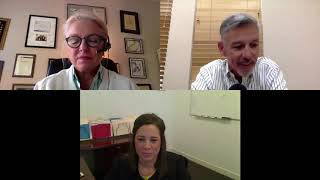
Bea Staley, a senior associate at Korn Ferry, explains how to tailor resumes with keywords from job descriptions and align language with company culture. She covers applicant-tracking systems, the power of referrals to bypass automated filters, and networking tactics like handwritten question lists and maintaining authentic relationships.
Chapters
Welcome to our new show, What Anyone Can Do Podcast, with Leo Battari and me, Randy Cantrell. Our new show picks up where the last show, Year of the Peer, left off, highlighting the simple truth that who you surround yourself with matters, and that if we enlist the support of others, give back to those who give to us, and pay it forward for the next generation, we can do anything. Author and keynote speaker Leo Battari and I will interview a diverse group of thought leaders who will share stories and insights that will help you succeed in business and in life.
How?
By doing the things anyone can do, but most of us never will. Today's guest is Bee Staley. Bee is a senior associate in the professional services practice at Korn Ferry, specializing in executive search. She brings a wealth of knowledge and experience around career planning and recruiting, having worked at Southern Methodist University's Cox School of Business Career Center, her own boutique recruitment firm, and in executive search at Korn Ferry. Bea earned a bachelor's degree from Emory University and an MBA from Southern Methodist University Cox School of Business. We welcome Bea to the show.
Bea Staley, welcome to the show. So wonderful to have you here today. And I can't tell you, um, also how excited I am to have a guest co-host today, Dr. Cecilia Hauser, who, um, I've had the great fortune and pleasure of, um, teaching with for over a decade now, actually. And we're actually teaching a course together now, an e-portfolio course to graduate students at Rutgers University. So we want to give a shout out to those students as well. But today, you know, in the spirit of that, especially with students and people who are out looking for jobs today and really trying to find out what's right for them and also for companies, of course, to make sure that they're getting people who will be that not only that skill add but that culture fit in their organization kind of gets down to what our course is all about, which is about personal brand. Um, and today though, um, we can focus on resumes, uh, which is why we have you here and your expertise around that will be, um, great. And then also talk a bit about resumes specifically, how they kind of fit as part of our personal brand. And then let's talk about our personal networks because as we know, and what this show is all about is who you surround yourself with matters, and the people we connect with and these relationships we build over time are really, really powerful. But, um, I guess I want to get started, um, just talking about, um, I guess resumes first. You know, let's talk about maybe the role of the resume today, and has it changed over the last 5 or 10 years? And what should our students be thinking about when it comes to writing a great resume?
Sure, good morning.
Thank you for having me. Excited to be here. And I would say the resume— we've talked a lot about, you know, how do you differentiate yourself on a resume? And, you know, it's not as much sometimes about differentiating yourself as it is tailoring yourself and your experience for what, you know, the hiring employer is looking for. And so over the last, call it 5, 10, 15 years, the resume has changed in the sense that you're really exploring and doing a lot of research on the front end versus taking your resume and blasting it out to tons of people like you would a college application that's just one-size-fits-all. So you may have 3, 4, or 5 different versions of your resume. One may be more technological, one may be more finance, one may be more of your operations skill sets. You may have several versions and you've done your research, you've gone and seen the recurring terms and the buzzwords, you've embedded those as appropriate throughout your resume. And so I would say it's tailored, it's customized, and it's not a one-size-fits-all. You want to make sure that you're changing it for every job for which you're applying or connecting connecting with individuals in your network.
B, I'd like to follow up with that. And so good to see you, a colleague of mine from Korn Ferry, different office than I am, but we're all part of the same family. I'd like to follow up with that notion of being able to tailor your resume. That speaks to me of really having to understand who the recipient is, speaking in essence to the language of the receiver. So what might be some of the first steps that someone might need to engage in as you think about applying to X company or X organization?
Sure. So if you could find a specific individual that you want to connect with, and I would say the first step would be, you know, have your resume ready because usually the first thing they'll ask is say, can you send over a copy of your resume? But I would ask for the business. I would say, are you open to attend a 15-minute phone call where I can make an introduction and learn? Always make it what's about the other person. Again, the resume opens the door, it invites you to the table or a conversation. But you want to be prepared to say, Cecilia, good morning. Could I learn about what you do? It's really interesting to me, and I'm thinking about making a switch, and I'd love to just pick your brain on something. So people like to help other people, and if you can approach it from a curiosity and learning standpoint, you're much more likely to secure a conversation, get your resume in front of the right people as a first step, versus, you know, not doing that and just sending out your resume blindly.
And several of our students have talked about making that connection through their network on LinkedIn, finding somebody who's in their LinkedIn network who's either willing to make that introduction for them or who actually works for the company. Is that one of the, one of the first steps in terms of taking a look at your network and seeing how you might get that access?
Absolutely. And I think that that's a critical step that a lot of people maybe get wrong, or that's something that's changed in the last 5 to 10 years— using your network and having the ability to go on the the internet and make connections, connect the dots. And a lot of people aren't willing, unfortunately, to put in the extra legwork. It takes time. Some people say finding a job is a full-time job in itself. And unless you have a warm connection, or I should rather say, when you have a warm connection or someone can facilitate an introduction through your network, or even a friend of a friend of a colleague, you're much more likely to accomplish what you're looking to do versus applying on the company website.
Good point.
I like the point about asking questions and making it about learning and making it interesting because it also gets the other person talking. You know, someone shared with me a long time ago that when you have a conversation with someone, usually the person who got to talk the most thinks the conversation went the best. And so certainly a nice way to do that. Ask great questions, get people to talk about their company and their organization, and they can wax poetic about what they're expert in. But, um, you know, when it comes to resume, I know a big question, not just among our students but what everyone really is, kind of this idea of resume format. Um, you know, sometimes people see a format and they're like, God, my life doesn't fit into that format. It doesn't communicate about me very well. Um, you know, and, and is there a difference between preparing a resume for a recruiter versus a specific organization. So if you could speak to some of these issues regarding format and, you know, students talk about adding headshots or putting logos of high-profile companies they have in their organization, things like that. So any guidance that you could provide people about how to, you know, kind of distinguish themselves but do so in a way that's not distracting and not You know, just distracting, I guess, is the word.
Sure, sure. So when you talk about preparing a resume for a recruiter or recruiting firm versus a hiring company, you have to remember the recruiter represents their client or a hiring company. So when you talk to a recruiter or you're presenting something to them, assume that they are the hiring company. So therefore, your resume would only take on one format. And we talk about the different formats of a resume. Some people choose— most people choose chronological chronological order. Some do a skill set-based resume. I would say as a recruiter, when I see a skill set-based resume, that can be helpful for me to pull out and glean information that I am looking for specifically, like merger and acquisition work that my client needs. However, I would still recommend having a chronology section because I'm, I'm the ever pessimist as a recruiter, and I'm looking for holes in your resume. I'm looking for, you know, when do you— when you spent 6 months at a job, why do you come in? If you don't do well, do Do you leave or do you stick with it? How long have you been at your companies? I want to see stability. And so I still say chronology is a format that you would want to stick to. And if you have gaps, you can address that in your cover letter, which we can talk about, or a meeting face-to-face. And as far as bios or headshots go, bios are great. I never recommend including a headshot. Unfortunately, discrimination can occur one way or the other, and we most often take off pictures when they are associated with a headshot. And finally, logos. For some positions, you know, if it's at a larger company, logos can be— they can draw the eye. But keep in mind the content is much more important than any format or logos that you can put on your resume, I would say.
And you earlier, you know, we chatted a little bit, of course, before we got started. We talked a bit about these keywords, right? So we know, or our assumption is that There can be hundreds of resumes that may come in for a particular position, and somehow there's this kind of— what I think about it in terms of there's a process of elimination and then becomes a process of selection. And in that process of elimination, uh, you're looking for very specific things, and oftentimes that is in the form of keywords in a resume. How, as an applicant, do we know what are those keywords that are going to help our resume rise to the top?
So, you'll know most of those keywords just by being in the business. However, you can get on the internet, do a search. My two best pieces of advice are to get your hands on a job description. And if there's not a job description, if this is a role where, you know, you've heard about it through word of mouth, go and search the internet for director of operations, for example, at any company, XYZ, and take those buzzwords that you see from a company, make sure they're in your resume, and also go to the actual hiring company's website find what they're calling the terms, which may be a little different than where you are today, and make sure if you need to amend your terms in a truthful way, then do that.
B, does it help also in some of that pre-research to understand what the company may say that their values are, or their mission? Obviously, any, any information there that might help you in a truthful way— and I so appreciate your framing it that way— in a truthful way, use the correct buzzwords.
Absolutely, absolutely. So you want to use those. I would be somewhat careful to tailor your resume in a way where you're talking only about culture or teams. A lot of that is saved for the interview itself and for the language you're using— excuse me— when you connect with the team. So for example, a company out there that has, I believe, their 12 guiding principles is Amazon. If you don't eat, breathe, you know, sweat their principles, you will not make it through their process. And so you need to know the principles, the culture, backwards and forwards of these companies that you're applying with in order to make that connection and let them see that you're a good fit. So that's, that's more further along in the process, I would say, versus coming across necessarily in the resume. That's good advice.
I'd like to ask one more about what you include in the resume, and that is a number of people have asked, should I be having a professional objective? You know, oftentimes you'll see at the very top of a resume a professional objective. What What's the read and what's the feeling on those?
I would say objectives in the true sense of the word, how they used to appear on resumes decades ago, are out. Where you just say objective: to secure a job in XYZ industry in order to fulfill my life purpose. That's, that's how we know that. So yeah, you'd be surprised, some people still use those and it's just fluff at this point. But the qualification summary can be helpful. So, you know, top forth half your page outlining what position it is, maybe managing director of operations, for example, and your key bullet points, you know, 1 or 2 lines, or those buzzwords, because that'll draw attention from the onset where someone will pull your resume and say, oh, well, that's interesting, that's— those 3 things are exactly what I'm looking for. And then they'll go and scan the rest of your resume. And also keep in mind that we talk about the buzzwords, sometimes there's not a human element involved when we talk about going through the filter. And so sometimes these are being being pulled by computers, and so you want to make sure that the computer can scrub your resume and find those keywords even if the critical human eye, you know, doesn't get that far. You know, it has to go through a filter first.
Is that occurring more and more where there is a computer that is taking a look for data when you're applying to jobs online?
So when you're going through, I mean, Indeed, Ladders, Monster, yes, they are— that first pull is usually done through an automated computer system, and so that is is where the importance of having a connection, even a warm one, even a slightly lukewarm, through your network is so important so that you don't have to worry about maybe, maybe you missed the boat. Maybe you've got all the experience but you didn't call it by the right name, the buzzwords. And so if you've got a connection, all of a sudden your resume moves to the top.
You know, one of the things that I've definitely heard a lot from just people in general is Maybe they start off in their career, they do what they're doing for 5 years and they're like, I don't know if I want to keep doing this anymore. You know, like they, they find that they may be interested in something else entirely. What tends to happen is they will continue to do what they're doing because that's what they can get a job in. That's what they can make more money at and all that. But how does someone, especially based on a lot of what you've been talking about too, help— how do you transition? You know, how do you make it— get someone interested in that?
You make a transition by tailoring your resume and pointing out the experience that you do have. Maybe it wasn't the 95% of the time that you spent doing it, but if you had an element of working with people, or you're going into a human capital management position and you've done aspects of that before, you highlight that in some of your bullet points. Of course, you will still give an overview of what your what their main responsibilities were, and that will be evident in the title. But it's all about highlighting what it is and where they say, "Oh wow, you know, I never knew that someone in that type of position could do something so relevant." And so the onus is on you to change your resume accordingly and highlight maybe those smaller but yet very important pieces of your job that are so relevant. And honestly, it can make you more competitive because, hey, I've touched more industries, and by the way, I bring a broader skill set to this role, but I've still done this in the past. So it happens all the time that people are able to successfully transition from one type of role or industry to another because they spent the time to highlight— everyone's got transferable skills.
Mm-hmm, nice.
That's a good point. And yeah, I wanted to go back just for one moment on your comment about, you know, that your— even your warm connection can help you if there's technology involved on the front end. So if an organization is using a screening mechanism to pull out keywords words. How do you leverage your warm connection to somehow help your resume come up to the top?
So we're still thinking about the applying online in order to get your resume to come to the top. Oftentimes the larger companies have a referral system, and if we're being honest, these individuals are incentivized to refer people because number one, one, they get in good graces because they're bringing great talent to the company. Number two, there's usually a bonus associated with it. And so putting your name in as a referral almost guarantees most of the time that they will give you a call because they want to continue to build their network and support the folks that are giving referrals. So they will at a minimum call you for a screening call. That's one way to get the referral actually submitted in the system. And asking your connections, say, you know, I understand you're not in this area where I'm looking, but is there someone in your network Who do you think that I should be speaking with to learn more about this? And they might say, oh, you know, actually, I know this person. Would you please facilitate an introduction? And by the way, it's okay to follow up with these folks. They're so busy. The burden is on you to continue to push this forward to make the right connection and to be so gracious and thank every step along the way.
You know, one of the things too, I think, because you've talked about, you know, phone calls and interviews and all that, Oftentimes we don't always get the benefit of that. In fact, we don't even get acknowledgement that anyone even got our resume or, or ever looked at it, you know, which can be a bit frustrating. But so I think too about not only keywords and making sure that we're kind of pressing all the right buttons there, but when you're looking at a resume, are there resumes that catch your attention because they communicate other things? For example, a real passion for what they do, or a commitment to results, for example, right? They don't just talk about what— they don't regurgitate their job description back to you in terms of roles and responsibilities, but they talk about maybe that they made a difference while they were there in some way and what that looked like. Are there things like that in terms of what— not just what people say, but kind of what they communicate through their approach on a resume?
I think you're right. I think some of the most impactful resumes I've seen are not the ones, like we've said, that are just blindly stating all the bullets, facts, and figures that are highly relevant, correct? But the ones where you say, here's what I walked into, here's what I inherited, here's the current situation. When I stepped into the role, revenues were at this, that the attrition was at this percentage, and over the course of 6 months, 12 months, 4 years, we left it at this. And when I stepped out of the role, it went from A to Z. And if you can show that progress and, you know, the, the outcome of what you've done— and so it's inherited to outcome— that is extremely impactful. And it almost makes you draw to that person and want to connect with them because you know that they put in the work to say, I know what you're looking for and here's what I've done.
Nice.
You're reminding us about the importance of quantitative data, if you will, in a resume as well, that not only saying I I brought results, but being able to justify in some quantitative manner the impact that you had really adds punch, it sounds like, as a good recommendation.
It absolutely does. The quantitative and the qualitative are, of course, important that we're talking about, but I would say on that same vein, if you haven't managed a $500 million portfolio and you haven't managed thousands of people, some people are so terrified by that and they say, well, what can I highlight? There is always a way to add a fact or figure to your resume. Maybe you managed a team of 3, and maybe you decreased attrition by recruiting in the right people. Or maybe you had 3 very prominent clients instead of 10 that you were working with. That would be worth highlighting. And so give project examples and how you changed their business from X to Y. And I think that that's still very relevant, and you can add those figures even if they're not big. They can still— you can still demonstrate the impact that they had for your client or the business.
Good point, good point.
So given that, and as you, I think, kind of stated at the top here, that our personal networks may be important— more important to us today than they've ever been, what have you seen? Maybe you can either talk in terms of personal example, that in terms of what's worked for you, or what you've seen others do in terms of how do they go about just really building their personal network? Maybe I don't know a lot of people in my field or people at a certain organization or whatever. What are some of the ways ways that you've seen people build their personal networks effectively, and how do they sustain that?
One of the best people that I know, she's a networker in Atlanta, she always says think about what's in it for the other person. And don't think about going, you know, blasting out the resume, throwing out the business card. Always ask the question, how can I help you? And think about that. People remember the people that get them, like you said, talking about themselves, being mentors or advocates, or where you help them. And so I always think when I, when I spend time with someone, even as a recruiter, treat them with decency and learn about them. When someone feels a human connection, they will remember you more than they will remember what you did in your job. And I think that's really important in building your network. And always following up every email with, thank you so much, really appreciate this, and you know, you gave me your time today. If I can ever be helpful to you, please let me know. Call or email me. 9 times out of 10, they don't, but when they do, they will remember you for that, and you'll stick out in their resume. sorry, in their network.
Yeah, and I guess sometimes I've made connections like that and, you know, honestly it'll be like a couple months later and without anything else assigned to it, I may say, "Hey, I saw an article today that I thought you might be interested in," and just that, just leave that that way, not, "Oh, and by the way, I have 3 things to ask of you." Just, you know, to your point, take an interest in them, an interest in what they like, and take some time to build that relationship because it isn't always going to happen right away by any stretch. Sometimes these things have to be nurtured a bit for sure.
I think you're right, you do have to constantly work at building your network and it's those touch points, whether it's every few months, once a year, twice a year, sending over an article with no strings attached and truly stick to your guns by that and know that you're just being a helpful resource. And, you know, if you're checking in from time to time, hey, you know, I'm still on the hunt, I'm considering other opportunities, and Hey, just wanted to ping you and say hi today. You know, that's fine as well, but kind of mixing up your approach in speaking with these people. Mm-hmm. Sure.
I want to follow up on that because I think there are times when we forget how broad a network we truly could have, and we think about the immediate people around us. We think about, you know, jobs, perhaps people that work in companies that we may want to work at, let's say, and yet we may forget about the, you know, the college connections connections that we have, the former job connections that we have, to keep those networks as robust as possible.
Yes, and the alumni networks can be extremely helpful. And oftentimes they'll say, you know, are you looking for a job? Do you have a job that you're hiring for? Or are you willing to be a resource? And you'd be so surprised by the helpful conversations that are out there that you can be having with folks that are loosely affiliated to you and your networks. The alumni associations, like you're saying, are very, very helpful. As a resource and possibly as a connection point. And different affiliation groups are out there that you can join. And again, offer to help other people, and they will offer to help you in turn as you build out your network and meet these people that are in the field that you're interested in.
Yeah, that—
that—
never, never be shy about asking, and never be shy about thinking about how you might even add to somebody else's network. I think an undercurrent that I hear there be.
Mm-hmm.
I think it's always what you said about not being shy to ask. I always say ask for the business. When you send an email to recruiters, some of your network, maybe you send along your resume and a nice note, but there has to be a call for action in the end. Can I have 10 to 15 minutes of your time? Would you be willing to meet me for coffee? Or, I know that you're speaking at this networking event, may I take you for a coffee afterwards? Just asking for the business or a follow-up up, or can you connect me to someone in your network? If you don't ask, there's no call to action, and it's nice to meet you, your resume goes in the pile. Mm-hmm. Good point.
Good point. Leah, what's your thinking about what we've heard so far?
Well, I mean, it kind of tells a nice story, right? It's that it's not just about a resume, but also I think a real prevailing message for me is You know, someone once told me that try to be interested before trying to be interesting, right? So take an interest in others, and if you really, you know, kind of take that approach, it makes all the difference in the world. It can't be kind of coming into conversations and it can be all about you and talking about— and, you know, it's interesting because here we are are on one hand in this arena where we're trying to stand out. And the great, I think, message here is you can stand out by actually just asking great questions and showing an interest in others. And by doing that, I think it says a lot about you, about how you see the world, how well you may work on a team, how much you really care, I think, about what you do and how you do it. And so I think for me, that's a huge takeaway. You know, for the audience here is to be thinking, you know, about that. And it may seem counterintuitive to some people, but I think we've all experienced it, that when we act in that way, when we behave in that way, it comes back to us, I think, very beautifully.
And maybe not immediately.
No.
So I think there's an element of patience there too, and authenticity. You know, B, I know you, with all of your experience in your own business and and other employers as well. I'm sure you might have some thoughts about how one maintains that authenticity during the building of that network and in, for example, an informational conversation with somebody to find out about a company. Any advice there?
Authenticity to me is not being afraid to, to be prepared and to show that you are prepared. And I always come in with a handwritten, not typed, handwritten list of probably 10 to 15 questions before any job meeting or interview if I'm personally interviewing for the job. And that's where, you know, if the conversation stalls or, you know, maybe the other person isn't as extroverted as you are, and so don't assume that the conversation will flow naturally. At one point or another they will say, "Well, what questions do you have for me?" You would hope that you wouldn't go off the cuff, and so your true self shines through. And for me, I kind of sheepishly say, I say, well, and I laugh, I actually brought a whole list of questions and we've covered some of them, and do you mind? And it's endearing, if anything, that you're prepared and people see that you truly care and you can pull out your questions and ask the appropriate ones. And again, it's just, I think that's how you get yourself to show through, your authenticity and your interest in the role by being prepared.
There's that sense that Collins talks about, about intense professional will and deep personal humility. And that's certainly part of that lovely yin and yang that deep personal humility, very much so.
Yeah. You know, Cecilia, you also said something that was, um, you used a word that I think speaks to a question a lot of people have out there when you talked about patience, because, and I always think about that the recruiter or the company's mental timeline is very different from the applicant's timeline, right? So when a week goes by for the applicant, it feels like a month. When a week goes by for you, it's like a day. Day. You know, I mean, it's just, you're on, you're in different time zones. I think about it that way. But, um, how do you remain patient and yet try to, you know, people always wonder, I think they feel like, well, I've got to follow up, just checking in, you know, want to see what's happening, whatever. So I guess what's your advice for people who are inclined to, you know, because they get in their head, well, I'll probably hear something by Friday. Now they have no, no one's told them that or anything, but they have it in their mind that boy, by any day Friday, I'm going to hear something. I'll have them before the weekend and they don't. And all of a sudden, because they've created this mental timeline in their head, they're following up and they're doing stuff. I mean, how do we combat that? How do— and what's too much follow-up? What's not enough? I mean, what thoughts could you give our listeners for that?
I will give you an analogy that I always use, and it is so true, although a little strange, in that recruiting is like dating. The job search is like dating. Unfortunately, sometimes it's a game of the chase and hard to get. You know, when recruiters are looking for people that are contributing and happy in their current roles, and so if you're pinging them every day, sending an email, you know, it doesn't necessarily send the message that you're happy in your role. Sometimes it's unfortunately the hardest person that I'm trying to get to that's wildly successful in their role that I have to chase them and be persistent. And when I finally get the conversation with that person, I said, man, I better listen to what this person has to say and learn a a lot about them. And so even when you get to compensation negotiation, sometimes silence is golden. And let it go another week in a responsible way to make sure you're not slipping through the cracks. But remember, recruiting is like dating. Sometimes you wait for the other person to call you and build up the intrigue, build up the interest. And silence can really be good in piquing someone else's interest. And if you do follow up, add value versus kind of showing some sort of desperation.
Right. Well, I think that's key. And I think that that desperation, I think for some, does fuel some of the impatience and fuel some of the inclination to, got to follow up, got to do this, got to do that, and doing so in a way that often doesn't add value. And I think that's a really, really key component of this as well. I think if there was, other than some of what you've talked about, I think both in terms of preparation and taking an interest in and really knowing the people, knowing the company, taking genuine interest in that. I guess if there is another piece of advice that you would want to make sure that our listeners walk away with, what would that be?
You know, it's, it's not necessarily paper resume related. It is about the process of interviewing, networking, There is no person that is too insignificant that doesn't make an impact. What I mean by that is the executive assistant that answers the phone, the gatekeeper, they are just as important. Their impression of you, if they don't like you, they're not going to put you through. If you are not nice to the person opening the door or the valet when you go into the job interview, those people talk. People talk. I'm not going to say they walk up to the executive suite and send a message. But when the CEO comes out and he says, "Oh, you never know what people say," and even the HR person sometimes feels like the middleman, they know that company and you can still build rapport with that person and say, "What's been your experience? You've been there for 15 years, you must love it. What's different about this company versus somewhere like I am today? I just wanted to learn from you." So just remember that any person that you touch along the way can add value and they should not be underestimated. Underestimated. Great point.
Excellent point, thank you, because I think we forget about that.
Well, I'll tell you what, this has been, this has been a really great session and great show. I've loved having you on. I think you've given so many terrific pieces of advice to everyone. Cecilia, thank you so much for co-hosting today. You've— it's like you've done this forever, you know.
And I think we've been, we've been co-teaching forever.
There is that. We've co-hosted a lot online, in person, whatever, I suppose. This is just a mildly different format, but I just want to—
Enjoy. Thank you, Leo.
Yeah, I just want to thank you both so much. And, uh, yeah. And, and Bea, um, if we could, maybe we could just end with you letting, uh, people know a little bit about, um, Korn Ferry and about, um, anything that you think our listeners would find helpful.
Sure.
Yeah, let's just say—
Oh, sure. Sorry, Cecilia. Sure. So, Korn Ferry, in my view, I call it a full-service human capital management firm in the sense that we deal with people, whether it's advisory and leadership consulting or assessments or helping employers build out their teams or assess their teams and identify gaps, or it's recruiting in the right individuals at the executive level. So I sit in our executive search business and recruit executives mainly in the Big 3 and the Big 4 professional services. And we have several different business lines, but all things dealing with people.
Nice.
And I sit in the other part of the organization in the advisory side. So I help leaders perhaps that Bee has placed, help them figure out their succession planning, their leadership development, their bench strength, and whatnot. So it's a lovely collaboration on all sides of our business.
Nice. Well, uh, B. Staley, Dr. Cecilia Hauser, thank you both, and, uh, we will, um, connect again soon, I'm sure. Thank you.
Thank you.
Bye.
To learn more about our show and what we do, to submit questions to us, and to subscribe to What Anyone Can Do Podcast, please visit our website, whatanyonecandopodcast.com. What Anyone Can Do Podcast is hosted by Leo Battari and me, Randy Cantrell. Music provided by Kevin MacLeod is Vibe Ace, licensed under Creative Commons by Attribution 3.0 license. Thanks for watching or listening. We hope you'll share the podcast.










