What Anyone Can Do Christina L Martini 1016
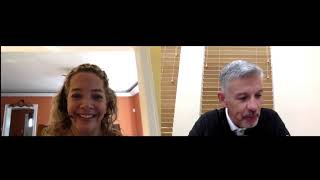
Christina L. Martini, a partner at McDermott Will & Emery, left her firm after 25 years to start fresh. She discusses launching her Paradigm Shift podcast, why firm culture and the right people matter, and how empathy and emotional intelligence build trusted advisor relationships.
Chapters
Welcome to our new show, What Anyone Can Do Podcast with Leo Battari and me, Randy Cantrell. Our new show picks up where the last show, Year of the Peer, left off, highlighting the simple truth that who you surround yourself with matters, and that if we enlist the support of others, give back to those who give to us, and pay it forward for the next generation, we can do anything. Author and keynote speaker Leo Battari and I will interview a diverse group of thought leaders who will share stories and insights that will help you succeed in business, and in life. How? By doing the things anyone can do, but most of us never will. Today's guest is Christina L. Martini. She is a practicing intellectual property attorney and partner at McDermott, Will Emery. Christina focuses on domestic and international trademark and copyright law, as well as domain name, internet, social media, advertising, unfair competition, and entertainment law. In addition to Tina's full-time practice and various leadership roles at the firm, she's a thought leader, author, columnist, and speaker. Tina is also the host of the Paradigm Shift Podcast, a podcast about the intersection of business and law. You can find that show by visiting ParadigmShiftShow.com. We welcome Tina to the show.
Christina Martini, welcome to the show. It is so great to have you here back again. Um, you were part of, of course, the original Year of the Peer podcast that took place in 2017, and, uh, There are a few folks that we are having back from that podcast to our new What Anyone Can Do podcast, which kind of follows through with what kind of happened naturally during the Year of the Peer, where the conversation went from formal peer groups for peers very strictly in that formal business leader space to expanding the dialogue to a lot of that larger circle of people who surround us, our kids, our parents, our teachers, and, you know, all of that. Um, and at the same time, um, took it kind of out of the, just the formal space. Right. And we talk a bit about that in the book and we'll talk about it here, but the idea that we engage people every day and how we can do that and how we can do that effectively. So anyway, thank you so much for being here. Welcome. And, um, You know, I really just want to get started by catching everyone up a little bit on what's been going on with you recently. You've had a big year.
Yes, I have. Well, I want to congratulate you on your new book. I'm so excited for you, and I'm looking forward to hearing more about it. And I really appreciate the opportunity to meet with you again today and to have been part of the creation of your book. So the past year has actually been a huge year since you and I last spoke. I launched my podcast Paradigm Shift earlier in 2018, and as you and I have discussed before, you were actually one of the main inspirations for me as I was toying with the idea when we last spoke about doing something like that. The fact that you had been able to do it, were having so much fun doing it, really inspired me to sort of develop and launch that podcast. And I also changed firms this past year, which when you and I last spoke, we talked a lot about the fact that I've been at the same law firm for about 25 years since I graduated law school. And—
That's a big change.
It is a big change. And so it's been about 3 months now since I made that transition. And so far it's been great. It's been scary, but it's also been a really terrific thing for me in my career and for my personal development as well.
Nice. Well, I want to start with the podcast a little bit because Paradigm Shift is one of those titles that really gives you a lot of flexibility, I would imagine, in terms of what you can do with the show. Um, obviously I was very happy to have been a guest on it, um, pretty recently, but I'd like to get a sense from you when you were thinking about this podcast and what you hoped the takeaways would be for your listeners. Well, how did that kind of come about for you and how is that continuing to evolve? And now that you've had the podcast, Well, that's a great question.
So Paradigm Shift was born about 10 years ago, actually, in concept. It was the name of a column that I wrote for the Chicago Daily Law Bulletin on a monthly basis, and it was really about the intersection of business and law. Being a lawyer for 25 years, I've had the opportunity to work with some amazing clients, and to, in addition to the client work and really developing those trusted advisor relationships, to also have leadership experiences and just business experiences that I really wanted to talk about with, you know, different folks. And the column was really an outlet for that. And as we've evolved over time in terms of thought leadership and the format in which thought leadership is really being more and better received by various audiences, I decided the podcast was probably the better approach. Going forward for that. Also being able to have guests such as you on the show to really have a dialogue about these issues. And so it's really a podcast that while primarily it's targeted to lawyers, I think because of the way that our business and world have evolved, I think there's a real intersection for business and law to have discussions about things that matter to everybody. Whether it's gravitas, elevator speeches, how do you go to market in the most effective way, what are some business development techniques, and also talking about when you and I were speaking about why who you surround yourself with matters and how can you be the most successful person in the world. And that's really what the podcast is about, using business and law as sort of the platform but understanding that there's a lot of intersections there. There's a lot of issues that converge at a certain point and end up being of interest to everybody.
So what's interesting about that is there are certain areas where I think people have an obvious, they make the obvious connection between business and the law and where they intersect. But when you're talking about going into new markets and a lot of other initiatives, I'm imagining that you can reach out to leaders who, as they're thinking about different strategies going forward, aren't always considering some of the legal either ramifications, advantages, pitfalls, whatever that could be in front of them. Is that fair?
Yes, yes, I think that's totally fair. And I think that, you know, that's where legal advisors like me and my partners, for example, at my firm really come in to help advise clients on the legal risk. And it's really critical for us as lawyers to also understand the business ramifications of certain transactions or litigation or just day-to-day counseling. And that's something that I think a lot of lawyers really need to do a better job of focusing on, is understanding the client's business and understanding that legal advice, there's always a business backdrop to it. And that's really another aspect aspect to what paradigm shift talks about is— and that's another sort of frame of reference for the business conversation— is understanding that there's always a business context for the legal advice that is being given. And as part of the business conversation, there's always the people element. There's always, how does this impact the people who may be at an organization, or folks that may be part of the target acquisition, for example, or who may be involved in particular litigation, you have to remember the people element and what goes along with that is emotional intelligence, for example. So all of these issues, issues that I, I'm framing and will continue to frame for my podcast.
Nice. So given the other paradigm shift, which is your major work change, um, and not to get into this in a comparative way at all, obviously you were with a firm for 25 years, it was very successful, had great people there, and I'm sure that, you know, all of that. However, you are in a new environment right now, and what is that like for you being surrounded by, you know, essentially a, a real different set of people and how that's influencing you going forward?
Well, it's been a great experience so far. I left my old firm with a lot of friends and a lot of great memories and a lot of wonderful experiences that I took with me and a recognition that who I am today as a person and as a professional was shaped in large part by the firm that I was at before. And I really, um, still consider it, always will consider it an honor and a privilege to have had those experiences. And I will always take those with me no matter what happens going forward. In the new firm that I'm at, which is McDermott, Will Emery, it's an international law firm based in Chicago. What I've really found has been that it has a very strong positive culture and the folks that I've met so far have been incredibly supportive of my transition. They are incredibly smart business people as well as lawyers. They really have some amazing capabilities across a number of different practice areas, which is really what drew me to the firm. I've had a number of friends over the years who said, who are still at the firm that I think very highly of. So they've been very welcoming to me and I really feel like I'm part of the family and have felt that way for a long time. The culture is really, for me, a critically important thing. I still have a lot of gas left in the professional tank, so to speak, and I figured if I was gonna make a change that this was really the time to make it. I think a 25-year mark in anybody's career makes you really think about what you want to achieve and what you have achieved and how best to achieve that going forward and how best to contribute both to the firm as well as to the clients and to the profession. And McDermott has been a terrific fit for me, and it is incredibly important of, you know, who you surround yourself with matters. That's a conversation you and I have had off and on now for a couple of years. And I really feel like the people I've surrounded myself with, that we're all rowing in the same direction, that we have a common goal, that we're very supportive of each other, and that there are very cool and interesting things that the firm is doing now and will over the foreseeable future. And we all want to do those things together. So it's really exciting.
You know, it's so interesting when you bring up just this whole idea of not only culture, but the kind of things that comprise that culture. And, you know, whenever I spoke at some workshops last week, as a matter of fact, where I will ask the people who are CEOs to identify like the best team they've ever been part of and what was it about that team that made it so great and all the things that you've mentioned in terms of, your culture and what that's all about are the same things people mention about the greatest teams they've ever worked with. And, you know, it's really something when people can really be committed to a common purpose, be there for one another, trust one another, and have a sense, not so much of accountability in a way that is imposed on you, but one that you accept in terms of your personal responsibility, that your currency among the other lawyers and all of the staff at that firm is you showing up bring in your A-game every day, just like all those people do, I'm sure. And that's pretty exciting.
It is pretty exciting, and I completely agree with you after having experienced a lot of different things, both at my former firm as well as at my new firm, and with my prior work experience before that, that you can have a great accomplished team together that is very, very smart, but if they are not rowing in the same direction, and really committed to each other, as you said, and really putting the team first and the client first, it's not as effective as if you have people who really, from a personal standpoint, professional standpoint, as well as just an EQ perspective, have the same mentality about what it takes to not only perform optimally, but also what really matters at the end of the day. You have to have people who are aligned on that in order to really make things work the way that I think they're supposed to.
Well, it sounds too, you know, you made a comment about the fact that you've been doing what you've been doing for 25 years now. So what makes you get up out of bed in the morning and want to attack the day in the way that you do? And part of it are those people that surround you. And I also think a big part of it, I know for me, what I try to focus on is, you know, there's a lot of things that I've done in my career that I'm pretty proud of. And yet I get up every day hoping that my best work is still ahead of me. You know, that there's that fuel that, um, that fires that a little bit. So when I, when you think about what's ahead of you and the work that you hope to do in the next 5, 10 years and beyond, what, what does that feel like for you in terms of, um, this, what's next?
Well, I, um, what gets me excited in the morning is, first of all, I love what I do. When I look at my practice and my clients, I'm very committed to my clients. They come first. Um, they were first and foremost in my mind when I made the decision to change firms, because I would not have done it if I hadn't believed that at the end of the day, the environment I'm in now would be better for my clients. So Keeping and maintaining and proliferating those relationships with my existing clients, getting the opportunity to meet with new clients and to help them tackle their problems, that really excites me. I love my practice area. It's a very subjective area, and so it's not rote, it's not the same thing day in and day out. Helping advise clients on their intellectual property needs is something that, depending on the context of their business, depending on what's going on in the world, it sort of morphs and changes. I see myself as a client advisor beyond just my practice area, and that's where my partners and I can really get a chance to collaborate in areas beyond that. What also excites me is being able to be a thought leader. My podcast, my radio show on WGN Radio, the writing that I do, the speaking that I do, I think it really, I wanna make a difference in the world, I wanna help people. Sort of identify issues, figure out their paths in the world. I've had the great fortune of having people, we talked about this when we first spoke a while back, I've had the great fortune of having people show me, you know, helping me at certain inflection points during my career and my life path, and I want to do the same for others, and I feel like one of the ways I can do that is through thought leadership, and also just through the various leadership hats I've worn, and which I believe I will continue to wear. Going forward. I really just love making a positive difference, and I think that's what we're all here to do, is to help make the world a better place. And that to me is something that over time, you know, it looks different for me depending on where I am, but I also want to help others find their path too. So it's, it's very exciting. It's what gets me out of bed in the morning.
Well, part of it too is your commitment to thought leadership is in many respects a real commitment to constantly learning and growing. And then passing that along, if you really think about it. And so has a lot changed and does a lot continue to change in your field in terms of always needing to stay current and always needing to be actually trying to be one step ahead in terms of where things are going in your business and in your practice?
Yes. I'd say that what that looks like kind of changes over time. When you've been practicing as long as I've been practicing, one of the privileges and benefits of that is having had a lot of experience, having seen a lot of different things. And I think that is something that is of tremendous value to clients from a substantive standpoint. But then there's also the, you know, intuition or gut or what have you that you develop, not just about your practice area, but about having seen scenarios play out. And I think that is a differentiator for me, and I think that is a differentiator for other attorneys that have been practicing for a long time. But we do live in a world of flat market share and flat demand when it comes to legal services, and people are fighting for market share. And so it's important to figure out ways to differentiate yourself, and there are very finite numbers of ways to do that. And so whether it's, you know, becoming the substantive expert and maintaining that sort of posture, that's one way to do it. And I think it's critically important for everybody to stay abreast of what's going on in their practice area. But it's also figuring out how do you become the trusted advisor, with the word trust being a key part of that, and figuring out ways to do that. Because I think it means something different depending on the client or potential client that you're advising. So that's a big part of what I feel the need to continue to do to learn and to grow, not just in my practice area, but in terms of business sense and understanding risk tolerances and things like that as well.
You know, it kind of brings me back a little bit. I was a senior VP for the corporate practice for Hill Knowlton for a while, and of course worked with a lot of great folks out of the Chicago office there. But when I was there, I just remember a big shift in the business happening. And I went to a client meeting where I had owned my own firm prior to that and all that. And when I walked into a room, I, you know, I had a solid command of the subject area and what was going on. I go to a client meeting and all of a sudden there was a whole lot going on about social media and digital and a lot of things in terms of where our business was going, not just where it was. And I remember being in that meeting, kind of survived the meeting okay, but I was like, whoa, I really like starting today. I need to start taking a deep dive into what's next and what's going forward. And for a while there, that was very exciting. You know, I spent months just looking what everyone else was doing before I even ventured into anything as far as all the social media platforms. And then I started a blog, which I wrote in every single day for 6 straight months. And, you know, but you have to just stick your hands in the clay and just do things and make mistakes and, you know, and all that. But Um, it was exciting because, you know, there's a guy that I met, uh, at Vistage. He, um, passed away actually just a few years ago. Uh, his name was Pat Hyman. Pat Hyman began his work as a Vistage chair at age 73 and did it for 25 years and was the strongest spirit. I mean, his presence in the room and everything, there was nothing frail about this guy. I mean, up until, you know, he died and he was extraordinary. And of course people used to ask him all the time about, you know, his longevity and his just strength. And he said, you know, he said, you don't grow old. He said, you become old when you stop growing. And it really made me think about how to always be thinking about how can I learn more? How can I stay current and maybe even be thinking beyond current to look at a lot of things going on? I think there's certainly a challenge in your business. For me, it represented not even staying in PR and corporate communications, but shifting into kind of an entirely kind of new category of things where I get to have fun and explore this whole area of how the people who surround us really make a huge difference in our lives in every way, personally and professionally. And I get to talk with people like you and I get to, you know, do all of these kind of fun things and speak to groups. And, you know, I mentioned just in an article that I had done recently where I spent a year doing keynotes and delivering workshops and all that. And at the same time, I was the one learning every single day when I, when I did all of those things. And that's what makes this, I think, so fun. And it's actually what I think makes you such an effective thought leader as well. You're just committed to just growing and learning and getting better. And, you know, I'm not a fan of people who are self-proclaimed experts, you know, like I'm an expert in this, that, the other thing. And it's like, well, really? It's like, so if there's someone who knows more than you, are they like more of an expert than you are? I don't know what that is. I think we are all students of whatever we're doing. And we are just, you know, kind of committed to being that. And I think, and those are the people I personally trust in terms of wanting to do business with, are the people that are doing that and those thought leaders and all. And I'm sure you have a lot of them in your firm as well. And you probably inspire one another in that way. Is that a fair statement?
Yes. Yes. And I'm still getting to know a lot of folks. And, but everybody that I've met so far, you know, you, you take away things, you know, things from relationships. And there are a lot of folks that are really, really very well known in their fields. You know, so I've seen from a substantive legal perspective, just, I've met a number of people who are just terrific lawyers, have terrific reputations, learned a lot talking to them so far about how they've developed their client relationships, how they've developed their expertise. And there's also just really tremendous leaders, you know, right up to the chairman of my firm who just has a very, really refreshing way of leading, really understands the value of empathy and the people element to leadership. Obviously there's the metrics and what you're trying to achieve, but then there's also the people element and making sure that we keep that as our North Star because we're in a service business. And the organization can't achieve what it wants to unless, you know, you've got the people behind you and you've got the right, the right people there. So, so far it's been a really wonderful learning experience. And I look forward to that continuing because I do believe, as you said, that we all, every day we should be learning and growing and putting ourselves in positions where we can continue to do that. And if we feel like we've sort of hit this equilibrium where we're not really learning as much, which was something that I sort of felt, you know, at my old firm, that for me to continue to learn and grow on a trajectory in a certain way that I have been the last few years, that I would need to change my environment to really meaningfully do that. And so that's what I did.
You know, it's funny, I try to catch myself and it'll happen from time to time where I'll be, I'll be writing and speaking and doing a lot of that stuff and really getting in a role doing that. But I also get to a place where I feel like, huh, I'm doing more writing and speaking than I am reading and listening. And, and I try to check myself a little bit and, and, you know, dive into some things that, um, you know, will, will give me those experiences because I think that, um, The world is changing so quickly and things are moving so fast that, um, a lot of great information can go right by us, especially with the abundance of it there. You know, just because we have access to more information doesn't make us more knowledgeable. I mean, we have to figure out and we have to, you know, find a way to make it part of our lives to be able to access all of that stuff along the way as best we possibly can.
Right. I agree with you that there's an abundance of information. I think sometimes it's a lot of noise, frankly, and it's really important to filter it, as you say, as to what is the most meaningful information, because it's, you know, it's one of those things where it's an opportunity cost analysis. For every minute you spend doing one thing, you're giving up doing a whole host of other things. And I think the same is true for when you're trying to keep yourself on that path and learning and growing. And there's an abundance of information and trying to figure out what is the most meaningful information and resources that you can pay attention to. And it's tough sometimes because it's so ubiquitous. And, you know, I try to, you know, do my part in contributing to the conversation in a meaningful way, in a way that's different and not the same as as others and, um, you know, try to intake information by, you know, reading stuff on the internet, but also listening to podcasts and so forth and reading books that, you know, really speak to me in terms of leadership and, um, personal development and things like that.
You know, I think this whole idea of filtering is huge. You know, um, I'm not always a big fan of these, you know, 3 ways to do this, 5 ways to do that, kind of the tips articles, you know, the, um, that are great clickbait, great debate, but I think should all come with a warning label. I mean, they're all just kind of like these things that so try to oversimplify, number one. And then secondly, they don't ever— rarely do they really give you kind of what the core is that drives where those tips come from and how you should really be thinking about something. You know, it reminds me of one of my favorite poems from years ago. I read it.
E.E.
Cummings wrote a poem called All Ignorance to Boggins and to Know. And he basically said his premise is that we actually strive for ignorance only to slide back into knowledge again. So our strive for ignorance is to read the 3 tips article and think, ah, I've got the 3 things only to slide back into knowledge again when you, when you realize that maybe things are a little more involved than that, you know? And so it's, um, you know, always interesting stuff there. Hey, I want to, You know, we've talked a bit about your firm and culture and all that, but I think just you in general and you personally, when you think now, especially, you know, we've certainly had conversations about this and, you know, this is a, I think it's a more prevailing conversation than it's ever been. When you go online and think about all the things we get to read and hear about surrounding yourself with the right people and how to be our best self first, right? How to kind of like the airline safety instructions, you know, how do we put the put the oxygen mask on ourselves first so that it actually makes us more capable of paying it forward to others and doing the kinds of things you do. So what are some of the things that guide you in terms of who you want to surround yourself going forward in terms of what's next for you, both personally and professionally?
Well, I think that's a wonderful question. Um, for me, what I've realized over the years is understanding that Working on oneself, whatever that looks like at any given time, is critically important because you need to know yourself first and have a real tremendous sense of self-awareness. Because when you really are put in a position to look at your strengths and your weaknesses and what your true desires are, then I think that helps drive everything else. I've worked with executive coaches over the past 10 years, and I felt that that was critically important to my personal and professional development. Because there are certain things that you see about yourself pretty readily, and there are other things that you don't see, both in terms of what your strengths and weaknesses are, but also in terms of what you end up attracting into your world. And I think once you have somebody there with you who helps you sort of see your multidimensionality in ways that you can't see yourself, then that helps you sort of prioritize and focus on things like who you surround yourself with. And so that journey really began for me in a meaningful way of the executive coaching in like 2007, 2008. And there are times that I take a hiatus from it because I think you sometimes need that breath to take a step back and say, okay, what have I learned? And am I going to hit reset in certain ways? And so when I look at who I surround myself with today, I realize that it's really important to not just have people who are really smart, who are switched on and so forth around me, but they also really need to get people. They need to really understand that your mental attitude and your positivity, or, you know, the flip side of that, your negativity, can really drive what you bring into your universe. And so it's really important for me to be with people who are not Pollyanna-ish in terms of what certain types of obstacles may be, but they also see the positive side of things and They're relentless and they want to push forward and make a difference. They're collaborative and they all want to achieve the same thing, or at least similar enough things that there's an alignment there. I think that's really important because I do think that what you put out into the world, whether it's positivity or negativity, that that comes back to you. And I really try to be positive. And I think that there is such a thing as the power of positive thinking. And I do think that when you put that out in the world, that you get it back and, you know, tenfold, a hundredfold. And that, that's critically important is what your mind, what you find yourself focusing on, because that's what tends to come back into your universe.
You know, so you, I mean, bring up a great point and remind me how important this is. First of all, how we know ourselves. And, and what we want helps us identify who we want around us, right? And you've identified some of the things that you'd like to have common among the people who surround you, but then there's also the things that you think, well, I want all of that, but at the same time that I want people to share these common traits, I want people who are from different backgrounds and have different perspectives and see the world differently and all that. How do you blend that? How do you try to— and of course diversity cuts a lot of different ways. I'm not only talking about race and gender and things like that, but as we think about, or as you're thinking about your circle, if you will, and the things you want them to share in common, what are some of the things, or how do you go about seeking out people that are different from you, people that you might not naturally hang out with, but they can be a part of your world and offer you a perspective that can be hugely valuable? And vice versa, by the way.
Yeah, I know. I mean, I think that that's great. And I know we touched on this when we spoke, when we first had our first interview, that diversity is incredibly important because I think that from a personal standpoint, being around people who may generally at high level be aligned but may have different ways of getting there and having different life experiences, I do think it's critically important to put yourself in situations where you have the opportunity to meet people like that. And so there are, there are a few ways that I've done that in terms of being part of recruiting efforts, both now at my new firm as well as in my old firm, making sure that the pool of people we look at are pulled from a whole host of different sources. They come from different backgrounds and different experiences. I think that's a critically important way to make sure that your work environment is filled with people or at least from a hiring perspective, that you are filling your work environment with people that don't necessarily all come from the same background. When it comes to client service, I really do look for opportunities, particularly when it's work beyond what I'm able to do on my own, to try to draw from folks that are at the firm, for example, that come from different backgrounds and from different experience levels. And that's a way to make sure that I not only learn from those types of people, but that I also give the clients an opportunity to meet different people because from a decision-making perspective, having people at the table who come from different experiences contributing to the thought process as to what the optimal decision is for a client, having people from those different backgrounds really helps tremendously. And then when it comes to other ways to get exposed to different people and different ideas, I think networking, the thought leadership that I do, has really given me the ability to meet people and to speak with people that do come from different experiences and different backgrounds and who are able to provide explanations and information that is really important. And you get to draw from their experiences and you're able to contribute to them as well. So I mean, those are just a few of the ways that I really try to make sure that my universe is not just filled with people who all look the same, but that they really are from different backgrounds and who have had different experiences that can all be meaningful.
I think that's what I enjoy so much about the podcast world. And I'm sure you think of it the same way and, you know, leading Paradigm Shift in that you can have all kinds of various guests that really contribute so much to the conversation. You know, when we did Year of the Peer, um, I had, authors, scholars, CEOs, you know, all kinds of folks. And, um, one gentleman, Sekou Andrews, is a poetic voice. And Sekou is quoted in several places around the book or in the book. And largely the thing about Sekou is not only has this great ability to turn a phrase, but there's always so much meaning in it. And it's packed, you know, all the time with just great stuff. And actually his quote leads the book that I want to kind of wrap up with today because it kind of speaks to everything that we talk about as far as the people we surround ourselves with, both what they should have in common and, you know, the differences they bring. But Sekou talks about it this way. He said, there is an incredible power that comes from surrounding yourself with communities in which you feel small among them and they look at you like a giant. Just so wonderful. Um, and, uh, you know, it's really, I think, something that we can and should aspire to in terms of, you know, the, the people we surround ourselves with. And, um, I can't tell you how, pleased I am that, um, you know, um, my cousin Kathleen introduced us and added, and you are now part of my circle. And I am so grateful for that and enjoy that so much. And, um, and, and you've become, I think, a part of other people's circles now through your own podcast, through being a guest here and who become familiar with you and your work and what you're all about. And, um, but I'd like for people to get a chance to learn a little more about you. So how are they going to find out more about you, your podcast, your firm. Please let our listeners know how they can do that.
Well, I want to let you know that I feel the same way about you. I feel so blessed and fortunate that Kathleen introduced us a couple of years ago. It's really had a profound impact on my life, and I hope that you know that you really were one of the main sources of inspiration for the podcast known as Paradigm Shift today. So thank you, thank you again so much, and for all the wonderful thought leadership that you are contributing to the world and making people really think differently about what it takes to really self-actualize and to positively contribute. So people can find me on social media. I'm on Facebook and I'm also on Twitter. My Twitter handle is @TinaMartini10, and I'm also on LinkedIn. And if folks would like to check out my my podcast. The website is ParadigmShiftShow.com and all my episodes are there. And my podcast is also on C-Suite Network too. So that's another way to check it out. And there's ways to communicate with me through all those platforms. And I really, I would love to hear from people and I've gotten some really wonderful notes from folks and I really appreciate that very much.
Well, I'm glad you mentioned C-Suite Network too. I think they're worth a shout out. They do a great job, I think, of bringing people together. In creating a real environment among the people who have shows. Many of us have never met one another necessarily, but we really do support one another as a community. And I think Jeffrey Hayslett and his whole team do a wonderful job at, I think, inspiring that kind of spirit with the folks who are part of C-Suite Radio. So it's great stuff. And Christina Martini, so happy to have had you again on the show. Thank you so, so much, and I just hope you have a great day.
Thank you so much. I really appreciate it. I look forward to seeing you again soon.
Same back.
To learn more about our show and what we do, to submit questions, questions to us and to subscribe to What Anyone Can Do Podcast, please visit our website, whatanyonecando.com. What Anyone Can Do Podcast is hosted by Leo Battari and me, Randy Cantrell. Music provided by Kevin MacLeod is Vibe Ace, licensed under Creative Commons by Attribution 3.0 license. Thanks for watching or listening. We hope you'll share the podcast.










