What Anyone Can Do Dr Larry Senn 1004
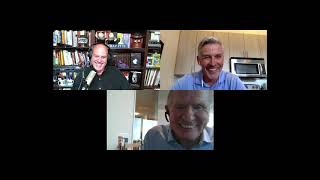
Dr. Larry Senn, founder of Senn Delaney, created the Mood Elevator framework to help people manage their thoughts and emotions for better wellbeing. He explains how curiosity, forgiveness, and a quiet mind shift your mood state, and why surrounding yourself with supportive people matters for both personal and organizational success.
Chapters
Welcome to our new show, What Anyone Can Do Podcast, with Leo Battari and me, Randy Cantrell. Our new show picks up where our last show, Year of the Peer, left off, highlighting the simple truth that who you surround yourself with matters, and that if we enlist the support of others, give back to those who give to us, and pay it forward for the next generation, we can do anything. Author and keynote speaker Leo Bottari and I will interview a diverse group of thought leaders who will share stories and insights that will help you succeed in business and in life.
How?
By doing the things anyone can do, but most of us never will. Dr. Larry Senn is a pioneer in the field of corporate culture. He founded Senn Delaney as a culture-shaping firm in 1978. Today, Senn Delaney is the oldest, most experienced organizational culture-shaping firm in the world. Larry has authored many books, including Up the Elevator: Your Guide to Success Without Stress in 2012, Winning Teams, Winning Cultures in 2013, and most recently, The Mood Elevator: Take Charge of Your Feelings, Become a Better You in 2017. Find out more by visiting his company website at sendelaney.com or his book website at themoodelevator.com. We welcome Larry to the show.
Larry Send, pleasure having you on What Anyone Can Do. Really appreciate your joining us here today.
Delighted, delighted.
Great. Hey, well, you know, one of the things, as you know, is we are all about just this whole idea that who you surround you surround yourself with matters, right? We are such a product of the people we surround ourselves with, and I can't think of anything more relevant than to dive into a topic that is near and dear to your heart. You've obviously become a well-known expert in corporate culture. So I think for starters, in terms of our listeners, I really want to give them a baseline of your work in particular, but also how you got into it and why you are so inspired by the topic.
Well, you know, I started out of college doing more traditional consulting work in organization performance improvement. And what really struck me was how it was easier to decide on change than to get people to change, and that most organizations were like dysfunctional families. They had turf issues and politics and trust issues and talking about each other behind their back and all this stuff. And I thought, my God, it's really interesting that they're like miniature societies. But they're kind of dysfunctional. And I was hired by a guy named Sam at a place called Walmart way back— this will date me— back in the '60s to help design. He had this new vision of bringing low-cost goods to rural America. He was going to revolutionize the world through this thing called Walmart. And working with his team was just the most joyful thing I did. They were collaborative, they were creative, they were supportive, they were open to ideas. And they were doing something for the greater good. And it was wonderful. Then I got in a plane and went to New York. We've been hired by Woolworth to do the same thing. And I'd walk into this room, it'd be like going to the morgue. I mean, just like a bunch of old guys sitting around a table, and their only purpose seemed to be to maintain the status quo. And I said to myself, oh my God, that, that little company in Bentonville is going to take over the world, and this one's going to die. There's something they didn't teach me in school. The way that people work and get along over there is totally different than they do here. And so I went and found a professor at USC. I'd gone to UCLA for an engineering degree and an MBA. And he'd written a book called Readings in Organizational Character, that companies like people had personalities. And I went to him and said, Dr. Wolf, I've got to understand this. He says, well, we know it's there. No one's ever studied it. What if we paid your way through the doctoral program? You've got clients. You could research it. So that led to the world's first research on corporate culture, this really fat blue book above my desk here. That was my doctoral dissertation at USC, first study of corporate culture. And I, at that time, I committed to finding a way to how can you create healthy communities of people. And that led to in 1978, 40 years ago, founding the world's first culture-shaping firm. And so today we work with 125 Fortune 500 CEOs, governors of states, members of other presidents' cabinets, and university presidents in 40 countries around the world doing this thing we call culture shaping. And so that's how I got into it. And it's still a passion today to really help people live life at their best.
So I just want to know how we can get more people to read that book, right?
I mean, seriously. Yes. So, so part of that is about the book, The Mood Elevator, where that kind of comes in. What we, what we, what we found over the years is we kept working with groups. Whenever they got real healthy, they had a similar kind of set of behaviors. They were more collaborative, they were more trusting, they're more respectful of other people, they're more appreciative, they're more accountable, kind of an essential set of behaviors. And then we discovered, you know what, when people are their very best, when you're the top of your game, when you have your best day ever, you are all those things. That's who you are naturally. So the question was, how can we help more people live life at their best? And a great way to do that is to live life up the mood elevator, which was what that book's about.
Oh, sure. And, you know, no, but I think it was fascinating when you think about mood and what it plays into in terms of our everyday, not in a course. I know you talk about it, not just in the workplace, but in terms of our everyday life and what it can mean and how do we keep ourselves exactly at a healthy place, you know? So, so what, what are some thoughts around that? You know, because we all, we also can get sucked into, especially I think in the corporate environment where it's easy to get dragged down, particularly when it comes to things you can't control, things you may not like, right? You talk about change. I was looking at a quote I heard a number of years ago that said, people don't mind change so much. They don't like being changed. So I always feel that it's—
And I agree. I agree.
So that it's, you know, that they're getting changed, that they're not part of it. But yet sometimes they really can't affect that, yet they get caught up in it. And it drags them down in terms of their ability to stay engaged, stay aligned, stay motivated, and So I guess, how do we keep ourselves out of that? How do we, you know, not try to be the CEO and how to try to do our job and do it as effectively as we can, you know, in the organization we're at? And if we can't, maybe we belong somewhere else. But, um, you know, what are some of the thoughts you have around that?
Yeah, right. Well, you know, first, what's interesting is almost to the point of your program, um, when I finished my dissertation, the question was, You know, how do you change habits of adults? How do you take successful leaders who are too hierarchical, too territorial, people who are always critics and always judgmental, and how do you shift that? And people don't like to be changed, so you can't just tell them, you can't give them a book, that something else needs to happen. And so for example, someone who doesn't take care of themselves has a heart attack and all of a sudden they're walking around the block and eating greens. For somebody who's a lousy listener, their wife divorces them and says, you blah blah, you know, you never listen to me. Then they go sit in the mountain and think about that. So those are not intellectual events. Those are significant. Those you learn yourself. Nobody teaches you. You learn from the inside out. So it's fascinating by that notion of inside-out learning. And there was this fascinating social science guy named Kurt Lewin. He said two things. One really relates to this company you keep, but the first thing he said was that when we're young, we're like a flowing river and then we freeze. So when we're kids, we get over things really quickly and we cry a minute, we're happy the next minute and we're curious and we're loving and we're trusting. And then the world descends upon us. And I learned for me to win, you have to lose. And I learned, I'm in the Midwest and I learned if you can't say something nice, don't say anything. I'm not saying anything at all, so I'm dishonest. And so all this stuff goes on. So his theory was unless people had unfreezing, unless they had aha moments, they wouldn't change. And so the core of our learning methodology that really transforms people is this aha, oh gosh moment. The second part that he said is this. He said the immediate social group is what determines behaviors. The company you keep determines how you behave. So be careful the company you keep. So what that meant in our models, we had to take teams and we had to begin at the top because the central finding in my doctoral dissertation was organizations become shadows of their leaders. And so you got to start at the top with a team, an intact team, and get them to be healthy and get them to live the right way. Then, then do that in teams down through the organization. And so that's kind of the essence of the model. Is making that happen. Does that make sense?
It sure does. The other thing I will say, a bit of an off, but when you talked about listening, I actually saw a t-shirt the other day and it said, my wife says I have two flaws. One is I don't listen, and I don't know what the other one was. Beautiful.
Well, you know, part of the core, one of a single concept we teach, we probably delivered to a million people around the world is this concept of being in the present. We call it Be Here Now. In fact, I'm sitting at my desk looking at a picture of a manufacturing plant of a client in Romania, and it's the highest quality, highest safety plant in the world. And there are 1,000 people wearing t-shirts that say in English and Romania, Be Here Now, be in the present. Yeah, because if you are, you won't, you won't miss things, you won't have accidents, you'll listen to people. And so this Be Here A quiet mind is one— you talk about how to live the mood over. If you think about angry, when you're resentful, when you're worried, you're thinking, just cranking away. But when you're looking at a sunset, there's almost no thought, there's just a feeling. So the idea of having a quieter mind and learning to have a quieter mind and quiet yourself down, even by taking a deep breath, is one of the ways that you live higher on the mood elevator. But you know, we all, to be human means we're gonna ride this thing called the mood elevator. We're gonna ride up and down from grateful at the top to unhappy at the bottom and everything in between. And the question is, how can we influence that? Well, the first thing to influence it, you have to understand where it comes from. And most people think it's the world doing it to us. But let me tell a really quick story if I can about this guy. He's about to leave work and somebody tells him they're going to shut down his division of the business. So he goes, oh my God, and he's afraid to go home and tell his wife. So he sits on a park bench and first he goes to depressed, oh my God, my neighbor lost his job and lost his house, my son won't be able to go to that college he wants to go to. And then he goes to anger about the company, gets really mad at the company. Then he sits there and says, well, you know, this guy's always starting rumors, it's probably not true, and he goes to relief and says, oh. Then he says, 'Hey, I hate this job anyway. Maybe she'll give me a package. I can leave and start my dog grooming business. I've always wanted to do dog grooming. Oh my God.' Then he starts to get really excited about it. The little kid walks by and he says, 'Why am I sitting in the park? When I go home, my kids are going to run up and hug me and say, I love you, Dad. I'm a blessed man.' So what took him from depression to anger to relief to excitement to gratitude What's his thinking? So every moment of every day we create a movie and that movie is created by our thought and our thinking creates our reality of life. That's how it works. So grateful thoughts create grateful feelings. Worried thoughts create worried feelings. We just need to know that and stop blaming the world for it. That's the place to start.
You know, I have one follow-up just before Randy jumps in.
No, go ahead.
Because Randy, you've got a good quiet mind over there too, you know, but It can be a dangerous thing too. And actually, let me, let me, let me let you go. I want to go back to what I was doing, but go ahead, Randy. You could start.
Okay.
Well, my thought, Larry, was recently I was having a conversation with somebody about forgiveness and this was a family issue. And my suggestion was, and the question that I was asked was how, and I said, you just do it. You just choose, you just choose to do it. I'm curious, your experience and your— just the power of choice and what, what we can do to help people facilitate making that choice.
Yes, and no one will have a really happy, fulfilled life if they can't forgive, because you just can't change the past. You got to move forward. I had this Father's Day lunch with my 5 kids, 5 grandkids, and all, we have this incredibly loving family. And my mother kept telling me over and over again, you know, family comes first and you got to cut them slack. You got to give them some latitude and that's really served us well. But to your point in the mood, Albert, here's the deal about it. Given that we're all creating our own movie of our mind, then everybody is really doing what makes sense based on their thinking. There's a form of innocence in what people do. Not that you don't need to deal with it, but the fact is, if you can go to compassion instead of anger when someone does something, I had a really gnarly night clerk the other night checking into a hotel. And he, you know, he gave me all kinds of trouble. I sat there and said to myself, oh my God, I'm so blessed I'm not him. Poor guy, he probably hates this job. It's sad. So I actually gave him some sympathy and he became a nice guy. So this notion of forgiveness, forgive them for they know not what they do, is actually very true. They're thinking they did what made sense to them based on their thinking at the time. That's the best they could do. And I should be able to forgive that and not see that as all of them, because they do have a best self. We all do.
Do you find that the mood—
that's the part of—
do you find that some of the challenges to people being able to manage, better manage that mood elevator? Because as Leo said, kind of the tagline of our show is who you surround yourself with matters. And we've talked about that. But there's— we tend to be so prone to viewing what's happening to us as a victim and blaming the external on our mood as opposed to owning what's internal. I don't know, there's a question in there somewhere. I'm curious your wisdom. I'm just— I'm so baffled, Larry, by the way this conversation started and, you know, and the tremendous history that you've got. It's just, yeah, I mean, I love it.
So, well, you know, I'll give you a quick example of— got a note from the wife of the CFO of a large Midwest bank after he had gone through our 2-day offsite at Sandilane, and she said, I'm not sure who you sent home, but I like him. You can keep the other guy. That's good. So, so what that tells is everybody's capable Everybody's capable of this higher level thinking. And what's true is that when we're in the higher states on the mood elevator itself, if you look at it, curious and above, you tend to have clear thinking, you have higher emotional intelligence. Now let me ask you a question. Have you ever said something to a loved one you wish you could take back?
Of course.
Have you written an email you probably shouldn't have written?
Yeah.
Or shouldn't have sent it anyway.
Okay. So where were you on— Shouldn't have said— yeah, so where were you in the mood elevator? You were down. So the big deal is this, if you learn nothing other than your thinking is unreliable when you're in the lower mood states, be careful. I mean, even my son, when he was young, he'd say to us, don't talk to me now. I probably will say something I don't mean and I can't hear you. Let me go to my room. When I'm myself, I'll come back out again. It's good admonition for most adults.
Yes, it is.
You know, this idea of a quiet mind though is something that I think we're inherently uncomfortable with. I mean, think about the fact that whenever there are gaps in communication, we cannot help ourselves but to try to fill those gaps with whatever story we can make up in our heads. You know, we can be sitting somewhere and someone's supposed to meet us and they're 10 minutes late, they're 15 minutes late. We're already thinking about, oh, you're mad at them. You know, whatever you conjure a story about. And none of it's true. It's completely made up.
Yes.
And here we are in this state because we're not willing to have a quiet mind. We're not willing to just, you know, we're waiting. We do, we have to conjure up stories. We can't help but fill these gaps. Um, how do we, how do we keep our, you know, from just falling into that trap of filling these communication gaps and getting ourselves worked up over this self-inflicted self, you know, made up story that we come up with?
Well, you know, it's interesting. We have clients, we have clients that have the highest customer loyalty scores in America, highest customer service scores in America, highest employment engagement scores in America, and they use these concepts. So for teams, for example, one of the things they learn is assume positive intention, don't assume motives.
Right.
And we so often make up these stories. And if we can just say, wait a minute, stop, we don't know. Now the other thing that really helps, a powerful tool, is this notion of curiosity. Let's say someone does something you don't like or don't approve of. In fact, we had to go around the dinner table Father's Day and everybody say what they learned from their father. So my 18-year-old said he learned from me, he said, don't make up stories of people. He said, if they do something you don't understand, be curious about why they did it instead of getting mad at them. I thought, oh my God, you know, if I'd known that at 18. So this notion of if we can just assume, or even maybe they're having a bad day, maybe something's going on for them. I mean, I remember getting really mad at a CEO once. I thought he really liked me. I have CEOs that say they love me, but I thought, and he wouldn't communicate with me for about 4 weeks. I was getting so upset. And then he finally sent an email back. He said, my mother died. I was taking care of arrangements and I felt like a jerk. Because I'd been mad at him. And that happens to us every day. So if we can, if you just love, live life in curiosity versus judgment, your life will be different, I guarantee it.
But I'm assuming you didn't send him the email that you were mad at him.
So at least there's that. I didn't. I was smart enough to know something's going on. It was bothering me, but something's going on that I don't know, I don't understand.
Exactly.
Yeah. Yeah, but think of how often we do stuff like that.
So sometimes we're not smart enough to keep our mouth shut.
There are, there are two things we found that actually— first of all, here's the disclaimer: everyone will ride that mood elevator and will visit every level at some time. That's to be human, and it's okay. My wife is really great with— she's really good at being down. She says, I know it will pass, I'm just not going to do any harm, I'm just going to kind of step out of things, and I know I'll be better by tomorrow. I need a night's sleep or something. But there are two things that really do shift you on the mood elevator. One of those is really simple. Just take better care of yourself. You know, we catch colds when we get run down. We catch the moods when we get run down. So for me, physical fitness, exercise, diet, for me, a brief 10-minute meditation in the morning, all those things condition me such that I'm much more resilient to the world and much less taken off my bearings, losing my bearings that way. So, take care of yourself, get some sleep, get some exercise. It's free drugs, endorphins.
Okay. Well, speaking of that, you're going to have to tell us the story of the trip that you've got planned with your 18-year-old since physical fitness is such a priority. We got to hear this story.
We love adventures. So, he's graduated from high school. He's this great star volleyball player. So, I said, "Where do you want to go?" He says, "The Barrier Reef." So, I start researching the Barrier Reef. And the area around it where there's rainforests. So we got this planned out. One day we're going scuba diving, then we're going on this with this adventure, canyon adventure, where you rappel down these rocks, down through waterfalls, jump into pools. Then the next day we're gonna ride ATVs in the morning, we're gonna do whitewater rafting in the afternoon. Then the next day we're gonna be ziplining down a mountain. So we got a lot planned for us.
Am I safe to assume that if you weren't being nudged by a much younger man that You might not be doing all of that. You might be, what do I know?
Well, I'm really, I'm a blessed man in so many ways. So, Logan came into our lives. Logan came into our lives when my wife was 52 years old and I was 65 years old, okay? And to have a child that age changes your, it's a life-altering event. So, I said to myself, man, you better live a long time if you want to see this kid graduate and get married. You better do something. You better take care of yourself. So I took up triathlons. And so I've been doing them since I was 70. And so physical fitness has become part of my routine. So I love doing things like that. We water ski, we ride off-road motorcycles, we do all that stuff. And I'm only 82.
So here you start—
Well, Leo and I are— Go ahead, go ahead.
No, but here you start doing triathlons at 70. You've been doing them now 12 years, which is— remarkable in itself, no matter where, at what stage in life you're at. But so who are there, people that you surround yourself with when it comes to that particular fitness goal? Like people that you train with, they could be people who live near you or people you talk to on the phone, or what's that community look like for you so that you stay on your game doing what you want to do and achieve your goals?
Absolutely. In large part, it's my family. So, my wife, who had a child at 52, ran a 10K race 4 weeks after a C-section and won in her age group. So, she's buff. She's 70 and slalom water skis, got ribbed abs. You know, I got to keep up with her. Then, I've got one son who's a professional surfer and he now runs Endless Summer Surf Camp, the best-known surf camp in the world. Another one is a professional kiteboarder. And he was in some videos on a movie on Up in the Air about his, and he runs a surf shop in Hawaii and a kiteboards. Another one is a powerlifter whose, his hobby and interest is physical fitness and everything to do with that. So that's for starters, my family. And so we're all into it all the time. We're not a sedentary family. We don't sit around watching golf or football, we do stuff.
That's amazing. That's amazing. Go ahead, Randy. I know you had a question.
Well, I was— you, you pretty much went there.
You pretty much went there.
Are we feeling pretty much like slugs right now? No.
Yeah, I'm— yeah, I'm just— yeah, I feel just like a big blob of, of goo. And, and I'm a gym rat, Larry, but I mean, being a gym rat That and going to Barrier Reef is a whole, there's a whole different deal.
No, I'm curious.
I'm curious, Larry, of, of, you know, we pay it forward and Leo and I both are at a stage of our life and this may be similar for you at 30, mountain climbing, right? Metaphorically speaking in business, real just achievement, achievement, achievement. And for me now it's very much, significance and legacy. And I intentionally and somewhat organically have a lot of young people in my life. I've got a lot of 20-somethings and 30-somethings and a few 40-somethings. And I've learned a tremendous amount from these people who have just a completely different view of the world. They came up just completely different than, than I did. I'm curious, your experiences in not just paying it forward, but the ability of others to pay it back, backward, because we're so much further up the trail than they are. And yet, man, they've got so much to teach us.
No, I think this notion of making a difference and leaving a footprint in the sand and being a role model for others is really a big thing. I mean, I, I actually don't like publicity, but I stand up on that podium in most triathlons at the end. And because just to show that there is somebody in that 80-year-old category. Now, my son, when I come home, says, "Dad, did you come in first and last in your age group again?" But I said, "No, I beat a guy today." But anyway, but in so many ways, I mean, I have 5 children and we all talked this weekend about what they learned from dad and it made me cry. I have 6 grandchildren and they said they learned love and compassion from me and I cried. And that's important. I have a couple of godsons and a goddaughter and I want to be a role model. But for me, the bigger thing is that the platform of the world, the work that we do at Centilennium, which really does change lives. And then the reason I wrote the book, so at Centilennium, everybody has a personal purpose. And my purpose is to provide understanding and inspiration to more and more people to live life at their best mentally, emotionally, physically, and spiritually. And as soon as I finished writing that purpose statement some years ago, I said, I got to write a book about the Mood Elevator because if people can learn to live life as their best self, what a gift that is. If they can learn to not assume motives in others and to be curious, not judgmental, and be loving and compassionate, not angry and self-righteous. So that's really why I do this work.
Where did that idea— where did the whole Mood Elevator— what was the genesis of that idea?
Well, I have to give credit. There's a guy named George Pransky who teaches in a field called psychology of mind, and he really is the one who taught me about the notion of our thinking creates our reality. You know, our thinking drives our behavior, thinking drives our moods. And I remember at one point he was saying, you know, thoughts, your moods are just a constellation of thoughts. And I got thinking about that and said, why do we kind of ride up and down this thing called the mood elevator? So I began to work with groups and having them, if you just have people list, what do you like when you're at your best? And you'd start to write down, what do you feel like when you're at your best? Well, I feel more hopeful. I feel more optimistic. I feel more grateful. I feel more curious. How do you feel when you're at your worst? Well, I feel more worried. I feel more judgmental. I feel more self-righteous. I feel more irritated, bothered, impatient. That's just how I feel. And as I had thousands of people begin to write down how they felt in real life when they're at their best and worst, what came out of that was the Mood Elevator because we all have our own Mood Elevator we're riding. Yeah.
So, I don't know.
That's one thing to do. Yeah. So, you have one.
Yeah. Just because, you know, we kind of pivoted a little bit. We were talking about young people and the influence they have in our lives. So, what you must see, I would imagine, in corporate culture today, because we certainly have had guests who talk a lot about it, is, you know, especially in larger companies, you've got 4 generations oftentimes in the workplace. And mentorship has pretty much been redefined. It isn't just the experienced people you know, mentoring the young people. It's the young people also mentoring others because on issues of technology and digital and social media and, and ways to communicate and being, being purposeful and, and these kinds of things that this younger generation brings to the workplace. What, what are you seeing in your practice that, that has changed in that regard and how do you think it's made maybe companies and people better for it?
I think much too slowly, but organizations are beginning to really learn lessons from the newer generation, all kinds of lessons. I know we hired a relatively young person to come in here and look at some of our content. But the big example for me, one of my best teachers in the world right now is my daughter, and she's like 26 years old, and she's just a— and she actually helps manage the book and gets it out there, and she's just incredible. In fact, she arranged this meeting we're having today. And so she just understands this, this world like I didn't understand and gives me platforms like this to talk about it and can do. And then my son, I mean, my wife was trying to work on something she had to do on the computer the other day, and she worked for about an hour to try to get this thing sent through. And she called her agent, you know, he walked in the room and 2 minutes later he'd done it and he'd handled it. And so I bowed to my son, I bow to my daughter as authorities in their field. And I believe we all can keep learning, and that's one way to learn.
It sure is. You know, Randy, you touched on this in a show that we had the other day, and just in terms of how, you know, oftentimes, particularly millennials— and I think it's, you know, for sport in a certain level, and in a way that's not attractive and very judgmental about this particular generation— and I think you've said many times If you look hard, and don't have to look that hard, you can see the real value. I do a lot of mentoring at Seton Hall University. I'm blown away by these young people and what they're doing and how they think about things. So I know you may want to speak to that a little bit as well.
Well, the word that popped into my head was the word that Larry has used over and over, and it's curiosity. My experiences, Larry, have been greatly impacted by the young people because of their curiosity, as opposed to my being jaded, not intentionally so necessarily, but just life does what it does to you. And we have these assumptions that, you know, where we're at and our insights. And then along comes a 24-year-old that doesn't have those assumptions and has this curiosity that I may have long lost in this particular area. And all of a sudden we're off to the races.
Yes. Yes. I guess the one— it talks about a lot, but the one concern I have in that area is just how much time people spend on devices, that we're losing some of the connections we have. I know the world always evolves, will handle this too. But I know even in raising our 18-year-old, much as I love Logan, he just loves his games and having his phone in his hand. And he's marvelous at that. But then, just that time to sit down and talk. So, we do that at family events. Anytime we can get together around the table, we put our devices away. And my wife was great at just asking questions. So, her question at the table on Father's Day for a bit is, "What's something you learned from an adult figure or father?" figure in your life? What did you hear them say or did you learn? Then we have this really rich conversation which leads to a deep bonding. That's how people connect. People connect through sharing. You think about the people you're closest to in your life, you're more open with them. You'll say things to them that you won't, you won't play image maintenance with them. You'll be, you'll ask them questions. And so that, that bonding, that's such an important part of the work we do with teams. We get them to Talk about things like the crucible stories. What's a characteristic in you and where did that come from? What adult figure or significant life event caused you to be that way? And as they share deeply about, you know, you might notice that I don't give people appreciation. Well, my dad never appreciated me. I remember when I came home from one CEO telling me this, I came home with this letter from Stanford accepting me and he said, all he said to me was, where's the letter from Harvard? And so that imprinted this poor kid, and his whole team said, oh my God, I understand now why he doesn't appreciate me. But that sharing at that level, vulnerable sharing, creates deep human bonds. The people you connect with, we can't really lose that.
Well, the great thing about technology, those that afford people like us to connect who otherwise probably never, never would have it— gave Leo and I the ability to connect. So I'm suspecting, no, I don't have to suspect. I know your 18-year-old— no, you're 18-year-old has much broader connections than you could even conceive of having when you were 18 or when I was 18. So there's the upshot.
Yeah, exactly. So we had, uh, one of his close friends for the last 4 or 5 years is a kid from Hawaii, from a Korean family in Hawaii, that he's teamed with and he never had met for years. And the guy came to California the first time, came to our house, and they were like they knew each other their whole lifetime. They spent a couple days together, and that happened, you know, thousands of miles apart and, and, and all kinds of differences bridged.
It's a great— it's, it's, it may be the greatest time to be alive. Why, and why shouldn't we think that, right? Larry, we, we, we greatly appreciate you accepting our invitation, and I want to give you, I want to give you the last word before I want to kind of hawk and tell tell people to buy The Mood Elevator. The subtitle of the book is Take Charge of Your Feelings, Become a Better You. Larry's got 4 other books that you can also check out. Up the Mood Elevator: Your Guide to Success Without Stress was published in 2012. So that's kind of the precursor to the current book. So we're going to encourage our audience to buy the book, read the book, check out all of your work. Our tagline is who you surround yourself with matters, Larry. So advice and parting words of wisdom to us to be more thoughtful, more intentional, more purposeful in surrounding ourselves with people who can help us to do what anyone can, but most don't. What would be your words of wisdom?
Well, I think one way we attract to ourselves things, and we're our best self more often, we attract people like that and begin to create a community like like that. So, I guess the biggest tip in The Mood Elder is really live life as much as you can in gratitude. Realize that you're among a fraction of people in the world in terms of what you have, that you're even listening to this broadcast and talking about things like this. You're very blessed. And if you can keep that in perspective, maintain a gratitude perspective, and your life will be filled with people like that who are loving people and create a great community.
You're an inspiration, Larry.
Thank you very much.
Thank you. Okay. Thank you. Enjoyed it.
To learn more about our show and what we do, to submit questions to us and to subscribe to What Anyone Can Do Podcast, please visit us at whatanyonecandodo.com. Podcast is hosted by Leo Mattari and me, Randy Cantrell. Our assistant producer is Katie Rutkin. Music provided by Kevin MacLeod is Vibe Ace, licensed under Creative Commons by Attribution 3.0 license. Thanks for watching or listening What Anyone Can Do. Please share the podcast. See you next time.










