What Anyone Can Do Drew Dudley 1020
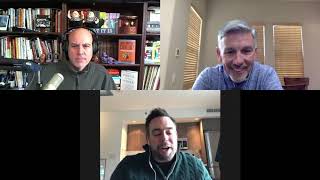
Drew Dudley, founder of Day One, argues leadership isn't rare or grandiose but a daily practice. His "lollipop moments" concept shows how small acts of recognition transform people. He distinguishes courage from confidence: courage is acting despite fear, and it's what actually matters in leadership.
Chapters
Welcome to our new show, What Anyone Can Do Podcast with Leo Bottari and me, Randy Cantrell. Our new show picks up where the last show, Year of the Peer, left off, highlighting the simple truth that who you surround yourself with matters, and that if we enlist the support of others, give back to those who give to us, and pay it forward for the next generation, we can do anything. Author and keynote speaker Leo Bottari and I will interview a diverse group of thought leaders who will share stories and insights that will help you succeed in business, and in life. How? By doing the things anyone can do, but most of us never will. Our guest today is Drew Dudley. Drew is the founder of Day One. Drew Dudley spent 8 years as the director of one of Canada's largest leadership development programs at the University of Toronto. He also served as national chair of Canada's largest post-secondary charity, which mobilized 35,000 volunteers annually to support the work of Cystic Fibrosis Canada. Recognized as one of the most dynamic keynote speakers in the world, Drew has spoken to over 250,000 people on 5 continents, been featured on the Huffington Post, Radio America, Forbes.com, and TED.com, where his TED Talk has been voted one of the 15 most inspirational TED Talks of all time. You can find out more by going to DrewDudley.com. We welcome Drew to the show.
Drew Dudley, welcome to the program, to What Anyone Can Do. Such a great honor and pleasure to have you here today.
Uh, the honor's all mine. I'm thrilled to be here.
Well, you know, one of the things of course, um, that many of our listeners, um, know about from you is that obviously your famous, now famous TED Talk seen by at least, you know, at least last I checked, it was over 5 million people. Who knows? It may be more than that, uh, by now. But, um, one of the things I wanted to share with you about that was When in teaching graduate programs for Seton Hall University, we took our students through Chip and Dan Heath's book, Made to Stick. I don't know if you're familiar with that, but they have a model there. The premise of the book basically is, you know, you can hear presentations all the time and sometimes you forget them the next day and other times you'll remember them for the rest of your life. And what's the difference between between one and the other. And they write this whole book about it. And of course, one of the things they break it down to is there's what they call the success model. That if you look at really great presentations, there's something simple. There's something unexpected. It is clear. It is concrete. It has some emotion. And then it's usually with story. So what I would do with your talk is I would play it and I would have the students identify where they see every one of those elements present in that 6+ minute talk that you give. And of course, many of them appear over and over. And when you think about the emotion and the stories and the, you know, the unexpected nature of a lot of what you do, there's a simplicity about it. There's an approachability about it, you know. So we use that as just a wonderful example and it's probably if at least you subscribe to Chip and Dan Heath's theory, maybe one of the reasons why it is so memorable and why people will listen to it once and remember it for the rest of their life. The other reason, even though of course the premise of the talk was how we should be thinking about leadership in our lives, not make it this big, huge, unapproachable thing, but, you know, it's actually quite a bit different than that. But the real message that I would leave students with, because it was part of their final residency in their graduate program, and many of them were about to accomplish something that they may or may not think they ever could have done. And, um, so I would have them think about that one or two or three people in their lives that really made a big difference in their life and to write them a letter, send them an email, call them on the phone, do whatever. And, and, thank that person, and that by doing so, it will absolutely make their day. And, um, you tell actually a great story in your new book, This Is Day One: A Practical Guide to Leadership, and it was a student, right, Aaron, who's thanking the bus driver?
Yeah, it was a challenge we gave to the students to tell them to get out there and recognize somebody else's leadership. And the challenge was there's 12 students and myself, and we all committed to Answering the question, what have I done today to recognize someone else's leadership? And our whole goal was that instead of saying that we stood for the value of impact, which is a specific value they picked, we wanted to live up to it. We figured you can't answer that question without impacting someone positively. So we sent everybody out to do it. And 7 days later, what we did is we came back together and everybody shared their favorite moment. And the student I call Aaron in the book He, what he did is he waited at the bus stop for his bus driver from kindergarten to grade 8. Um, and he gets on the bus by the way. Yeah. The thing is like he gets on the bus and he's 22. So of course the bus driver's got to throw up a stop sign and say, what are you doing? And he told him, you know, I rode this bus every day for 9 years and I was bullied so badly because I was really fat and really smart. And if anybody's listening who has gone through that experience, which I did myself in elementary school, it automatically makes you a target. And he said, I was bullied so mercilessly that before I could leave the house every day, I had to stand in my front hallway and cry as hard as I could for 30 seconds. And then I could go out and I'd get on the bus and I would sit at the front because the cool kids sit at the back. Always have and they always will. And you drive us to school, but what you do is you'd sing Disney songs badly the whole way. And the kids in the back were merciless. They just ripped you and you didn't care. And all I cared about my whole life was about what those kids at the back said and thought. And here was a man who didn't give a crap. And watching you do that day after day was a huge part of how I could get off the bus every day and say, you know what, one day I can be like that. And he said, you know, man, I go to Harvard for graduate school next year and you are as big a part of that as any teacher I ever had. And you are a tremendous leader in my life. And what was amazing, and you know, the book emerged from this one little social experiment where we were trying to answer this one question and journal how we answered it. And there was over 100 of those. When you looked at the journals, 12 students and me over the course of 7 days, there were so many moments like that. And the whole idea was this question didn't change who we were, but it put us on the lookout and made us realize how much unrecognized leadership surrounded us and how many opportunities for impact we had traditionally been allowing to pass by. And it made us way less likely to let those moments pass by because when a moment, an opportunity arose to answer the question, we'd seize it. Sometimes we planned it ahead of time, whether you wrote a letter or you called someone from your past. Other times it would be like moments in my life where all of a sudden I realized here is a chance to tell somebody that they really are a leader. So it was a really transformative little experiment. Eventually it made me end up quitting my job and, you know, eventually morphs into the book. But that power of consciously committing to answering a question that's tied to a core value really had a huge impact on a whole lot of us that, that, that week.
Yeah. It's kind of interesting when you think about, on one hand, we know what it can mean to someone when we thank them. I mean, it's an extraordinary moment for that person. There are sometimes we even think that, oh, that person's never going to remember me. And of course they do. And, and, they have this incredible appreciation. But I also think that, um, the other way you talk about it, which you just really referenced now, was also really the story of the, um, that you tell in the book about the cashier. Uh, yeah, and it's like, that's your example of like taking a moment, taking an opportunity to recognize something that you see, or this is this extraordinary kind of leadership moment from a cashier in a store. So share that one as well.
Yeah, that was mine. So my students came and shared it, but that was my first one that happened when I, like, right after we made this commitment to answer the question. And really, it's an example of a really core premise of my work, which is that leadership recognized is leadership created. Because it's not just saying thank you and helping recognize people, it's helping them recognize themselves as leaders. And when you recognize leadership behaviors, you make it way more likely that they're going to get repeated because people don't see them as leadership until you point out they are. What happened to me is right after we committed to answering this question, and I knew that I can't ask my students to do something I won't do, I end up at a grocery store on one of those days where every cash has 20 people standing in line. And I got in line and take a quick glance to the end of it and the cashier at the end of that line, I think I called her in the book, I referred to as a cashier ninja. It seemed like she had an extra pair of hands firing stuff across it. And I just remember thinking, you know, that's the greatest cashier I've ever seen. And I was surprised at how quickly I realized that that just seemed like an awkward thought. That's the best cashier I've ever seen because, and what I realized is The more people in our society that are capable of doing a job, the less likely we are to recognize excellence in that job. And athletes and business people and musicians, there's always magazines and websites debating the top 50 of all time. But we take a look at cashiers, bus drivers, custodians, and unfortunately people like teachers and nurses, and we say, well, anybody could do that job if they wanted to. So if someone does it great, it's not that big a deal. We spend so much time celebrating the amazing things anyone can do, we convince ourselves they're the only things we're celebrating. And what happened was, in that moment, that question said, oh, there it is. I didn't plan this, but all of a sudden I saw an opportunity. I said, okay, we're going to answer the question. When I get to the front, I will tell her that she's the greatest cashier I've ever seen. And then you get all excited because I'm going to make somebody's day. And, uh, but for the next, I don't know, 10, 15 minutes as she worked her way through the customers, so many people were either rude to her. People are awful when they're in line and we just take it out on other people, right? We're so pissed when we're in line and they were either mean to her or they failed to recognize her. You know, you keep your eyes down on your phone, you hand over cash, you hand over credit cards, and you don't even make eye contact with them. Like, it's one thing to be rude. It is another to fail to recognize someone is standing in front of you. Although that's still better than one of the guys who did this to her. Hey, hon. And I know, yeah, everybody responds like that. Ultimately, I always say I think everyone in the service industry should be allowed to taser one person a year without punishment. It would change everything. But by the time I got to the front, She just kept working at that speed despite no recognition, and in many cases the opposite of recognition. And so I said, okay, I can't just say something nice, let's do something. So I turned to the candy counter, which they stick right at the cash, right? So I'll end up buying chocolates. And I asked her, you know, which one of these chocolates do you think are the best? And she just snapped at me. Just takes all of that crap that had been thrown at her and passes it on. Just like snaps the caramels, like yells caramels at me, which is an unusual experience to have the word caramels yelled at you. It's just one of those words you don't expect to hear snapped in anger. Like you can't say bubbles angrily. It's just really difficult to do. And I got taken aback, but I take the caramels, I put them on the belt and she runs them through the scanner and goes to put them in the bag. And I stopped her and said, actually, look, Those are for you. I teach leadership at the university, and what I've been watching for 15 minutes is you dedicate yourself to a job in such a profound way that it's the type of leadership that I want my students to recognize. I want everyone in the community to recognize. So I wanted to stop for a minute and tell you that you are a leader, and nobody's recognizing it, but it really inspired me. And I wanted 2 bucks, right? I was dropping 2 bucks to make her smile and she started to cry, which is not what I was going for. And as a Canadian, you know, I've apologized to things I've tripped over, let alone people. So when someone's crying, I, you know, an avalanche of apologies, you know how you can, you never finish the apology. I'm so, I can't, I really, and she just said, look, sir, no one's even been polite to me today. And you bought me chocolates. I just don't know how to handle it. And I just, without that question, I never would have done, I never would have realized that without her saying back to me and being willing to be open about how it made her feel. I probably wouldn't have adopted a philosophy I try to live by. It's hard some days, but if you interact with strangers, assuming that no one else has been kind to them all day, it changes the way, even if they piss you off. Only hurt people hurt others, right? So she just— every time I'm interacting with a stranger and it's frustrating, I try to remember that phrase, no one's even been polite to me today, and realizing that it's probably nothing to do with me. And it's almost exciting to think you have an opportunity in this moment to be the first person to be polite to someone. And it's really adapted how I move forward on that. And it was because of that question. And I got just as much or more from that as my students did.
Drew, what sets you on this trajectory? Give us some context. I mean, I'm curious the backstory that propelled you toward all this.
You know, that's a long story. One of the things I mentioned in the book is that there's no reason for anything, but there are reasons for everything. And there's no one particular point where things started to shift. But I do know that a major revelation for me happened at the end of my university career. I think I was a junior, or what Americans would call a junior. And I, there was a member of the campus community who passed away. His name was Jason Abraham and he was all of 23 years old. And when the university, when he was, when he got the terminal diagnosis, the university voted the Senate to give him his degree, even though he wasn't going to get the last few credits his last semester to graduate. And what they did is they sent his best friends to the hospital to give him his degree and say, tell him we're so happy he's a member of our community, want to make sure he got what he came for. And when he— when his friends got there and they held out his degree, he said— they said, the university wanted you to make sure you got what you came for. And, uh, he told them, I didn't go there to get that. I went there to get all of you. And I have everything I need from that school. Tell them thank you, but I will come and get it myself in May, or I don't need it. Like, my life isn't about that piece of paper, guys. And I, my whole life, had been treating my education as if it was about filling out a double-sided sheet of paper. A resume. On the top went the grades and then the volunteer work and all the awards. The idea being that you only had from kindergarten until the time you finished college or university to work on it. And then it got judged against everyone else on the planet. And you, you were a success or a failure by what that paper looked like on graduation day. And this guy refused it. You know, it was that piece of paper that my whole life had been about, that degree. It was the first time it had ever occurred to me that anyone would go to school for some reason other than to finish it. Because I was driven to get into the leadership club. Like, from the very first time they give us a grade, we start to realize, like, why would they be grading us if it wasn't to rank us and make sure the people at the top get something the people at the bottom don't get? So I adopted the concept of leadership as something that not everyone can or should be allowed to embrace, right? Why would I be working so hard and getting all these awards and scholarships if everybody got to be a leader, right? So I wanted into the tiny little club. I wanted the letters after my name. I wanted the great jobs and the money, because when you get in the little club, you get more money and more recognition and more opportunities. And let's face it, everybody in the club looked like me. Everybody in the club looked like the three of us, right? White dudes everywhere. And so it never occurred to me that I had an easier way into it. And then when Jason passed away in 2000, whatever, hundreds and hundreds and hundreds of people show up at his funeral. And I'm sitting there looking around, and Jason wasn't an A student. Jason wasn't president of half the things I was, but he mattered more, you know, because I sat there and I thought to myself, okay, what if it was you that never left the hospital? Would this many people care? And when you've been valedictorian and handed awards and patted on the back your whole life and told, do it just like this, And then all of a sudden you look around and realize the answer to the question, would this many people care, is no. Like, it blew my mind and it really messed with my reality. And I held up that double-sided sheet of paper, my mental one I've been working my whole life, and realized that on paper I was more impressive than this guy, but he mattered a lot more. And at that moment, and there were many more, there was the lollipop moment, but I remember the power of the moment of realizing The big difference between Jason Abraham and I, and what made people connect with him in a way that my paper never would make people connect with me, was that I lived my life for that piece of paper. Everything I'd done was for that piece of paper. And he lived his life for the guys that brought it. And that had a much more impactful ripple on the world than anything that I was doing. And I started to realize, and this was a big shift in my life, that I was living my life for people I hadn't met yet. And a lot of us are right. When you're in high school, you're living your life for college admissions counselors. And when you're in college, you're living your life for grad school admissions counselors. And then when you are finishing there, it's okay, who's going to look at my resume and give me my first job? Every job you're at, you're thinking about the next person who's going to hire you. And a lot of that so that one day you will impress someone enough that they'll marry you. And I realized everything I did was about people I hadn't met yet, which meant I was not paying any attention to actually having an impact every day. I just kept putting it off to the next person I'd never met yet. And I was not consciously caring about how I mattered every day to the people around me.
From a practical perspective, then how did that shift your behavior?
Ultimately, what it started to do is I started to realize that I needed to stop commenting on the world, you know, and I needed to stop trying to please other people and I needed to start doing things that impacted other people. And so, you know, quickly the lollipop moment follows that, right? Where this girl says to me, makes me realize that the biggest impact I've had had nothing to do with this work. And you string that together with, you know, losing a roommate that happened shortly after that. And what happens is it all begins to string together. And what I realized was I stopped focusing on the goals that I was chasing and started to pay a lot more attention to how I was chasing them. And I started to stop focusing my evaluation of my life on how I did over blocks of time. And I started focusing a lot more on evidence that I could prove each day. That I had done something of worth. Because for most of my life up until that point, I was celebrating only these really big extraordinary milestones in my life as opposed to whether or not— and you know what? In pursuit of one big milestone, I might do nothing for 4 months except chase that one day. And it just, it didn't make— it meant I wasn't doing things each day that I could point to and say this impacted other human beings. The specifics of the day one approach and operationalizing values and identifying things based on these questions, everything that's in the book, that emerged later when I tried to teach it, when I had to figure out how to explain it. But what really changed my behavior every day is a realization with the loss of Jason, with the loss of a roommate, with the loss of several friends that happened before that, the realization that living our life so that our legacy gets laid out over 20 years isn't a great idea because I had lost so many friends who never saw their 24th birthday, and yet I continue to teach their lessons. So we need to start focusing on laying out a daily legacy as opposed to a lifetime legacy.
You know, you speak to, um, a concept that is very central to the work of, um, a woman we've had on the show actually a couple times. Her name is Angela Myers, who runs, uh, organization called Choose to Matter. And this whole idea of mattering and what that means, um, in our daily lives, from a leadership perspective, all of it. Why do you think it is so difficult, especially when we move from childhood to adulthood, to kind of come to grips with and admit to ourselves that we matter and, and, and to proceed in that way? What, what do you think is so hard for us to kind of just take that approach?
Again, like, that's another one of those reasons for everything. I think it starts early. I think we are educated out of thinking that we matter. So I think the first piece is that we are evaluated externally for 20 of the most formative years of our lives. Like, if you ask a 5-year-old or below why they matter, They give these really amazing answers and they have no shame in it. They don't think, oh well, I gotta say something that won't make me sound cocky. They identify something. One mother sent me a video when she asked her 5-year-old, why do you matter? And he looked quizzically, like it was an idiotic question. And then he said, 'cause I'm a hug monster. And you see his arms go out and you see the camera basically to do that, right? And, but what happens is when we send our kids to school, they stop believing that why they matter is up to them to determine. Because for the next 20 years of our lives, what happens is why we matter and where we rank is evaluated externally. Teachers tell us, professors tell us, and because it was such a formative part of our lives and, you know, we don't know who first discovered water, but we're pretty sure it wasn't a fish. So when you're immersed in that world for 20 years, you don't question it. It's just all you know. And as a result, we never unlearn that lesson that why we matter really isn't our job to identify. There'll always be someone to tell us how and why we matter and how much we should, you know, because you've been ranked. And I think the other piece is, as educators, you know, and I think we're in the same boat here, the first time I ever asked a student, first time I ever asked a human being why they mattered. I'd been in education for years and he had been in the education system for 20 and he was freaked out about graduating and moving on. And I asked him, why do you matter? And he clearly had never been asked that question. Forget never been asked, he'd never considered that question because, you know, the education system teaches us don't consider questions you're not going to get tested on. You've only got so much RAM. Right? So, you know, it teaches us you should focus on the things on which you're going to be tested. And here's the thing. Go out and ask a whole bunch of young people, like at the highest levels of education, stop kids at Harvard and Yale and Princeton, and ask them, when was the last time anybody asked you why you matter? And when you're young, you focus on the things you get tested on. And if we as educators don't ask, why do you matter? Can you prove it? They don't, people don't consider it. And then we, because we don't consider it the 21st, 25 years of our lives, why are we going to start later? Right. And that I think is a big reason why it is. And I've asked hundreds of people that question. I do it in front of, they hate it. Um, because when I asked that student, he said, I don't yet. That's why I'm working so hard. And look, unacceptable answer to get from anyone you care about. Like if you have kids, anyone listening to this, ask them that question. And depending on their age, you're going to see how it starts to shift. And I think that, you know, I don't yet, that's why I'm working so hard. I can show you a lot of 50-year-olds who are still embracing that concept. And what I talk about in the book is how we hope to matter and we hope to lead and we hope to make a difference. And hope's a powerful force. I don't deny that. But if you want to lead and matter and make a difference, you have to plan to matter, plan to lead, and plan to make a difference. And I think what we do is we go through life hoping to stumble into opportunities to do that as opposed to planning that. And I think there is a process we can use. There's lots of them. I just talk about one in particular.
You know, it's interesting about that, and I've shared this story before, and Randy knows this. So I was leading a workshop for a CEO peer group. And we were talking a lot about attendance, right? You know, just by being there, because if you're not there and showing up all the time, you're never going to be able to achieve a lot of the things that are going to be necessary to create a high-performing group. Well, one of the CEOs literally stood up and I got this very eloquent speech about how, you know, they pay the dues and they show up when they can and blah, blah, blah, and whatever. Right. So I'm like, all right. So he sits down and I went around the room and I said, give me 30 seconds on what's missing from this meeting when old, let's call him Bob, doesn't show up. And I went around to every person in the room. Bob was in tears by the time it was over. He had no idea that he mattered that much, that his presence, and he's the CEO of a company, that his presence among his colleagues made such a difference. And he looked at them and he said, I will never miss another meeting. And what was interesting, and I said, in fairness to him, I said, if I asked that question to every other person here, you know, or made them the subject of that question, they would have all gotten the same response. You know, we are oftentimes part of an ensemble and we think of it like a jazz ensemble. When we start removing instruments from it, it's going to sound different. We matter. We play a part, we play an important role. And I think from a leadership perspective, I just love the fact that you covered it as well as you did, you know, in your book, that just recognizing that how much just being there and being present and listening and asking great questions and doing all those things is so incredibly powerful. And, you know, you also speak to this whole idea of the difference between confidence and courage and the importance of actions, not words. Which is also a great part of the book too. And if you'd like to share some of that, that would be— I think our listeners would love to hear about that a little bit.
Yeah. I think what happened is leadership's portrayed a certain way. So introverts, people who don't love to be the center of attention, people who are shy automatically separate the concept of leadership from who they are. And I think a lot of it, especially, you know, when you work with young people, what you find is, you know, I don't have enough confidence. I don't have enough confidence. And I tell the story in the book about the most confident guy that I knew back in university, right? Like just that when he walked in the room, every girl turned their head and he just wasn't afraid of anything. And when you're a guy who that isn't true about, or a woman who that isn't true about when it comes to dating the opposite sex, the same same-sex, whatever. Uh, you want to know how, right? So I asked him and he just, he said that thing that people say, this empty cultural cliché, confidence, man. Confidence is sexy. But I didn't feel I was confident. I know a lot of people who don't think they're confident, but here's what I've realized. And I talk about, this is what I think you're referencing, is that confidence actually isn't a really key part of leadership because when you break confidence down, What it is is acting like something doesn't scare you. Now, in some cases it's true, but I often think it's just acting like something doesn't scare you, which means you can act like that your whole life and never actually do anything. So confidence can exist completely absent of actual action. However, courage, I think, is a much better indicator of who a leader is. Because confidence is acting like something doesn't scare you. Courage is recognizing something scares you and taking action anyway, even though there's the possibility of loss. And it's in— because that means courage cannot exist absent of action. Courage only comes into existence when you do something where there is a possibility of loss. And that's usually where fear comes from, the idea that you might lose something, whether it's face, whether it's money, whether it's a job. And I think what I've started to realize is some of the most courageous people I've ever worked with are not confident at all. Like, they are worried and scared all the time. But you know what? They do it anyway. And they don't see themselves as confident people because they were so scared going into it and they wish they didn't do it. Sometimes after, they wish they hadn't done it. But that confident guy, that confident woman never did anything. They never took a chance. So for everybody out there who thinks they're not confident enough, that basically means you're scared of a lot of things. Every time you've taken action in the face of your fear, that's courage. And I would way rather have courageous people surrounding me than confident ones. All right? You can be scared all the time. Leaders are always afraid. They're always afraid. They just don't let fear lead to inaction. And that, I think, is the big difference. People think when they're scared, they're not leaders. Cause they're not confident. Fear, the absence of fear doesn't identify leaders. An ability to keep fear from letting you not, like, from an ability to keep fear from leading to inaction. That's, I think, where leadership is. So confidence is a sham. All right? It's just an act. When confidence becomes courage, that's when leadership is born. And you know what? You can have zero confidence, but if you show up with courage, awesome.
There we go. Now, you know, one of the questions that, um, you were asked that I thought was, was interesting, and I, I think this was, was really fair, was when, um, someone kind of asked you to define leadership and you weren't sure you had a great answer. And, uh, so, so what would your answer be today?
Yeah, yeah. Not only was I not sure I had a good answer, I was damn sure I didn't have a great— I I was— well, the thing is, I was actually freaked out I didn't have a good answer because I was running a leadership class, right? And it was an international student who, when I started talking about the way I define leadership, was confused because it was so different than the way that she had been taught. The idea that the smarter you are, the more you should be a leader, and you use grades to determine who's smart and who's not. So you basically have leadership figured out by the time you're done school. And so she asked me, what does it mean in the simplest English terms possible? And I choked on it. I mean, when you get asked a question you're sure you have an answer to and you start that really cocky, well, and then you're, I don't have an end to that sentence. And that's what happened. And you know what's interesting is that my definition of leadership now, what I did then is what educators do all the time. You point at the student and go, What do you think? Um, tell me what you think. Uh, and then when she was like, I don't know, I said, well, go home and think about it, reflect on it. We'll talk about it later so I can go home and figure out the damn answer. Um, but, uh, you know, I used to say that, that leadership is striving to act every day in a way that makes it more likely you'll have a positive impact on your own life and the lives of other people. And I say striving to act because you'll try. And make it more likely because you'll probably fail sometimes, but it's in the act. But you know what? It started to change for me and it's an ever-evolving thing. Now what I say is that leadership is recognizing a gap exists between the person you want to be and how you're behaving. Recognizing that gap exists, acknowledging that it's your responsibility, and creating a plan to close that gap daily and recognizing you'll never close it. But basically, to shorten it, leadership is planning and acting to close the gap between the person you want to be and how you're behaving. And I'll be clear, right? I do not argue that everyone should be a CEO or a senior executive. But what I do argue is that there is a form of leadership to which everyone can and should aspire. And I get pushback sometimes, especially from people who are high performers and who have become CEOs or doctors, because they think that saying everyone is a leader is saying all the work you put in isn't that special. And when you've dropped $150 grand on an education or you've worked 95 hours a week for 10 years to get to where you are, and then somebody comes along and dares to say that you're not more impressive than other people because this thing you've earned isn't actually something that unattainable. I'm not making that argument. I'm not saying that people have worked very hard and have earned positional leaderships or positions of influence haven't accomplished something impressive. I'm just saying that's not the only form of leadership. And if we treat it as the only form of leadership, the vast majority of people on the planet will see leadership as something for the other. And I think in doing so, what we've done is we've created a world where the vast majority of leadership comes from people who don't see themselves as leaders. And therefore, most of the leadership on the planet goes by ignored. And I think we've got to change that.
I think that's the greatest gift of your talk, the TED Talk, and of the book, you know, and it's kind of the, where our content intersects a bit. Um, so in the book that, um, I just released in September called What Anyone Can Do, the title actually comes from a line in a book that Joe Henderson, who was a former editor, um, for Runner's World, wrote in a book called, uh, The Long Run Solution back in 1976. And what he was describing was successful people, runners, but also people who are successful at anything. And he said, you know, most of these people aren't capable of superhuman feats. They don't leap tall buildings in a single bound and all that. And he said, they just do the things that anyone can do, but most of us never will. And I think what you're talking about in terms of the daily, um, acts that we, um, can, you know, that can make up our lives and that we go and do each and every day, are those things that anyone can do. You know, the things in your book aren't like, oh no, you know, I can't, I can't thank someone. I can't do, you know, all of these kinds of things that are just everyday acts and that commitment to daily practices that is so powerful and that really creates great leaders and great models for leadership for others. And, um, you know, I think it's just a, You know, great. And it makes it approachable. It makes it attainable. It makes it, you know, real.
Yeah. I mean, a big underpinning concept is that leadership isn't in the big things. It's in the consistent things and consistent things done with, you know, simple things done with extraordinary consistency, right. Is a big thing, but we think simple means little and it doesn't, they're not the same thing. And we equate them. We talk about moments of really powerful interpersonal impact, compassion, empathy, and recognition as the little things. We say things like random acts of kindness. And I don't like the term random acts of kindness. I like conscious acts of kindness. And you're right. It's about consistent non-negotiable behaviors every day, evaluating your leadership each day, embracing the idea that everybody on the planet wakes up every morning having accomplished the exact same amount of actual behaviors to earn the title of leader? None. Like, you woke up today and I woke up today, and Mark Zuckerberg— and let's not say his name, but, you know, important people on the planet— wake up every morning and we all have the exact same amount of leadership behaviors in the, in our daily bank at that point. None. Which means we all have an obligation and an opportunity to to choose that day to engage in non-negotiable leadership behaviors day after day after day. I, the idea of the book is basically a leadership test that imagine if every day at the end of the day you had to prove that you deserve another day on the planet. Like, that's it. You don't get another day unless you prove it. You prove it by passing a test. But the thing is, you get the questions questions to the test in the morning. And if you lived in that world where you were given a set of questions in the morning and told you need answers to these by the end of the day or you don't get to do tomorrow, you would prioritize those questions pretty powerfully. And what I talk about is, okay, don't make them random questions. Tie those questions to your core values and then make sure that you get more than half of them every single day because on those days, even when everything blows up in your face, you can still say, well, I was the man or the woman that I wanted to be today. And I argue that if you do that, that's leadership. Um, we're not always in charge of what we have to do every day, but we're always in charge of who we are. And I think what's happened is we, most of us haven't defined who we want to be because education taught us to talk about what we want to do. And if you don't know who you want to be, you can't create an actual daily plan to do it. And I'm not saying that every day you got to change the world, although I argue, you know, in the talk that there is no world, right? There's 7 billion understandings of it. Well, I guess there's a billion more understanding since I gave the talk 8 years ago, because I think it was 6 billion then, but it might be more now. But that's the idea, right? Is let's, let's evaluate leadership based just on whether or not you behave like a leader today. And behaving like a leader isn't some crazy big thing. What it is, is as long as you identify certain leadership behaviors and you do them again and again and again, and those behaviors are customized to what matter the most to you, do it. That's leadership. All of us can and do that. It's not beneath anybody and it's not beyond anybody.
Randy, final question for Drew before we let him go.
I just want to hear Randy's voice again.
Do it.
No, just thanks for the insight. And thanks for— yeah, that's the best word I can put to it. You know, as an older guy, slightly older than Leo, you know, we're, we're long in the tooth compared to you. And so it's— there is something to— when you mentioned legacy, Daily Legacy, you know, that resonated with me. I know Leo well enough to know that it resonated with him because that's largely what, what we are all about, you know. And so to see people of your generation and even younger generations embrace that, uh, my hope is that the message gets out loud and long and very clear. And, uh, I appreciate you. Thanks.
Well, I want to say thanks because without coming on here, I never would have said that. That's the first time I've ever said Daily Legacy. And now I'm sitting here thinking, I really like the sound of that. I want to find a way to share that better. And if I hadn't had the chance to come and talk to all of you, it wouldn't have happened. So there's leadership right there.
See how much we matter?
You do, you do. Because I'm gonna do something with that. I love that. Listen to me be like, I like how smart I was right there. But I want to be clear, accidentally, like we stumble into it sometimes. I'm like, okay, how do we— how are we gonna share this idea?
Serendipity is a good thing. If our audience wanted to connect with you, what's the best best way for people to connect with you?
DrewDudley.com. If you go to DrewDudley.com, that's D-R-E-W-D-U-D-L-E-Y, you're going to find all the different ways to connect with me. So, and if you're looking on social media, it's always pretty much Day One Drew, and that's D-A-Y-O-N-E-D-R-E-W. So pretty much everyone. I love Instagram. It's where I play the most.
Well, and I also want to give a plug to go to Amazon and get This Is Day One: A Practical Guide to Leadership That Matters. You'll be getting an Amazon review from me real soon, 5 stars plus whatever description I can offer that, you know, is as good as the book itself. But I mean, great job on that. Love your work. And we look forward to, you know, hearing a lot more from you in years to come. So thanks so much for joining us today.
Thanks for the opportunity, my friends.
You bet.
To learn more about our show and what we do, to submit questions to us, and to subscribe to What Anyone Can What Anyone Can Do Podcast, please visit our website, whatanyonecandodo.com. What Anyone Can Do Podcast is hosted by Leo Battaglia and me, Randy Cantrell. Music provided by Kevin MacLeod is Vibe Ace, licensed under Creative Commons by Attribution 3.0 license. Thanks for watching or listening. We hope you'll share the podcast.










