What Anyone Can Do Happy Thanksgiving, 2018! 1019
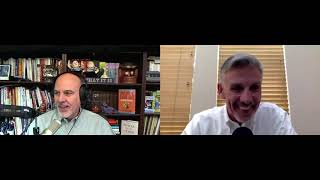
In this Thanksgiving special of the "What Anyone Can Do" podcast, hosts Randy Cantrell and Leo Bottari discuss the importance of surrounding yourself with supportive people, sharing personal holiday traditions, and the role of gratitude. They recount Thanksgiving rituals such as a turkey trot, family gatherings, and football, while also reflecting on past injuries and the joy of holiday meals. The conversation pivots to the power of expressing thanks to mentors, teachers, and loved ones, illustrating how a simple note or call can have a profound impact. Leo highlights Drew Dudley's TED Talk on "lollipop leadership" as a concrete example of recognizing the influence of others, and announces Dudley as the next guest. The hosts promote Leo's recently released book, mention media appearances, and encourage listeners to leave Amazon reviews. They close by outlining plans for 2019, emphasizing scaling peer‑based learning, and wishing listeners a happy Thanksgiving, with a call‑to‑action to subscribe and visit their website.
Chapters
Welcome to our new show, What Anyone Can Do Podcast with Leo Bottari and me, Randy Cantrell. Our new show picks up where the last show, Year of the Peer, left off, highlighting the simple truth that who you surround yourself with matters, and that if we enlist the support of others, give back to those who give to us, and pay it forward for the next generation, we can do anything. Author and keynote speaker Leo Bottari and I will interview a diverse group of thought leaders who will share stories and insights that will help you succeed in business, and in life.
How?
By doing the things anyone can do, but most of us never will. Welcome to the Thanksgiving episode of What Anyone Can Do Podcast. I'm Randy Cantrell, gentleman over there. He's the brains of the operation, Leo Buttari. Welcome, Leo. It's been a while since we've greeted everybody, but no better time than Thanksgiving and the holiday season to really get focused on who you surround yourself with.
Yeah. And what anyone can do, which is overeat on Thanksgiving, I think.
Exactly. And watch too much football.
But I think, um, you know, obviously we figured, hey, let's do a little Thanksgiving Day, you know, morning podcast. And, uh, you know, for me, Thanksgiving is about a couple of things. Um, usually it's been about doing a turkey trot in the morning. So I'll be doing a 5K, uh, this Thanksgiving before, um, it kind of helps me feel like I can justify, you know, the eating and drinking and everything that goes on.
I'll be on the sofa thinking about you while you run the 5K.
Festivities. And, uh, um, I think it's obviously about being around family and friends. And again, as you suggested, surrounding yourself with the right people and not only thinking in terms of what it means for that day, but what these people and, and what people, I think, in general just mean to our lives. And, um, you know, the importance of really pausing for a moment and giving thanks to those people who I think do so much for them and the hope that we can reflect on the year and that we did for others as well. And then, as I mentioned to you before we get started, Thanksgiving Day for me has usually been a day of injury of some sort or another because for many Thanksgivings and not just when I was a kid, sometimes when I was much too old to be doing this stuff.
Old enough to know better.
It was the Thanksgiving Day football game where you need to be emergency room for like a torn, you know, something in my ankle a couple of times. And then of course, um, my hand here, which you can show this, but that finger is, you know, that's a Thanksgiving Day reminder of like, don't be out there playing football anymore. Um, caught a pass and it just turned into potato chip bag inside my, uh, joint. But, uh, hey, but it's all fun stuff. All great memories, great people. And, um, you know, just a lot of fun. So, uh, so how about you in terms of Thanksgiving? What does that kind of look like for you both? Maybe when you were kids?
Yeah, it's, it's, it's, it's very much family and, you know, and, and really close friends. Um, you know, it's funny, the holidays and all the conversation that a lot of people, you know, feel like they've got, they've got people that impose on them that they may not necessarily want to be surrounded with. You know, so I feel for the people like that, but that's not the case for us. No, it's, it's definitely, it's, it's friends and close family. Of course, here in Dallas, Dallas Cowboys, I mean, the Thanksgiving game in the NFL, the big deal, I guess, since the days of Tex Trammell, you know, the Cowboys have been the big deal. So here in Texas, watching the Cowboys play ball, even though they're marginal at best, It's always, always a big deal. So, well, yeah, pretty similar.
And in all deference to Scott Monte, it's still better than watching the Detroit Lions.
Well, yeah, this year it sure is. This year it sure is. But well, even your, even your, your New England Pats are having a tough go of it this year.
So, you know, when you consider what their record is in the division, and it would be a year that most teams would be happy with, and yet absolutely they're not.
Absolutely.
They're feeling like— well, when you start looking at the teams, look at last night's game.
Unbelievable.
Of course, this is, you know, we're recording this a couple days before Thanksgiving, but of course, Monday Night Football with the highest-scoring game in, you know, Monday Night Football history. It was just unbelievable. I mean, it was just crazy, you know. I thought, you know, in fact, it was looking like that whole scenario with the last team that was gonna have the ball was going to score and then they would end up on top. And, uh, you know, Mahomes just ended up throwing that interception there and that was that, but it was a, it was an amazing spectacle.
Oh yeah. Super entertaining. Super entertaining. Well, and the theory is that that's probably where the league's headed, you know, with all the, uh, all the priorities going to offense and worried about head injuries and whatnot and taking some of the physicality out of the game, but it's really entertaining. That's for sure.
And I had 2 of the receivers for the Rams last night. So that means my fantasy football team came back and prevailed last night.
So yeah, good.
Much to the chagrin of my friend Phil, who had to suffer through the taunting.
Yeah. Yeah.
There was a lot of, you know, face— I mean, texting, you know, taunting.
Right, right, right. Trash texting back and forth.
You know, one of the things going into this though, you know, again, this idea of the people we surround ourselves with being so important. I don't think there's ever been a better example, you know, at least in the form of a TED Talk, than Drew Dudley's talk when he talks about lollipop leadership. Now there's a lot of themes in that talk, and Drew Dudley of course is going to be our guest next week, which is why I think it's kind of fitting that we tee this up a little bit. But, you know, certainly, and I don't want to get into the whole story and all that, first of all, if you haven't seen seen it. If you're one of the few who haven't seen it, by the way, because it's hard to say billions of people. Yeah. It's about 6 minutes long. Drew Dudley, just look him up on, you know, TED or YouTube or whatever. And it's a remarkable talk. Even if you've heard it before, I think this is a great time of year to look at it. But certainly among many, I think, real lessons and great themes in this tight video, these incredible story that he tells, is just, you know, the notion that we have people in our lives that have made a big, big difference. And sometimes they're plainly, you know, sometimes they're very obviously aware of it, but sometimes not so much, you know, um, maybe a teacher we had, it may be, uh, someone who, you know, we worked with for a brief time who in some way influenced us and we took that, those nuggets that we got from that relationship and did something with it that wasn't always, um, you know, apparent, you know, to the person who kind of made that contribution to our lives. And I think it's a great time to be thinking about who's a person who is where I am today. It could be, you could be where you are in school, it could be where you are in your job or your career or, or, where you are with your family, personal life, whatever that may mean for you. If there is that one or two people or more who you think about and say, wow, you know, I would love to just reach out to this person. It could be a handwritten note, could be an email, could be a phone call, whatever that may be, and say, hey, I just wanted to give you a call and thank you for the big difference you've made in my life. And here's how. And, um, You know, certainly I don't get to tell you enough, but I didn't want to let another day go by without sharing that with you. And I'll tell you, um, you will make somebody's day. You'll make somebody's week. Even, even beyond that, it will be an unforgettable experience for them. And it's such a small thing to do, but I think such an important thing to do. Uh, and it's a very big thing to do. Um, and I don't know, I've been fortunate just on a few occasions to be recipient of a call like that. I can't tell you what— how impactful it is.
Well, and there's the good karma, or whatever you would call it, that you get in doing it. I was fortunate this past week, had an out-of-town visitor, uh, here at the house who's been a lifelong mentor to me. Uh, he's now 83 years old, vibrant, in good health, and, uh, and I was able to do exactly that. I've done it before, but you know, and there's something different when it's, when it's somebody that you've got big history with. He's known me since I was born. He was friends with my parents and I intentionally sought him out as a young man because he's one of these more reserved kind of people. And I just kind of imposed myself on him as a, as a kid and especially as a young father. And a young husband and just, you know, sought his counsel. And so I was able to tell him to his face this past week, we put him on a plane and, uh, he's in Springfield, Missouri. And, uh, yeah, it's, it's a, it's a big deal. And it really is at the heart of this holiday, uh, you know, here in the States, Thanksgiving Day. I mean, it's gratitude, right?
Yeah. And, um, it's definitely what anyone can do, certainly, you know, when it comes to anyone can just pause for a moment and reflect a little bit on the people in their lives and give thanks to them. Obviously it was really remarkable for you to be able to do that in person, you know, we— and but if we're not afforded that opportunity, you don't have to wait, you know, like I said, write a note, make a call, you know, do that. I've heard of people who wanted to thank a teacher, and I mean like way back, like like teacher they had like in the 5th grade or something. And they're like, ah, they'll never remember me. I'm going to feel like an idiot, you know, and they'll call. And of course the teacher remembers. And then once they get into why they called, there's nothing that makes a teacher feel, you know, more fulfilled than knowing that they impacted the life of a student in such a profound way.
And yeah, and don't wait. You know, I did reach out. I reached out, oddly enough, fifth grade teacher. I reached out probably 5 or more years ago, 5 or 6 years ago, but I waited too long. Uh, I got in touch with her daughter, but she had passed away a couple of years before. Um, and have no idea why she suddenly popped into my head, but yeah. So don't wait. Don't wait. You know, fortunately your father is still alive. My father is still alive. My father's 95. And, uh, you know, these opportunities, I don't know, we need to seize them more. Yeah.
It's unfortunate on one hand, of course, I know you feel that way in terms of not being able to reach the teacher directly, but how meaningful for the daughter to be able to hear that. Um, yeah, you know, that made such a difference in your life and how meaningful that was to have a parent who made such a difference. And so even under those circumstances, there was some something there too, you know, that there's some good, you know, to be gained certainly from it. But, um, you know, it's good stuff. And it's something that I'm certainly going to think about as I go into this, um, holiday and, uh, very excited about, uh, you know, Thanksgiving. Um, it's not quite the same as when, you know, I grew up in New England. So you had this whole Thanksgiving in New England and there was always all that stuff around. It was always a big holiday there. It was a little different in Southern California. I will say that.
Yeah.
But it's nonetheless, it's, uh, it's, it's all good. And it works very well too. It's just a little bit different and it's a heck of a lot better weather.
So sure. Yeah, that's for sure. Well, and there's the flip side to this as well as, you know, the impact that you may be having on somebody and you, you have no awareness of it at all, but you know, there's that intrinsic value of us just doing it because it's the right thing to do, whether, whether, whether somebody's bold enough or courageous enough, whatever it takes for us to tell people that we care about them, that they made a real difference in our life.
You know what I think is funny? I mean, just think about it from the podcast, right? So obviously we put a podcast out there, we know there were somebody's listening to it, right? But when it's people we know and it's like, well, someone said, hey, I listened to your podcast the other day and there was this great thing I got. And I'm like, really?
Yeah, right. I had no idea you were listening.
That was surprising. Exactly.
Right. Yeah. Well, you never know. You never know. And that's, you know, but it's a cool thing. It's a cool thing. You know, we're able to influence at scale. Those of us that are, uh, I don't know what the word would be, bold enough to put ourselves out here like you and I do. So, so there's that. That's a value too. So you're always helping somebody.
It's fun stuff. So just a couple of things, cause I know, um, again, we'll have, um, Drew Dudley on the show. Next, next week. Very excited about that. We'll close out, I think, between, you know, some guests and some of you and I kind of closing out the year with some thoughts about going into 2019, because I think it's gonna be real exciting. I think we're gonna do some really good work together that's gonna be beyond the podcast and be really about taking a lot of the lessons from the power of peers and what anyone can do and what this is all about and looking at how do you help people be their best selves? What does that look like in a group experience? And then how do we translate that into the organizational team environment that can be really super powerful? And, you know, I just think there's going to be a lot of possibilities and a lot of lives that I hope we're able to impact next year with a lot of that work that we'll be able to do together.
And, well, the podcast had an interruption this year, and it was this little orange gremlin over here that, that came out. That, that, that it was a great disruption. But, you know, so to our, to our audience, we got off track and we're making no apologies for it because it was well worth it. Well worth it. The book, the book is out and doing well. And you're, you're getting, you know, you're getting invited to some other podcasts and some of that content. I would invite people to go to leobattari.com/media and, um, you'll be able to keep up with where Leo has appeared. And, uh, and some of these interviews are really succinct and good. I mean, the last, uh, the one that I most recently listened to that I think you just did, was with Rick Fronzy. And it was really tight. It was really compact. And it was really good. And I think it would be a great place for people to go to get some overall sense of the book.
He does a great job with that show. And he lives right up in Orange County. It was less than an hour drive for me to go up. In fact, you know, he has some people who come into the studio, others he'll do remotely. And I was working through his producer, he actually didn't realize I was going to show up that day. And I'm right at his door kind of knocking. He's So we just kind of get set up and did our thing. Uh, he knows the space extremely well. He's been writing about it, um, you know, um, before I was, and, uh, you know, very involved, um, still, uh, with it. But I also, uh, and, and for that reason, I think I like the interview because he just asks really great questions and, and understands, uh, I think a lot of the benefit of what the people who surround us do and what they mean in our lives. And so really grateful for that interview. I think there's a lot of other, you know, really good ones there as well. I think what I like about them is that they're just easy to listen to in your car or whatever. It's, you know, sometimes stopping down and reading a whole book, but in about, for a lot of these interviews, they're 20, 25 minutes. And it just gives you a nice succinct, snapshot into what the content's all about. And I think even from that gives you some good takeaways that are either, you know, hopefully something that may whet your appetite, you know, in order to read the book. But even if it doesn't, and there's just some value that listeners get from that, that's, that's great. And, you know, all in all, I don't, you know, I think on one hand the book interrupted the podcast, but It's just really about all the different mediums we're trying to communicate and get the message out. So the book, I think, was kind of a necessary piece to try to launch it and vault to the next level in 2019. When we think about how we take this content and make it more relevant and even more practical and approachable for, you know, really anyone in their everyday lives, not just a CEO who's part of a peer group. Okay. And, you know, as we've talked about, and I think it's really, as we've said many times, it's the guidance that we got, you know, from our guests, um, in during the Year of the Peer podcast and not so much explicitly, but it was just, it was kind of like the force of gravity, you know, it was kind of the conversation always seemed to kind of pull in that direction to be about this larger circle of people who surround us. And also the idea that it wasn't just about how we engage them in a formal setting. It's how do we do this every day and how do we get really good at it? And so that's what made, I think, this year a lot of fun. And I think it's going to really make next year really rewarding as well.
Yeah. Well, listen, we're both evangelists for this message. As hopefully as good and effective evangelists, hey, we'll use whatever platform we need to to get the message out. So the podcast is just part of it, but I'm thrilled for you. I'm happy for you. I'll end by telling you some things that I'm thankful for. I'm thankful that I got in a moment of bravery or stupidity, one or the other, or a smattering of both, reached out to you. With having no idea who you were, um, and that you were courageous enough to say yes to a guy in Texas that you had never met. Thankful that the book came out this year, you know, that you wrote it. Uh, I think it's, as, as you told Rick in that interview, you know, it's, it's both a different direction and an expansion of the same direction of the first book that you co-authored, The Power of Peers. But boy, does it broaden it. And yeah, the title says it all because it absolutely applies to anyone. So I'm thankful, thankful for you, thankful for the friendship, the relationship, and all the listeners, really especially thankful for them and for the people that are investing their money and their time to read, buy and read the book. Really thankful for them. I think the more that we can push this message, I think it's more power. It's going to be like a snowball. It's going to pick up momentum and steam. And I think really at the heart of a lot of this stuff is exactly congruent with this holiday of Thanksgiving, because the power of other people, it really is at the heart of it. For me, at least, it's about gratitude, gratitude for what these people can do for us, how they can help us and how we can help them. It's not just this self-serving. Kind of a thing. It's mutually beneficial. So those are my parting shots.
Yeah, no, I mean, well, obviously the gratitude goes both ways from here. You know, one of the things when I was on the, during the interview with Richard Franzen, he talked about this whole idea of unanticipated or unintended outcomes. I don't like to refer to them as consequences, but they're out, They are outcomes, right?
Right.
And in this case, think about it. Um, if you don't reach out and then I don't kind of entertain that, we don't figure out something where all of a sudden we do a podcast. It was because of the podcast and all of the guests that we got on the podcast, there would be not that book that just got done. I mean, there's just so many things, right? I mean, the content doesn't go in that direction. There's a lot, you know, and, And then obviously I think we've found, you know, other ways to work together where it's going to be a real 1 1 3. And I think anytime you can find those kinds of partnerships in life, uh, they're just going to make a big difference. And our hope, of course, um, I know both our hope is that, you know, a lot of people will benefit, you know, from that. So I'm very grateful for that. Um, you know, grateful for the people who've, uh, bought the book, read the book. Some of you have been kind enough also to leave books— leave books— leave reviews on Amazon, which are great. If you've read it and want to leave a review on Amazon, I would really greatly appreciate that. I think Amazon reviews to me become a great example for what this whole power of peers is all about. You know, the less we trust institutions, the more we look to others like us who have read that book or driven that car or sent their kid to a college or whatever. And so the more of you, I think, who contribute your thoughts and insights into the content of the book, people, uh, look at those reviews and they take those as a really powerful data point, even though they don't know any of you. They know that you have a shared interest in content like that. And your description of what that experience was like is really helpful and really meaningful. So again, if I would be very grateful and thankful that if you have an opportunity and can leave an Amazon review, that'd be really terrific. But, you know, until next week where we get Drew Dudley to join us, I just want to wish everyone a happy Thanksgiving and let's, you know, just, I think, make the most out of December and do some really great things to tee us up for 2019.
Happy Thanksgiving, everybody. To learn more about our show and what we do, to submit questions to us, and to subscribe to What Anyone Can Do Podcast, please visit our website, whatanyonecando.com. What Anyone Can Do Podcast is hosted by Leo Battari and me, Randy Cantrell. Music provided by Kevin MacLeod is Vibe Ace, licensed under Creative Commons Creative Commons by Attribution 3.0 license. Thanks for watching or listening. We hope you'll share the podcast.










