What Anyone Can Do: Jay Izso
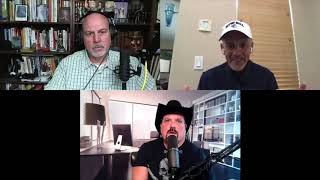
Jay Izzo, author and coach, interviewed over 100 authors during COVID and found that crisis amplifies how leaders show up. Remote work strips away filters, making authenticity and vulnerability harder to hide. He argues anyone can make a difference through gratitude, effort, and attitude.
Chapters
Welcome to the What Anyone Can Do podcast with Leo Battari and me, Randy Cantrell. This show picks up where our previous show, You're the Peer, left off, highlighting the simple truth that who you surround yourself with matters, and that if we enlist the support of others, give back to those who give to us, and pay it forward for the next generation, we can do anything. Author and keynote speaker Leo Battari and I talk with a diverse group of thought leaders who will share stories and insights that will help you succeed in business and in life. How? By doing the things anyone can do, but most of us never will. Welcome back. Another episode of What Anyone Can Do, a special episode. Well, they're all special. Uh, it is another COVID-19 episode, kind of sort of, but we have a guest today and you could guess which one of us is in Dallas, Texas. And no, it's not him. It's me. He's East Coast. The other guy in the cap is West Coast and the bald guy, I'm right in the middle. Leo, I'm going to turn it over to you and let you take off.
Well, the What Anyone Can Do podcast was being challenged when none of us could kind of get on this platform and get all together. We thought anyone could do it, but oh well, took us a little while. But anyway, um, Jay Izzo, so incredible to have you on the show. I so enjoyed being on your podcast, A New Direction. And what impressed me so much about that whole experience was I know you have a lot of different people on the show, many of whom have written books, and you always read the whole book. You ask questions about the book in a way that I've never really had, you know, anyone do before, quite frankly. And, but what— so one of the reasons that, in addition to— so a couple things. One, of course, is I really would love to get you to talk a little bit about who you are and what you do and kind of what you're all about. But I think what I really want to get to today is is here we are over the past 8 weeks, and we've been through shelter in place and all of this disruption in our lives, both in terms of economic, health, and social, and all of it. You talk to a lot of people. Randy and I talk to a lot of people, and I think in terms of what we're hearing out there, in terms of what people are experiencing, both in terms of some things that have surprised them, about their workplaces, about their people, all of it. And then, of course, some of the— I think the real— as I mentioned to Randy this morning, 8 weeks ago, for example, when I would speak to CEO groups, coronavirus was just something that everybody— somebody else got. It wasn't affecting them. It's rare that I can get in front of a group today where someone doesn't say either I have it, I've had it, my wife has it, or the parents have been affected by it, parents have died from it. So statistics have quickly moved into real human stuff. And I can't think of anyone we'd rather talk with about what's really going on with people as human beings, uh, quite frankly, than you and all of the people and all the guests that you, um, speak to. So if you could just tell our audience a little bit about what you're all about. I'd love to get a sense of some of the, particularly maybe some of the guests that you've had over the past 8 weeks and what you're kind of learning from them and what you're hearing out there.
Thank you, Leo, and Randy, thank you too for the introduction. So my name is Jay Izzo. I am an author, I have 4 books out in the market. My very first book was called Got Social? Mediology: Using Psychology to Master Social Media for Your Business. Without spending a dime. The last book that came out last year was Lessons from the Farm: Essential Rules for Success. I'm originally— I was actually born in New Jersey, raised in Nebraska in a town of 119 people called Ithaca, Nebraska, and played football. I'm about 6'4", but still about 250 pounds, work out regularly. Played football, played football in Nebraska, small college ball, and Went to school, went to grad school at Washington State University, came to North Carolina to work with the men's basketball program and some other sports programs at North Carolina State. Wound up over the course of a year, my wife told me write a book. I wrote a book, and then next thing I know, I'm speaking to groups all over the place. I have my own coaching company called coachingmavericks.com, where I coach, I do everything from business to life coaching and success, what I call success and leadership coaching is what I call it. So that's, that's kind of the nutshell. The show is literally a show about authors. As you know, Leo, you've been one of my, just an amazing, fabulous guest. And I have, we've done 100 shows. I've read about 100 books. I read a book a week for the show from COVID to cover. I tell all my guests, and the reason I started doing that is because I'd been on so many shows where nobody ever read the book. And I wanted to do a show where I respected the author's passion and inspiration and wanted to be able to relate that back to the audience. So since this whole thing has started, we have been— I've interviewed so many, many people, and they have been absolutely amazing. Dr. Rick Brinkman who co-wrote a book with Dr. Rick Kirschner, has been on my show twice. The book title is called Dealing with People You Can't Stand. And so yesterday we did the revenge show, and which was a lot of fun. But, you know, the truth of the matter is, the reason why I bring that book up in particular is because as we feel the pressure— because my master's and beyond work is in psychology. As we begin to feel pressure, we start to become people we can't stand. You know, whether that is that we're a tank, that because of the stress that we're feeling because either we're not in work or we can't work or we're not able to do what we want to do, or maybe we can't do it right, we just are trying to get it done, or maybe because we're the type of people who are people people and we can't be around those people and this isolation affects us. Or maybe it's because we want to people-please and we can't people-please right now. Maybe it's because we want to hear people appreciate us for what we're doing and we're not getting that appreciation. Whatever that might be, we become people, or we start dealing with people we can't stand. Whether that's the tank who all of a sudden just comes at us out of nowhere and blasts us, or the grenade who just starts throwing shrapnel all over the place and doesn't care who it is, or maybe it's the sniper who has that snide remark that comes out of anywhere. And I think it's a really important book as we approach this time, because what we learn is that we start becoming the people we don't like in others quite often. And I think learning how to deal with those people, having a change of attitude and a change of behavior on our part, is critical for us to deal with people and taking a positive intent approach of going, you know, this isn't who this person really is. You know, deep down, this is really a good person, but their stress level has changed who they are. So that book, I think, has been, uh, has been ultra critical. It's also insightful for yourself. I think the week before, I had Maureen Metcalfe, who is the founder and CEO of the Innovative Leadership Institute, and she wrote this book on innovative leadership. And how interesting is it that she starts the book of saying, you know, the first thing you need to know is your leader type, your leader personality type, because we have to all become more self-aware of ourselves. And I think that's where in all of this, and she talked about this in terms of this COVID-19 pandemic, that so often we become less self-aware because we're so— we've gotten so worried about almost survival that we're not even aware of our own selves. And I think that becomes critically important for us to really stop for a second and we have to become all more self-aware of our behavior, of our attitude, our lack of gratitude, our inability to find ways to be thankful, the willingness to improvise, adapt, overcome, which are my favorite 3 words. I think all of those things are critical, and I think that's what some of the people are pulling together in some of these books that I've covered, and they've been awesome.
You know, we were just talking, in fact, we're looking forward, hopefully, be able to put this together next week. If you haven't had Craig Weber on your show, you would love his work on conversational capacity. The first book was called Conversational Capacity. The next one is Influence and Action. He talks a lot about candor and curiosity and how to operate within the sweet spot in terms of conversation. And it's very powerful because Even though I think intellectually we know how we want to be, we know what it's supposed to look like, we don't— we're not always equipped with the tools to make that happen. And so one of the things I enjoy about the book you just described, which I'd love to read as well, and Craig's work, is I think it starts to give you some of those tools. And the reflection piece, of course, is huge. This idea that we have to take care of ourselves. Someday when we get to fly again, we're going to— remember the airline safety instructions, right? I brought it up in my last book. You put the mask, oxygen mask on yourself before you put it on others. It sounds counterintuitive, but bottom line is you've got to be strong enough, and that's yourself. It's physically, mentally, psychologically, all of it to take care of others. And obviously leaders, I think, are really feeling this right now in a big way.
Well, I think you're right. And here's the thing. I think Maureen Metcalf did a great job and I really, it started getting me to think.
I listened to that. I listened to a great bit of that show, by the way. It was good. I enjoyed her.
Thank you. She, you know, she makes a point of saying something that really kind of hit me. You know, you kind of find out what kind of a leader you are under stress. I mean, that, that's— I mean, right, Leo? I mean, it's really easy to lead when life is going well, all right? But what kind of leader are you when you don't feel like leading because the circumstances around you are starting to dictate, dictate other factors? And the people are starting to question whether they should continue to follow you anymore. And, uh, there are financial pressures, there may be even home pressures. I think we start to expose leadership under stress. I think that— I think to me that's the— I think that's probably the The greatest test of leadership is when the leader is under the most stress, when the followers are ready to unfollow. What, what kind of leader are you? And, and I say that pointing fingers at myself too, because I have to be honest with you, Leo, as this has been going on, and I'm an extrovert, I am a big-time extrovert, and so I get my energy from people, and when you're not around people, you have a tendency to go to the grocery store and talk to the grocery clerk just so you can be around people. Yeah, okay. And it's funny, but it's really true. I know, I know all the checkout people by their first name now at my, at my local grocery stores. I know them, and I talk to them like they're my best friends because they're the people I get to see the most frequently. But it started to dawn on me that, you know what, I'd gotten soft. I'd gotten so used to being in the palace, probably took a lot of things for granted, and, and didn't— had forgotten to realize that I have to step outside of myself if I want to, if I really want to be, be the leader that I say that I am. You got to step outside yourself. You're going to have to do it differently. And you have to stay positive, and you have to make that choice. And that I actually have choices in my attitude, I have choices in my behavior, I have choices how I can respond regardless of what you say to me. And I have to sometimes make that choice day by day by day. And I love your example. You said, you know, the whole airplane thing. We've all been on an airplane, right? We should lose cabin pressure. Put your mask on first before you put everybody else's mask on. Well, why do they say that? Well, here's the deal. If you don't put your mask on and you lose and you can't breathe anymore, you're not putting anybody's mask on, right? And I think what this is realized to me, at least from a leadership standpoint and even a personal standpoint, is, dude, Put on your mask, but you better start putting masks on everybody else around you after you've done that so that you can put on as many people, because there's people dying out there. And I think we've gotten soft. We've gotten so used to living in a world that says, I want it yesterday. I'm not going to wait for it. I expect Amazon to deliver it, and if they don't deliver it in the days that they promised me, I want a complete refund. We live in a world that says there's always gonna be meat on the shelf, there's always gonna be vegetables on the shelf, there's always gonna be all this stuff. All this stuff is available to me. And honestly, gotten soft. And now reality's starting to slap us in the face, and what are we gonna do?
There's no question, I think it's gotten a lot of people to reevaluate their priorities. But I think to your point in terms of leading through adversity, one of the great examples that I got recently. I've been speaking to CEO groups and just in the past few weeks, it's been all over. It's been Denver, it's been Glasgow, Scotland, it's been Toronto, you know, a little bit in California. And there was one really fun story. It was a CEO who was echoing what many CEOs are saying, which is, by the way, they're amazed at the level of productivity that's taking place with people working work from home, right? You had to come into the office because, boy, we got to see you work. And all of a sudden now everyone's at home. And this guy was talking specifically about— and he said, and I can see it not just anecdotally, but I can look and see, for example, because I run a tech company and people are writing lines of code. And, um, he said it's up 20% just consistently. Now what I'd love to hear from him though, his great thing, he talked about it being up 20% and in a nanosecond he says, but you know what worries me? He said, I don't want my people getting burned out. He says, what I really need to focus on now— and this is what he wanted help from the other CEOs in the room— how do I make sure that people are taking breaks, that if their kids are home and being homeschooled, that they're taking time with their kids, they're taking their dog for a walk, they're doing yoga, they're doing whatever, so that they are, you know, making sure that they're not just hunkering down and just diving in and sitting in front of their computer for 12 hours a day because that's the last thing I want to have happen. And I think for him and for others who talked about similar situations where they were— when one CEO, for example, she said, hey, I make sure that I'm really transparent about what's going on in my day. So if I'm going to take my dog for a walk at 4 o'clock, I tell everyone, hey, going to take the dog for a walk at 4 o'clock, just to model the kind of behaviors and let them know it is OK to do that. And I think that's really remarkable when it comes to priorities and comes to recognizing those things. And, you know, I know Randy, you're doing work with government leaders right now in terms of kind of how they're responding and what's going on, but it is at least kind of nice to see leaders focusing on those things and actually having Zoom calls with employees that are just about "how are you doing? How's your family doing?" Not, "did you get that report to me?" You know, or, you know, do you, or whatever deadline you got to meet or whatever metric you were supposed to, you know, chin that day. So that, that's been kind of nice to see.
It has. Matter of fact, my wife owns her own company. She owns her own real estate company here in the Research Triangle Park of North Carolina and Every day she has a Zoom call with her entire team. Every day. And she has said to me, at least 3 or 4 times every week since this has been going on, "This is the best thing that's ever happened to my team. This is the best thing that's ever happened to my team. We're actually checking in. We're actually talking and caring about one another. We're actually not just focused on work." Yeah, we talk about some work things and ideas and we brainstorm, but the idea that How are we doing? What are some of the new things going on in life? How are you adjusting? Those things have been, in her mind, far more powerful. And she's like, I don't know I ever want to go back to having a regular meeting again because of how powerful. And, you know, Dr. Schuller came up with a term called online disinhibition effect. And basically the whole idea is that when we're behind the screen or when we're behind a phone or a tablet or whatever it is, We have a tendency to be less inhibited because we don't have that immediate threat. Even if somebody's on video looking at us, we don't feel that threatened as we would face-to-face, where we might withhold something. And I almost wonder if he hasn't stumbled on something here that he didn't even realize, in that in this pandemic, are we actually more vulnerable? Than we would typically be face-to-face. Has this disinhibition effect that he talks about— and by the way, he's from Rider College, Rider University, sorry, was Rider College. My dad graduated from Rider College in the '60s. Dad, God bless you, I'm sorry, I didn't mean to insult the college, but it's a university now. But anyway, you know, this idea of inhibition effect, we have seen, of course, play itself out on social media where, you know, people are willing to basically take off all their clothes and you know, shoot pictures of themselves and selfies and stuff that they would never do in public. But I also wonder if there's a positive side to that that we're seeing as well in this situation with the Zoom calls that's happening. I think it's awesome. I do agree with you though on one thing, and that is when people are working out of the house, and I'm guilty of this because I do my job out of the house, Sometimes what happens is you get so consumed on what you do that you don't pay attention to the things you need to pay attention to. My wife has called me in the last 30 days, has called me on saying, you are so stuck in that computer. I really want to talk to you. And you go, crap, you're right. You're right, you're right, because I, you know, you, you know, we tend to, you know, we want to, you know, remove the world from around us so we get focused on something. And so, you know, I'm focused on my work, you know, she sees me reading another book and she'll say to me, she goes, you know, you've been at that book for, you know, 9 hours taking notes out of that book. Do you think we should, you know, have a little time? Yeah, probably you're right. You know, yeah, as a matter of fact, we should have some time. You're right. You know, but it's, but it, that is a danger. But I think, you know, we have to, and I, and maybe this is, I told this to my client, one of my clients who I coach, and I said to him this morning, I said, you know what, this world has changed so much. It's time for us to get back into fundamentals and basics. You know, what are the fundamental and basic things that we should know but we're not doing because the world has changed? And so what we're doing is we're jumping far ahead instead of getting back to the basics. How much time should I work, right? How stressed are my employees, and do I need to really account for that in terms of what their job production is? Am I making sure that when they, that when my employees go home, they really can go home to a restful situation? Am I, am I doing the basic things that we should be doing in our job? That is, have I made it so complicated because our lives are complicated that we really need to actually back down and simplify it? And let's just get back to blocking and tackling. Forget the trick plays. Forget the pulling guards and forget the, you know, we're going to bunt with two guys on first and second and we're going to do a squeeze play. Forget all that. Let's just hit the ball. Let's just catch the ball. Let's just throw the ball to the right person. Right. And I think as I told him that and he said to me, man, He said, you're right. We just need to get back to basics and fundamentals. And I wonder if that's not the answer to all of this is to, instead of making it so complicated, if we need to just get back to the basics and fundamentals.
I think it's also another explanation for why collaboration has gotten better. Um, I don't have a name for it because that was a really cool name we had there. But, but the, um, but I, I think what's happening too is look, You know, we typically have a situation where people go into work, they bring their work hat on, they're the employee, they convene in one place. Now all of a sudden everyone's in their home. Their employee hat stays in the closet essentially. Now I'm inviting people into my world in a way that's very, very different, right? So it's a little bit of its home field advantage. A little bit of it though is dealing with each other as human beings instead of employees, because now we may have things in the background. I'm not a fan of the virtual background. I wanna see kind of, you know, but it'll be a dog barking in the background or jumping on your lap. It'll be the little kid who's being homeschooled who needs a break from their work too, who's coming over and say hi and seeing who's on video. All the things that humanize us in a way where we start being just a little more forgiving of one another, a little more understanding, a little more willing to listen and work together. And I think that's been really powerful as well and driven and deepened a lot of the relationships that employees are having with one another. That I think has been really powerful also.
Listen, my wife went through this with her team. There was an initial, there was this initial push that shouldn't we all be dressed up, you know, to be on the Zoom call? And so my wife came to me, she goes, what do you think about people, you know, dressing for a Zoom call? And I said, why? I said, what really would be the point of that ultimately? I mean, what would change? I said, the fact of the matter is nobody dresses up to sit in their house. The fact of the matter, it's still their house. It's not an office. It's still their house, right? So let's deal with the people in their authentic— and I love that word, I know it's a really kitschy phrase word, right? Authentic. But let's just strip away all that stuff and let's just be authentically real. This is who I am at home, and I can still do my job not in a tie or a, you know, business suit or whatever it is. It's really interesting how much more people become vulnerable that disinhibition starts to come forward because now people are willing to be more open and honest because they don't have that— you know, we wear things. People don't realize it. Put on a suit and see what happens to your attitude, right? I'm just telling you, put on a suit. Your attitude changes when you're in a suit, you know. But put on a pair of shorts and your Tommy Bahama shirt Right? Tell me what you're at. Try being real intellectual that way. You know, unless you're really comfortable in your skin, it's not going to happen because so much of what we wear— and by the way, there's been research in the '70s, all the way back in the '70s, where it said, you know what, people relate to us if we wear what they wear. They just do. If you look like the person, if you look similar to the person that you're trying to be, they, they have a tendency to like you too. You become more likable. By the way, likability is that key to a little trust, right? You know, was it Dr. Amy Cuddy from Harvard University did all this research on trust, and what she found is competence means nothing, likability means everything when it comes to trust. So the book, by the way, is called Presence, if you're interested in the book by Dr. Amy Cuddy. Fabulous. She's a fabulous researcher out of Harvard, and her book, I thought, was just crazy good. So check it out. But I think that's kind of, I think, Leo, to your point, I think, I think that's what we've got, we've got going on. I think we're becoming more real about what we really are. And I think it allows us to, I think it allows us to shed so much of the outer shells that the— what did Irving Goffman say? Irving Goffman said, in his dramaturgical approach. He said, famous sociologist by the way, if you ever want to read a fun book from the '80s, I think it was about '83, it was called Asylums, where he actually spent time in an asylum. But he said, you know, we are all actors on a stage, and depending on who our audience is, we put on a different mask. And we don't really want people to see what's really backstage or who the real self is, because we're sometimes really uncomfortable with that. But I think in times of pandemics and what we're living in now, I think we're letting more people into our backstage. I think we're willing to do that. And I think it's healthy. And I think it's good.
Yeah, I agree. And people who are listening on audio, by the way, should be aware that none of us got dressed up for this podcast today. So it's just really just to tell you we're eating our own dog food here. Randy, as we—
I did put on a collared shirt.
There you go. That's big today. But Randy, I'd love to get a sense too. I mean, we've been kind of back and forth on this today. What is the thing that is kind of in this conversation kind of stood out most for you in terms of the conversation, but also kind of what you're experiencing and what is kind of hitting you with all this?
Well, I'm clearly the introvert in the room, you know, so if Jay's the, you know, the, the big extrovert— well, and the thing is, you've got an extrovert who's admitted that his wife, you know, has kind of called him on the carpet for getting his nose in a book for 9 hours at a time. So you can imagine what the introverts among us, you know— fortunately, I'm married to an introvert, so We could go days without seeing each other and be fine. Leo and I talked a couple of weeks ago, Jay, about the NFL draft and the Zoom. And of course, here in Dallas, it is a football town.
Absolutely.
And everybody was really wondering, this is going to be a colossal train wreck. And of course, it just, it was really compelling because we were able to see not only people that were in there, you know, because the NFL had closed down all of the teams' offices. So these people, and of course, you know, we got Jerry Jones, he's on his yacht, you know, and then you've got Coach Bro, Klingsbury, who's got this phenomenal backyard and, and just killer, you know, bachelor pad set up there in Arizona. But that was all kind of cool. And then seeing the players was kind of cool. I would— the thing that's come through my judgment is easy. Compassion and understanding is hard. And while this conversation has been admittedly leaning toward the positive side, all we have to do is look at the media and see that during this pandemic, it's just been rock throwing and grenade launching and just a lot of venom back and forth. And Jay, I mean, we've leaned into the positive side, which is great. And I would love to just do that and ignore all the other. But during this pandemic, the thing that has frustrated me the most and the thing that I have seen, and maybe I'm just highly sensitive to it, is just the highly opinionated people. And I still love the meme of the newscaster And coming up next, we're going to have our virus expert, Karen, from Facebook. You know, and that has absolutely driven me out of my mind. But we've seen that, you know. So, Jay, have you—
Well, the vitriol has certainly, I think, increased, sadly. And I have to admit this, you know, in my research of studying social media and continuing to study human behavior, one of the things I've noticed is that the— as separated as we have been, we've just— the chasm has grown even wider. Sadly, that, that's true. And it's not just along political lines. The opinions have become so strong and there is no bend. There is that they won't even tolerate. There's no tolerance to even listen to another viewpoint. If you are on this side of the fence and you're on that side of the fence, we're not even, matter of fact, we're not gonna even look at each other. We're gonna turn the other way and then what we're gonna do is we're gonna tell our own people on these sides, we're gonna tell them how wrong they are. We're gonna tell those. And by the way, I am watching some of the most educated people, highly educated, I mean, these are people with master's and sometimes PhDs, who have resorted to grade school name-calling tactics. And I think to myself, When we as educated folks, and I do consider myself to be one of the educated folks, when we as educated folks start resorting to the playground tactics of calling other people names because of what they believe or because of what their opinions are or because they don't like this person or that person, and rather than disagree with the argument, their resort is they're an imbecile, they're an idiot, ignorant, they are morons, they are hideous human beings. And when I— that disturbs me because you listen, if I If I don't try to promote positivity, I'm gonna tell you what that does. It will create a spiral because it's really, it would be very easy for all of us to spiral down if you start focusing on that. I'm not gonna allow it because I have a choice of my attitude. So I'm gonna counter it with every ounce of my body and my mind and my ability to type and to speak. I am going to counter that negativity, and I'm going to be not only tolerant, I'm going to be accepting. I'm going to take it to another level. Even if I don't agree with you, you know what? Come on in. Come on in. Let's just chat about it.
Yeah, I posted a quote from Winston Churchill: All I want is compliance with my wishes after a reasonable discussion. Except we want to forego the discussion. All I want is people to comply with what With what I think, but no, I'm with you. I think I, it's not a fight fire with fire kind of a thing in my mind. It's absolutely the opposite of exactly what you said, you know, counter it with compassion and understanding and giving a little bit of grace to one another.
Well, it's grace and mercy. All right. Okay, folks, hold on. Hold on to your hats. Now, now you've got me on fire.
All right.
This is not a religious program. I am not a pastor. but I'm gonna talk about grace and mercy here real quick, and I'm gonna talk about it in very layman-like terms, all right? Not religious terms. Folks, grace and mercy, let me explain it. Grace is giving a gift to people even though they don't deserve it. That's grace. Mercy is withholding punishment from people who do deserve it. That's mercy. We can both practice both of those. I can give you the gift of having your own opinion, and I can give you mercy by not trying to blast you out of the weather because I disagree with it. That's grace and mercy, and we need to practice it.
Yeah, agreed.
Well, now as we move on to the name-calling segment of our show— no, I'm just kidding.
Yeah, Leo and I've got, yeah, we've got a lot of those. We have a lot of those.
So, oh well. Hey, I have to tell you though, that's a pretty good spot, I think, to wind things down today. I will say that we've talked a lot about reflection. We've talked a lot about, I think, revealing character through adversity. We've talked about gratitude. And I think we've talked about listening for understanding as opposed to judging, and certainly not name-calling. And, but Jay, you know, as we sit here now, maybe moving towards still an uncertain future, and to use the name of your show, for many, for many of us, it's going to mean a new direction. And so I'd like to get a sense, you know, for you about what you hope for, for this world in the next, in the months and years ahead as we kind of go come on the other side of this and kind of move forward from there?
You don't have to be extraordinary. None of us have to be extraordinary. Everything that we've talked about on this show is something that anyone can do. And it's those things, the things that anyone can do if we choose to make a choice, those will be the things that will make the biggest impact and difference. In the world around you. And if we will just do what anyone can do, and I know I'm stealing your book, but it really is, it really is true. Just do those things because it's the gratitude, it's the attitude, it's I can give a little more effort. Those are things that any of us can do. I can always change my attitude. I can always give more effort. I can always be more grateful. Those things that all of us can do, that's what's gonna make the difference for all of us. Every one of us. I don't care who you are. I don't care what your work— I don't care what your station is in life. I don't care if you're the checkout person, you know, as I told checkout person who was wearing their mask and she saw me coming through the line, I said, you know what, I can still see the smile in your eyes. Still makes a big difference, doesn't it? Something that we do.
There it is.
He is. Jay is. So we've, uh, we've been pleased to have the East Coast represented. Hadn't had East Coast representation in, in too long, even though Leo's a Boston guy. So we've had that going for us. We, we appreciate you, the listener, you, the viewer. The website is leobottari.com. That's L-E-O-B-O-T-T-A-R-Y dot com. Peerinnovation.co will get you there too. And grand news, Leo's got the book sent off, Peer Innovation. And so hopefully, uh, he'll be on a fast track. Don't, don't know. Don't know how, I mean, how does COVID-19 impact the publishing world? I guess we're going to find out, huh, Leo?
I think we will. Yeah.
So we appreciate you, the listener, for being here. We're going to put links if you're listening in audio. Just please go to the website leobattari.com and we'll have links to Jay and his show and even some of the stuff that he has referenced, some of the books and stuff. We like books, we like book links, and so we're all pretty voracious readers around here, and I trust many of the audience is too. So we appreciate it. Thanks everybody. To learn more about our show and what we do, to submit questions to us, and to subscribe to What Anyone Can Do Podcast, please visit our website, whatanyonecandodo.com. What Anyone Can Do Podcast is hosted by Leo Battari and me, Randy Cantrell. Music provided by Kevin MacLeod is Vibe Ace, licensed under Creative Commons by Attribution 3.0 license. Thanks for watching or listening. We hope you'll share the podcast.










