What Anyone Can Do: Leo & Randy On The Cabo Olympics (1042)
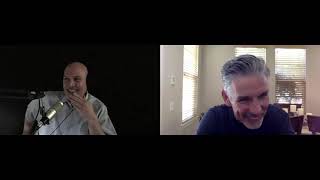
Randy Cantrell and Leo Bottari launch their new show building on peer-group learning. Leo organized a 90-day Apple Watch fitness challenge with family and friends before his Cabo wedding, with daily activity rings, up to 600 points per day, and one-on-one contests fueled by trash-talk and group motivation.
Chapters
Welcome to our new show, What Anyone Can Do Podcast with Leo Bottari and me, Randy Cantrell. Our new show picks up where the last show, Year of the Peer, left off, highlighting the simple truth that who you surround yourself with matters, and that if we enlist the support of others, give back to those who give to us, and pay it forward for the next generation, we can do anything. Author and keynote speaker Leo Bottari and I will interview a diverse group of thought leaders who will share stories and insights that will help you succeed in business, and in life. How? By doing the things anyone can do, but most of us never will. Welcome to another episode of What Anyone Can Do, the podcast coming to you from Dallas-Fort Worth, Texas. My name is Randy Cantrell. He is in San Diego, California, and he is Leo Bottari. The website is his name, leobottari.com. He's got big news today and big challenges and talk about leveraging the power of other people.
Oh yeah. Well, first of all, as you know, LeoButtari.com is also home to Peer Innovation right now. So I'm real excited. As you know, of course, we last podcast made an announcement about what we're doing with that. You know, in addition to you, you know, certainly playing a big role in facilitating groups, which will be wonderful, we're also looking to look at group dynamics and the power of peers leverage learning and development inside larger companies, to look at how to create better alignment and engagement around strategic initiatives so that they can be that much more successful. And third, to continue to work with CEO and executives who are in peer groups to try to help those groups perform at an even higher level. And that's going to be a big focus, you know, for us as well. And I think within all of that will be an effort to be looked to really be exploring about the peer groups of the future. What are they going to look like? How are they going to operate? Both in terms of the way people will engage, how they'll do it, what platforms, what mechanisms we can give people to, you know, between these kind of formal sessions, how do we facilitate more of the peer-to-peer relationship that we talk about in What Anyone Can Do? So it's going to be real exciting and really be looking forward to putting some things out there in a lot more focused way. In the coming weeks so that people can really get a sense of why peer innovation is relevant to them, and really look forward to the opportunity to work with folks there. But on a personal front, you know, a lot of great stuff going on as well. Actually getting married at the end of October, which is very exciting, and we're actually doing it down in Cabo. And we got into this conversation, of course it's not dissimilar from what we we talk about in the book, right? And what anyone can do, the idea is that if you have a goal, share it with someone else, you know, get other people involved, enlist their support. Um, maybe they're trying to do it too, right? So you can help one another and kind of see how this all works out as opposed to just being left to your own devices and saying, all right, well, that's it. Right. So I think anytime anyone's preparing for a wedding, man, woman, guest, whatever, uh, wedding party people, you're like, all right, this thing's like, roughly 3 months away. And, uh, we want to be in the best shape of our lives for this, right? I don't care how old we are, what we're doing. We're just like, we just want to, you know, go do that. So we started thinking that pretty much all of our family members who would be inclined to participate in something like this also have, um, Apple Watches. And on your Apple Watch, you can share your activity. So as you know, there's kind of a movement goal, an exercise goal, and a stand goal. Um, and so the idea for everyone is to close all 3 rings every single day and make sure that you're wearing your watch, uh, that you're encouraging one another. Um, trash talking as necessary, of course, has been a part of it because we have a whole, you know, text.
Um, and we're talking about a circle of how many people?
Well, let me see. I'm going to, you know, cause we're adding folks, um, all the time here who are expanding the circles expanding because people are seeing this. Cause let's face it, everybody's doing more than they would do if they were just like on their own plan. Of course, no question about it. I mean, so we have 1, 2, 3, 4, 5, 6, 7, 8 people involved in this. Um, so it's basically our, our daughters and their boyfriends and husbands and stuff like that. And, um, son. And I mean, it's just hilarious and it's been very, very fun to do. So the part of it is everyone can follow everyone else and then you can kind of see how people are doing. In fact, on the first day, everybody closed all 3 rings.
Of course they did.
It didn't, it didn't actually play out in day 2 that way. Cause it started on a Friday and then Saturday, uh, we had some folks who didn't quite, um, chin the bar there. So it was like, okay, but you know, again, everyone, we realize it's 90 days long. So you may have some days here and there where you, um, it's a marathon, get a little, uh, exactly. We get a little lax on it. But, um, again, by and large, everyone is like into it, focused on it. There, uh, there's a whole, uh, group text, you know, that operates even outside of this where, Again, people are making various comments and trash talking and leaving various gifts and all kinds of other crazy things that, uh, but it makes it a lot of fun. And, uh, and the other part of it though, there's another dynamic here, which I've found out, I think much to my detriment in week 1. Excuse me. So in, um, so in week 1, you also have the ability to do one-on-one challenges. With somebody.
Okay.
So I'm thinking, well, this could be fun. I'll do a 7-day challenge with, um, my daughter Taylor, who, you know, always trains a lot and all, um, you know, basically half my age, but hey, you know, I was all good for doing that.
Well, aim high.
So what it is, is there's a point system that actually operates. So in addition to your 3 rings that you have to close, you have points. Um, Now, fortunately, we didn't realize it did this at first. Now we understand why, but it maxes out at 600 points a day for each person. So basically when you each get 600 points, you're basically tied. Even though when you look at the other stuff, like she's basically smoked me the first 2 days, but at least I got to my threshold and she did as well. So, um, but it's hard to get there because getting the 600 points is much more difficult than closing just the 3 rings. And I'm like, man, I can't do many of these one-on-one challenges. I got to really space them out. Any day, any week I'm traveling, no chance, you know, could I do it? Or, um, um, never would do 2 in a row. I'm only in day 3 of this one. And, um, it's, it's going to take—
now describe, describe, describe for those of us that may not fully understand.
So the closing of closing of 3 rings, So you have a movement goal, an exercise goal, and, you know, essentially the amount of times you have to stand during the course of the day.
So closing it is achieving each of those goals.
Each of those goals, right? Got it. So, and your movement goal is associated with the calorie count and all of that, and you can set your movement goal, right? Okay, right. So mine is set at 750, and Then there is an exercise goal, which everyone just said is 30 minutes and you can't adjust that. And then the third one is a standing goal, which is, it's 12. So out of 12 hours, you've got to make sure you're standing. The point of that, of course, is that, you know, when we're all working and we're all, you know, sitting hunched over a computer and all of that, that they want you to get up and move. And you basically, you know, you get credit for doing that. So when, as, as we're doing this, you know, we're the one-to-one challenge part is just more involved and just a little more. You just have to do more in order to make sure you hit your threshold. And again, we're glad that there's a threshold because it would get ridiculous if it didn't. Now the other dynamic, of course, with Taylor, if I wanted to have some real fun with this, although I have no, real desire to take it to this level, but she's in Eastern time and I'm in Pacific time. So obviously, um, when it's 9 o'clock, her, her day's over. Now I could look at her point total. And if I decide I want to run around the block a couple of times in my neighborhood, get my point total up, I could, I could do it. And then there's no chance that she—
you get the advantage of going last.
I do. But she also, I wake up at a deficit every day too, which is also, you know, debilitating. You know, I'm sitting there and I'm looking at the fact that I'm just trying to get up. She's already got like half her points.
So now, the one-on-one challenge, is it based on goal or is it just based on you outperforming the other person?
It's based on, it's really not against anyone. It's kind of, it's like golf, you know, it's kind of against the system, if you will.
Okay.
So we all achieve 600 points in different ways. Maybe some of it's walking, maybe some of it's cycling, maybe some whatever. So, but whatever relative movement is required in order to do this. I just know that, you know, sweating a lot right now. And of course, I'm only, it's only 3 days of this week challenge, but we started the whole 90-day piece last Friday and we're coming up on the end of the first week. And I just will tell you though, that it has been fun. Not only has it been very And this is typically what happens with these kinds of things. I mean, I think everyone is going to do really well and they'll, whether they hit whatever they believe was the goal for themselves a lot, I can tell you that everyone will outperform what they would have done if they were just left up to themselves and they weren't participating in this. There's no question about that. Um, it's also a real unifying experience, right? I mean, it really brings people together. We're having fun. We're engaging one another in conversation, even though most of it is on text. But you know, we're every day, there's all of this little engagement going on and everybody, uh, is just enjoying it and having fun with it and celebrating when they do well. And yeah, you're all in it together and admitting, hey, um, not a good day today, you know, or someone will, say, I'm doing curls right now. And they'll have a beer in their hand, you know, stuff like that. Right. So, but, but again, I think these kinds of things, it's just a small example and obviously made sense, you know, given the book this year that this is, this is how we would go about this, these things. And it's, it's fun. It's enjoyable. Um, everyone's pushing themselves harder as a result. Um, there's some fun little things you can do. And I think the weekly challenges in many respects, are ways to celebrate small wins in the course of a 90-day piece. I'll also be doing like at the end of each week, I'll do a kind of an update on kind of how everyone's doing, congratulate everybody onto week 2, and just, just kind of keep a bit of excitement going because as we're quickly finding out, 90 days is a long time. You know, it's kind of like marathon training. Marathon training is usually typically like 16 to 18 weeks. So it's closer to 4, 4.5 months. But as we're doing this over a 3-month period of time, it's fun also because it's not just like going out and running every day or that. We can do any different kind of activity we want in order to, you know, I think keep the variety and just have some fun with it.
But it caps off at 600. Which is beside the point, but I'm just—
just on the personal challenge. So it'll be— so what, um, so 7 times 6, so 4,200 points is basically what it takes to assure that you don't lose the challenge, pretty much. Okay. So technically speaking, Taylor and I, I think between the two of us, we're not likely to fall below 600 unless one of us gets sick or hit by a car or something like that, because we're both competitive in that way. We're gonna, we're gonna do that. But like I said, we've always acknowledged that the tiebreaker will be looking at the data behind the 600 points and realizing that had the count continued, I probably will lose every day of the, of the challenge. But I'm hanging. I said you're gonna win, but you're gonna work for it, you know. Yeah.
Now, is there anybody that's just kind of a bottom feeder? I'm curious about the psychology of this. So if there's 8 people, I mean, is there somebody that's just— I would, I would think at this stage, cause it's early on that everybody's pretty much with the program. Nobody's kind of fallen off. Have they?
I wouldn't say fallen off. I think there are a few people that are, let's call them slower starters, right? You know, we'll be nice, but, uh, but no, they've, they've not fallen off. And obviously, You know, what does the group dynamic look like toward them? How so toward those?
Well, those people that are kind of starting off slow. I mean, I get the, I get the trash talking and I understand the fun of that. Cause I rather love good trash talking, but so the people that are slow starters, I mean, what's the group dynamic as far as urging those people to come on, get your act together, catch up, or is there anything like that?
You know, I think like any, um, team or any, any situation or group you're working with, you know, for some people, trash talking works for other people. Not so much. They have some fun with that. But that, but if you encouraged them or you invited them to do a week or a weekly challenge with you, you know, or you did things like that to bring them along, I think there are different ways that our peers, if you will, and peers in, in that we are all in the same contest, looking at the same kind of thing with the same basic goal. Um, and, uh, Yeah. So that pretty much works that way. You just have to get inside someone's head. What do you think is going to nudge them a little bit? What's going to, you know, uh, either inspire them or motivate them? You know, I was seeing an article the other day and I hate when people use those words interchangeably, by the way, it's a stupid pet peeve to have, but you know, this idea of motivating people and motivational speakers and blah, blah, blah. I'm like, come on. You know, I mean, Obviously, you know, motivation can be really negative too, right? Like, you know, I mean, because when someone hangs punishment over your head, that can be really motivating, but it's not inspiring. So I think as leaders, or whether we're peers, or whether we're trying to just help people, in this case, do what they've expressed they want for themselves, right? Because people are in this contest because they want to do it. They want to have fun. They realize that we'll have the goal if everyone else is doing it, you know, we're going to do it. And, you know, so I think as long as we are there for each other and, and that for the most part, there's no, there's no penalty here. There's no, uh, we're all just trying to inspire each other to just do a little more and dig a little deeper and, and get what everyone wants. And that's, They want to look good in whatever, you know, suit, dress, whatever that they wear to the wedding and feel like, yeah, that's just kind of a fun thing to do. And it's healthy.
And I would guess that it's a fairly judgment-free zone, smack talking aside.
Yeah. Oh yeah. Yeah. And we do healthy reminders too, that, you know, it's no good to close all 3 rings and then eat, have a diet of pizza and ice cream either. You know what I mean? Let's try to not, undo all the hard work that everyone's had. But, but again, I think the larger point, one of the reasons that I wanted to talk about this, first of all, I'm really proud of everyone. And when it comes to like their participation and agreeing to do that, wanted seeing it for the fun, uh, that it is and just trying it out, you know, I think that by the time this is over, I'm going to take my Apple Watch and I'm going to fling it off of a rock somewhere. No, I won't. I enjoy my Apple Watch, but, but I feel like it's kind of—
Strap it to Argus and then turn him loose.
Totally. Oh, that's come up. Oh, I've totally brought it. I was, you know, I was accused of it one time because I had one day that was a pretty big day and someone said—
Argus is his German shepherd, by the way.
He's just out there. And we, we get Argus after some of the lollygaggers in the, uh, in the group. Although people, like I said, I've got, you know, one, um, our kids basically and family members are all over. They're in California, they're in Colorado, they're in Washington, DC, traveling. They're doing all this kind of stuff. So, um, Again, it's even geography notwithstanding, it's a fun way to bring everyone together.
And it'll be, you know, very cool when we all see one another at the end of October and we just get to hang out together and talk about, you know, I don't know, maybe it brings up, I think it brings up an important point that I don't know that we spend nearly enough time talking about, when it comes to even professional peer kind of groups, and that's just the sense of community.
Yeah. Oh, it's huge.
The value of just belonging to a community is huge.
You know, the expression, "Misery loves company," you know, really has a lot of truth to that, right? How many times have we endured something, you know, with someone else, and no one else really knows what that experience was like except you and me and all the people that were around us. And there's something very unifying about that. There's something that feels like, yeah, we went through that together and we toughed it out or we did whatever. And you know, now we're moving on, but that shared experience is something that forms a real lifelong bond. And, um, so this, this may be that way by the time this is over. This may be a kind of misery loves company kind of thing.
Well, but you're also creating, I mean, for this, for something as personal as a wedding, you're, you know, it's, it's the creation, It's the creation of big memories that, you know, everybody's going to have the rest of their lives, which is a big deal. Oh, I think it's a lot of fun like this.
Yeah. You know, we'll, uh, you know, we'll take a good group photo of the people who participated, uh, in the program. We'll, we'll be a lot of fun. And, uh, of course some people, some people like to claim that, uh, their watches aren't really recording all of the activity.
Of course. Yeah, of course. Of course.
That's a common one. There, there's a, Yeah.
This is all the excuse making. So is there, is there, is there Taylor?
Taylor described it to someone who, uh, I think it was, um, my, uh, son-in-law when he was concerned that, you know, now he's doing really, really well too. But, um, Taylor said, well, you know, if your workout isn't recording the numbers you think it should be, maybe we need to be working out a little harder.
Just not let him off the hook.
So we, we, we think, I think sometimes that, and I think this has brought some things to light. Like I'd, so for me, going to the gym 4 or 5 days a week or something like that is not unusual. I would go and I'd kind of, you know, phone in my workout, do my thing or whatever, feel good about the fact that I did something. I mean, that's fine. But now I'm realizing that when I'm doing this and there's a bunch of other people and we're all trying to achieve things to a different level, it's like, for me to get, um, to do what I'm trying to do on my stuff. Excuse me. It's more of a 2-workout-a-day thing than 1. Yeah. And it's, and it's making sure that for that time I'm there, I'm really digging and working harder than I've been. So it's brought some things to light. And I think everyone has commented on that. The idea that, you know, I thought I was working out. I thought I was working hard. Now it's, it's put some context to it where I said, you know what, I can actually be squeezing a little more and do more. And by the way, for the same amount of time that we're spending in many cases. Now, again, in some cases, if some people are actually working out twice a day versus one, or in some cases it may just be that somebody's hanging maybe just for a little bit longer, but digging a bit deeper and the value they get from that time is now far greater than it ever used to be. So I think all of these kinds of things are, um, it's a real combination showing up.
You're showing up a lot more now, huh? Everybody's showing up a lot more.
Everyone's sure. Yeah. They're showing up and they're just showing up and stepping up. Yeah. Yeah. That's the, that's the thing. And it's, and it's, and it's awesome and it's super fun to watch. And, uh, you know, so, um, Yeah. So, so it's real exciting, real kind of cool thing. Um, you know, again, um, you know, and what anyone can do, we talk about this whole notion that, um, as Joe Henderson said back in 1976, that people who are typically successful in whatever it is they're doing aren't capable of superhuman feats or things that none of us can do. They in fact just do the things that anyone can do. That most of us don't. And, but I do think all of us are capable of surrounding ourselves with good people who can come to a common understanding that, hey, we share this goal. And together, if we work with each other, encourage each other, give each other advice, talk about how, um, you know, we're doing things and we're kind of all in it together, then we can have an incredible influence, uh, on having each of us perform that much better. And that's what's so great fun about it. And I think to your point, um, you know, earlier, the most fun of all, the goal notwithstanding and everything else, is just the dynamic it creates with conversation and with, uh, uh, just a true bonding experience with everyone. And that, that's, that's what's really great fun. Yeah.
Well, and it's experience that you would not have if you guys didn't have the courage to do this. I mean, think of all the missed opportunities that y'all would have.
It's fun, you know. So we're on it. It's going to be a long slog. Every once in a while, in a small way, I'll kind of report in on what we're doing because we have a podcast audience here too that I have to consider, you know, part of the team, you know. So I figure I gotta, you You know, yeah, you put it out there now, personal responsibility for, uh, for what I'm doing here and, uh, and, and go from there. But, uh, but anyway, um, so, um, I know you probably only have a couple more slots left with the, um, uh, groups you're trying to put together right now. So I would just say, really encourage anyone who's listening out there who, um, is really interested and believes they could benefit from being, uh, in a business-specific, uh, peer group. This is basically largely, uh, people who are running their companies. And I think as Randy likes to describe it, not sitting in the ivory tower running their company, but real operators and people who share that challenge of being in the business and yet trying to really be able to pull back and reflect and be thinking about the future and be thinking about all the things that, that are coming ahead and how important that is for everyone to be in a place where they can sit around the table with other people who share that common challenge, who, uh, can share and learn from one another and help each other grow. So, um, definitely would encourage, um, folks out there listening that, uh, if that's something of interest to you, Uh, you should be reaching out to Randy. Randy, what's the best way how you'd like them to get to you directly on this?
You know, you can find everything you need by going to thepeeradvantage.com, thepeeradvantage.com. It spells, spells everything out. And you know, you and I've talked before, these are just conversations that I'm having to see if this is a good fit for them, if it's a good fit for me, for this group. If you've read Leo's other book, The Power of Peers, you know the right people in the room is a big deal. And so this, yeah, this group is, it's SMB folks. You know, there's no real dollar range. There's no headcount kind of a thing. I would tell you that some of the folks are vastly larger than I initially thought I might would attract, which is fine. But we've all got, we've all got, we've all got stuff to learn. So yeah, these are, these are operators. These are people that are, that are in it close to the customers, even closer to the employees.
As I kind of say, you know what I find really interesting is I've, um, you know, been part of and, um, you know, spent a lot of time with groups where you had a lot of people who are running very mature businesses and other people who are, you know, in an earlier stage with their company and both can learn from one another. You know, the more mature companies can kind of recapture a little bit about that entrepreneurial spirit that put them, you know, where they are, keeps them abreast of what's next, you know, in a lot of different areas. And at the same time, you know, when we think about scaling businesses and the various stages of that, some of the mature companies can be incredibly, you know, the leaders of those companies can be incredibly beneficial to the entrepreneurs talking about some of the things that you've got to put in place in order to create some real stability around the organization.
And well, like your group, like your community, it's— there's, there's, there's room for everybody, you know, and it's the great thing. Like our conversations have been about teams versus groups, you know, the group, the individual pursuits, and yet there's something really cool about the community. I mean, all of your people in your, in your circle there, your fitness circle, or they've all got their own goals and objectives that they're all trying to achieve.
Yeah. Right now I'm just trying to survive my week, week, one-to-one challenge here. But, um, you know, after Taylor, I got to take a few weeks off. Like I said, one second a week off cause I'm traveling, but then I've got to get my daughter Kristen in there, my son-in-law Chris, and You know, and we'll get, you know, get around all— and Noel and, you know, everyone else who's part of this whole, you know, Andy. We've got an amazing, you know, group of people, all whom are younger than us. Yeah. And, you know, yeah, you've still got everybody in great shape, everyone doing fun things. I got— and Kristen, of course, my daughter Kristen, right? You know, 2 kids, you know, Nora and Ben, right? So you've got Nora just over 2, Ben, you know, before on the 4 or 5 month plan right now. And it's, it's April 1st. So yeah, yeah, yeah. Crazy, you know, I've got to—
and you still got, you still got what's left. I mean, as we hit the record button today, it's the last day of July, but there's still some summer left and You still got a real busy part of the year.
I have a lot more summer left than some people. That's for sure. Yeah. You know, that's, that's for sure. Yeah. I think, uh, for Taylor, she's traveling, but she's in DC. So for her, um, it gets tough because a lot of what she does, which is really smart, is she just walks everywhere.
Right.
So when you're walking everywhere in DC, I, I basically said the money I'm saving on gas already for me doing this, cause I'm trying to walk everywhere. And do all that too, because that's what, you know, really helps you a lot. But, uh, yeah, but when she starts hitting the wintertime, that walking's not going to fill her up. Exactly.
Yeah.
Although the thing ends by the end of October, so she's fine. Yeah, it doesn't get that bad in DC at that point. But, um, but anyway, um, yeah, so for, uh, for me, just the end of the— for the rest of the month, I've got, uh, a trip to, uh, Denver to speak to a group and do one of my workshops there. I'm doing one in Memphis, which is an inside group, inside of an organization where we'll be talking to a cross-functional work team there, working with them, which would be fun. And then it's speaking at the Executive Growth Alliance Summit in Oslo on the 28th of— and I'm really excited about that. Executive Growth Alliance is this kind of systems thinking meets the power of peers. And it's amazing to bring people together who really take that view from the balcony, as William Ury likes to say, but figure out how they can work together in ways where they bring everyone who's part of a specific ecosystem, let's say transportation, for example, right, and they get them working on some of the larger issues. So instead of each part of the ecosystem trying to do their own individual thing to deal with whatever, they're like, you know what, we can work together on this and we can create something that is going to be less expensive for us and more beneficial to the customer. Right. And how great is that when you've got people who understand the, uh, the power of that. So, um, this whole thing is basically was piloted in Norway. I think a lot of their culture has to do with why it was such a terrific country to begin this with. And it will expand through Europe, South Africa, into the US, I would say maybe in a few years or so, you know, maybe to Asia, but, or certainly it's just a matter of when. But I think what Jennifer Vessels is doing is really exciting. And I think anyone who wants a taste of what this is going to be about and is in or around Europe, or if you're in Europe listening to this program and, uh, coming to Oslo on August 28th for the Executive Growth Alliance Summit, and it's easy enough to find, um, online. Um, maybe we'll put a link in the show notes on that. Um, and, uh, but I think it would be really worthwhile for people to see something that I think is really going to be a sight to see. I think it's going to be really powerful. So yeah, I'm excited.
I'm going to be excited to hear how your trip goes. Let me make a pitch here for a future upcoming guest.
Ooh, yes, Brian Solis. We've been a bit back and forth, as much my fault as any, in terms of just trying to get a good date and time together. But we absolutely will have him on the show. Both of us have read the book. It's a terrific terrific book. Um, you know, I did a thing recently where I was asked to identify my favorite book, like of all time. And it's like, well, forget that. I mean, I, I've been so fortunate, like all of us, I think, to read so many amazing books. I'm not going to single one out over the other, but I did pick two that I've read most recently that I really enjoyed. And it was Late Bloomers by Rich Karlgaard and Lifescale by Brian Solis. I think both are excellent. And I think both certainly spoke to me and I think also spoke to a lot of our work. And I think really informs, you know, a lot of us. I mean, it's just really great, great work and both worth—
Yeah, the name of the book is Life Scale: How to Live a More Creative, Productive, and Happy Life by Brian Solis. And there's what the book looks like.
There we go.
That's compelling. It's compelling. You'll see yourself in the book straight away.
Well, you know, of course, when we did the Year of the Peer, we had Brian on the show and I know he's excited to come back. It's just, you know, he's just all over the world. We got, you know, just kind of putting this together. But, and he's, by the way, been really generous about promoting what anyone can do. As well. You know, he's read it, also really liked it, which is very kind of him.
Definitely friend of the show.
Yeah. Um, but, but, uh, you know, just one more thought about LifeScale. I think when you look at LifeScale and you look at a lot of the things that Brian writes, there's such a tremendous— you can't help but look at this material and go, oh my God, the level of effort it took to not only research it and compile it and assemble it and, and make story of it. But then all of the things he adds to make for such a richer narrative, which I think really increases everyone's ability to understand and retain what he's done and really be able to apply a lot of, you know, what he talks about. So anyway, Brian, we can get you on here soon. And anyway, Randy, Thanks as always. Um, another, uh, fun show. And, uh, don't forget Randy's group. Yeah. Yeah.
Make sure you visit Leo's website, find more about peer innovation and, uh, leobottari.com, L-E-O-B-O-T-T-A-R-Y. We appreciate all our subscribers. We appreciate, appreciate you clicking play. Yeah. And again, if you're interested in what I'm doing, thepeeradvantage.com. What else?
Well, only one more thought before we run. Um, Jay Izzo, uh, podcast called A New Direction. I loved doing that show with him. I have to tell you, he was so unbelievably prepared. First of all, the amount of work he did before we ever sat down.
Yeah, he did.
He also shares kind of our sensibility for these kinds of things with regard to— it wasn't an interview, it was just a conversation. It's like we were standing in his kitchen with a couple of beers talking about, right, all of this content. And he did a great job with it. So I did want to, you know, offer a shout out to Jay Izzo's— I-I-Z-Z-O— a new direction.
We'll link that. We'll link your show.
Yeah, we'll do that. We'll put that up there.
And I would be the guy without the cowboy hat though.
That's right. And I would encourage you not only, of course, to listen to the show where I appeared as a guest, but He's got a lot of terrific guests. And I think once you get a sense of him and his style and his level of preparation and his enthusiasm and energy as well, it's a real treat. So with that, have a great week and we will connect next week.
See ya. To learn more about our show and what we do, to submit questions to us, and to subscribe to What Anyone Can Do Podcast, please visit our website, whatanyonecando.com. What Anyone Can Do Podcast is hosted by Leo Al Bhattari and me, Randy Cantrell. Music provided by Kevin MacLeod is Vibe Ace, licensed under Creative Commons by Attribution 3.0 license. Thanks for watching or listening. We hope you'll share the podcast.










