What Anyone Can Do: Leo & Randy On What's Next (Season 2020, Episode 1)
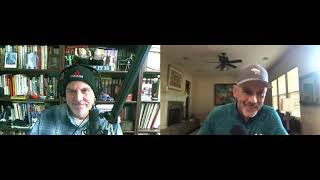
Leo Bottari and Randy Cantrell kick off their 2020 season discussing peer influence and how surrounding yourself with the right people drives growth. Leo's upcoming book Inside the Five Factors outlines a framework for high-performing teams, and he shares research showing people retain 70% of what they learn in the right setting.
Chapters
Welcome to the What Anyone Can Do podcast with Leo Battari and me, Randy Cantrell. This show picks up where our previous show, You're the Peer, left off, highlighting the simple truth that who you surround yourself with matters, and that if we enlist the support of others, give back to those who give to us, and pay it forward for the next generation, we can do anything. Author and keynote speaker Leo Battari and I talk with a diverse group of thought leaders who will share stories and insights that will help you succeed in business and in life.
How?
By doing the things anyone can do, but most of us never will. Happy New Year. Welcome to a new season, 2020 season of What Anyone Can Do, the podcast. He is Leo Bottari. My name is Randy Cantrell and coming to you from Texas and from California and Happy New Year. We've got just a ton of things to riff about this morning.
I think we should start though with, first of all, I can tell you that the hat I'm wearing from Torrey Pines, cause I got to play it as a, present the other day, um, played the North Course over there. And it does, I think, try to, um, you know, symbolize the fact that I'm looking forward to becoming a better golfer in 2020. Um, I did get down to a single-digit handicap, but let's see if we can kind of keep it moving from a 9 down to barely single digits down beyond that. But, um, tell us a little bit about the hat you're wearing today.
Yeah. Well, I would love to tell you that this podcast is sponsored by, but it's not. If you're interested in sponsoring the podcast, I would, I would love to have you. Would think that I lived in Green Bay, and that's a great segue into the— this— well, there you go. We're recording this on Monday, January 6th, 2020. Um, Dallas Cowboys just hired Mike McCarthy, ex-Green Bay Packer. You would think I'm in Green Bay. I would not survive in cold weather climate. I can tell you right now. I mean, it's— I'm in Dallas-Fort Worth, Texas, and it's not that cold, but Hey, for those of us that shave our heads, it doesn't take much. It doesn't take much. But yeah, so man, the year got started off with a bang down here with Cowboys football.
Well, and you know, the other thing with the Cowboys, and of course everyone looks at— so everyone knows now the Patriots are out, probably to the delight of most of America other than people in New England that they don't have to have the Patriots in the playoffs or in the Super Bowl again any longer. But you know, I kind of remember growing up when the Patriots couldn't buy a football game, you know, to save their lives. So you'd be looking for just someone to cheer for who could win ball games. And so I used to really enjoy the Dallas Cowboys when, when I was a kid and years later I had the really great fortune of being able to meet and work with on several occasions, Bob Lilly. And what I was excited about to see for Bob, and by the way, I worked with Bob in the capacity of him being a nature photographer, you know, after his professional football career. He's an amazing guy. He's brilliant, very creative, very technically savvy, and what he does— and I'm fortunate too, I have a few photographs in my home here that he gave me, and I also have a hat, you know, signed by him— but I was really delighted that he was selected among the top 100 players in the NFL, not only just I was thrilled because of his incredible skill and the integrity in which he approached the game. But he's just a super human being and to have that—
That's the top 100 all time.
Yes. Yeah. So it's not just the Hall of Fame, which of course he's a very proud member of the Hall of Fame, but top 100 players all time is pretty remarkable. And he's an amazing guy. And his wife Anne are just the loveliest people. And, um, you know, it was just, uh, you know, exciting to see.
And, uh, he's still very revered.
Oh my God. Absolutely. Yeah. He's, he's a, he's a funny guy. He's, um, yeah, still, still formidable. He's still like 6'5", 255, 260, I think, at least last night.
He was a ballplayer, you can tell. Yeah, you know, and then the New Orleans Saints and Drew Brees. I mean, so you've got these two kind of iconic quarterbacks that get taken down, both of them at home, you know.
Well, to have Brady— first of all, you know, the Patriots go scoreless in the second half, and then he throws a pick-six on his last pass. It was a little bit like you've got to be imagining maybe he's not going to retire on that note. And I don't know that he will. I don't also— I don't see him playing for for anyone else either. And I also think he took— he may not be the quarterback he was 5 years ago, but he's still better than most of the quarterbacks in the NFL. And if you actually gave him some people who could get open and who could actually catch the ball when they do get open, I think he's still got some game in him. And it'll be interesting to see how this all goes, you know, next year for New England.
And, well, proof that even an iconic talent like him It still boils down to— we'll bring it back to the theme of the show— it still boils down to who you surround yourself with, or who the general manager is.
For Brady, he'd tell you who you surround yourself with matters a lot.
It absolutely does. Hall of Fame or not. I want to tell people before I forget, you can now go to peerinnovation.co. That's peerinnovation.co. And go, it takes you to leobattari.com. But Peer Innovation, some big, some big stuff in the works and big plans for 2020. I know a lot of people are looking at this year as kind of the buzz is a takeoff on the year, the number 2020 and year of clarity and better vision and all that. But I think it's a positive thing for all of us to leverage it that way. And I know you and I both individually and together, We really are.
I agree with that. And I think we've talked a lot about, you know, I try to extract and have the most positive look possible about 2019. But I really feel, and I know you've mentioned the same thing, in many respects, it was a rather underperforming year professionally. And I think a lot of it, I know for me, there was just a lot of change going on in my life. And even though it was, largely very positive change personally and moving and doing all these kinds of things, there was still, you know, so much happening that I think, um, I allowed myself to get pulled away from a lot of the focus that I wanted to have professionally about what I was doing now, you know, but again, um, so how do you pull the positive out of it? Right. Well, I think the good news was that, um, I created a keynote that I think is relevant to, you know, every single, conference that anyone could ever attend because no matter what the conference is about, the reason people there are there is similar. You know, they want to hopefully learn something they can take back for themselves and for their organization to do something positive. And so what, um, so the keynote that I developed, um, is basically designed to say, hey, the most valuable people around you at that conference are the people around you at that conference in terms of a resource for learning. And the fact that most people go to conferences, they forget 70% of what they learn. And a lot of the keynote that I provide offers them the tools to say, let's try remembering 70% of what you learn instead, and then actually being able to apply that. And then I think, you know, the other thing is I really do look at it as a year where I was able to pressure test the content that I've been spending so much time developing with groups and teams to a whole other level where now it gives me, I think, a level of confidence and just real excitement about moving forward in 2020 because I'm going to bring this to a lot more groups next year, a lot more teams next year. I think this development of this idea of peer innovation and what that's about and what that can mean. to organizations, whether it's, you know, here in the US, around the world, I think is substantial. And, um, you know, I'm excited. Um, and not to mention, I'll be, I want to put it out there publicly too, because, you know, again, the more public we are about our goals, the more likely, you know, we'll, and the more that I continue to surround myself with people that will help me get there. But I'm looking basically to complete the manuscript for a book called Inside the Five Factors. And it's basically about what high-performing groups can tell us when it comes to building high-performing teams in our organization and what that looks like. And it's a real framework that people can work through, not a prescription, you know, which I think is really important distinction. I don't believe in, you know, walking into some organizations and this is what you should do because this is the formula. I think it's far more about providing people a framework where they can take the very greatest strengths of who they are and what their culture is all about and leverage them in a way that's best for them. Um, so I'm super excited about, um, you know, the book and, um, uh, having that published and being released, uh, before the end of May. Uh, and, uh, and just kind of deciding that this year is going to be a year that we're just going to take off and make stuff happen. And so that's, that's real exciting. And I know, uh, you're kind of looking at this with the same mindset, which is, you know, really exciting.
Yeah, very much. I, you know, 2019, um, you know, without going into the details, but you know, the second half of 2018 all into 2019, you know, I had some personal family issues that everybody's healthy, everybody's fine. Um, but just, I completely underestimated. And I think it's a vulnerability that I think a lot of people have, particularly CEOs, right? These people who you feel as though you're the guy, you're the answer guy, you're the person that people come to. And I certainly have had that mindset since I was 25 and got my first opportunity to lead a company. And that morphs over into your personal life and you just feel like I ought to have this together. I ought to be able to figure this out. And I made some confessions even on my own podcast. Spiritually, I surrounded myself with 4 people, 2 of whom have passed away last year. Thankfully, I had them. One of whom is in hospice as we speak, but I didn't do it in any other area of life. I'll confess, I didn't even do it— as close as you and I are, I didn't even do it with you. I didn't do it with anybody. Didn't do it with my wife. I just kind of siloed myself. I'm living proof. If you are listening to us or watching us and you're going through something, and it may be in some area of your life where maybe it doesn't impact you. Professionally. It did for me. It impacted every area of my life, and I let it. And I didn't feel victimized. I didn't feel— I didn't play a blame game. I just, I was really unaware of just how deep into the hole, you know, it was kind of shoving me. And I would describe the last 18 months to 2 years as I just was looking for a big rock to go crawl under And that clearly doesn't work. You know, there, there's nothing that's profited. I've kind of come to the same realization that you have, I think, albeit we took very different courses because if you can believe, if you can believe the pundits, and I do, that moving, you know, there are a few things as stressful as moving. Uh, that's a big deal, you know, to move from Denver to Southern Cal and You know, you, you turned your life upside down and thankfully in all the best ways, you know, my life took a turn in probably too many of the worst ways and much of it was my own fault. But I think now we've come to the conclusion, it seems to me, I know I have. And from the way you talk, you, you too, excuse me, of thinking that, you know, there are all these people out there that you and I are talking to. That are gracing us with their attention, and for us to try to serve them. You and I not being our best doesn't benefit them at all. You know, there are a lot of people out there that you and I can impact that maybe nobody else can. I don't mean that in an arrogant way, but just, you've got so much knowledge and so much insight. I'll go you one better and say that there's not a human being on the planet that I know of forget knowing them personally, that I even know of that has got the insights that you've got when it comes to especially groups of CEOs, groups of business owners, high-level alpha kind of personalities driven to achieve. The sheer number of people that you've been in front of gives you insights and experience that I don't know anybody else who has. So I'm pretty tickled about the book. I'm In fact, I'm beyond tickled about the book. And for us to be able to share that and for me to play some small part in whatever storytelling can resonate with people, I would say everybody in our audience, there are people in your world that that's exactly true of. There are people that you can help in 2020 if you'll get out of your own way.
No, I think that's true. And part of hope, you know, and whether it's, you know, what I'm putting on the table, or I think there's so many people right now, uh, coming up with new approaches and new ideas, um, you know, to things. And, uh, it can be difficult sometimes to ferret out which are the things worth trying and which are the things that, you know, are not. Um, but I do think the more that people can be open-minded, the more they can do their research, and the more they can maybe think that doing things exactly the same way we did them last year are gonna yield very different results. You know, it's at least worthwhile to kind of look at, you know, opportunities, you know, for people to work together more effectively. I had the greatest time actually right at the end of the year. I did 3 workshops in a row in Tucson, Arizona, and all 3 groups, 2 CEO groups and 1 key executive group, And they were just amazing in their own right. I mean, every single group, each of the 3 groups was very, very different in many respects. And yet, um, they shared, um, such a wonderful camaraderie and such a wonderful common purpose, uh, and not just being there for themselves, but in really helping one another both personally and professionally. And so now with all that purpose, the question then is just becomes, how do you give How do you get people to pay attention to all the kinds of things that can help them do that more effectively? And that's what we did. And we spent a lot of time together doing that. And, uh, this was really done in a way where they were the ones telling me, here's what we want. Here's, you know, where we think we stand now versus what we believe might be ideal. And then figuring out ways, and steps they can take to move toward that ideal so that by the time December 2020 comes, they are much closer, if not there all the way, to be that group, every bit that group that they believe they're capable of becoming. So it's kind of nice, particularly at the end of the year when people are just kind of taking stock, and I think it's a great time to do it this year, anytime in this first quarter, January, February, March, to really be looking at, We've got this whole year in front of us. How do we go about really just kind of, for lack of a better word, just kind of attacking, you know, whatever it is we're looking for in all the most positive ways. And I know it's certainly, you know, what I'm trying to do right now. And I'm hopeful that because of that, to your point, I hope a lot of people will certainly benefit from that. And I know, you know, It'll be every bit the same for you as you continue to do your work on the podcast, as you consider, um, you know, to facilitate, uh, groups of, um, you know, business owners who I think, uh, could benefit greatly from your ability to facilitate a session, um, you know, with, um, with those folks. So I, I'm, I'm just excited about making sure that we're kind of maximizing all of our time each and every day, that I look at the day and I think, all right, what are the, what are the things that I really need to get done today? Because, you know, getting the manuscript finished by the end of February is not going to be an easy task. Um, but, you know, I'm committed to doing it and I'm trying to eat my own dog food, if you will, by enlisting the support of people that can help me um, you know, make that happen.
So, uh, you may get some pages thrown your way every once in a while to, uh, well, let's back up and talk about, so the outgrowth, the, you know, the outgrowth of, of your work with these groups and of course your prior work, you know, having co-authored the book, The Power of Peers, um, pressure testing. It's a phrase that you use quite often. So walk us through what that looks like from your perspective. How do you approach pressure testing and what kind of a mindset do you have going in? What does that look like coming out the other end?
Well, I think it's one thing to come up with a concept and in theory have it make perfect sense, but in practice, does it hold up? Right. Is there something that's unexpected or unintended that happens when you try to implement it or whatever that tends to be so that when you get people to actually— it's like this concept of no plan survives contact with the enemy kind of thing. It's essentially this idea or no lesson plan survives the students or whatever, right? I mean, until you put it out there and get people to work with it and see how it plays out in real life. Only then I think, can you make the kind of adjustments that will help you optimize that thinking or learn, for example, that maybe what you were thinking is all wrong. And in fact, you've got to approach it in a completely different way. So fortunately in my case, I was able to bring, uh, you know, the work that, began really when I started in graduate school, continued through my time at Vistage, was I think really documented more for broader consumption with the Power of Peers when we introduced the 5 factors that are, I think that we found to be common to high-performing peer groups here in the US and around the world. And then look at everything from peer influence, which is what we know is the impact we have on one another, the influence we have on one another's behavior, largely driven by a sense of belonging, wanting us that sense of belonging and, and all that, um, to figuring out, well, if there's this force out there that has been around for as long as any of us can remember, is there a way to harness that? And that's where the concept of peer advantage came from, where Basically, it was if we can be more selective, strategic, and structured about the people we surround ourselves with, now all of a sudden we've got this dream team, if you will, where we can make things happen. Peer Innovation really became the result of what such a dream team may be capable of when they work together. When you bring people who share a common purpose, may have very different perspectives, but come together and who are able to create something larger than themselves. Uh, and in most cases able to create something that any individual as part of that group or team never would have been able to do completely on their own. You know, they benefited from the contributions. They stood on each other's shoulders to create something that was magical. Um, I've certainly seen it happen. You know, I've told you many times, whether it was my work at Mullen or Hill and Knowlton or, you know, my own agency for a while, you really start getting the right people together in a way that is selective and strategic. And you put them in a situation where they're able to challenge one another, not to call one another out, not to, um, fight against each other, but to fight for the best idea. Uh, then you really start seeing some amazing things happen. And so part of what, you know, I felt like I got to the next level of confidence with over this past year was working with more peer groups. Um, and, you know, and, uh, and did that in Canada, the UK, uh, and the US, and also with cross-functional work teams, uh, inside of organizations where, you know, many cases you've got you know, people from finance and marketing and HR and, you know, whatever other department, um, supposedly, you know, they should be working together. They need each other. They have oftentimes very little understanding of what each other does. Like if you ask them, hey, what do you think someone does all day? They really couldn't tell you like what their job is and anything. And yet somehow we're supposed to understand where the opportunities are to work together, and that's just not realistic. So, um, so it's been a lot of fun again over the past year to get that to a place where, again, for me— and I've got a pretty high bar on making sure that I'm putting something out there that's really legit and really works, um, and really makes sense for people. And again, it's why too maybe that I'm much more committed to this notion of frameworks versus prescriptions, you know, that, um, and so I think the framework is powerful. I've seen people do it. I've seen, you know, some amazing things happen where you can just to give people the opportunity to have the kind of conversations that unless you, um, you know, decide that we're going to have a conversation about these things, they're just not going to happen organically. Right. You know, we, we talk about the importance of a safe and confidential environment, for example, in groups. You know, Google talks about how essential psychological safety is in high-performing teams. Yet it's so easy to say, oh, we got that. Only until you don't. 6 months later when you're not really paying attention to it, you're not nurturing it and you're not, you find that, huh, this maybe environment isn't as safe as it used to be or as safe as it can be. Or if the environment is safe, Why are some people leveraging it more effectively than others? And what does that look like? So I think all these things, it's as simple as just giving people the opportunity to ask one another the right questions. And when they are all committed to excellence and to the purpose of why they are where they are, then, um, then it gets to be kind of easy. So, but it's, but it's fun to watch.
Well, the pressure testing to me is, you know, one of the overall themes of everything that you and I talk about, and that's just to seek understanding, not only just from other people and the perspective that they've got, but even from the situation that you find yourselves in. One of, one of my mentors, in fact the first one who passed away, and he was in his mid-70s and died suddenly, but one big value that he brought for me in my life, he was one of those rare people that would ask me super tough questions, you know, and, and Mike would say, well, you can do that. I'm not sure that's your best course of action. It wouldn't tell me what my best course of, you know, but just to challenge me in that sort of a way. I mean, the pressure testing in our lives and in our decisions, and in your case, pressure testing these notions and these ideas of how to have really effective teams and groups. There seems to be such resistance. Well, we see it in the political arena. There's just such resistance to even consider you could be wrong or you might not be as right as you think you are.
Well, what I love about— I mean, it's a smart mentor who doesn't give you the answer, you know, to the question. It doesn't tell you what you should do. You know, we all know that part of the value proposition of being in peer groups is that the whole point is that these peer groups ask you really great questions and engage in really great conversations that allow you to come up with the solution. And we know, I think, I don't care whether we're little kids or we're adults, we are going to be far more committed to implementing something that we had a hand in creating. You know, we understand it at a completely different level, we're committed to it. We feel that this is my idea. You know, I've, I've come up or I've come to a place where I can take ownership over what we're doing. I'm not implementing someone else's solution. The difference that makes in terms of that being done successfully or not, um, is huge. Um, so I think anytime we can, again, you know, like in my case or in yours, when you can provide people a framework or ask some great questions to do whatever it is you do to put them in a situation where they go, huh, maybe if I looked at it this way instead of this way, I can proceed that way. And you just say, then you go make that happen. Right. Where if you told that person that before they were ready, it's not going to, it's, you know, you probably lost that opportunity forever. You know? So, um, so it's really great stuff when we can just, you know, And again, I think put a little trust in people too, that if they're being sincere with us about what they want to really accomplish and they're willing to grapple with those hard questions and have some conversations that where they can remain open about how to get what they want and how to help others do the same, then it's huge.
You and I are both kind of naturally wired optimists and I hope that comes across to the audience. I think it does. And as we enter 2020, I mean, that really for me is it. I mean, everything kind of has its time. So instead of— before we hit record, you know, I was mentioning to you how pathetic I have been over the last 18 months or so in having productive amnesia. You know, they talk about the NFL quarterbacks who may throw a pick 6, and he's got to forget that because he's got to go out the next series and try to make something positive happen. And I feel very much that way, you know, in having struggled up to this point to have it. But I hope you, the audience, I hope you're picking up on our vibe of just how optimistic we are. And it's not just because it's a new year, that's just a calendar and that's just a date and that's just some demarcation in time. I mean, it's relatively meaningless except for the meanings that we ascribe to it, but it really, for me, begins with belief. My belief is, as we've now just begun 2020, Yeah, I believe this is going to be a big breakout year for our work together and our work individually, for this whole idea, this whole notion of helping people empower themselves by leveraging whatever power they can with the help of other people.
You know, I started off talking about the fact that— and I wasn't joking— I really would somehow love to be able to do all these things and improve my golf game at the same time. There's an aspect of, you know, when you think about, for most of us mere mortals, or, you know, anyone really playing golf, it's just really about how do I go out there and make sure I hit more good shots than bad ones, you know? And when I hit a bad shot, it's like, okay, well, you know, then as long as I can still hit the next one, I'm in play, you know, and I can go and you can save par and you can do what you need to do and you go on to the next hole. And, but, but having that attitude and not hanging onto that shot that you didn't hit well, and it's like, all right, well, you just got to let that go. There's nothing I can do about that one. The only thing I can control—
being overly anxious of all your buddies in the, in the group that are going to make fun of you or whatever else.
Well, they usually don't only because they're hitting bad shots too. So there's nobody out there just, uh, you know, it is so funny. This is especially when I talk with people who are trying to learn the sport and people are out there and they're like, oh, I'd be embarrassed. And I'm like, you have no idea. I said, you watch golf, like you turn on the television and you watch the PGA tour and the LPGA tour. I said, go out to a normal golf course and you go watch people play. It's like, you're going to be fine. Don't worry about, about, uh, the fact that you may not be hitting it down the middle of the fairway every time because nobody else is doing that either. And by the way, you'll watch any given tournament, you won't have to watch long before you see the best players in the world, the people who hit more golf balls in a year than you'll ever hit in a lifetime, blowing it out to the right or whatever, however they're missing a shot. You know, and it just happens now. But what you watch them do is recover in ways that are so remarkable and extraordinary because they've got that great skill level. But mentally, even after they've hit that horrible shot, they're able to hit the great shot, sink the putt, save par, get out, get out of dodge, and then go play the next hole. And I think we've got to think about that, you know, in our own lives in that way.
But, um, Yeah, we've got a lot more in common than not.
Oh my God.
All of us.
Yeah. But I'm, you know, just really stoked for the coming year. You know, I've got to get, you know, continue to stay rolling on this book. I've got a busy month, both in, well, today I'm in, tomorrow I leave for Seattle. I'll be in Seattle and Atlanta. I'll be in Atlanta again the following week, and then I'll be in Toronto shortly thereafter, and then West Palm Beach the first week of February. So it's kind of a busy geography, you know, in there, but, uh, but, but really nice. And, and again, uh, so fun to meet with so many different groups and teams who You know, they're just, they're so incredibly different and yet you find out so quickly how much, you know, we all share and how much we have in common. And it just, it's, it's a very unifying kind of opportunity for all of us when we get to work together. So it's good, good fun.
Let me direct everybody again to the website. It's peerinnovation.co. PeerInnovation.co, that takes you to Leo Bottari, that's LeoBottari.com. You've got a new video there. Let's talk just real briefly about that before we sign off here, but a new video on that page that I'd like everybody to go and to look at and watch. You'll see it right there on the homepage. Pull it up on any device that you've got, mobile, doesn't matter. Uh, the site's super friendly to whatever your, whatever your viewing pleasures are, but people need to watch that video.
I think it speaks to some very simple truths through lines that we're all very familiar with, right? Like birds of a feather flock together. We're all in the same boat. And you're asked to basically fill in, you know, the phrase. So see, I can just fill it right in for you right now. And then of course, great minds think alike, which is kind of a fun play on the fact that you clearly guessed the first two and Here we are. But, you know, the important part of it is that, you know, because of that fact, I think there is just an incredible opportunity waiting for us. And there's another little piece that I've created too. That's a little 3 or 4 slide piece that I've had on LinkedIn, which shows the definition of peer influence, peer advantage, and peer innovation. And this idea of how do we take these three ideas, um, that we're quite frankly all very familiar with, even if the, the words around them are a little different, but the concepts are something we've been living with our whole lives and just spend some time talking about how we can do all of those things a lot better, how we can recognize how we influence one another. What would happen if we were more selective, strategic, and structured about how we engaged each other? And then what's possible when we work together in a way that allows for us to create something larger than ourselves. And, you know, again, this is where I think I've found you get a lot of companies out there. Look at, you know, VaynerMedia. Look at, you know, so many organizations out there that I think are creating great work around, you know, this idea. Of, um, they may not call it peer innovation, but that's what's happening there. And, you know, it's exciting to see. And I think more, um, organizations than not are capable of really doing some amazing things if they allow themselves to go there.
Well, I think 2020 is going to be a big year. I hope it's a big year for you, our audience. Thanks for hanging with us, uh, in 20 2018 and 2019, and hopefully this year. And, uh, we're going to do our best to do our part, but thanks for letting us into your life. Again, the website is leobottari.com. That's leobottari.com. Look for Leo's book coming, uh, hopefully sometime late spring, summer.
Yep.
I'm excited about it. I'm excited about it. Happy New Year, everybody.
Happy New Year.
To learn more about our show and what we do, to submit questions to us, and to subscribe to What Anyone Can Do, What Anyone Can Do Podcast, please visit our website, whatanyonecandodo.com. What Anyone Can Do Podcast is hosted by Leo Battari and me, Randy Cantrell. Music provided by Kevin MacLeod is Vibe Ace, licensed under Creative Commons by Attribution 3.0 license. Thanks for watching or listening. We hope you'll share the podcast.










