What Anyone Can Do: Leo & Randy On Conferences (1050)
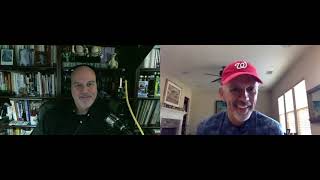
Leo Battari and Randy Cantrell discuss how to get real value from conferences. They share a five-factor framework for high-performing groups and explain why attendees themselves are the greatest asset. Treat connections as relationships, not transactions, and follow up after the event.
Chapters
Welcome to the What Anyone Can Do podcast with Leo Battari and me, Randy Cantrell. This show picks up where our previous show, You're the Peer, left off, highlighting the simple truth that who you surround yourself with matters, and that if we enlist the support of others, give back to those who give to us, and pay it forward for the next generation, we can do anything. Author and keynote speaker Leo Battari and I talk with a diverse group of thought leaders who will share stories, and insights that will help you succeed in business and in life. How? By doing the things anyone can do, but most of us never will. Welcome back to another episode of What Anyone Can Do, the podcast. My name is Randy Cantrell. I'm in Dallas-Fort Worth, Texas. He is Leo Buttari, Southern California. And well, let's, let's start off with the hat. Let's start off with— we're recording today. I've got to look at my calendar. Today is Wednesday, October 16th. So last night the big sweep happened.
Pretty amazing, right? I mean, first of all, to be able to come back the way they did and beat the team regarded as the best team in baseball this year, 106 wins, right, during the regular season with the Dodgers. But I think to sweep St. Louis was just, I think, beyond anyone's expectation, you know, in any real way. And to do it in the dominant fashion they did, particularly with these last two games, at home was amazing. This hat, by the way, is not some recent purchase of, you know, just because—
not a bandwagon thing.
No, it's not a bandwagon thing. My daughter lives in D.C. We've been to several games together. Had the Rockies made the playoffs, I am equally armed with my Colorado Rockies hat in the event that, you know, but like the Red Sox, the Rockies, you know, skipped the postseason this year and we'll have to typical wait till next year kind of thing. But the Nationals are fun to watch. And I think there have been other years where I remember being in Washington, DC and just feeling the excitement around that baseball team when it's doing well. And, you know, for a city where just about everybody's from everywhere else, it's a— I think it's a real unifying force there. And it was fun to watch them celebrate last night. And, you know, my belief, of course, you know, I mean, obviously, being a Red Sox fan, my hope is, you know, that Houston prevails against the Yankees because I root against the Yankees for anything. But I think Houston is going to be tough. You know— Yeah, the pitching's tough. Yeah, Houston's going to be a tall order for the Nationals. And I also think that if you're the Nationals, you'd like to see that series end quickly because I don't think they want a lot of downtime. I think that typically serves a lot of these teams really well when they get a long waiting period. And on one hand, it can be great if you're nicked up a little bit and gives everyone a chance to kind of recover from injuries, gives pitching staff a rest and all. But on the other hand, there's a lot of, you know, little momentum I think that's lost as well. You know, so—
Well, here in Dallas, we're too busy mourning the Dallas Cowboys and the— debacle that has been the last few weeks. So we're not— we're talking a lot— they're talking a lot of sports here, but it's mostly about who's gonna keep their job and that kind of stuff. So I think the collective is really, really tired of 20 years of losing. And, you know, talk about resting on your laurels, you know. It's like there's a quote that Jerry Jones— in some— they had a call-in show, and this was years and years ago, and somebody was being very critical of of him as a general manager. You know, and he makes the comment, did you like those Super Bowls? I hope you did. I hope you did very much. You know, but now people are like, man, that was so long ago now. The memory, the memory has, the memory has faded.
Yeah.
Speaking of fading and fading memories leads into, uh, you redid your, you redid your page. And I'm just going to ask you, because we haven't, we haven't talked in depth about this. You can go to leobattari.com/speaking. That's leobattari.com/speaking. And speaking of memories and solidifying things, you've got a new keynote, so let's talk about it.
Well, the page in general, it's just kind of a bit of a refresh on it. There's a video that is from the just a short story that I tell, told at the conference in Oslo. But I did add a new keynote that was really actually inspired by— it was kind of interesting. So I work with the, the Speakers Group out of Nashville who tends to book speaking engagements for me, and they're just really terrific people. And so what had happened was here in San Diego I guess one of the keynotes had dropped out and they needed somebody. The reason it was probably, I probably had less than 2 weeks notice on it. And, but it was right here, you know, in the area. I was, I was free that day and able to do it. But it was interesting. It was the Western States Auto Theft Investigators Conference, right? Or learning seminar. Yeah. So, So it's kind of interesting because I'm on the phone with them and we're talking about this and it's like, hmm, all right, what are we going to say to these folks about the power of peers other than, you know, don't hang around with people who will steal your car? So anyway, I started looking at the whole conference itself and I was one of the morning speakers right on the first day. And then they're going to spend, let's say, the next 2.5 days in pretty detailed breakouts— no pun intended there, I guess— regarding the subject matter. And this was largely for people who are both in the insurance industry and law enforcement. So it occurred to me that I am— there, and that I'm gonna— and I actually introduced it this way. I said, I'm gonna basically— I'm not gonna talk about anything that has anything to do with anything you will study in this entire conference. I said, but I'm— I want to talk about what I believe is everything that has to do with why you're here. And, you know, people go to conferences like that, they, they want to learn They want to connect with other people and they want to grow. So what we basically talked about was the most important asset for making that possible isn't the people running the sessions or the speakers or anything like that. Your most powerful resource are your other attendees. And so we talked about the power of peers in a conference setting and what that looks like and how if you activate it, you can take What on average, right, when you look at the average conference and the average conference goer, basically what they say is that 24 hours upon leaving the conference, you will have forgotten 70% of anything that was ever put in front of you or presented to you. That number goes down by the day. So you go 48 hours, 72 hours, you just get stupider about the whole experience, right? I joked with the folks here in San Diego, I said a week from Now you won't even remember you were here in this room. So, you know, however, the good news about that is that it doesn't have to be that way. We can actually do something about it. What we do know when you look at other studies about how we learn is that if we have information in front of us and we study it like one time, we kind of read through it, we get a sense of what it's all about. You'll remember about 28% of it after 48 hours. That's about it. If you review the material a second time within that period, that number jumps to 46%. However, if you engage with— in a conversation with someone else or a group of people about that topic and can ask each other questions and share experiences and talk about what you're doing, it literally helps you create neural pathways for memory that allow you to now instead of the conference-goer forgetting 70%, if you actually engage with other people, you are more likely to remember about 70%. Number comes out to 69%, 70%. Right? So on that front, even just from a learning perspective, think about how much more— and these folks were— they were there. They're investing time. They were staying at a hotel. They were away from their families. I mean, this is a big investment of time and money for all these folks, many of it coming out of their own pockets in order to, again, try to learn, connect with others in their field, and grow. And I think you got to do better than the average conference-goer in that scenario. So we talked a lot about that. Talked a lot about the fact that you're also there to connect with people. And it's so easy to go to those conferences and you just hang out with the people you kind of know and the usual suspects there, right? But what if you actually worked a little harder to reach out to others and try to meet more new people and not do so from a strictly transactional point of view, but with the idea that you will meet someone, get to know them a little bit. You may have no idea about how you would possibly be relevant to one another at this moment in time, but we all know when we've had this happen— both of us have been to conferences and things over the years where you meet somebody, you didn't know why it was important at the time, and 6 months later something comes up and I'm like, huh, I remember that guy that knew such and such about something, and I think he could help me answer this question, or I think he could help my friend, or I think, you know, or I get a call from someone saying, hey, you may not remember me, but, you know, and you'll get the— and I think it's so important to be mindful of those things because that is why we go to those things. And I think to the extent that You know, we keep the material in front of us. We get to meet and try to not just meet people at the conference, but stay in touch with them afterwards. You know, that's a, it's a, it's a big help in terms of now starting to take that investment that you made and have it really work for you at some level.
It's especially powerful, I would think, because you've got a group of people. I mean, that, that, This is a pretty targeted group that you spoke to. I mean, that's a pretty, you know, yeah, they've all got something in common. And I, as I was reading, you know, your page last night and looking this over, preparing for today, you know, I was thinking of the conferences that I've been to, and I've been to some of those, you know, that are way more general, and the population is anybody and everybody, but I've been to far more that, that were specific like that. So you've already got some shared thing. You've already got, in most cases, I mean, I'm thinking of, there are a ton of podcasting conferences, for instance, and I've been podcasting for a long, long time. And so you go and, you know, and I've met so many people at those. And because I've been podcasting for so long, I'm not all that interested in whatever, whatever's going on maybe inside the room. But man, out in the hallways, yeah, I mean, the connections are crazy. I went to a conference years and years ago in Nashville that was pretty targeted and specific and made a relationship that, that I have to this day. You know, the person has stayed in my home, and I mean, this is a person I would have never— our paths would not have crossed in a million years otherwise.
Yeah.
And the business opportunities that we have had, not And the biggest thing is the support, you know, that we've been able to kind of give each other. You know, this is a person who's in the professional services game, kind of like me, and completely different. But yeah, huge, huge value. Much, much, much more value than whatever we paid to go to the event that we went to.
Well, having, you know, a shared interest in a certain subject, I don't care what it is, whether it's car theft or whatever it happens to be. There's something very unifying about that. There's something that brings people together. It's the idea. It's a common— you could be among baseball card collectors. You could be among— I mean, you just pick it, runners. It doesn't matter. You put people together that have a real passion, a shared interest in a topic, and it gives them a common language.
You know, even the introverts, which I am— I appear like an extrovert, but it's just draining to be in a large group for me. But even the introverts like me, I mean, the icebreaker is pretty easy at an event like what you spoke at and many others. So I think there's a big reluctance on people's part to just start a conversation. And everybody probably has the exact same fear.
So, you know, what was interesting though, as I'm trying to craft some— so as you might imagine now, I pretty much was crafting a keynote around this very idea of how do I help you maximize the whole rest of this conference that much more effectively? I thought if I could do that as my job, then that would be about the best value, you know, I could deliver doing this. But part of it was I revisited the 5 factors for high-performing groups like that we've talked about. And it, you know, it's easy to see how it's the exact same 5 factors for a high-performing conference, right? You got to have the right people in the room. You have to have some element of psychological safety where people feel comfortable to engage and ask questions. And, you know, they're not around all the people they work with. And so ask the stupid question, do whatever, it doesn't matter. And because of that, because you're showing kind of the generosity and the courage that's required to do that, everybody benefits and everybody wins, right? That you have valuable interaction that, particularly with one another, because the more you do that, the more, again, you embed that learning, you have the courage to act on that learning when you get home. But there is a sense of a culture of accountability that you attended the sessions, that you bring your A-game, pay attention, ask good questions, do those kinds of things. The more that people deliver on that for themselves and expect it of others, the more that everyone benefits. And then finally, I spoke to the leadership of the conference as that fifth factor that always has to be making sure that as they recruit for any conference, they get the right people in the room. That there is a context for openness and vulnerability, that valuable interaction from their standpoint comes from not only creating space for people to have conversation, but to have the kind of sessions that offer the kind of rich content and opportunity to keep it fresh and exciting for them. And that there's some— because of the quality of the whole experience, it creates a culture of accountability for everybody. And, you know, mentioned to them that at the end of the conference, the leadership of the conference is likely to ask you, you know, what did you think about this or that? Or you may be asked to comment on every single breakout that you were part of or whatever. And I said the value of that feedback is enormous for them to do all those things that I just talked about for next year's event and make it something that you actually would want to attend. Excuse me, next year, that it isn't some been-there-done-that experience, or that, you know, you know it's always going to be, you know, something that really considers the participants in that way. So it was kind of interesting to see how so much of the content from the Power of Peers, and particularly from What Anyone Can Do, you know, found its way very easily into conference environment that helped people think about how we can take this incredible investment of time that we're making and really squeeze every ounce of value possible from it.
And it's expensive for everybody. I mean, it's expensive. These are expensive events. Even smaller events are expensive to put on. So, you know, why not?
It is, you know, and, and, you know, the other part of it is these things They continue to be important, right? When you think about all the opportunities we have to learn online and synchronously, asynchronously, whatever, we don't have to leave our house if we don't have to, if it's just about the content. But the reality is we do learn better when we learn together. It's fun to get out and meet people. We know today, I pointed out to them that our networks have never been more important to us, right? Talk to any recruiter out there who will say, hey, what's the biggest source of what's for someone to get a new job nowadays? It's not sending your resume into some company with 500 other people and hoping for the best. You know, it's being able to, who do I know in this organization? Who do I know that knows someone in that organization that can be helpful, you know, in, Showing something that I'm someone who's competent and can be trusted and would add value and do these kinds of things. And obviously for the company itself to have that information, because you've got so many people in front of you, you have to evaluate, is really, really important. So it's a, it's a win-win. And, but to have a network, you've got to do some networking, you know, to do that. And the two is funny. I didn't really want to go deep into it necessarily. Largely for time and for a lot of things. But the two pieces of advice that I only provided, one was kind of as I mentioned earlier, think about these relationships in the perspective of being relationships, not transactions, right? Or think about the connections as relationships, not transactions. And then second, I said, if you're one, and whether this is easy for you, hard for you, or whatever, If you think about trying to be interested versus trying to be interesting, that's a big help. You know, you'll be far more— you know, anyone who walks into any room and starts engaging with someone who just wants to bloviate about themselves and what they're doing and how— you know, we all know how that goes. You know, walk in and just start asking questions and showing interest in someone else. And you walk away from that conversation and go, wow, what a great guy, right? I mean, you know, I mean, it is so true, and that is what we're there for. We know what we know. People will ask us if they're interested, if whatever is relevant to them they want to know about. Um, obviously we want to share that, but I think just the more we ask really good questions and focus on that, um, not only will be more, more successful in well-liked, but we'll also learn a whole lot too.
Well, the opportunities, you know, I'm thinking of an individual, and sadly he lost a long battle with cancer earlier this year, but I met him here in Dallas at a big podcasting conference. He was Steve Kloida. He was up in, I believe, Minneapolis-St. Paul area, and you could tell he had that accent. But I had listened to his podcast a time or two, and I recognized him from across the way. I'd never met him me before. And I walked up like, you know, this is, this is how I do it. You do it any way you want to, for those people that are listening. But being the introvert that I am, I just, I purposefully just kind of go over the top. And I walked up, put my arm around him, and I said, Steve Kloida, you are Steve Kloida. And he looked at me and grinned really big, and he said, yes, yes, I am. And I told him who I was. Well, he knew me from podcasting, and he was, he was known as the prospecting expert And his podcasts were very sales-oriented for, for sales professionals, you know. But I think about, I think about him fairly frequently, especially since his death. And I'm like, you know, I would have never met, I would have never met this guy had I not just had the bravery to, to go up and, uh, and to do that. So I'm a, I'm a, I'm a big believer in, in that topic. And like many people probably in our audience, I am not this natural go-around, work-the-room kind of guy. I'm way more comfortable hugging the wall, being behind the scenes. But boy, do you rob yourself of some really precious things when you do that.
Yeah, and I'll be honest, I don't find it particularly easy either to be walking into a room and just connecting with people in that way. And yet I know how valuable it is, and I know how important it is, and I'm always so grateful when someone comes up and wants to start a conversation, and it's always fun, always interesting, and then that kind of moves. You know, one of the things that, if you remember— why is this escaping me off the top of my head here? Ah, I'll think about it. I just lost a thought, but I know it was J.J. Rembrandt. I'm thinking about JJ Ramberg and advice she gave in the book from her dad about networking, and a lot of it had to do with—
She's a super connector.
Oh my God. But sometimes it's when you're kind of walking into the room and how intimidating that can be because you can't help but think everyone in that place knows one another. It's just me that they— Right. Oftentimes, if you can be first, if you can be early at those things, and then you've got other people kind of coming to you, then it can make kind of engaging in that whole process a heck of a lot easier.
Well, she introduced us to Larry Robertson, and I remember after Larry was on the show, there was somebody that wanted to meet him, and I just made this LinkedIn— that part and that There's great value in that too. There's great value in having the ability to know multiple people and being able to kind of be the third party that connects them and not just merely make an introduction, but to really connect them, make sure that they connect. I remember you and I, Claude at VaynerMedia wanted to connect with, uh, Pat Waters, who at the time was HR at LinkedIn, you know, and ServiceNow. Yeah, and we, we happen, we happen to have, to have had them both. So that part of it, that, I don't know, being that, I don't know what you would call it, being that connector, that intermediary, I think they're, they're intermediary, there's great value in that too.
It's really interesting. So I was on about a week or so, we, um, recorded, um, Greg Boyson has a podcast. And he also lives in Encinitas. He lives in the next town over. We didn't even realize. So we ended up meeting for coffee yesterday. But it was incredible, all the mutual people we know, some of the people he wants to introduce me to and vice versa. And one of the guys, you know, we talked about was Drew Dudley, right? When we had him on the show. And of course Drew is also a huge proponent of not only giving back and paying it forward and all that, but I think reminding us how important it is to, you know, just every once in a while be thinking of whoever that person happens to be in our life, in our currently, whatever, and call them and just thank them. Call them just out of the blue or write them a note or send them anything. And I've seen people do it with like teachers or professors or something. Someone's like, they'll never even remember me. They feel self-conscious about doing it. Reality is, of course they remembered you. You made their day when they opened your note or got your call and whatever. And it feels good. It feels good to be able to you know, say to someone, you made a difference, you know, in my life. Some of these people we meet at conferences, some we meet them in everyday life, whatever. But I think to your point, the more that, you know, we can get out there and connect with people that in many cases we never in the course of our daily lives would have run into, why not take advantage of that possibility that we could meet someone who could literally make an extraordinary difference in our life, or we could make an extraordinary difference in theirs. And how would you ever want to miss that opportunity? Yeah.
Well, and you wouldn't, and you've teed me up and I'm going to give a shout out to an aging mentor of mine. He's 83. His name is Ronnie Wade. And Ronnie has been a lifelong mentor to me. Ronnie, for the past 5+ years has been battling this blood cancer. That he's got— the name is way too long, I couldn't begin to pronounce it— it will end up morphing into leukemia. He knows it will eventually kill him, and he's done terrifically well over the last number of years, but he's battling it, and it's taken a turn for the worse. And, you know, so I'm talking to him on the phone the other night, and he's like— I'm like, I want to come see you. And not being crass, but I said, you know, I don't want to wait too long. And he laughed and he said, no, I get it. So he just said, yeah, you know, I would enjoy it. So Lord willing, I'm gonna, I'm gonna go up and spend a few days, you know, with him next week and make sure we don't leave anything unsaid that we, that we wish to say, kind of a thing. But I mean, here's a guy, he's a, and he's also, he's a, he's a, he's a PhD in public education and leadership and spent his life in in public education but is also a preacher. And he performed the ceremony for both of my kids. And so, you know, the ties are just— he's just interwoven in every area of my life. And we— everybody's got people like that. You've, you've got people like that, and they're not necessarily in failing health like, like Ronnie is. But I think I told you before we started recording, I'd watched this documentary on the 9/11 survivors and the voicemails that they received from their loved ones who were trapped in those towers. And they are so grateful for the phone calls and/or the voice recordings that they got. And many of them expressed gratitude that their loved one was able to say what they wanted to say, albeit under horrible, horrible circumstances. But Yeah, but the who's, the who's in the, the who's matter. And so, you know, the tagline that I know you don't take original credit for it, but it still is a terrific tagline. Who you surround yourself with matters. And boy, does it, but is it ever, including at conferences where you don't think the relationships might be so deep, but you never know. I've got a relationship that's easily over a decade old with a young lady that I met at a conference and She lost her husband in the last year, and I'm 11 hours down the highway from her, but I've been able to at least be a small part in helping her navigate some choppy waters. And she certainly has done the same for me. And had it not been for striking up something at a conference, it never would have happened.
Right. That's right. No, I think it's something to really think about every time. I think every time we spend our time anywhere, we should think about how do we, you know, really leverage everything possible around us, you know. It could be anything. It could be— sometimes when I'll go and I'll watch someone see like a beautiful sunset or whatever, Okay. But then you've got someone who wants to take a picture of the sunset with their iPhone. So they're looking at it through the lens for 2 minutes as opposed to just put the phone down for a moment. I get you want to capture some of it and you can do that, but just enjoy it for a moment. Just take advantage of that moment where you can actually see it right in front of you as opposed to looking at it through the lens or, times where we are surrounded by people that we would not otherwise meet, then if they're right there, take the opportunity to meet them. There's so many people who are worth getting to know. And I think this is where, you know, I mean, countless times, just because it's so relevant, we talk about Angela Meyer's work. And I think some of it also speaks to our unwillingness to own how much we matter ourselves. You know, and then you think about it, it's kind of a selfish act in many respects when we're not willing to give of ourselves to others, to understand we matter, to understand that we have special gifts that we should be introducing and having be open to other people as well, and not be closed off, not be the person who's not approachable, not be that. So I think to the extent that we look at it as both an act of giving and an opportunity to meet other people and receive, the more likely we are to do it. And again, I think if we're engaging people in the formal sessions and someone says something or you're working together, maybe they do little breakouts and do things. I mean, take the opportunity to extend those experiences beyond when the clock hits 10:50 and you're on your way to the 11 o'clock session. You know, it's like, it's just, it's just too important. You know, it really is. And when we think about our time in general, we don't have a lot of it, you know, on this earth. I can't imagine why we'd want to waste a second of it. And if you're going to make an investment, to do anything in your life, whether it's go on vacation or go to a conference. Figure out what are we going to do to maximize everything we want out of this experience. That doesn't mean schedule yourself to death because part of what you want to do is relax. So go do that, you know, but the point is that based on whatever it is you want from it, you know, make sure that you're getting all of that. And I don't know why we would ever think otherwise.
It's interesting to me, you know, the buddies that I've got, that I've got buddies that go to way more conferences than I do because of their work. And it's, it's really interesting to me that when they come back, no matter how terrific the conference was, the stories are all the same. I couldn't tell you the last time I heard a story about a session, but man, do I hear— I hear all kinds of stories about hallway conversations, and I really hear conversations about you know, a group of us, and they'll start rattling off these names, how 8 or 10 of them, you know, went, went out to eat that evening.
Yeah.
And they don't forget those.
Yeah. Or just the people they just met and hanging out in the bar, you know, after the sessions were over or whatever. No doubt about it. I mean, it's all those, uh, informal gatherings that make a big difference. You know, even look at, um, when we talk about peer groups or we talk even about teams inside companies, really getting to know one another has to happen outside the context of those formal environments, right? It's got to be in those places where everyone, for lack of a kind of, lets their hair down or whatever and just is able to, you know, chat about things that I think in many respects represent a lot of their shared humanity, you know, about family, about Right. You know, whatever it happens to be. And that's what we get to know each other and kind of realize that we're all just kind of, kind of trying to do the same thing at the end of the day. We're just here doing our best, you know, and that's, that's about it.
Well, I like the title. I like the title a lot. The title of this new keynote is Maximizing the Value of Your Conference Experience. You can find all the details at leobattari.com/conference. Speaking, he has additional keynotes and workshops that I would encourage everybody in our audience to reach out because if you, if you're running a business of any size at all, I mean, this has application as hopefully we've pointed out today to make a sales pitch here for you to be able to maximize the learning inside your, your company. Leo is very accustomed to speaking to small and large groups of CEOs. And I know from our private conversations, increasingly CEOs, the wheels start turning as he's talking to these groups of CEOs that, you know, how could I do this in my company? Because it's, it's not groups, it's teams, but boy, the application is still universal.
Well, you know, it comes down to, as you talked about conversations in the hallway and the the fact that when you go to any company, any group, any conference, the greatest asset by far in the room, any classroom or whatever, it's, it's the students, it's the attendees, it's the employees, it's the members. It's, you know, what you can make happen among them really becomes the secret to maximizing anything. And, you know, when we bring people together, I mean, what they're capable of is really rather extraordinary. So, you know, on that note, you know, just wish your friend well, by the way, and I hope your— I know your visit will go, you know, great, and it'll be good. Look forward to hearing about it.
Yep. And go Nationals, huh?
There you go.
I'll say go Astros because that's in your favor too.
Oh, let's do that. Have a good one, everybody.
To learn more about our show and what we do, to submit questions to us, and to subscribe to What Anyone Can Do Podcast, please visit our website, whatanyonecandopodcast.com. What Anyone Can Do Podcast is hosted by Leo Battari and me, Randy Cantrell. Music provided by Kevin MacLeod is Vibe Ace, licensed under Creative Commons By Attribution 3.0 license. Thanks for watching or listening. We hope you'll share the podcast.










