What Anyone Can Do: Leo & Randy On Achieving Goals (1038)
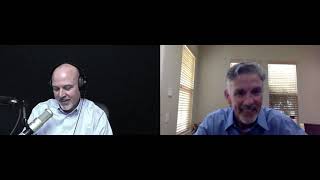
Randy Cantrell and Leo Bottari explain why 82% of personal resolutions and 90% of corporate goals fail, then show how the right peers and public commitment fix it. They contrast groups with teams, emphasize psychological safety, and share tactics for the second half of the year.
Chapters
Welcome to our new show, The What Anyone Can Do Podcast with Leo Battaglia and me, Randy Cantrell. Our new show picks up where the last show, Year of the Peer, left off, highlighting the simple truth that who you surround yourself with matters, and that if we enlist the support of others, give back to those who give to us, and pay it forward for the next generation, we can do anything. Author and keynote speaker Leo Battaglia and I will interview a diverse group of thought leaders who will share stories and insights that will help you succeed in business, and in life. How? By doing the things anyone can do, but most of us never will. Welcome back to another episode of What Anyone Can Do, the podcast. My name is Randy Cantrell. I'm in Dallas-Fort Worth, Texas. He is Leo Bottari, coming from Southern Cal, San Diego to be precise. Greetings.
How are you? I'm doing very well. I'm doing very well. I'm still, you know, I've finally, you know, recovered from, you know, the post Stanley Cup, you know, and it's Stanley Cup Finals. But what did Dennis Leary do? The video, some video before Game 7 where he talked about how we haven't had a parade in 4 months. Come on. Exactly. So, you know, we have nothing to complain about, you know, in New England as far as all the sports.
Now it's the boys of summer. It's their time. So yeah. And around here, it's not— I'm not a big baseball fan, but it's, of course, the Rangers. They've People have been rather surprised they're over.500. Nobody thought they would be that. So it's dog days around here. Everybody's keeping their eye on the NFL. So this is Dallas Cowboy country, big time.
Oh, that's for sure. I mean, between that and the NBA draft, and, you know, it's— and, you know, baseball is just such a long season. I mean, the Sox clearly need a better back half than the front half of the season, but we'll be hitting the All-Star break soon. And, you know, it kind of brings me— here we are. We're getting near halfway the baseball season. We're obviously July 1st begins the second half of the year for us. And I think it may be a good time to reflect on, and I think I'd mentioned this in one of my What Anyone Can Do minutes where I'd asked people, not only did they accomplish their New Year's resolution, but do they even remember what it was?
Right.
Because according to the University of Scranton, as we've talked about on occasion, 82% of people fail at their New Year's resolution. And interestingly enough, if you think companies are any better at achieving their strategic goals, their failure rate, if you believe Norton and Kaplan, who were authors of The Balanced Scorecard, will tell you it's 90% there. So I mean, I think it's something to look at as we begin the back half of this year and really take stock of how are we doing? You know, what are we doing, you know, with our lives? What are we doing with our companies? You know, what are the kinds of things that we can start thinking about going forward? You know, I think that, you know, individuals and companies tend to fail for different reasons. Um, and, uh, so maybe we can talk about individuals first, right? Um, and of course I suspect a lot of that failure happens really quick. Oh, totally. Oh, within weeks. Yeah. You talk about the fact that the give up factor is probably pretty quick. Give up factor is fast. Um, Everyone is all, you know, in whatever good cheer you are on New Year's Eve thinking about, oh yeah, here's my New Year's resolution. I'm going to do this. I'm going to do that. And what I think makes it more remarkable is most people's New Year's resolutions aren't like, like they're trying to, you know, make the Olympics or something, right? They're not trying to be elected, trying to land on Mars or, you know, they're fairly within reason. Goals. And yet still, somehow they elude us. Talking to someone the other day who basically said, you know, we're really good. And he was talking specifically about Americans that really get at getting things started. And we're not always great at the follow-through and getting it done. And I think there's some truth to that. But I also think, and of course, the premise of the book, What Anyone Could Do, is that if you can surround yourself with really good people, which is, I think, something that anyone can do, you will do the things that anyone can do far more often. And, you know, as we've said, success really is about not doing superhuman things. It's basically doing the things that anyone can do, but just most of us never will. And oftentimes when we look at the little everyday things that have to happen in order for us to accomplish what I think are some pretty modest and achievable goals, and yet we still, we don't. And I think we've got to figure out how to enlist and engage people around us to help us get what we want.
Well, and I think in our lifetime, as more mature guys, it seems to me that it has certainly changed for the individual because of the mounting pressure I'm reminiscing back to our conversation with Rich about his book Late Bloomers and that pressure to always have that Instagram moment and be successful and kind of not show your underwear. But it's in those moments where you kind of need somebody that you're willing to show your underwear to, to help you push past that. I don't know. At younger people today and was reminiscing about my early career with somebody who was in their forties the other day. And I'm like, you know, it's, you are in a whole different world than the world that I came up in in my twenties. And I'm not, I'm not judging it as either good or bad. It's just different.
Well, certainly back then you would never admit to anyone that you didn't know what you were doing. Exactly. Exactly. The answer to something, or it was the whole fake it till you make it. It was that whole kind of thing where I think today it's far more permissible, even the, you know, the expression about men being terrible asking for directions. They would drive around lost for 2 hours before they would ask someone who lives in the damn town to say, hey, where is this place? And you know how easy that is. And yet, We are not, we certainly weren't in our generation conditioned to do that. I'd like to think that, um, both in terms of models of leadership and with the way, uh, young people are raised today, that asking for help, asking for answers to their questions, asking, um, you know, others is far less problematic than It used to be, would you say?
Oh yeah, absolutely. Absolutely. Well, what, what leaps out in your mind when it comes to the individual and the real challenge or the, or the, or the thing that makes them quit the fastest or however you want to look at it?
Yeah, there's a number of things. Um, you know, you could argue that people didn't really want it that badly to begin with. I think that's one of the things that you can kind of look at. I think University of Scranton, when they talk about a bit of the failure rate there, that has a lot to do with it. Like we say, We want to lose 10 pounds. We say we want to do this, that, or the other, but you know, we're not really willing to do what it takes to do that. You know, conversely, I think when we talk about companies, companies are great at also at setting goals oftentimes. Um, and they pay attention to what, whatever that end goal is. And they pay less attention, I think, to what it's going to take to make that goal happen, right? What are, what are the metrics around it? It's the difference between measuring outcomes and outputs, right? And oftentimes it's so helpful to measure the outputs as well as the outcomes, because if you don't achieve the right outcome, you really don't have any idea whether it was a poorly, uh, it was a bad strategy or just a poorly executed strategy, right? It could be a good, been a great idea, poorly executed. And next thing you know, it gets tossed aside and you're going to do something else when in fact all you needed to do is tweak a bit of what you were doing and do it a lot better and you would achieve the goal.
So yeah, I'm reminded, you know, when you said that, you know, this Mikaela Shiffrin, who is a world-class downhill skier and slalom skier, Which, a sport I know nothing about, men or women.
It won't keep us from talking about it though.
So yeah, no, no, but she was young when she was young, and her dad was, was a, from what I understood, was a ski instructor. And while other girls her age were competing on the world stage, she was at, at a ski training facility, old school, that had the old, the old kind of seats where You don't take your skis off, you just sit in this thing and you go up the hill very slowly. Your skis are on the ground and you're watching the other, the other people that are being trained. You're watching them come down.
Yeah.
And she's doing it day after day after day after day, a lot of reps. And other people are like, you know, you're wasting your time. And other people are competing, they're winning cups and whatever. But the value of that old school style of not just the repetition of going down the hill, but going back up the hill and watching other contestants come down the hill, or kids being trained, and watching what they're doing and learning not only from your own skiing but from their skiing on the hill. And here she is today, world class, and she attributes much of it to that process, not fixated on, okay, you're 18, you got to be on the world stage, you got to be winning cups and titles and Well, and I think you're right.
I think it speaks to Rich Karlgaard's book. It speaks to a lot of us wanting everything now. You know, you want, you might want to lose 10 pounds. You might want to lose 20 pounds, but you want to lose it now. You know, you're not willing to do what it takes during that time to make that happen. And you know, it speaks to a great tenet in Peter Senge's The Fifth Discipline, where he talks about how slower is often much faster. You know, when I think about— so I'm the worst, for example, or at least I used to be. I like to think that I've made improvements in this after nearly 60 years. But when something would arrive in the, you know, by UPS or whatever, and it had to be assembled, right? Do I read the directions first? Oh no. You know, I've got to go and just start trying to put it together. And many things usually happen there. First of all, there's a bunch of extra parts. I'm wondering, all right, I clearly missed something. Um, or it's put together improperly, or I try to force a part into something and I break it or any, any number of bad things.
Or you realize you didn't have all the parts to begin with.
But either way, had I actually spent time and done what they say to do, Read the directions from beginning to end, put everything where it belongs, put it together in a methodical way. You will get it done correctly and that much faster pretty much every time.
And so, yeah, well, let's say if you don't have time to do it over, you know, if you don't have time to do it right the first time, when you're gonna have time to do it over?
You know, in StrengthsFinders, it's that, it's that person who's the Activator, you know, the person who says, all right, let's go, gotta, gotta move, gotta get started. And the Deliberator is the one clearly who's saying, whoa, wait a minute, we can't do like shoot, ready, aim, you know, this kind of thing here, right? We gotta hold on. And obviously companies need both kinds of people. You know, you need someone who is going to get things started, but you also need people who are, check that, you know, as well. But, but it is true. And we aren't always, we're just impatient. We're just really at the end of it, we're impatient and we want it now and we're not willing to do— and left to our own devices. And when we are accountable to no one other than ourselves and it's like, well, who's going to know? What's the big deal? It's a big difference from stating publicly to maybe some of your friends or whatever, I want to do this by X time period. All right. Okay. And now I'm out there with it. And maybe, how can you help me make that happen? How can you encourage me? How can you give me advice? Because you did that last year. I want to know how you did that. Or whatever it happens to be. Or someone to do it with you. Be partners. And I think as we look at July 1st coming on here, both as individuals and as organizations, to be thinking about, well, where are we compared to where, what we said, or where we said we wanted to be, you know, at the start of this year? And how do we not get to December and just throw up our hands and say, well, you know, we missed the goal, or we didn't do what we said we wanted to do, only to have to try to go through this process again and run into the exact same thing next year?
So, well, that's Seems to put some time pressure too, I think, on people, individuals, and on businesses, because we didn't get it done in Q1, Q2, and now we're staring down the barrel of— I mean, Q4 is going to be here rapidly. And now the pressure is even, even more intense. My grandmother on my mother's side had a little thing hanging in her kitchen that I'll always remember as a little kid. The hurrier I go, the behinder I get. And it's true for us individually and in business when we try to make up, I think, for lost time. I'm wondering how much of that, in your opinion, is due to, you know, people not really wanting what they say they want, but I'm wondering how much of that is just clarity on their part of not really, not really sussing out what are you after exactly, or what is the challenge, or what is the I think there's definitely some of that.
I also think that the further behind we get, the more closed we become. So when we, if you think about it, like, uh, the time where you need the most help is the time that you're asking it less. And the time, right? Because here, here I started off and all right, I'm good. I got my team, I get this, or I'm doing it, whatever it happens to be. And when you start falling behind, that's when you don't want to admit that you've got these things going on or admit you need help or ask for advice on something. And I think that gets us into a terrible trap, you know, both whether it's individual or people inside companies who are trying to look good for their boss or look good for their fellow employees. They don't want to admit that there's something they can't handle or something going on, you know, in, in, these peer groups, right? I do workshops all the time. And it's fascinating to see how if you get a bunch of CEOs in a room, even many of them are far more likely when it comes to talking about, um, difficult challenges they're having in their life to talk about the personal challenges they may be having at home. It could be with their marriage. It could be with a, with a teenager. It could be with you, you name it. But when you ask that same person, Or if that same person is challenged in their own minds to actually bring something forward that says, I am struggling with this, I can't handle this at work, that becomes actually far more difficult. Really interesting.
Yeah. And the, and the oddity or the irony maybe is our, I want to lose the 10 pounds. I want to use it yesterday, but then my reluctance to ask for help. When I need it. I mean, it's, it's the yin and yang of the whole thing. Earlier is better. It's, I mean, same thing in healthcare. You know, you have these conversations with people and yeah, you know, I, I knew I had this lump right here or I had a lump in my hand. I just ignored it. And yeah, that never works. I mean, that never works better to be on the front end of it than the back end of it.
Yeah. I'd like to think that we will, we would do one or two things at the start of the year, either let's not put ourselves or anyone else through the, repeated exercise of failure. You know, when it comes to New Year's resolutions, just say the heck with it. I know I won't do it. I'm not going to declare it. Forget it. Or, or actually, you know, say, I really do want this for myself. This really isn't impossible. I see other people doing it all the time. Uh, you know, I can do this. Um, I may need help doing this. I may need advice. I may need encouragement. I may need, uh, someone to, You'd hold me a bit, help me hold myself accountable is kind of how I like to think of it, more of someone holding me accountable. But, um, you know, I think that, uh, if, if we're willing to do that, I think it's pretty simple. Um, but it's, it's really about, I think to your point earlier, which is first of all, let's be really specific and define what we want and think about also why we want it. I think remembering the why, is really, really important. You know, there could be any number of goals that we have, and everyone may have the same goal, but they have different reasons for wanting it. And to remember that reason every time you're thinking about falling back, or to remember that reason every time you think that you don't want to be asking for help on something, you know, I think it's, I think it's really, really essential. Um, you know what I was, um, watching recently, a video that I love on TED. It's William Ury's The Walk from No to Yes. And he tells a wonderful story, you know, at the beginning about 18 camels that I would tell it, but he tells it so beautifully that I would just really suggest we'll, we'll leave that in the show notes. Listen to the first 2 minutes and it's extraordinary. But what he talks about, uh, he talks about it in terms of conflict. I think if you took conflict and just replaced it with the word challenge, um, you find that it's very much the same formula in that he talks about it as the third side. He said even in difficult negotiations with, um, two sides, there's usually something greater at stake. It's for the kids, it's for our future, it's for the country, it's for the environment, whatever it happens to be. And if we can keep that why You know, in mind, and we can be open to what's for the greater good. We often can discover possibilities that we never would have imagined if we just sit in our own, you know, um, isolated place with some type of, uh, positional argument that really is a very narrow way of looking at a lot of things. So I, I think for ourselves, when it comes to setting goals and realizing why do we want this, why does it matter? And if we can tap into why it matters, and then I think tap into why, or who I should say, the people who could help me accomplish what I want to achieve my why. You know, I think that's powerful stuff.
And I'd like to thank people to help us, even lean on people to help us figure out, is this really what we want? I mean, even before we start the journey.
I mean, I think that, and the why oftentimes, you know, helps you get the answer to that. Because if you can't figure out why you want whatever it is you want, it's not something you're really going to pay much attention to or stick with. And maybe you pick another goal of some sort that does have meaning for you or your kids or your parents or the people around you, you know, whatever that looks like. And, um, of course in the show notes as well, cause you know, of course in the, um, in What Anyone Can Do, the book, we talk about, um, having a people plan and there's a people plan and an outline for that. We won't go through it here, but for individuals and for teams. Um, and I think as we start getting, um, you know, really on the doorstep of July 1st, We've got, I think, a really good opportunity here to look at the second half of this year, be thinking, all right, what is it that I want? Why do I want it? Who can I enlist to help me make that possible? And then, and I would love it if people did it and maybe even in the comments say, hey, here's, Here's who I am, here's my goal, here's why I want it, and I'll get back to you and let you know when I did it. And that would be kind of great, you know, for people to just look at a simple outline on the people plan where they can for themselves, or if you're a company who wants to do the same thing, I think there's some really great opportunity there between now and year-end to make some things happen that may not otherwise be possible.
How do you view the power of those kind of public declarations? Well, I don't mean public in the sense of social media, but just even in the context of a company, you being part of it.
I think they matter. I think when you put yourself out there that this is what you want to do, you, when you're a company, you're really talking about it, I think, in terms of what your priorities are, what matters to you, you know, and You hope that what matters to you also are the same values that your employees hold dear and the same things your customers hold dear. Because when you're all in it together, you've got a great chance of making those things possible. You don't have to be perfect at it yet. We can have aspirational values that I think hold a real place for us. Most people aren't as good as they want to be with diversity. They're not as good as they want to be in a lot of areas in their organization, but they're working at it and they're committed to it. And I think when they put out there publicly that this is our commitment to be better here, and they can enlist the support of others where oftentimes customers or employees can give ideas for here's how you could be better, here's, you know, what you could do to make this stated value and these goals around that possible. So I think it can be extremely powerful when, when we do that, both as individuals and organizations. I think aspirational values, you know, have a real, real place there.
From a company perspective, I mean, what, what leaps out to you as the differences as individuals make these pursuits and these decisions and come to wrestle with their Why? What, what's, what are some distinguishing differences that you notice when it comes to a team or an organization versus an individual?
Um, I, I just think that people can get overly— it's kind of what I mentioned earlier— they— you can get overly focused on the goal. It's that whole thing we talked about with, you know, keeping your eye on the prize isn't always the best advice. You know, I mean, you have to be focused on what are the things you have to do to make that possible. Um, and by focusing on those little everyday things and having the discipline around that and making sure that you're good at those things. You know, the, otherwise, whatever you're doing is just like, you hope, it's like a hope, you know, people talk about hope is not a strategy, you know?
So I think in that regard, well, the big difference to me leaps out from a team as far as, and you and I have talked before about the difference between teams and group, and maybe, and maybe that would be a it would be fitting to give the audience greater context. We don't dwell on it all that often, but the distinctions between teams and groups.
Yeah. I mean, you know, you know, let's face it. I mean, a group basically, at least as we defined it in The Power of Peers, comes together to help one another achieve their individual goals. Right. So if I'm a CEO and I'm part of a CEO group of CEOs of other companies, we're there to collaborate and to help ourselves be better leaders and help take things back to our companies to make our organizations better and grow healthier and all that. A team basically is working much more toward a collective goal. When a team is going to win a national championship, when the team is trying to create a great piece of advertising, when, you know, there's either a singular goal or singular work product. That comes from a lot of contributors and oftentimes people contributing different things in different ways in order to do what one person would not be capable of doing. So, you know, I think anytime that we can put that mindset behind it, either way, it comes down to what we learned so well, I think, from our guests during Year of the Peer, all these super successful people from all different walks of life and not one of them suggested. In fact, they, all of them, I think to a person, laughed at the idea that they did anything completely by themselves. We need being part of groups, being part of teams, and these don't have to be formal, fixed. These can be ad hoc, you know, bring together the people who surround you, whether it's at a company or in your individual life that can just help you get done what you want to get done. And conversely, you would be willing to help them do the same.
So if, if, if people in our audience, if we've got team leaders, and I'm certain that we do, and, and hire kinds of leaders who may be assembling teams and, and probably aren't looking at second half, but are probably already definitely deep in thought about the fourth quarter, If you are more formally gathering a team and you're facilitating this group to make such a decision so that you can collaborate to the max, get the highest amount of buy-in that you can get, what are some things that you have learned in all of your dealings with the teams and even groups that might, would help that leader facilitate that?
So I think it really goes back to what we do in the workshops and what we learned about the 5 factors, both in how they work for groups and teams. One is you've got to have the right people in the room. And I think it's the leader's job always to make sure that you've got the right people in the room who have the skills, who share the values, and who have the commitment to getting done what has to get done, that the people are committed to one another as well as they are committed to the goal. I think it's essential. Um, you know, in the Google study, we talked about, um, where psychological safety is such a key element for teams, right? People have to believe that it's okay to make a mistake. It's okay to admit you're wrong. It's okay to, you know, to do certain things that keep everything really transparent so that people can help one another fix things more quickly and not have things, you know, go to a point where someone is keeping it, um, you know, a secret only to get to a point where it gets so bad, then it has to become visible. And now all of a sudden, there's less, if anything, you can do sometimes to help them. I think third is really focusing on productivity. You can have a lot of, you can have right people in the room. They can really trust one another. And, but are they being as productive as possible? And as the leader, how do I help them be productive? How do I run meetings? Do I have too many? Do I not have enough? Are they too long? Are they too short? Are they, they make people feel like they're being heard. Do they really know what's going on? Um, how do we do calendaring? How do we manage people who, um, based on various commutes they may have or whatever, who may be more productive if several days a week they were able to work from home, you know, all kinds of things like that, which we can look at from a productivity standpoint, which then I think puts you in a position where you can create a culture of accountability where Again, the team members are accountable to one another. They're not just, you know, worrying about their supervisor or trying to be accountable to the CEO, but that their currency with the other employees is based on the commitment that they all share. And they model those behaviors for one another, and they have expectations for one another because they depend on each other, because everyone contributes usually something a little bit different on the team. And then finally, I think for the leader to reflect on themselves, to not— to make sure that the right people are in the room and that they've got that psychological safety and that there's productivity and accountability. But for them to always be thinking about, how am I as the leader supporting this team? How do I do a good job of that, knowing that I'm, as the leader of this team, want to be part of the team, not apart from it? Which allows me to really participate and model behaviors that I hope others will emulate. And it's really being for the team, not for your own self-aggrandizement, and to be, again, steward of those other factors that we talked about. But those things, I think, when we start looking at the back half of the year, Also, as for a leader, which is a good point I think you're, you're leading to here, which is really looking at these factors and saying, how are we doing? How am I doing against each of these areas? And I think it'd be a really good point in the year to self-assess and reassess that, make any adjustments you need to make, and kind of go forward from the year and finish out the year strong.
Yeah, very good. The website is leobattari.com. That's L-E-O-B-O-T-T-A-R-Y dot com. We'll put links to some of these things. We're doing more and more of that, and I hope the audience is finding that helpful. The things that we kind of refer to and talk about, even some of the books that you mentioned, putting links so that you don't have to go hunting all around. You can just go to leobattari.com and find that.
Well, there we go. That's good. So what do you got as you think about the back half of your year? Any goal come to mind that you want to—
Oh yeah. You gotta get that group started. Yeah, that's the big goal. And I'll show a little bit of my underwear in Reader's Digest fashion for the old heads that even understand that reference. Stuff happens. Life gets in the way. You've had some challenges in the last year. I've had some challenges. And it's not that we air all this dirty laundry, but for all of us individually and people on teams or in groups, life gets in the way. Stuff happens and it's not perfect. And everybody would like this hockey stick kind of a life. It's just not realistic. It doesn't happen. I'm talking to a 22-year-old the other day who's, you know, coming out of Texas A&M and boy, he's just thinking, you know, I got the world by the tail. And, you know, until life hits him square in the face or lower. And, you know, it's just not, not how life goes. So I'm one of those people, like so many, life has gotten in the way, but I've let it, you know, stuff happens to us and thanks to you and some other nudging. So yeah, for me, the elephant in the room is is The Peer Advantage by Bula Network. You can find out more by going to ThePeerAdvantage.com. I'm really committed to small business owners, and that's what this is for. I've just, in all candor, I've just got to get off my butt and, you know, and give it more effort. I think so much of this for an individual as well as for teams, it boils down to resilience. It just boils down to Will you, will you quit or will you keep going? You know, and I'm reminded of, you know, the famous, the famous Navy SEAL training, 200, 200, and these are elite sailors already, right? I mean, they're all put forth by their commanding officers. 200 guys go in the class and there's this one simple device, a bell, you know, and you can make it all quit. You can make it all go away. And all but 10% ring that bell and say, I'm done. You know, and it's the way the Navy— I mean, how else is the Navy going to figure out who's going to quit and who's not going to quit? And that's the purpose of the training. And I'd rather view our lives professionally and personally. It's the same. It's the same game, except we can ring the bell, but the beating still continues. So my question is, why ring the bell? Why not just keep moving forward? You know, it's one thing if you don't have your goal clearly established, or if you change your mind, which is perfectly okay. People change their minds all the time, you know? So I'm thinking, I want to get this group going. I've just, I've just got to do it. That's all there is to it. You know, there's no ifs, ands, or buts about it. You just keep pushing forward and, and doing it. Uh, my, my big challenge, as you well know, and And for whatever value this is for the audience, and I hope it is because I know there are so many people— that whole fake it till you make it conversation that we had at the top of the show. As I've gotten older in life, I've gotten more aware of who and what I am. And one thing I know that I am not, and you and I've had this conversation off the air, I'm not a self-promoter. Just not. I don't judge people who are. It's much easier for me to promote you and I do, and I feel good about it, than it is, you know, to promote me. That's just— that's who I am. Now, I could sit here and lament and go, well, you know, it's that famous, you can't teach a fish to, you know, climb a tree, whatever that genius comment that Einstein supposedly made, you know. So I could sit here and go, okay, I'm a fish, why am I— why am I climbing trees? What's the point in that? But I do think, to the topic of our show, I think these resolutions, these goals, these initiatives, are we being— forget if we're being realistic or not. I mean, is it really what we want? And to the point of the Michaela Shiffrin kind of a thing, can we enjoy the process? Can we be good at the process along the way? There are a lot of things that I'm not going to be in life, maybe not because I don't have the talent or the propensity for it, But I hate it. You know, I hate it. So, so what's the point, you know, of that when it comes to the individual? So I'll get it, I'll get off my pulpit now. But hey, I think resilience and just tenacity, and just, I would encourage anybody in the audience, if you've been knocked out and you've been dragged out, and you have, we all have, get over it. You know, I know that can sound like empty advice, but You're in grand company. Every human, every human has, has gone through it. Uh, you know, and I don't, I'm not one of those that believes we can just do anything we put our minds to, but boy, do I believe that we can do so much more. You know, I mean, we, we limit ourselves severely and quit way too soon. You know, it's that Seth Godin dip thing. The problem is you don't know how big or how fast the dip is. So what's your choice? You know, swim back or keep going, hoping that sooner or later you're going to get there.
Well, that's right. And I think when you look at a lot of— there's a lot of great stories out there of people, I don't care if they're sports figures, actors, whatever, that literally if they quit the day before of their big break, they never would have accomplished what they did. Exactly right. I think there's, there's real You know, I think about, you know, these workshops that I'm doing this year, which are, which are great and fine, but I see the value of what happens when I'm in that room for 3 hours and the transformation that happens on these people. Um, but I, I need to scale that and I need to figure out, uh, you know, how best to do that. And I'm, uh, and, and interestingly enough, ironically, I'm trying to do a much better job of really reaching out to people who understand how to do that well and understand how to do it better than I do to look at something that I would just, that I just want to share with more of the world. Because I think there's, there's real value there. So I think for me in the next 6 months, it's going to be really getting to a place where I figure out how to be more impactful to more people.
Um, so that's, yeah, I think that's, I think that's a really under, I think that's a really understated kind of a, kind of a truism, especially for people in our demographic. You know, Leo and I are— I mean, if you're listening, if you don't watch, I mean, all you do is watch the video and you'll see we're not 20-somethings. But I was having a conversation with a gentleman about my age the other day. And, you know, I mean, we've never been better. You and I have never known what we know. We've gone through so many economic cycles. I started my career, it was the mid-'70s, the oil embargo. I was in high school, but I was I started out selling cereal. So, I've seen all that. I was telling a young couple the other day, my wife and I bought a house, 17% mortgage rate. I can't even imagine that. And so, all of that endurance, all of that experience, now at this point in our life, I mean, here's a challenge, I guess, to us or anybody like us. And it's kind of reminiscent of Rich's book, The Late Bloomers. These people who feel like, you know, what have I got to offer? Tons, tons and tons and tons to offer of people who have not seen that experience. Not in a judgy way. You know, it's not like, okay, well, we know what's best. We just know what we know. And there's probably value in that. Leo and I, our relationship started because I reached out to him because he had co-authored this book, The Power of Peers, and I was deeply curious and interested about it and wanted to know more about it. And told him, I want to learn. I want to learn. I want to know as much as I can what you know. That's how this whole relationship got started. And here I am, you know, on the cusp of trying to launch a first virtual group.
And then you will do that this year.
Yeah.
And it's going to be great. Hey, before we run too, just want to give a shout out. Actually, I'll be leaving for Boston this weekend to help my dad celebrate his 80th birthday. And so really excited about that, looking forward to that.
And yeah, happy birthday to him.
Good stuff.
Yeah, that's awesome.
You know, so anyway, that's awesome.
Well, you got some other stuff coming up. I mean, real quick, so give us kind of a Reader's Digest version, like now through, now through August, just some highlights, because I know you got one big one. We've talked about it once before, but yeah.
So I'll be doing, I'll be doing some workshops. Not so much in July. I'm really kind of hunkering down in July, trying to get a lot of writing done. I've got a number of workshops, you know, different cities in the US in August, but then I'll be speaking at a conference in Oslo. Of course, we had Jennifer Vessels on the show and be speaking at the Executive Growth Alliance conference. I'm really excited about what they're doing And it may be interesting to see at what level I may get involved with that initiative because it's really great stuff and really excited about that. And I'll be getting to spend more time with Jennifer and some of the other leaders of that group in July, be there at the conference in the end of August and really look forward to what they're doing. You know, and again, I think it's exciting because to me it's another level of benefit to peer groups when peer groups are comprised of people within a similar ecosystem that start looking at that third side like we talked about, right? And they really understand the why and people willing to work together for the greater good, and yet it will be to everyone's benefit.
Yeah, we'll put links in the show notes to that initiative because you need to, whether you're interested or not, give it a— you're gonna be interested in it because it's a really unique initiative. Exactly.
No, it's great stuff. But anyway, look, hope you, you know, have a great weekend and, you know, we'll get started in July and We'll get that group up and running and we'll get— do the things we want to do this year as well. So anyway, exactly right.
Happy birthday. You're the dad.
We'll do— have a good one.
See everybody. To learn more about our show and what we do, to submit questions to us, and to subscribe to What Anyone Can Do Podcast, please visit our website, whatanyonecandopodcast.com. What Anyone Can Do Podcast is hosted by Leo Battari and me, Randy Cantrell. Music provided by Kevin MacLeod is Vibe Ace, licensed under Creative Commons, by attribution Distribution 3.0 license. Thanks for watching or listening. We hope you'll share the podcast.










