What Anyone Can Do: Leo & Randy On Podcasting (1037)
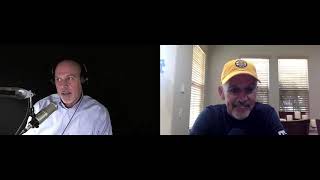
Leo Bottari and Randy Cantrell discuss starting and running a podcast. They emphasize finding your purpose first, not chasing money, and building a network of quality guests rather than chasing famous names. They stress that who you surround yourself with matters for the show's success.
Chapters
Welcome to our new show, What Anyone Can Do Podcast with Leo Bottari and me, Randy Cantrell. Our new show picks up where the last show, Year of the Peer, left off, highlighting the simple truth that who you surround yourself with matters, and that if we enlist the support of others, give back to those who give to us, and pay it forward for the next generation, we can do anything. Author and keynote speaker Leo Bottari and I will interview a diverse group of thought leaders who will share stories and insights that will help you succeed in business, and in life. How? By doing the things anyone can do, but most of us never will. Welcome back to another episode of What Anyone Can Do, the podcast. He is Leo Bottari. My name is Randy Cantrell. It's the last dawning of the Bruins hat, but he is a— pardon the pun— but he is a true, true blue fan, even in the loss. Condolences.
Well, you know, so for those of you, of course, you'll be listening to this basically exactly one week after the Bruins lost to the Blues in Game 7 of the Stanley Cup Finals. And yeah, it was rough. It was a hard game to watch because of, you know, everything this season at times where the Bruins were so dominant. To watch the first period last night, have the Blues get only 4 shots on goal but yet score 2 goals. I mean, things like that, you know, and everything was just a little off all night. For the Bruins. Every pass, every shot, everything was just— it was painful, you know. But, but, you know, you feel, you know, it was a great series. I mean, it was a great series in two, you know, I think in some respects very much the same but very different styles of play. You watched how each of these teams were very much back and forth in terms of how to combat the the strengths of one, you know, versus the other. And it was great stuff. And you could really feel it, you know, and it obviously would have been the same for the Blues players had it gone the other way. But you could really feel the devastation, you know, of the reality of the season being over and knowing that, hey, we had this opportunity to win the Stanley Cup at home, Game 7, which is never— the Bruins have never done, by the way. But, you know, let's face it, for the Blues, they've never won a Stanley Cup ever. So for them, it's a great thing for that city. Hats off to the team, you know.
Yeah.
You know, but, you know, you got to wear the hat the day after just because they lost. I'm still as much a Bruins fan today as I was the day before. And yeah, so we'll get into next season. You know, our team looks really good in terms of who's coming back. And, you know, it'll be good stuff.
You know, just heartbreaking, but it just kind of shows you the razor-thin margin, you know, between victory and defeat. Uh, in spite of that score, you know, you and I were talking before we hit record and here I am in Dallas and we're recording this the day after the morning after. So today is, we're recording this Thursday, June 13th, but you know, the Blues eliminated the Stars. Game 7 overtime, right? And the Stars had multiple chances to score and it just didn't break their way. And next thing you know, it's in the back of their net and they're eliminated and they go home. And but the St. Louis story is pretty terrific, you know, going from worst in the league in the first week of January to winning the Cup is just— in any sport is a remarkable thing. To even have made the playoffs would have been probably statistically Absolutely. Strange.
No question about it. So, um, and to switch gears a little bit, because it's funny, as you, as you know, I was, um, you know, a panelist at the, uh, C-Suite Network Thought Summit in San Francisco yesterday. Jeffrey Hazlett and his whole team, they run a wonderful event. It was multi-days. Uh, I just was up there for the one day, um, serving on the panel about podcasting actually yesterday. So we'll, we'll, we'll get into that a little bit. But, um, you know, the, the event itself was great, but what was funny was after my panel was over, I realized that I was on a 5:40 flight and I'm like, well, that wasn't going to cut it. So there was a 4:05 flight. Um, so I was trying to get to the airport fast just to make the 4:05 flight, which by the way I did. So that way, by the time I got to the airport in San Diego, I was listening, to see the end of the first period, pretty much. Well, not great. Cause it was 0-0. And at the end of the first period, I'm watching like 2 goals for St. Louis. And I'm like, oh, this is bad. So then I got in my car and I was able to, uh, you know, get to a place and, and, and watch the rest of the game. And turned out the 5:40 flight that I was supposed to have been on never left at 5:40. I left hours later. You know, I just, this would have been, watching it. No.
So that was—
so it worked out great. Yeah, it worked out really well. But one of the things I thought would be interesting today was I wanted to extend this, um, panel discussion, if you will, uh, to our podcast and talk about podcasts. So today will be the podcast on podcasting. Uh, and the reason was because it was so evident yesterday that people are listening to podcasts, wanting to have their own podcasts because they understand this concept that who you surround yourself with matters. They use it to learn from other people. They use it to build relationships. Um, they use it for, um, to build their business. There's so many things that you get to do when you can engage people in this format. And so there were a lot of questions that came my way yesterday that I'd love to get your thoughts on. Obviously your name was invoked several times and they were asked, so Leo, how did you get all this started? And I said, well, I didn't really get all this all started much at all. And I talked about how, you know, you very much, um, you know, invited me into that process and that, um, I joked and said that you've been actually podcasting for as long as there's been, you know, fire basically. And that, uh, so you had all the experience and hazards of being old. Yeah. Well, I've been, you know, the real beneficiary of that and we both had a lot of fun with it. But, um, but you know, there were some great questions that came up yesterday. That. And of course, Jeffrey was saying, hey, where's Randy? We would love to have him up on this panel, you know, and, uh, which it would have been great, but I figure our way of, of doing that maybe to talk about some of the few questions that, uh, sure were asked yesterday, which was great fun. But, you know, one of them that came up, well, just a basic one. So if you're— if there's someone out there who may be interested in starting a podcast, what would that look like for them? What would they do? What are the things they should be thinking about when it comes to, hey, I want to have my own show? What does, what does that look like? And by the way, someone had suggested that there was some fairly high percentage of people who get into podcasting that don't go any more than 4 shows and then it's over. But, but, um, I, I, for us, I know that we, um, got away from that because we declared so publicly and so forcefully that we were doing 50 shows at least, right? For a year, we had all the guests lined up and we did, or most of them anyway, early on. So that kind of at least helped us get through that wall. But, but I think for, for those folks out here who may be thinking, hey, I'd like to do, I can do what Leo and Randy are doing, or I can do what any of these other folks who have their own shows are doing. So what, How would they go about that?
You know, I think the Simon Sinek question is probably the question of the hour with regard to that. And that's why, why do you want to do this? You know, it's like any other thing. People want to jump on a bandwagon. They see other people doing it. People get especially enamored with monetizing a podcast, which is ridiculously difficult. You and I don't monetize this podcast in the sense that we're not really asking our audience to buy anything from us. Not that there's anything wrong with that. Not that we won't someday do that, but I guess I would pull back the curtain a little bit and just use, use this podcast as a case study, especially Year of the Pier when we first started 2, 3 years ago, whatever it was. Leo had co-written a book with Leon Shapiro called Year of the Pier. I was very interested in this topic. I had never, as a person leading companies, I had never participated in such a thing as a peer group made up of CEOs or business owners. And I was fascinated by it. So I reached out to Leo. I had been doing podcasting for me was mostly, I guess if it had a business angle, it would be lead generation, but Boy, not really even that. For me, it was more just to put myself out there so somebody could click play and within a few minutes they could get some sense of who I am. And very quickly they could decide, I kind of like this guy, or they could decide, I don't like this guy at all. And either way, my viewpoint as a business person and a podcaster, I win. The quicker we get to the fact that I'm not your cup of tea or that I am your— we both win. Saves us both a lot of time. Because I had the background in it and the interest in it, the interest in the topic, and I had the knowledge of the technology of how to do this, I reached out to Leo. He graciously accepted. I leaned on him a little bit and told him, I'm not looking for anything. I just, I like, I like this space. I like what you're doing. I like the book. I want to learn more. For me, my why to reach out to you was, I stated it up front in our very first conversation, I like this space. I want to know more. I got no, I've never participated in this. I want to know what you know. And if you recall, I used the phrase guilt by association. You know, the most I want from this is just guilt by association. So we were both very transparent and open, which I think is important to anybody starting a podcast. You know, come, come up to be able to honestly answer, why do you want to do this? And I will go ahead and tell you upfront, if the answer is, well, I want to make money, I don't like that answer. You're free to have that answer if that is your answer. And if that's what you want to do, great, power to you. But we're all publishers and we're all distributing our content. We've got the ability to do that. Um, in spite of the fact you've written a book and it's got its own distribution, but your message by way of YouTube and podcasts and Stitcher and C-suite and all these other platforms where you can put your message out is ridiculously powerful. I would say for the person starting, just really get clear as to why you want to do it. And if you are at the focal point of that, if it's all about you, tap the brakes and step back because an audience of one with you being the audience, It's fine if you just want to document stuff, uh, but it's, it's probably not something that you're going to stick with. And there's an awful lot of people that just want to hear their head rattle and they just want to contribute to the noise. I just— it's a poor decision in my— I think you could spend your time elsewhere if you're going to be that mercenary about it. There's a lot of better ways, in my opinion, that take a lot less effort.
You know, I think for a lot of the people yesterday, they were— the podcast isn't obviously the only thing they might want to be doing, right? So they're looking at it as a brand play. Like, how do I bring identity and emotion to what's in the written word, right? And how do I, how do I put myself in front of people without having to fly there and be there and all of that and extend the reach for it in that way. But I also think to the point, And I did raise this yesterday that for us, obviously from the very beginning, and I joked with them about it yesterday, I said, we didn't get into this for the money. And it's like a really good thing, you know, because that wasn't what— but what I did say though, was all the other currencies that you get, the people we've met, the relationships that we've created now, the things that we've learned, what it's like when, You know, I'll be somewhere and someone says, hey, I heard your podcast a couple of weeks ago and this is what I got. This is what I'm doing now because of it, or this inspired me to do this or that. It doesn't get any better than that. Right? I mean, that is so, yeah. Um, that is payment, you know, in a really big way. And, and again, we learned so much from the people on the show. I mean, think about how lucky we are to have people like Jim Kuzas or Rich Karlgaard or Linda Darling-Hammond or, We've had a whole host of folks. We had Paul Michelman on the show from MIT Sloan Management Review. I mean, you can go on and on and on with, and many of whom had really some incredible messages that have really stuck with us and been now part of our lexicon. Think about Angela Meyers and the whole notion of mattering and what that looks like. And to be fair, Laura Goodrich.
And to be fair, Not everybody who starts podcasts is going to get those people. And I'm not saying that to blow smoke up our skirt, but the truth is, you know, Joe Schmo can start a podcast and you're probably not going to get those kinds of people. That doesn't mean that you can't have a great podcast and have meaningful conversation. But for us, it's, it's allowed Leo, because he's a published author with two books now, to broaden the platform, expand the message, expand the dialogue, expand the people that are contributing to the conversation. So yeah, to your point, the people, the people matter.
Well, that came up yesterday regarding guests, right? Like, how do you get these great guests, you know? And people asked it of, you know, a lot of people in the panel. And, and I think, you know, we all have probably a network of our own that could be tight. Maybe you know 1 or 2 or 3 people, or you know 1 or 2 or 3 people that know someone who might be able to be a guest. You start putting a few good guests together and then it becomes a heck of a lot easier when they— when— because people want to know, right? We're known by the company we keep. If I'm— if someone's going to be in a panel, someone's going to be a podcast member, who else has been doing that? And the more— this is the power of peers, right? The more that we can show, hey, um, Jim Kuzas has been on the show and, you know, Rich Karlgaard's been on the show and JJ Ramberg's been on the show, and, you know, now all of a sudden it's like Okay. Yeah. I want to play in that space with that level of dialogue and know that I'm associated with that quality level of people, both in the business and academic space. And, and from our standpoint, and that's where it helped us, right? Especially early on when the commitment was, all right, we're going to get 50 great guests. Well, the hell, I mean, I didn't know 50 amazing people when we started. It was like, let's hope that we can start with whatever nucleus and And then build on that.
Yeah, and we had a list that was much, much longer than that. I mean, by the time that we were done—
Oh, by the time we were done?
Oh yeah, we still spreadsheet. Yeah, I mean, there's interesting people that pop up on our radar all the time, constantly. For us, I think the context of the conversation really mattered. This podcast was never started and it was never intended to just be a platform where authors or big-name people could come in and hawk their stuff.
Right.
Yes, we absolutely do hawk their stuff.
Yeah.
Uh, but it was all, especially Year of the Peer, and even, even this version of it, the What Anyone Can Do, it's, it's still very centered around the theme. And I tell people regularly, it still is your tagline, which is a brilliant tagline. Who you surround yourself with matters. All of our conversations come right back to to that fundamental premise. And so for us, it's not kind of— it's not a celebrity author interview show. It's dialogue that always comes back to that theme and what our guests, how they feel about that, what their experiences have been with that, how other people have impacted their life. And I think that's important for our show, at least.
No question about that. In fact, the other, I would say, twist I would give to this idea of— in other words, I think it's easier if we were to come to guests that we wanted on the show and basically promise them we'll hawk, hawk your stuff in order to get you on the show. And then at that point we find out, all right, what is their stuff? And we start looking at it, right? I mean, it's completely the opposite for us. We look at, you know, someone had brought up yesterday, you know, you know, when hosts are prepared or not, when you've got a host who someone's coming on and they wrote a new book and they go, well, tell us about your book. Cause they don't know anything about it. Right. I mean, zero. They just know they've got one.
They just know they've got one and they're on, because of that.
Well, chances are good that we've read the whole book or we've been through it in enough detail where we're intrigued by the content. We understand the connection. And then our play to the, to the guest is, hey, you've got a great new book out and it's great content and it really connects with what we do and what our audience is about. Would you like to be on the show? And so it's, it's very much, mutual benefit from that standpoint, but it is the content/guest is very much vetted ahead of time in terms of the substance of what they're bringing versus just their name and they're showing up. And so that's been, I think, a real difference. And I'd like to think that that makes a difference, certainly in the show and the questions we ask.
And then, well, and again, it goes to the why, it goes to the why we started. That's why we started it. We started Year of the Peer about that tagline, "Who you surround yourself with matters," to collect the stories, to have dialogue and conversation, which I think is an equally important distinction. There are a bunch of interview shows, nothing wrong with interview shows. It's fine. It's wonderful. But it's intentionally how we chose not to roll. And that first year I wasn't on, I was behind the scenes. Leo graciously, we got to the fall of whatever that year was. And he said, Yeah, next year you need to do this with me. But again, that was congruent with our why. The why was this needs to be a conversation. Leo was very gracious and invited me, and I was thrilled at the offer to just, let's make this more collaborative. Let's make this a three-way dialogue conversation, which hopefully the shows are. Yes, we do ask questions. We want to provoke, you know, some good thoughtful answers from the guests, but It's very much a dialogue.
That's true. And also a perfect example today in that we don't always have a guest, you know, and I think that was really very much, you know, at your insistence that, you know what, let's, let's bring on some great guests. Let's, you know, we're going to have Brian Solis on pretty soon. We're going to get that together. His new book, Life Scale, for example, I think is phenomenal. And inviting him on the show is very much about that. And about the relevance of that, um, you know, to our audience. But, um, you know, um, but the idea that we can talk and kind of riff, if you will, on a lot of things around this topic of who you surround yourself matters and can do so in a way that speaks to timely events oftentimes, right? Um, you know, yesterday being at the Thought Summit and, and the idea that, I could get the questions I got yesterday and then we could bring that forward and extend that conversation ourselves, uh, is great. And by the way, the panelists, um, that were on with me yesterday were all amazing. And what I want to do is make sure that when we're— we do the show notes for this, that we will give the name of the other panelists with a link to their podcast so that, uh, people can get a sense of what they're doing and be exposed to a lot of their content, because I think that would be— that'd just be really terrific. You know, always a learning experience when you do those kinds of things. And, you know, it's easy to get focused on what am I going to say and how am I going to ask questions. And I was more fascinated with everyone else talking about it.
Right.
It was good stuff.
You know, that move, that move that you just made of us putting links in the show notes to these people's shows is very much this word of mouth, spreading the conversation, discovering things. I'm a big music fan. So if I go on iTunes and I'm one of these old fuddy-duddies, I happen to believe in buying music, uh, even digitally, but I was an old vinyl guy for a long time, you know, and then there's recommended artists. If you like this artist, you may like this one. It's the same thing. You go to Amazon Right. And so some of this is our ability, in spite of the fact that people can think, well, it's, it's, it's too promotion. You know, I would, I would ask you to consider people that may be so cynical as to think it's all just a bunch of hawking. There's also some really valid sharing. I mean, you and I have guests have mentioned other people. We had no idea who these people were. Right. I could think of an example, but I'm not going to give one. But there have been some, some big-time people who have said, have you talked to so-and-so? Or they've mentioned a name in the course of the conversation, you know, and I'm sitting here writing this down. Or they mention a book. I mean, some of the best stuff that I've ever had in life came very indirectly like that. So the conversations are valuable.
I think the way that you described it, we don't hock things, but we do very much share, you know, and enthusiastically share things that we think are really good, that we think, you know, boy, if everyone could see this and read it and we can do our part in extending the reach of that, no question about it, guilty, you know. One of the questions though, I want to pivot a little bit, that I got yesterday that was fun. I want to get your thoughts on this first, but they had asked, yesterday. Greg Greenberg was actually the host of the panel. He's a great guy. So one of the things he asked everyone was, what is the perfect podcast? You know, in your mind, if you could either conjure it up or if you've ever had a podcast, which in your mind, I'm asking you personally, and since don't limit it to this show necessarily, but, But I won't be that self-serving. No, no, no. But I'm no, I mean for yourself, but I mean for yourself, I mean, because you've done your own podcast, you've got Grow Great, you've got all these things that you've done. So I guess what I'm saying is how would you define the perfect podcast? And do you think there's a particular podcast that you've participated in that is about as close to that as, you know, just something you're really proud of in that way?
You know, I think it's so individual. I don't know. I mean, there clearly is no answer. To it. There's whatever somebody individually feels is perfect. But for me, as a longtime podcaster, and I've been doing it since it began and even got a title, got a name by Apple, um, I mean, pick the topic, and as crazy and as wild and as nichey a topic as you can think Somebody's doing a podcast on it. There's a topic that may be resonating with mere hundreds of people around the globe, but they're into it. You know, there are a lot of people that are into things that I'm like, I don't get it. I love Civil War and I love history and, and all that history and stuff. But then there's these, there's this whole Civil War reenactment community. I know nothing about that community, but I have run across some people who are very into that, you know, and, and that, that's not the niche-est of the niche. You know, the perfect podcast is, as a consumer of podcasts, I think would be whatever your current interest is. To me, it's no different than YouTube. People now go to YouTube. I don't care what you have, if you've got any kind of a fix that you need in your house or your car, You know, anything that's kind of DIY, you're going to YouTube. You know, you may not subscribe to that channel. You just, you need it. You need it for this one chunk of information. Um, you know, there's all kinds of categories. I will listen to some podcasts that are very business oriented. I will listen to others that are fiction, not much. But I just kind of listened for the storytelling, you know, that NPR style storytelling kind of a thing. My best answer would probably be, at least right now here on the spot, would be the perfect podcast is, is the one that you're most interested in, that you find value in. And I would say if you're going to be a producer, that's why your why had better include other people, namely the people that are willing to click play. Hit subscribe, give you their time and attention. And I think that's where people get it so wrong. If you can't get their time and attention, you're not going to get their money.
Well, I can tell you that yesterday, in terms of what I talked about, and it wasn't so much perfection, I think from the way I was thinking about it is so much as what do we strive for? You know, we certainly strive for giving value to the audience. We hope that in addition to some substance, they can, they can smile, you know, that it's kind of fun, it's enjoyable for them, that it is much more of them eavesdropping on a conversation than feeling as if they are an audience for a formal interview. And I also think when they can learn something not only about the content but about the guest, that is a little bit of a window into who they are that they may not have gotten elsewhere. You're not going to get it from a formal bio, you're not going to get it from an a typical stilted interview that is asked, you know, that is done of them, but just a little something. I mean, how many times have we had a guest where they'll bring up something and because we're not all scripted with a big list of interview questions, we're like, huh, talk more about that.
Right. Exactly.
And then you can kind of extract these kinds of things that are, that, that are things that are really interesting about that guest and who they are. And that's where it is so much fun. And I'm not sure it becomes perfect in that way, but I think those are the kinds of things that I talked about that I think we shoot for in terms of doing this, right?
Oh, sure. Yeah, absolutely. Well, to my point of either love me or you hate me, and the sooner we find that out, we both win. That works, that works for you and, and me as well. And we are completely different people, as people can tell just by the accents. You know, I'm here in Dallas, Texas. I'm an Oklahoma, Louisiana, Texas guy. You know, Mr. Boston there is in Southern Cal. Um, you know, Leo's highly educated. I'm grossly undereducated as you can tell, but formal education, but, but people, but people can within, within just seconds of listening. And because we do it on video too, which I highly recommend when you're having these kinds of conversations, the ability to see each other's face and your facial expressions makes a big, makes a big difference. Even if you were just doing a podcast that was going to be audio only, but you were going to interview people, you just, you got to do it on video.
Just fun. Yeah.
Just for the value of the conversation. But yeah, I think you're exactly right. I think for us, I think Listen, we haven't hit our ideal, but that's the whole object of this game. We're trying to get better. We're hopefully better today than when we started, and hopefully a year from now, Lord willing, we're still doing this, we'll be better still. I think to think about the audience, we're always thinking about the audience, but we're so engaged in the conversation with the guest. You're exactly right. For us, it's just you've clicked play on something and you're eavesdropping and you've dropped into this conversation that you're now in the booth behind us while we're having this conversation and you're listening.
Well, this particular show, of course, reminds me of Kramer's coffee table book about coffee tables, right? Because our podcast about podcasts and— but, you know, I think a real shout out to Jeffrey Hayslett and his whole team at C-Suite Network, C-Suite Radio, they've got the Hero Club, they've got so many things going on right there to support a community. And what I love about the community, and I am going to pitch this a little bit, not because I'm trying to hawk C-Suite, but because it's an incredible example of something that's been started that's been all about giving. If you come to Jeffrey, for example, he even mentioned it yesterday, and it becomes all about you in terms of why you want I don't want to be in this. Well, that's— then this whole thing isn't for you then, because this is a giving community and it's very much about that. And it's been really exciting for me to be— and you also, you know, to be involved with it and to, you know, experience that and to watch other people do well because so many people want to do good. And, uh, it's been, um, you know, it's been really terrific. It's been, um, Great to be able to just, you know, following the Thought Summit yesterday to kind of extend the panel discussion to maybe a broader audience today through this podcast to talk about that. Again, another shout out to my fellow panelists yesterday who, you know, we will list and we want you to get a sense of who they are and what their shows are about. You know, it's just—
and I'll give a shout out to this, the new platform. The new— if you— if, if it's been some time since you visited C-Suite Network, uh, and you can just— I'll put links in the show notes, but you can just Google C-Suite Network and, and it'll be the first thing that pops up. But the platform is infinitely better than it was just mere months ago. It's, it's very clean. It's, it's very easy. To navigate. Uh, the shows list all of the episodes from the most recent at the top. Uh, and, and Jeffrey and all the, even the support people would tell you that they realized that platform was clunky some time ago. So if you haven't given it a shot, go back because it's night and day difference today. So shout out to them for that.
But they've done such a good job of, too, of moving forward You know, it's like anything, you know, we don't have to wait till things are perfect before we move forward and before we can give and add value. And they've done that and they've continued to improve things along the way. And that's been, I think, a great lesson for a lot of people. You know, they do that really, really well. And think about, we were probably certainly not by any means the first shows, but among the early shows certainly on C-Suite Radio. But look at the number of shows that have got today and the number of people who recognize the power of that platform, largely because of who we're talking to, right? People will ask about, well, who listens to your podcast? And it's like, well, the people who want to listen to our podcast, right? If we were doing a podcast on plumbing supplies, then we would attract people who have an interest in that topic, right? Where we talk about peer groups and teams and groups and leaders and CEOs, those are the people that are attracted to this show. And it's really who we want to speak to in the hope that they take a little something from every one of these shows and can bring it forward in their own lives and in the lives of their groups and teams. And if they can do that, that's all of the— that's all the currency, you know, that we need, I think, with this.
Yeah, well, and they— come on, network's in the name. I mean, that's, that's a big part of it. It exposes you to people. I mean, the people that you The people that you were in panels with yesterday, did you know any of those people before?
Nope.
Had you ever met any of them before?
Yeah.
Yeah. So there's that.
That's right. And now I have all these and, and I had, um, uh, one person reach out already and asked me to be on their show. So, and, um, and it would be really interesting. Who knows, maybe we use Circles platform or recreate, we recreate the, the whole panel and we get everybody on. And we have some fun with Dan Hoffman facilitating that. There's a lot of fun things that we can do and a lot of things that this—
Well, this is a good time to ask the audience, you know, I mean, give us your feedback, right? You know, we're thick-skinned. We know we're not perfect. We know the show isn't perfect. This is done in video. It's not edited. I realized that the purists would say, well, you guys are crazy. You should edit. We don't edit. We're business guys. We got lives to live. If you, if you can't overcome a few foibles of Argus, you know, Leo's dog walking down the street, then, you know, build a bridge and get over it. Come on. Don't take yourself that seriously, but we're trying to get, we're trying to get better. So here's the other thing though about podcasts. This will be my last kind of pulpit moment. You've got to do the show. So you've got to be happy with it. You know, so if Leo and I decided, well, we're just going to make this the most mercenary thing that we can make it, the odds of us sticking with it would be slim and none. We're able to come back and do this and be excited about it because we both are immersed in the topic. We love the topic. We are both preachers and evangelists for the topic of our ability to learn together and grow together and encourage one another These are big topics for us, and we could talk about these all day long without getting tired. So that's important for those that might be interested in starting. But we, yeah, we absolutely need your feedback. How can we make the show better? Uh, what, what, what would you like to see us change or improve? No promises that we'll do it other than the promise we'll listen, seriously consider it. It's, it's, it needs to be audience-driven enough because if we want to expand this message, we want the word to get out. So we want the message to resonate and however we can better make it resonate. That's good feedback for us.
Sounds great. Hey, well, with that, uh, thanks again for, um, you know, the podcast about podcasting today. Uh, fun.
Uh, I'm sorry, you're not going to get to have a parade. In Boston.
But, you know, but, you know, great, great season. Congratulations to the Blues, and we're excited about next year. So there we go. It's not— we've been very, very blessed in the last couple decades with the number of championships that have come to Boston.
So yeah, I can tell you, people in Dallas were not, were not real happy that— that was it, Dennis Leary that did the, did the promotion. He said, you know, come on Bruins. He said, it's been 4 months since we've been able to have a parade, you know, and Dallas is like, oh man, 4 months. It's been a great run. It's been a great— well, they ain't over yet.
All right.
Well, um, leobottari.com, L-E-O-B-O-T-T-A-R-Y.com. Use that contact form and you can send us your information and buy Leo's book. I'll hawk that.
Excellent. All right. Have a great day.
You too. To learn more about our show and what we do, to submit questions to us, and to subscribe to What Anyone Can What Anyone Can Do Podcast, please visit our website, whatanyonecandodo.com. What Anyone Can Do Podcast is hosted by Leo Battaglia and me, Randy Cantrell. Music provided by Kevin MacLeod is Vibe Ace, licensed under Creative Commons by Attribution 3.0 license. Thanks for watching or listening. We hope you'll share the podcast.










