What Anyone Can Do: Leo & Randy On Friends And Family
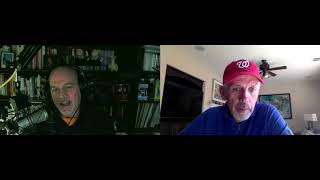
Leo Battari and Randy Cantrell discuss how the people around us shape who we become, weaving together stories from Leo's wedding, Randy's 83-year-old mentor, and the 2023 Nationals comeback. They argue that trust, authenticity, and intergenerational relationships are what actually matter.
Chapters
Welcome to the What Anyone Can Do podcast with Leo Battari and me, Randy Cantrell. This show picks up where our previous show, You're the Peer, left off, highlighting the simple truth that who you surround yourself with matters, and that if we enlist the support of others, give back to those who give to us, and pay it forward for the next generation, we can do anything. Author and keynote speaker Leo Battari and I talk with a diverse group of thought leaders who will share stories and insights that will help you succeed in business and in life.
How?
By doing the things anyone can do, but most of us never will.
You're listening and watching.
Hopefully you're watching.
You can catch us at leobattari.com or at YouTube. Another episode of What Anyone Can Do, leobattari.com. My name is Randy Cantrell from Dallas-Fort Worth, Texas, where we were mostly rooting for the Nationals. And he absolutely is rooting for the Nationals. He's the star of the show, Leo Battari, in Southern California, but, uh, has interest in Washington, DC.
Well, my daughter's lived there for over a decade. I went to GW. We've been to many Nationals games together. It's a lot of fun. I've been there during times where they, they were definitely thought they were going to do really well only to kind of fail, which I know that whole arc really well having grown up a Red Sox fan, so I get it. And, you know, but to see a team so unlikely, right? This is a team that had a losing record what, 40, 50 games into the season. I mean, they were, you know, I mean, and a losing record by a lot. So to come back, just make the playoffs, and in fact, you know, beat two teams that, you know, everyone was thinking this was going to be a matchup for the, you know, Astros and the Dodgers. Quite frankly, I mean, as, you know, tough as the Yankees always are, as much as I hate to admit that being a Red Sox fan, but I think still everyone was kind of looking at the Astros and that team and the Dodgers and for that to— their pathway to winning the World Series was having to beat both of those teams is pretty remarkable. And you know, as we talked about too last night, obviously Houston got out to an early lead and yet the Nationals were able to just keep it close. Times where Houston could have broke it open a little bit and widened that lead and they didn't, I thought to myself, man, Nationals are absolutely in this ballgame as that goes, as you get into, you know, the middle and late relievers and a lot of things change. And so that's how they won most of those games though, man.
I mean, back in like the 7th and 8th innings, and they didn't let it get out of hand and they stayed around.
And, you know, it was an amazing thing to watch.
They were saying how many Cy Young winners beat just, you know, all through the playoffs. I mean, it was just one stud pitcher after another.
Well, I think it was the only Game 7 in World Series history where you had the two starters were both Cy Young Award winners.
Yeah.
You know, and also the first series, not only just in Major League Baseball but in the NHL or in the NBA, where in the 7-game series, not one home game was one, which is like—
That to me was the remarkable thing. You kept thinking, okay, surely one of them is going to do it at home.
But I would think it would have been particularly difficult for the Nationals fans, right? So you win 2 in Houston, you've got to be thinking, all right, we got to win one at home. We get swept at home. And almost you wonder, the team you watch on TV and the team you see in person aren't even the same guys, right? It's just incredible to me. And does it feel like after Houston comes to your park and whips you 3 games in a row and it's like, now you don't get to win the World Series, we do.
No, it was— and I'm a non-baseball guy for the most part. I'm a hockey guy. But man, it was really compelling though. Nerve-wracking.
Well, and I think as we were talking about this, and baseball is such a— Certainly in Fenway, and I think in Boston and for a lot of places around, you think about going to your first ballgame with your dad or your uncle or your grandfather or your grandmother or, you know, whomever may have taken you, your mom taking you to a game, and knowing what that experience was all about, never forgetting it, wanting to kind of pass that experience on to your kids and all. And I think baseball in this series is kind of a fitting reminder that, you know, since we— since What Anyone Can Do, the book, came out and a lot of what we've been talking about, in some respects we haven't hit squarely on the difference between that book and the first one, right? The Power of Peers was all about formal peer groups for CEOs and business leaders, you know, strictly peers, strictly formal situation and all that. And As you well know, the incredible guests we had on the Year of the Peer podcast, the conversation just continually returned to the informality, right? The people that just surround us every day. It isn't about going to a meeting once a month. It's just how you engage the people around you, but beyond just your peers. It was that whole circle. It was our parents, our teachers, our kids, our mentors, our mentees, and this whole ensemble of people that make up those who can really make a big difference in our lives. And so I think it's kind of fun today after the World Series and after what I think can be such a family affair. And after, of course, you know, for those listeners who don't know it, I actually got married last weekend in Cabo to, you know, not only an incredible woman, but it was the bringing together of two families that was so remarkable. To watch everyone and everything they did together and how they went off and all did their own stuff together. And now they've got their own texting group chat now that's totally not just— there's no my family, her family anymore. It's an our thing. And everyone's so thrilled. In fact, Diane's son said to me, it's incredible to actually be like 30 years old and getting new family members. And of course, I look at him and I say, tell me about it. Right? So the same is true. For me, but I think it's really exciting and I think speaks to this whole idea of who you surround yourself with matters and the difference it could make. Actually, my dad was my best man, and how fun that was, you know, for the two of us really. You know, as you might recall, and anyone who's looked at the book would know, there's a book I share about him. In fact, my license plate, the What Anyone Can Do, W-A-C-D-1-2-3, it isn't really 123 123 so much as it's 123. It's the page in the book where I tell the story about him being a police officer and he's leaving the Boston police force after what, it was like 10, 12 years. And he was actually kind of just pursuing a career. He was going into the insurance business until he was kind of involved in that process. You know, wins a pro-am with this guy. They're going out, they were having drinks and dinner one night and He says to my dad, what are you going into the insurance business for? I said, what are you doing that? He said, you love golf. You want to play. So why don't you go and be a golf pro and be a teaching pro and go do that. And my dad's looking at that at first saying, man, you know, it's like he was almost 40 years old at the time. And that's something that kids do in their 20s basically is to go through all of those schools and every little, the protocols involved in being a class A PGA professional. But the idea that he, And he said, you know what? I think you're right. I think I'm going to go do that. And basically does. Takes him over 4 years to do. Gets his Class A PGA card and taught for over 30 years. Right? Think about it. So now he's 80. He's retired from doing it now, but just an incredible thing. And I think a wonderful— I mean, I'm sure, and I really want to hear some, obviously, so do our listeners, want to hear some examples from you about just times where our family, oftentimes by example, showed us things that were incredible lifelong lessons that they were like, wow, you know, just shows you that if you're ever, no matter what stage in life, and I think Rich Karlgaard really, I think, speaks to that in Late Bloomers, right? Where it's about, hey, you know, if you want to go do it, go do it. And it doesn't matter how old you are or any of that. Now, clearly, you know, I'm 60, so if I wanted to do— like, I play golf now, but if I didn't but wanted to take up the sport, I'm not going to go on the PGA Tour, but I could hopefully— you can take it up at this age in my life and get good enough to enjoy it, or whatever that may be for you. But anyway, you know, the power of one voice like that.
I mean, had your dad's Buddy not suggested that. Maybe nobody would have suggested that.
No, no one would have suggested that.
And then he would— he'd have been stuck in the insurance game.
Yeah, maybe not. Maybe that wouldn't have lasted long and he'd have gone on to try something else. Who knows? But, um, you know, you never know. I just think it's always fascinating when we talk about sometimes something that we think we want, or we think, and then all of a sudden there's a no. Um, and, and we understand now all too well, the older you get, that all that no did was free you up to do the thing that you got to do afterwards that you never would have had the opportunity to do had that been a yes. And, um, but, um, you know, I think in terms of, you know, think about yourself in terms of growing up. I mean, as far as whether it was a teacher or a parent or somebody who you kind of felt had an incredible influence for you in your life?
I, you know, and I think we talked in that last show that we did about— I've got an 83-year-old mentor in Springfield, Missouri, and I went last week, spent a couple of days with he and his wife and visited with him. And he's in failing health, and he knows the end is probably sooner than later. But we had a great visit, and this is a a guy that's known me since I was born. My parents knew him when he was probably 15 or 16. You know, my mom is 87, my dad is 96. I got back today from visiting with them. And, uh, you know, and they're, they're in good health, uh, obviously getting older, but that, that's, that's where my head goes these days. And I'm a couple of years ahead of you. I just think of the, the people that are 15 to 20 years older that I have intentionally surrounded myself with. As people that could kind of say, hey, when you get here to this crossroads, watch your step, kind of people for me. And the sad thing is, as you get older, will you outlive them? You outlive them. You don't expect to necessarily outlive your peers, but conversations that I have with my dad, who's now 96, you know, he's, he's largely mostly has outlived his not just mentors peers. And all it does for me is compel me. And I guess I would, I would encourage anybody listening to us or watching us take advantage. You just got to take advantage of that. Now, I don't care where you're at on the timeline of life, like you and your family and this, you know, this, this pivotal moment in y'all's life of getting married and your dad standing next to you. Who's 80. I mean, you're seizing those moments. And I think too frequently we just, we may neglect these people that are around us. I was having a conversation with my father about these times when all of this experience and all of this knowledge and all of this wisdom and all of these insights, and too infrequently we don't lean on it. Which is why I really love Rich Karlgaard's book and that, that whole notion of late bloomers, of just us. It's not a matter of people judging and people saying, well, you should do this, you should do that. It's just a matter of the insights that some of these older heads can provide. I mean, your, your dad's got, your dad's got 20 years on you.
Yeah.
And that 20 years is a, that's a That's a, that's a big delta difference, you know, what you've seen. And, um, I don't know, I just, my head goes to my ability to try to leverage as much of that, as much of that as a resource as I possibly can, you know, for my own benefit and for the benefit. My son is 39 and to benefit him, you know, to just keep on passing this stuff passing this stuff down.
Yeah. What's also interesting and what I really loved was, you know, I mentioned about watching quote the kids, right? They're in their 30s and 20s. But, um, you know, this idea of our peers and our mentors and all that, our mentors can certainly be people younger than we are, you know, as well. When I think about all of those young people today who— and those who were at the wedding, certainly— who were shaped by a world and by a completely different set of circumstances growing up than you or I were. So the lens that they look at everything— I don't care if it's politics or business or their own lives or family, friends, whatever it happens to be— is really worth understanding. And the only way to understand it is to really have conversations with them about it, to spend time with them, to get to get a sense of what has shaped their values and how they see the world and how they think about it. It's the only way it'll keep us relevant and fresh and current and understanding and not be speaking to, you know, a world that, you know, was shaped by gun smoke, for example, but a world that was shaped by, you know, something a little more contemporary with regard to any things like that.
So yeah, oh, I agree.
I—
the conversations that, that I've had in the last month or so with regard to, to friends and family, I think so many people— it's, it's kind of interesting to me how many people are motivated by things that happened in their family and things that go back to pretty early childhood, you know, 10, 11, 12 years old. And no, they're not all positive, right? They're absolutely not all positive. But it still is amazing the drivers that some of those things are, you know, for, for a grown man who's a CEO but whose mother was super critical the whole time growing up, and just how driven he is today at my age, at your age, to— and she's been long gone, but, you know, I don't know, it's— I can't count how many conversations I've had with people who've had experiences like that and come to some realization that, okay, it wasn't ideal and it wasn't great, but it did serve me. It did serve me, and I'm leveraging it. And not that we want to surround ourselves with people like that intentionally, but there are a ton of people, all of us, who've had circumstances and people in our life, and it Okay. It hasn't been ideal.
And it brings up a great point, not only just of things that happen to us that may have been unfortunate or negative, but if they've had lingering effects on how we see the world and our behavior going forward, then that's obviously much more problematic, right? It's kind of funny. I think that, you know, when we're born, we are hardwired in a certain way. There's no doubt about that. You see kids, who out of the gate are just flat out different from their brothers and their sisters or their whatever sibling. They're at— I mean, everything is just— there's just something in the wiring that's different. Then that wiring gets shaped by experiences and circumstances and nurturing and kind of what they do. And then I think we are also challenged sometimes to unwire or to rewire some of these things work. Because we know emotionally we may have certain reactions to things, but as we've gotten older, as we've gotten more experiences, and as we have— and now we have an intellect to realize, you know what, my response to that, probably not great. So we need to— we're going to work on that. We're going to figure that out. And, and I think this is where surrounding ourselves, obviously, with people in our lives that can help us do those things can be really helpful. And you know, it comes down to, and obviously talk about it quite in the book, the better you know yourself, the better you're going to be able to surround yourself with the kind of people that can help you be the best person you can be. And when you're the best person you can be, think about the value you can bring to countless others. Um, I had a conversation with a student today where, You know, she was talking, you know, she sees herself through this lens where it was lacking a little bit of confidence and not seeing she's challenged here, here, here, and here. And I'm looking at her like, are you kidding me? Seriously? You know that you've got this, this, this, and this. Let's build on that. Then which, and the more we're able to tell that story, the more that you can be behind that story. You know, and I think people can get concerned about, things that, well, they don't have certain skills yet, or they don't have some of these things. And yet, I think what you and I, I think both have talked about and know really well, the things you can teach people, those aren't a problem. It's the things that you, you know, you can't teach someone oftentimes to have integrity or to have the kind of work ethic or all those intangibles, all that stuff that makes someone who they are, not just what they can do. And if they're smart and they're curious and they're committed, And there are all these other things. When it comes to some of the skill sets you've got to teach them, that's the easy part. You know, give me that person all day long. You know, and so it was interesting. And fortunately, at the end of the call, and it's kind of one of those moments that it was very— you know, I didn't expect it so much, but it's one of those things where you got to make a difference in someone's life in a 10 or 15-minute phone call. Just by having them see themselves just a little bit differently for a moment. And have someone else say that to them. Um, and you know, I think we all need that, you know, from time to time. I don't care who you are or what, um, position you're in, but, um, well, I don't—
there's no way that self-awareness is improved by going to some cave and meditating alone. I mean, it just— I think there's empirical evidence as well as anecdotal evidence that doesn't work. We see ourselves one way, and that's not necessarily— we have this great ability to be able to lie to ourselves. Well, better yet, we have a great ability to believe that a lie is true, especially about ourselves, which I think other people can really help us see past. I mean, your dad's friend with the golf thing, I mean, he clearly knew your dad well enough to know Well, you don't want to do that. You ought to do this.
And, and, and my dad obviously trusted him well enough to know that what he was suggesting wasn't some, you know, that it could be real, you know, he could make it happen, and that, that it is capable of being done, but also that he's capable of doing it, and trusted that enough where, you know, we talk a lot about how this exchange of information that we have from one another, it not only gives us incredible learnings, but other people is what gives us the courage to act on that learning. And that's a classic example. On the flip side of things, I'll tell a story because at the wedding it was really funny. We've got a 2-and-a-half-year-old grandchild, Nora. And Nora was going to be the flower girl. So when you think about that whole scene and whatever, she's 2 and a half, so that's not— you don't know what's going to happen, right? Nor did we care too much because it's just fun. It's just the kind of thing. And, you know, there were times I would suggest over the weekend, it was a little fussy here and there and, you know, quite wasn't paying attention, different things or whatever. But there was something about her from the beginning that I thought, this kid's a red light performer. This is going to be all about when it's showtime, it's going to be all about that. And this kid, you know, put those flowers literally up in the air with more flair and more joy and more exuberance. There was not a thing, nothing self-conscious about this, trust me, as she is coming down and doing that. And it just captivated everyone. And then she gets to the near the bottom of the stairs. This was funny. She's got the empty basket now, so she's getting used to this now. So what does she do? She gives it to her mother, gives it to my daughter Kristen. Then she goes down a couple more steps and runs into my brother's arms down on the step and says, "I did it!" And everyone is just like— it was just like cool. It set the tone for everything for the whole rest of the ceremony. This kid's 2 and a half years old, totally stole the show in many respects in the most positive of ways, was perfect, but did so just by being herself and just by being in the moment, just by feeling and experiencing and sharing, you know, joy and fun and not being self-conscious. It's everything that you and I have talked to us about.
Yeah, the challenge now is to get her to 22 and have her still be that way.
Well, that's— it's true. It's a challenge to everyone, you know. Yeah, we kind of get messed up along the way in that regard, and that's too bad. But hey, maybe, um, this next generation will be better about that.
That's right. And it's amazing how frequently all this boils down to safety though. I mean, for even for a 2-and-a-half-year-old.
Oh yeah.
You know, to just— the more that I dive into this and the more that I learn from you and the more that I learned from these conversations, trust continues to come up. But really, I have learned from you, the bedrock of all that still, it still is safety. It still is these people that we feel safe with because for whatever reason, we trust them like your dad trusted his buddy.
Yeah, it's a little bit of what people talk about in families is unconditional love. It's a little bit of, I mean, I I think we have a responsibility in terms of how we behave and how we are with our family. But at the same time, I think there's an incredible level of trust. There's a clear recognition that when you're really close to someone, you've known each other for a long time, any air that you're being perfect, that you're perfect about anything, you blew that a long time ago. So no need to pretend anymore. And which kind of brings me to, I know sometime, you know, soon, and I do want to mention this because as you know, Ryan Folan did the cartoons for What Anyone Can Do, and he and Leonard Kim have a new book that just came out. Literally just shipped like on Monday, Monday or Tuesday, I think I got it on Tuesday, and it's called Ditch the Act, and it's very much all about let's not You know, put up all the veneer and all the stuff and try to create this persona that isn't real. Let's just figure out how do we be authentic selves, almost really in the way Nora was, you know, that day, and how we can be better at that and do that. And, uh, you know, um, so obviously, um, whether it's, uh, we talk to Ryan and Leonard, or we get Ryan on the show sometime soon, I'm looking forward to— I looked at the book, fortunately, in the manuscript stage and wrote a review for it. And he's a— they're both good guys, really smart guys, but also really committed to and really attentive to this subject. And I think it's—
Ryan just needs a little bit more energy.
That's it. Yeah. That's the problem. Yeah, too reserved. Yeah, exactly, exactly, exactly.
Which is a good thing. I mean, for, you know, he's, he's, he's absolutely living—
well, exactly right.
I mean, that's proof of what he wrote about.
He, he, you know, is absolutely just, just having fun. And he's out there with, um, you know, things that don't go well just as well as he is with things that do go well, you know. And again, I think that's part of it, you Uh, it's part of why, you know, people trust those, you know, the people who, um, have read What Anyone Can Do, their favorite parts of it. And, and, you know, and I think for all the right reasons, are times where I talk about like, this happened and it didn't go well, you know, and I screwed this up, right?
You know, people resonate with that. I mean, it—
they love to know it. They love to You know, they're so sick of getting everybody's highlight reel, you know, that it's like, hey, that isn't the way anybody's life goes. It's just, you know, that kind of thing. But I will say that this weekend was a bit of a highlight reel, I will say. And it was great again because it took two families and very quickly brought them together in a way that was so extraordinary. And I don't think it's just a blip. It wasn't just an event. I think it was the start of something pretty substantial. I think there's a bunch of us that will be going to Boston in early December, for example, just for a little holiday celebration between Thanksgiving and Christmas. And a bunch of folks who are just going to run out there and show up, you know, it'll be fun.
So yeah, well, it's a, it's a new, it's a new blended family.
So yeah, yeah, I said Brady Bunch are amateurs compared to what you just did.
Yeah, that's awesome. That's awesome. Well, you've got a big, you've got a big, got a big bowl in front of you that I know is filled.
Yeah, I'm going to be— I, I have my choice, I think, would be to look at that, give this out to what will be literally in our neighborhood. This is last year, this was discovered about 350 to 400 kids. Okay, and I think I would rather do that than try to tackle this on my own. I will tell you, see, you know, who you surround yourself with matters. We need all those kids tonight because we gotta get back out of here.
Yeah, it's a lot of fun, but it sounds like, it sounds like you, you have a good time with it too.
So yeah, I, I get the projector out and I I use the garage doors as a screen where I get all this Halloween video and stuff like that, and I'll put out big Bluetooth speakers with some Halloween music and have a glass of wine, give out the candy, and it's all good. Awesome. So yeah, it'll be a fun night. The folks across the street from us have the most elaborate, like, display in front of their house. It's crazy, you know. So I step up and just do my little electric show on Halloween night. That's about it.
But, uh, well, it's excellent. It's excellent.
Yeah.
Well, I'm, uh, I'm happy. Congratulations to you both and, uh, and all of your family. It was the— I saw some of the photographs and pictures and social media. It looked like a terrific place to—
Yeah, it was funny. And in most cases, that was the first time I saw any of those images as well. There's other people just snapping and just—
Yeah, well, everybody that was tagging your name, I would see. So, you know, but man, yeah, it, it was, uh, it looked like a picturesque place to do it. That's for sure.
Yeah, it was a lot of fun. And, uh, yeah. And so I'll give a nod to this place too. Uh, Esperanza at Cabo. There's really nothing like it. I mean, you really want to do something special and go to a resort that's on a really different level than most places you'll ever go to. Um, that's, that's the deal. You know, it's a bearish property. They actually have a sister property though at Chileno Bay, and they have a restaurant there called Comal that we went to one night. Well, actually, we went one night kind of with the kids, if you will, another night with friends who stayed over on the Sunday night. We stayed through Tuesday. It was kind of a Thursday to Tuesday thing for us, but most folks did a 3-day deal. Like I said, Thursday to Saturday or Friday to Sunday. And Sunday night we were very fortunate, we had 10 of us, you know, go back out there. And it was, it was just delightful. I mean, it was just really great. And again, great conversation, great fun stuff. And now these people have been recruited, many of them from the dinner that night. I'll be celebrating my 60th birthday in just a few weeks. And so that has turned into you know, a bit of a celebration as well. So yeah, fun stuff. Yeah, well, it should be.
It should be.
It's a—
oh, I'm, I'm 2 years ahead of you. It's a, it's a— I guess it's a big deal. I don't know. I don't, I don't care. I don't think much about it.
Do you?
No, the numbers? No, not at all. I just try to— yeah, just don't even sit here.
You tell the kids, listen, I don't feel any different than I did when I was like 17.
And I look to go to the gym, do my thing, try to stay as fit as I can, just try to, you know, do that kind of stuff and feel good because it isn't about the number of years. It's about whatever I could squeeze out of the quality of those years. So, you know, I can somehow keep my sanity and, uh, maintain some level of strength, flexibility, and cardiovascular, um, so that you can actually enjoy certain things in certain activities. not feel like, nah, I can't do that anymore. That's no fun. You know, so we'll see.
Well, at the heart of that is the people that surround you, you know, cause you want to do it.
There's people you do it with and people, people, seriously, the people I surround myself with, I'm in there. I just try to keep up. I mean, honest to God, that's, that's, that's my goal. Yeah. I'm not, yeah, I'm not, uh, there's no excelling or beating anyone there. I just try to keep up. And then the young folks will help you keep up too. You know, because they want to do runs, they want to do things, you know, that Taylor and I did a half marathon together in March, you know, I mean, to be able to do and have fun with those kinds of things, you know, it's great. And so, but it's excellent.
Well, we appreciate you for listening. We appreciate you for watching.
Sure do.
You'll subscribe to the podcast. You can do that and you can find all the links and all the cool stuff at leobattari.com. It's L-E-O-B-O TTARY.com. Congrats to you. Congrats to the whole family. Congrats to the Nationals and all of the fans. And, and congrats to everybody here in Dallas-Fort Worth who did not want the Astros to win because Dallas hates Houston. What can I say?
There you go. All right. Well, hey, you have a good week. We'll talk soon. Thanks.
To learn more about our show and what we do, to submit questions to us, and to subscribe to What Anyone Can Do Podcast, please visit our website, whatanyonecando.com. What Anyone Can Do Podcast is hosted by Leo Bettencourt. Atari and me, Randy Cantrell. Music provided by Kevin MacLeod is Vibe Ace, licensed under Creative Commons by Attribution 3.0 license. Thanks for watching or listening. We hope you'll share the podcast.










