What Anyone Can Do: On CEOs and Peers (1043)
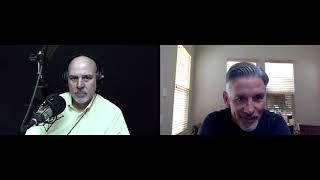
Randy Cantrell and Leo Bottari explain how CEOs can leverage peer groups to improve decision-making and company performance. Less than 1% of CEOs participate in peer advisory groups despite strong evidence of their impact. High-functioning groups need the right people, confidentiality, valuable interaction, accountability, and a servant-leader steward.
Chapters
Welcome to our new show, What Anyone Can Do Podcast with Leo Bottari and me, Randy Cantrell. Our new show picks up where the last show, Year of the Peer, left off, highlighting the simple truth that who you surround yourself with matters, and that if we enlist the support of others, give back to those who give to us, and pay it forward for the next generation, we can do anything. Author and keynote speaker Leo Bottari and I will interview a diverse group of thought leaders who will share stories and insights that will help you succeed in business, and in life. How? By doing the things anyone can do, but most of us never will. Welcome back to another episode of What Anyone Can Do, the podcast coming to you from Southern California. He is Leo Buttari. I'm Randy Kendrell coming to you from Dallas-Fort Worth, Texas. And Leo, you just published as we're hitting the record button today is Wednesday, August 7th. And you had a, you had a short but pretty powerful, I thought, article that appeared in CEO World Magazine, How Great CEOs Maximize Peer relationships. And we wanted to talk a little bit about it and share with you, the audience, some of, some of these insights that largely stem from the research that you did in co-authoring that first book, The Power of Peers.
Yeah. And, uh, I just felt like it was worth kind of, you know, getting to that because it speaks to the basics in terms of how we engage one another. And it's basically set up in a 2x2 framework where we talk both in terms of the one-to-one relationships we have with people as well as the one-to-many. So the argument is basically, or the premise of it is that most people engage in relationships with their peers by connecting, right? Making connections with people that could be connecting on LinkedIn. It could be introducing, you know, someone or meeting someone at a business after hours, things like that, where we're making those initial connections and introductions and all that, where we first started getting to know one another. The second way we talked about was networking. Now, for a lot of folks, it's kind of interesting because I may have shared with you, you know, while writing the book that people in many respects define networking much like going to business after hours or reaching out on LinkedIn and all that. I think that the more we dove into it though, the more we saw networking as kind of a next level, not an initial level, because oftentimes when we're networking, we're doing so in a way that extends our reach, but does so in a manner where there's some trust and experience, shared experiences with one another built up enough so that if you and I meet, Okay, and I spent enough time with Randy. I'm like, hey, Randy's really good at this, this, and this. I think I'm now confident that I can make an introduction to someone who I know and trust and know that that engagement is gonna be really positive for both of you. And I think every time each of us does that, whether it's recommendations or references or introductions or whatever it happens to be, we're always putting our personal credibility on the line every time we do that. So that's why we defined it in terms of connections as being literally those initial introductions and networking being more purposeful, uh, and more intentional. Um, third was this idea of optimizing. I think most of us have an opportunity at one point or another, whether it's on a sports team, whether it's at our companies or whatever, to be part of a team where we are either trying to achieve a collective goal or create a common work product, uh, where everyone has to contribute to this singular product of work that is a result of all of the skills and all of the knowledge and hard work and everything that everyone on the team brings to it. And that in most cases, no one person could create that product and make it as good as it would be when everyone gets involved, you know, with it. Um, We've talked in the past about, you know, the VaynerMedias of the world or people like that who, when they create great work, it's the result of a lot of people coming together in the right environment that makes that happen. And we refer to that as optimizing. I think for most of us, that's about where it ends. We get to experience those 3 basic things. For many, if we get to that third one, yeah, we're, if we're lucky, you know, I mean, you're going to be part of it at some level, whether you're part of a really great team that does that, right. Is it, is another, um, you know, another animal, but, um, but for many, they never get to experience what we talk about when we mean accelerate. So, and what we really mean by that is that instead of being part of a team, it's really part of a group. So a team is trying to go after something that they can only achieve collectively or a work product that they create as a group or as a, as a team, of course. As a group, however, we kind of reverse engineer that. So we take all of this concept of having a bunch of people working together, but we help each other achieve our individual goals. And this is what we're talking about with, as far as accelerating. It's what happens in mastermind groups. It's what happens in very various peer advisory groups for business leaders and CEOs. But what we found really fascinating was that while most of us engage in this in a certain order, right? We make those connections, those become deeper, we become parts of teams, and maybe it goes 1, 2, 3, and maybe we even join a group and get a sense of what that experience is like. Although very few people, despite how incredibly effective peer advisory groups and mastermind groups are, um, whether it's for the EOS, YPOs, Vistages, Renaissance, TAB, you name it, and a host of other companies out there who do it in the US and around the world and who, and people who create, you know, their own groups. When you think about it, uh, very, very minute, uh, you know, percentage of business leaders, particularly CEOs, participate in groups like that, despite how effective. They've proven to be over time, which is kind of amazing. So, um, so, so the— but the interesting part is for those who do participate in that group, right, who experience what it's like to accelerate, which means now I'm around other people who share my common challenge. And in the case of a CEO, they know just what it's like to sit in that chair and have to make decisions for an entire organization. However, If I'm the CEO of a bank, I might be sitting around the table with the CEO of a hospital or a small manufacturing firm or an ad agency or whatever business. And we can tend to think, well, all right, if I'm CEO of a bank, what am I going to learn from the CEOs of these completely different types of organizations? And yet again, because they share a common challenge, there are common issues and opportunities. And there are also norms that are present in one industry sector that are absolutely how they do business and yet completely absent from another. And when people start learning, you know, from one another and kind of seeing like, huh, that could work in my industry, right? Or if I'm in a particular industry where I have a window into something that is coming our way with regard to the economy, for example, I can let other people know about that in, in my group. Whose window into that may be more downstream, right? So, so when you think about the advantages of it and what it can do and how it helps CEOs, then they start in their minds thinking, well, I'm going to spend my time engaging with people in a way that actually provides me the most value. So instead of for them thinking in terms of connecting, networking, optimizing, and maybe accelerating, They are accelerating because it gives them the greatest personal value because it helps make them better leaders and gives them things that they can take into their own companies where they now can help their people optimize that much more effectively. It's not unlike, you remember we had Linda Darling-Hammond from Stanford on the Year of the Peer podcast that we did during 2017, and she was amazing in terms of That whole interview was incredible. But the most, one of the most interesting parts of it was she said, look, when you get teachers and teachers and professors and they collaborate and they really work with one another really well, those are the people that are able to create the more collaborative environments in their classrooms. And she basically agreed it's the same thing with chief executive officers. Um, so they are able to, gain this incredible advantage from accelerating. They bring it into their companies and what happens? Their companies become stronger, which means what? Then when you go to network, you're bringing a much stronger case to the table with every single person you meet about who you are, who your organization is and all that, which only makes it that much easier to extend your reach by making more connections, right? So this is what, was a fascinating kind of aha moment in researching The Power of Peers. We definitely saw the four, these four stages, if you will, of these four levels of engagement, but to actually see that kind of in some respects counterintuitively, but makes perfect sense, CEOs tend to think about them and leveraging them in the opposite order.
As you were going over that, and of course, I read the article and having read the book, and if you have not read the book, we'll put links in the show notes. If you've got any interest at all, and you don't have to be a business leader, if you've just got interest in leveraging the power of other people, particularly people that you could see as your peers, whatever the group that may be, you really should, you owe it to yourself to give the book to give the book a read. It's The Power of Peers. It's co-written by Leo and Leon Shapiro, who at the time was the CEO of Vistage. And, uh, I know in the book you talked and gave a ton of examples, which is great because the storytelling is, is really compelling, of CEOs who came to the group not expecting to get one thing and a conversation that may not even been remotely about them or their situation. And yet some of the deepest learning came because somebody else had an issue. And now you started to make application to yourself in a way that, you know, you never would have otherwise.
No question. I mean, there's a few different examples, you know, or circumstances that can be described around that. In one case, there was a particular CEO who was bringing up what she saw as a problem in her organization. And the more she got into describing the problem, the more other CEOs start looking at one another around the room and thinking, huh, I got the same thing going on in my company. I didn't even recognize it for the problem that now I see that it really is. And now You know, this is something I have to think about and probably something I have to act on. But now they're going to talk about it more and they're going to get more into it. But this is something they never would have seen. We talk about our blind spots. We talk about our biases and all, and to get a sense of, you know, the point of being part of a CEO group isn't that you get unbiased advice. Uh, cause that's impossible. You, everybody has a bias. You get impartial advice. You get You know, but you get actually the benefit of everyone else's biases and the fact that they see the world through a different lens. And oftentimes it can be very different from how you see things and you get to take all of that in. And that, uh, can be extremely powerful. And the other thing that is very common is a CEO may come to a group and be thinking, all right, I've got this particular challenge in front of me and I, I've got to somehow be able to choose between plan A and plan B in terms of how to deal with this. Well, the more that they get into a conversation with another group of CEOs who, excuse me, all come from different companies and walks in life and all that, they will typically discover, huh, I don't just have a choice between plan A and B. There's actually a plan C, D, and E. How about that? And it just really gives them a sense of what the possibilities are in meeting this challenge. And lo and behold, they may very well select Plan C or Plan D or E and not feel that they're beholden to going to one path or the other, but, and leave feeling pretty good about the fact that they've now, uh, discovered, uh, something new that can be really, really helpful to them. So it's, it's a, it's a really big deal when you see that go on. It's great stuff.
The other thought I had when reading the article that brought back some memories of reading the book is the leadership ability of, of particularly CEOs or business owners who are in a peer advisory group. That leadership of collaboration, that participating in a group like this and having to, having to learn to collaborate, putting yourself in a position where you're willing to learn to collaborate, which is probably not something that's terribly natural for the typical CEO type personality, but then the translation of that into their own companies, because they're now practitioners of it themselves in this safe context with other CEOs.
Look, the, the workshop that I do, Harnessing Peer Advantage to Your Advantage, right? We take the 5 factors from the power of peers that do we have all the right people in the room, safe and confidential environment. Do we have valuable interaction in terms of the quality of the topics and the discipline around conversation there? Uh, you have a culture of accountability among the members and that you have a servant leader. Who serves as the steward of the other 4 factors. I think once you get folks kind of locked in on what this is all about and how it works, they get to really, um, you know, crawl inside the power of that. Now the workshop itself has them working on their own group where they are having these conversations with one another. That's an important part of what the workshop is about, but it's not the only part of what it's about. What it's really about, and we talk about it in terms of being able to stick your hands in the clay, right? To be able to really participate in this so that when I give them a deck that they can use to facilitate very similar conversations with their teams back in their companies, they know what these conversations feel like. They have a really good idea. They participated in it themselves. And, you know, I think it's important to, whenever we can ask something of our team, that it's not something we either wouldn't ask of ourselves or something that we haven't done before. So it's a tremendous advantage, I think, where they went through this whole exercise and it's actually lasts, you know, several hours. It's basically a 3-hour exercise that they go through to get into these rich and deep conversations among one another. To leave with an action plan that basically puts them in a position where they can take the whole performance of their group, as good as they are, they can make it that much better. So now they see, wow, what if I could do that with my teams? Right? What if I sat down even at a lunch and learn, even in 90 minutes, and we went through a bunch of these questions? For CEOs that have done it and have gotten back to me about it and they've said what a learning experience it was, is that I work at this company, I founded this company, whatever happens to be, and they think that they kind of have their finger on the pulse of everything that's going on, only to learn that, you know, our companies grow and evolve and there's, there's a lot to learn all the time. And, um, so it becomes really beneficial for them. And again, because they participated in it, it makes them that much better at leading it and learning from it, uh, back in their own organization. So yeah, it's really, really, really critical.
I'm curious your thoughts, and I don't know that I've ever asked you this, but as you were talking, it came to my mind. So I'm going to, I'm going to throw it out there. The ideal, the ideal member so far as, because the title of your article was How Great CEOs Maximize Peer Relationships. Paint, paint for us a picture. I'm curious, paint for us a picture of the ideal CEO who is capable of maximizing that relationship? What, what do they do that those who maybe just go through the motions or those that are maybe even more average, those that aren't really leveraging it for all that they could, what's the difference?
Well, this becomes easy because this isn't my assessment of it. This is what CEOs learn for themselves when they go through this and they'll parrot it back to me in terms of what they can be doing better. Um, and this is where we use the 5 factors to really provide a framework for that, right? So the first thing is, you know, like 80% of life is showing up, as they say, right? Well, it's that and then some, you know, in a peer group. These folks realize that attendance is really important and that my attendance matters, that my being there is really, really important for myself, but also for the other members of the group. The idea is, we've talked about many times, you, if you have a jazz ensemble and you start removing instruments, it's never going to sound the same. So being there, number one, and being prepared, I think, is another critical one. I've had so many CEOs tell me that their peer group meeting can be the least prepared they show up to any meeting on their calendar. So they don't— they would never think to go to a board meeting or meet with their employees or meet with a client or customer and just show up and wing it. And yet it can happen and they admit it. What's fascinating about it though, is that usually in that group of CEOs, there's somebody who actually does prepare and it's noticeable to the point where someone calls out and says, hey, you're always prepared for this meeting. Right? So A, they notice. And B, I've never had anyone answer the question of how long it takes them to prepare and have them say that it takes more than 15 minutes. So now everyone looks at each other around the room and says, wow, imagine if we all spent 15 minutes and actually really were prepared and were ready and our heads were in this game right out of the gate from the moment we showed up first thing in the morning. Makes a big difference. Um, that alone can be a game changer. So I think being there, being prepared. Um, there's also the question of how well they leverage this very unique, safe environment that they have. Right. So we talk about these peer groups in terms of having an environment that people can and should feel open, you know, to share what's really going on, not just pieces of it or not avoid it or anything like that, but really throw it open and talk about what's really happening and also understand that the environment is confidential and that confidentiality is sacrosanct and essentially contributes to the safety of that environment. But Having a safe environment is one thing and having people who actually use it, right? Let's dive into the pool and get all of its benefits as opposed to sticking my toes in the water. And that makes all the difference in the world because, um, when we get into the valuable interaction part and the quality of the issues and all, you're never going to bring up the real important topics that you're well prepared to talk about, right? Which goes back to preparation. If you are not comfortable having those conversations with the— around the people in the room, even though you can, but if you won't do it, if you can't bring yourself to do it, you're never going to gain the full advantage of what's happening there. So I think clearly being open, clearly being willing in a way where you're really prepared to bring, you know, high-quality topics to the group, I think is essential. Fourth is that there's some— and I really think about this less about accountability as far as having to play defense with your other CEO peers and more about accepting personal responsibility for the role that you have and to be— to really being about holding yourself accountable to do the things that you said you would do. And right, because all everyone in that room wants for you is for you to do and achieve what you've expressed already to everyone that you want for yourself. Um, so I think feeling that sense of accountability/personal responsibility to the other members is what makes them a really good member. And I think finally, you know, this often points to the leader because the leaders of these groups, whether it's a member or whether it's a paid facilitator or what happens to be, Typically a servant leader. You know, they're there for the group, not for themselves. And also they are there to serve as the steward of the other 4 factors. But good members are also going to keep the lines of communication open with that leader to make sure that that's an ongoing conversation, right? That nothing's ever taken for granted. That if anything starts to feel like it's slipping or, you know, there's something going on there, that needs to be a conversation that they address. You know, they, um, these people under whatever circumstances typically don't get together, uh, often enough or long enough for them to be able to afford not to maximize every second of that time they have together. So I think as long as people are committed to doing that, it sounds like a lot, but at the end of the day, if you were to put one word around it, um, great members are committed members. And they're committed to contributing to others and they're committed to getting benefit themselves and they're committed to the kind of preparation and participation that really helps them bring value. And when you've got a whole bunch of people and everybody's bringing value to it, you can only imagine what the ROI is for any one individual around that table.
Well, an effective CEO is basically, at least in my mind, or are people who are capable of effectively deploying the resources where they can bring the most value to the organization. I mean, it's really the decision-making that goes on every day in the C-suite of large and small companies. It's the exact same thing inside the peer group. It's leveraging all the value that you can get in these relationships.
You know, when we talk about the fact that it isn't just about I'm going to go to this group and ask them questions about things I don't know or things I can't handle or, or whatever. They can learn from one another, as we say, by getting their answers questioned. Right? So I may have had a decision to make, or I may have a decision that I believe I have pretty much settled on, haven't implemented it yet. And now I can go to my group and say, hey, here's what's going on. Here's the process I went through and all the things that I thought about in terms of reaching this decision. What am I missing? Right. And you get to pressure test that thinking with other CEOs who are either going to, I think, confirm that both the process you went through and the decision you arrived at, you know, certainly reasonable. And, um, or they're going to introduce some things to you that maybe you hadn't thought about, and it can be hugely beneficial. I also see groups or members, and this is, I think, a great way to leverage the power of that group. Let's say they have a presentation to make to their employees or to a client or to the investor group or something like that. And they basically say, all right, hey, I've got this presentation to make. Here is who I need you to kind of be, you know, as audience in terms of the lens to be looking at this. I'm going to deliver the presentation, or at least an important part of it to you all. And I want some feedback on it. And I've never seen that done where someone doesn't get a whole lot of really great feedback around that, that helps make that whole thing that much better and allows that CEO to be that much more successful in whatever, uh, you know, meeting they were leading or whatever outcome they were looking for. And of course, for everyone else in the room who is not only participating but listening to that coaching, they're imagining in their own minds, all right, next time I've got this similar meeting, here are the things I'm going to avoid, or here are the things that I want to make sure that, uh, that I do. So I think it really comes down to, I mean, the short answer, you know, to your question really is really about commitment. And it's about the understanding that It's my responsibility to myself and other people around the table to bring my A-game each and every time I come and interact with them.
Before we wrap up, catch us up on Peer Innovation. This is the new initiative that Leo is spearheading and update us.
Oh yeah, all kinds of Peer Innovation going on. You know, but no, I mean, you know, let's face it, I think peer innovation is, you know, there's many initiatives around it. First of all, it's doing the kind of work that we've talked about in these workshops to help make CEO peer groups and executive peer groups just operate at a higher level based on their own assessment within the framework I provide of what they can be doing and how they can be more effective. You know, be working with organizations who make incredible investments in learning and development and provide a lot of amazing content and great speakers and great learnings. And unfortunately, there's not always a mechanism for people to be able to absorb that and apply it, you know, in a way that would really be beneficial to the organization when you consider the investment made against that. I think it's an ROI that would be unacceptable in most other areas, and somehow we don't kind of hold ourselves to account on that the way we need to. I think the same is true with strategic initiatives, right? There's no reason in the world that depending on the research you're looking at, anywhere from 65 to 90% of strategic initiatives inside companies fail. It's not that the initiative wasn't well thought through, because you need everyone on board to be able to do it. And you need everybody rowing in the same direction and everyone, um, you know, constantly being able to participate, learn, make adjustments as necessary, do all the kinds of things that, um, help you do that. And again, I think peer groups can be an incredible mechanism for allowing for that and for getting leaders to understand that communicating vertically through my organization is fine, But I need to communicate horizontally as well, understanding who are the key influences, who are the people that irrespective of what title or position they hold in the organization can be very influential and important people to make sure that they have on board. And then finally, all of this, I think through the work you're doing and leading peer groups through the workshops that I'm doing, is some real look and, you know, working with Dan Hoffman and others on what does the peer group of the future look like? What are the various iterations of it that can help democratize this whole thing? Number one, get more people participating in these groups than ever before because they are so amazingly effective. And how can we just make that possible for more and more leaders so that a decade from now, instead of less than 1% of, uh, fewer than 1% of CEOs participating in anything like this, we start ratcheting that number up. And I think we'll see a big, big difference.
Well, you hit on it in the article and in the book, uh, the power of peers, you know, just that, that acceleration, which to me is the exciting part of, of this work and our initiatives. Uh, separate and together of traction. You know, putting all of the dollars that HR departments and training departments are spending on their people, which is an enormous number, and giving it some real value that comes back multifold. I do think, and you know better than me, I think a lot of it is just know-how. It's just people figuring out ways to do that. And it's, it's just, it's not so complicated. And I don't know if people are looking for just that easy button solution and dealing with human capital and putting people in a room together and just actually having the conversation, you know, in a, in a swipe up world, it's, it's just easy to, you know, to swipe up and forget it. It's much more difficult to really engage in a deeper conversation where you can actually get something accomplished.
You know, I think if the content is worth presenting, it's worth caring about whether it's applied or not. Otherwise, why don't we just, you know, put our employees through art history classes or things that are really helpful to know and wonderful to— Yeah.
Or something that they care about.
As a human being. But I mean, it's not really going to be super relevant always to operations of the company. And so to the extent that we can You know, help people really better understand what resonated with them, really to really make it a part of not just what they know, but who they are and how they see the world and how they think about things. Getting teams then to figure out, well, how can we work together to make this as part of what we do? Because boy, this makes a whole lot of sense and we love this. We don't do this right now. We could. How do we go about making that part of our, the fabric of our team or our organization? And this, I don't think there's a huge investment of time, but you have to dedicate something to it. And I just think that for a very little investment, but something that is ongoing, that you can get peer groups inside of companies who can actually do some amazing things when it comes to bringing life to, you know, people go to, I don't care if it's an online course or it's a quarterly learning and development day or whatever. Typically someone will do their learning and development day. They take a day, we know, and then they, they're going back and they're catching up on everything. And then before they know it, it's the next quarterly development day on another completely different topic. Topic and other cool things they learn, they remember for 5 minutes and then they're on to the— it just, you know, it's just not—
it's the hamster wheel that many companies are on. Yeah.
So, but, but I, again, I don't fault the development programs or the training programs or anything themselves. I think there's a lot of incredible stuff out there, but I do think that, you know, you can teach someone to drive, but then if you don't give them a car for a couple of years, then they don't get to practice. They don't get to do that. I mean, I don't know how you're able to be competent out on the road. So yeah.
Well, let's invite people to go to the website, leobottari.com. That's L-E-O-B-O-T-T-A-R-Y.com. You can learn more about Leo and the workshops. And Peer Innovation and some of the work that he does. If you are a small business owner in the United States, and I'm not biased, it's just because I don't want to manage that many time zones. I've had a few people in Europe and a few people— Canada wouldn't be so bad, but, you know, I don't know. But a small business owner, SMBs in the United States, and you're interested in leveraging the power of peers in a virtual online convenient forum, then I would encourage you to check out thepeeradvantage.com. It's an initiative that I'm beginning, a 7-member mastermind group, if you please, of SMB owners from around the United States.
That's right. Well, as you know, I'm not going to get into talking too much about it right now, but we got a couple of great guests coming on the show over the next few weeks. And also internet connection, you know, fingers crossed on that. I think it would be great if we did a show from Norway when I'm speaking at the Growth Alliance Summit. Really looking forward to that. That's going to be an incredible event. And, you know, I think a live podcast from there would be a whole lot of fun. And maybe we can pull a few guests on the show or something like that while, while I'm there. But, you You know, that'd be great. Yeah. I think it'll be a really fun time and, uh, you know, really, uh, really great experience, you know, for, for everyone where we can really talk about kind of not only where the world's going, but hopefully make people feel a little better about the fact that no matter how daunting the challenge, none of us has to deal with these things entirely by ourselves. So I think as long as we can recognize that we're good to go.
Well, some of this is future-proofing. So, you know, part of the advantage of, of the peer advantage is, you know, is future-proofing your business and your career, which is largely, I know, what that conference is all about.
Hey, so I know there's only a few spots in your group left. So, you know, if you are so inclined, give Randy a shout. We will have contact information in the show notes, of course. And, um, but, um, anyway, um, Randy, always fun.
Thanks.
See everybody next week.
Have a good day, everybody. To learn more about our show and what we what we do, to submit questions to us, and to subscribe to What Anyone Can Do Podcast, please visit our website, whatanyonecando.com. What Anyone Can Do Podcast is hosted by Leo Battaglia and me, Randy Cantrell. Music provided by Kevin MacLeod is Vibe Ace, licensed under Creative Commons by Attribution 3.0 license. Thanks for watching or listening. We hope you'll share the podcast.










