What Anyone Can Do Paul Axtell 1015
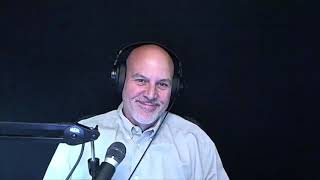
In this episode of the What Anyone Can Do podcast, hosts Randy Cantrell and Leo Bottary interview Paul Axtell, an author, speaker, and corporate trainer known for his books Meetings Matter and 10 Powerful Things to Say to Your Kids. Axtell explains how his background in chemical engineering and a pivotal early‑career experience forced him to confront a fear of speaking, leading him to develop a design‑focused approach to conversations. He discusses the importance of solitude and reflective time for personal effectiveness, the role of listening as the missing piece in both meetings and family interactions, and practical frameworks for designing effective meetings (setup, process, closure; the four C’s: clarity, candor, commitment, completion). Axtell shares research‑backed insights on parenting and grandparenting, emphasizing the need for children to experience solitude, positive self‑talk, and purposeful listening, as well as the impact of gendered socialization on empathy. He highlights the problem of negative conversational patterns, proposing awareness‑based tracking (e.g., a “negative‑conversation Fitbit”) to shift behavior. The conversation also touches on navigating polarizing topics like politics and religion through curiosity‑driven listening rather than debate, and the broader legacy of conversation as a tool for influence across work, family, and community. Axtell concludes with a call to prioritize focused listening and intentional dialogue to create lasting impact.
Chapters
Welcome to our new show, What Anyone Can Do Podcast, with Leo Battaglia and me, Randy Cantrell. Our new show picks up where the last show, Year of the Peer, left off, highlighting the simple truth that who you surround yourself with matters, and that if we enlist the support of others, give back to those who give to us, and pay it forward for the next generation, we can do anything. Author and keynote speaker Leo Battaglia and I will interview a diverse group of thought leaders who will share stories and insights that will help you succeed in business and in life.
How?
By doing the things anyone can do, but most of us never will. Today's guest is Paul Axtell. Paul is an author, speaker, and corporate trainer. He's the author of two award-winning books, Meetings Matter, and the recently released second edition of 10 Powerful Things to Say to Your Kids. He has developed a training series, Being Remarkable, which is designed to be led by managers or HR specialists. You can find Paul at paulaxtell.com. That's Paul Axtell, A-X-T-E-L-L, We welcome Paul to the show.
Paul Axton, welcome to the What Anyone Can Do podcast. Really a pleasure to have you here today.
Well, thank you for the invitation. I'm looking forward to the conversation.
Paul, tell us for the— for our audience, because as I told you before we hit record, I came to the 2016 book first and then, then backtracked to, to the book of of the 10 Powerful Things to Say to Your Kids. Give, give us a short description or tell us a story that the, the audience, to give them some context of who and what you are.
Um, yeah, very good. Well, I'm basically a corporate trainer, so universities, large corporations, churches, and I basically do programs on personal and group effectiveness. If you look at the questions that you get in every class, they fall into two camps: what can we do about the meetings in this organization, and can you make me a better dad, better mom? So questions, when you ask people, what do you want to know about, those are the two themes. So I simply took the ideas from individual and group effectiveness, so let's map it on to meetings and let's map it on to being a parent. So that's That's pretty much the source of it.
Well, the tagline of your website is Designing Conversations That Work, which we love and is congruent with what Leo and I are talking about on this podcast. But what led you down that path? What got you into that kind of work?
Well, if I kind of look at a core competency, I love design. So I got raised with Sherlock Holmes and chess. I like designing bonsai gardens. Decks, courses, and conversations. And for a long time, I was always been working on myself too. I kind of— my mother was scared of everything in life, and consequently I grew up scared. So I was always kind of working on myself as a human being. And early in my career, I didn't speak, and I finally was forced to either speak in meetings or I was going to be fired. It's a Wonderful story. I tell it in most classes. So then I started working on problem-solving and decision-making training classes as a way to confront my own lack of comfort in front of a group. If you start to think about it, any conversation would be better with a little bit of setup, some path for the conversation, and then closure. So that's pretty much how I got there. I raised not to speak. Then I just realized, okay, not only do you have to speak, but you have to speak with impact. Later on, I found out that listening is pretty much the most important piece. If nobody's paying attention, your speaking doesn't make any difference. And unless people have been trained, you will not run into a powerful listener out in the world. It just doesn't happen.
That is so true. You know, You know, as we mentioned too, we talked a little bit, of course, before we got on here today, we talked with a bunch of people last year on our Year of the Peer podcast and had some great guests. Conversation's obviously a big part of it. But one of the things that happened in that podcast last year was we expanded the conversation from peers to this whole big circle of people who surround us. And it's our parents, our teachers, and all that, but it's our kids, you know, in a really big way, not only in terms of trying to help them build relationships, but in the relationships we have with them, the relationships we hope they have with others. And so I'd love to, you know, kind of dive into a little bit of, uh, of that book, which I know, uh, of course came out in 2012. And I know you now have a second edition that just came out last year that, um, can be relevant to both Randy and I because we're both grandparents now. And I know there's a little grandparenting, uh, section in there. So I look forward to, um, to reading that. But I guess tell us a little bit about, what we can be talking to our kids about, especially with regard to relationships and conversation and the things that you've learned.
Yeah, very good. Well, let's just throw out 3 or 4 points. We went back and looked at all the research about conversations and kids, and there were some things that were striking. For instance, small children need to know how to be alone. And they need a lot of time playing alone. And then if you start to look at the younger generations, they can't tolerate being alone with themselves. Solitude and reflection are kind of a missing piece. Another idea was that who you are for yourself in terms of your self-talk that your kids overhear plays out in how they turn out. So then you start to say, okay, what am I muttering to myself and what am I saying to myself? And I'm a golfer, of course you see a lot of people who say things to themselves they would never say to you. If they did, you'd straighten them out, you know. Another idea is that, you know, if you look at millennials, who I don't think are that different, but just in terms of phone usage, they don't think it's rude to have a phone on the table or check their phone. In fact, they have a rule of 3, which is if they're out in a group and if at least 3 people are paying attention to whoever's speaking, then you have the freedom to check your phone. So they kind of know that paying attention matters, but not everybody has to pay attention. And clearly, however, many of them are working for people in my generation for whom pulling out your phone and checking it is rude. I don't think the issue is whether it's rude or not. The question is, this is a conversation that matters, and if it's a conversation that matters, would you be distracted? Grandparents in particular, if you think about it, you don't have the pattern of everyday conversations that are mostly controlling and correcting. That parents do, which now means you don't have a pattern of domination, coercion. And so grandparents have this freedom to talk about possibility and to encourage conversations with no place to get to, no correction, no advice. So I think grandparents kind of have this possibility-based set of conversations available. And grandkids think you're a superhero, so they'll pay attention.
You know, two things I've always felt about that. I always felt that, you know, when we go through the arc of life, you know, we see the world in a certain way as kids, and we probably basically screw it up as adults, only to get to a place as we get older where I think kids are kind of born of innocence, and the grandparents, I think, are informed by a bit of wisdom. And that those two things kind of really come together, which is why I would imagine that some of that relationship, you know, is what it is. But the other, the point you bring up in the book, which I really love, and I don't know, I don't recall now what the percentages were, but the number of times a little kid hears no versus yes when they're growing up. And tell us a little bit about that and the impact that has on a kid and how they see themselves and how they see what they can do in the world.
Yeah, and let me just take a step back here. I, in terms of changing behavior, I think it's all an awareness, and the moment you become aware of something that you were not aware of before, it's a different experience. I'm also a fan of Tim Gallwey, who says that critical variables are not something to do, they're something to pay attention to. And then if you look at intuitive leadership and parenting versus intentional parenting. Intuitive would be what you already do, what you do naturally, what you're comfortable with. Intentional is what you ought to be trying, paying attention to. Well, if you— actually, this— that book started— I had a participant, a young woman, bring to me the 30 statements kids hear most in life. Number 1 answer for applying family food would be no. How many times do I have to tell you? Why can't you be more like your brother? Turn the radio down, you know, put down your smartphone, whatever that would be, but they're all negative. Now, if you simply take that in the broadest sense and simply for 2 weeks notice every time you have a negative conversation with your kids, you don't have to change it, you just notice. Now all of a sudden you have this built-in awareness for when a negative conversation occurs. In that moment, you will start to shift automatically. And then you can start to play with some of the individual negative consequences. I think what we're after here is most— we kind of got raised that conversation doesn't matter. And so you don't have to pay attention, and you can gossip, and you can take the conversations around you for granted. So now you start to see, well, if conversation matters— I love Mindy Hall's mantra, which is, "I want to matter that we met." So we could say, "I want it to matter that we spent time together." Well, if you simply, as a grandparent, sit down with this grandchild and say, "Okay, I want it to matter that we spend this time together," you won't have a device in your lap. You won't be correcting them. You'll be just listening, being present, and encourage them to talk. So I think the whole idea of negative simply means, okay, if they're negative, how many? And if you kept score, okay, I'm going to keep track how many times I say something negative, or it could be perceived as negative by one of the kids in a week, you'll change. All you have to do is track and measure. It's like a Fitbit watch, only we just need one for negative conversation. Does that make sense?
He sure does.
Is there a correlation, Paul, between that solitude, our ability to be alone with ourself and be reflective? Because I keyed in on your mentioning of awareness and our ability to then connect to other people because we can be better connected to ourselves.
Yeah, there's a very powerful correlation. Um, if you just think about being with yourself. And I encourage people to start with 15 minutes a day. You know, you've got 15 minutes, you're waiting, rather than pull out Fortnite and play a game of Fortnite or two, do nothing. And then build your way up to— a long time ago I saw an article that effective people get 45 minutes a day of reflection time with themselves. And sometimes it's focused reflection, like they have a list of what they're going to think about the next time they're alone. Sometimes it's Okay, I'll just see where this mind goes. If you would build in 45 minutes a day of reflection, when you go to bed at night, you'd be asleep in a minute. Why? Because your mind would have already processed what problems it needs to work on. It would already do the forward thinking about tomorrow. So your mind is brilliant if you can give it the room to work. That's one of the things you can start to see now where technology is so novel and interesting that we go there versus be with ourselves. I think the thing about solitude and being better with the people around— I've been— I recently did a presentation on 8 pathways to being more productive, and the number 1 pathway is be your best self. Well, what does that mean? Well, probably you need to be honest about what's your worst self. And if you can start to notice yourself being not good and being great to be with, well, then how do you access being your best self? I think it comes from solitude and reflection. I just— I think if you and I hung out with ourselves, we would be far better quicker. And in that moment, you're available to the people around you.
You also mentioned when you think about just conversation and the kind of conversation that we want to have with people where we're present, where we're listening, where we're making that time together meaningful. When it comes to showing our kids how to be better at conversation, better at listening, is it simply a matter of modeling behavior in the hope that they will follow, or are there things that you actually talk to kids about or recommend we talk to kids about with regard to conversation?
Well, I'm going to say yes to modeling. Okay.
Exactly.
But in addition, I think if you're starting when they're small, 15 minutes of complete attention to every kid every night. Kindergarten teachers can tell you which kids don't get listened to at home because they don't speak well. Why? Because it takes practice to speak, just like walking and riding a bike. But the only way you get that practice is if you can speak at length without any help in a conversation. So that'd be one thing. When they're small, they want— they got stories to tell, and I think storytelling is something we've lost track of. Grandparents should be storytellers. This is a way that you kind of help people remember the past, get in touch with the past. It's a way to transfer values, but the most important, I think, once kids get older is you let them know at some point, you know, I just appreciate talking to you. I love talking to you. So a couple times a week, if we could get into a conversation, whatever you want to talk about, I would love to do that. That's the first part. Let them know you want it. They just need to have it in their awareness. Mom wants to talk with me once in a while. Then the second point, when they do talk, stay out of the conversation. Be present, but do not add to the conversation. Don't ask a lot of questions. Just kind of hang out there. And then after the fact, maybe the next day, you simply mark the great conversation you had by saying, I just appreciate the conversation we had last night. Thank you. So they get the, hey, I want this. B, when they do it, they've got your total attention and presence. And then after the fact, mark it. I think that would be a model that would make a difference.
You know, one of the things that I did in the book What Anyone Can Do, and I threw it out there to be kind of purposely provocative about it, but I suggested that maybe some of the worst advice we ever got from our parents was that we can't, or should certainly avoid at all costs, conversations about politics and religion with others, with the idea that when we do that, and because we are taught that, those conversations never— it never becomes possible that those conversations are opportunities for learning. Why are you a Republican or Democrat? Why do you believe in what you do? What's your faith? From a sheer learning perspective, not from a judging, arguing, defensive kind of thing that we are kind of set up as young people where we can't have those kinds of conversations in the way that I would imagine could be just very powerful learning opportunities. And instead we don't get to go there. And I think over time, unfortunately, I'm not sure we've gotten better at conversation. I think in some respects we're getting worse, particularly as the company, the country comes more politically divided. When I hear about Thanksgiving dinners that have to have ground rules before people, you know, I mean, so I'd love to get some of your, um, your thoughts around that and how we can be better at really listening for learning and understanding as opposed posed for arguing and debate and kind of positional, you know, type of conflict?
Wow. Well, I think people are missing some ideas. And one of the ways is the way your mind is wired up to automatically assess and judge everyone and everything in front of it. It's what allows you to drive 10 miles without noticing any of those turns. That's how fast your mind is assessing and judging. Also means we're appearance biased. The same mechanism that lets us drive now means we make up stuff about anybody we see. It's why going to the county fair is so interesting, because it's great food and people watching.
Sure.
So it means your mind is judgmental, and it tends to have a negative judgment unless you and I have a relationship and we're connected. So that's one idea. The second idea is I don't think you and I should share any opinions unless those are grounded opinions, informed opinions, researched opinions. Like if you went to— you had a serious illness and you went to the Mayo Clinic, if it was really serious, at the end they would say, and you should get a second opinion. So even though they have research-based, highly informed opinions, they know it's not the truth and somebody else might see it differently. So the swap of opinions is mostly an entertainment thing. I was recently with— we're actually celebrating the launch of the parenting book the second time, and there was about 12 guests, amazing people. But at some point, they started trashing the president. After about 20 minutes, I mean, it was animated. It was a— the host says, you know, Paul, you haven't been in this conversation yet. What's going on? And I said, well, if you look at who we got in the room, we're having a conversation that's not worth having. We got brilliant people in many fields in the room, and I would love to hear about their research and what they're doing. We're having a conversation that's simply not worth having. But I'm like everybody else. If I hadn't been asked directly about why I'm not participating, I would have rode it out. So I think we think that our opinions matter when they don't, and we are not very good at asking questions that get you to go deeper. Like, I love the question, what's your story? You know, how did you get to where you are? I'm curious. So we've not been well trained on how do you get people to open up about their background in a way that would be fascinating.
And I guess we don't always trust that the question comes from a place of curiosity or a place of caring and understanding. We kind of get our back up a little bit about what are they really trying to get at here. And we're not always trustful of that. Maybe sometimes.
I think it's more that our past experiences, people ask us questions with no intention behind it to stay in the conversation long enough where we could get somewhere.
Sure, right. There's definitely that too. Yeah, great. Randy?
Well, he, yeah, he teed it up because I've been wanting to ask about the— so you being compelled to put yourself out there and speak publicly, and you not being comfortable to do that. How did you overcome that?
Well, I think— so I train maybe 1,000 people a year sometimes. I just did a presentation to 2,400 people. I don't like being in front of a group. That's not my preference in life. I'm quiet and reflective, but you can get really good at something that you don't like to do. And in fact, that's why I think we shouldn't tell people to follow their passion. No, get good at something and you'll get interested in it and you'll enjoy it. But I basically, I got hired. I'm a chemical engineer by training. If you can think of the nerdiest, shyest engineer you ever saw, that was me. And, but I went to work for Monsanto and I was there maybe 5 weeks and my boss, who was Kurt Frank, came into my office on a Friday night and said, Paul, quick conversation before the weekend. I've been in 15 meetings with you so far. You haven't spoken yet. You are the lead engineer in most of those meetings. Not speaking is unacceptable. So beginning Monday, you're on 90-day probation for not speaking. "Have a nice weekend." And then he came in on Monday and said, "Here's the personnel papers, please sign them. 90-day probation for not speaking, subject to immediate dismissal." And then Curt said, "Okay, in every meeting you will speak twice or you're gone. I will ask you one question during the meeting. The other one's up to you." So he's the first person, even though I knew that I didn't speak, that it didn't work in life. He's the first person who had me get it. And I think anybody who's— I mean, each of you could say, who puts you in your chair? Somebody put you in their chair by giving you feedback that you needed to get. It was like a flaw that was going to derail your career, but somebody's got to care enough about you to say, no, not here. And if you think about meetings, um, If you look at broad participation, so Google cited two things, high-performing teams, broad participation and psychological safety. But how are you going to get broad participation when most people in this country walk into the room with a background thought, which is, I don't have to speak if I don't feel like it. Now we're going to compound that. We're going to tell the leaders of meetings, don't call anybody because it might be embarrassing. How's that working? You have no chance. You have no chance. So people have got to identify it as something they need to get to work on, and usually that means somebody they respect has got to say, don't do it, that's unacceptable, you've got to find a way to overcome this. I mean, I think people change dramatically If they once get— there's a cost here.
Yeah. But what a great boss to have to be able to provide that for you.
I mean, look at the trajectory of your, I mean, your whole career.
Yeah. We wouldn't be having this conversation for sure.
Yeah.
Interesting. And you knew his intent. I mean, you clearly, it seems to me, had a relationship where you knew his intent wasn't to fire you, but it was to force you to an uncomfortable—
well, you know, or did you? No, I don't know. See, he at that time, he was just a jerk. No, no, this was an awesome guy. See, don't make stuff up. See, that's the other thing people do. Yeah, that's right. Yeah, so don't make up stuff for your grandkids. Just kind of wait to see where they go.
Yeah, well said.
Good point.
Yeah, but he When he hired a new person, he said, "I have 6 months and then I'm going to decide whether we keep you for 20 years or not. So you get 6 months and if I don't really want you for 20 years, we're going to find a way for you to go somewhere else." So his mindset was— and he's going to confront anything that doesn't work, but he was a gentle soul actually.
That's a good story. I like it.
Go ahead, Leo.
No, I think it's an amazing story. I think it speaks to— we had Angela Meyers on our show actually a few times who gets into this whole issue of mattering and how much we need to understand how much I matter in any conversation, in any meeting or whatever, and that your voice matters. And I think what you were being told by your boss is that as the lead engineer, your voice matters a lot. You know, in that situation, that room, and that people are looking to you in a way that we're not always willing to own up to at certain parts of our life. And once we can accept that I matter and that my voice matters, um, you know, it's really powerful. And clearly you've been able to take that to a whole different level for sure. And, uh, and think about now the number of people that benefit from that voice, from the talks you give, from the books you write, for, you know, all of the things that have been the ripple effect of much more than just speaking in those meetings at that company at a particular time. But the way that's played out for you and your life is rather extraordinary. So, you know, we're, we're all grateful for that.
Yeah. I just had a, I was working in Miami this week and the people who are working on all of South America, and there's a gentleman, maybe 60. We do a listening exercise. And the point being that if you listen, don't ask questions, don't reassure. If you just are present and you listen, people will keep going and they'll peel the onion. So the graphic is they've got layer and layer, and if you don't interact with what they say, you just kind of hear it and get it. They keep going, and the gentleman came in and says, you know, my son, we're not very close because we don't talk much, but he called last night and I remembered, don't ask him any questions, just kind of mutter or whatever I do, and he talked for 3 hours straight. He says, I just peeled the onion by listening and doing nothing else. It's like, wow, you know, I said, you know, you just made my trip down here.
You know, I saw a great t-shirt that this guy was wearing at airport just a few weeks ago, and it says, my wife says I have 2 flaws. One, I don't listen, and I forget the other one. So, uh, yeah, yeah. So there you go.
There you go.
Paul, in your, in your parenting, in your parenting book, which I, I have to confess I've not read, but I'm really anxious to read, especially the second edition, uh, because of the grandparenting parts in it. Talk to us a little bit about empathy, especially as it relates to these little people in our, in our life. And how our communication with them, or what have you learned, or what do you believe to be true as it relates to maybe our ability to help the little people in our life be more empathetic?
Well, we're gonna have a politically incorrect conversation here for a second.
That's all right.
Because some people don't believe there are gender differences but I actually think there are 11 very powerful gender differences, and one of them is we raise little boys to play and compete, and we raise little girls to train and nurture. Now clearly there are exceptions, but if you're raising little boys to play and compete, they don't end up with empathy. Empathy requires listening to somebody at length. Also, When kids are small, they can't comprehend some of the abstract ideas like, "I'm sorry." A 5-year-old has no idea of what you mean when you say, "Well, tell them you're sorry." They can't comprehend it, and they maybe can't comprehend it until they're 9, 10. So if we kind of look at adults, if you simply set aside technology 2 hours a week and listen to somebody intently, you'll start to develop empathy. The other is you need to watch movies, read books that are literary fiction that have character development. So we watch Stranger Things with our grandkids. Why? Because the characters are developed over time. Game of Thrones is like that too. They're rich in character development. If you think about it, you learn that people are complicated and they're complex and they can be good in this moment and not so good in this moment. So that whole notion of kids, how do they get exposure to different kinds of people? But probably they need a set of conversations starting at about 8 which is, okay, how do you think that made them feel? Did you see what the other options are? But then we just need to train men to slow down, pay attention, quit multitasking, get your kids to talk. And when your kids say, how was work today, Dad? Say, okay, let me tell you 3 or 4 things that happened at work today. It's really not about playing and competing. It's about listening storytelling and sharing. Does that make sense?
Yes, it does. And by the way, I know a lot of adults who really don't know the meaning of story either. Exactly. But I do want to, you know, just before we run, I know our time's getting tight, but I do want to, you know, ask a few questions regarding the whole book on the fact that meetings matter. And because so much of what we talked about kind of feeds into all the things we're taught as kids and all that. But when we go into companies, um, you know, as we've said, some of these meetings can be, depending on what company you're in, people either hate them, they're the bane of their existence, or they think they're a critical and necessary part of, you know, knowing what's going on and being heard. What have you seen as far as some of the best, what makes for a really great meeting and, and You know, what can we be doing in our organizations to just keep raising the bar in that regard?
Well, this is a place where we come back to your idea of role modeling. If the top people are not going to role model effective meetings, I don't think it'll turn out. Um, also, I've not seen it. I haven't been in that many organizations, but it's not listed as a core leadership competency. Somehow we think because people saw a meeting one time that they can lead it.
That's great.
Also, so if you kind of look at 8, so the Stanford professor, I forget his name, but he basically says you have more than 8 people in a meeting, you're at risk of a not a high-quality conversation. Also, the quality of the conversation in this room is determined by the degree of relationship that walks into the room. You start getting above 8 people, there's not going to be really powerful relationships with everybody. But if senior management say, I want it to be a competitive edge, and I'm willing to be coached, and I'm willing to learn, and they let people know that, things would get better fast. One of the key ideas in life is you and I are better when we're being watched. You do your yoga poses better when you're being watched. Your golf swing is different when you're being watched. You will lead a better meeting if you're being watched. So if a senior manager simply said, okay folks, we need meetings to be a competitive edge, I'm going to start being coached, I'm going to be watched in every meeting. Now one problem I get when I say that is I don't want senior leaders to run their own meetings. I think their attention is too important. So I want somebody else kind of managing the conversation. I think, but there's some basic ideas. Only meet if you've got something to talk about. Don't call a meeting without realizing you are responsible for the time and the talent in the room. Don't abuse it. Give people permission to tell the truth about whether your meetings are effective or not. Somebody needs to say the emperor has no clothes. You know, I find myself double booking trying to avoid this meeting and You know, I want it to work. I'm committed to you. I'm committed to this project team. But wow, we've got to do this better. Then I think you need some people who are fascinated by meetings to the point they will do whatever work is required to get good at designing them and leading them. That being said, if you look at conversation, conversation has 4 key elements. In meetings or outside of meetings: clarity, candor, commitment—that means we end up in next steps—and completion, which means we stay with this conversation until we're ready to move on. So clarity, candor, commitment, and completion. If you simply manage every conversation so that we stayed with it long enough for clarity, people were willing to say exactly what they're thinking and asking, We ended up with next steps, and then we stayed with the conversation until everybody's ready to move on. Conversations would improve like that. It's about being intentional about it. I think the other model is setup, process, closure. See, you actually do this for this podcast. We have a little setup, but then we do the podcast, and then you have closure. Every meeting topic should have setup, And then you have the conversation and then you wrap it up. And I think closure is the most important piece. So that means if we're at topic A and we're about ready to go topic B, we're not going to move until we say, is everybody ready to move? Two, is everybody aligned with what we decided? Are we clear about who's going to do what as a result? And then what value did we produce in this conversation? If you would put those four pieces If you took every senior person, they said, okay, we'll have the conversation however we have it, but we are not leaving A until we do these 4 quick checks. Meetings will improve dramatically. It's not gene splicing.
There you go. Well, hey, um, Randy, I'm going to put the pressure on you to bring closure to this conversation in a way that would— will make Paul proud. And, uh, So anyways, there's pressure having you on the show for sure.
Yeah, no, Paul, it's, uh, it's the words that are kind of defining me at this stage of my life. And, and the three of us are clearly more mature gentlemen, I'll put it that way. You know, the legacy and the significance of it and passing it on. Um, I would like your kind of a closing thought. It seems to be a clear driver in your work. And I don't know, just whatever thoughts come to your mind as far as legacy significance, passing it on or passing it forward.
Um, okay, well, a couple of ideas. Number one, conversation is all you've got to have life turn out. That's it. And maybe you do individual work, but influence is all conversation. Meetings is conversation. Raising kids is conversation. The adage, you want to change your kids, change their playground and their friends. Also on that point, you've got to get the conversations in with your kids before they're 10. You've got to get them grounded in standards, values, and beliefs. Why? Because about 10, two things happen. They think they're an adult. And number 2, their peers for a period of time have more influence than you do. But if they're solid at 10 or 11, they'll be fine out there. A relationship is a series of conversations, and you're either having conversations that make you feel accomplished, fulfilled, open in that relationship, or you don't. And then I do think it's listening is the missing piece. If there's no listening, there's no speaking. And by listening, I mean attentive. Well, actually, there's a— I like focused listening, which means attentive, patient, and nonjudgmental. And if we could get that skill in every mom and dad and in every grandparent and every boss, it's a different experience. I mean, the last story, I run into a lot of minorities who feel like they would like my help on speaking with more impact. And I said, well, what's your data for that you don't have any impact? Well, nobody does anything when I speak in a meeting with what I say. And yes, sometimes there's something they should do to have more impact, but I really say, you know, it's not got anything to do with the minority. Nobody's listening to anybody in meetings. Nobody's paying attention to anybody. So everybody feels like they really don't have any impact. You just tend to make it a bigger deal because you're a minority. If you could get listening present, people would be profoundly moved. I like engagement. It's a matter of being asked and then listened to. Grandparents, ask your kids to tell you about what they're going on and then listen to it. Yeah, pretty straightforward, but it's one of those things I think it's missing. People just don't say that. What are the set of conversations you're putting in the world and are they worth having?
Well, in the digital age, we're headline readers, right? We just, we just read the clickbait and move on and make our judgments from there. Yeah.
And we think that the clickbait is what's in the article, but it's a little bit like a PowerPoint. Just because there's 4 lines and 6 words on each line, you have no idea about the 5 hours of thinking that's behind that slide. Yeah, yeah. I'll tell you one more story. And we were coming out of a grill going to our hotel, which is right across the parking lot. We like to go to this grill, we can have a couple drinks and get home safely. Here comes a group of people, 5 or 6, all adults. Right behind them is a boy about 7 and a highway patrolman. Just as we get alongside the boy, He turns to this patrolman and says, "My dad is super fast!" And the patrolman was awesome. He says, "Wow, your dad is super fast? Does he have a fast car?" "Oh, he does. He has the fastest car ever!" And this kid was just beaming. So then Cindy and I are walking back and we said, "Okay, this kid has a superhero for a dad. Unquestioned. But there's a good chance that dad is only talking to that kid about sports." Yeah. Here's the time when that dad can teach that kid how to be in the world, how to treat women in the world, how to treat men in the world, what it means to sympathize and empathize with somebody. And there's a good chance he's talking about fishing, hunting, or sports. That's— we got to get that across somehow. Yeah, good point.
Thanks for the conversation, Paul. It was great having you.
Welcome. I appreciate the invitation very much.
Yeah. And I just think one more thing, maybe, uh, Paul, let us know, uh, let our listeners know, uh, where they can find more about you and your work.
Um, well, there's a website, paulextell.com. You can get both of the books on Amazon. Um, I have a pretty good LinkedIn following and I, I'm a curator of the content. So if you follow me, I'm not going to waste your time. I just see myself as a content source on productivity, relationships, and conversation. So that's another possibility.
Yeah. And I can attest to that. I've been following you for a while on LinkedIn. Good stuff. Thanks, Paul. You're welcome.
All right, have a great day. Thank you.
To learn more about our show and what we do, to submit questions to us, and to subscribe to What Anyone What Anyone Can Do Podcast, please visit our website, whatanyonecandodo.com. What Anyone Can Do Podcast is hosted by Leo Battari and me, Randy Cantrell. Music provided by Kevin MacLeod is Vibe Ace, licensed under Creative Commons by Attribution 3.0 license. Thanks for watching or listening. We hope you'll share the podcast.










