What Anyone Can Do The Circl es Edition 1014
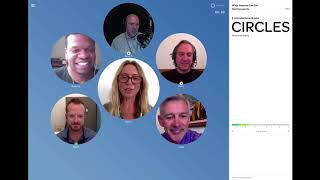
Leo Bottari and Randy Cantrell launch a podcast about peer groups using Circles, a video platform designed for conversation without recording. They discuss how unexpected challenges, like a spontaneous 9-mile run in Portugal, become growth opportunities when supported by trusted people who say yes to unknown possibilities.
Chapters
Welcome to our new show, What Anyone Can Do Podcast with Leo Bottari and me, Randy Cantrell. Our new show picks up where the last show, Year of the Peer, left off, highlighting the simple truth that who you surround yourself with matters, and that if we enlist the support of others, give back to those who give to us, and pay it forward for the next generation, we can do anything. Author and keynote speaker Leo Bottari and I will interview a diverse group of thought leaders who will share stories and insights that will help you succeed in business, and in life. How? By doing the things anyone can do, but most of us never will. Joining us today are Karen Floyd, Ryan Folan, Raphael Gordon, Dan Hoffman. Dan Hoffman is the CEO of Circles. You can find more about them by going to Circles. That's C-I-R-C-L dot E-S. It's a dot E-S domain. You heard it right. Circles with the dot between the L and the E. Circles is an online video conferencing platform designed to foster deep collaborative conversations. Leo and I intentionally wanted to feature this platform and give you a taste of what this thing can do. It's enormously powerful. It's great. It's terrific. It's stable. The quality is superb. I'm going to forewarn you, I encountered some technical issues in the recording process. I use screen capture software. This is technical, and I know you don't care, but I want to make sure that you understand the fault was on my end. Not the platform. Circles intentionally does not have a recording capability because it's Vegas rules. What happens here stays here. This enables teams of people to meet in confidence and with security, trusting one another that what is said in the room stays in the room. So it's not— it's intentionally not the typical web conferencing kind of a platform that you've been accustomed to. But as you will see in today's video, it's just got some resources that really make the interaction so much better than any of the other available video conferencing platforms. So if you, your team have a need to really have collaborative conversations, this is something that you definitely should check out. We invite you to check out Circles, circl.es. Enjoy the show.
Hey, it's, um, it's great to be here and it's great It's great to have all of you here. Couldn't be more excited, and I don't think there's anything more appropriate when we think about this whole idea of who you surround yourself with matters is to— as you can see, I'm surrounded by 5 really terrific people here, many of whom I met in Portugal. And we're going to talk a little bit about that. We're going to talk about how people come into our lives, and oftentimes we might meet them on an airplane. We spend an hour, an hour and a half with them and we find it incredibly meaningful, but yet we may never see them again. In other cases, we run into people, you know, in the case of the conference in Portugal that we'll talk about, the ANGE conference, you know, Ryan Folan, for example, and I lived an hour apart and yet we met in Portugal. And everyone around this circle here today kind of remains friends for, you know, many different reasons. I wanna talk a little bit about what that looks like for all of us. And I do, I want them of course at some point to certainly introduce themselves, but I do wanna start, I'll go around clockwise here. I'll begin with Rafael Gordon. Rafael Gordon speaks to groups all over the world as one who inspires, you know, and inspires all of us, but also inspires every audience with which he speaks, you know. Rafael is quoted quite a bit, by the way, in the book, What Anyone Can Do, with wisdom beyond his years, I think, that you'll find super valuable. Dan Hoffman, I was so honored to have write the foreword of this book. Dan is the CEO of Circles. It's the platform we're on right now that is designed specifically, as Dan has talked to me about many times, as a conversation platform as opposed to a presentation platform. So we thought what better way, you know, to use this podcast really, and it's the first ever podcast, as Dan has told us, that's ever been done on this platform. So we're going to give this a try and we'll have some good fun with that. But, and again, I'll have Dan talk more about that as well. You know, Randy Cantrell, co-host of the show, and there wouldn't be a podcast last year, this year, any year, at least on this topic, if it weren't for Randy, his persistence, his expertise, and everything that he brought to the table to really make this possible. Karen Floyd, who I met with at the ANGE conference also in Portugal, along with Ryan and Raphael Gordon. And, you know, Karen is just one of the most amazing people, you know, I've ever met, and someone who I knew right away that this was someone who I wanted to make sure stayed in my circle long after we left Portugal, and that's very much been the case, and I've appreciated you very, very much. Ryan Foland, last but not least, did the illustrations for What Anyone Can Do. Each chapter begins with one of Ryan's, you know, very clever, very fun illustration. These cartoons, I think, underscore the approachability of the content. You see them probably often on social media. They're terrifically well done. And again, they— if a picture's worth a thousand words, like I said, Ryan offers an additional 12,000 to 15,000 words to this book with the wonderful messages that I think so well accompany the content. But with that, I think I wouldn't mind, I guess, at this point to have each of you just say a few words about yourself and, you know, your being here today. And so we want to do this in random order, Dan, or what do you think? Ah, here we go.
Sounds good.
Everybody's numbered. So, okay, Rafael Gordon, you start. Tell us a little bit about yourself for our audience here today.
Yeah, so again, just awesome.
Oh, sorry, Rafael, you have to unmute yourself. I muted you by accident.
There you go.
There we go. So start again. That's awesome. Yes.
So it's awesome to be here. Uh, Raphael Gordon, of course. Uh, I pretty much am a, uh, leadership advisor. I work with a lot of entrepreneurs globally as well as different, uh, young world leaders who are looking to impact the world and in their community as well as communities that's outside of their, their country. And I'm also a creative director for Madison and Park. So I do a lot of strategic branding and marketing for individuals who are trying to either leverage their stories or their missions to impact individuals and organizations with whatever that they may have. So that's me in a nutshell, but I'm always about serving and trying to figure out ways to impact individuals' lives so that they can live their best life in the best way that they can possible.
Well, thanks, Raphael. All right, Karen.
Hi, I'm Karen Floyd. First of all, thank you to Leo for the invitation. It's such an honor to be here after— is it 2 years now, I think, that we met in Portugal? Yeah, so I'm speaking to you today from the beautiful subtropical island of Gran Canaria. I'm actually one of their targeted audiences.
Nice. Well, thank you. Ryan Faulk.
Ahoy! And ahoy is hello in pirate, if you don't know. People ask me what I do all the time, and I make it simpler than that. You don't care what I do. I don't care what anybody does. We should all care about the problems that everybody solves. So what I'm excited about is the problem that I solve for people, and that problem is, uh, the inability to explain what you do or why you do what you do in a short amount of time. So I have fun with that, and I speak around the world on the topic. I've got a methodology, and what you do or who you are into 3 sentences, 1 sentence, and then 3 words. And I find that sometimes that will solve the problem.
Nice. Thank you for that. Randy Cantrell.
Listen, I'm, I'm, I'm a, I'm part of the show. So I'm going to pass. I'm not the star. The star today is Dan Hoffman, in my opinion, because of the platform. So I'm going to give my mic time to Dan to explain a little bit more about this platform.
That's right, you're going to, um, you know, give the floor, uh, to Dan Hoffman. And Dan, it would be great if, uh, feel free to take a few extra minutes, talk about this platform, talk about, you know, your involvement with the book. Like I said, just so thrilled that you're hosting here today and really appreciate that.
Thank you, Leo. Thank you, Randy. Thanks everyone for being here in the first ever podcast on Circles platform. I am an entrepreneur and was part of a peer group through YPO and also through Vistage and the Aspen Institute and realized that the way I learned to do my job the best was in a circle, in a peer learning environment like those groups afforded me, and started to ask the question after I sold my last business, Why doesn't everyone in the world have this? Why doesn't everyone in the world have a small group that they can go deep with and can support each other and learn together? Why don't people learn this way? And Leo and I met and just immediately hugged it out on this. We said that this is a mission that we are both on, that we get behind. I'm honored to be a small part of this great book, and my way of contributing is by building a technology platform, a tool through the use of which people can easily form these groups, run them, have the deep conversations that move our lives forward. So Circles is a startup, we're a year old, we work with Harvard Business School, we work with companies like Square who has 400 managers around the world helping each other be better managers in Circles, and Our mission is really to help people connect deeply, to grow and work together better.
Yeah. And I do want to follow up on what you've said too, because to your point, when we did meet, not only were we aligned in terms of the value of deep conversations and people having them in these kinds of forums the way we are, but I really also appreciated the real social purpose that you bring to this, that there's so much of what you're bringing through this platform that allows people, no matter where they are in the world, be able to get together, have deep conversations, understand one another better, learn from one another, and really try to make the world a little better place. We've got so much going on right now where people are not collaborating, they're not listening to one another, they are taking political positions, quite frankly, that, and they just don't listen to anyone else. They're not interested in learning, they're interested in judging. And I think the more that we can show people the power of getting together, listening and understanding, as opposed to debating and arguing and judging, the better off we're going to be. We don't always have to agree, but to understand one another, I think is really powerful. And I know that both Ryan and Karen and Rafael and Randy, they're all really about, you know, just that. So, so with that too, I want to kind of transition because, you know, one of the reasons that of course Karen, Ryan, and Rafael are here specifically is because we met at the ANG conference in Portugal. Miguel Dias, who at the time was CEO of CEO World, now it's ScaleUp Academy, he invited us all to come speak and deliver master classes as part of the ANG conference. So as part of this invitation, let me just say this. So Miguel talked to each of us. He talked to Rafael, Ryan, Karen. I don't know how you got out of this, but you were very, very smart. You either didn't answer the phone or you were smart enough to just say, nah, I'm going to sleep in that morning. But anyway, Miguel asked Rafael and Ryan and I, if we wanted to go on a run with him that morning. Now, keep in mind, Miguel had run a half marathon like 2 or 3 weeks earlier. He was in very much running shape. But what he wanted us to do was really be able to, you know, see the city. He wanted to show off Porto. And we all know it's a great way to go see and explore and discover all kinds of things in a city by going on a run. So he asked me and I was like, sure. And then when I talked to Rafael and Ryan, they said, yeah, they had a similar conversation. And we're like, yeah, sure, we'll do this. So we bring our running shoes, we bring our shorts. We, of course, had flown all day the day before. And we get up early in the morning, it's probably about 8:00 AM. Next thing you know, we're off for a run. Now, as you might imagine at this point, you might think that we should have asked the question that you might be asking yourselves right now is, how far is this run? So we had no clue. We just said, okay, we're thinking 3 to 5K, something like that. We'll just kind of do something short. So when we were 7K away from the hotel and with realizing that we had to go back the same way we came, and by the way, most of the run for that first 7K was downhill. So when I think about what I would regard as the runner's law of gravity, what goes down must come back up. So now we've got to run back. Uphill. And so 14K, we get back to the hotel, Ryan does the, you know, the Rocky move at the end, you know, it was very, very inspiring for us all. But I would like to talk a little bit about that because so much of that story is actually really an interesting metaphor for us as individuals, and I think particularly entrepreneurs. So, so anyway, Ryan, let's start with you in terms of You— what was that call like when Miguel asked you about that run? And, and what was the experience like in terms of— was that what you were expecting that morning or not?
No, I was definitely expecting to see a bit of the city, have a good chance to meet people. But when we stepped outside and saw the shortness of the shorts that Miguel and his buddy had on with their very expensive running shoes and thin fitted you know, Under Armour sort of short-sleeve shirts, you know, that comes up, right, like this. Like, this is all for not fashion, but for wind resistance and speed. And so, you know, I think they were already stretched out, so I did my classic, you know, like Ace Ventura stretch, a little one side, a little the other side, maybe a couple jumps. I'm like, let's go. But I don't think I was prepared physically But to the point of the power of peers, I didn't need to be ready mentally because I was able to leverage the mental power of RAW. And I was able to keep up with sort of this groupthink and this group mentality. Like, I wasn't physically ready, but because mentally I was open to opportunity and I was open to the situation, I just kept running, and I kept talking until I couldn't breathe, and then Rob would pick up, and I was fascinated with what he was saying. I was so fixated on the fact that he had written 15 books, he was speaking around the world, and at that point in my personal branding, I was like, "This is it. I need to get in front of somebody like this guy." Wait a minute, I'm running in the middle of a park in Portugal with this guy. And distracted by being, you know, in this ideal place at the right time with the right person. Like, these are— you spend however long scraping the internet trying to find who you want to connect, and then LinkedIn, this, and maybe I'll send a message. And here I am, I have no idea who this guy is, and like, we're like running, sweating, breathing, appreciative. Whoa, squirrel! The tree! Like, like just all the stuff around us. And I think that I made a conscious decision at that point, this is somebody I want to continue to run next to for as long as I can. And I think we've done a really good job at supporting each other whenever we've needed it this last year. And it's not anything, it's not like we even needed to be physically ready for that long-term relationship. It's not like I had to do a bunch of push-ups and train. It was just that mental connection. It was like, who are you going to call? Instead of Ghostbusters, you think of your inner circle. And so I'll think, I need help. Who am I going to call? Roar, you know, Roar, or Leo, or whoever it is. And so what comes to me about that story is when we finished, and then it was like all of a sudden the conversation stopped with taking pictures. Wait a minute, how are we going to get back? I think that was interesting. We sort of switched up partners, so we started running with different people, and then that same energy was recharged again. For me, what stands out is that this idea that you don't have to physically be ready for positive influence. You just have to be open to the opportunity where that opportunity meets reality. And the power of that conversation and the energy with somebody and what they can bring to you and also how you can serve them, that can replace your physical ability to run 9 miles. And I haven't run 9 miles, you know, for a while before that and probably haven't run it since. But here we are still all running together metaphysically.
I do appreciate there you're coming clean on the strategy that the more you can get Raphael to talk, physically it would be easier for you to run. I think that was— that's clever. So Raphael, how about you? Unmute yourself, don't forget.
Yeah, no, Ryan hit a lot of good points. You know, and even one of the things that I— that just came to mind was that Ryan reminded me, which is interesting, about when we— there's moments in our running that we had discussions about things that we were trying to achieve and what we've done. But one of the, one of the things that I do think is important for those who are having their own moments of running is that when we were jogging down, there was, there was a lot of mist, if you don't remember, if you remember. And we didn't get a chance to really see how, what was actually what we were running to. And we just kind of had this thing that there's somebody that's in the pack that has been there before and is going to guide us through. And we put our trust and him to guide us through. And along the way, we all kind of had an individual, a partner that kind of guided us through the journey, right, to the first part of our journey, which is to go to the beachfront. And as Ryan was saying, when we were going back, we might have switched up. So it's like in terms of, you know, in an interesting way, it's like you start your journey with individuals and then you'll switch up with other individuals. But at the end of the day, when we were done with the run, we all came together. So everyone played their part along the path. So I thought that was quite intriguing. And then again, I wasn't prepared for that long run. I mean, I didn't have a— I just thought it would be a nice jog. We'll come back and have breakfast. I didn't— you know, I mean, you got to remember, there was a guy who was like, I'm going to take a cab back. I'm not even going to run with the rest of the way up. And for us to kind of keep pushing each other, that says a lot, especially with entrepreneurship, about trying to create these goals that we create. And trying to achieve them is that, you know, we have to have a core circle of individuals who will push us. And even if they don't say it, you just watch how they run along the path, and you kind of be inspired by them. So the fact that, like, you know, finding out that Leo, you know, runs X amount of marathons, it's like, oh, that's interesting, but how would you have known that he had the stamina for that unless you had took the journey with him? So I think, like, that aspect of just understanding and learning about each other in that short period of time is that's the invisible glue, you know, just the experience. Like, a lot of us have meet people on social media and different things like that, but I think the invisible string, invisible glue, is actually creating experiences that we can reflect upon, that we can constantly share with others to say, hey, listen, you have to do a little bit more. Like, experience life, experience these projects, experience creating goals together and help each other. And then that way you get a chance to learn about yourself and how, you know, teams and groups and friendship and relationships play a huge part in all, all that we do.
So I think suffice it to say, none of us ever would have been able to do that on our own. We certainly lifted each other up. But, you know, as we get into the next segment here, I would love to have actually Karen and Dan comment on this from the perspective of— see, for me, this story in many respects also speaks to the idea that because we didn't know what we were getting ourselves into that morning, that helped a lot. Because had we known we were running 9 miles, we're all staying home, we're all having breakfast, right? And so how many times as entrepreneurs, you know, for Karen certainly experienced this, I know Dan has, where, you know, if you kind of knew what you were getting into from the start, you might be like, ooh, I'm not sure about that. But we kind of move on with reckless abandon, we get ourselves around a good group of people, and somehow this becomes possible. Karen, if you have any thoughts on that, and then I'd like Dan to weigh in as well.
Okay, well, my first comment would be I remember you guys doing the run that morning, and then you did it the next day. You repeated.
Not as far though.
Yeah, so a lesson was learned somewhere along the way, that's for sure, but you did repeat, so it was obviously an excellent experience. So I would like to say that for me, that whole experience as somewhat of an outsider, because I was there supporting Raphael, not actually as a conference speaker, but I received the warmest welcome from the most amazing, loving group of people. I felt completely included. I learned a lot, and I've gone on to develop some really relationships, relationships that are important in my life today. Rafael and I, although we're not working as closely together as we were, we're still in touch and we do still have a project in common. More recently, I was invited to a wedding. I went to the wedding of Miguel and Mary. That was just incredible. I've had a holiday invitation from Leo. So in addition to all of the learning about entrepreneurship what it takes to succeed, all of those things, the kind of intangible threads are also just as strong as what you see and what you hear, like the feeling that you're left with and how that plays out later on in making those relationships even stronger. That was a really powerful experience for me.
So, Jan, what do you think about this idea of kind of not knowing what you're getting yourself into and, you know, Well, you really get at the heart of what an entrepreneurial journey is.
And I think what's interesting is the power of team in getting you to jump and getting you to move forward, complete the run. I've been lucky in this work that we get to observe a lot of teams and we think about trust. Trust is the magic. How do you build trust quickly? And so in our work, we have a model of 3 dimensions of trust. How open are you with each other? How much can you count on each other? And are you aligned in your diversity? You know, and I think of those as melody, how open you are, as rhythm, that beat, can you count on each other, do what you say you're going to do, and harmony, how do the different voices still their own voices line up to be one thing. We use this room, by the way, to measure all 3 dimensions and help people improve in their teams. When you have alignment, we're going to get back to the hotel. We're out here on the beach and we know we're getting back. We're finishing this run. Wherever level runners we are, we're all different people. That is so powerful. And it's a missing thing with a lot of teams. And when you create a board of personal board of advisors, personal board of directors saying we're here We're in alignment to make this jump. That is super powerful.
I couldn't agree more. And you know, Randy, I know that we're going to get into in the next segment kind of this larger question about relationships and those relationships that we can meet people and they can last just a small moment in time and we may never see them again to relationships that somehow, you know, when people meet there's just some kind of magic happens that people realize that I want these people as part of my circle longer term. But as an entrepreneur though, I'd love for you to address this dynamic that we're talking about that took place at that conference in terms of, you know, I mean, you've run a number of companies and just in terms of not knowing kind of what you're getting yourself into and being around a group of people that is just willing to forge ahead. And so what has that felt like for you?
Well, I would use our relationship, you and I, and even the advent of the prior iteration of this podcast, You're the Peer, as a perfect example. I reached out to Leo. I came late to the party of understanding this whole formal peer advisory for business owners, business leaders space, and got really fascinated by it. I'd been in the C-suite since I was 25 running companies, and I'd never taken advantage of it. I'd never even heard of it. And so I felt a little bit stupid and very ripped off, quite frankly, as a leader who had never been able to— now, I had always fostered collaboration inside the companies where I was, and I'd always sought older folks who were further up the trail than me outside the company. So I guess I had done it very informally. But when the book came out, Year of the Peer, that Leo co-authored. I reached out to him and I asked him, you interested in doing a podcast? I've been in the podcasting space for a long, long time, mostly kind of as a biz dev play, but it really started out for me more of a legacy project. I'm now a grandfather, so I started laying audio tracks online in '97 just to pass stuff on to my kids. I thought, you know, nobody's listening now, but when I'm dead they will. So I reached out to him. He misunderstood me and thought I was inviting him on my show. And I said, no, I don't, I don't do interview. I don't do interviews on my show. It's a monologue kind of a thing. And one thing led to another. I didn't know him except through the book. He had no idea who I was. I'm in Dallas, Texas. Uh, he, he was in San Diego and splitting time up in the Rockies. And, uh, one thing led to another. When we started, he can better answer this than me. You can, Leo. There was, there was no, there was no idea of this book that's now out as we release this show. And so all of these great stories and all of these people that we have interviewed, just a ton of unknown. But, you know, it starts with I know Leo has told this story to me privately, this run. I mean, it started, Leo, with you just willing to say yes. That's for me the elephant in the room, just our willingness to say yes to some things, even if we don't quite know what we're getting into.
No, I think that's a, that's a fair point. And, um, and I think that, uh, you know, that morning, sometimes you're not always happy you said yes. I think there were parts of times in that run, you know, talk about the fact that I ran marathons. It had been a decade since I ran anywhere near that kind of distance. So, I wasn't sure I was happy that morning. I said yes, but I was certainly happy when it was over. And I was happy with the experience we had and what we did. But Randy, I'd love to turn the next segment over to you now to really talk about this notion of relationships and kind of what they mean and So let's take it over to you.
Yeah, Leo and I talked before we, uh, before we jumped on with you guys, uh, just about the difference between people that come into our life and some are one-offs and some it's a, it's a passing, it's a passing kind of a thing. And yet some of those things can develop into deeper, longer-lasting things. And at some point, other than perhaps our family, but even them, I mean, we met everybody once for the first time. So I don't know, Raphael, start us off. I'm curious of any interesting stories or insights that you could share with us about that.
So, yeah, so in regards to like relationships, I think that for me in particular, like I always tend to look for the longevity of the things and people that I connect with. Because a lot of times when you meet someone, you know, there's— everybody you meet is always at the beginning of potential. Like, there could be potential for some type of relationship that you have beyond, you know, however you met in the beginning. I do believe that when you meet someone, I go deep in this, it's like everyone meets— you meet someone, but when you meet someone, you're meeting not just them per se, you're meeting every experience and individual that they encountered prior to you.
Meeting you.
And so what happens is all the things that you learned along the way has gotten you to where you are. So when Ryan talked about how, you know, he wanted to travel globally and things like that, in hindsight, he was already doing that. And the individuals that he met were doing the same thing. So sometimes when we meet people, they're just confirmations that we're on the right path. And sometimes they're also there to be able to, like, as I said, like, as an investor, it's like You always look for the long term. So your thing is to always make sure that, you know, you always invest in the individuals or connect, stay connected to those who have great insight and you constantly feel that you're growing and glowing. And I think that's super, super important because, again, people do come into your life for seasons and reasons and you have to honor and be thankful for that because they always drop little nuggets of jewels or just kind of give you some type of insight. For when you need it for that moment. But I do think relationships play a huge role and a reflection of who you are. And the longer you keep it— like, for Karen and Leo and Ryan, like, you know, we're all connected. It's been 2 years. But for me, I look at them as a part of my life forever. You know, like, I don't see expiration date because of the fact that we shared an experience that has transcended what we were actually there for to do, which is to inspire or to help those who were there at that venue. So the fact that we are still connected means that there's still a lot of insight and energy, and I always say love, but there's invisible strings of things that everyone possess that keeps us all connected. And as long as we're constantly growing individually and we are trying to grow and glow, we'll always stay connected. Because again, sometimes I heard like They talk about rocket boosters. It's like when you're going, when it goes up, you know, the boosters come off, right? So, you know, some people can't go with you because they're not growing at the same pace or they don't want to grow. But those who want to grow and go higher in their universe, they'll tend to always ride along with you and explore the universe with you. So that's how I look at relationships, you know, and you take those who, you know, who you feel are an asset to your life. and that's the big investment.
Thanks for that. And for our audience, people that are watching the video, you'll see some plus ones, which is a cool thing about the platform. You don't want to interrupt the, the speaker, but you'd kind of like to give some thumbs up and some approval. So when you see these little blue plus ones, that's what you're seeing. Ryan?
Yes, sir. I echo what Mr. Roth was rapping about. And I am oftentimes reminded about not how important it is to surround yourself with the right people, but remembering that you have a choice who you want to spend your time with. And I think that as a small, small tweak or insight to the whole what everybody can do is maybe the most powerful. And we all have conversations. We have conversations with other people, and we have conversations with ourselves as soon as we stop having those conversations with other people. And listening is a good skill, more importantly for listening to yourself and that little voice in your head. So I can think of a number of times when I'm around someone, and I might not have necessarily made a conscious choice to spend my time with them, or maybe I have, but in the moments of the interaction, sometimes they're the opposite of my run with Rob, where I was enthralled and we really were sharing our goals and like, how can we help each other be accountable? And there's this inside of my head, as soon as we stopped talking, inside of my head's like, this guy I need to connect with, this guy. Make sure you give us contact before you leave here, like that kind of a talk. Whereas with maybe I'm with someone else, and maybe I'm still running, something is happening, but in my head it's going, what's all the other stuff that I need to be doing at this moment? Or whatever this person's doing is not going to move the needle for you. Or I don't really know how I can help them out because they're not in a moment emotionally or stably to like have help or to receive help. And so I think when you think of these relationships that last long or they're more ephemeral, think of what you are saying to yourself when you're with these people and it's somewhat of a barometer. And that could even change. Family members you can be super close with and spend a lot of time with and people's lives change and then there might be something that you realize that the value isn't there as much as it was. It's not like you're not with them anymore, but You just come to terms with like, I only have so much time to spend, and the biggest disservice I could do is invest the time that I have on the wrong people. You're talking about investments, Ra, it's about investing your time. I'm really making an argument that we live in an economy of attention. That means it's not that we don't have enough time, it's that the difficulty is figuring where to invest that time, just like you're a VC trying to find a startup. Classically, if you invest in a whole bunch of different stuff, sometimes all it takes is just a small investment in one thing, whether it's a relationship or that idea you've been hanging on to or the drawings that you're doing in the background here, things that are inspiring you. It's figuring out where to invest that time. I don't like to think of it as much about the relationships being ephemeral or long-term. I think about if I'm investing my time into a relationship, do I want to continue to invest in that relationship for a long time? Or do I cut my losses and then just say, hey, great, this was really nice to meet you. Maybe now's not the right time to set a second date or something like that.
Good, thanks. Karen?
I think that there's always a valuable experience to be had in every relationship, whether you decide it's something you want to continue with or not. You can always learn or help. Somebody. I think for me, a key investment— we've talked about investments— a lot of it is about investing in yourself. Investing is if you're comfortable by yourself. I mean, I actually spent quite a lot of time by myself, and I think if you're comfortable to be by yourself, then I, I can be comfortable with anybody because I know I'm good by myself as well. So I look at the relationship not just that I have with other people and how long they are, but I also closely measure the relationship I've got with myself. Ryan mentioned about the conversations we have with ourselves when we're not speaking with other people. So I'm quite kind of into that philosophy, is that when you're comfortable with yourself, you could be comfortable with everybody. And when you're comfortable with yourself, it helps you grow the relationships that you have with others. So I'm— although I spend a lot of time by myself, I'm very, very fortunate to have really solid relationships.
Good, thanks. Dan?
Well, I come right back to trust. And, you know, trust is a bank account that builds very slowly, and of course can drain really quickly. One of the nice things about long-term relationships is that rhythm, that drumbeat. I can count on you. I can count on you. You return my emails. You show up on time when we meet. You, you're there for me. And Well, you can have some amazing conversations if you do that other dimension, that openness with someone you just met. You know, it's a wonderful networking point. Just go right there, open yourself up, be vulnerable, and you can build connection really quickly. I think what some of the other folks have said about the Harmony side, you know, sometimes, yeah, like that, and sometimes it's beautiful sound. And, you know, if you're listening for, are we in alignment here? Are we going, or can we help each other go where we want to go? So I'm always aware aware of those 3 points, but some of the deepest, most powerful relationships are really built over time. And it's amazing to watch this group and just be a part for a minute of what you've all built over a couple years that started with that one great opening. It's very powerful.
Thanks. Leo?
Yeah, I think as we, you know, wind down here, it kind of speaks to one of the points in the book that particularly that Karen brought up, where it does start with us, you know, in many respects. And it's not unlike the instructions we get on the airline when we're told to put the oxygen mask on ourselves before we attempt to help others. And I think that that's really true in life, certainly. And, you know, it's just been an incredible privilege, you know, to have you all as part of my circle. Not only have you helped me get to know myself better, but you also, I think, have brought a dimension into my life on so many levels that has been an incredible learning experience. And all of you, each in your own way, contributed to the content of What Anyone Can Do, both the podcast and, of course, the book that's just come out, obviously. If you are interested, I think, in really looking beyond your peers and looking at all the people that we meet in our lives and who surround us and also look at it not strictly from a standpoint of formal peer group settings, but also in the way we just engage one another and how we can enlist people's support and the difference between what we're capable of doing in our lives when we have the support of others as opposed to trying to do it on our own. I can't thank you all enough. Raphael, Ryan, Karen, Dan, of course my co-hosts and partner in crime here, Randy Cantrell on the podcast. And as we sign off here today, I know Dan has a wonderful feature for those of you who are watching this on video.
You deserve a group hug, Leo.
All right, here we go. Yeah, nice.
Thank you.
All right, you guys have fun.
Thank you.
I don't know if you can read that. We got "look for longevity." Yeah, it's good. It starts with us. A little backwards, we got "invest in yourself." Glow. Oh, we got "open your heart" backwards.
Real-time cartoons.
A circle. Try to get a circle for the circles. Nice. See, my circle's a little off though. Maybe if I can bend the paper.
It's perfect.
Perfect.
All right, well, thank you guys. That was so much fun.
To learn more about our show and what we do, to submit questions to us, and to support Subscribe to What Anyone Can Do Podcast, please visit our website, whatanyonecandodo.com. What Anyone Can Do Podcast is hosted by Leo Battari and me, Randy Cantrell. Music provided by Kevin MacLeod is Vibe Ace, licensed under Creative Commons by Attribution 3.0 license. Thanks for watching or listening. We hope you'll share the podcast.










