What Anyone Can Do: Thomas Anglero On Innovation (1044)
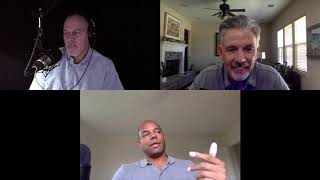
Thomas Anglero, Director of Innovation at IBM Norway, left a medical scholarship for love and technology. He argues AI is an ultimate version of yourself that helps you ask better questions, but leaders must confront ego and embrace humility first. Returning to face-to-face conversation and community practices, he says, is how you actually become future-ready.
Chapters
Welcome to the What Anyone Can Do podcast with Leo Battaglia and me, Randy Cantrell. This show picks up where our previous show, You're the Peer, left off, highlighting the simple truth that who you surround yourself with matters, and that if we enlist the support of others, give back to those who give to us, and pay it forward for the next generation, we can do anything. Author and keynote speaker Leo Battaglia and I talk with a diverse group of thought leaders who will share stories and insights that will help you succeed in business and in life.
How?
By doing the things anyone can do, but most of us never will. Welcome back to another episode of What Anyone Can Do, the podcast. My name is Randy Cantrell. I'm in Dallas, Texas. One gentleman co-host, Leo Buttari, he is in San Diego, but our guest today is from Oslo, Norway. So we've gone international and global today. Leo is going to be speaking with this gentleman at the Executive Growth Alliance. Get Future Ready Summit in Oslo on August 28th, 2019. And I'll let Leo do the introductions of our guests.
Oh, will do. Thomas Anglero, we're so thrilled to have you here today. Director of Innovation for IBM Norway. He's got 25 years of technology experience. Definitely among the most exciting and sought-after speakers in Europe. And he's an expert in the new culture challenges that come with the AI revolution Innovation and Explaining Disruption to Executives. Yes, I have the actual dubious distinction of having to follow Thomas on stage. This is going to be my big challenge, my international challenge. That day will be great fun. You know, Thomas, as I mentioned to you just before we got on, I watched the TED Talk you gave about Don't Fear Technology, Fear Yourself. And there were a couple of things about it that I thought were just so extraordinary, particularly how you really got everyone in touch with, you know, our greatest strength, which is our humanity and got us to reflect on things and feel things in a way that machines never will. Um, but I also, and I want to set the stage a little bit by, um, sharing a story with you. I had a client a number of years ago, it was an architectural engineering firm. This was when I was at, um, Helen Knowlton. And they'd been around, this 100-year-old firm. And quite frankly, you sit around the boardroom and it was a bunch of old white guys who basically saw themselves that way. They were looking at some of the challenges in the future and were just feeling that it was just daunting. They couldn't imagine kind of looking forward and figuring out how this firm was, was going to move ahead. And you could see that they had lost a real bounce in their step. So anyway, as I was doing some research on the company and I read their company history, right, So in 100 years, they survived wars and depressions and changes in technology and all this other stuff. But their history read like a bunch of dates and times, like typically that we read through this chronology, right? Instead of recognizing it for what it was, which was this company at every turn, every time it had a major challenge in front of it, they figured out a way to reinvent themselves and do the kinds of things that allowed them not only to survive but to really thrive. And I remember rewriting their company history for them and sitting around the table with them. And I said, not only are you prepared to handle the challenges of the future, I know I can't think of a company that it wouldn't be like more in their DNA to be able to do this. And I guess once they saw themselves as looking at it and recognizing what their strengths were, and what their culture really was about, it made them believe in themselves again. And they in fact really did that. And I'm wondering if today, as people who are either one, either unaware, or B, maybe really concerned about what's to come, you know, I'd love for you maybe to frame maybe for us what's to come and maybe talk a little bit about how we might approach that in a way where we can be successful going forward.
This is going to be a fun conversation. So let me, I have to start off with that meeting and that company. Did they, after they reflected on what you said and they realized that you were right, did they then start off a startup with those core values? Because that's the strength of that company, right? And with disruption coming and everything, you cannot continue down the same route of the same business model and all that. You have to dig down. Who are we at our fundamental, at our base, our base? What is it? Who are we? And you identified it. What they should have did was say was, we either start off a new department or start another company built on that because that is disruption-proof, generation-proof, technology-proof, blah, blah, blah, blah, blah. And that probably jumps all the way to the end of our discussion, but I don't know where the start, where the end is. For everybody listening on a personal level and a business level, what, who are you at your core? And for men, that is an impossible question because we're so full of it. All right. We're so full of it. We, We look in the mirror and we go, wow, you know, we would say, I look good today, or we flex our muscle. We have all this crap to find out who you really are. I mean, that, that is absolutely everything. Now, where am I coming from? I'm this— I work for IBM, Director of Innovation, travel the world, blah, blah, blah. What I realized is the deeper I go into tech, and now I'm responsible for all this AI in IBM, the deeper I go, and the closer I get to my spirituality. They are absolutely tied together. AI, an AI system never forgets anything. And an AI system can read today, the latest AI system can read 10 million pages of information in one second. In your lifetime, every one of your listeners in their entire lifetime, if they read as voraciously, continuously, by the time they die, they might read a million pages pages of information. Can you remember anything in that million pages? Can you remember page 6? Paragraph 2 is impossible. An AI system remembers everything, and because it's cognitive, it remembers the meaning of the first paragraph, the 1,000th paragraph, how they're associated to— it remembers your entire life and connects all those dots, not just in text, but also in visual, also in hearing, also in smell, and connects it all together. We cannot compete with that. But it's not a damn competition. This, I mean, I'm like getting all excited, right? This, this—
are you talking about men and women or you're talking about AI right now?
I'm talking about it, right? Don't go there, that's a dangerous subject. Yes, my wife always remembers more than me. I give up that fight, including my daughter. Now I covered all my bases, I can stay at home tonight. So here we go. The point where we're at with technology is as exciting as it could be because the tech is there for us. I like to use the example of telling men and women too, but mostly men, because as we get older, in the back of our minds, we know we have regret. I should have, I really, uh, all these things, right? So I like to tell people, listen, Do you remember that moment in graduation when you held up that diploma and you said, I'm going to conquer the world? That incredible, that Superman feeling, dun-da-da, here I come, nothing can stop me. With AI, your moment is back again. Because the AI, think of it as the ultimate version of you, is that version of you that never went out partying, that never did this and never did that. It knows everything you know. Your imagination, your intuition, your life experiences, plus this ultimate version of you. Where do you want to go? That's where we're at. That's why I'm so excited. But the only way to leverage this moment now is you got to know who the hell you are. That, that's it. So if you're scared about the future and all that, you're not at your core. You're at that higher level. You got to be— you have to man up. You got to be real with yourself. Okay, I'm a little bit overweight. Okay, I'm not as nice as I should be. I'm divorced twice. Oh, fine, fine. Dig down, break it down, break it down. Who are you? What do you want to be? What are your values? This is your next shot. With that, plus the AI that can answer any question, they could do, you know, you together, you will reach your ultimate goal. You will be the ultimate version you should have been. That's what's so exciting about AI. It's our next chance, and that chance is coming now. Do you get it? So the spirituality and the tech are the same.
So if we start considering AI not our competition but our partner—
yeah, it would be— yeah, not to consider— it is only your competition if you stay too high up on the the shallow thinking of, I've been working as an engineer for 30 years. I know everything about this system. If you stay there, of course you cannot compete with something that, you know, you know everything about that system, but the AI knows everything about every system built in every single country and every single manhole and every single pipe. You can't compete. Right?
So, right.
Yeah.
So if you get to the core of who you are, as an individual, how can you leverage AI?
Ah, one, you never really get to the core because when you— once you get to the core, once you think you get to the core, yeah, you ask yourself the next question which confuses the hell out of you.
Yeah.
But what you do when you get— you think you get to that point that you think you know who you are, at that moment things change. That literally The air you breathe almost changes. And at that moment, you start questioning things. That's the role of the AI, to help to get those answers. Do you understand? It's not that question of what is the meaning of life. No AI system will ever answer that. But you'll say, what if this? What if I try this? The AI will say, well, based right now in Israel, this truck is moving through there. This is happening in Southeast Asia. It will actually take a real-time look at the entire world, gather all these thousands and millions of data points, and give you an answer, and you take that answer with your epiphany, with your thought and your intuition, you combine it together and you ask the AI a next question. And now you're on your own journey, your own personal journey, your quest. Whether that's a personal quest, a business quest, a financial quest, it doesn't matter. You're on your personal quest, and there's no other button, there's no one else who's going on that quest, that same quest as you. Do you get it? This is as exciting as it can be, but it's scary as hell if you're afraid to look at yourself. I mean, really look at yourself.
It's a shallow analogy, but I'll make it anyway at the risk of proving my idiocy here. So the internet comes out, right? And Leo and I are much longer in the tooth than you are. So the internet comes out. We clearly have vivid memories of business and operating before that and before search engine technology. Is it fair to make any kind of comparison between search engine technology and the availability that we have to go down any route that we choose based on our own curiosity? And now we can look, instead of looking more external, now we can leverage AI to look more internal. Am I even close?
Internal and external. Yeah.
Right.
And if you were making the analogy of the moment before we had a search engine to the moment after search engine, that leap, I agree with that. I never saw that picture, but I agree with that because prior to the search engine, we had Encyclopedia Britannica in Western countries. Right. And the library. The moment Yahoo was the first, I believe. Yeah. And they're very rudimentary, just one little open space search engine. No, actually, they were all links. Sorry, Yahoo was all links. I remember, right? That opened up the whole world to us, or the whole world that was online. So yeah, it's a big moment. So we're at the next moment. But the difference is, The Yahoo moment was a text-based moment. That's kind of cool, thinking about that. Where AI is now connected to everything. When I say everything, I'm talking to lifetime visual feeds, 3D worlds. It's con— oh God. And then it's also connected to tomorrow. Now I'm getting really nerdy, sorry. If you have enough information about the now, if you have enough information about the past, then you're able to predict the future. That's where we're at. It's exciting as hell.
You know, it's funny you talk about Encyclopedia Britannica and the library and a lot of what was going on with search engine technology and all that. Everyone thought it was going to be the death of the public library. And I don't know about you, but you go into public libraries where I live today and they're packed. I mean, it's really incredible. And a lot of it was public libraries looked at their core, what are they? They are places of community, right? They are places that bring people together. They are, they have incredible strengths that allow us to engage with one another in a way that you're not going to be able to do sitting in your kitchen, you know, on your laptop. And so I think in many respects, as we look at all these things, and I love the way you talk about it, is once we get really back down and really dig deep and understand what our core values are, what our core strengths are, and then think of AI as a partner, um, in looking forward and not as somehow a threat. Um, then at least that's the start of something.
How could it be a threat? I think the media has hyped it up to be a threat. All it is, is again, consider AI just the ultimate version of yourself. Everybody likes themselves to a point. Okay, well, is that version of me that I didn't say yes when she came knocking on my door back in the second year of college or something like that, right? And I didn't go hang out with those idiots, then we didn't do something stupid, right? Well, if I could hang out with that guy, I would like to hang out with that guy. He's pretty damn smart, you know. He actually went to the weight room when I didn't go to the weight room, you know. Everybody take that picture yourself. That's a man picture and a woman picture. Go ahead, fill it in. I can't do that part, but I'm sure women can do it better than I. Is it intimidating now? No. And now that person also is connected to all the information, not all, but most of the information in the world. And that's you. What's so scary? But that's a real— that's what it is. AI is nothing but software. Are you scared? Is— are you and your listeners scared of Microsoft Word? Of course not. It's a ridiculous question. But AI is just Software. So simplify it. Don't take out the Hollywood in the Terminator picture. It's just software that has incredible amount of cognitive capabilities to answer your question. What are you going to do with it? There it is.
So that said, it is going to change a lot though in terms of how companies try to improve productivity and do all kinds of things though going forward. And it may be, there may be shifts in terms of the role people play inside these organizations. Organizations. I mean, and I think that for some is the scary part when they're, when what they know to be familiar is about to change. You know, we talked a little bit on the call before where I kind of mentioned this idea that, you know, people, it isn't they don't mind change so much, they hate being changed. And so I guess the question as we sit here is how can we make sure that we are part of and driving that change and not being changed?
I think it's a great question. So let me give you an example, and this is something I've been playing with my head too, because I'm a storyteller and I like giving a simple story for people to understand. So here we go. This— and again, I'm picking on men because I'm allowed to, right? So here we go, men, I'm bashing you. You deserve it. We all do. Here we go. Here's our ego, these men in the boardroom. You have— let's pick on stockbrokers or anybody who trades stock. Since the 2008 crash, or the stock market's financial crash, till today, the market, the index, has gone up on average of 11%. You didn't have to do anything but put your money in a damn index fund and you would have made on average 11%. You have leaders who are stockbrokers saying, I'm killing it, I gotta make some money. An idiot who doesn't understand the stock market would have made the same amount of return as this person who built and inflated their ego based on, look how much I made, I made 11% a year. You didn't do anything. This wave of prosperity, that's the problem— false sense of security. That's not who you are. You identified yourself with something that wasn't you. And now we're hitting the point where the 11% returns are no longer there, and you actually have to use your intelligence, but you haven't because you've been riding some other wave. This is what I'm seeing in boardrooms all over the place, where, you know the story of the emperor's new clothes, where the emperor's walking down the street naked? That's the boardroom. That's the boardroom. They're all partially naked to fully naked. And the worst thing— you get a 60-year-old man and make him insecure, you just woke up a sleeping giant. That guy is going to be vicious, right? Men, we're insecure. And when we get into our 60s, we're nasty about it. Don't make me feel insecure. Don't make me feel more bald than I already am. Don't make me feel stupid. All these things. That's what's happening. So the conversation, when I get into a room of one-on-one or a boardroom or whatever, it's a very soft conversation I have. It has to be a soft conversation. It's a moment for them. This is who you are, and it's okay. Now let's take care of you. This is your moment. How do you want to build up? Do you know how often I— is now, actually keep track of it— is one out of every three meetings I have like this with board meetings that there is someone in the board who cries. I am— I do like a Michael Jackson moonwalk to the other side of the room. As soon as I see somebody crying to my left, I moonwalk to the right so that everybody's following me. This is always— a man has a moment to get his dignity back because the worst thing he wants to do is cry in front of the other board members or the, the leader group, right? That destroys him. But that's because people realize that not what I thought I was, I'm not as smart as I am, but that's okay.
Yep.
In all countries, I don't care what industry and what culture, this is where we are in society. But what I'm trying to tell them is have that moment. And also when you look at AI, it's going to help you, right? So To me, this is a fantastic moment. You have another chance. You have another chance. Everybody wants a second chance. We all get a second chance.
So in less than 2 weeks now, we're all going to be together. We'll be at this Future Ready Summit. What do those words mean to you in terms of being future ready?
Maybe I'm repeating myself. To be future ready, I have to be honest with myself today. That's the first thing, I think, right? I have, on a personal note, the way I keep check and balance on myself, and I do this all the time, is I call my own BS. That's really hard to do. I want to do this, or I don't want to do this. And I go, God, Thomas, you preach all over the world. You talk to all these people. And here you are in this moment, and you're falling. What's wrong with you? And I call my BS in that moment. That is something we all got to do. And then once I do that, then I'm at that moment future ready because I'm centered. I'm me. I'm not full of crap. I've got my ego in check. I got my insecurity is on the outside, not on the inside. Now I'm future ready. I'm ready for anything. And also, I'm ready to love anybody 100% without hesitation. And I think that's something that everyone needs to talk a hell of a lot more is about love. Because as a leader, your job is to take care of them and to love them. I tell a lot of leaders who are men— back to the men thing— is that you're actually a papa. You're a papa to 50, 100, I don't know how many people, but you're actually the papa. Your role— they're supposed to look up at you. They're actually looking up at you and saying, Someday I want to be like you. That's just like a kid looks at their papa, right? As a papa, how much do you want to— how much do you love your kids? And leaders look at me like, holy crap, what are you talking about? I've never looked at my job as that. I said, yes, you are the papa. How much do you love your kids? They go, well, if I behave that way at work, that'd be totally different. I said, why haven't you? Don't you think your kid's been wanting, waiting for that? It's, it's, I find it's fun. I find it fantastic. And the tears start crying from these men and then they realize, wow, I didn't have to be an a-hole my whole life. As a matter of fact, one senior vice president of Europe's largest elevator So you can't forget who he is. He says, after 30 years, he said, I didn't realize that I didn't have to be an a-hole to all my customers. I said, you want to make your 30% more? Email. Can you hear me?
Yes. Now I'm sorry.
And so, yep. That's it. It's that simple.
Yeah, sorry, we're having a little bit of technology challenges on our end, I think, with the internet. But I did want to maybe touch on one thing before Um, we're done too. And that is, I love what you've been talking about in terms of some real introspection and reflection and getting to the core of who we are and understanding ourselves and how important that is. I think at the same time, when we get together with others and we take our focus away from our daily task and our daily things so that we can see what's going on in the world and take some time away from the daily grind to do a bit of that as well, so that we can, begin to absorb where the world is going and what's happening and how we can connect that with who we are. Talk a little bit about that.
Great points. So, um, the gathering of information should go back to old school and it should go back to talking to people. Get out of Facebook and get out of the whatever TV crap, right? I really think we need to go back. Remember the pictures of, uh, I don't know where you grew up, but, um, always in front of a building or something, there's always some old people chatting. You know, in Spanish we call it ponchichera. They always talked about everybody. They had all the latest news and things like that. We have to go back to that. You brought up a beautiful picture of your current library in your neighborhood, right? It's a congregation point in the community. We got to get back to that in terms of information and then connecting with people. Social media and the Instagram, that's the disconnection of people. Get back to talking. Get back to Friday night, shutting off the TV. I was gonna say put on a record, that tells you how old I am, right? Put on some Spotify, light the candle, and say some beautiful things to the person you love. Why don't we go back to some of those beautiful things like that? And then when you get back to work on a Monday, you will have changed, you know. You will be more full of life, more full of love. You'll be a better leader. Technology won't be as intimidating. You're connecting. You're connecting with people. You're connecting with yourself. Old school's got a lot of great values. And I'm a nerd. I'm hardcore technologist.
I'm—
the deeper I go, the close, the more I get closer to my spirituality. They are the same.
Well, as I mentioned, that's what I loved about your TED Talk. I really encourage everyone to, to have a look at that and look at the many of the other talks that you have on video, because I think, uh, you know, again, they are so profoundly and wonderfully human and, uh, just, uh, really, uh, Really great stuff. Randy, want to take us out here?
Yeah, I got one question, Thomas. How does a guy like you, how does a technology nerd, in your words, how do you get to where you get? And then the IBM moniker to boot. I mean, for an outsider, it would seem very incongruent, right?
Yeah, yeah. That's a long answer. I'll try to give you the shortest one possible. Do another show on that one. So here's— no one can see me, all right? So here's the details. I'm actually Puerto Rican, right? My family's from Puerto Rico. I'm born and raised in the Lower East Side of New York City in the projects, in the ghetto. I fell in love at first sight with my wife. She's a transfer student from Norway, 6-foot blonde, right? I can't help it, idiot. I was going to night school. I got a scholarship to become a medical doctor. I called her on the phone because she had moved back to Norway, and she gave me the ultimatum. 3 days later, I called her back and I said, I got a one-way ticket to Norway, and I never looked back. I ate my own dog food at that moment when I had in my hand a scholarship to become a doctor. And on the other hand, I had the telephone, I had the love of my life. I said, I manned up. What is life about? This is another country, I don't speak that language, I've only been there once for a couple of days on vacation. Life is about love, and I went for it. The piece of that story that's missing was back then, this is a long time ago, It was $15 a minute to call Norway. So I was one of the first 10 people in the world to use the internet as a phone call back with this company called Vocaltek a long time ago. And that's where I got into tech. And tech and love in my, in my life were born in the same moment. So I guess that explains it. It explains it and is natural. And the IBM thing, God bless IBM, great company. And it is, look, I think an old company like IBM that they embrace me and I embrace them is a sign that anybody can turn and that there's possibilities for everyone. You know, don't doubt yourself. Don't beat yourself up. You have this, this moment right now. Literally everybody listening to me right now, take your shoulders down, let go all those problems. Don't, don't beat yourself up, man. It's okay. No one's perfect. And they say, what do I want to be? What do I want to do?
Yeah, I want to do that.
Do it. That in your recessive mind, that's your secret thought. Do that, and then, you know, you, you, you'll be in love with everything, and the world could be a perfect place. And AI, if you want to put it in the story, will help you out. But to me, this is where I'm at in life, and I couldn't be any happier. And, um, the request for me to speak all over the world is, it's blowing up, and I think that's a wonderful sign that the world wants more love, and I am more than willing to give it. So Thank you very much for the opportunity to speak on this podcast.
Well, thanks so much for sharing all that with us and sharing that sentiment and bringing a little love to what anyone can do. So thanks very much.
Thank you.
You bet.
To learn more about our show and what we do, to submit questions to us, and to subscribe to What Anyone Can Do Podcast, please visit our website, whatanyonecandodo.com. What Anyone Can Do Podcast is hosted by Leo Battari and me, Randy Cantrell. Music provided by Kevin McLeod. Cloud is Vibe Ace, licensed under Creative Commons by Attribution 3.0 license. Thanks for watching or listening. We hope you'll share the podcast.










