What Anyone Can Do Tom Rubens On Accountability 1003
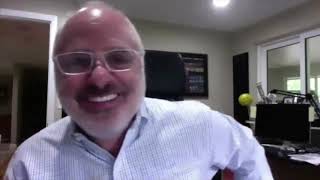
Tom Rubens talks accountability as personal ownership, not punishment. He argues leaders should serve employees and build trust through clear expectations and honest feedback. A restaurateur focused so hard on staff well-being he lost sight of the business itself.
Chapters
Welcome to our new show, What Anyone Can Do Podcast, with Leo Battari and me, Randy Cantrell. Our new show picks up where our last show, Year of the Peer, left off, highlighting the simple truth that who you surround yourself with matters, and that if we enlist the support of others, give back to those who give to us, and pay it forward for the next generation, we can do anything. Author and keynote speaker Leo Buttari and I will interview a diverse group of thought leaders who will share stories and insights that will help you succeed in business and in life.
How?
By doing the things anyone can do, but most of us never will. Tom Rubens is the founder of Tom Rubens Coaching and the author of the book Life-ness: Harmonize an Entrepreneurial Life. Over the last 40 years, Tom founded, bought, sold, and managed businesses and industries as diverse as a commodity trading company, a real estate brokerage, investment groups, and minor league baseball and basketball franchises. Find out more by visiting his website, tomrubens.com, We welcome Tom to the program.
Tom Rubens, welcome to the show. It's such a pleasure to have you here.
Hey guys, thank you so much for having me. I appreciate it. I look forward to this.
Yeah, you bet. You know, Randy and I have both been pretty, you know, obviously fascinated by a lot of your work around accountability. And Randy and I were just chatting just before. We get started here today. And Randy had a great question that I would love to maybe have Randy, why don't you kind of kick that off? Because I know that word accountability, it's one thing to have a dictionary definition. It's quite another when we start dealing with the connotation of that word, how it makes people feel and all that. But Randy, I know you had a specific question for Tom around that based on some of Tom's work that you looked at.
Yeah.
You know, and I know, Tom, that you come from a position that the number one, it's the number one misunderstood key to business success. And our curiosity is, what are you finding are the big misunderstandings about it?
Well, I can tell you one is, and we all, I know that even though I preach this, sometimes I fall into this little rut myself where We say things or even feel things like, "I'm going to hold you accountable," which to me is, it's an insult. That's how we treat our kids. You know, "Hey, if you don't bring the car back by 11 o'clock, I'm going to hold you accountable. That means next weekend you don't get it." Or, "If you don't do your homework, then you're not going to get this prize." Or, "I asked you to mow the lawn. I'm expecting that that means the front yard and the backyard. I'm going to hold you accountable." Well, no. To me, the way to treat people is to live accountably and expect you to be accountable. In other words, I expect you to live an accountable life. I expect you to say, if you tell me you are going to show up at 10 o'clock, I expect you to show up. I'm not gonna hold you accountable because that's— you're not a child anymore.
So then one of the misunderstandings is that people misunderstand a threat for accountability? I mean, is that what you're saying?
Accountability is a state. I live accountably. You live accountably. Now that doesn't mean that we're perfect 24/7, but I expect that— I don't have to say, now look, Randy, this is the way we're going to divide this project. I'll do this, you do that, and we'll meet together on Friday to discuss the results. I don't need to add, and I'm going to hold you accountable to have your stuff done, because I'm not. I'm going to do my stuff and you're going to do yours. And I think when we get to— when we use accountability sort of as a, uh, a sword, you know, okay, that's it, you better be accountable. Well, that's— it doesn't give a person a chance to really shine. It doesn't give a person a chance to show you what they can do.
If I do my work but you don't do your work, then what does accountability look like?
It looks like, uh, you didn't perform, okay? So you weren't accountable to this project. That's what we— in that case, I think we would agree that you, you did not perform accountably. But the issue is about holding you accountable. Yeah. And I'm sorry, go ahead, Leo.
Yeah. It sounds to me like, um, so there's a couple of things. One is that accountability is something you own. It's not something that owns you. It's not something that someone imposes on you in that way. The other thing about it really comes from, you know, and I love this description. There's a former director of the, uh, director general of the school system in Finland. His name is Pasi Sahlberg. And Pasi Sahlberg says that there's no direct translation in the Finnish language for the word accountability. He said in their view, culturally speaking, that accountability is simply what you're left with after someone's sense of personal responsibility gives way. So I think in many respects what you're talking about is owning it, having a sense of personal responsibility, knowing that my currency with others is that I will hold myself accountable. I will do what I say I will do. and people can depend on that. And that as long as we own that ourselves and we have that sense of personal responsibility and everyone shares that, then we're all going to do really well. We're going to build trust. We're going to do all the kinds of things that where accountability becomes a very positive and powerful force, as opposed to having something where people feel like they're on their heels or they're being micromanaged or they're being looked at in a way that, uh, just feels crappy, to be honest with you, right?
Right, now, so that's really perfect, Leo, because here's the deal. How many accountable humans are also victims? You know, we know, we all in our lives encounter victim mentality and people who show up perpetually as victims. None of them, in my mind, if you're showing up as a victim, that eliminates you from the accountability group. Because you're already saying, you know, my life was great until Randy showed up, and I loved my job, and then Randy became, you know, it's like, no, it's, I have a choice. Randy may be a good guy or a bad guy. I have a choice how I want to respond to him. And if I respond to him and allow his toxicity, if he, if he really is toxic, to contaminate me, my choice. That's not accountability. That's blame. That's victim. And we got to get away from that as soon as possible. You know, I hope that answers your questions, sort of.
Yeah, no, and I think this idea, getting to Randy's point about accountability in the workplace, I think that, you know, you've kind of gotten to the heart of how misunderstood it is because it is understood and oftentimes used, to your point, as a sword, as a threat, as opposed to Having people take ownership of that and just simply understand that when you create a culture of accountability among employees, for example, that again, my currency is in terms of my value, my respect, my everything that I get from my colleagues is about me stepping up, you know, accepting responsibility that I'm going to do what I do. I'm going to take pride in my work. I'm going to do it well, and that everyone can count on me to do that. And my hope is that through others modeling the same behavior, then I can count on them as well. And that, you know, in terms of the accountability, that's kind of the more of a counting on one another as opposed to, you know, feeling that this is some imposition or some threat.
And I think it's— I'm glad you pulled the count out of the word because that's totally— it's on And another piece of this is, if I'm living an accountable life, I am clear in my communication. So you and I aren't going to be in doubt. The example I gave of your kids showing up, you got to have the car home by 11 o'clock. I don't want you sliding into home just under the tag at 11. I want the car in the garage, engine off and you at the kitchen table telling me about your evening. And but if I don't communicate that properly, shame on me. And if I don't— if, let's say, you bring the car home at 2 o'clock in the morning and I don't do anything about it, well, you know what, you— I just basically gave you carte blanche to bring it home at 2 o'clock all the time because I wasn't clear. I wasn't 100%, and then I didn't enforce it. You guys, one of you guys I know will know whoever it was that said inspect what you expect. Well, if I don't let you know, hey, I noticed that you didn't do this, and I expected you to do it, well, then we got a two-part problem in accountability. Maybe I didn't have the courage to call you on it.
Right, I mean, I think there's an issue of clarity of expectations. I also think too that You know, so one of the things that we talk about, or, you know, I talk about in the book on what anyone can do is this idea that if you look at, um, uh, research from the University of Scranton basically says that 92% of people who take on a New Year's resolution will fail at it. Okay. Sometime in the course of the year, it may happen in the first 30 days.
Guilty as charged.
So, But think about this, right? So there are people who have a high sense of personal responsibility, who are good people. They haven't selected goals. They're not trying to make it to the Olympics at the end of the year. They've picked a goal, hopefully, that is halfway within reach. And yet, left to our own devices, we often just— we're off to a strong start. And then somehow, we rationalize 3 weeks later, 4 weeks later, I didn't have time for that. Whatever excuse we can conjure. And yet we sometimes can surround ourselves with people where if I say to you and to Randy, hey, this is important to me. I want to achieve this goal. And to do that, here are the things that I'm going to have to do every day. I would love it if you just asked me about that, you know, and you're asking me not to hold me accountable in that punishing way, but you're asking me because I've told you this is what I want. And you, because you care about me and because you care about me being successful at what I said I wanted to do, then that can be helpful when we make that public and we get people to play that caring role in our lives. And, you know, I guess I wanted to get a sense of how you've seen that happen, whether it's inside the workplace or outside the workplace. And I think it paints a picture kind of to your point, that's a more positive view of accountability as opposed to this negative connotation that people have of it.
And I think pertinent to the theme of your book, what anyone can do, this is pretty simple. I can do what I say I'm going to do. I can live up to my promises. Anyone can do that. Now, we don't always do it all the time, but anyone can do that. And so much of success in life, it was either Woody Allen or Groucho Marx said that 80% of it's just showing up. So you show up. Well, a lot of people don't. And so, but to the point of what anyone can do, we can all do so much if we live, if we just do what we say we're going to do, if we make a commitment and follow through, man. We can accomplish, we can all accomplish far greater things than we are currently accomplishing. Absolutely. And I hold my hand up guilty as charged because I don't do that every day. I say to myself, I'm going to do this. I set a goal and I don't, I don't reach it. It's not your fault. It's not, oh, well, it rained today. It's, I apparently wasn't deeply committed enough to do it. Well, shame on me, but there are those among us who are able to just stick to it every single day, and frequently those are the ones that we are looking up to and admiring their accomplishments. It's not because they're smarter than we are, or they started with more money, or whatever excuse we want to use, or I got 6 kids and therefore I don't have time to, you know, No, they just made a commitment and stuck to it.
Tom, you say that you believe that most business issues stem from human nature, poor communication, and great ideas followed by facepalming execution. Let's talk about human nature a bit. In what ways are you seeing that manifested and what are some solutions that business owners can deploy?
Well, I'm glad you asked me that, Randy, because that's sort of one of the— another sort of word or expression that is a key part of what I do is I believe that this notion of work-life balance is such a crock. It leads us down a really bad road. I think that what we should be seeking and what business owners should be seeking is harmony. And my book is all about that. It's called Lifeness, you know, harmonize an entrepreneurial life. And so the, this notion of, uh, I've got it. Like some, some people think that management is telling people what to do. For example, they think that's what I do as a manager. I just tell people what to do. No, I think You'll find that if, first of all, some of us need— some of the business owners I work with need to remember that actually they work for their employees, not the other way around. And secondly, when they encounter— and this I see so often— when they encounter a problem, maybe it's a problem employee, maybe it's a problem customer or client, they'll always look— they might be looking for balance. Oh, let's Let's do what's fair. Well, to me, balance implies conflict. I mean, I don't know about you, but the first thing I picture I have when I think of balance is a teeter-totter, which, you know, depending on our own height, weight, and balance, we've got to constantly move to keep that thing level. So my counsel is always to seek harmony. If you and I are in the midst of a disagreement, the best thing I can do And, and usually the first one who does this wins. It's like the first person to apologize all of a sudden gets to be on top again, you know. Oh, he apologized. Now I kind of wish I had. Well, my point is, let's harmonize. So you're singing a song that is totally dissonant for me. We are just— we have a business disagreement, and there is no way I can tolerate listening to your song, and you can't stand mine. Well, we could just sing louder, see how that goes, or I can find the harmony, I can find a way to harmonize so that your notes aren't so dissonant. And then what happens when someone harmonizes with us? Even if it's like, wow, it's like, where did that come from? That sound is so familiar, I love that sound. Of course I do, it sounds just like me. Someone's harmonizing with me. And I find that with clients, if I can get them to, Reach for harmony. Reach for an opportunity to sing someone else's song in their key, not in yours. You've instantly created a friend. You've created a colleague. You've probably been able to turn around, uh, what was previously a toxic employee. Sing her song. Sing his song. And you'll find that soon enough The opportunity will arise for them to sing yours. So, uh, I don't— I hope that answers your question. I mean, I just think that's, that's such a common issue in not just business, of course, but in our lives. Um, and I, I try to use it all the time for me. I mean, I try to use it in my life all the time, and of course then it rubs off on my clients.
You know, one of the, um, interesting things you bring up, and I'd love to get your reaction to a couple things. Um, one I remember writing a piece a long time ago just talking about this notion of work-life balance and that it's such a false construct, number one. I mean, all it is is a path to being average at everything, you know. So, but I think what's been interesting is work-life balance has become kind of the, you know, part of the language of millennials in particular when they talk about it. In fact, so I teach a number of graduate students at Rutgers University and they're they do these videos and they talk about work-life balance being important to them. And, you know, you think about going on a job interview and talking about work-life balance to the person who's going to hire you. And it's kind of like sending them the message of like, oh, I think what you do is important. Don't get me wrong, but I have things that matter to me too. And it's like, well, really that, you know, so what I asked of them instead, I said, let me, I said, let me offer this as a way to say the same thing, but I think accept it in a very different way. I said, what if you said to your employer that I'm committed to excellence in my life, both personally and professionally, in everything I do? How does that feel? That's every bit what you're trying to convey from a work-life balance standpoint, but with a completely different, you know, a way that that would be accepted. And, you know, why wouldn't we be committed to excellence in our personal and our professional lives? And, and be present, you know, in, in those areas in a way that allows for us to flourish in those areas as opposed to being this work-life balance nonsense, which I think is just wrong on every level. You know, Randy, what do you think about that?
No, I listen, you're preaching, you're preaching. Uh, you know, I, you know, I'll say amen to that and agree.
Okay.
You know, I think about, Alan's guys is, uh, and for me, and we're all mature guys, which I think is helpful for context, especially to people that are just listening to this podcast. If you're not, if you're not watching the video, um, skins on the wall and all that, you know, a three-legged stool, I can balance pretty well on two legs. Most people can, but one, you get two legs up off the floor and it's a no-go. So whatever those 3 big things are, you know, in life at any one point, I was, I was a young father when I had my first CEO gig and I was working 80 hours a week is not an overstatement with 2 little, you know, rugrats at home. I had no, I had no balance, you know, the, the, the time of my life, the career, you know, the price that you pay for the climb and the grind. It just, it was what it was. So I think context, you know, matters as to at one moment in time, something comes off the floor because something else demands your attention. And yet I think, and Tom, I'm curious your input, that harmonizing back when I was 25 in that situation, it was in harmony with my life. I didn't love every minute of it. That didn't mean it was always fun, but it was congruent with the overall big picture of what I was trying to achieve.
And I don't know your situation, but the first question I would ask is, was that in harmony with your wife's life? Is that what she wanted? Uh, no, hours a day.
No, I can absolutely unequivocally tell you no.
Okay.
But we both, but we both had an awareness to know that it's this moment in time And, and I don't know, it's, it's perfectly up for debate. Work still is a big differentiator. Putting in, putting in the work and having the patience, which I come from a different generation for sure. Uh, most of, a lot of my work is with young adults. I happen to love young adults. So I don't come from this bias of thinking that, well, these new kids, they don't get it and they don't, I think they are so far ahead of us in so many ways. It's not funny. And I'm frankly, I'm envious, but I knew as a 25-year-old, which is way back in the rearview mirror for me now, that some of this is the price you pay. So yes, my wife understood that.
Do you love it?
No, it just, it was the time.
Right.
And so We've all got to do business in the, in the, in the moment.
And, and you know that, so I'm glad you, uh, clarified that for me, Randy, because really, uh, that's a— if she's on board and you're— you agreed that this is where we're going to be right now, we know it. We also know we're not going to be here forever. So, uh, as tough as it is, we can, we can open our eyes and say, okay, I get it. I don't really feel like changing diapers again right now, but I know that I'm just putting money in the bank metaphorically for our future. And I know Randy's out there doing his thing. This is my contribution. And, and so you guys were clearly harmonizing that.
Oh yeah, for sure.
You were doing what you loved. I hope she was doing what she loved, and you were doing more of what you love. You would have liked to have been home too. But you did it in harmony. And whether or not that was— whether or not you would go back and do it the same way doesn't really matter. You were in harmony.
The good news is, Tom, we're on year 41 of our marriage, so it worked. The end of the story is pretty good so far.
Yes. Well, and not just that, but your kids too, you know. So, I mean, and clearly it worked, so that's great. Because the work-life balance group would say, "Well, that's nuts. He's got no work-life balance." Well, you know what? He has a partner and they do have balance because they have agreement, they have accountability, they have communication. You didn't just one day say, "I leave for work at 6 o'clock in the morning and not come back till 10 without being clear this is what the deal is for right now." Yeah, nor— so, so you had harmony, you had accountability, and, and he was certainly—
and he was doing what he's saying he was doing, right? He was working. He wasn't like playing golf like 3 mornings a week, you know?
No, he was, he was committed. Yeah. And, and you know what, we, we've— I, I'm gonna assume that we've all been fortunate through much of our business life to do what we love, so it isn't like manual labor. It's like, wow, I get to get up and do this again. And oh, by the way, they're paying me for it. So, I'd like to think that your wife and any stay-at-home mom or dad is that committed and that joyful about what they do because I can tell you, I work still and I'm older than you guys, but I still work a lot of hours. Please, I don't want this to get around, so let's just keep it between the three of us, but I would do it for free because I love what I do. And every day I get up and I get to do it. I don't have to do it. I get to go there and work with these people. I love it. Uh, so yeah, do I spend a lot of hours doing it? Wouldn't, uh, absolutely. If you just— I mean, there's— I can't imagine anything you could say to me, uh, on the positive side. Okay, you just inherited a gazillion dollars or whatever, it's not going to change me. I'm still going to get up in the morning and go work with my clients because that brings me joy.
Tom, what's the resistance? What's the big resistance that you find to your clients as far as accountability or any of these big issues for you?
Well, it's funny when you started asking that question, Randy, I thought you were going to what is my resistance? You know, what keeps me, holds me back?
Yeah, we'll answer that too because that's a good one as well.
But then I was very relieved when it was about other people and I realized, I gotta answer the truth.
Yeah, you just shot your mouth off, so go ahead. Yeah, I'll let you answer. Good, good, I appreciate you.
So I don't know if, I hope both of you have read Steven Pressfield's book, The War of Art, and he talks, it's a whole book about resistance and what the things we do to create and sustain this resistance that stands between us and whatever success. You know, Leo talks about his book. I know that when I was writing mine, it was like, oh man, I could come up with all sorts of reasons. I'm a very slow writer to begin with. And then I could just agonize over a paragraph, and that paragraph could keep me occupied for days or hours, or I'll just sit in front of my computer. So resistance for me, first of all, it isn't a thing. It isn't like it's the— Facebook or it's baseball or golf, it's me. It's all this, all these games that I play inside, stories I tell myself about. Yeah, you know, that's a good idea. I think you should spend a little time on Facebook because you're researching, you're really checking, you know, you know, I, I got, I, I, if I could write a book half as good as War of Art about resistance, I might try it, but I think he's got He's got that ground so, so well covered. In terms of my clients, I think my ability to help them work through resistance is strictly born from my own ability to resist. And what, what do I see? I guess I could point to a meeting I had yesterday with a client, very successful restaurateur, who we're going over the books for the restaurant. And he loves what he does. He's no question dedicated, but his blind spot is that he really doesn't look at his books that much. So when I pointed out, I said, you realize that you've got 3 employees who make more money than you do? He was shocked. He was absolutely shocked. Well, really? Because that's not where— He was focused on making sure that everyone who comes into that restaurant is treated well, that the employees are treated well, that the food is good, and he loves each part of that, but he's spending so little time on money. Well, so, and to me, that said a lot about where his, some of his issues are. I don't know that he really is comfortable making a lot of money. He's very into running his business like a democracy. And I said, you know what, first of all, it is not a democracy. You own 100% of the business. And second of all, in my experience, and I'd love to hear this from you guys, but in my experience, employees really like it when their boss makes a lot of money, shows up with a brand new car, because to most of them, they're not feeling jealousy. They're feeling job security. I'm glad my boss is making so much money that he could buy a brand new house and a new car, and I'm getting paid well, so I'm totally cool with that. If my boss traded in his BMW for a Yugo, I might worry. It's not about, well, I want to be on this level playing field with my employees. So that was an issue he had. And I don't know that we've solved it because we just met yesterday about this, but I know that I'm working on him to take as much joy in the result of all of his work, the monetary result, as he's taking in the joy of seeing people happy in his restaurant.
Nice. You know, I guess if I were to comment on that one thing, I think that You want us to know that your boss is successful. You don't want it lavishly put in front of you, but you don't want him rubbing your nose in it. Exactly. I think this is—
well, y'all may have seen that. Y'all may have seen that social media meme. It's a guy leaning on a Lamborghini or something, and the verbiage basically says, yeah, you know, work really hard again this year and blah, blah, blah. And I'll be able to buy another one of these for myself next year, you know, which is kind of, kind of funny and telling.
He's really leasing it anyway.
Exactly. Exactly. Hey, look at it for Instagram or something.
I think, um, you know, some of the themes for me as we kind of wrap up here a little bit, uh, clearly one of expectations, being clear about our expectations, communicating and how important that is. And I think finally what felt really good was, Tom, when you talked about it, and I think Randy and I can, you know, feel the same way about just loving what you do. And I think if you have clear expectations for yourself and others, you have good communication, and you truly love what you do, then I think the issue of where accountability falls in our life in a positive way can be, I think, very powerful for our success and happiness.
And I just want to piggyback on what you just said, Leo, because when you talk about expectations, I think it's important, again, as we live accountable lives, that, and as bosses, as business owners, is to not just communicate what I expect of you. Okay, you run this department and I'm expecting your department to have the— No, I let you know what you can expect from me because absolutely I've got my own blind spots. I know that, and they are blind spots, so turning around, I'm not going to see them when I turn around. They're always going to be my blind spots. I need you to help me with that, whether I own the company or what. So I'm going to tell you what my— what you can expect from me. And if you see me behaving in a way that runs counter to that, call me on it. I need help. We all do.
Yeah. Well, I think that's true. I think that, um, none of us does this alone. When we, um, did our podcast for the Year of the Peer last year and we had 50 guests, all of whom were very successful in their own right, we asked them Did you get where you are today because you did it all by yourself? They all laughed. You know, I mean, of course not. You know, so we all help one another. And I think it's something we can all do. I think if we're not afraid to enlist the help of others to help us do what we do, and if we're willing to return the favor and pay it forward as well in our lives, I think that we as individuals and as a society and businesses are capable of really extraordinary things. And Tom, I just want to thank you for being with us on the show today. We just really enjoyed having you. It was kind of nice to do a deep dive on the accountability piece. Randy, anything more? Last word maybe before we wrap up?
No, I appreciate it. Leo and I both are obviously huge fans of it and the tagline for the podcast, because Leo, Tom's a co-author of a book called The Power of Peers, and, uh, back in 2016. And so the tagline last year was, who you surround yourself with matters. And so your, your, your, your last thoughts there, completely congruent, at least with our philosophy. Uh, we're evangelists. We're, we're absolutely on a mission to propel that notion for our audience, to try to convince those that may not yet be convinced. That it is important. It does make an impact and it does really leverage your ability to do what anybody can do, but boy, does it give you big-time power. So thanks. We appreciate your contribution.
Well, thank you for having me. And I just have a little advice for Leo here, which is, here's the deal. When a guy has an thing going on that Randy has. It's like they always— it's so hard to keep up because they are so— people instantly like them and believe them. And then, you know, those of us who speak regular English, like Leo and I, we're sort of left behind.
I speak Oklahoma and Texan. It's a whole different language.
I sympathize with you, Leo. Every, every week you've got to have this compadre here who just sounds like a saint, and you just sound like a guy.
There you go.
Hardly. He's the brains in the room. That's why, that's why you guys are the bright guys and I'm sitting here in the dark. I'm like a mushroom.
He is the handsome one for the group, I'll grant you that. But you know, it's, it's that voice. So anyway, thank you guys both. I really appreciate the opportunity to be on the show, and, and I look forward to reading your book, Leo, as soon as it comes out.
You bet. Well, you have a great day. Thanks so much.
Thanks.
To learn more about our show and what we do, to submit questions to us and to subscribe to What Anyone Can Do Podcast, please visit us at whatanyonecandodo.com. Podcast is hosted by Leo Battari and me, Randy Cantrell. Our assistant producer is Katie Rutkin. Music provided by Kevin MacLeod is Vibe Ace, licensed under Creative Commons by Attribution 3.0 license. Thanks for watching or listening What Anyone Can Do. Please share the podcast. See you next time.










