D.C. Spotlight: Insights with Rep. Mast
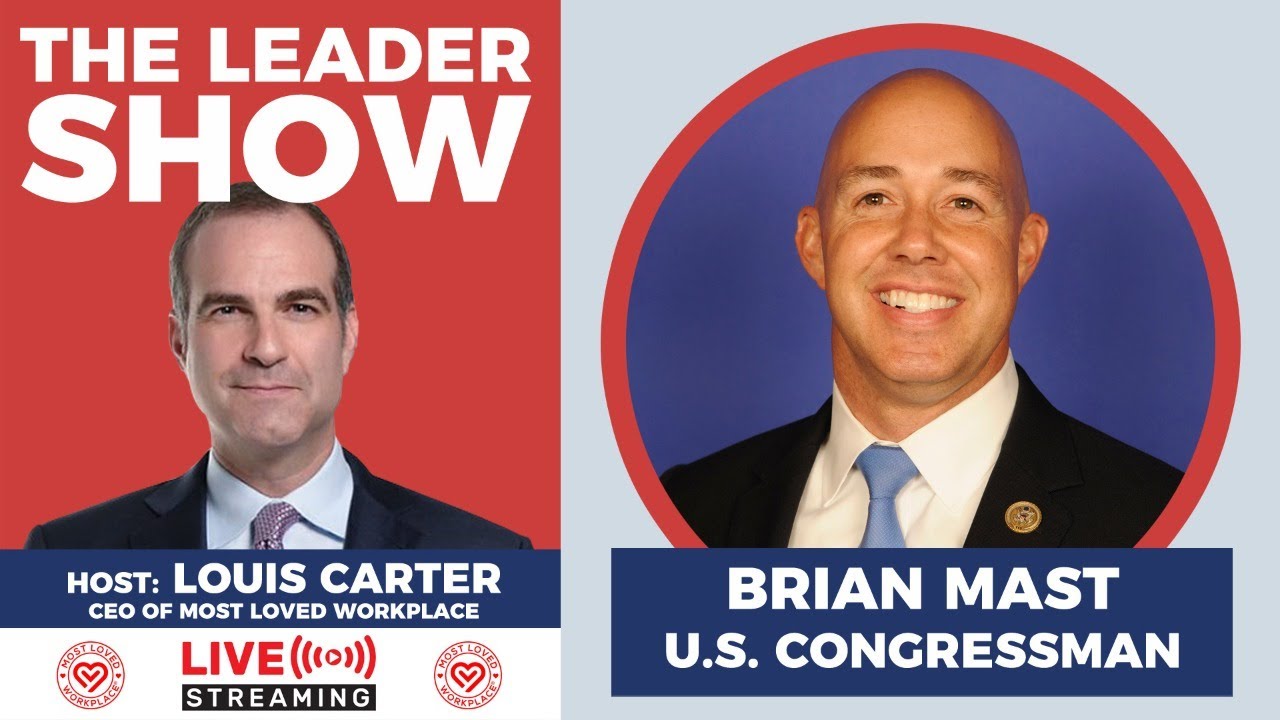
In this interview on The Leader Show / Newsweek Today, host Speaker A talks with U.S. Representative Brian Mast about a range of current‑policy and personal‑leadership topics. Mast frames his congressional role as a temporary stewardship of "We the People" and critiques the Biden administration’s unelected bureaucratic mandates, especially the push for rapid electric‑vehicle (EV) adoption that he says creates false demand signals, strains the electric grid, and harms auto workers. He links these policies to broader inflation pressures and argues that government‑driven wealth redistribution often hurts the very workers it intends to help. Mast reflects on his Army service, emphasizing that good leaders never ask subordinates to do what they wouldn’t do themselves, and that decisions have life‑or‑death consequences. He discusses his ongoing missions: veteran suicide prevention, environmental conservation in Florida, and his role on the Foreign Affairs Subcommittee on Oversight and Accountability. When asked about bringing opposing stakeholder groups together, he stresses honest dialogue, respecting both "yes" and "no," and avoiding two‑faced behavior. Finally, he shares a resilience framework—viewing personal and professional challenges as "explosions" that, when met with disciplined, calm problem‑solving, build character. The conversation blends policy critique, leadership philosophy, and personal anecdotes, offering insight into Mast’s perspectives on governance, economics, and service.
Chapters
Everybody, welcome today to The Leader Show. This is a very special show here on Newsweek Today. We have Representative Brian Mast here with us today. He's calling from his office in Washington, D.C. Brian, thanks for, for joining us today.
Thanks, I'm glad to. I would start with a correction, number one. That's not— started off on a bad foot. It's not my office. Right? It's the office of We the People. I have the honor of holding the office for a certain window of time, and, uh, in that, people should always, when they come to Washington, make sure to come by here, see their seat of government, of federal government, and ask questions. But, uh, it's just, uh, mine to, uh, to sit in for a window of time. It's always the seat of We the People.
It's a great perspective. I love how you see that, and I know a lot of CEOs who say that as well, who truly mean it like you mean it, which is, "I'm here to serve. This is who I am." And you have done that for the country for so many years and in such selfless ways. And I want to first start that out by saying thank you, and I mean this. I know a lot of people say this to you. Thank you so much for your service, not just in Operating Enduring Freedom, but in the U.S. Army for so many years and all you've done for our country.
I love the Army. It was the time of my life. I'm glad they paid me, but reality is I would have jumped out of planes, roped out of helicopters, kicked in doors, done the work that I had the opportunity to do for free. Like I said, I'm glad they paid me, but it was the time of my life. And as I tell folks, to be there for the times where you get to save life, you got to be there for the times that it might take your own.
Right on. Yes, absolutely. And lives you did save and enduring freedom you did serve for and so many other in our country during times of need. So thank you so much, really, from the bottom of my heart. I, I was not there, and you, and you were doing that for all of us, and you're doing, and you keep doing that as a congressman in your, in We the People office. And so that's, that's why I want to talk to you about different things today. Brian's really very, it's a really cool guy. And, uh, just to let you know, he is, he is so much like the people that I actually met Brian. He was so nice to everybody at a restaurant we met at, right? Brian, I just want to say this— this is the kind of guy— he's got to eat too. And he, he was so kind, bought us lunch, had great discussion, talking to people like they were his friends. This is, this is a kind, good person. And I wanted to just say that about, uh, Brian first and foremost. Um, it's like meeting a friend. So thanks, Brian, for, for being like that, so approachable and such a good guy in that way. Um, Brian, so Brian was kind enough to indulge my questions for today, which, uh, are really around current events, things that are happening around us now that, uh, you'll likely—
you're—
when you do the gavel today, we'll be talking about, uh, in, in the House. Um, the first is the UAW strike. Wow, a lot going on around the UAW strike, a lot for American businesses and, uh, our relationships globally, right, with China. And what this means for our industry and our economy. Where do you stand on the UAW strike and what we will see for our economy and what we should be thinking about really?
Yeah, I take it to the, let's take the UAW strike to a term I would say root causes, right? And root causes directly by the administration. They have, I think it goes without saying, a great deal of power. But the reason I say that is a great deal of power outside of making laws. Everything that they're doing with the auto industry, with demands that this percentage of the fleet be electrified by 2024, and this percentage by 2025, and this percentage by 2026, those were not things that were written with black ink and white paper in the House of Representatives and then passed over to the Senate and then went to Joe Biden's desk and were signed into law. These were things that unelected bureaucrats in agencies, in bureaucratic agencies, went out there and just decided for the American people. And, and when they decided that, what do they do? They're creating demand signals. They're saying, okay, listen, uh, company Ford or company this, there's going to be a demand for this, so produce this and then sell this, and then that will be reflective in your profits, which ultimately matters to the, the line worker, right? And, uh, what they're doing is they're creating false demand signals. I don't know how many billions Ford lost in this last quarter, but it was a fair amount. They have electric vehicles stacking up. We know the electric grid can't support the way that they want to electrify just the auto industry, much less every— everything else across the country. When I say they, I mean the administration. And as a result, you have people that are in the auto workforce and by extension, people that do tool and die in other companies or people that are at the dealerships as salespersons. You name it, that are affected by this. Just not just the United Auto Workers that are affected by bad policy. And then you could go even beyond this and say, these folks want more money, right? So how do you give people more money? Easy way as elected people, take less money outta their pocket, right? Because it's all their money to begin with. So how about we as representatives, the government say Washington has to do more with less. And the person that goes to work every day, since it's your money, you get to do more with more.
And this is this concept of redistribution of wealth, right? And the, the, and the question is, you know, how do we redistribute wealth to create the most economically sound situation for all? You know, that, and that, and that's what is— people are saying that to you as well, I would assume, is there's this moderate viewpoint of just redistribute wealth, right? Let them have what they need. And then what happens as a result of that though, right? You take away the money from a larger corporation to give to the United Auto Workers Union, right? Now what, right? So there are other methods that other people are saying to say, what can we do to negotiate? Are there other things at play than just salary and just policy? Is it about treatment? Is it about fair treatment? Is it about the way they're working together right? Because we're, you know, we're talking about a huge impact on Tesla and on EV vehicles and the way in which we work with China. Like, how do we do it so that we don't get in these labor situations into the future? Is there a larger issue at play here, or a way we can kind of rise above the, the, the, the salary and economic disparity requirements?
Look, I don't think exactly that, because this is a conversation and a debate and a negotiation that that goes on year after year, right? Goes all the way back to Lee Iacocca and beyond, and it goes right up until today. I think there are a lot of peripheral things at play, right?
The— you—
there's an exclamation point on this when the cost of everybody's life, whether to get to work or whether to get to the grocery store and then buy your groceries, and you see the price of the meat or you see the price of whatever and it's that much higher, and then whether if you have to put that on your credit card and your interest rate is that much higher, and so you're, you're paying even more. All of those things put exclamation points on the conversation of your pay. And the term commonly used for this is inflation, right? The inflated price of your basket of goods. And that puts an exclamation on this. That goes to this administration directly. I don't mind throwing that ball, that bomb at them because that's directly where I put the blame. And so, no, I don't think the conversation of pay goes away. I'm going to throw another bomb at the administration because I think this goes directly to it. You had labor negotiations. Over a year ago with the rail administrations. You had the executive branch, the Biden administration, get directly involved in that. And when they got involved in that, they sent a signal to all the rest of the other unions out there that they were willing to get involved in it and take a side in this way. That was inappropriate, in my opinion, that they did it that way. And they sent another signal of not impartiality and letting the side of private business and private employees work together on that, but that they were going to push their agenda.
And, and it's those kinds of special interest discussions that are just inappropriate when it comes to representing the American people, in my opinion. Yes, I can completely understand that perspective. And thinking about that kind of— think about the emotion behind that for folks. Can't pay for their, uh, put food on their kids' table, right? The inflation is happening, difficult and feeling horrible, but the amount work they're doing on a continuous basis every single day to key into that emotion from a leader perspective at the top—essential, essential. And to get back into motion, really in service to the country, and the fact that we're going to be taken over economically by other countries in the meantime. Help people, and you'll always win.
Well, I put it in this perspective, and it's possibly the most frustrating part about it, right? The old Reagan quote—I think it was even maybe played in the debate last night. You know, the most terrifying 9 words in the English language, I'm here from the government and I'm here to help. I'm from the government and I'm here to help, right? And the reason that that's a terrifying statement that Reagan made a joke about is because the government isn't working always to help and move hurdles out of the way. They're erecting hurdles in many cases. And in this moment in history, they're failing to plan, they're erecting hurdles, And they're making excuse for all of that by saying it's okay that you have to pay a little bit more, you suck it up. It's okay that we take the work of your hands and redistribute it to other places. They see the role of government as charity and benevolence, not as responding to specific things that are earned like we would expect in our own thing. And I think, you know, from top to bottom, from that to normalizing, you know, sloppiness in the Senate to, you know, a host of different things, they're leading away from moral absolutes. Hard work.
Sorry, folks, I— we have a, uh, internet issue here on our— it was on our side, or— here you go. Sorry, I've— I— Representative, Representative Mast, uh, sorry about this. I— we couldn't hear you for a moment. Hang on one sec, right, Representative Mast? Yes. Uh, so I guess you're on mute now, and you said to unmute it. There you go. Thanks, Representative Mast. It's okay, we, we made it through that. Are you able to hear us now? Or— I think we're still going, uh, I think we still have a, an audio issue. Um, there you go. Hey, there you are. Hey, Representative Mass. Yes, yeah, here you go. Thank you. Thanks for coming back on, Representative Mass. So we were saying you, you wanted to continue that way about— we were talking about the Reagan quote and sort of, and, uh, understanding how to help and redistribution of wealth and the, the autoworkers and the, the concept of, hi, I'm the government, I'm here to help, that Coast Guard statement doesn't quite cut the mustard in your opinion.
No, um, and again, it's because the, the, under this administration, they're not here to help. Uh, you know, when there's tax cuts for everybody, they say it's just tax cuts for the rich, uh, as though one group should be excluded, um, from keeping the, the work of their hands. There's not an apology, but rather excuses and an expansion of effort to say, hey, we don't mind making your life more expensive because we think it's gonna go for this. There's not a look at when the government takes the work of your hands and redistributes it. There's too many people in government that see that as charity or benevolence, that it's okay to just give it away to anything because it's a good cause. Well, there's a million good causes out there. That doesn't necessarily make it a public good that says, I can take the work off your hands and just send it over here. That's— that, that is just the wrong way to look at the approach of government.
And I like what you're, you're describing here and hinting toward is that it— the, the kind of fault right here, or the reasoning behind it, is a system. It's not just pricing, and, and it's not— it's not just, uh, wages. It's also inflation. It's also how wealth is redistributed and how as you said, the Biden administration perhaps is contributing to that very situation for autoworkers to be in a situation where they can't afford with the current wages that they're being given.
Yeah, it's not an if the Biden administration— it is a they are, and they're working to do it even further, right? They— they're— I always use this as the example, right? We'll go to fuel prices. We'll go to groceries as a cost of living example, right? The term farm to table. Oh, let's go find a restaurant that's farm to table. There's no such thing as farm to table. There's farm to truck to table. There's production to truck to place that you're buying something or to your door front or whatever. There's a truck in the middle of basically everything. And I just use this as one example. If they don't care that forcing people into electric vehicles that they may not want, that may not fit into their driving schedule or the size of family that that they have to transport into places, that if they're forcing people into those things at an exponentially higher price, and in the process of doing that, empowering countries like China to enforce slave labor in places like the Congo and other places to get cobalt and lithium and the things that they need to produce their batteries, and the list goes on and on of the effects of this, the administration has put blinders on to say, we're not interested in any of that, we don't wanna hear about any of that, We just want to make sure that you listen to what it is that we want to happen and accept that for what it is.
I like what you said, the word forcing, right? Coercing doesn't work very well in business, or, or well, I should say in government, right? Coercion is, is pretty much the opposite of the government systems that work very well. And what you're proposing, what you're saying, and what you do is let's work with and let's work in open dialogue and allow people to make their decisions as voters so that they can live their best lives. And since it's the Leader Show, I'm curious actually about this for you as a leader. You've been, you've had the opportunity to be a leader in many different settings. And I like how you put it; it's an opportunity in those sets. What— so I want to go to the leader, kind of go to conceptual now. We can go back to some of the other stuff. Conceptual is, I like what this person asked, I'd like to learn about— and this is about the Army. I want to hear about the Congress, I want to hear about government too, but it's a, you know, kind of overall question about leadership. Said, love to hear about the best leadership lesson Representative Mass learned while in the Army. Thank you for your service.
Yeah, number one, easiest one, right? Uh, best leaders never ask their people to do something that they haven't done themselves or they wouldn't do themselves. That has to be just the number one pinnacle crate trait of good leadership. Don't ask that of anybody that you get to be associated with. I would say, you know, number 2, I realized this, I was a bomb technician, right? So it was serious work. If I made the wrong decision, that could mean the life of one of my friends or it could mean my life, right? And the reason that I layer that on leading today is to say this, The decisions that we make as individuals, they have real effects on other people. That's something that I learned in a very life-or-death way in the United States military. I'll give you one more. And, uh, you know, I've lost a lot of friends in combat, and I can tell you that there's not one of my friends that left this world because they were doing something to make themselves rich or famous or important or to write a book about or write a song about or get a podcast about or anything that you could say about that. They did it for the right reasons. They did it because they were willing to do anything for their brothers and sisters to their left and right. And because they believed in what they saw as the tenets of the United States of America being worth the last breath in their lungs. And to give you just one more quick point on that, what America means to me, it means that when I have a flag over there, You can't see it, it's out of the shot, but when I wake up under 50 stars and 13 red and white stripes, I get to decide that today is a better day or it's not. It doesn't matter what yesterday was, no matter what, in America, I always get to make today a better day. I can start 20 businesses if I want. I could leave work and go to do something else entirely. I can educate myself if I want. I can save if I want. Make the decisions that I want for myself every day, or I don't. But I bear that responsibility. And it doesn't matter if yesterday I lost two legs and a finger. I get to wake up the next day and make it a better day.
Right on. And you have shown that. And that concept that you're bringing up in leadership, one that I think about is impermanence. We can make change one day and we may not be able to sustain that change the next day unless we make that choice to do it. And you're saying make the choice each day to do better, to be better constantly. And, and make, and you have so many choices when you're looking at that flag every single day. You choose the choice to lead. You lead with integrity, honesty, and ethics.
Yeah, go ahead. I could speak to a lot of kids in high schools. I'm always going there trying to push 'em into the service academies like West Point, Naval Academy, Coast Guard Academy, Merchant Marine Academy, Air Force Academy, you name it. Always trying to make them know that that's an option. But whenever I speak to them, I always tell them, look, you gotta live life by experience. You can't just live it virtually, looking at Facebook, Twitter, Snapchat, social media of some sort, you name it. You get to wake up every day and you get to decide, are you gonna spend your time in pursuit of your dreams, exhausting yourself fully to achieve your dreams? Or are you gonna spend your time working your thumb, thumbing through your phone, looking at somebody else's pictures, how they live their life, not achieving your dreams, or making your thumbs as strong as they can on, you know, playing whatever the best video game is out there or something like that. That's a choice in your time that in America, again, you get to decide if you make it a better day or not, if you're reaching your dreams or, or not.
One of the questions I get a lot in that, in that is discovery. And I know it is discovery of passion. And you discovered your passion, I'm going to assume, in the military when— and you, you chose the probably, uh, arguably the most dangerous possible profession in the Army of mine, so how, you know, what about your discovery of passion? Tell me about that journey of your discovery of passion and how you got there.
Discovery is purpose, right? And again, I get to say this to young people all the time. You know, I can't tell you how to become a millionaire or a billionaire or how to, you know, you can write a book if you want any given day, but how to make people want to read it or things like that, or how to get a television show, But I can tell you that if you go out there and you find a way to serve others in a selfless way, and there could be 1,000 ways to do that, right? It's not just military, it's not just government. There's a ton of ways to do it. And if you find a way to serve others, you will come away with no regrets. I have no regrets about my injury because I was serving something bigger than myself. If I would've lost two legs driving my motorcycle drunk down I-95, I'd have a hell of a lot of regrets, but I don't have regrets. Regrets because I was serving something bigger. And, you know, so the journey in that is to say, you know, find purpose. And I'll tell you, one of the most common questions that people ask me about being in Congress, they say, hey, are you having fun? It's a, you know, it's a common question. And, you know, when I reflect on am I having fun, the reflection is that fun is not its job. Fun is not the purpose of Congress any more than fun was the purpose of being in the military. It's not, it's serious work. It's life and death in many situations. And if it's not deadly, it's usually often dangerous. And so fun is not the intent, but I can tell you where I have fun. I have fun when I get to mission accomplished. It was fun for me in the military when I hit mission accomplished, right? Because I had that purpose. It's fun for me in Congress. When I hit mission accomplished on something that I'm working on. And so I think that, you know, that has been that part of the journey is being mission-driven and having that drive me. Yes, in the military I was cold, wet, tired, hungry, had blisters on my feet, was getting shot at, getting blown up. You know, those things were not classically fun, but when I got to mission accomplished, I forgot all about the blisters and I was left with the purpose. And that's the same way it is in Congress. You get a lot of blisters, but when you get to mission accomplished, you forget about them and you're left with the purpose.
You have a lot of missions that you, you're on right now in Florida, and we wanted to bring those in, uh, as well because it's, it's, it's significant. And so would you like to bring us through your missions? I know you have a lot with protecting the environment, hunting and archery programs. There's just a list, a whole list of things. Tell me, tell me your passion areas.
Your mission number one Same oath that I took as a member of the military, support and defend the Constitution of the United States of America. I take it incredibly seriously. I actually think that members of the military, they have to take a lot of classes on a lot of different things. Unfortunately, today, woke classes on woke different things. Most important thing that people in the military should have to take classes on as recurring classes is on the Constitution because that is their oath. I think that's important, number 1. Specific work in the community, veterans, my brothers and sisters in arms, trying to deal with the crisis of suicide that takes place, which is ultimately an individual evaluating their worth to this world. And there's nothing more heartbreaking to me than thinking that one of my brothers who held the lives of our friends and the lives of our enemies in their hands is struggling with what they determined to be their value to this world. That is heartbreaking. I could espouse more on my opinions about that. So we're gonna— that making sure the VA gives the best possible to those people that risk their lives for our country, or were willing to do so. Dealing with the environment in our community. We choose to live in Florida, we make it our home, we live, work, worship here, and we do that because in part we think it's a beautiful place to be that offers a great quality of life. And part of that is related to the environment and the waterways and the ocean, the Atlantic, the intercoastals. The estuaries, the fishing, the wildlife. I wanted conservation to drive so much of what I do so that we have a beautiful place to live that unfortunately, because of government in many cases, has had bad policy that hurts that, which is businesses, home values, restaurants on the water, things like that. Literally the health of individuals. So that's very important to me. I chair a subcommittee on the Foreign Affairs Committee of Oversight and Accountability. So dealing with diplomacy for the United States of America, I know you pay attention to Ukraine, what's going on with Ukraine, what happened with the Afghanistan withdrawal, and a host of different things. You have to be able to walk and chew gum in doing this vote on the breadth of issues that the United States of America deals with. But those are certainly some of the things that are top on my plate.
That's outstanding. I know we only have a few more minutes. I want to shag two questions. Good golf in Florida, so I shag. First of all, this one, he's just thanking you for your service. I want to make sure you see that. And this is an interesting one from Scott Baxton. And I want, and I, especially in, in relationship to what you're talking about with different stakeholders and implementing all these various new missions that you're having in Florida, it's leadership ideas around how you bring different stakeholder groups together with opposing viewpoints to solve challenges. That's most, that's pretty much one of your major jobs, right? So, you know, tell me, how, how do you approach those situations.
So I'm going to talk about a couple different dynamics I see going on in the world with this that I think, you know, can help towards leadership on this. So you have a situation where often in social media, whether the social media platforms do it by algorithm or people do it by, by choice of interaction, sometimes people isolating themselves from what is different or opposing to themselves. But, and while I see that, I'm giving you my personal experiences, right? While I see that play out on the social media side of things often, I find in the one-on-one interactions with people that come into my office on a daily basis, of which I usually have meetings in here from let's say 8:00 AM to 6:00 PM, there'll be people coming in and out of the office and lots of work even outside of that. The best interactions and conversations are not with people that I'm just nodding my head saying, yes, I absolutely agree with that, that, that, that, and that, and the conversation's over. No, it's where I have a difference of an opinion, or I need to learn something about their experience, or they need to learn something about my experience. And those are the best interactions and the most appreciated interactions that I see that take place. And so, you know, when I look at that in terms of the question of bringing opposing groups together, I say, make sure that your yes is yes and your no is no. And don't think that people only want to hear from you if they agree with you. They will learn something from you and you will learn something from them. Maybe you still stick with your same place that you come down on, but the why really matters. And that's where you have a real conversation and a real debate with people. When you don't just talk about what do I believe, why do I believe that? And that's where you learn about those opposing viewpoints, in my opinion. And, you know, so in that, that's the leadership example that I would say. I'm bringing opposing groups together. Let your yes be yes and your no be no. And I'll give you one other illustration on this where it's so frustrating in Congress. So, you know, we— I'm going to go to the floor of the House of Representatives in a little while, and I'm going to— I'm going to chair the floor. I'm going to be the person up front holding the gavel and recognizing people from both sides. And I can guarantee you what's going to happen. I'm going to hear people from both sides saying Republicans are the worst for this, this, this, this, this. They hate dogs, cats, ducks, children, whatever. They hate all of these things, right? And I can tell you that if I walked off the floor and got into the elevator with those individuals that say those things, that would not be the conversation. The conversation would be, hey, Brian, how are you doing? How's your wife? How's your kids? I love it when you bring your sons up here. When are your sons coming up again? I've got this legislation I'm working on. Would you think about signing on to this legislation? I think you'd be a great addition. You know, I hope that you consider it. You name it. And the point that I'm making is you can't say that I'm this on the floor of the House of Representatives in one breath and 2 minutes later be Jehovah and buddy buddy with me. One of those two situations is not true. And I don't really give a rat's caboose which one of them is true or not true, but be true to the one that is true, right? Don't be two-faced in that way. And that hurts opposing groups being able to come together and find a common ground.
Excellent. That's excellent. Living your truth and staying with the purpose, enabling that one purpose to be at the center of everything. And how can we say one thing and do another? What are we achieving, right? In doing that. What we need is more elevator conversations everywhere where we don't tell you what you're achieving.
And I don't know how much more time we have here, but you're achieving the greatest addiction, the worst addiction in Washington, D.C., and maybe in many other places, and that's this, right? That's the greatest addiction in Washington. People want more claps, more likes, more shares, more retweets, more whatever. And it doesn't matter if what they're saying is truthful to themselves, they'll say it if it gets them more of this.
That's— we have a last question. I know you have some— a handler there though, I don't know who it is, who needs you to go at 12:25. Can I ask the last question, or do you want another one? I'll take one, one more, we'll wrap it up. This is— I like this. How do you stay so positive when you're faced with frustrations and obstacles? What advice do you give young people? Who face unique challenges. I like that.
Um, you know, I've been through serious physical challenges, obviously, with the loss of my legs, serious training challenges on a daily basis as a part of the military, um, you know, serious challenges on mission as a part of the, the military, serious challenges, uh, with the direction of this, this country as an elected representative. And, you know, what I would say is have an approach, a repeatable approach to dealing with challenges. And I'll paint it in this way. I had a physical explosion in my life. We all have explosions in our life. They're not all with bombs. They're with family, they're with education, they're with work, they're with our mental state of being, they're with a thousand different things. We can all have explosions in our life. We got to train ourselves to be stronger, be resilient, think calmly, collectively, and deal with the problems that are faced in front of us, not run away from them, not curl up in a corner and quit or start crying or anything else, but look at it, determine how we deal with the issue. And ultimately, if I ask, I bet anybody that pays attention to you or even you yourself, tell me something that made you who you are. Tell me about the experience that built your character. You're not going to tell me about the easiest thing that happened where you walked out your door and this thing just fell into your lap and it happened to you. You're going to tell me, and most people are going to tell me about an experience that challenged them because those challenging experiences are not just challenges by themselves. They're opportunities to make us ultimately who we are. And it's like going to the gym, hitting the bench press, or going for a jog. You push yourself to exhaustion because you know that it's going to make you stronger. And this is no different.
Bonking. We got it, as they say in the Marines, bonking, pushing ourselves beyond what we have. This is extreme wisdom, what we think we're capable of. Uh, we're having more thank-yous. It was just extremely— it was awesome meeting you and talking with you here today. I know you have to go click the gavel, explore the differences in polarity between us in America, and hopefully get to better elevator conversations that are the same in the elevator than they are on the floor, so we can all be at peace with ourselves and each other. Representative Brian Mast, Thank you so much for joining us today, sir.
I wish you the best.
Wish you the best as well. Take care.
More from Louis



How to Get Found in ChatGPT, Perplexity, Gemini, Claude & Grok | Visipage AI Visibility Audit

Your Competitors Just Got Certified. Now What? | Most Loved Workplace® Demo & Hiring Advantage



Visual Thinkers: The Hidden Genius Behind Skilled Trades & Innovation! #shorts

Car Mechanics: The Secret to Engaging Autistic Adults Over Video Games! #shorts


