Diplomatic Talks with Putin To End The War With Ukraine
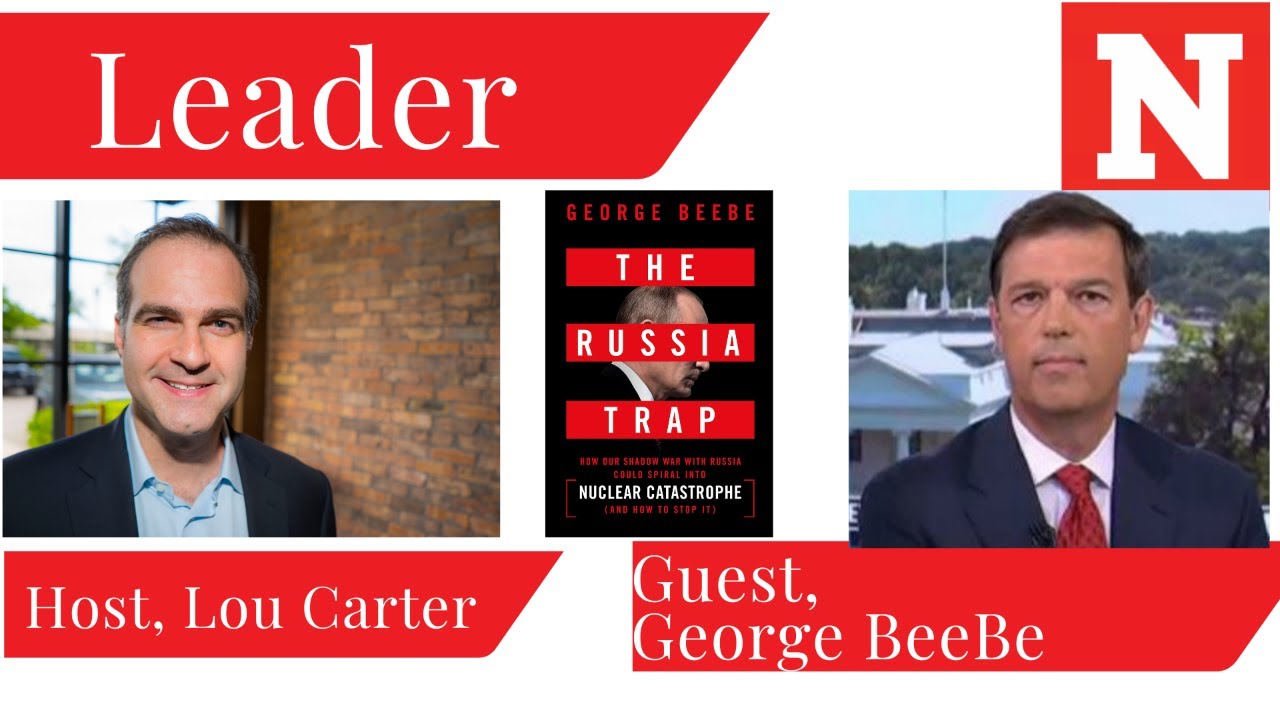
In this YouTube interview, host Louis Carter speaks with former CIA Russia analyst and author George Beebe about the complex dynamics of the Russia‑Ukraine war and possible pathways to a diplomatic settlement. Beebe explains that Ukraine is militarily dependent on Western aid, especially artillery, rockets and ammunition, and that this support cannot be sustained indefinitely because of the United States’ high debt, deficits and the economic blow‑back from sanctions on Russia. He argues that sanctions function as both a stick and a potential carrot, but their current design—perceived as permanent by Moscow—reduces their incentive value. Beebe outlines Putin’s long‑standing distrust of the West, rooted in a 20‑year perception of isolation and regime‑change threats, and notes that Russia sees the West as an irreconcilable enemy, making diplomatic engagement difficult. The conversation revisits the post‑9/11 period when the U.S. and Russia briefly cooperated against terrorism, highlighting how subsequent actions eroded that trust. Beebe warns that China could supply Russia with critical technology and ammunition, potentially shifting the battlefield balance, and that U.S. actions regarding Taiwan risk pushing China further toward Russia. He stresses that escalation is more likely on the Western side, driven by political pressures such as U.S. midterm elections and public opinion, while Russia pursues a strategy of attrition. For a settlement, Beebe proposes a Ukrainian neutrality guarantee, backed by a coalition of guarantors (U.S., Germany, Italy, Russia, Canada, Turkey), arguing that the war’s primary driver is geopolitical—preventing NATO expansion—rather than territorial gain. He recommends the U.S. leverage its military aid and sanctions as sticks and carrots to push Russia toward a negotiated settlement, and suggests forming red‑team or Track‑2 dialogues that include foreign experts to challenge assumptions and explore creative solutions. Finally, he introduces the “co‑hostage” concept: the U.S. and Russia, as the world’s two nuclear powers, must respect each other’s core security interests to avoid mutual destruction, and that recognizing this interdependence is essential for any durable peace.
Chapters
Institute for Responsible Statecraft. He is the former director of the CIA's Russia analysis and was on the White House staff as special advisor to Vice President Cheney for Russia intelligence programs. He is also author of the book The Russia Trap: How Our Shadow War with Russia Could Spiral into Nuclear Catastrophe. Today, George will help us sift through the complexity of the war in Ukraine and give informed and logical advice to policymakers and world leaders to get back to a relative sense of economic and political stability. It is of incredible importance right now that we look at the effects that the U.S., uh, is obviously having on our geopolitical and geo-economic situation. What are you to say about this, George?
Well, it's a very complex situation, and as current trends are going, we're headed toward a little bit of a scissors. On the one hand, the Ukrainians can't defend themselves. They can't hold off the Russians unless the United States and Europe provide an enormous amount of support. The Ukrainians are completely militarily dependent on us. They have burned through most of their Soviet-era holdings in their military, and in order to keep pace with what has been to this point a rather overwhelming barrage of Russian artillery and rockets and missiles, they need an awful lot of volume, particularly of, you know, artillery systems, rocket missile systems, and their ammunition, just to hold off the Russians in what is turning out to be a war of attrition in Ukraine's east and south. If we were to stop that kind of support, you know, the Russians would simply roll forward, and that would bring about all kinds of bad consequences, first and foremost for the Ukrainians, but also for the United States and Europe. So that doesn't look like a very appealing option at all. On the other hand, the more that we spend in support of Ukraine, the more difficult our economic circumstances are going to be. We already have, you know, very high debt levels, a very high deficit. We've been spending an enormous amount of money, really going back to the recession in 2008, but it was, of course, significantly accelerated as a result of the COVID pandemic. So we're not really in a position where we can afford to provide this sort of support forever without some real economic blowback on the United States and the West, as well as the rest of the world. Plus, our economic sanctions on Russia, which were designed to punish the Russians for their aggression and to change Putin's calculations about continuing this war, they are also having an effect on us and the, and on the rest of the world as well. Taking, you know, the world's number 2 or number 3 petroleum exporter, you know, at least significant portions of its exports off the market, can't help but have an effect on oil prices around the world. And Russia and Ukraine are both among the world's, you know, biggest agricultural exporters. So all of this is having an effect, and the question really becomes How long can we sustain this? And will the economic effects of all of this start to erode popular support in the West for continuing to support Ukraine?
So if I give— if I create sanctions, I'm going to be hurt. I'm going to be hurt and the other side's going to be hurt. Can we use sanctions as a piece, potentially making carrot to begin opening up diplomacy and discussions?
Well, right. I think that's exactly what we need to be thinking about. Putin is betting that over time Western capacity to continue this war will erode. That capacity is in one sense physical. How long can our war machine continue to provide the kind of aid that has been provided to the Ukrainians? But even more importantly, it's a matter of political resolve. And that's the kind of thing that can be affected by, you know, economic deprivation of various levels. But what we could be thinking about, what I think we ought to be thinking about, is how we can use both our carrots and our sticks to try to steer this situation towards some sort of settlement. If time is not on our side on this, If it's likely that a year from now Ukraine's position is going to be more precarious, both on the battlefield and economically, than it is right now, then we ought to be thinking about how do we use the leverage that we have today to strike the best deal possible. And sanctions are a part of that. The Russians clearly are being affected by sanctions too. You know, they are not so crippling that the Russians have no choice but to, you know, declare an end to the war, but they're certainly impactful enough that the prospect of lifting them would be a carrot, I think, that would have some appeal in Russia. Unfortunately, right now the Russians don't believe that there are any prospects that the West will ease economic sanctions at all, they see things going in the opposite direction, that these are becoming more extensive and more permanent, and thus a constant rather than a variable. And if the Russians believe that these sanctions are going to continue regardless of how the Russians behave, regardless of what other concessions they might make in negotiations, then of course they become a disincentive to making any kind of compromise, not an incentive. That's something I think we need to think about changing.
And this really goes to their profiles, doesn't it? How we profile their behaviors and how we've seen them behave in the past. And this— the, the past is prologue, and we haven't really learned from that. The, the current, uh, behaviors of the U.S. have been deploying and using are all stick. And the more you use stick in, in sort of behavioral psychology, the less someone is able to even entertain the possibility that carrots exist. So let's talk about some of the carrots, and also potentially, if you could, sort of a profile, not just on Putin, on his inner, on his inner sanctum, and how they may really begin to change their mind in the eyes of, in the, in the eyes of the world, if you will.
Well, those are big and difficult to answer questions, But I think what's been going on with Putin and his circle of close advisors is that they have been growing more and more disillusioned, more and more frustrated, and ultimately more and more enraged by the West over time. This is a process that's been going on for, you know, some 20 years. The Russians have felt spurned by the West. You know, they believe they reached out and said, you know, let's be friends and partners, and got from their perspective the back of our hands. And then, you know, that initial recoil at the way they were treated has turned into anger over time because they believe that the United States and Europe increasingly have been attempting to isolate Russia, to surround it with hostile states allied to NATO that they believe ultimately is aimed at regime change in Russia, that all of this is tied up in the belief that the Putin regime is illegitimate, unacceptable, and, you know, needs to change. In order for the United States to have any kind of constructive relationship with Russia. And, you know, unsurprisingly, Putin has been pushing back on this with increasing resolve, up to including his invasion of Ukraine in February. And right now, I think Putin and his circle do not believe that some sort of understanding with the West is possible. Not because they wouldn't want one in principle, but because they believe the West is an irreconcilable enemy of Russia and will treat Russia in that way regardless of what they do. So, you know, Putin has frequently been asked, you know, what he would do differently in dealing with the United the United States and the West. And his answer is consistently that I wouldn't trust them the way I did. That was my big mistake. So, um, how do you deal with that kind of perception in a situation like this? It's obviously highly problematic if you're going to try to find a way out of this war, which, you know, is having such detrimental consequences and looks likely to have even worse consequences over time and could, you know, escalate into a direct military clash between the United States and Russia, you know, which is obviously quite dangerous given that we are the world's two largest nuclear powers. So how do you find your way out of a situation like that When, you know, there's absolutely zero trust in the relationship, both sides believe that the other side is out to destroy them fundamentally. That's an extremely difficult situation to deal with. So I think you have to start by accepting that you're going to have to talk. The only way out of this is through some sort of diplomatic exit. You're not going to win on the battlefield, you know, not when you're talking about a country that has more nuclear weapons than anyone else in the world. Uh, Putin may not be able to defeat Ukraine altogether, but he can certainly ensure that if Russia is going to lose, that everyone else will too. Um, so we're going to have to accept that, uh, the only way out of this other than escalation is a diplomatic settlement. And once you accept that premise, then, you know, you start looking at your carrots and sticks in a different way as a means of steering this war toward some sort of diplomatic end.
I think back to Ronald Reagan and George Herbert Walker Bush. And, uh, George Herbert H.W. Bush was director of CIA, uh, and, uh, Ronald Reagan was, uh, you know, became friends really with leadership in Russia, um, and, uh, Gorbachev. And their behavior and leadership was very much of relationship building. They started with relationship first, I would say. Would you say that's a truth, George? They started with relationship first and they were aware of their, of what was possible on both sides. And they went to a fundamental truth of the fact that they all wanted peace. In the end, everyone wanted peace. And Putin did come— came when he came into power. And we learn about this more in your book, too, about, you know, you were with Cheney. Cheney was recognizing some of Putin's behaviors. He recognized it and came under some scrutiny for recognizing it, and yet you did still recommend diplomatic solutions. How did you do that with Dick Cheney so that we did not escalate into what we do have today?
Well, we were in a much different situation in the world and bilaterally with the Russians back then. As you recall, this was post-9/11, and the United States had its eye on a very important enemy, global terrorism, and we tended to see the Russians at that time as a potentially very important partner in dealing with terrorism, and of course the Russians had you know, their own set of very unfortunate experiences with terrorism. And the Russians were eager to work with us. They had been for several years prior to 9/11 trying to, you know, more or less metaphorically shake us by the lapels and say, hey, terrorism is a problem. We need to be working together against this. And after 9/11, I think the United States really became convinced that we did need to work with the Russians. We needed to build a strategic partnership against terrorism, and that was the context in which a lot of things went down in the bilateral relationship for several years. But unfortunately, what happened was a lot of things interfered in our ability to forge that partnership. The Russians took a number of steps to try to build trust Putin, of course, had called the White House a few days before 9/11 saying that Russian intelligence had picked up some indications out of Afghanistan that some sort of big plot was being implemented. He didn't have enough details to allow us to act operationally on that, but it also set the stage for his call after the attacks on 9/11 and his expressions of sympathy with the United States and his offer of help, that came across as quite sincere. And the Russians also did some other things. They shut down their intelligence collection site in Cuba that they had operated for many, many years dating back to the Soviet period. They closed their naval base at Cam Ranh Bay in Vietnam that they had taken over after the the US withdrew from Vietnam back in the 1970s. These were more than just symbolic steps. These were real concrete operational decisions that were meant to send a message to the United States that Russia really wanted to build trust and build a partnership. But a lot of other events happened that started to erode trust, to build suspicions on both sides, and the relationship started to deteriorate. And it has really over the past, you know, 15, 17 years.
You know, I think about, you know, the enemy of our enemy is our friend, and we had a common enemy at that time, and we were able to come together. And just that lesson alone may inform what we're doing now in the current state. The— what I have seen though, and I wanted to see if you brought this together as well, is that, you know, with our, uh, sort of taking, um, Omar Khalid, uh, showing that we had some independence in taking over Taliban and our own enemies, we don't need Russia, for instance, and Russia trying to keep their own economy, uh, you know, sustainable, self-sustainable. Are we sending messages right now to Russia in that way?
Well, unfortunately, I think the messages that we're sending to the Russians are quite negative, and we're also doing something I think that is undermining our own interests quite severely vis-à-vis China over Taiwan. The Chinese, I think, are the one actor in the world that could really have a decisive effect on what is proving to be a battlefield stalemate in Ukraine. The Russians, you know, need economic help to sustain themselves in a period where the United States is essentially cutting off trade between Russia and the West. They need technology. They need markets. The Chinese can provide all that. And they also need military help. You know, a lot of what is going down in Ukraine depends on lots and lots of ammunition. It also depends on drones and sensors that are designed to determine where the targets are located on the other side. We're trying to cripple Russia's access to that sort of ammunition, weaponry, technology. The Chinese have a lot of it. If they were to provide that to the Russians, that could have quite an impact on the, the balance in Ukraine. And we're doing, I think, the one thing that might convince the Chinese to tilt much more openly to the Russians in Ukraine by generating this crisis over Taiwan at a time when, you know, we didn't need it. It was not necessary to do right now, but nonetheless, we sort of walked into this. So these are all factors I think that we need to be thinking hard about, and these are things that should, I think, prompt us to try to find a way out of the situation in Ukraine because the trends right now are not looking very good.
It seems to me that actors like Nancy Pelosi, who goes to Taiwan upon other counsel to not go there, it seems that actors— is this— do you agree or disagree with this— or are largely acting and behaving on political motivations and, uh, and social thinking, if you will, what is the popular people are doing?, and that's causing the possibility that we will go into an all-out war. And how close are we to that all-out war due to these, these actors who are potentially enemies of our own state by taking such actions like that?
Well, it is a precarious situation, um, and, uh, right now it doesn't look like the United States is proving very adept at sound strategic thinking. Or even in, you know, coordinating the basic levels— levers of foreign policy in a coherent way. How close are we to a real disaster in Ukraine? Well, it's clear that neither the Russians nor we want this to result in a direct military clash. The Biden administration has been cautious about trying not to cross red lines, that might prompt the Russians to escalate in response. And right now, I think the Russians don't feel a particular need to escalate. Putin has settled into a strategy of attrition, believing that he can grind down the Ukrainian military rather slowly but steadily on the battlefield, and that the effects of economic downturn will over time also erode Western resolve and that this plays into Russian hands over time. So escalating on the battlefield is both unnecessary and frankly, from Putin's point of view, I think counterproductive right now. He's content with the trends as they're currently proceeding. The temptation to escalate, I think, right now is more on the Western side than on the Russian side. Because we want to do something to, you know, turn the tide of battle. I think there's growing concern that, you know, the Germans, as they, you know, head toward winter without adequate Russian gas supplies, could start to buck at continuing to support the Ukrainians. We're worried about inflation here in the United States. We've got midterms coming up. That don't look particularly rosy from the point of view of the White House. Those are things that I think tempt us to say, well, you know, can we change the momentum on the battlefield by providing newer, better, more capable weaponry to Ukraine? Well, every time we do that, you know, that is an escalation, and the question is, do the Russians allow this to continue? Do they respond in some way? And, you know, we'll have to see. It's, you know, where that red line is drawn that might prompt a Russian escalation is invisible. We have to guess where it is. And I think the real problematic part of that is that that line probably moves contextually. You know, when things are going well for the Russians, the red line may be drawn, you know, way over here. But if things start not to go so well, that red line might move a little nearer than where we thought it would otherwise be.
You know, and I think about when you're talking about the fog of war, you know, every side has its own story, and we've had this massively, uh, uh, prominent, uh, theme happening of, uh, victimhood, which is albeit true, and it obviously Ukraine has been victimized And at the same time, the fog is starting to lift with regard to public relations and mindset because of the midterms, as you said, because of the fact that we've had such massive devastation, so much physical casualties, and it's been something that is— we must go now logically to diplomacy. Logically. I mean, there, there is no other logical way to think about this. And all the— our other presidential administrations that had any semblance of strategic strength always had some sort of line into the leaders that we could be potentially at war with. In this situation, as I'm seeing it, it does not seem to be the truth.
Yeah, no, that's right. We are in an information war as well as in a physical war on the battlefield. There is a battle going on for opinion in the West, in Russia, in Europe, so that does make it very difficult to understand where truth lies amid all the claims and counterclaims in this information war. Best I can tell right now, the Russians are still making slow advances in the Donbas And although Ukraine is talking a lot about a counteroffensive in Kherson, for example, so far they've not shown an ability actually to pull that off effectively. Until they do, I'm going to remain skeptical that this is anything much beyond an information offensive as opposed to a battlefield offensive.
So George, we need your thinking here for the strategic thinking for not just leadership of the United States, but for the world. What would be your recommendation with knowledge of Putin and of the situation? What would be your recommendation to Joe Biden, the executive administration, perhaps even Senate and Congress?
Well, I'll make a distinction between wearing an intelligence analysis hat, in which what you're really trying to do is to help policymakers, decision makers, understand the dynamics of the situation that they're facing, in the hope that they can make, you know, effective decisions and all of that, and wearing a policy hat, where you're actually making decisions about what the United States ought to do to deal with the circumstances that it's facing. So, In terms of policy, what ought the United States do about all of this? My recommendation would be that we need to be using the leverage that we have to steer this situation toward a settlement. And we have a significant amount of leverage. The Ukrainians can't fight without our assistance. That by definition gives us a fair amount of influence with their thinking about how to, how to proceed in all of this. But also, it gives us a stick to use with the Russians, because the prospect of continuing or even expanding our military assistance to Ukraine can serve as an incentive for Putin to think about You know, am I better off ending the war now than I would be continuing it? But we also have carrots. You know, as we talked about earlier, our economic sanctions can be a carrot. The prospect of easing them in some way can, if coupled with that military assistance to Ukraine, help convince Putin that he's better off settling than continuing the war. So, that's what we ought to be thinking about, and then the next question becomes, all right, what does that settlement look like? How does the United States shape it in an advantageous way?
And that has been a huge point of consternation, I know, not just with Quincy Institute, but all around the globe, and when Henry Kissinger made a statement, World Economic Congress, about this, where he was saying, let's get to a compromise, compromise. And, uh, there's a lot of upheaval around that. There's a lot of upheaval around any thought about compromises, which is really antithetical to any kind of peace movement, which kind of is interesting. It's very interesting to me that we're promoting, uh, promoting destruction when looking for, uh, caring and understanding for all. So my question really is to you, what are we to do about the actual ending of this war, the ending of the, of the conflict, the use of munitions, the amount of money we're sending to large manufacturers here in the United States for expanding munitions, and so I'm wondering, what do we do to end it, to literally end it, to stop it? What parts do we compromise on?
Well, I think we need to first of all recognize that this is not going to be like World War II, where you're going to insist on unconditional surrender of the other side, occupation of its territory, and essentially you know, rebuilding those countries from the ground up under, you know, U.S.-supervised, uh, change. Um, you can't do that to a nuclear power. If Japan had nuclear weapons in World War II, the way that war ended would have been much different than the way it ended. And that's also true of Nazi Germany. So we have to acknowledge that reality here with Russia. That's point number one. Point number 2: I think it would be a mistake to treat this as primarily a territorial problem. Territory factors into this, but it was not the primary motivating factor in Putin's decision to invade. Uh, Putin's decision to invade was primarily geopolitical. It was to deny Ukraine to NATO or to the United States as a prospective military ally, and the Russians were concerned about both of those things. NATO had declared since 2008 that one day Ukraine would be a member of NATO, and we have refused to change that position. It is the position of the United States and of NATO today. Was just reaffirmed a few weeks ago in NATO's new Strategic Concept that Ukraine will be a member of NATO one day. And also the United States was moving toward increased military bilateral cooperation with the Ukrainians and had declared in the fall of last year that, you know, we had actually signed an agreement with the Ukrainians on a strategic partnership. So the Russians were concerned not only that Ukraine might be part of NATO one day, but that they were witnessing a burgeoning US-Ukrainian military partnership that over time would result in sort of a de facto alliance that would threaten Russia's security interests in Ukraine. So, the primary motivation for this invasion was to prevent that outcome. Territory has been secondary. So, I don't think you start with territory in trying to find some sort of compromise. I think you start with that geostrategic issue. And the Ukrainians have actually pointed toward a way forward on this. Early in the war, they, when they were negotiating with the Russians through Turkish mediation, the Ukrainians put a proposal on the table in which they would declare themselves neutral, a member neither of the NATO alliance nor any alliance with the Russians, and that, uh, that neutrality would be guaranteed by a number of international guarantors that would include the United States, Germany, Italy, Russia, Canada, Turkey. And they felt that this was the way forward on that geostrategic point. That, I think, is fundamentally the way forward. If we start with that and the Russians believe that the United States is genuinely supportive of that way forward, then I think the territorial issue becomes easier to deal with. Not easy to deal with, but easier. And we may be able to find a very gradualist approach to putting that territorial issue into a long-term process of discussions, but not allowing it to be an impediment to ending the fighting in Ukraine, which is so problematic for everybody involved.
And just thinking about what's possible with CIA and the great peace it really can bring to the world, because it can, the intel and the ability to understand behaviors is extraordinary. I think the CIA has got, have gotten a bad rap over the years. They certainly are not. They have some incredible ways of thinking and helping with to create diplomacy and responsible statecraft. And I had a question for you around that. It was about, uh, if we were to put a red team together, a red team together, because I do believe we need one, uh, especially this situation, uh, to help not just inform the president and Congress, Senate. It's more than that. I think it's beyond that at this point. I think it's about global stability. Who would be in that red team, and what should we put on the table?
Well, you know, red teams essentially are groups of experts that can offer alternative perspectives on dynamics on various issues, and I found over the course of my career that asking hard questions about how our forecast could be wrong, asking ourselves, are there other ways of understanding the dynamics of a situation, thinking hard about the key assumptions that underpin some of our judgments, all of that is a very healthy and necessary thing, because looking out into the future and anticipating what's going to be coming down the road is an extraordinarily difficult thing to do. You know, human beings are quite unpredictable. They can oftentimes react in ways that you don't anticipate, and there are all kinds of connections that are difficult to understand in these situations. Lots of things are interconnected with one another, and sometimes you don't realize that if I pull this lever over here, that it's connected to something I wasn't aware of that has an effect that I didn't see coming. So red teams can help you think about all these things in creative ways and minimize the prospect for making mistakes. And when you think about, you know, how many things have happened over the past several decades that we didn't we didn't expect. You know, how many of our good intentions produced results that we didn't see coming? I think it underscores the wisdom about trying to think about these things in alternative ways.
George, so I'll say it in a different way to get to the people. So, should they be foreign entity actors? So, should we bring together a red team from different foreign entities, perhaps even what are considered enemy actors? Whatever that means. If you say— if we— there's different speculation on what an enemy actor really is, like you, as you said, because behavior is, uh, it really is unpredictable in many ways. Um, yet we still do have some understanding of it, I think, from the past, right? There's sort of a, uh, if you look at a grid or a box of, of how far someone will go based upon how far they're pushed, whether it be the nature of their, uh, mental stability or not, or their, their, uh, or whatever we're speculating Who may be part of that, and as you said, may help to pull strings to bring this to a more stable conclusion with more strategic actors?
Well, I think that's an excellent question. There has to be a balance in all of this. So if you're talking about a red team that has access to classified intelligence information, then you obviously can't make that available to foreign actors without, you know, severe compromises of security. However, if you're talking about what might be called Track 2 or Track 1.5 dialogue with foreign entities, that's something that I think can be very useful. It can can help step out of a mindset that you may not be aware that you're in and see things through the eyes of somebody else, which is very necessary in foreign affairs. If you're not able to do that, you tend to get surprised, and, you know, surprises, particularly in the intelligence business, are very unwelcome things typically. So, Foreign entities, you know, I think can be very useful for American decision makers in that context of track 2 or informal dialogue between experts in the United States and abroad.
Agreed. Again, and you know, the whole concept of foreign entity help is an interesting one, and if it's needed or if it's just specific to the United States actors here alone. If we were to get to level 2, 3 dialogue, what would you see as the most important elements? Is it the awareness or the uncovering of more intelligence that is a little bit deeper that could bring us to a more sort of just and peaceful conclusion? Do you believe that to be true when we uncover more of the deeper intelligence and, and, um, in, in different levels of dialogue? Could, could that happen? And perhaps you could give us a way of describing what that could look like with your current understanding of intelligence, the intelligence available.
Well, I, I don't think the, the nature of the problem between the United States and Russia right now is fundamentally an intelligence problem. I think fundamentally it has to do with America's strategic goals in the world and bilaterally vis-à-vis Russia. If the United States' goal is essentially to have Europe be run by NATO, and if our goal is to change the nature of Russia's internal political system, no amount of intelligence is going to change Russia's attitude toward those things. For Russia, those are red lines, and Russia will go to war and has shown that it will go to war to prevent what it sees as bad outcomes in those areas. And so fundamentally, if we're going to change the situation, I think we're going to have to come at this from the point of view that the United States and Russia, as the world's two largest nuclear powers, are essentially co-hostages with each other. We are going to have to recognize that one country's security has to recognize that the other country's fundamental security interests must also be respected. When you're co-hostage with someone, you can't kill your hostage without also killing yourself. To put it very crudely. That's the situation that we're facing with the Russians. That's fundamentally what we have to recognize to find a way forward. And when you do that, then you start asking yourself, okay, you know, given all of the many disagreements that we have, the divergences in values, the differences in our political cultures, can we find a way to live with each other within acceptable bounds that provides for respect to each side's fundamental security concerns. I think that is possible. The United States and Soviet Union showed that that was possible, and I think it remains possible today if both sides are willing to think creatively about how to achieve that.
Well, George Beebe, I do believe that you would help with the midterms greatly if given the chance to, or even on your own, uh, on your own, it could significantly help the United States in our co-hostage situation, which is a brilliant analysis. I strongly recommend you go out and get Uh, get George's book, The Russia Trap: How Our Shadow War with Russia Could Spiral into Nuclear Catastrophe. It's extremely useful for our, our world today and our situation today. George is an invaluable use of knowledge for this show and for this situation. Uh, encourage everybody to call George and understand the situation even better and to listen to this interview. I'm hoping we'll have a lot of people listening to this interview today, George.
Great. Well, thank you, Louis Carter. It's been a pleasure.
Thank
More from Louis



How to Get Found in ChatGPT, Perplexity, Gemini, Claude & Grok | Visipage AI Visibility Audit

Your Competitors Just Got Certified. Now What? | Most Loved Workplace® Demo & Hiring Advantage



Visual Thinkers: The Hidden Genius Behind Skilled Trades & Innovation! #shorts

Car Mechanics: The Secret to Engaging Autistic Adults Over Video Games! #shorts


