How AirHelp Built a Most Loved Workplace® Through Innovation and Culture
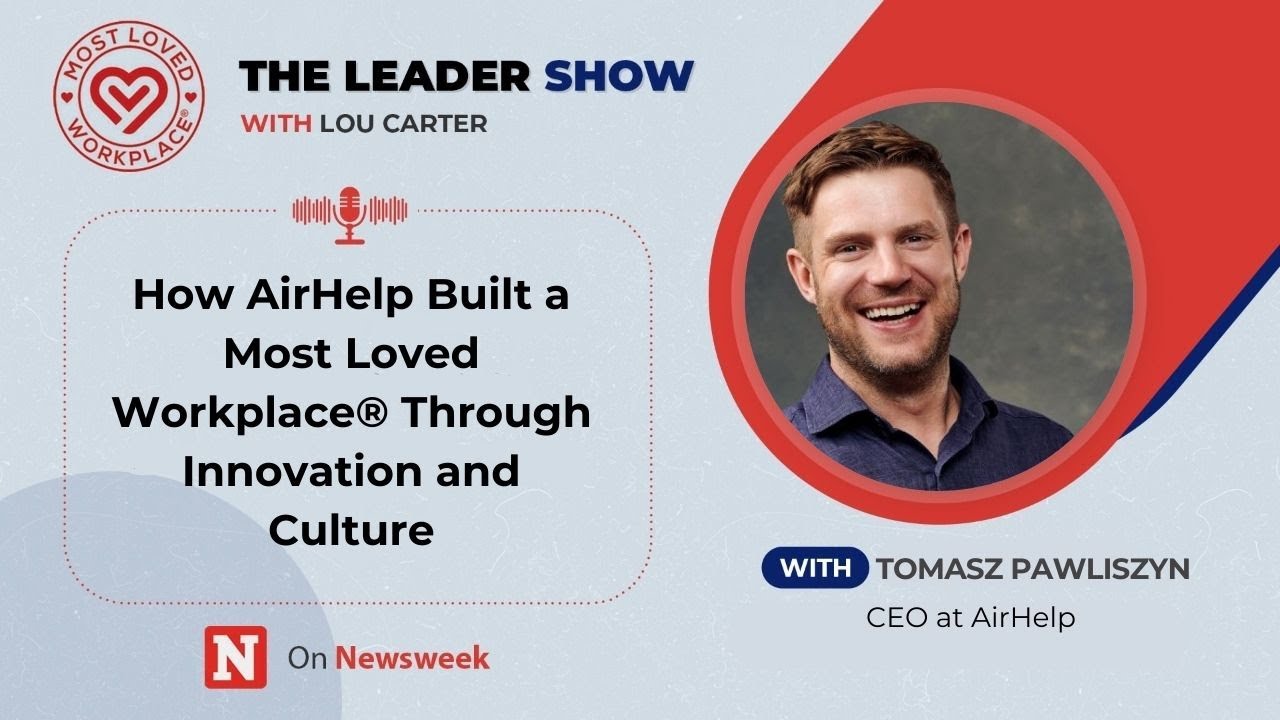
Tamás Pavlícsán, CEO of AirHelp, built a Most Loved Workplace by prioritizing trust and autonomy over perks. The company hires for cultural fit around a "here to help" mantra, uses monthly team budgets and constant in-person feedback, and saw productivity gains after shifting to hybrid work.
Chapters
Welcome to The Leader Show. I'm Louis Carter, and today we're diving into a game-changing conversation with Tamás Pavlícsán, the visionary CEO of Airhelp. Tamás has led high-growth companies through major transformations and built world-class operational teams at a global scale. With an MBA from Oxford's Business School, he brings a rare combination of technical expertise, strategic leadership, and cultural innovation. His track record includes reshaping the retail giant, Studio Moderna, and now leading Airhelp to define the employee experience while driving business success. Here's what makes today's show different. Most leaders think creating a loved workplace is about perks and policies. But Tomáš is proving that trust and autonomy, not just benefits, drive talent attraction and innovation. Airhelp didn't just earn the Most Loved Workplace certification. It became a magnet for top talent. Even influencing hiring decisions and sparking new business partnerships. Today, we'll break down the real factors that make a company one of the most loved and how you can use these insights to build a high-performance, culture-driven business that stands out in your industry. Let's get into it. Care about each other and we care about the customer, and that is the one legacy. That's the name of the game. And by the way, it's, it's not up here, it's here, it's in the heart. Hi everybody, welcome to the Lear Show today. This is a great show. I I think a lot about how you can make the most out of being a most loved workplace. And what is it that makes being a most loved workplace a real competitive advantage? In this show today, we're going to talk about that. A very successful company, successful CEO of AirHelp, which is actually a very cool company. They, they have wonderful technology that helps passengers, right, Thomas? Amazing, amazing stuff. And You know, it really— they're dedicated to helping passengers with flight delays and cancellations, something that is much needed today. So right away we have this great vision. Now here's the thing that's different, and I want to— want everybody to get today, is there's a sort of counterintuitive power of trust and autonomy, right? We have to trust while allowing people to be autonomous in their decisions, right? So that's what they're doing here, is they're not just offering benefits It's not just about benefits. It's a culture of trust and autonomy. And employees feel empowered to make decisions and take ownership. So we're going to get into how many leaders think control leads to better performance. But Tomas has proven the opposite. Giving employees more autonomy results in higher engagement and innovation. And we'll talk about all of his successes now with his clients, with his innovations, with his partnerships, everything that he's done to really sustain his workplace culture. So that he's doing just what we know people need to do, which is invest in their workplace culture, not just external brand. It's investment in workplace culture. Tomas, it's great to see you. I can't wait to dig into this really important—
Thank you for having me. Great intro.
Yeah, no, it's good to have you. And this topic we think about a lot. How it's counterintuitive to have power of trust and autonomy. We trust, we have to remain autonomous, yet our people need to feel both, feel trusted and be autonomous. How do you build that up in your culture? Because it is counterintuitive power.
It is a little bit, but end of the day, we should never hire a person we know we will have problem trusting. So everyone we hire, we hire because we think we will trust them, right? We have this kind of tick in our heads, right? Whether you love someone or not, you know, it's the few seconds on the interview. And you wouldn't hire anyone if you knew immediately, oh, this is the person I have problems, right? Trusting, right? Because there is something that doesn't fit, right? So trust is very important. Trust is for me, And for us at Airhelp, one of the two most important things, how we hire people, right? One, because it's the trust. Second is, of course, the performance, right? We want people to perform, we want the company to perform, because we have, as you say, millions and millions of clients every year that we have to serve, that come to us for help. But it comes to the bottom of it, right? To the very simple, you trust, your employees have to be trusted to make decisions. Once you lose the trust, something is really wrong, right? And this comes how you manage the team, right? You go out of micromanagement, but you still want to be very much involved in everything what's happening, right? And I always have this problem because I want to know everything what's happening in the company without stepping into what's happening, how decisions are made, because I know, you know, we have people who are employed to make all of those decisions. Hence, we trust them to make those decisions. Right. It's difficult balance.
It is, because what I see is a real rethinking of micromanagement these days. Right. It's perfectly understandable for a leader to micromanage when they're under so much stress. Right.
And sometimes you have to, right? Sometimes you have to step in.
Sometimes you have to step in. And when, when the, when employees build the trust up by by showing initiative, by being proactive, it helps. So, and that's really the thing. Leaders should rethink micromanagement, right? You know, how they can give more autonomy while maintaining accountability.
Yes, I think there are two different things, right? You know, we went through COVID, right? It was not an easy time being travel, operating within travel ecosystem. 'Ah, you know, we are in the market for, you know, 12 years. We've done fantastically before COVID and COVID hit.' So we needed to make very tough decisions very quickly, right? So this was a perfect moment where management was even expected to step in, right, to speed up some of the decisions, and the team was not ready to make, right? Because the team structure, organization, motivation was always to grow the company, help more and more passengers. Not the vice versa, right? What's happening when there is no business and no passengers because no one is flying? So this was a perfect, this is perfect, of course, very outlier, but still an example on when the management has to step in very quickly and show the new path, right? You show the new path, how we are going to survive. Okay, some things work, some don't work, but then the entire team kind of has to adjust and okay, this is how we do things now, right? We change the style of management. We, you know, we go away now to very quick decisions because we have to restructure. Once we do that, you know, it happened also with us, right, with many travel companies post-COVID, people go back to travel. Again, a massive change of how do we manage the company. So again, there's expectation leadership to step in and show the new way, how do we operate now, right? It's like the vision is now completely different for the company again. Again back to the growth, again back to the helping of millions, and back to being, you know, empathetic, compassionate person out there on the market helping others, right? So it's very different. Every change in vision, and there are a lot of micro changes, right? Because the world is changing so quick today, almost is a requirement for the management leadership to kind of make these small micro steps as well, saying, listen, this is what's happening. I think this is maybe what we have to do. Everyone agrees, so who disagrees? You know, there's discussion and then we go for it, right? So it's a very difficult balance. I think what I call it and few people call it is like to be very present, right? To know what's happening in the company, lead by example very much, be authentic and be very, very open on what is in your head and what do you want to achieve, right? And see what others think about it, whether they agree or not. And you know, there's a normal discussion. But it all has to happen very quick because the world is moving very quick.
And it's sort of like flying the plane, right? Everything— you have to work on the plane while flying the plane. Everything moves so quickly and there's so many different factors that happen around us. And, and that's the thing with candidates, right? And how you invest in your culture and how you invest in that ideology and leadership principles And, you know, the question I have, you know, you've had multiple candidates apply because of your culture, right? Because of the love workplace culture. And you have a wonderful CHRO, Catherine Rumery, who's doing great work there and mentioned that. And, and she, you know, what does that tell us about like the shifting workforce landscape that we're looking at culture at the forefront rather than just typical benefits and salary? We're looking at culture now and lifestyle. How people are, how they feel, how they act, how they interact, how they collaborate. What is this saying, right? This is a different world now.
It is, it is. But you know, it has, um, it has also consequences, right? It's not always great on a hiring side, right? Um, it also, it also has consequences on sometimes you have to separate ways because, you know, someone might not fit to the culture, right? And bending someone to the culture of the company also doesn't make any sense, right? People have to be true to themselves, and if they want to change, they have to want to change, right? So, but by far the most important, of course, is to hire the right people, right? And if you do this right, then you don't have the other problem. We don't always do it 100% right, right? But we try to, you know, stick to 99% of a success here. Yeah, I mean, Cultural fit for us is as important as experience, skills, and that the person brings, right? Cultural fit means a lot of things. You know, cultural fit means does the person buy the vision of the company? Is the person going to live this kind of 'here to help' slogan that we live internally and externally? Does the person kind of value the same thing that we value, right? And, you know, the teamwork, ownership, persistence, integrity, you know, the very basic concepts, right? Um, and but not only says it but really feels it, right? Um, so, so this is very, very important. And again, you know, through, through the last few years going through COVID and post-COVID, it was not so easy, right? Because, um, going on the camera and recruit everyone on a camera was, uh, was not always the best thing to do, but you had to. Uh, so today we are slowly, slowly moving into having face-to-face interviews. I mean, most of the interviews are face-to-face because people basically want it, because, you know, this is how you feel the person, right, for the cultural fit, um, through this face-to-face integration. Even though if the— probably even the entire work is done remote for many people within Airhub, right, but having this touch with the person, um, judging the culture of it is as important as their skills and expertise.
Now, I love that, here to help. Obviously, you're Airhelp, and that's a— is that a— tell me more about that phrase, here to help, and how that impacts employees and their behaviors and actions.
It sounds like— yeah, it is with us from the very beginning, right? When we thought, okay, there is millions of people that need— clearly need help, right? Because they're displaced, stuck at the airports, you know, don't know what to do. And on the other side, we are creating organization that thinks, well, we actually, we have a solution or we can build solution for it. And it is technological solutions with a lot of, you know, human touch on it. But I know how to explain them who we are, right? And what do we do? And the easiest way was to come up with the slogan, right? We are here to help, right? So if you're stuck somewhere, just think like this. We are here to help. Come to us, you know, go on our chat 24/7, you know, 24 languages, and just write what you want, right? Write what is your worry, of course related to flights, right? And, and we are— because we are here to help. And maybe we can help you, maybe not, right? But at least we try. Um, and this kind of evolved, of course, through the years and then became much bigger than this, right? This is how we talk to our business partners, right? 50% of revenue is B2B. 'Right, we are here to help, you know, whatever need you have, whatever worry you have with your clients, you know, we are here to help you. Let's solve the problem together.' Right, also internally, how the team work together, teams work together, I work with all of the people in the company, you know, we're always here to help, you know, the door is open, whatever you have, you know, we are here to help. So it's kind of evolved from this kind of first going outside message, we are here to help, to to be very, very, very strong internal slogan and message and more of a way of working for us, right? Or way of management. We are here to help. And people, I have to say, people are abusing it now, right? You see here, you're here to help everywhere, right? You say, thank you for helping me with fixing this issue. And then typical answer, Erik would be here to help, right? It became even a little bit abused across the Slacks and mails. But I think we all love it internally.
That is cool to have that related to your brand, to have that related to how you serve your customers and do it every day. And it certainly helps with trust and autonomy. When you're here to help, certainly is easier to trust and be more autonomous in that way.
That's correct. That's correct.
Now, one of the things too I want to hear about is that we— you call your employees Air Helpers. Isn't that cool? And you choose fun activities to get together, create memorable experiences, and strengthening social bonds. Tell me about those, because I really would love to hear more about that and also your thanks channel. But I want to hear more about that.
Yeah, most probably a lot of things, a lot of things that's happening is very specific, I guess. But we, you know, In this current hybrid type of work, how we operate, we really put a lot of attention to meeting within their own department and cross-departmental and how do we spend time together and how do we make it fun for people to meet, right? So they don't feel forced, right? So it's purely voluntary, not everyone has to go, but you know, we have every person has a team days budget, so it's per person in a department. So we have team days once a month for everyone. So every department, every office can organize team days. And the participation is very high. We have office breakfasts for everyone who wants to come to the office. We have activities when we invite the whole company twice a year and we make like the, you know, 2-3 days big event for everyone, for all the developers across the globe who come and meet together. Of course, it's joined with lots of management sessions, leadership sessions, hackathons, right? So we combine it with many other things. So, and of course, these are the social things, right? We meet at work all the time, right? But having this space to, as we call, team days, as you go for dinner altogether or go for lunch altogether or go for bowling altogether, right? And then you have to worry, you know, it's all within, you know, your team budgets. Gives people this kind of sometimes crazy ideas what they can do. And believe me, there are some crazy team days. I probably shouldn't say everything what's happening, but the most important is people love it, right? And people join them and it creates this important bond that is missing within the remote hybrid work type we operate.
Yeah, and the question is that, you know, your company values are persistence, ownership, integrity, and teamwork, right? And they came from your employees. And so what you're saying is you're in a new hybrid workforce. And I know that you use consistent surveying. You know, I'm wondering, how do you do it in a hybrid workforce to ensure that you're doing all those values, right? And that they're— how do you do that? Yes, yes, yes.
We always say, well, we monitor engagement very carefully and we are very happy to have higher engagement today within the hybrid work model than before COVID when we all were in the office. So we have much higher engagement. We also have much better, you know, internal NPS score. But even forgetting that, right, our productivity went up across all the divisions. Our productivity went up in a hybrid model. But it came with a lot of effort from everyone, for the entire company, for every person in the company. It was not easy to get there, right? So the productivity gain was through, you know, okay, now you don't have all of these meetings, now you don't have to stay in a line for a coffee, you don't have to do all of this, but you can simply sit and work, right? And now we will also reward you for that, right? So we completely changed the motivation scheme. We completely changed how the variable pays for the teams. So there are incentives to work, whether they work remotely at home or wherever they work, or in office, because in our company everyone can be in office 100% if they wish, right? But the incentive is very different today. So we restructured quite— I would say we restructured everything, right? So also pre-COVID, we were around 800 people. And then of course COVID happened and we recovered. Now we are 360 people and we do pretty much 4 times more than we've done before. So the productivity gain was massive, right? Even though we moved out of the office. And I was the first one who was saying it will never work. People have to be in the office. And so I went through this mental challenge as well myself. It's like, how we can make it work? And it worked. Million things had to happen, but the most important is team bought the idea how we can operate in a hybrid, and they channel, and they went through it, and it worked, and it was fantastic to see.
And they created it too, which is very cool. They created the values. They said how they want it to work.
Yeah, exactly. A lot of how we work, The model we work is a lot employee-driven, people-driven. Of course, we have safety checks, right? And we don't want to do anything crazy, but we give people reasonable freedom. But at the same time, we are a very demanding employer. So the things have to happen, the deadlines are deadlines, you know, what we want to deliver has to be delivered. So we are not— I don't want— you know, we always say we are difficult employer because we are demanding. We are quite demanding. We have the team is very lean and small, but in the same time serves millions of millions of people every year. So the efficiency and effectiveness of everything that's happening is extremely important for us, right? And in the same time, to being recognized as Most Loved Place, right? It's a, for us, it's a massive reward because this means that it's not only the statistics which you see, right? The engagement goes up, NPS goes up. Uh, but also, you know, people actually say they want to stay. And also, if you see the, uh, what we didn't actually pay so much attention on this one, but I can see our, um, rankings on different websites as an employee of choice is also quite, quite satisfying to see that. So we are very happy after this. Yeah, or the challenge is how to maintain it and grow from that, right?
It is. Yeah. And one of the things, one of the things that we've seen too is you, you did, you came out even stronger, right, after COVID, which is awesome, you know, because it was the co-creation. But we've seen a lot of companies that get feedback and they do it on a consistent basis, but they don't do anything with the feedback, right? What we've seen with you is they actually, you actually do translate it into real cultural improvements, right? So listening, right, and so, so allowing for autonomy and knowing what is expected, engaging the values, listening throughout time, right? And doing something about it.
That's correct. Feedback is a difficult part because feedback, you have to really learn how to give good feedback. And part of the reason why we are not fully remote, why we are hybrid, is exactly to— one is for sure foster the culture, but in fostering the culture, the giving feedback, this constant feedback is so important. Not this one-on-one per quarter, right? Once per quarter. But it's really the everyday feedback is so important. And it's so much easier to do it in the office when you see each other, right? On a coffee break. Listen, this was not good enough. I know you've done your best. But let's sit down and do it once more. Right? It's so much easier to have like this honest conversation, grab the laptop, let's do it together, right? Than having the call and say the same thing online and, you know, then try to redo it together only. It's not really the same. So this was one of the main reasons we moved to hybrid, to kind of give people the space to work together and, you know, talk to each other and say what's worked and what doesn't work and what's not— no, what's— they sometimes think is good enough, but good enough is not enough, right? You have to You have to always improve on what you do and how you work. And the special worry, of course, was always about the newcomers, people coming straight from universities. You have to spend time with them. So this was important.
Yeah, absolutely. Yes, that's right. To have that consistent feedback loop, be mentors and coaches to those who were acquired inside the new business world, of course. And closing that loop, right? It's one thing to be autonomous, we talked about today, and have trust. It's another thing to be able to speak back and forth see what is needed, what advice is required to change and grow, then doing a cost-benefit. Is it worth it to do these changes, to make these changes? What's the cost associated with changes, right? And, uh, and determining perception versus truth. All those things go into play with feedback. So important. You're really making a huge difference there and doing awesome work at AirHelp. And, uh, well, we've, we've, we've We've said it all today. You've said it all. We've done quite a lot. And what a great work you do, Tomáš, and what a cool company. And the values are wonderful. I love the truth-telling they have, which is one of the thanks that you have as well online. Love that thanks channel you have. I hear it works quite well too.
Most popular channel in the company. Thank you channel.
Does it really? Tell me, what are some of the thank yous that go into that channel? Tell me more.
Oh, all of the stuff you can imagine, right? Mostly professional, but also personal. You know, you help, thank you for pitching in because I missed €1 today at the coffee line. But mostly professional, you know, thank you for, you know, you helped me today with the code. Thank you for solving issue with the client. Because I didn't know how to help. Help, thank you for, you know, helping me with some legal stuff. Thank you for, you know, rewriting my product scope or, you know, giving important feedback to my product scope, all of those things. So this is very, very busy channel. I think we have easily between 20 to 40 different thank yous per day on the thank you channel. So it's fantastic to see this.
So with a thank you, it's typically, you know, we find is that we always ask a question in stand-ups, which is, what did you do? What are you going to do today? And what do you, what's needed to get there? What is needed to get there? So if I were to look at your thank you channel, I would bet, and we did a study on the thank you channel, I would bet we'd find threads about the things that we need the most. Yeah. Right. Yeah, these are the things. And whether or not it's resources within or it's inside of a job and, and skill bases too, there's something that was said, an efficiency potentially.
Yes, yes, yes, yes. That's very true. That's very true.
It'd be interesting.
It's a great source of information on what's happening in the company.
Great.
I enjoy reading it, not because someone thanks someone, because this is great on its own, but actually what problems are being solved. And why are we so, um, so thankful to the other person, right, uh, for what's being done? It's a fantastic resource for me to read what's happening in the company every day.
Yes, absolutely. It truly defines value in so many ways. So that, that's wonderful too much. Wow, you're, you're amazing. Incredible background, uh, Said Business School, amazing creator. I mean, wow. Besides all the incredible things that you've done, you really don't have anything going for you, Tomáš.
I'm just proud. I'm just proud of being part of the team today, right? I think what the company is doing is fantastic. We do something impactful with a great vision. And if another 400 Air Helpers feel the same, coming to work every day, it's— yeah, I feel happy.
Well, thanks for becoming part of, you know, really the cultural movement, isn't it? Right? Toward awesome, like these toward love workplaces, like placing that at the center of what you do and how you do it. It's really what it's all about. And it helps drive business. It's good for everyone. And it makes— it's good business sense. Real glad that you're doing that, Tomas. Hey, Tomas, thanks so much for being on The Leader's Show today. We've learned quite a lot from you about trust and autonomy and getting the most from ourselves and our people. Thanks for coming on The Leader's Show.
Thank you so much for having me. Have a great day.
More from Louis



How to Get Found in ChatGPT, Perplexity, Gemini, Claude & Grok | Visipage AI Visibility Audit

Your Competitors Just Got Certified. Now What? | Most Loved Workplace® Demo & Hiring Advantage



Visual Thinkers: The Hidden Genius Behind Skilled Trades & Innovation! #shorts

Car Mechanics: The Secret to Engaging Autistic Adults Over Video Games! #shorts


