How To Make Sure The Right People Are In The Right Jobs | Interview With Watco CEO Dan Smith
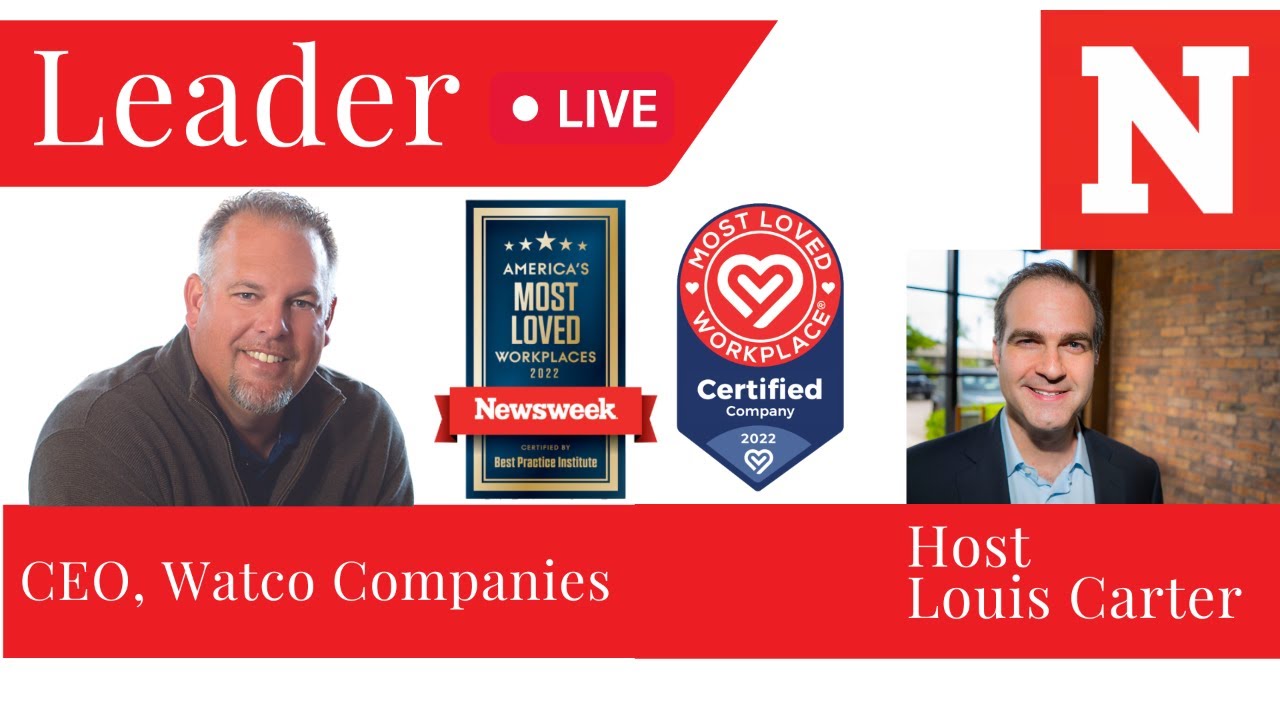
Dan Smith, CEO of Watco, explains how he builds trust and empowers employees through decentralized decision-making, which he calls "locker rooms" from his baseball background. He hires for cultural fit over credentials, maintains non-negotiable safety standards, and uses mentorship to build confidence in his team.
Chapters
Hey, it's great to be here today on The Leader's Show with Dan Smith. This is terrific. Dan's the CEO of Watco, A Most Loved Workplace. We'll get into a little bit later. I do want to say he's also a pitcher of the Expos, which is really darn cool. And he's actually practiced down here in Jupiter. But this is great talking to Dan today about being CEO of Watco, A Most Loved Workplace. Dan, welcome.
Lou, I really appreciate the opportunity to talk about all the great things we have going on at Watco.
Well, it's, it's good to have you on here today and learning all about that. And tell us about Watco first. Let's get a little bit level set with Watco, uh, where you are and what you do so everybody knows you're here.
Sure, we're, we're a worldwide transportation solutions provider. We own assets across all forms of transportation and provide all types of services— rail, marine, air, logistics brokering, mechanical, anything related to transportation service needs, we do it. We were formed in 1983 in Pittsburgh, Kansas. We've been in business 40 years. This is our 40th year. We have about 5,000 team members in North America and Australia with revenues north of $2 billion a year.
Outstanding. You know, it's a lot of various perspectives and people that go into this. It's all about people, isn't it? Getting this done. It's about people on the field, front lines. And that comes with so many different ways, new ways, really, you must have to enable safety, enable a good culture, happy employees, people who really can get things done, not just in a safe way, but to their level-best possibilities and performance. How do you create that culture? What's some tips you could give to others who are becoming a most loved workplace? How do you create it? How do you enable it on the ground floor?
Well, Lou, you're— I appreciate that. It's, uh, you know, it's a, it's a very simple thing we do, but it's a complicated way to execute it. And what makes it complicated is people. And the foundation we operate under is trust. For us to be successful every day, we have to trust every single one of our team members in the field to do it safely and to do it the way the customer wants to do it and to do it in a way that keeps Watco profitable. So We're only as good as each individual activity out there performed by each individual person. And you said it best, it's all about people. Uh, we put a tremendous focus on how each individual locker room across North America and Australia is built with all of our team members in each one of those, making sure they have what they need, making sure they have the ability to make decisions where they need to make them. Uh, and in a nutshell, making sure folks like me stay out of their way so that they can do what they need to do. They know how the job needs to be done. We have to trust them enough to give them the tools, uh, and support that they need in order to make it happen every day. And that's really the secret. It's, it's simple to say, complicated to execute, but fortunately we've got 5,000 tremendous people, uh, that do it very well every day.
It's funny you said about giving opportunities for people to make their own decisions. You know, that, that's important because a lot of the times people A lot of, a lot of companies I see that have, are on the front lines, that are doing the type of work that you're doing, give tremendous amounts of training and telling. They just constantly train, tell in the beginning every single time. So it's, the huddles are different. It's telling. And yours seem to be different. It's about giving the tools and resources to go do the job, enable people to do it on their own so they can get access to resources rather than you telling them consistently what to do.
Yeah, I think it's a subtle difference between the two. Safety is paramount. We want to train on all the things that our folks need to be trained on, that they want to be trained on, to know how to do the job, how to perform it safely. But the ability to make decisions on the fly, to be nimble and flexible for your customer, we believe that creates great reward for our team members. They take great pride in listening to a customer at a location, perhaps in a very rural place, uh, Southern Idaho, or, or, uh, you know, perhaps in Northern Alabama— pick any location, uh, in our network— our, our team members take great pride in being able to listen to their customer, understand that they need something different, and being able to very quickly make that adjustment without approval from folks that wouldn't understand the complexity of it. So we do want to standardize the, the, the non-negotiables. You gotta be safe. You have to be responsible. You need to treat your teammates and those around you with respect. Those are non-negotiables, and we don't mind requiring that. Beyond that, we just require that you listen more than you speak and that you do the job the customer needs you to do in a safe and efficient manner. And, you know, we've got a lot of great leaders throughout this company. I'm very proud to work alongside all of them. And they humble me every day with the things they teach me about leadership and coaching. So it's been a fun ride. And as I mentioned, we're in our 40th year, and we're looking forward to 40 more.
Right on! You know, I've always noticed that too about how much I learn from other people when we just open up our ears. And I'll just make a quick connection to MLB because it's important. So in particular, in Major League Baseball, we train first, right? You train first, and you do a lot of training outside, and then you get to the show, right? You're in the show, and you, the best come to the table. You, as a pitcher, you come to them, and it's huge, high levels of trust for the people who are there, huge levels. And you have, and great confidence in what you do. The confidence is over the top. You know, just for NFL too, same kind of thing is, you know, confidence plus listening plus understanding the rules, this kind of this 3, you know, because MLB has rules. We got to know the rules to the game. We got to understand that we got to listen to what's about, what's happened around us, and respect our teammates, respect the game, respect baseball, right? And then train up first, right, in order to get to the show. Have you seen that your learnings from Major League Baseball have transferred to your work as CEO of Waco?
Well, there's no question, and, and I say it with, uh, you know, prefacing it with leaving baseball, coming to the business world. I left baseball and went into business world with tremendous insecurities about, you know, what, what do I know about business? I, I was a baseball player. What I found was that, you know, playing, uh, being blessed enough to play at the highest levels in baseball taught me a lot about, you know, how teams should function. And the fundamentals of getting to the major leagues and staying in the major leagues are very similar to the fundamentals of growing a business, getting the locker rooms right, getting the culture right, and then staying at the highest level of performance in business. There's no question there's many parallels, but one thing that I would point out, Lou, that I found to be important to me in my journey was You know, a lot of what got me to work hard to become good enough at baseball to get to the major leagues was a tremendous insecurity. You know, I would wake up every morning thinking I wasn't good enough and I needed to go work really hard and get better. Um, and I did that every day in my career until my career was over. Um, in business, I feel the same way every day. I, I sort of talk to all of our leaders that You should embrace that insecurity. You know, you should wake up every morning with a hunger and desire to make sure you create value for your team and that your job is to help your team get through that day. And at the end of the day, what is the reward? Is that feeling of, hey, I had a good day, we had a good day, and I feel good about my contribution. And then in a brief moment, you lay down, go to bed, you wake up and you do it all over again. So literally, as I was preparing to speak to you, Lou, I was embracing that insecurity of how do I tell this story about Watco? It's hard for me to talk about how great we are because it's not something we do. We don't think, spend much time thinking about that. Most of the time we spend our time proving we belong here and proving that we are the service provider that we say we are and that we are as good as we can be every day. I think that's a big part of the equation. And then certainly having a major league caliber organization like Watco is something to be proud of. And it's something that you should work hard to protect every single day.
So much of that is resonating with people right now. We see on LinkedIn about foundation of trust and the people who work for you as well, saying thank you for making this one of a kind culture and for helping them create this and be a proud team member. So just tremendous amounts of outpouring of this concept and reality of what you're describing today. I love how you said about the imposter syndrome. I feel it too. And it really is. It's about beginning every day and saying, I can get better every single day. And knowing that you have that level, you can get to that level every day and redoing it, even though you may not know how to do it, means that you're agile. Every single moment's a new moment to learn from. Especially in safety, we have thousands of situations that could occur in the front line. And as CEO, we have to experience them head-on as if it's our first experience with them.
Yeah, yeah. Lou, you're right on the money. I think the importance of being genuine and sincere with everything you do each day, it resonates with your teammates. I've known that throughout multiple career baseball business. More importantly, it, it sort of cleans the schedule out of the stuff that doesn't matter. If, if we focus on being genuine and sincere, uh, with all of the things we do each day, there's sort of a self-policing methodology to that, to where you don't spend a whole lot of time on stuff that doesn't matter. And, uh, I believe that, that pace and that rhythm is contagious. And we've seen success with it. And at the same time, we're always open to new ideas. We're all, we're all very coachable. We want to get better. But at the end of the day, I think if you just step through the moments in a genuine and sincere manner, you're going to focus on safety. You're going to focus on your people. You're going to focus on your customers, and you're going to focus on being profitable because we are in business to make money.. But those other 3 things should happen first, and you can't be profitable without the first 3.
People before profits. It works that way all the time. The equation is— that's the right equation. And, and so some, some tips. In my mind, I'm thinking to myself, well, you called them locker rooms across the country. That was kind of— that was cool. Is that a term that you use, or is that something that you're saying that is taken from baseball? Kind of— it's kind of cool. Tell me more about what's the locker rooms across the country mean in terms of culture.
So I call them locker rooms, but I think our folks may call them depots or on-duty points. Some may refer to their locker room as an office. It depends on your job and your task. For me, I just punch it in as locker room. But we talk a lot about the most important thing is knowing every single day where everybody's head is at within that locker room. Like, you, you have to have the right people in the right spots in the right frame of mind. And your job as a leader is to know where your team's at that day. Put the right people in the right spots. If somebody's having a bad day, you might have to give them a day off. You might have to pinch hit for them. You might have to pinch run for them, whatever that may be. Use any analogy you want, but know where your people are at, know where their heads are at, know what they're best at that day, and then make some— make the moves as necessary. And don't get caught up in a, in a lull of complacency where you think every day is going to be the same. People have, you know, people have good days and bad days. I have good days and bad days. When I'm having a day where I'm not feeling great about things, I go to the people closest to me that I trust and I say, hey, talk to me, make me feel good. I'm having a bad day. I don't feel— I'm not feeling confident about this, or I'm concerned about this. And what that does is create an atmosphere where I find from time to time they do the same thing with me. And I hope that throughout our network, I believe that it is happening every day throughout our network where folks are having those conversations with each other. And again, that's genuine and that's sincere. And, you know, the empathy it requires to understand how someone else is feeling really teaches and trains you to make sure you keep your eyes on the customer as well. So if we can treat each other the right way every day, I know we're going to take darn good care of our customers as well.
Right on. And that came from the times of Jackie Robinson to today, right? You don't have to be my friend, but I do want you to respect me. And that's what, that's what it's about, you know. And because that's what skill is, you respect my talent, respect my work, but you don't have to be my friend. So, uh, you know, the other question I want to have, um, uh, also have for you is I'm thinking back to recruitment because a lot of people want to know how do you recruit the best for a most loved workplace, which you are. And I harken back to, you know, sort of finding back of finding the best talent that fits with your culture, of being genuine and sincere about everything you do every day. How do you find that? Is there, is there predictive analytics to it? Is it more like Moneyball? You know, which one is, you know, what, how do you find the right people for your situation, your team?
Well, I think the first thing we have to do is we want to hire right. And what does hire right mean? Well, number one, you have to know What are you looking for? I think a lot of times in any technical industry, people think technical first and they think, they think emotional intelligence and they think, uh, you know, sort of those soft skills, those leadership skills secondary. I think we invert that. Typically we want to make sure we hire the right people for the geography we're hiring within. And then we've learned that, you know, technical skills can be taught. Some of the other skills are a little bit harder to pick up. So, uh, we put a big emphasis on local folks throughout our pockets of geography, making sure that they're ingrained enough within the hiring process to put the right candidates in front of them, that they can make decisions not based on necessity in the moment, but have a pool of people that can offer a variety of skill sets to help better blend each workforce we have across the country. So it's, uh, it's definitely an art. It's not a science. I, I don't think, uh, narrowing the pool to any particular education skill set or work history. If we had done that in my, my role, I wouldn't be here. I have neither a college degree nor did I have much work history. So I think as an example of that, we try to be very creative in where we seek, uh, you know, potential new Watco team members. We're open to new things, but at the end of the day, we make sure that the folks those people have to work with and side by side with believe in that candidate as they enter Watco. We're not 100%. It doesn't work perfectly every time. We learn from the ones when it doesn't work. But over the last 5 years, I put our track record up against anyone in the ways in which we've been able to recruit people. Also, when someone approaches us with a desire to come to Watco, we don't always have an open position that we're actively recruiting for. But one of the things we've been, uh, you know, I think smart enough to do is when someone wants to join the team, we have the conversation and we say, this person's really good. We may not have been looking for something in this area, but how about making an investment here? Because we know what our company's doing, we know we're growing and scaling. You can never have enough great people. And so we put an active, uh, you know, we always have an active dialogue with anyone that has an interest in joining our team. And that's led us to some tremendous, tremendous people.
You know, that, that's such an incredible way of thinking because we have Recruiting is so algorithmic, right? It typically is right skills, right specific, uh, uh, specific experience. What you're saying is you have talents, we— and, uh, you perhaps have a specific talent that's great here, and you could get us on, on base for this, right? And perhaps you're not as strong here, but we could develop that later, right? We value you for your experience and your know-how and the way you fit into this more family-oriented culture. Let's go. That's hiring right.
And Lou, you've done this so many times and talked to so many people. Sometimes you can just tell when there's a connection. And I think, you know, when it's a good fit. And I would encourage anyone that's building a company or that's trying to develop a workforce or develop a leadership team or develop a culture. When you meet somebody and you connect with them and it resonates with where you want to go, You make it work. All the, all the, we will find out where it fits exactly later. But those intangibles, when you come across those, you better grab them and hang on to them and you better cherish them. And, and that's what we've tried to do with our folks when we come across those types of people. Um, I, I work my butt off each day to make sure we don't ever lose any of those folks.
Right on. And that kind of brings me to the practices, you know, and, you know, I want you to not be humble for a moment. And really, I want you to, because right now it's incredible how many people are saying this, how the culture is around valuing people, our customers, safety. You have a lot of people are saying this, proud to be, with the family emphasis and sincerity, proud to be a family member. I mean, importance of, you just have a lot of outpouring of love for you here, Dan. And it's real. It's not, this is not This is not something that's, that's, uh, you can't fake this. So, you know, the, the, the— so I want you to know that first of all, because I know you have the imposter syndrome. So let's, let's, uh, let's tell— absolutely. And so let's, let's go to what Dan does to make sure that you, that you keep these folks at Waco. But can let's talk about on a ground level, going to meetings, is it talking to people, is it having, you know, overall what's, what's your thing that you, you do a lot?
Yeah, well Well, it's a great question, and I'm going to give you a fair— I'm going to give you a really, uh, honest shot at answering it. Um, I really believe most of it is, is just from my experiences in my career, um, particularly in baseball. Um, that insecurity we talk about, you know, I, I think early on I realized I was very self-aware. I understood what I did well, and I understood what I didn't do well.. And, uh, you know, one of the things that helped me was when, uh, people invested in me personally in a way that made me feel more confident. I, I always re— I always built better rapport with coaches and managers that took a moment to, to make me feel more confident. You know, they could ask, they could have hard criticisms for me about how I did my job, or they could ask me to do things I didn't necessarily know how to do. But if they took those moments to make sure that they built confidence in me and made, you know, I felt such a sincere and deep connection with those people throughout my career that it never really left me. And then when I transitioned into business with a tremendous amount of insecurity, I had the pleasure of really spending a tremendous amount of time around Rick Webb, who is our founder, you know, owner, largest shareholder, and is like a second father to me. My father passed away a couple years ago, so Rick moved up on the depth chart. Um, you know, I'm very close to him and care a great deal about him. Uh, somehow, uh, by the grace of God, I came in contact with Rick and immediately recognized that he He, he worked very hard to put that confidence in me, like all the great coaches and managers I, I have ever had. There was really nothing sophisticated about it. It wasn't, uh, like a formal assessment of my strengths and weaknesses and, you know, here's what you need to do to get better. It was just a constant drip of, I believe in you. And, and, um, and it changed my life and has helped me really embrace committing to hopefully being able to do that for other people. I believe I'm very replaceable. I think it's important for me to be very replaceable. I think we should have interchangeable parts at the heads of our organization. I believe we should build something that withstands any transition. Along the way, if it's my stewardship or if I get to be a part of the stewardship of this company, I will stay focused on and fixated on trying to put confidence in other people the way that people have put confidence in me. And when that happens, I think you tend to own the organization, you tend to own your decisions, as if you're going to take care of somebody else's finances better than you would take care of your own. You're going to protect it more than you might protect things in your own life, in your personal life. And I think if we all stay focused on that, it tends to be very contagious. People can believe in it. You know, maybe I have an advantage. I have a bit of a— I wouldn't call it a blue-collar background, but I'm not an educated guy. I embrace my weaknesses. I think that I connect well with— generally connect well with most people in our company. But I feel like I have to earn their Um, I have to earn their trust every day, and I really am always concerned about losing it. And, and, and it's because of the way people have put confidence in me. Um, I just can't imagine being anywhere else. And it's really— I, I've never had passion about what I do each day like I do here. And that, that even more so than when I played baseball, maybe because I was too young to appreciate the opportunities I was given. But, you know, I thought I loved that and I thought that was my life. And then I came to Watco and figured out, holy cow, I was just getting ready for the thing that was going to be my life. And that's meant a great deal to me.
So everything you're talking about right now is sometimes the opposite of what most CEOs say. Literally the opposite.
I don't know if that'll help my insecurity.
Or think it's probably what they think. You actually believe it. You—
I hate, I hate being called a CEO. I think it's— I don't like— it's not my— I, I think it's, uh, it's unfair to all the people that really do the work. I get way too much credit, uh, for things I don't really do. I, I care about our people, and I guess if that's what the job means, then I'm proud to have it, but it's an overrated title. I think it's not important to me. I am proud. I, I felt like I was the same thing 5 years ago when I wasn't the CEO, you know. I, I, I, I, I never really think of it any different. But, um, there's a lot of great leaders in the world. I come across them all the time. I'm amazed by things, you know, that, that the way people lead companies, and there's all sorts of ways to do it. I just know that we have a great team and a great group of people and And man, I just, you know, every day is a lot of fun. And I appreciate the fact that my journey is a bit unique to get here. But there's way better leaders out there than me, Lou.
Well, let me tell you, everything you're saying is awesome. It's right in line with the best CEOs in the world: the succession planning, your stewardship, the way that you're setting up your developmental conversations with people, being informal is the best ways. And the "I believe in you" in a consistent way that you're really reducing any type of, not just backlash, but you're creating friendship, caring for each other, respect for each other. And it's showing what people are saying with this, what Ken just said, "A constant drip of 'I believe in you' creates this environment so team members can be at their best." That's the thing. It's this constant drip, this consistency of, of drip. This is a cool question. It's from Chad. He said, How do you maintain your leadership team holding the company values the same way you and Rick Webb do? Can you, what do you, what do you say to that to Chad?
Well, you know, that's a great question. I mean, I think, first of all, Rick's a great, the greatest example. And I, and I'm not the only one following it. We have a tremendous leadership team. The leaders closest to me, I, I personally had a strong desire for each of them to be in the role they're in. I feel like I had the freedom to pick them and put them in that role, and it was because of how I felt about them each as individuals and how they felt about our team. And then as you get a step away from that into the most important parts of the company in the field, our leaders, I hope that the messages resonated in the way that that we want it to. I'm not naive. I'm not going to say there aren't some things we can do better in certain places. There always is. If you start thinking that it's perfect everywhere, you need to wake up. You're sleeping. But I do believe that focusing on the simplest of things, that genuineness, that sincerity, you know, that resonates with people. It's easy to mimic. I'll say it like this. I got to the big leagues, I was 22 years old, and I walked into the locker room and, uh, I was scared to death. And something hit me. I looked around, I said, who's been here the longest and who's the best player? I'm just gonna do what they do. And, uh, so I just, I just mimicked what I thought gave me the best chance to be successful. I didn't have a great big league career, but, you know, I tried like hell, and, and I, and I, I watched the people I respected, and I did what they did. When I came to Watco, that's what I did with Rick. You know, I respected him, and, and I still do, and I, I mimic him and, and try to— I don't do everything he does. He's, he's wrong half the time, just like I am. You know, that's— we're people. But hopefully, uh, someday You know, people will say Dan was a good guy to imitate from time to time. And that would be the greatest compliment I could ever ask for.
Huge legacy. Huge legacy. And if you have the 50/50 split, that means you're going to be right 100% of the time.
That's right.
So, that's always good. And well, it's incredible, this outpouring. It's interesting what you said about Major League Baseball and doing, finding the behaviors or the things that the best players out there, right, are doing. And then one of the practices I've heard from great musicians, great athletes like you, is exactly that. They— I said, well, what's— tell me that. I say to several people, I say, tell me the one thing that I can do to be better what I do. They said just what you said. They said, for, for 1 hour, you know, I'm, I'm a drummer, so for 1 hour, listen to a, a song just very carefully and closely watch the person and how they performed, and then do everything that person did to a T. And, and they said make that a practice, right? Is that something you went through where you looked at everything?
Yeah, man. I mean, when I was a young guy pitching in the minor leagues, every day that I started a game, every fifth day, I watched the video on Nolan Ryan, the same one every single start. I never became Nolan Ryan, but you know, it felt good to watch the video. I mean, I, I think it's, it's refreshing for me to hear you say that. I didn't know it was a thing, but it really makes sense to me. I think, uh, man, it's, it's an easy way to learn how to do something— watch somebody that's good at it and do it. And, and don't be afraid to make mistakes. That'd be the other thing that I try to talk about. I have made thousands and thousands and thousands of mistakes both personally and professionally. And, um, and man, I wish I didn't make some of them, but I did, and I learned from all of them, and I'll make some more. And hopefully I'll make fewer and fewer as time goes on. But if you're not making some mistakes, you're probably not trying hard enough. You're not pushing yourself out of your insecurities enough. You're playing it a little bit too, uh, down the middle. It's okay to make mistakes. Mistakes is how we get better. Whether it's bad pitches, whether it's, you know, bad business deals, uh, whether it's, you know, you, you gotta— you miss all the shots you don't take. So, uh, you got to make sure that you give yourself the freedom to make mistakes. And then the thing I tell people that's helped me a lot is, you, you make a mistake, you got to be able to forgive yourself. Don't hang on to it for too long. It's okay to feel some pain about it, but you need to forgive yourself and move on.
I'm into that. Let it go. Let it go. You can't move on and you keep talking about the things that we've made mistakes on rather than learning from them and doing them differently the next time. Because it's those errors that we learn from. We say, well, if that happens again, this is what will happen or could happen. And it goes right to risk management and safety. So that's what may happen. And they apply to management leadership as well. This is just tremendous. You're, you're spot on here, Dan. This is good stuff. I love the fact that we've had this conversation. I see a book in your future.
Well, you're— we're going to collaborate, you and I together, maybe.
What a cool thing, wouldn't it be?
I'd love to. I mean, I don't think anybody would want to read it, but hey, we'd have fun writing it.
No, you kidding me? The Major League Baseball, uh, CEO. This is— this is, you know, this doesn't happen every day. This is very, uh, unique, and it, it shows, uh, a lot of more here. So we're talking with We're talking with Dan Smith, CEO of Waco, here on Newsweek's Leader Show. Uh, Waco is a Most Loved Workplace. They have an outpouring of comments from employees saying how much they love them. This is real. You know, you see this a lot where company employees don't get involved. They don't talk. They don't comment. They don't say a lot, and they're quiet. One of the reasons why I believe this particular conversation and interview is different and company is different. It's, and it's reasonable to assume that this is very genuine. This is a real deal, um, where CEO— Dan as a CEO recognizes his stewardship.
This is true.
And recognizes succession, recognizes how he is a part of a whole and creating this really self-sustaining culture that will endure well beyond his, his being CEO, which is really admirable. Um, so I love what Sean Murray says here: if you make a mistake, you have to be able to forgive yourself. Especially since it means you're attempting to push harder forward. So these— what you're saying is, is what people are actually doing too. When you're in this position, Dan, I'm kind of interesting— you, you get to this position and you really knock it out of the park, which you've been doing, and you obviously have a great outpouring of emotion and, and love for you and your, your company. What happens then when you've gone past the imposter syndrome, right? And now that you, you really have gone past it, you're it. What do you do with the pressure?
What do you do?
Go ahead.
I'm still waiting to wake up and feel good about everything, but, uh, right on. No, look, it's important, Lou, that, uh, everyone realize— and I know our team realizes— I, man, I— 2018, I was given the opportunity to be CEO. Wasn't something I was really, you know, lobbying hard for. Rick, Rick Webb And, and his, you know, leadership and the team we've had— a lot of folks here have been here a long time. I mean, I, I got handed the keys to something that was running pretty good. I didn't, I didn't have a lot of things I needed to, you know, it was really in my sweet spot of what I felt comfortable doing, which was, you know, just taking something that was great and trying to make sure that we understood what we did really well and maybe get rid of a few things that we didn't do well. And there's not many opportunities that would have fit my skill set. I got lucky in that, uh, Watco found me and, and gave me this home. And, um, I think we have a lot left to do. And, and not, not in, not in— I think number one, we will work our butts off to preserve our culture. There's still things we can improve, and I love that we're still talking about that, but we're having a different kind of dialogue in the way that we talk about improvement now. It's a major league improvement. You're in the mid— you're in the big leagues, and you know you got to keep working, right? You don't— you're not in an emergency, but you just got to work your butt off to stay there. You know, nobody runs— nobody watches you run foul poles in the big leagues. You got to do the work. If you don't do the work, you won't be there. Um, so I think we have a lot left to do. Um, I don't think we're out of the dark on You know, I think we are a major league organization, but the sky is the limit on where we can go, provided everyone is signed up for this journey for the long haul. I'm signed up for the long haul. I'm blessed that I have leaders near me, uh, you know, very close to me that could do this job if something were to happen to me. There's lots of folks that could step right in and do a tremendous job. I hope there's a spot for me for a long time. This is the best team I've ever been on, and I don't have anything else I want to do. My kids are still young enough that I want to keep doing this, and it gives me great joy to watch our people have success. So I think we got a lot left to do, and, and, uh, I don't really ever want to wake up and feel like, you know, it's, it's, uh, we're where we need to be. It's good for me to— it's good for me to wake up and feel like I gotta go make it happen. And I don't think that'll ever change.
Right on, Dan. There is, there is work to be done. And in every company, there's stuff that, I mean, there's always something you can determine, the gaps, the abilities to keep moving forward. And that's what separates the good from the great is the, the fact that we keep looking at the gaps. We keep seeing where it's possible and what we can do even better every single day. And that's what makes good to great. That's really extraordinary, you know, and, um, You know, it's true, don't rest on your laurels. And so we'll, we'll definitely go through that. I like the, I like the concept of how you've brought people together, how you've enabled this culture, and also the knowledge that you're going to keep moving on.
Sure.
Keep building, which is, which is tremendous. So this, this is great, Dan. Thanks for joining us today on The Leader's Show. We appreciate it. Congratulations again. And with the knowledge that this is just— this is the now and there's a lot more gas in the tank and electricity in that battery to go for you and the legacy you're creating and continue to create. And this in your family will endure throughout with WACO.
I look forward to talking to you again next year, Lou. I think we're going to have some really exciting things to share with you and hope we can do this again very soon. Thank you so much for this opportunity.
We will do that. You're welcome, Dan. See you soon.
Thank you.
More from Louis



How to Get Found in ChatGPT, Perplexity, Gemini, Claude & Grok | Visipage AI Visibility Audit

Your Competitors Just Got Certified. Now What? | Most Loved Workplace® Demo & Hiring Advantage



Visual Thinkers: The Hidden Genius Behind Skilled Trades & Innovation! #shorts

Car Mechanics: The Secret to Engaging Autistic Adults Over Video Games! #shorts


